George Washington’s original Revolutionary War headquarters tent is still standing, and you can see it inside a Philadelphia museum. It’s one of several remarkable pieces of presidential history preserved across Pennsylvania.
The state is home to the building where two presidents took their oaths of office, the battlefield cemetery where Abraham Lincoln delivered the Gettysburg Address, and the farmhouse where Dwight Eisenhower welcomed Soviet leader Nikita Khrushchev.
You can also explore Washington’s headquarters at Valley Forge, visit James Buchanan’s former home, and walk through the rooms where America’s earliest lawmakers met.
These 14 historic sites reveal where major decisions were made, what presidents’ private lives looked like, and how Pennsylvania helped shape the country.
1. Independence Hall, Philadelphia, Pennsylvania
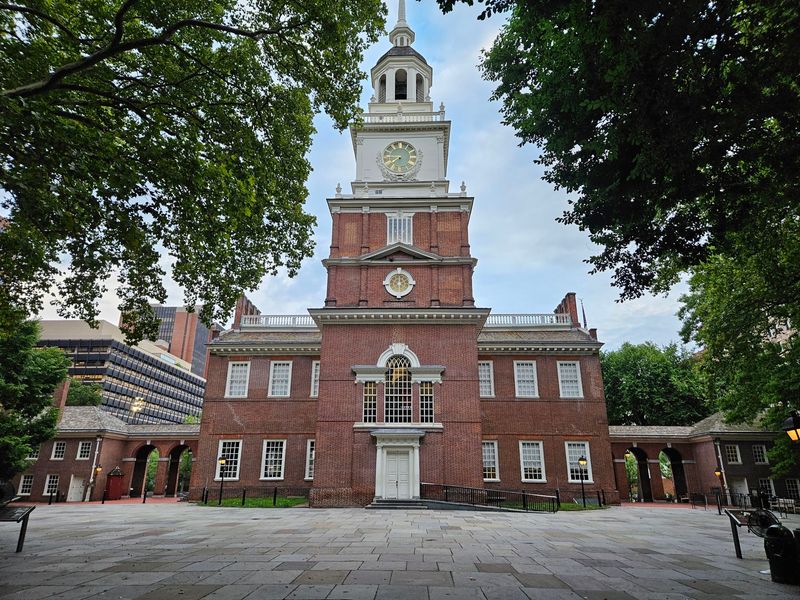
Two of America’s founding documents were debated inside one red-brick building. The Declaration of Independence was adopted here in 1776, and the U.S.
Constitution was signed here in 1787.
The highlight is the Assembly Room, where George Washington presided over the Constitutional Convention. His chair, called the Rising Sun Chair, still sits at the front of the room.
Tours are led by National Park Service rangers, and they’re free. Timed tickets are often needed during busy months, so check ahead before you go.
The building first served as the Pennsylvania State House. That’s a fun reminder that big national history started in a state government office.
Plan extra time for the surrounding Independence National Historical Park. Several other sites in this list sit just a short walk away.
Address: 520 Chestnut Street, Philadelphia, PA 19106
2. Eisenhower National Historic Site, Gettysburg, Pennsylvania
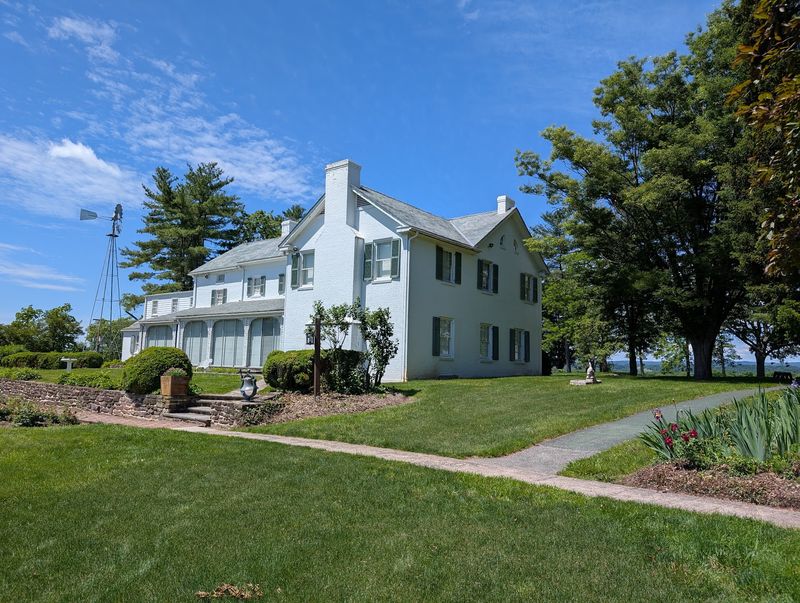
Ever wonder where a five-star general goes to relax? Dwight and Mamie Eisenhower chose a farm right beside the Gettysburg battlefield.
It was the only home the couple ever owned. During his presidency, Eisenhower used it as a weekend retreat and even hosted world leaders like Soviet leader Nikita Khrushchev there.
The farmhouse still holds many of the family’s original furnishings. You can see the sunporch where Ike liked to paint and play cards.
The grounds also include a putting green and barns tied to his Angus cattle herd. Walking the farm lanes gives you a calmer side of a man who led Allied forces in Europe.
Access is by shuttle from the Gettysburg National Military Park Museum and Visitor Center. Check the park schedule, since shuttle service can change by season.
Address: 1195 Baltimore Pike, Gettysburg, PA 17325
3. President James Buchanan’s Wheatland, Lancaster, Pennsylvania
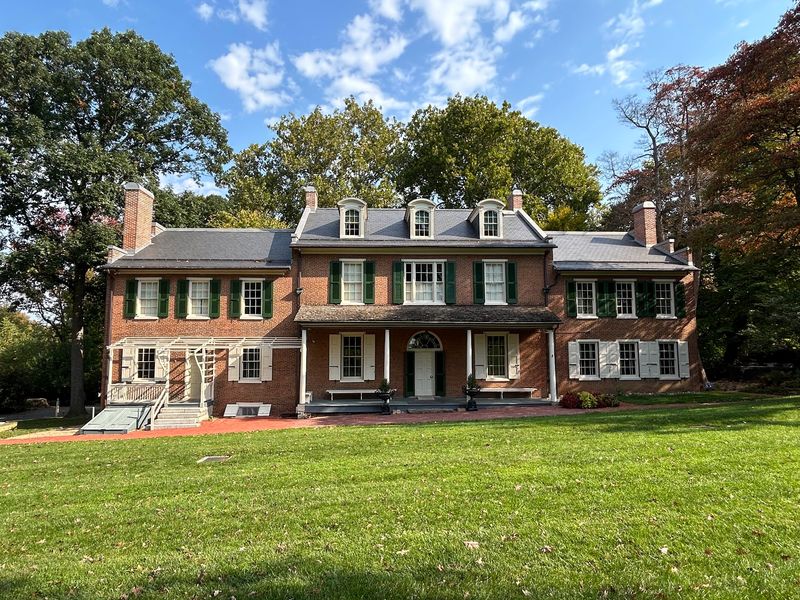
James Buchanan bought this Federal-style mansion in 1848 and ran part of his 1856 presidential campaign from its front porch area. He came home here after his single term ended in 1861.
Buchanan was the only president who never married. His niece, Harriet Lane, served as his official hostess and grew up partly in this house.
Guided tours lead you through the parlor, dining room, library, and his bedroom. Many objects inside belonged to Buchanan and his family.
His presidency came right before the Civil War, as arguments over slavery tore the country apart. Tour guides discuss that difficult record openly, which makes the visit more thoughtful.
Wheatland is operated by LancasterHistory, which also runs a museum and archives on the same campus. Pair the two for a fuller afternoon in Lancaster.
Address: 1120 Marietta Avenue, Lancaster, PA 17603
4. Pennsylvania State Capitol, Harrisburg, Pennsylvania
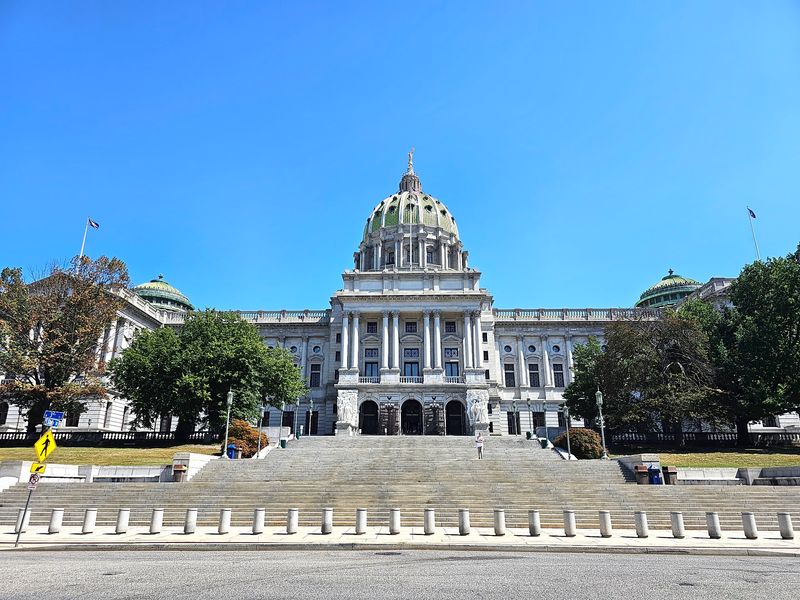
President Theodore Roosevelt showed up for the dedication of this building in 1906. He reportedly called it the handsomest building he’d ever seen.
The dome was inspired by St. Peter’s Basilica in Rome. Inside, the rotunda’s grand staircase was modeled after one in the Paris Opera House.
Look down as well as up. The floor features hundreds of Mercer tiles telling Pennsylvania’s story, made by Henry Chapman Mercer of Doylestown.
Murals by Violet Oakley and Edwin Austin Abbey cover many walls. Oakley was the first woman to receive a major public mural commission in the United States.
Free guided tours run on weekdays and some weekends. When lawmakers are in session, you might glimpse state government at work in the House or Senate chamber.
Address: 501 North 3rd Street, Harrisburg, PA 17120
5. Washington Crossing Historic Park, Washington Crossing, Pennsylvania
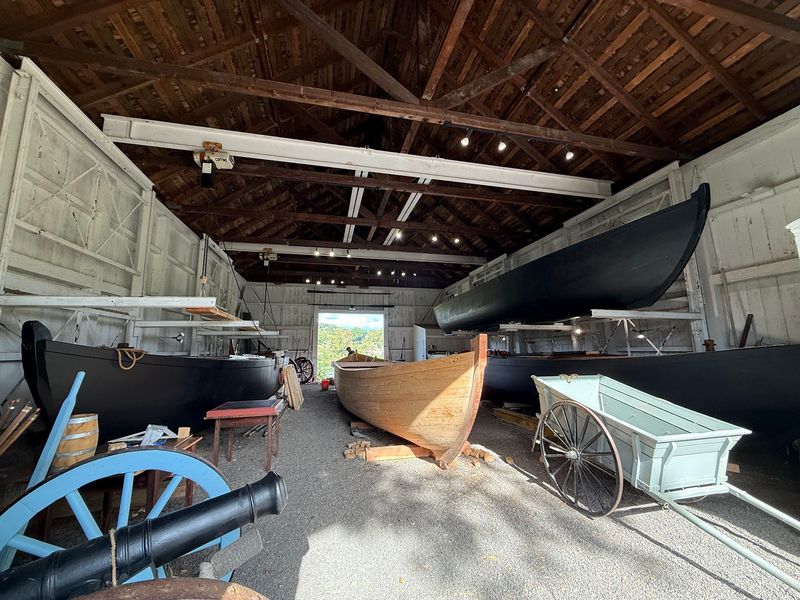
Christmas night in 1776 was cold, dark, and full of ice. George Washington still moved about 2,400 soldiers across the Delaware River here, then surprised Hessian troops at Trenton.
The park protects the Pennsylvania launch site. Historic buildings in the Lower Park include the McConkey Ferry Inn, where tradition says Washington may have eaten before the crossing.
Replica Durham boats are stored on site. They show the kind of sturdy cargo boats the army used.
A few miles north, Bowman’s Hill Tower offers views over the river valley. The tower was built in the 1930s as a memorial, not during the Revolution.
Every December, reenactors in period clothing recreate the crossing. It’s a popular yearly tradition, so check event dates and weather updates before you head out.
Address: 1112 River Road, Washington Crossing, PA 18977
6. Congress Hall, Philadelphia, Pennsylvania
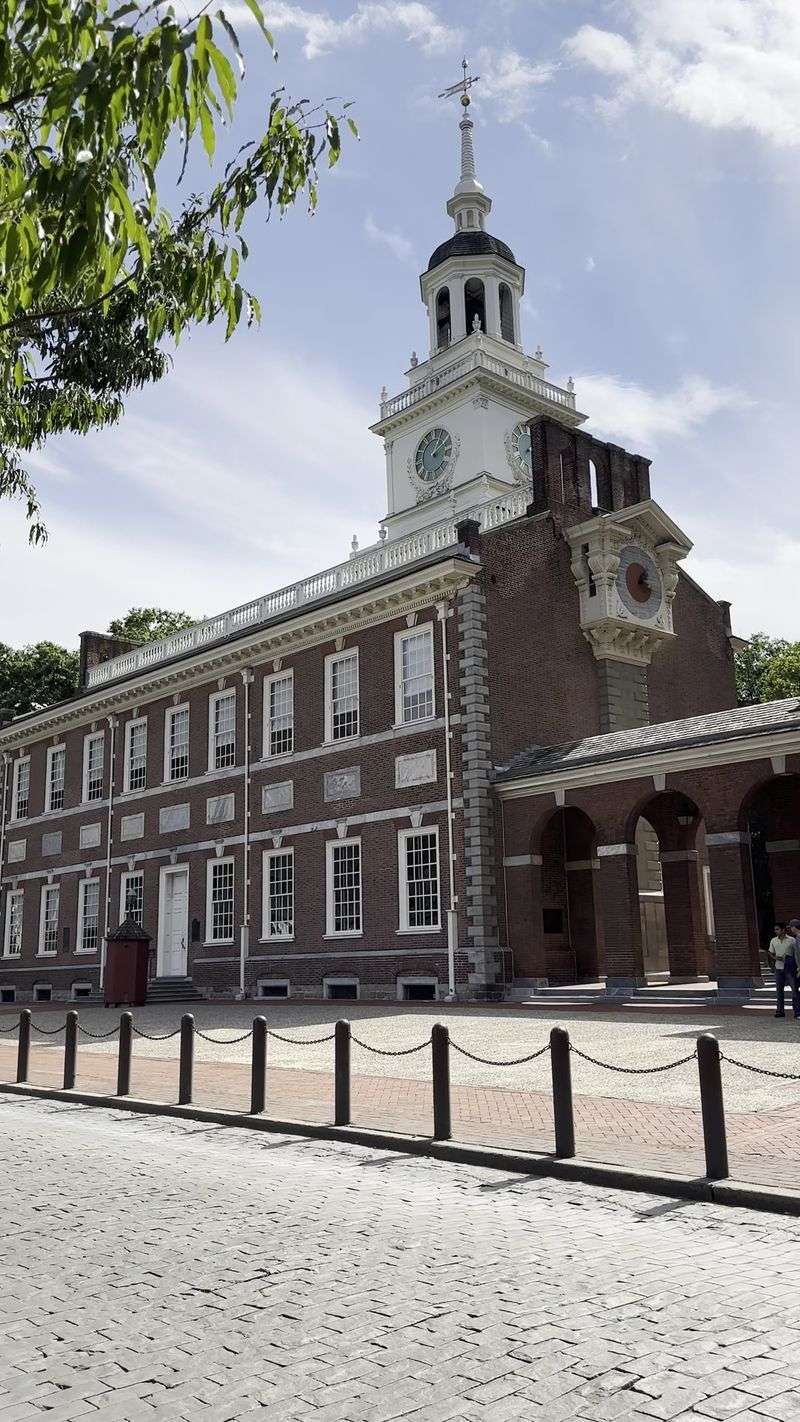
Talk about a busy room. George Washington took his second oath of office here in 1793, and John Adams was sworn in here four years later.
Adams’s ceremony mattered a lot. It was the first peaceful handoff of presidential power in the country’s history.
From 1790 to 1800, Congress met in this building while Washington, D.C., was under construction. The House gathered on the first floor, and the Senate met upstairs.
The Senate chamber still has red leather chairs and a painted ceiling eagle. Many furnishings are original or restored to match the 1790s look.
The Bill of Rights was also added to the Constitution while Congress worked here. Ranger tours are free and pair nicely with a stop at Independence Hall next door.
Address: 6th and Chestnut Streets, Philadelphia, PA 19106
7. Valley Forge National Historical Park, King of Prussia, Pennsylvania
About 12,000 soldiers marched into this encampment in December 1777. They built roughly 1,500 log huts to get through the winter.
Food and clothing ran short, and illness hit hard. Still, the army came out stronger, thanks partly to training from Baron von Steuben.
Reconstructed huts along the Muhlenberg Brigade area show how cramped camp life was. Rangers sometimes lead programs there in warmer months.
Washington’s Headquarters is the original stone house he used. It’s one of the park’s most meaningful stops for presidential history fans.
The park covers more than 3,500 acres with a 10-mile tour road. Bikers and walkers love the Joseph Plumb Martin Trail, which loops past many sites.
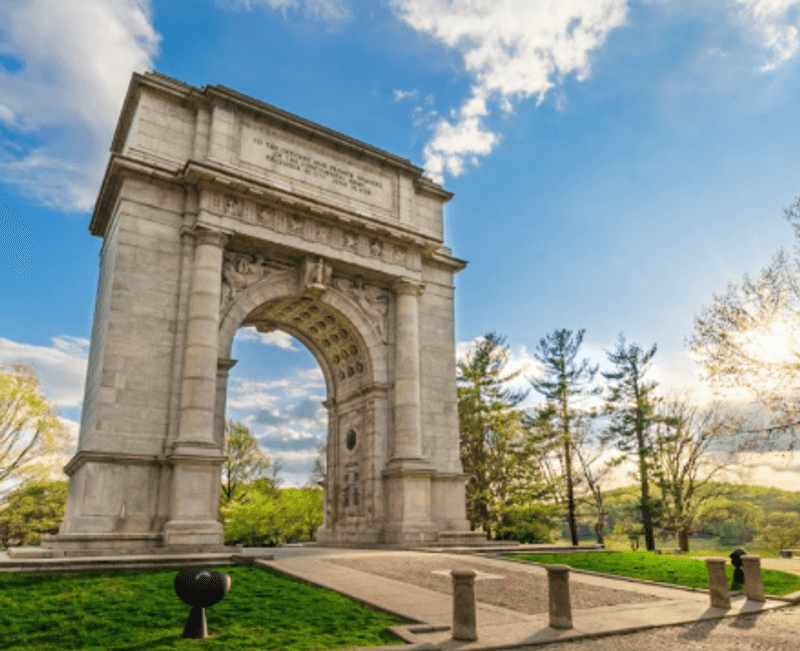
Don’t skip the National Memorial Arch. It honors the endurance of the soldiers who spent that winter here.
Address: 1400 North Outer Line Drive, King of Prussia, PA 19406
8. Gettysburg National Cemetery, Gettysburg, Pennsylvania
Abraham Lincoln wasn’t even the main speaker on November 19, 1863. Edward Everett talked for about two hours, then Lincoln spoke for around two minutes.
Those few words became the Gettysburg Address. Its ideas about equality and government by the people still shape how Americans talk about democracy.
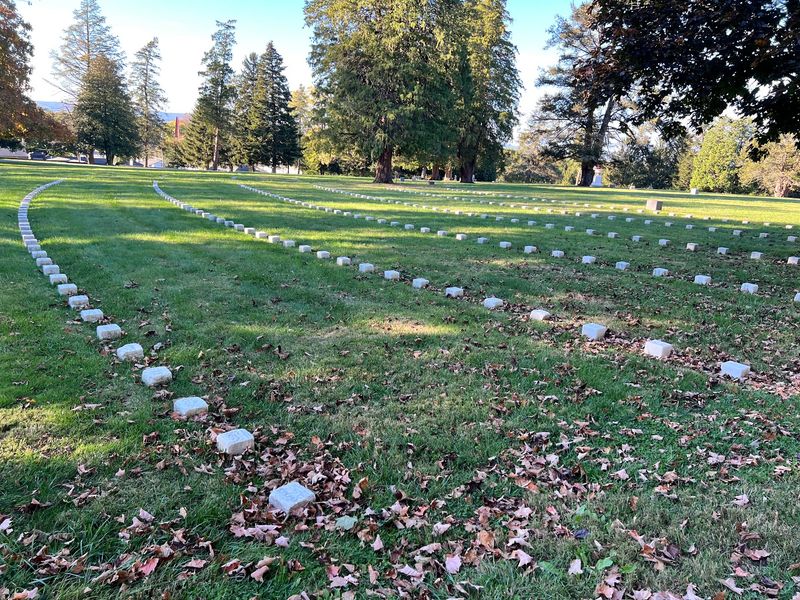
More than 3,500 Union soldiers from the battle rest here. The graves are arranged in a semicircle by state around the Soldiers’ National Monument.
A Lincoln Address Memorial stands near the cemetery’s edge. It holds a bronze bust of Lincoln and the text of his speech.
Veterans of later conflicts are also buried on these grounds. Walking paths are easy to follow, and the setting is calm and respectful, so plan a slower visit.
Address: 97 Taneytown Road, Gettysburg, PA 17325
9. National Constitution Center, Philadelphia, Pennsylvania
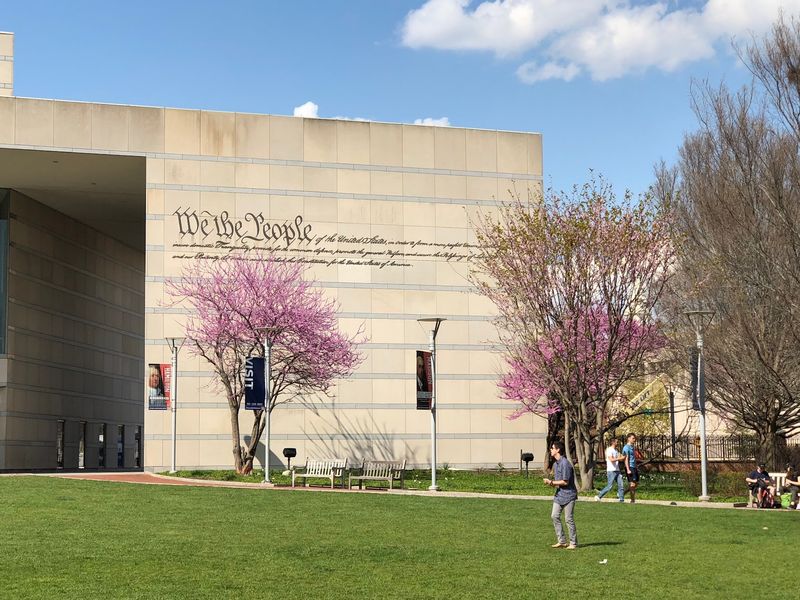
Want to stand shoulder to shoulder with Benjamin Franklin? Signers’ Hall has 42 life-size bronze statues of the men at the Constitutional Convention.
Franklin is seated, and Washington stands tall near the front. Go ahead and compare your height to James Madison, who was famously short.
The main exhibit, The Story of We the People, uses hands-on displays to explain the Constitution. You can even take a presidential oath of office in a mock setting.
A theater show called Freedom Rising introduces the museum with a live narrator. It’s a lively way to start before exploring the galleries.
The center sits right on Independence Mall. That location makes it easy to visit along with Independence Hall and the Liberty Bell in one day.
Address: 525 Arch Street, Philadelphia, PA 19106
10. Fort Necessity National Battlefield, Farmington, Pennsylvania
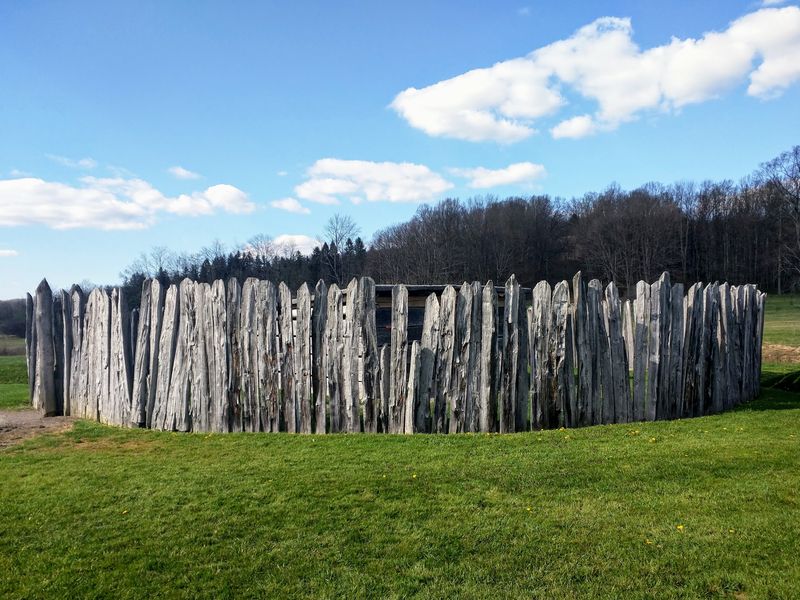
George Washington surrendered only once in his military career. It happened here on July 3, 1754, when he was just 22 years old.
His small round fort sat in a meadow, which made defense tough. French and allied forces had the higher ground, and heavy rain soaked the troops.
The clash helped start the French and Indian War. That wider conflict later shaped the tensions that led to the American Revolution.
Today, a reconstructed wooden stockade stands where the original was. The visitor center explains the battle with exhibits and a short film.
Nearby, you can see the grave of British General Edward Braddock. The park also includes the Mount Washington Tavern, a stagecoach stop on the National Road.
Address: 1 Washington Parkway, Farmington, PA 15437
11. The President’s House Site, Philadelphia, Pennsylvania
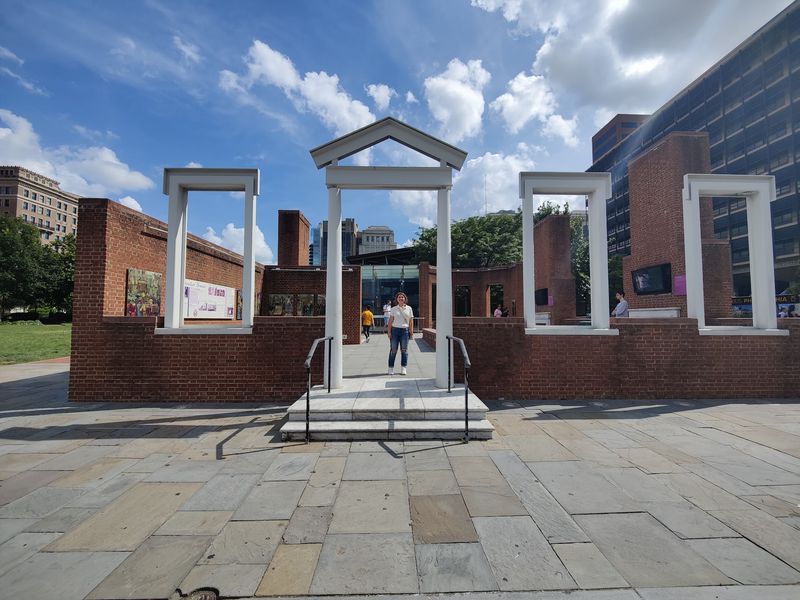
Ona Judge slipped out of this house in 1796 and never returned to slavery. She was one of nine enslaved people Washington held at his Philadelphia residence.
The building itself is gone. An open-air memorial now outlines its rooms and foundations, and you can view excavated remains through glass.
Washington and John Adams lived here while Philadelphia was the capital. It served as the executive mansion from 1790 to 1800.
Panels and short videos share the stories of the people enslaved here. The site explores the gap between the nation’s ideas of liberty and the reality of slavery.
It sits right beside the Liberty Bell Center. The site is free and outdoors, so you can stop by anytime during a walk around Independence Mall.
Address: 524-30 Market Street, Philadelphia, PA 19106
12. Museum of the American Revolution, Philadelphia, Pennsylvania
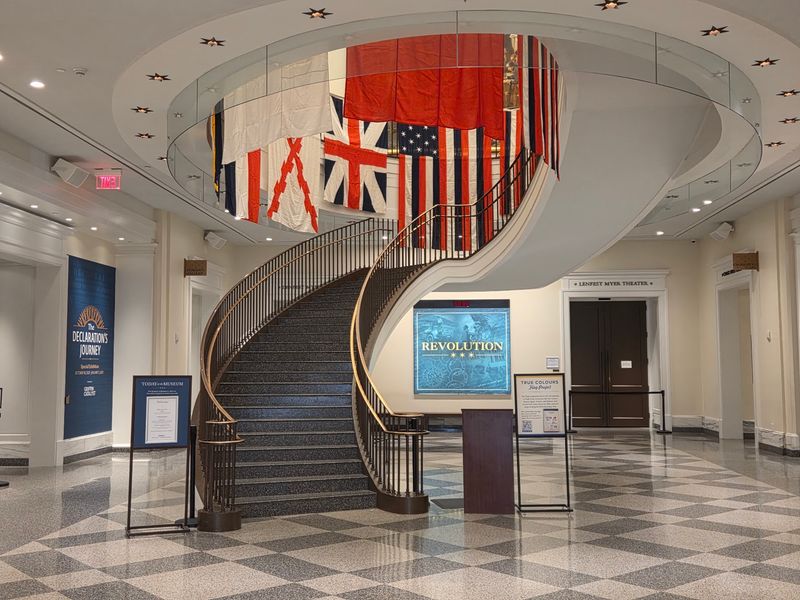
Washington’s headquarters tent is the star artifact here. He used it as an office and sleeping space during much of the Revolutionary War.
It’s shown in a special theater presentation, so the canvas is protected from too much light. The short film explains how the tent survived through family hands and church care.
Galleries cover the Revolution from early protests to the war’s end. Recreated scenes include a full-size privateer ship you can climb aboard.
The museum also shares stories of women, Native Americans, and Black soldiers. Those perspectives show how the war affected more people than the famous names.
Kids enjoy the Revolution Place discovery center with hands-on activities. The museum stands a few blocks from Independence Hall, making it an easy addition to a history day.
Address: 101 South Third Street, Philadelphia, PA 19106
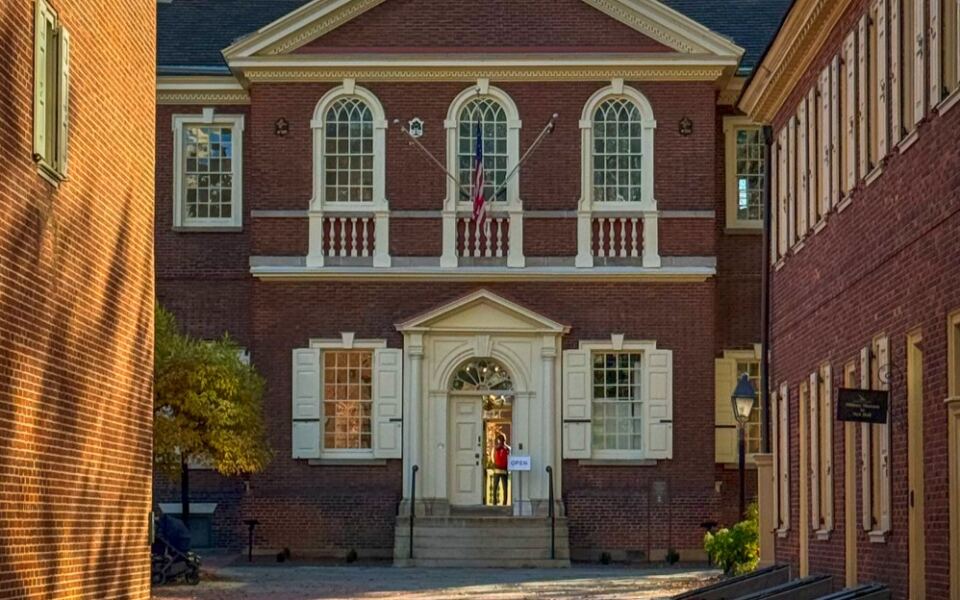
13. Carpenters’ Hall, Philadelphia, Pennsylvania
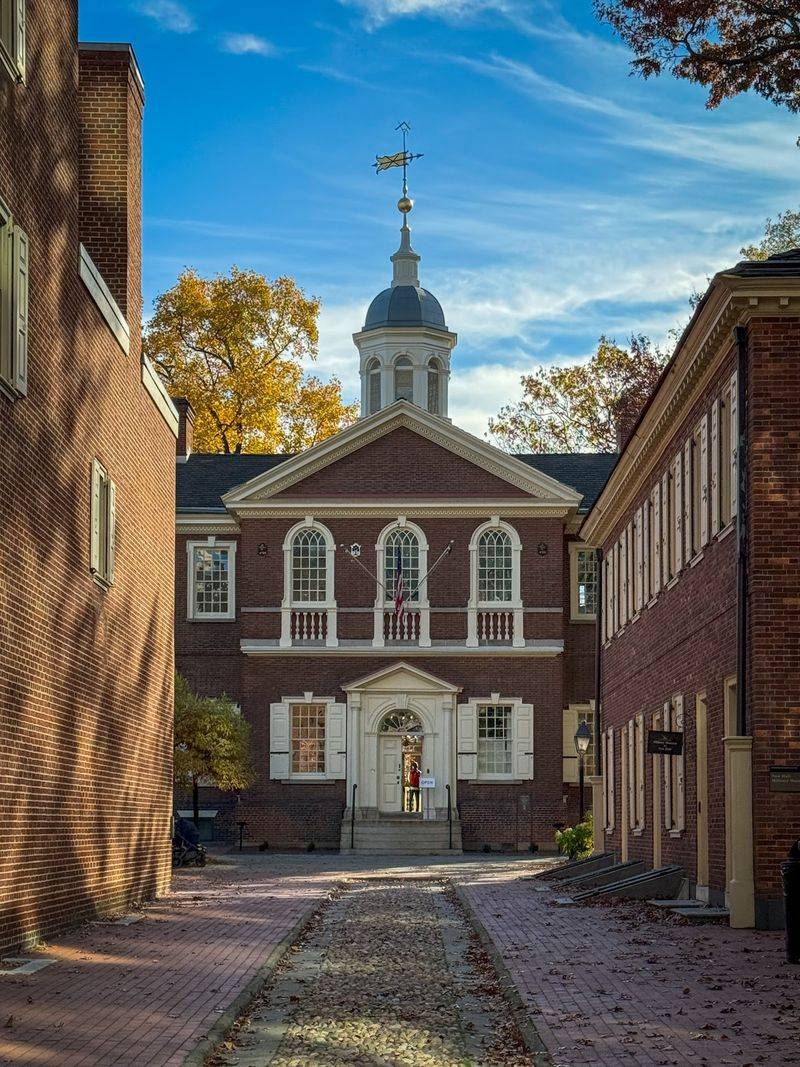
A trade group of builders owns this landmark, and it has for centuries. The Carpenters’ Company of the City and County of Philadelphia still runs it today.
In 1774, the First Continental Congress met here. Delegates from 12 colonies discussed how to respond to British laws they saw as unfair.
The hall was finished in the 1770s in a Georgian style. Its cross-shaped floor plan and cupola stand out on the quiet courtyard.
Inside, you’ll see original Windsor chairs used by the delegates. Displays also show old carpentry tools and building models.
Admission is free, though hours are limited and it closes on certain days. Benjamin Franklin’s Library Company and the first Bank of the United States also used space here at times.
Address: 320 Chestnut Street, Philadelphia, PA 19106
14. Buchanan’s Birthplace State Park, Mercersburg, Pennsylvania
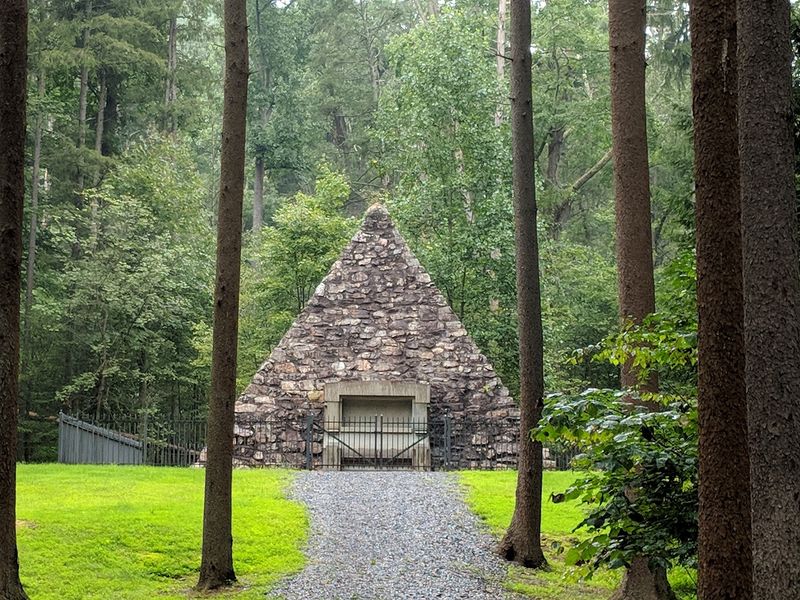
A stone pyramid in the woods marks where a future president was born. James Buchanan arrived in a log cabin at Cove Gap on April 23, 1791.
The pyramid is built from native stone and stands about 38 feet tall. It was funded through money left by Harriet Lane Johnston, Buchanan’s niece.
The original cabin no longer sits here. It was moved years ago and now stands on the campus of Mercersburg Academy in town.
The park is small, at about 18 acres. Picnic tables and shady trees make it an easy stop on a scenic drive through Franklin County.
Tuscarora Mountain rises around the gap. Pair this quiet site with Wheatland in Lancaster to follow Buchanan from his birthplace to his final home.
Address: 6235 Aughwick Road, Fort Loudon, PA 17224
Share this story