Henry Chapman Mercer built a 44-room castle in Pennsylvania using concrete mixed entirely by hand. The finished house has more than 200 windows, 18 fireplaces, and at least 32 stairways, including some that lead to unexpected places.
Mercer wasn’t a trained architect. He designed the unusual home himself, filling its walls and ceilings with handmade ceramic tiles, historical artifacts, and pieces collected from around the world.
Built between 1908 and 1912, Fonthill Castle in Doylestown is now open for guided tours. Visitors can explore its unconventional layout and learn how one man’s interest in history and craftsmanship turned an experimental building project into one of Pennsylvania’s most unusual historic homes.
A Concrete Castle on East Court Street
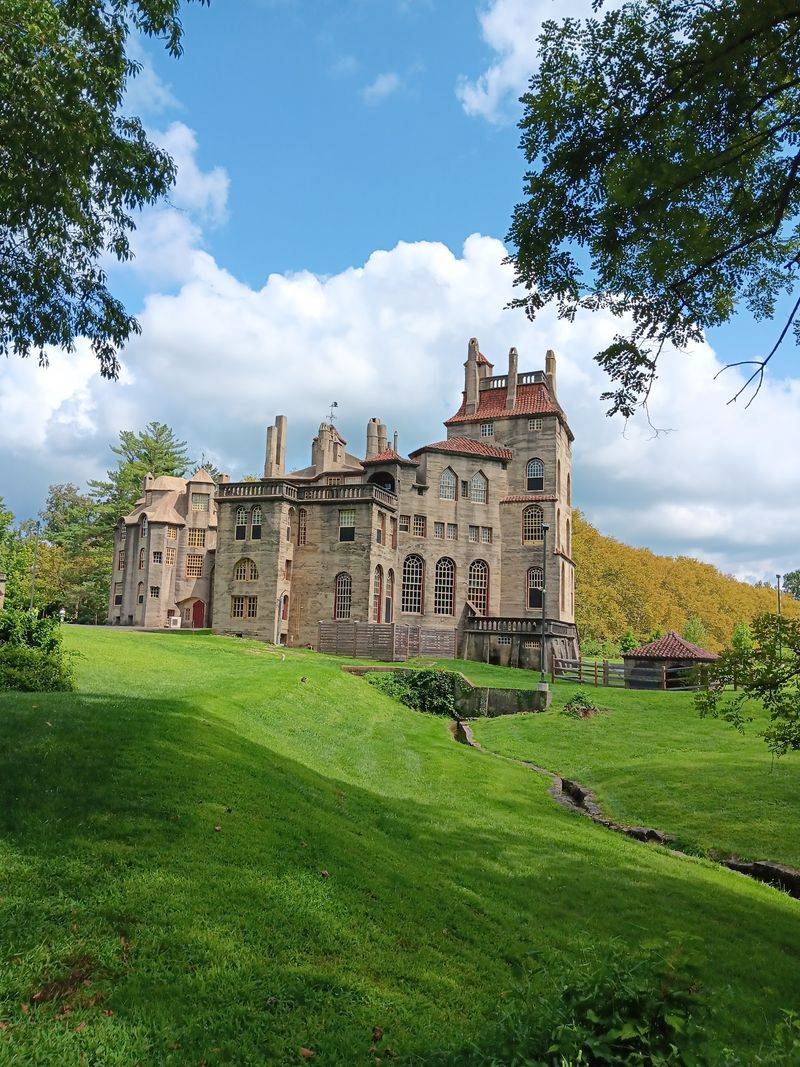
Fonthill Castle sits at 525 East Court Street in Doylestown, Pennsylvania. It was the home of Henry Chapman Mercer, and today it operates as a museum run by the Mercer Museum organization.
From the outside, the building looks like a pile of towers, rooftops, and windows stacked together. It does not follow one style.
Parts of it hint at medieval castles, while other parts look like nothing you have seen before.
Mercer built the house between 1908 and 1912. He chose reinforced concrete because he wanted a home that could resist fire and protect his large collections.
That was a bold choice for a house back then.
I find it interesting that such a heavy material ended up shaping something so playful. The rough gray walls give the castle a sturdy, serious look, yet the shapes feel almost like they grew on their own.
The castle is a National Historic Landmark. It belongs to a group of three concrete buildings Mercer created in Doylestown, which together are often called the Mercer Mile.
Of course, a building this unusual raises a big question. Who was the man who dreamed it up?
Henry Mercer, the Collector Who Became a Builder
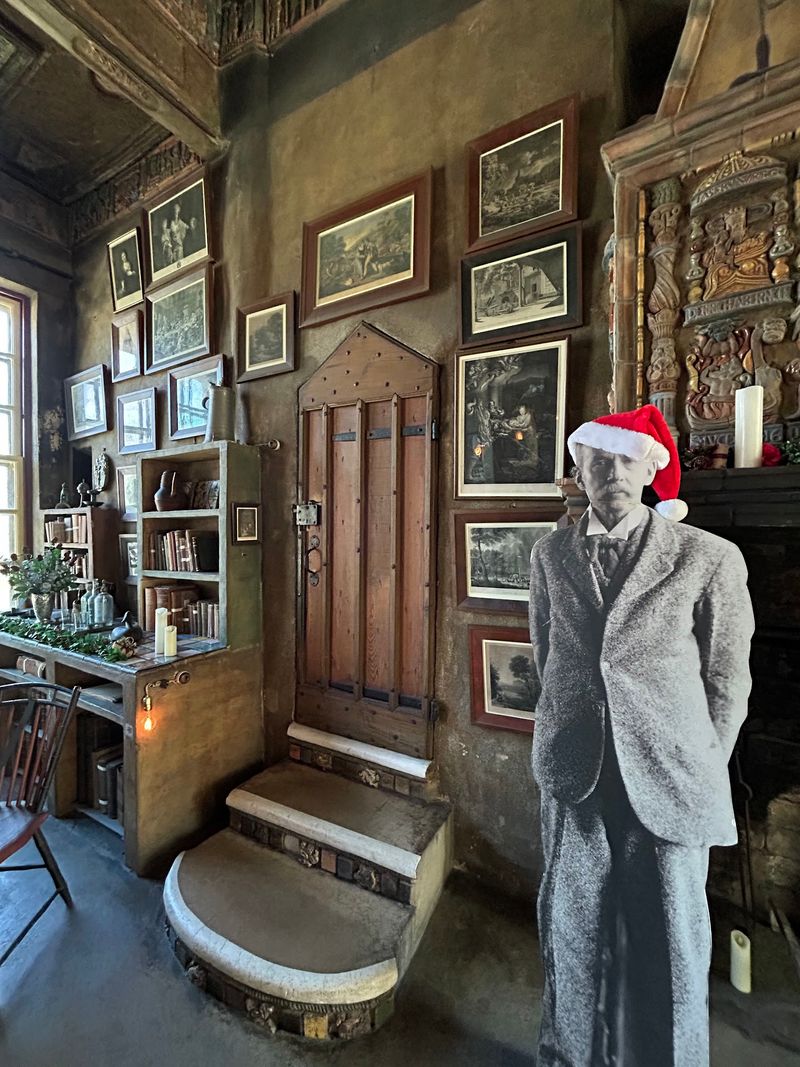
Henry Chapman Mercer wore many hats during his life. He was an archaeologist, an anthropologist, a scholar, a collector, and a tile maker.
He was not a trained architect, though. That detail explains a lot about the castle.
Mercer worked out his plans himself, often sketching rooms and shaping ideas as he went, rather than handing over neat professional blueprints.
His passion for history drove nearly everything he did. He gathered tools, prints, books, and objects from around the world.
He also worried that everyday tools from earlier American life would disappear, so he saved thousands of them.
Those older tools ended up in the Mercer Museum, another concrete building a short drive away. Fonthill, meanwhile, became his personal home and a showplace for many treasures.
It helps to think of the castle as a reflection of Mercer’s mind. His interests were wide and a bit unpredictable, and the house follows the same pattern.
Knowing his background makes a tour more meaningful. Once you understand the man, the strange stairways and crowded walls start to make sense.
They show someone building exactly what he wanted, without caring much about the usual rules.
How Workers Poured a House by Hand
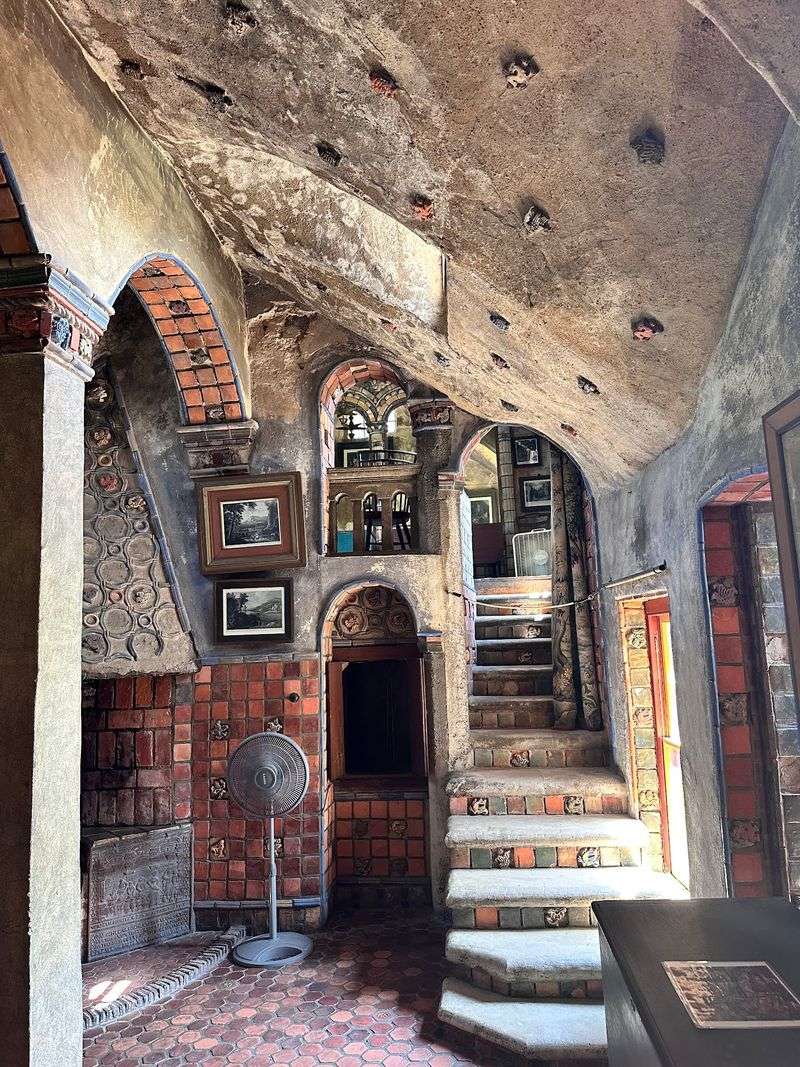
Building with concrete in the early 1900s took a lot of muscle. Mercer hired a small crew of local workers, and they mixed and poured the concrete by hand.
Guides often mention that a horse helped haul materials around the site. Workers built wooden forms, filled them with concrete, and let each section set before moving on.
Room by room, the castle slowly rose.
Mercer sometimes shaped spaces by piling up earth into the form he wanted, then pouring concrete over it. Once the concrete hardened, the dirt was removed.
That method helps explain the curved ceilings and uneven surfaces.
The house cost far less than you might expect for such a large place. Tour guides share the original construction figure, and it surprises many people.
What I like here is the hands-on feeling. Machines did not do most of the work.
People did.
When you notice the rough texture of the walls, remember that every inch was poured and finished by a small team. That handmade quality ties directly to Mercer’s love of craftsmanship, which shows up again in his tiles.
Tiles on the Walls, Floors, and Ceilings
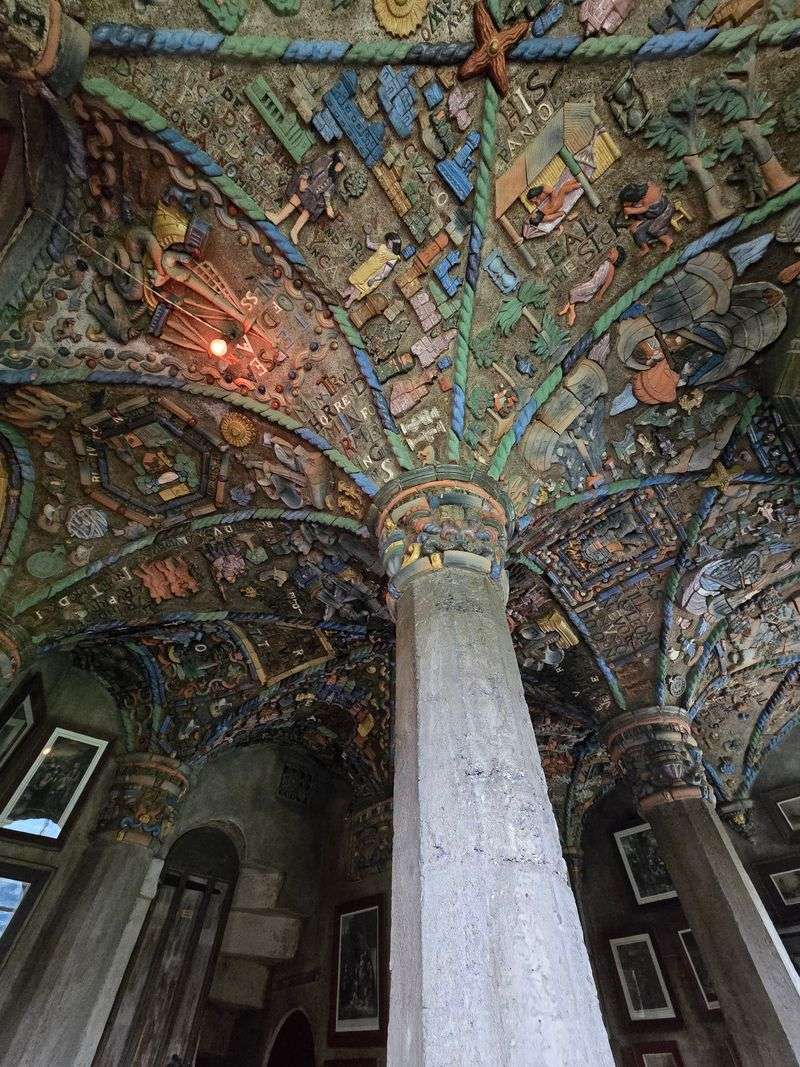
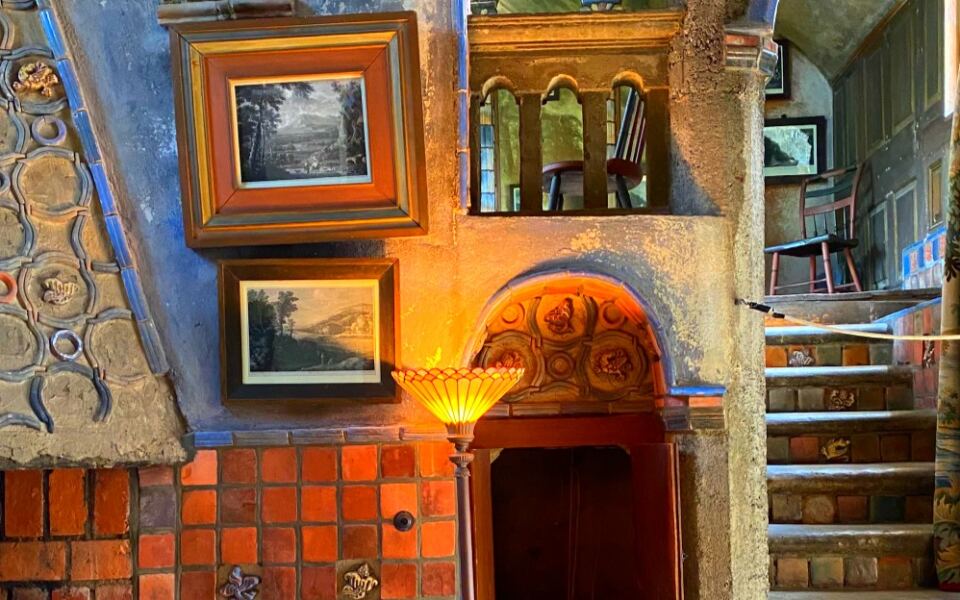
Look up almost anywhere inside Fonthill and you will spot tile. It covers ceilings, frames doorways, decorates columns, and lines floors.
Many of these tiles came from Mercer’s own business, the Moravian Pottery and Tile Works. He designed scenes showing history, legends, and stories, then pressed them into clay.
The results feel more like pictures than plain squares.
Mercer also collected tiles from other places and times. He mixed them right into the concrete, so old pieces sit beside his newer creations.
Some rooms feel like you are reading a giant storybook overhead.
His work became well known during the Arts and Crafts movement. That movement celebrated handmade objects over factory-made ones, and Mercer fit right in.
Here is a tip. Bring patience and look closely.
The ceilings are packed with small details, and it is easy to miss a tiny figure or pattern if you rush.
Photos help, but they rarely capture how much tile surrounds you. Some visitors love it, and a few find it overwhelming.
Either way, you will not forget it, and you will probably want to see where those tiles were made.
Stairs That Twist and Ceilings That Shift
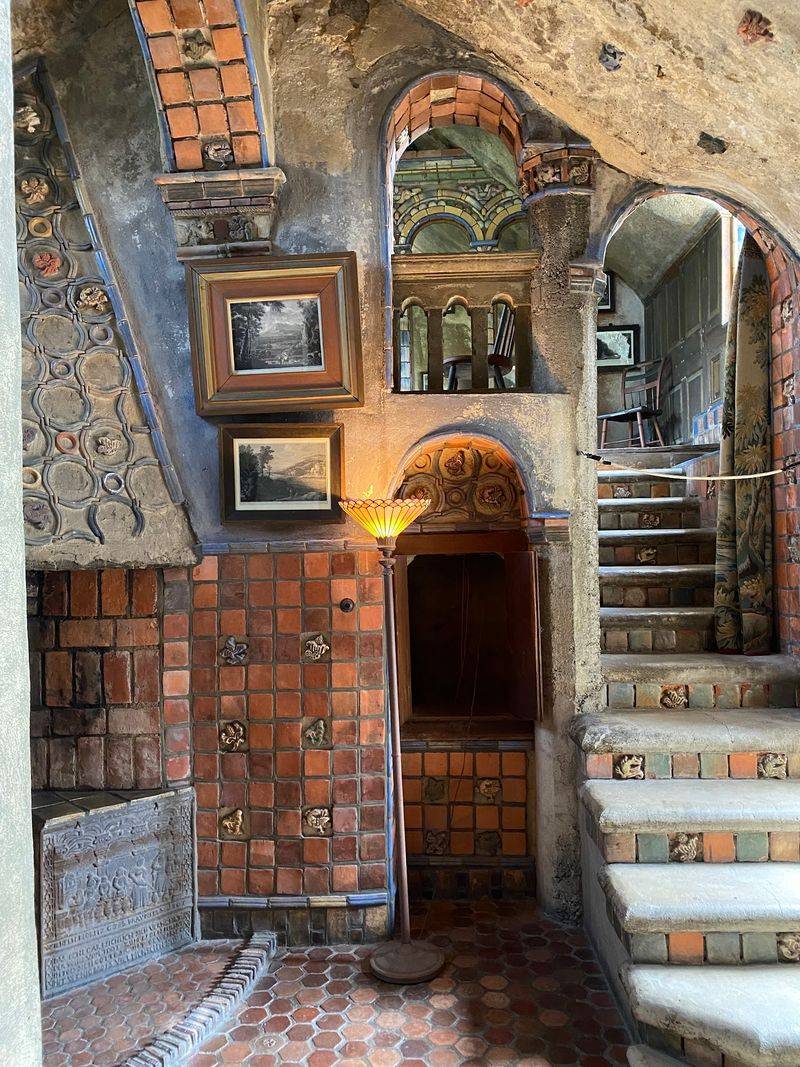
Getting around Fonthill feels a little like solving a puzzle. Staircases are steep and narrow, and some seem to lead in unexpected directions.
Ceilings change height from one space to the next. A tall, airy room might lead into a low passage where taller guests need to watch their heads.
Big columns pop up in places you would not expect.
The castle’s quirky layout comes from Mercer designing it himself. He did not follow standard building plans, so rooms connect in surprising ways.
Doors, nooks, and landings appear wherever he felt they belonged.
That might sound confusing, and honestly, it can be. Still, I think that is part of the fun.
Every turn shows something new.
Practical advice matters here. Wear comfortable shoes with good grip, since the stairs and passages can be uneven.
Anyone who has trouble with steep steps should check accessibility details before booking.
Groups on guided tours are kept small, which makes moving through tight spaces easier. It also means you can actually hear your guide in those twisting halls, which brings us to the people who make the tour come alive.
Small Guided Tours With Big Stories
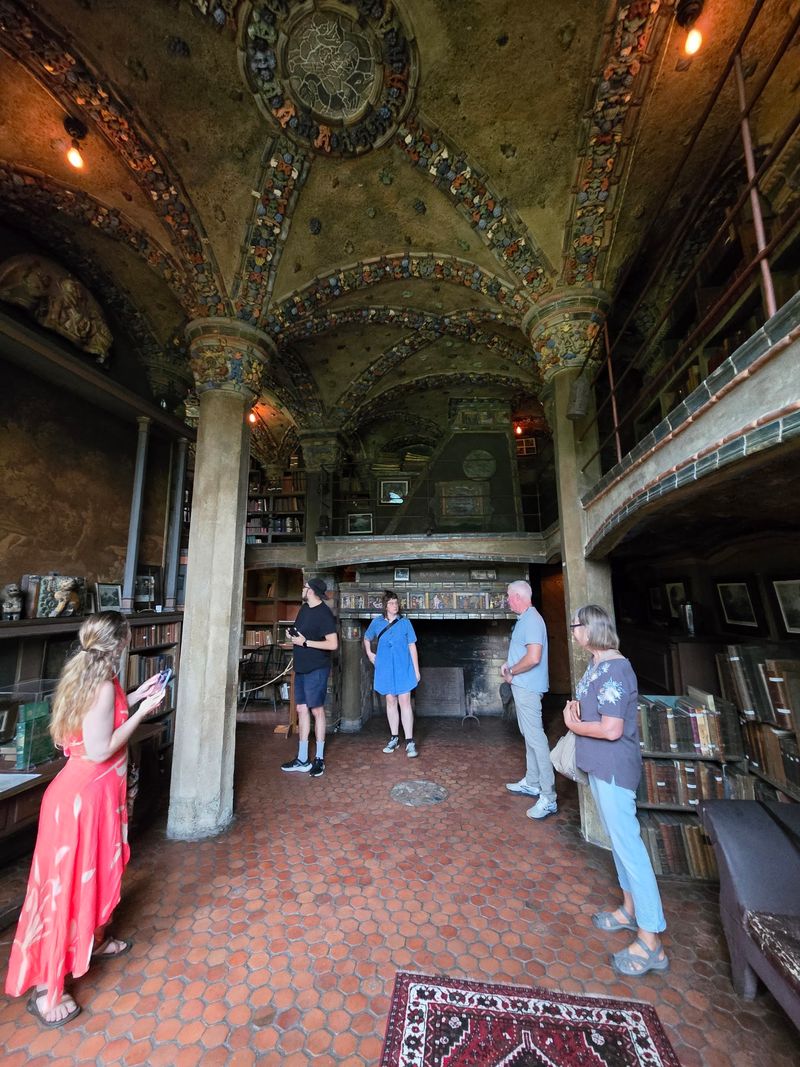
Tours at Fonthill are intentionally small. Space inside the castle is limited, so each guided group stays tiny, often around ten people.
The standard guided tour lasts about an hour. It covers most of the main rooms and many bedrooms.
Tours start frequently throughout the day, which helps spread out visitors.
Because groups are small, tickets can sell out, especially on busy weekends. The museum recommends booking ahead online.
Showing up and hoping for a spot is risky.
Guides share stories about Mercer, his collections, and how the house was built. They point out small details you might otherwise walk right past.
I would plan extra time after the tour. The grounds and nearby sites deserve attention too, and rushing off right away means missing a lot.
The castle is generally open Tuesday through Sunday and closed Mondays. Hours can change for holidays and special events, so check the official site before your trip.
If one hour leaves you wanting more, you are not alone. Fonthill also offers special tour options that reach parts of the house regular visitors rarely see.
Behind the Scenes and Meander Days
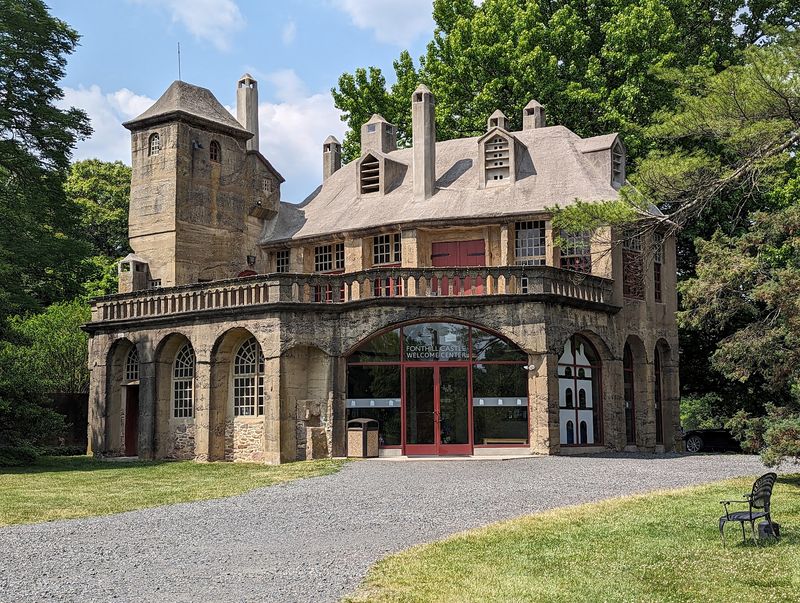
Curious visitors often come back for a deeper look. Fonthill offers Behind-the-Scenes tours on certain dates throughout the year.
These longer tours explore more of the house than the regular one-hour visit. They can include spaces not covered on the standard route.
For fans of architecture and history, that extra access is a real draw.
Another option is called Meander Days. On these days, guests move through the castle at their own pace instead of following one guide.
Staff members stand in different rooms to share highlights and answer questions.
I like the idea of a Meander Day for a second visit. You can linger in a favorite room, look up at the tiles as long as you want, and ask whatever comes to mind.
Schedules for these special tours vary. They are not offered every day, so it makes sense to check the calendar early.
Picking the right tour depends on your interest level. A first-timer may be happy with the classic route, while a returning guest might crave more.
Either way, the rooms hold some surprising objects worth knowing about.
Ancient Tablets and a House Full of Books
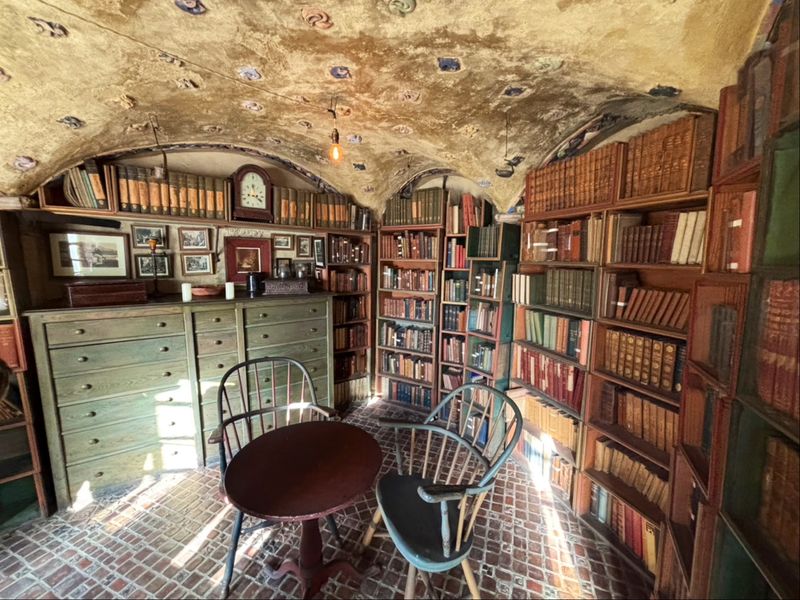
Some of the oldest items inside Fonthill are thousands of years old. Mercer collected ancient cuneiform tablets, small clay pieces covered in wedge-shaped writing from ancient Mesopotamia.
These tablets were built right into the walls in some spots. Seeing writing that old pressed into a 1900s concrete house is a strange and memorable mix.
Books are everywhere too. Mercer owned a huge library, and shelves appear throughout the castle.
The library room, with its large windows, is a favorite stop for many people.
He also collected prints from around the world. Many hang on the walls, often surrounded by tile.
Mercer wanted his collections close to him, not hidden in storage.
The castle is largely kept the way it was when Mercer lived there. That makes it feel like a personal home rather than a staged exhibit.
My advice is simple. Ask your guide about any object that catches your eye.
Many items have stories, and guides usually know them.
Once you have explored the indoor treasures, it is worth heading outside. The surrounding property gives a calm break from all that detail.
Woodland Trails and the Tile Works Next Door
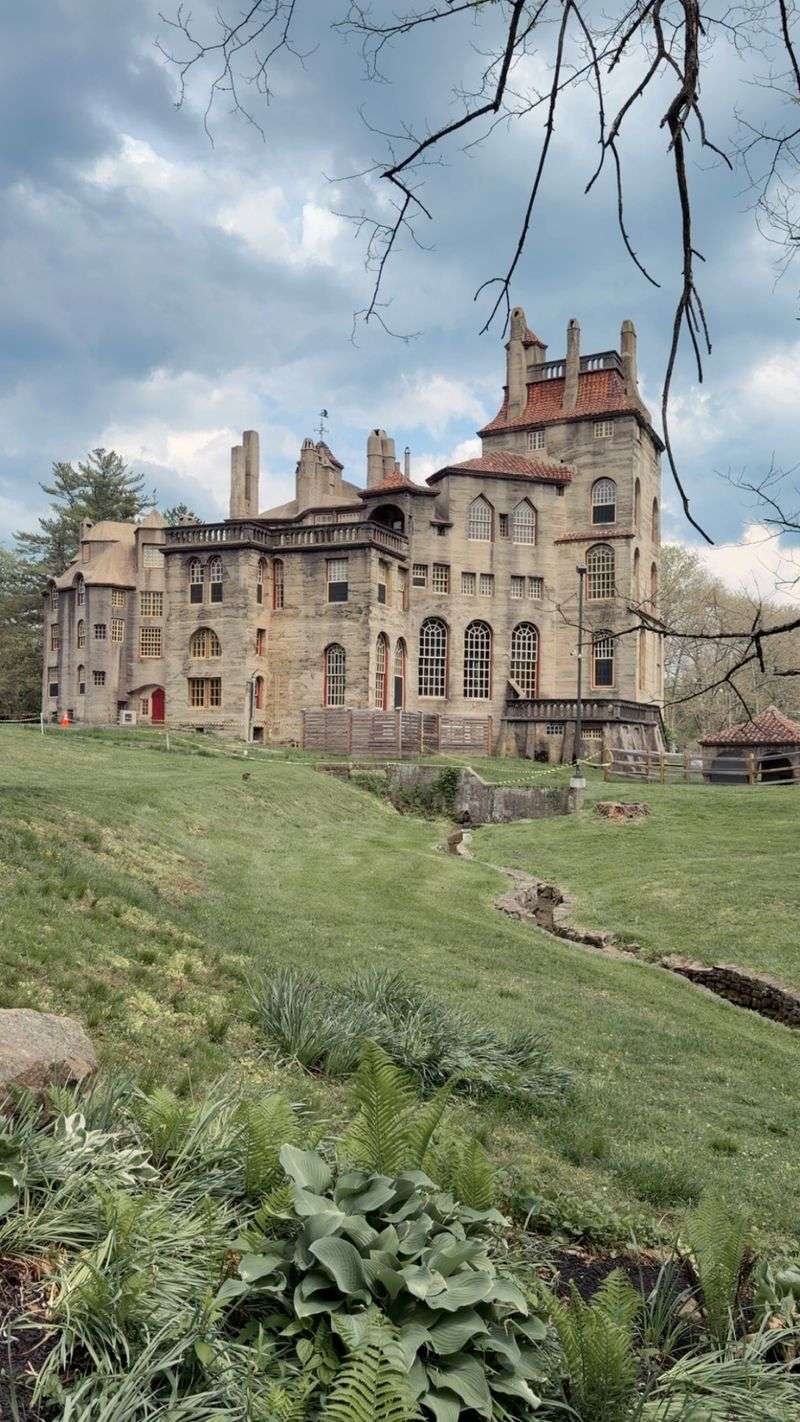
Fresh air is easy to find at Fonthill Park. The castle sits on wooded grounds with walking trails, a nice change after the tight indoor spaces.
Many visitors spend extra time strolling after their tour. Paths wind through trees, and you can view the castle from different angles outdoors.
Just up the road stands the Moravian Pottery and Tile Works. Mercer built this concrete workshop too, and it is where his famous tiles were produced.
It still makes handmade tiles today and is run by Bucks County.
The Tile Works offers its own tours and a shop. Seeing how tiles are made adds meaning to everything you spotted on the castle ceilings.
I would pair the two stops on one trip. They are close together, so it feels natural to walk from one to the other.
Parking near the castle is convenient, and the visitor building includes a gift shop. Comfortable walking shoes help on the gravel paths.
Of course, the Mercer story does not end at the park. A third concrete landmark waits a few minutes away in downtown Doylestown.
Holiday Trees and a Trip to the Mercer Museum
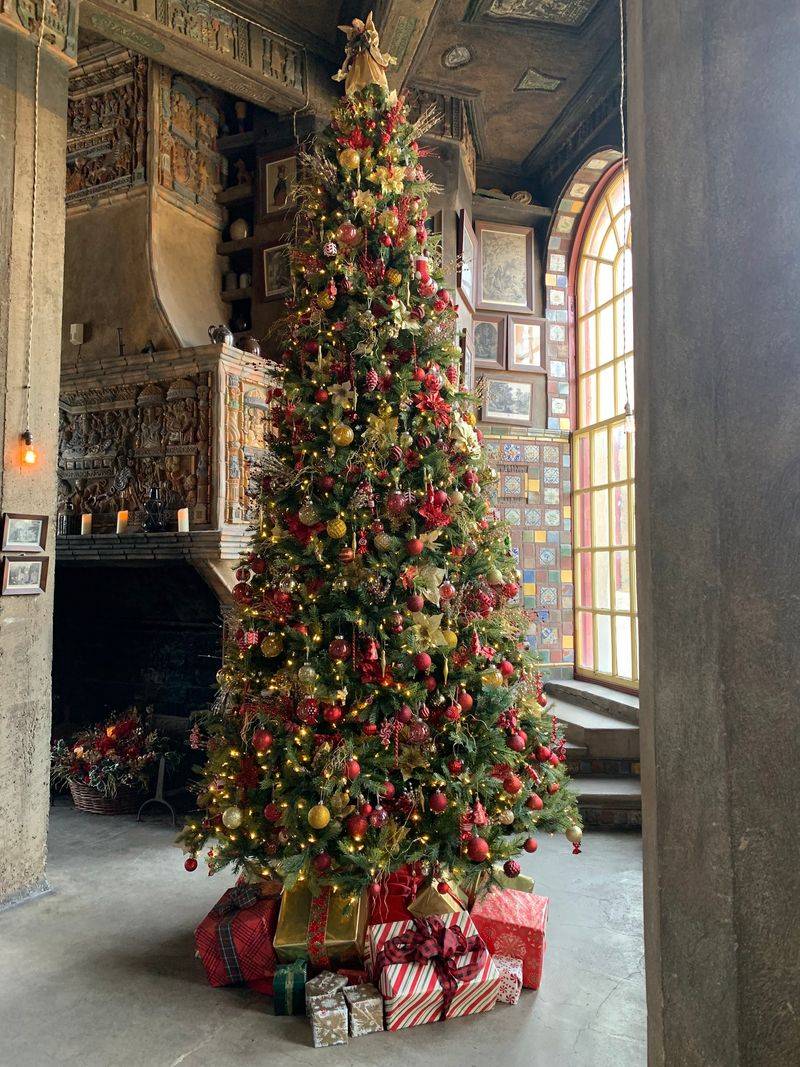
Winter brings a cozy twist to the castle. During the holiday season, Fonthill fills its rooms with themed trees and festive decorations.
Special holiday tours run during this time, including some evening options. The decorations add color to the gray concrete and patterned tile.
Heaters help keep the rooms comfortable on cold days.
Holiday tours can be popular, so booking early matters even more then. Check the schedule as soon as seasonal dates are posted.
Any season works well for adding the Mercer Museum to your plans. It sits about five minutes away by car.
This tall concrete building holds Mercer’s large collection of early American tools and everyday objects.
Tickets for the castle and the museum are sold separately now. Plan your budget and timing with that in mind.
I like the idea of seeing all three Mercer buildings in one day. The castle shows his home life, the Tile Works shows his craft, and the museum shows his drive to save history.
Together they tell the full story of one curious man who shaped a corner of Pennsylvania with concrete and clay.
Share this story