You can walk among thousands of free-flying butterflies without traveling to a tropical rainforest. Across North America, butterfly conservatories let visitors get close enough to watch these insects feed, emerge from chrysalises, and sometimes land right on them.
Florida’s Butterfly World displays around 20,000 butterflies, while an Arizona attraction houses thousands inside one of the country’s largest indoor butterfly conservatories. Other destinations offer tropical birds, giant insects, waterfalls, and opportunities to watch newly emerged butterflies take their first flight.
Some of these attractions stay open year-round, while others operate only during warmer months. Two are even located on Michigan’s car-free Mackinac Island.
Here are 15 butterfly destinations where the experience goes well beyond looking at butterflies behind glass.
1. Butterfly Wonderland, Scottsdale, Arizona
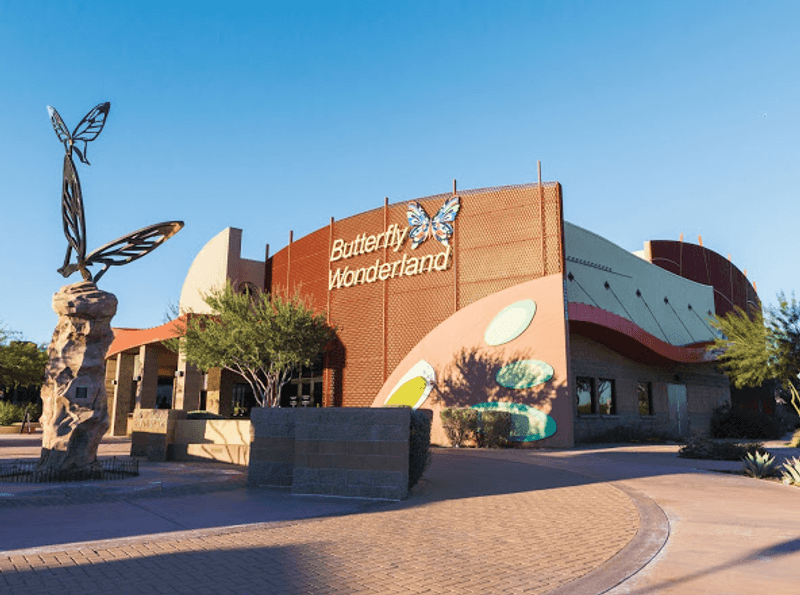
Cactus country is the last place anyone expects a rainforest, yet Scottsdale has the largest butterfly conservatory in the United States.
Butterfly Wonderland sits inside the Arizona Boardwalk complex. Its 10,000-square-foot atrium holds thousands of free-flying butterflies from Africa, Southeast Asia, and Central and South America.
Your visit starts with a 3D film called Flight of the Butterflies, which tells the story of monarch migration. Then the doors open to the main habitat.
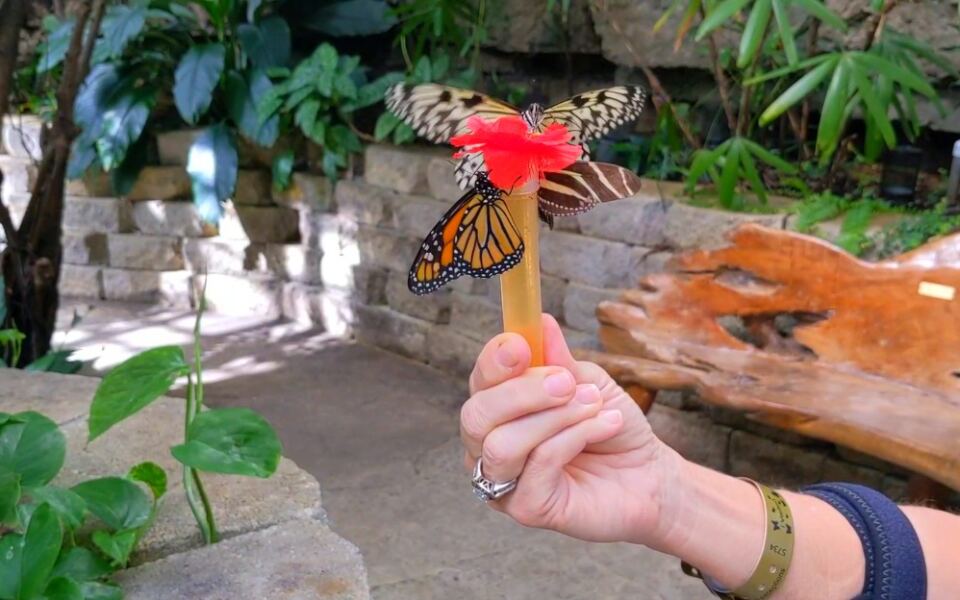
Stand still for a minute. Butterflies often land on shoulders of patient guests, and staff sometimes hand out sugar sticks for closer looks.
The Butterfly Emergence Gallery lets you watch chrysalises open in real time. Extras include a koi pond, a live ant colony, a beehive, and freshwater aquariums.
Bold visitors can even sample edible insects. Consider it a snack with serious bragging rights.
2. Butterfly World, Coconut Creek, Florida
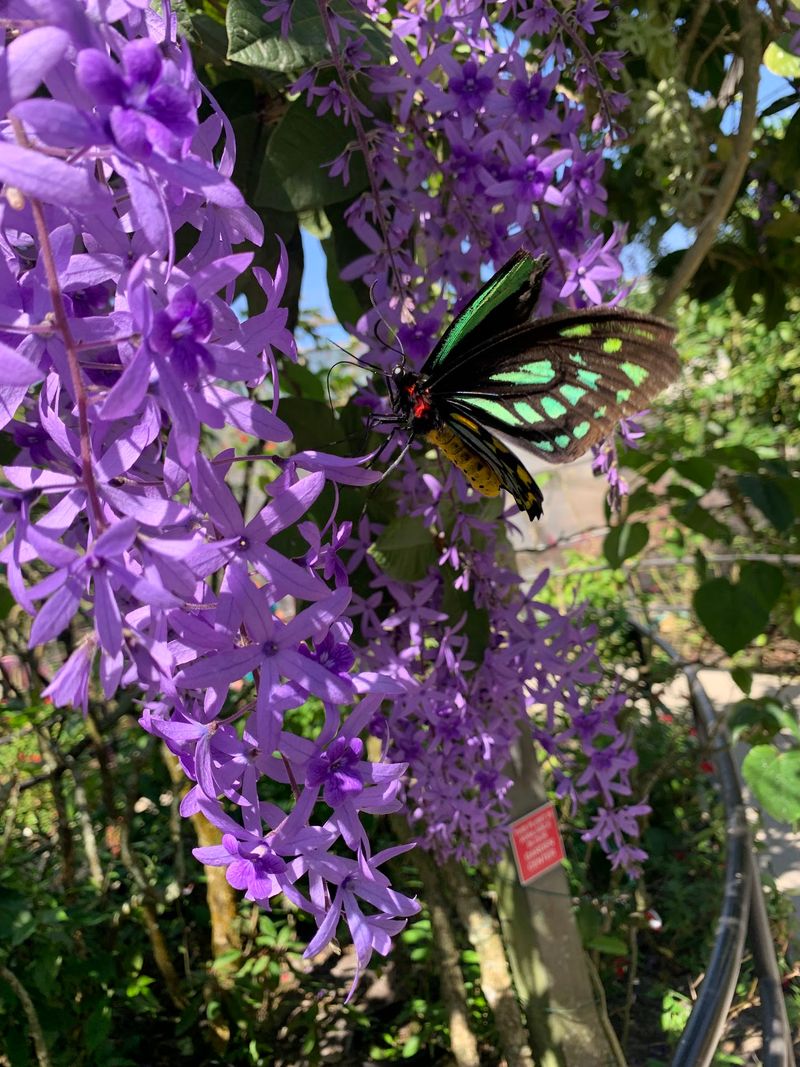
One retired electrical engineer named Ronald Boender loved raising butterflies in his backyard so much that he built the largest butterfly park in the world.
Butterfly World opened on March 28, 1988, in Tradewinds Park. It was the first attraction of its kind in the Western Hemisphere.
Around 20,000 live butterflies from about 50 species fly here at any given time. Over a year, up to 150 species rotate through.
Plan for several hours. The Paradise Adventure Aviary has fountains and ponds, while the Tropical Rain Forest Aviary shares space with free-flying birds.
Hummingbird fans should head to Jewels of the Sky, the largest free-flight hummingbird aviary in the country. The Bug Zoo adds scorpions and tarantulas for braver guests.
Before leaving, stop by the Secret Garden. It holds one of the biggest passion flower vine collections on the planet.
3. Magic Wings Butterfly Conservatory, South Deerfield, Massachusetts
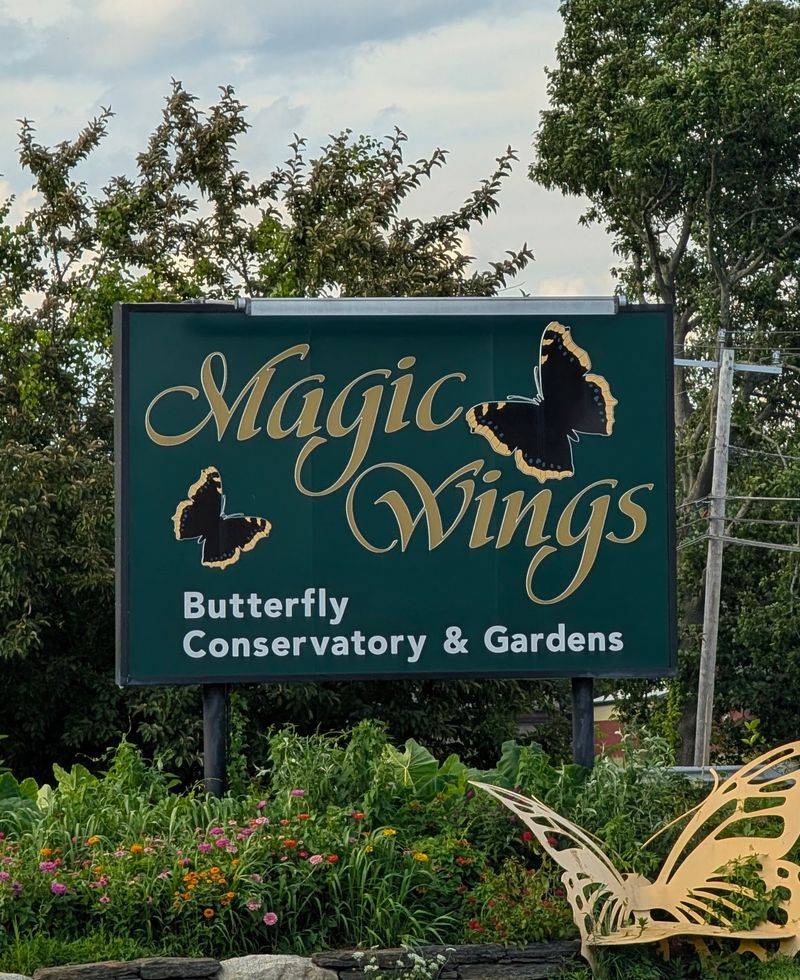
Snow boots at the door, short sleeves inside. Magic Wings keeps its glass conservatory at a cozy 80 degrees, even during a New England blizzard.
The 8,000-square-foot space opened in 2000. More than 4,000 butterflies live here, representing up to 70 tropical and native species.
Butterflies are not the only residents. Dart frogs, tortoises, button quail, a blue-tongued skink, and koi in two ponds all share the space.
Say hello to Akbar, a Senegal parrot who has lived at the conservatory for over two decades. He is something of a local celebrity.
Before the main room, the Wonderarium shows off more than 40 species of insects and reptiles. Curving paths lead to a gazebo with benches, which makes a great spot for patient butterfly watching.
The gift shop even sells live painted lady caterpillars, so your kitchen can host its own transformation.
4. Niagara Parks Butterfly Conservatory, Niagara Falls, Ontario, Canada
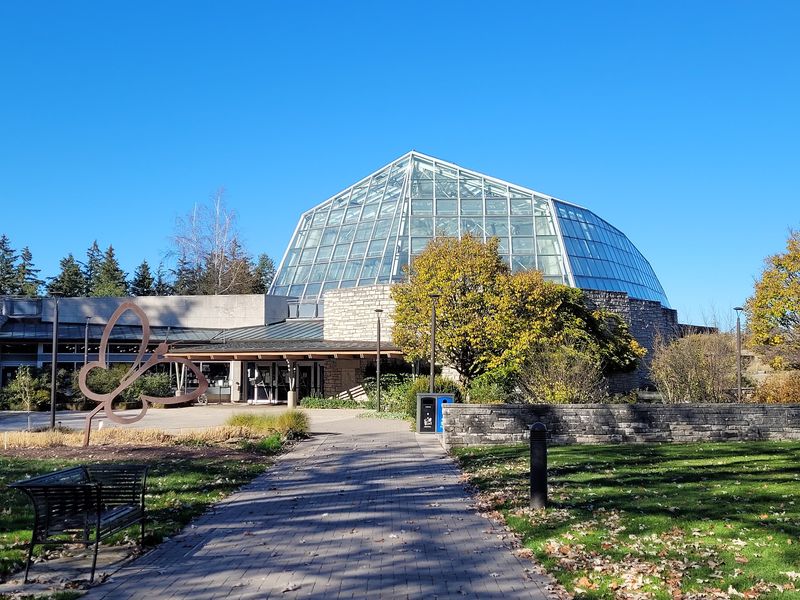
Most people visit Niagara for the big waterfall. Smart ones also save time for a smaller waterfall surrounded by thousands of wings.
The Niagara Parks Butterfly Conservatory opened in December 1996. It sits inside the Niagara Parks Botanical Gardens, a short drive from the falls.
Between 2,000 and 3,000 butterflies fly through the greenhouse. They come from tropical places like Costa Rica, El Salvador, and the Philippines.
Here is a handy trick. Wear bright colors and move slowly, and a curious butterfly may choose you as its landing pad.
A short video kicks off the visit before the self-guided walk. The Emergence area is the crowd favorite, since you might catch a butterfly opening its wings for the first time.
Kids enjoy the Pollinator Playground, with its Live Sketchbook and Puzzle Pond. The conservatory has also tagged and released monarchs for over 30 years.
5. Butterfly Pavilion, Westminster, Colorado
Call it a zoo for the little guys. Butterfly Pavilion opened on July 15, 1995, as the world’s first stand-alone invertebrate zoo accredited by the AZA.
The facility covers 11 acres just outside Denver. Its star room, Wings of the Tropics, holds around 1,800 free-flying butterflies from over 200 species.
Time your visit well. Staff release newly emerged butterflies into the rainforest twice a day, straight from the Chrysalis Chamber.
Beyond the butterflies, things get delightfully creepy. You can meet Rosie, a Chilean rose hair tarantula, along with leaf insects, scorpions, and giant millipedes.
The Water’s Edge gallery adds coral reef animals and a touch tank with sea stars. Outdoors, the Dee Lidvall Discovery Garden offers an amphitheater and water-wise plantings.
Families with small kids will appreciate the Colorado Backyard indoor play area. It mixes climbing with lessons about local wildlife.
6. Cockrell Butterfly Center, Houston, Texas
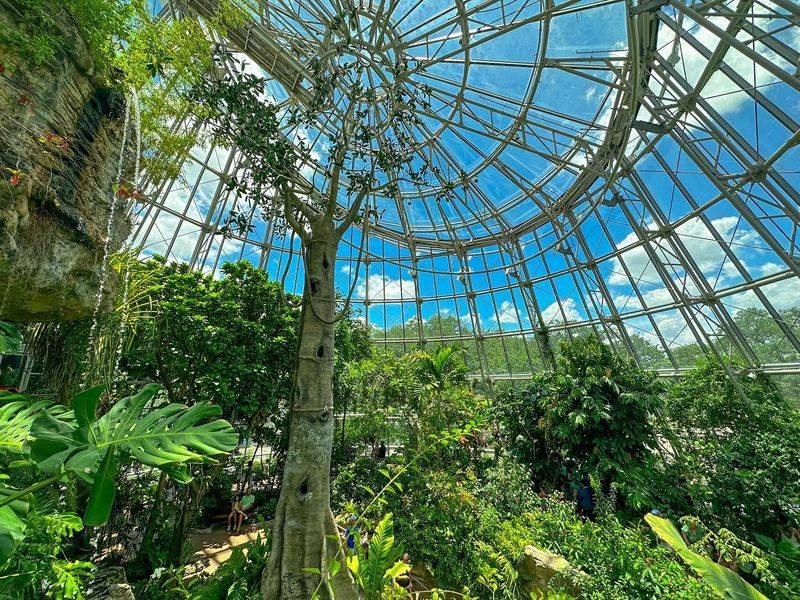
Houston hides a rainforest inside a glass pyramid, and it stands three stories tall.
The Cockrell Butterfly Center opened in 1994 at the Houston Museum of Natural Science. Its 50-foot waterfall is the tallest feature in the room.
Somewhere between 1,500 and 2,000 butterflies live here, covering about 60 tropical species. The space stays near 80 degrees because butterflies need warmth to fly.
Fresh renovations in March 2024 added small finches and an Alexandrine parakeet. Now the rainforest has a few feathered neighbors.
Head to Chrysalis Corner to watch new butterflies dry their wings before joining the crowd. Next door, the Brown Hall of Entomology covers leaf-cutter ants, forensic science, and some impressively large local cockroaches.
Younger visitors should not miss The Land of Beeyond. A giant play beehive and insect rubbings make bug science feel like playtime.
7. Frederik Meijer Gardens & Sculpture Park, Grand Rapids, Michigan
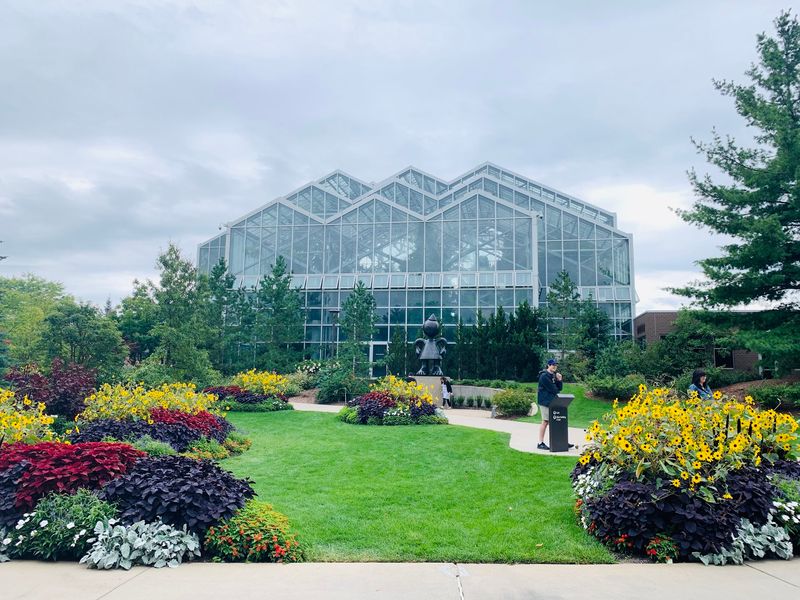
Spring in Michigan arrives with over 7,000 butterflies and moths, all packed into one five-story greenhouse.
The Fred and Dorothy Fichter Butterflies Are Blooming exhibition runs from March 1 through April 30. It is the largest temporary tropical butterfly show in the United States.
About 60 species fly through the 15,000-square-foot Lena Meijer Tropical Conservatory. Visitors may spot blue morphos, clearwings, and tree nymphs.
Keep an eye out for Atlas moths. Their wings can stretch from 6 to 12 inches across.
Hundreds of chrysalises and cocoons arrive every week at the Observation Station. That steady supply means fresh emergences throughout the season.
Families needing a calmer visit can book sensory-friendly evenings in April, which include quiet spaces and ASL interpreters. Members also get early Sunday access in March and April, a perk worth knowing before crowds roll in.
8. Cecil B. Day Butterfly Center, Pine Mountain, Georgia
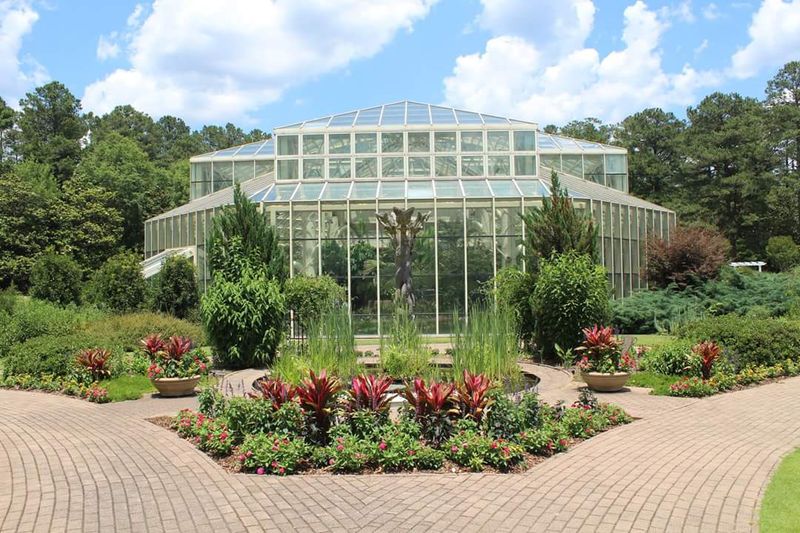
Back in 1988, few Americans had ever walked through a butterfly house. The Cecil B.
Day Butterfly Center opened that September and became one of the first in the country.
It sits at Callaway Resort and Gardens and is called North America’s largest glass-enclosed tropical conservatory. The dome reaches 35 feet high.
Inside, staff keep the air at 80 degrees and 74 percent humidity. More than 1,000 butterflies from over 50 species fly among 250 kinds of nectar plants.
The pupae come from butterfly farmers in six countries, including Malaysia, Tanzania, and Costa Rica. That farming helps support rainforest communities.
Catch Wings of Wonder, an award-winning film that plays nonstop in the theater. Photographers should aim for weekday mornings when crowds are thinner.
Afterward, the gardens, lakes, and trails make it easy to stretch the trip into a full weekend.
9. Sophia M. Sachs Butterfly House, Chesterfield, Missouri
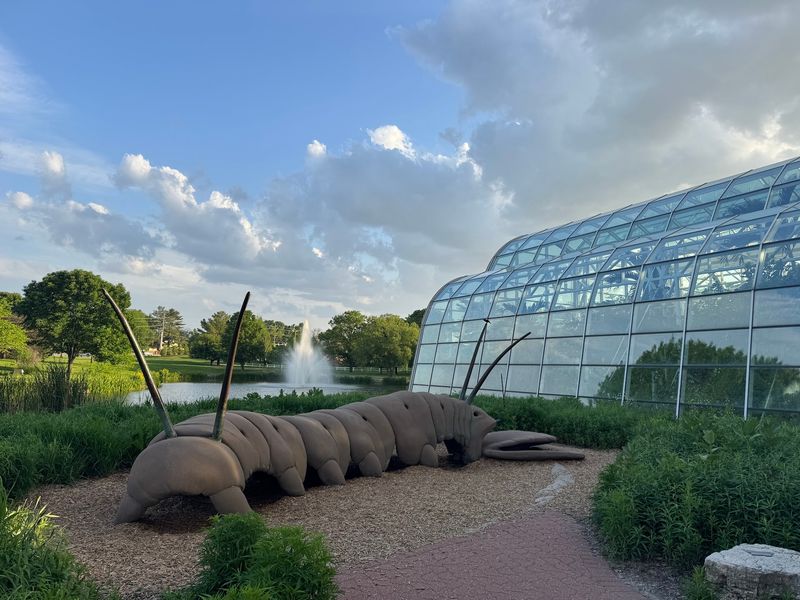
Only two insectariums in the whole country hold AZA accreditation, and one of them sits in a quiet St. Louis suburb.
The Sophia M. Sachs Butterfly House opened in 1998 inside Faust Park.
Its 8,000-square-foot glass conservatory is home to up to 1,500 butterflies.
More than 60 butterfly species live among over 150 kinds of tropical plants. That mix gives the butterflies plenty of places to feed and rest.
Staff have one friendly rule for families. Walk, do not run, because quick feet can accidentally hurt the tiny residents.
The place is part of the Missouri Botanical Garden, so learning is a big focus. Classes, family events, and Project Pollinator teach people how to help bees and butterflies at home.
During warm months, visit the outdoor native butterfly garden too. It offers smart ideas for planting your own pollinator patch.
10. Butterfly Biosphere, Lehi, Utah
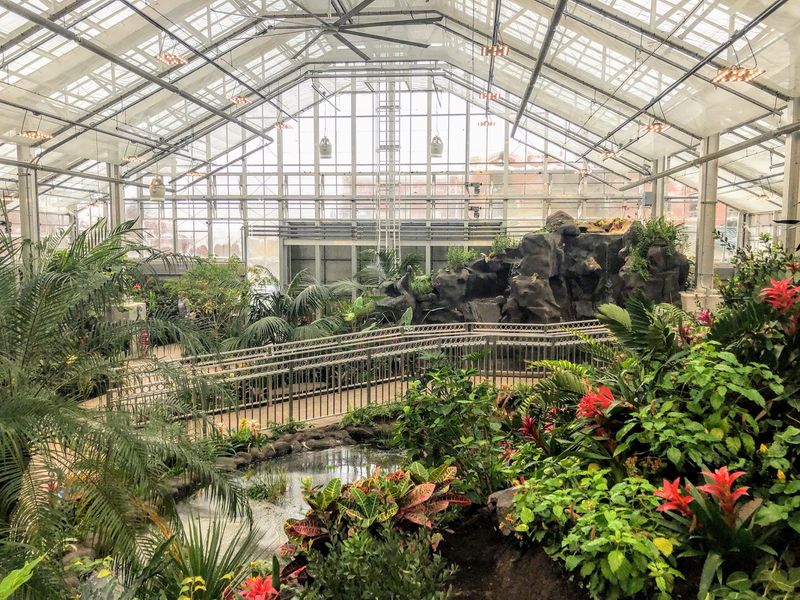
Ever wanted to walk over the top of a waterfall? At Butterfly Biosphere, the path actually lets you.
Thanksgiving Point opened this 40,000-square-foot facility in 2019. It is Utah’s only butterfly conservatory and insectarium.
The 10,000-square-foot glasshouse holds over a thousand butterflies. Watch for the blue morpho and the orange-and-black Halloween butterfly.
Next door, the Discovery Zone turns bug fear into bug fun. It features 20 tarantula species, fist-sized beetles, and a leafcutter ant colony of about 120,000 ants.
Daily Critter Encounters sometimes let guests hold a featured bug. Kids can also climb on human-sized insects in the Costa Rica Climber play area.
For a true keepsake moment, sign up for Butterfly’s First Flight. You get to release a newly emerged butterfly into the conservatory yourself.
11. The Butterfly Palace & Rainforest Adventure, Branson, Missouri
Branson is known for big stage shows, but its smallest performers have wings.
The Butterfly Palace and Rainforest Adventure brings a tropical aviary to the Ozarks. Over a thousand butterflies from more than 60 species can fly here at peak times.
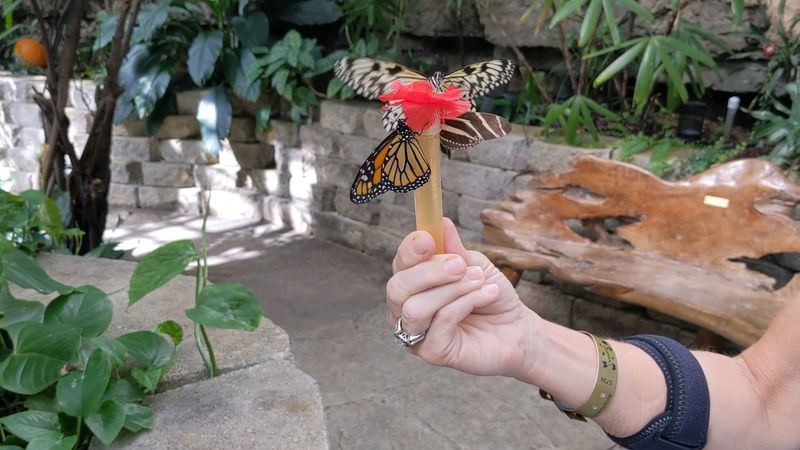
Free flower nectar is handed out to guests. Hold it out, and a butterfly may stop by for a snack.
The palace imports 500 to 700 pupae every week from sustainable farms in places like Costa Rica, Australia, and Malaysia. All shipments follow strict USDA rules.
Once the aviary visit wraps up, the fun keeps going. The Emerald Forest Mirror Maze and the Great Banyan Tree Adventure are full of tricky illusions.
Kids can borrow pith helmets and binoculars for a mini safari. The Living Rainforest Critter Center adds skinks and geckos to the lineup.
12. Tropical Butterfly House, Seattle, Washington
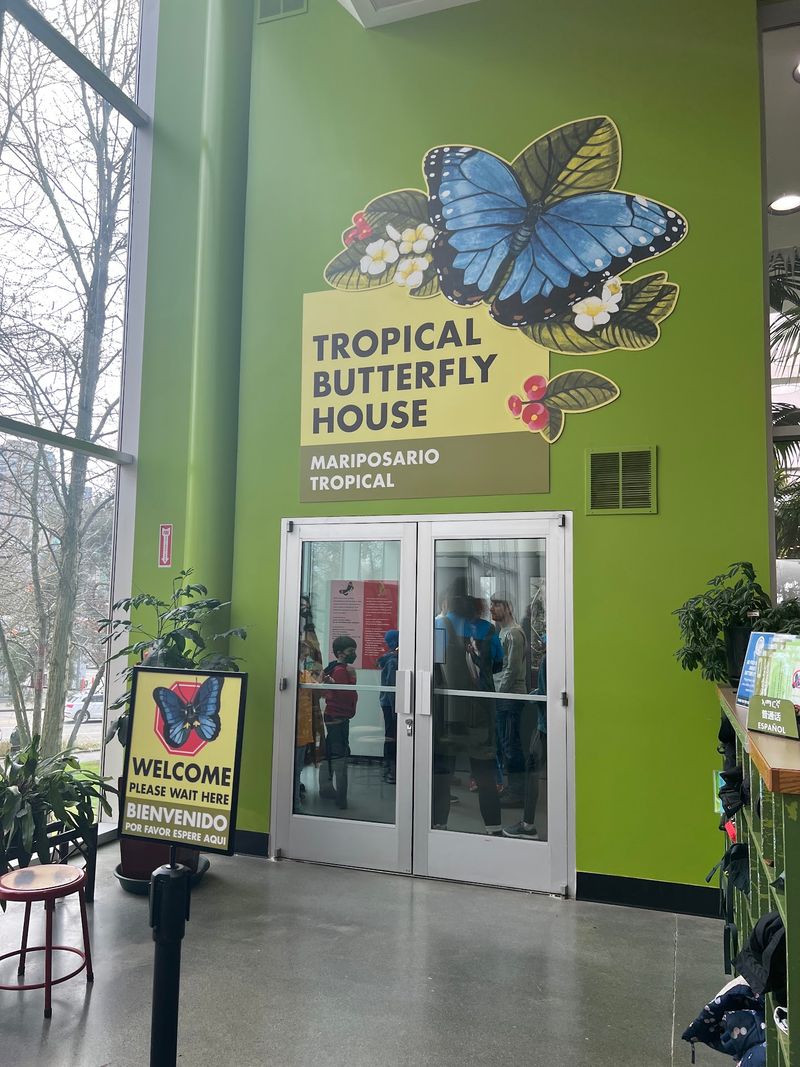
Seattle may be famous for rainy days, yet one spot near the Space Needle stays tropical all year.
The Tropical Butterfly House sits inside Pacific Science Center. It is the only facility of its kind in Washington State.
Temperatures hold between 78 and 85 degrees, with humidity around 60 to 70 percent. Special full-spectrum lights copy the day and night pattern of the tropics.
Each week brings 20 to 30 species, and over 100 rotate through each year. Chrysalises arrive from sustainable farms in South America and Southeast Asia.
Look for the Blue Morpho, the Orange Tiger Longwing, and the striped Zebra Longwing. Plants like Golden Dewdrop and Begonia keep them fed.
The 4,000-square-foot room is cozy, so a visit takes less time than you might expect. Use the extra hours to explore the rest of the science center.
13. Butterfly House & Aquarium, Sioux Falls, South Dakota
Here is a fun surprise for a prairie state. South Dakota is home to the only public saltwater aquarium in the Dakotas, and it shares a roof with butterflies.
The Butterfly House and Aquarium sits in Sertoma Park. It is one of two campuses run by the Sioux Falls Zoo and Aquarium.
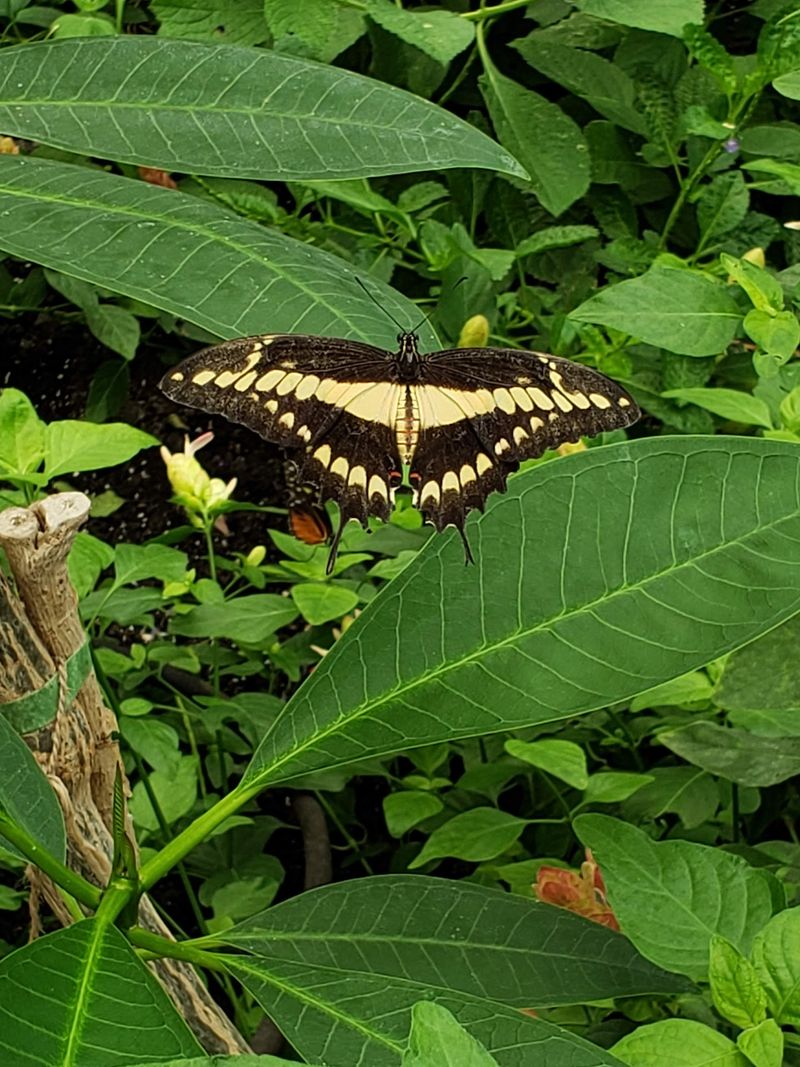
Hundreds of butterflies fly among tropical plants throughout the year. Feeders are placed so guests can study wing patterns up close.
After the butterflies, the ocean takes over. Coral reefs, stingrays, jellyfish, and horseshoe crabs fill the aquarium side.
Families tend to linger at the touch pool. Kids get a rare hands-on meeting with sea creatures far from any coastline.
As a nonprofit, the attraction puts its focus on conservation. School field trips here work like living classrooms, mixing wings and fins in one visit.
14. The Original Mackinac Island Butterfly House & Insect World, Mackinac Island, Michigan
Cars are banned on Mackinac Island, but butterflies get a free pass.
The Original Mackinac Island Butterfly House was the first live butterfly exhibit in Michigan. It also ranks as the third oldest in the United States.
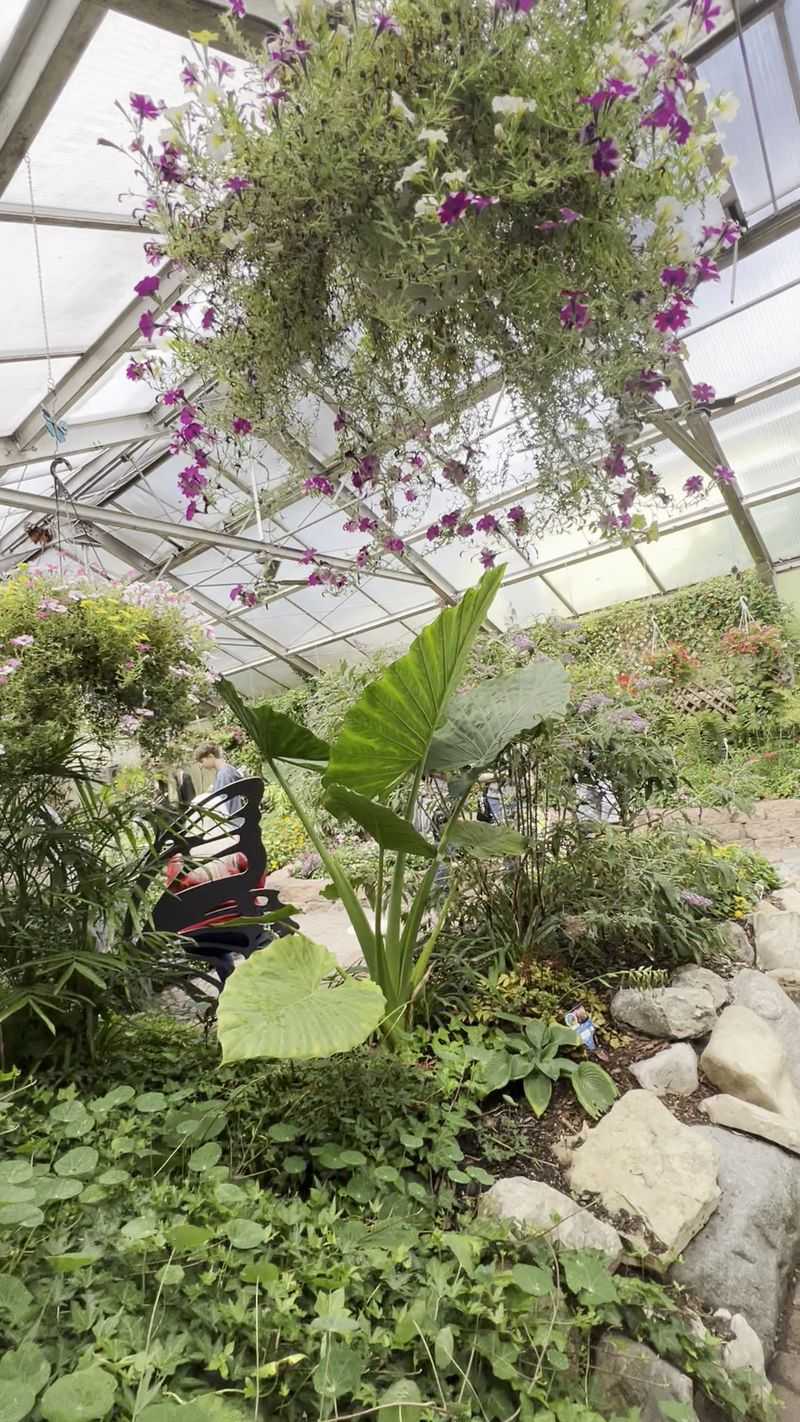
Its 1,800-square-foot tropical garden holds hundreds of butterflies from four continents. A waterfall and classical music keep the setting calm.
Spend a few minutes at the emergence case. Between 300 and 500 chrysalises hang there at all times, so new butterflies appear often.
Insect World, renovated in 2006, shows off 16-inch walking sticks and 6-inch centipedes. It even includes the record-holder for the world’s heaviest bug.
Grab the free butterfly identification chart and try to name what you spot. The attraction runs from mid-May through early October, so plan your island trip accordingly.
15. Wings of Mackinac, Mackinac Island, Michigan
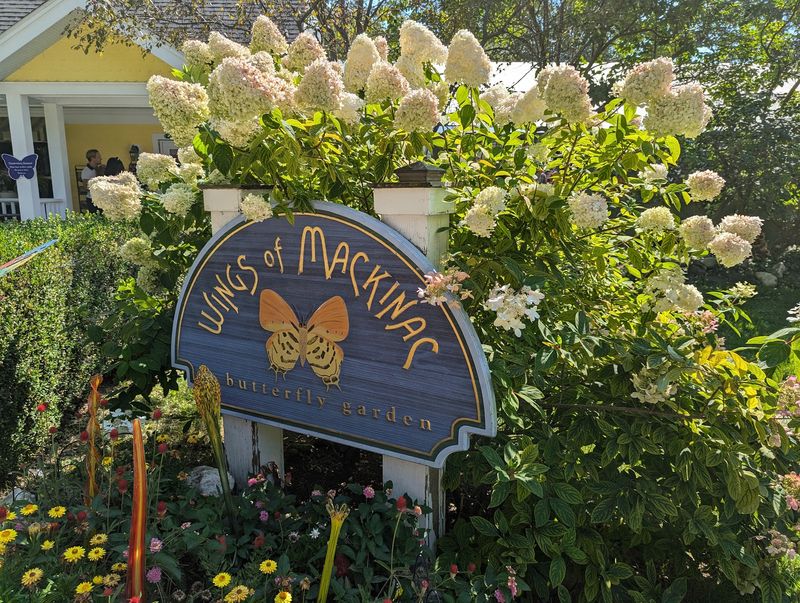
Two butterfly houses on one small island might sound like overkill. Butterfly fans will happily disagree.
Wings of Mackinac sits in the Surrey Hill area, right along the island’s popular carriage tour route. That makes it an easy stop between other sights.
The all-glass greenhouse holds hundreds of free-flying butterflies. Both tropical and native species share the indoor garden.
Its smaller size works in your favor. With fewer crowds, you can study wing details at close range without bumping elbows.
Staff and signs explain where the butterflies come from and how long they live. You can follow the full life cycle, from eggs and caterpillars to pupae and adults.
Wings of Mackinac is open only in the warmer season. Pair it with the Original Butterfly House for a double dose of wings before the ferry ride home.
Share this story