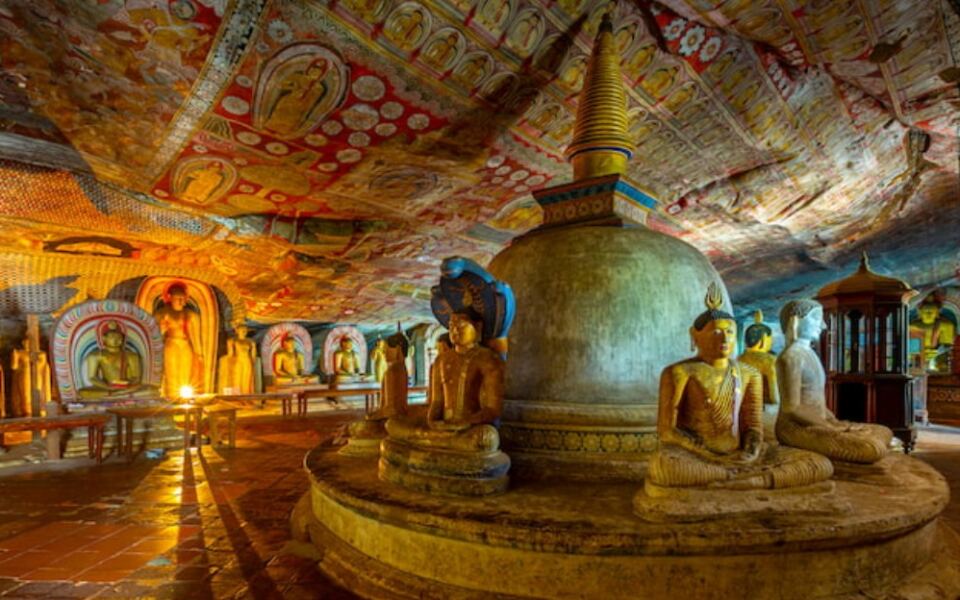
Tucked into a giant rock in central Sri Lanka, Dambulla Cave Temple has welcomed visitors for over 2,000 years. Inside five caves, you will find more than 150 Buddha statues and walls covered in colorful paintings.
It is a UNESCO World Heritage Site, and it still works as a living place of worship. Here are ten things that make it so special.
A King’s Hideout Turned Holy Site
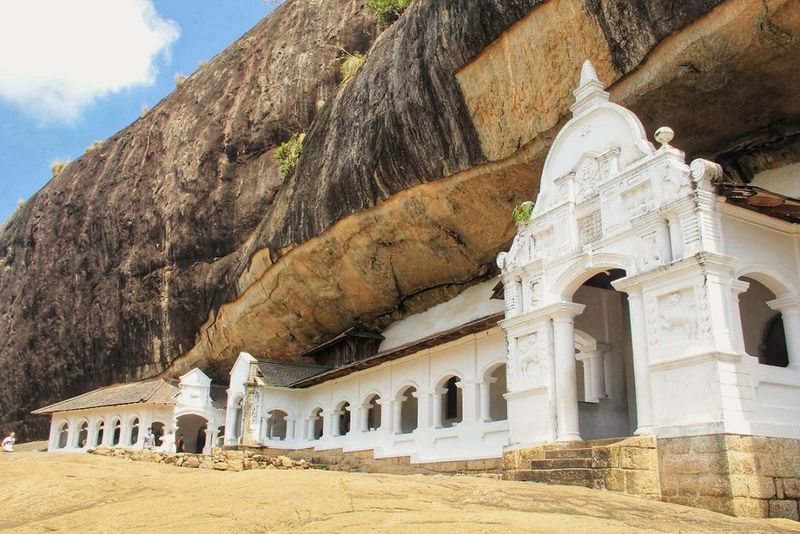
Picture a king on the run, looking for a place to hide. That was King Valagamba in the 1st century BCE, and the caves of Dambulla gave him shelter for years.
When he won back his throne, he did not forget the favor. He turned the rough caves into splendid rock temples as a thank-you to the monks who had protected him.
Monks had actually lived in these caves even before the king arrived. Fresh water, shade, and quiet made the rock a perfect home for meditation, and the place slowly grew into a monastery.
Later rulers kept adding to it. Kings from different eras paid for new paintings, repairs, and statues, so the temple kept growing for centuries.
Today, the story of Valagamba is part of what you see. His statue stands inside the caves, so you can look him in the face and thank him for starting it all.
Not bad for a hiding spot.
Over 22 centuries of continuous worship make this one of the oldest active religious sites on the island. Few places can say they have been busy that long.
Five Caves, Five Personalities
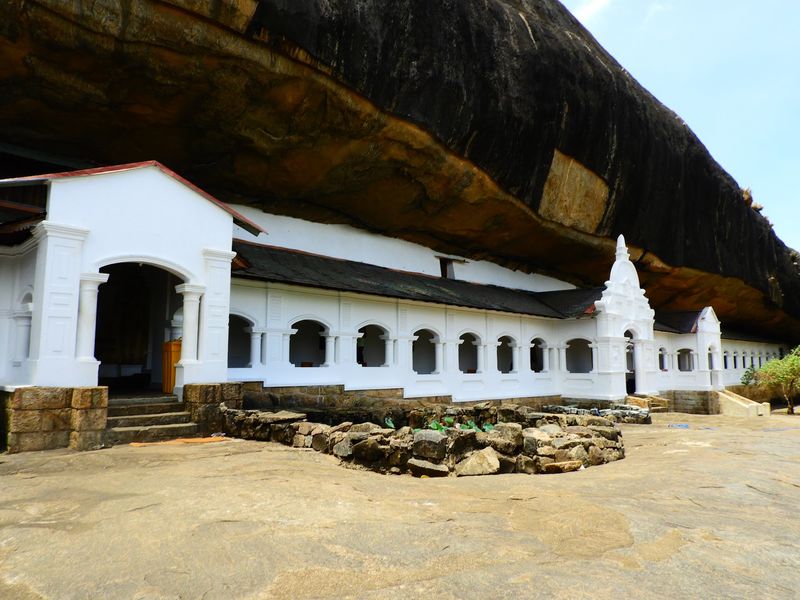
Count them as you go: five caves, each with its own mood. Some are grand and roomy, while others feel snug and secret.
The first is the Cave of the Divine King, home to a giant reclining Buddha carved right from the rock. The second, the Cave of the Great Kings, is the largest and holds dozens of statues.
The third is the Great New Monastery, and its ceiling is packed with painted patterns. The remaining two are smaller, but they hold plenty of treasures.
Each cave was built at a different time, so the styles shift as you walk. You can spot older, simpler work next to richer, later additions.
Take your time in each one. Rushing from door to door means missing the small details, like a tiny painted figure tucked into a corner.
A full visit can be quick, around 40 minutes, but many people end up lingering much longer. The caves have a way of slowing you down.
Over 150 Buddhas and Counting
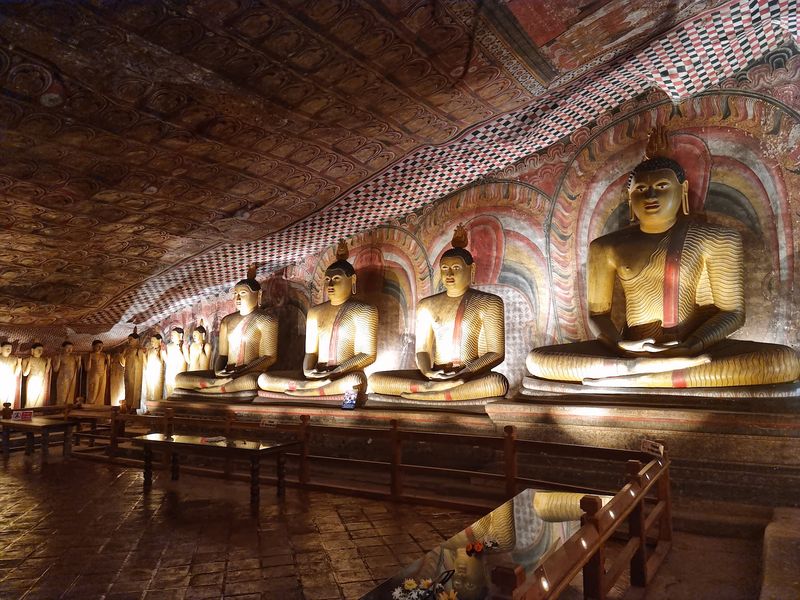
Hundreds of calm faces greet you the moment you step inside. The temple holds about 153 Buddha statues, and no two spots feel the same.
Some Buddhas sit with hands folded in peace. Others stand tall or rest on their sides, and the largest reclining figure stretches around 14 meters long.
Look closely and you will find more than Buddhas. Statues of ancient kings and a few Hindu deities share the space too, showing how beliefs have mingled here over time.
The lamps and soft light make the gold glow warmly. Many visitors say the atmosphere feels hushed and almost magical.
Bring your curiosity and a little patience. Spotting the differences in hand positions and robes is a fun game, and it teaches you a lot about Buddhist art.
Photos are fine in some areas, but always follow the posted rules. Inside, you are guests in a place where people still pray daily.
Ceilings That Steal the Show
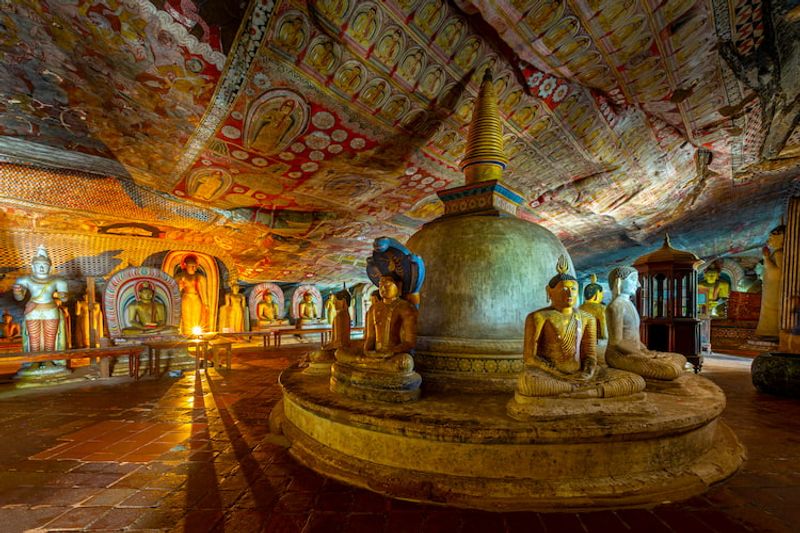
Tilt your head back and prepare to say wow. The ceilings in these caves are covered in swirling murals that spread across the rough rock like a colorful skin.
The paintings show scenes from the life of the Buddha, along with episodes from Sri Lankan history. Rows of tiny Buddha figures repeat across the surface in careful patterns.
Artists have repainted and refreshed these walls many times over the centuries. Much of what you see dates to the 18th century, when Kandyan kings sponsored big restoration work.
The rock itself is uneven, so painters had to shape their designs to fit its curves. That makes the artwork feel like it grew right out of the stone.
Visitors often mention the sheer number of details. One reviewer said it is hard to even begin describing the attention that went into every inch.
Give your neck a break now and then, and bring patience. The longer you look, the more you find.
The Climb Is Part of the Deal
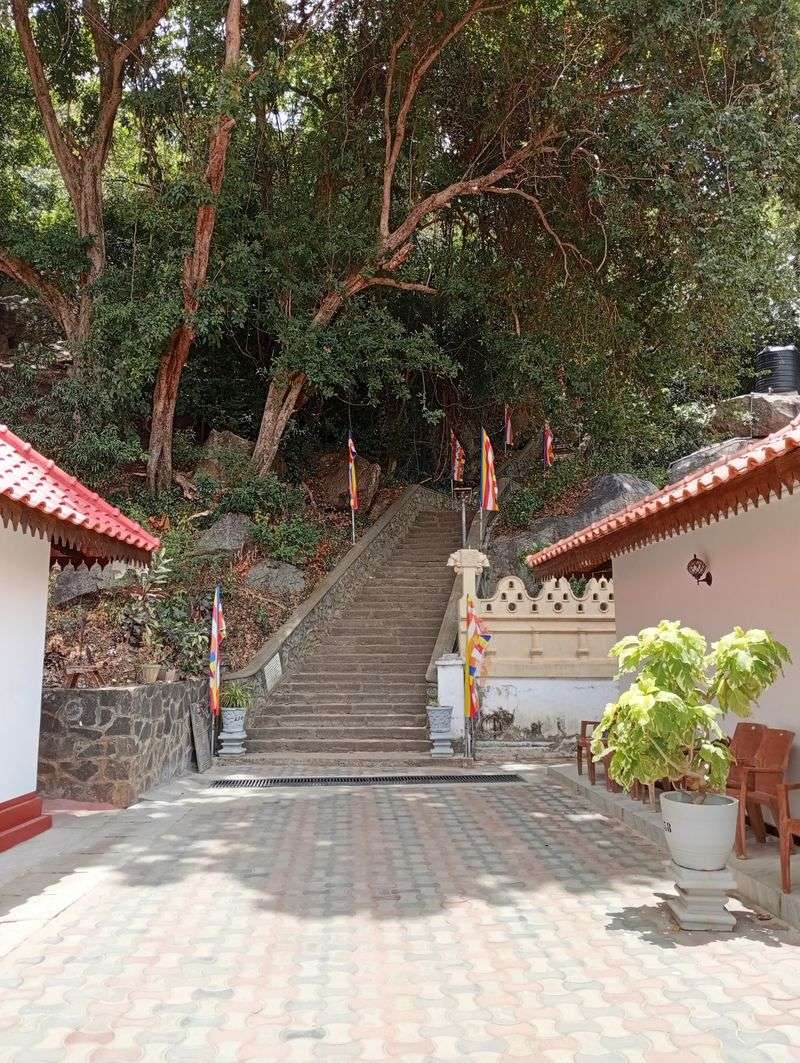
Your legs will know you visited. Reaching the caves means climbing a few hundred stone steps, and reviewers guess anywhere between 300 and 500.
The walk takes about 10 to 15 minutes for most people. It is not extremely steep, but heat and humidity can make it feel longer.
Wear comfy shoes and carry a bottle of water. Go slowly, stop for photos, and enjoy the breeze as you rise above the trees.
One traveler called it a handy practice run before climbing Sigiriya. That is a fair way to think about it, since both sites sit in the Cultural Triangle.
Early morning or late afternoon makes the trip much nicer. The sun is softer, and the stone under your feet is not as scorching.
Along the way, benches and shady spots let you catch your breath. Nobody is racing, so pause whenever you need to.
Tickets: Buy Them at the Bottom
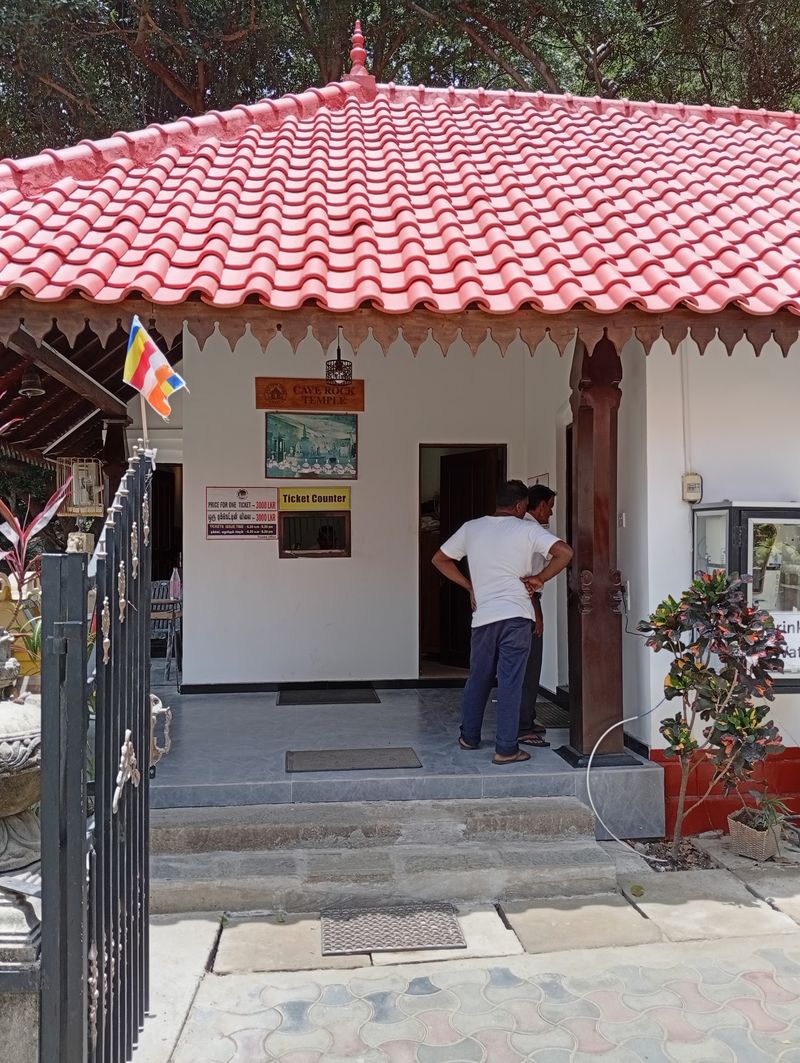
Here is a mistake many visitors make: climbing all the way up without a ticket. Several reviewers warn that the ticket counter sits downhill, not at the cave entrance.
Foreign visitors pay around 3,000 LKR, and children usually enter free. Look for the Dambulla Cave Temple Ticket Office on your map app before you start walking.
The Golden Temple near the main road is a separate sight. Entering through it can lead you up lots of steps with no ticket booth in sight.
If you feel lost, ask a local. People nearby are usually happy to point you toward the right counter.
Buy your ticket first, then enjoy the rest. It saves you from a long, sweaty trek back down.
Keep the ticket handy, since staff may check it at the top. A small bit of planning keeps your day smooth and stress free.
Barefoot Rules and Dress Code
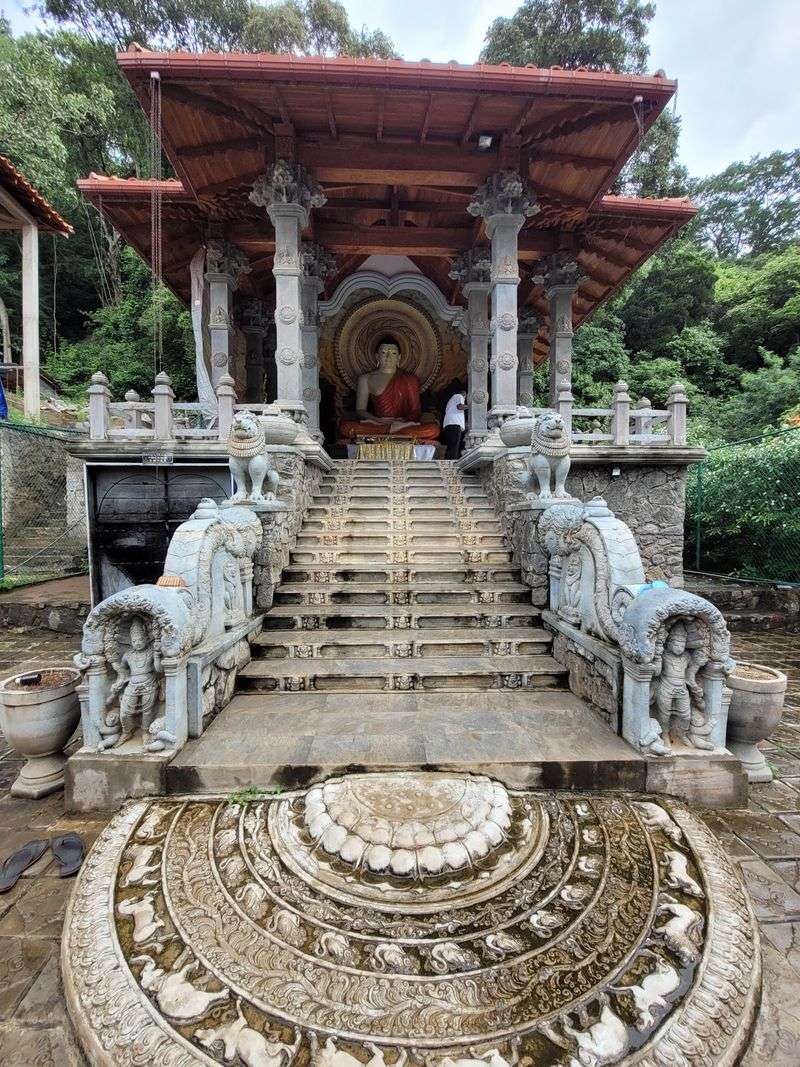
Hot stone, bare feet, and a strict dress code: that is the deal at the cave doors. Shoes come off before you enter, and shoulders and knees must be covered.
The floor can get very hot in the sun. Bring thin socks if allowed, since several visitors say they helped a lot.
Forgot long pants? You can rent a sarong for about 100 rupees.
Shoe storage costs around 50 rupees, though some travelers say helpers outside can be pushy.
A simple trick is to carry a small backpack. Slip your shoes inside before the final stretch and skip any fuss.
These rules are about respect. The caves are an active place of worship, so dressing modestly shows you care.
Wear light, loose clothes that cover your legs. They keep you cool on the climb and ready for the doors.
Monkey Business on the Path
Keep one eye on your snack bag. Monkeys roam the stairs and the temple grounds, and they know exactly what a backpack zipper means.
Most reviewers say the monkeys are harmless and mostly mind their own business. Still, a few have tried to grab food, drinks, and phones.
Do not feed them, and do not walk up and poke at them. Keep your belongings zipped and close to your body.
Kids tend to love spotting them. One family said the resident monkeys were a highlight of the walk.
Avoid holding food out in the open, and finish snacks before you start the climb. A calm, steady walk keeps things peaceful.
Treat them as part of the neighborhood. Give them space, and they will usually return the favor.
Views Worth the Sweat
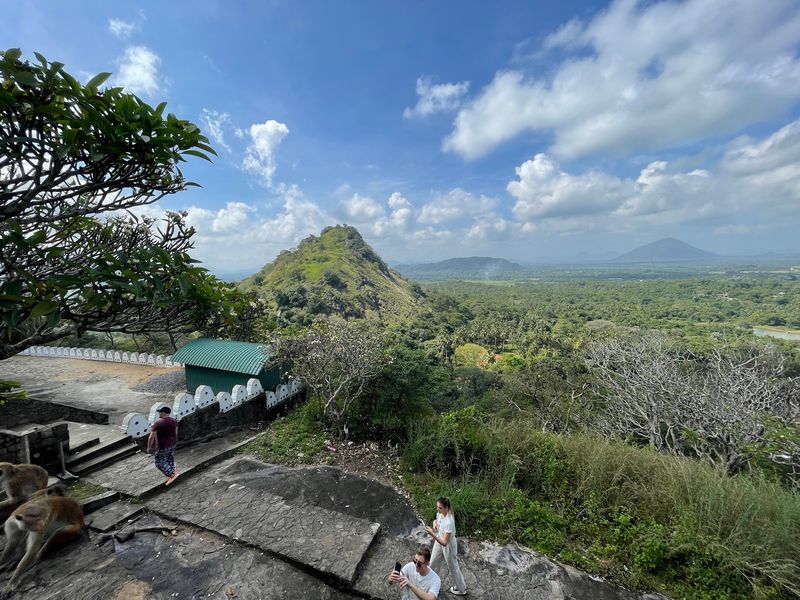
Turn around at the top and the whole countryside opens up. Green plains stretch toward the horizon, with the hills of the Cultural Triangle in the distance.
A cool breeze often waits on the terrace, which feels wonderful after the climb. Many visitors say this moment is when the effort really pays off.
Rock formations, ponds, and treetops all add to the scene. It is a great spot to sit for a minute and simply look.
Photographers love the soft light in the late afternoon. Evening visits are also quieter, and one traveler said the mood feels more relaxing then.
Weekends can get crowded, so a weekday gives you more room. You will have more space to enjoy the view and take your time.
Bring a camera, but also put it down for a bit. Some sights are best remembered with your own eyes.
A UNESCO Star on the Cultural Triangle
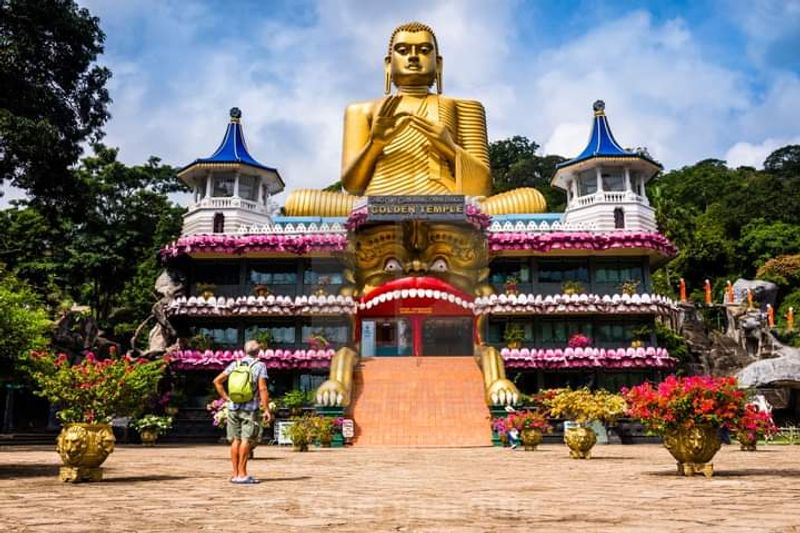
Dambulla earned a UNESCO World Heritage listing, and you can feel why. It is the largest and best preserved cave temple complex in Sri Lanka.
It sits in the Cultural Triangle, right near Sigiriya, Anuradhapura, Polonnaruwa, and Kandy. Sigiriya is only about 25 minutes away by motorbike.
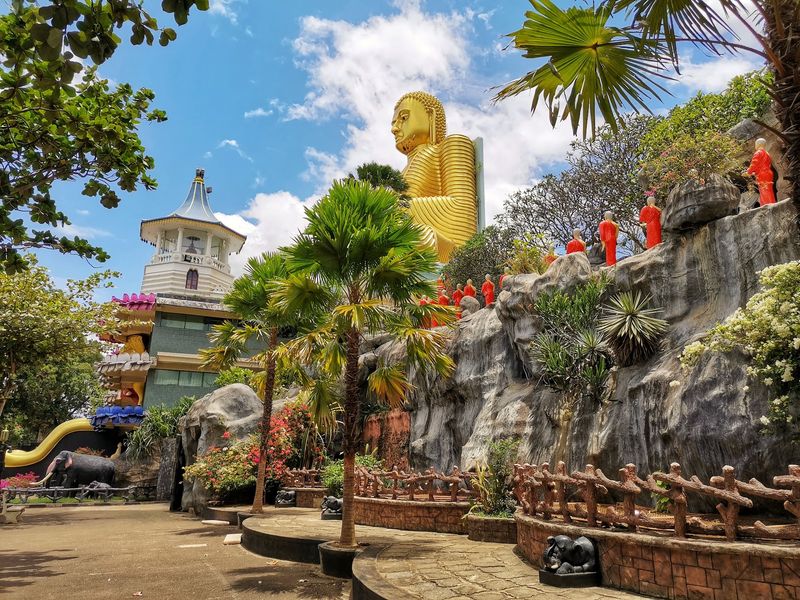
At the base, a giant golden Buddha sits above the Golden Temple museum beside the highway. It makes a bright photo stop before you head up.
Free parking is available near the entrance, and there are clean public toilets and a juice bar. Note that the cave area itself has no toilets.
Plan around two hours if you want to take it slow. Many people add it as a stop on a longer road trip.
Respect the site by carrying out your trash. Locals take pride in keeping this historic place clean.
Share this story