Europe’s ski resorts are about much more than snowy runs. Think cozy villages, giant mountain views, tasty food, and fun evenings after the lifts close.
Some resorts even let you ski from one country into another. Here are 16 places where the slopes are only the beginning.
Val Thorens, France
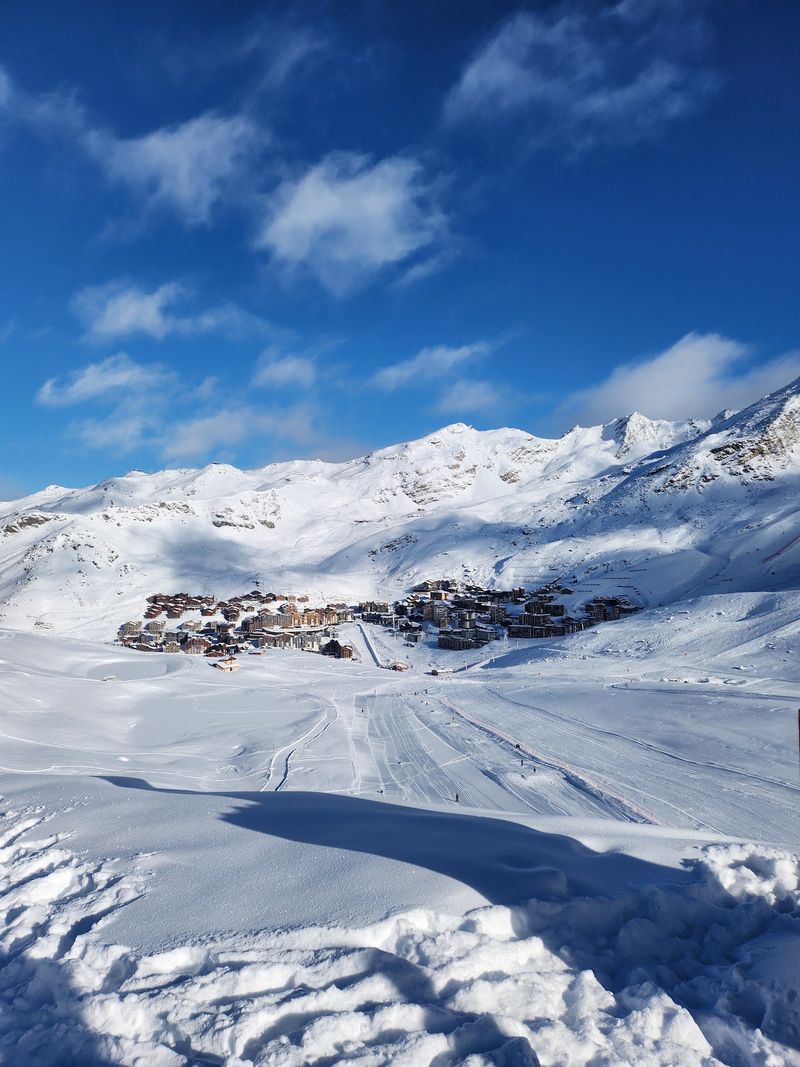
Most ski towns brag about snow. Val Thorens brags about altitude, and it has the numbers to back it up.
Sitting at 2,300 meters, it is the highest resort in Les 3 Vallées, and about 90 percent of its terrain lies above 2,000 meters.
That height means snow sticks around longer. The resort often opens in late November and can run into early May, which gives you plenty of choices for planning a trip.
Val Thorens and nearby Orelle offer around 150 kilometers of skiing on their own.
Better still, the wider Les 3 Vallées network stretches to 600 kilometers of linked slopes. You could ski for a week and never repeat a run.
Ski-in, ski-out lodging means you can clip into your skis right at the front door.
When the lifts stop, the village comes alive. Bars and terraces buzz with music and chatter, and tired skiers swap stories over hot chocolate or something stronger.
Pack warm layers, because the air up here bites, and book lift passes early to save money.
Zermatt, Switzerland
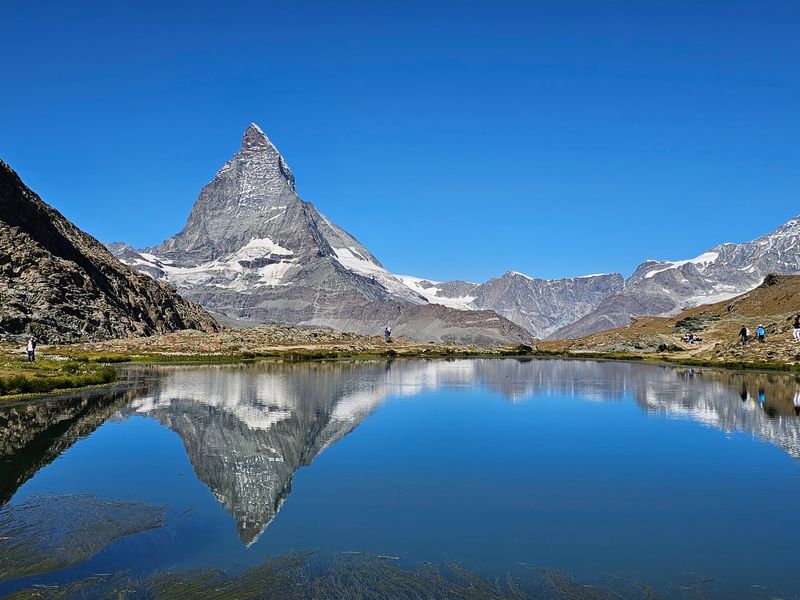
There is a reason the Matterhorn shows up on chocolate wrappers. Its sharp, crooked peak towers over Zermatt, and you will want your camera out from the moment you step off the train.
No cars are allowed in the village, so the air feels crisp and quiet.
Wooden chalets sit beside fancy hotels, and little electric taxis hum along the streets. Lifts carry skiers up to some of the highest terrain in Europe.
Long cruising runs and glacier slopes suit all sorts of skill levels.
Here is the real treat. You can ski across the border into Cervinia and Valtournenche in Italy, so a normal ski day becomes a trip between two countries.
Check the weather and lift times first, since the connection depends on conditions.
Lunch is a highlight too. Mountain restaurants serve cheesy Swiss dishes with views that make the food almost secondary.
Take your time, soak it in, and save a little energy for the ride back down.
Lech Zürs am Arlberg, Austria
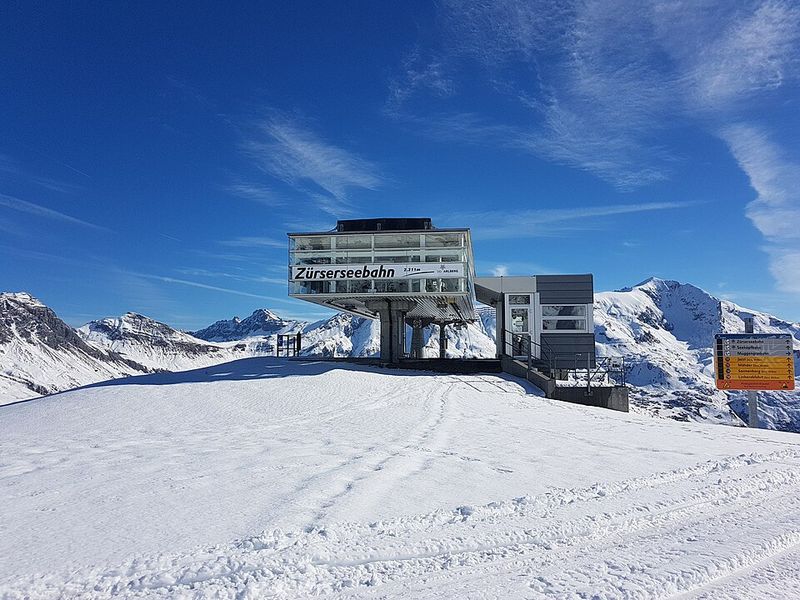
Picture a ski town where the biggest drama is choosing between two excellent restaurants. Lech and Zürs feel polished, calm, and a little bit fancy.
Hotels are elegant, and the mountain dining is some of the best in Austria.
The skiing is serious, though. Ski Arlberg links Lech and Zürs with St. Anton, Warth, and Schröcken, making about 300 kilometers of marked runs.
Add more than 200 kilometers of deep-snow routes, and experts have plenty to chase.
The season is planned from early December to mid April, so there is a long window for good snow. Families and couples like the relaxed vibe, since evenings tend to be more about good dinners than loud parties.
If you want comfort without giving up big terrain, this is a smart pick. Try skiing the whole circuit across a few days, and stop often for a warm drink on a sunny terrace.
Your legs and your taste buds will both be happy.
Courchevel, France
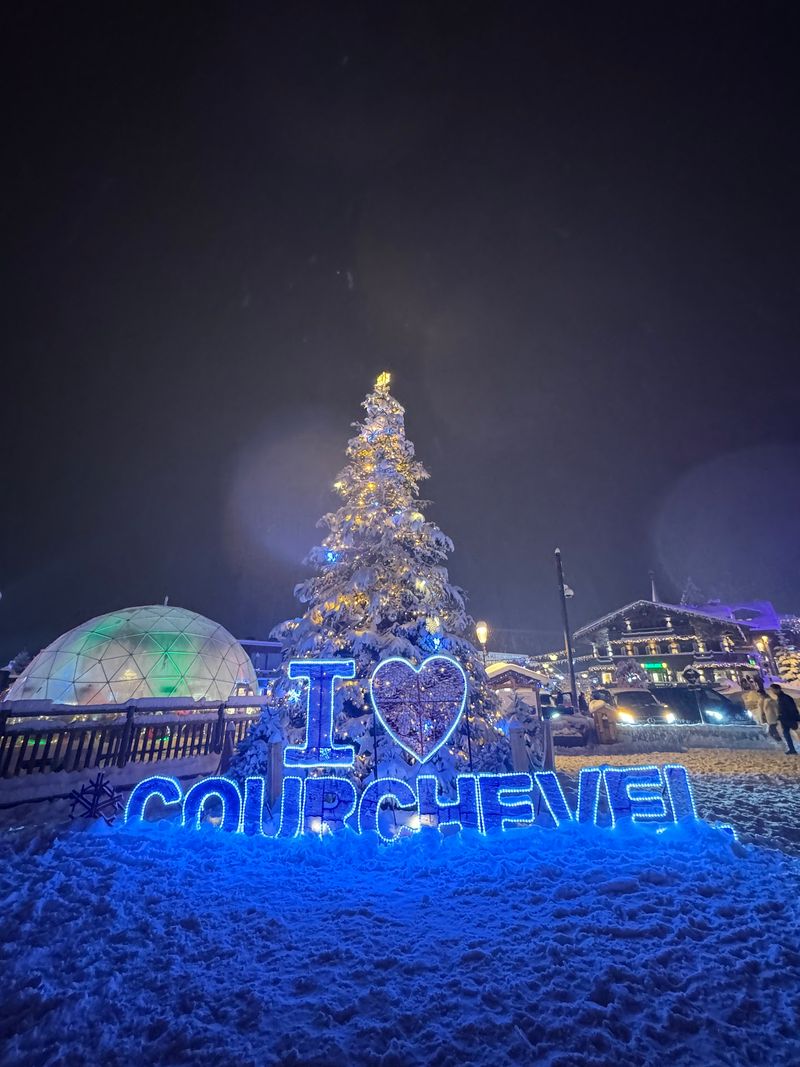
Five-star hotels, Michelin-level dinners, and boutiques full of sparkly things: welcome to Courchevel 1850. It is one of the most glamorous gateways into Les 3 Vallées.
Yet you do not need a giant bank account to enjoy the skiing.
The wider area has about 600 kilometers of slopes and 337 runs, with terrain climbing above 3,200 meters. Courchevel spreads across several villages at different heights, so you can pick a spot that fits your budget and style.
Lower villages are often calmer and cheaper.
Roughly half the runs in Les 3 Vallées are green or blue. That is great news for beginners, families, and relaxed intermediates who want room to roam.
Experts can still find steep and snowy challenges.
The winter season is planned from early December to mid April. Go early in the day to enjoy quiet slopes, then treat yourself to a long lunch.
Even people watching here is a form of entertainment.
Val d’Isère and Tignes, France
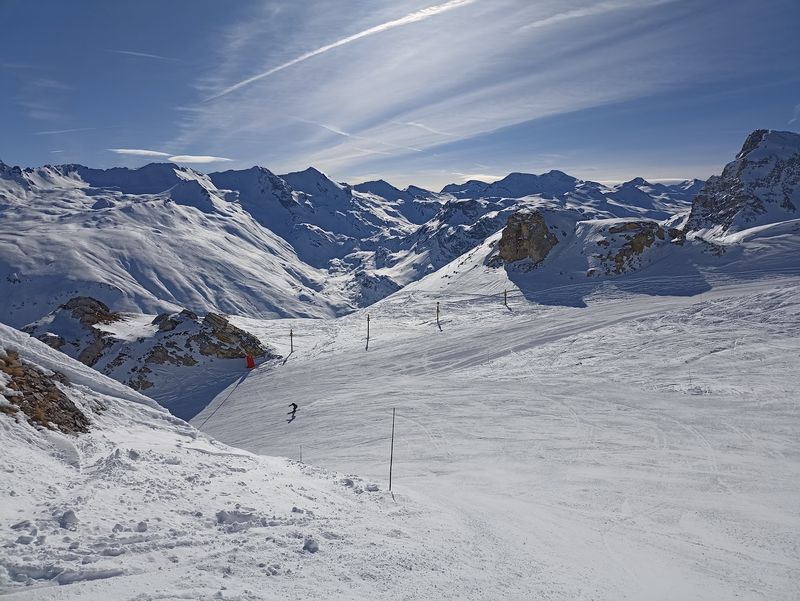
Snow fans circle this place on the map in red ink. The linked Tignes and Val d’Isère area has about 300 kilometers of marked runs and 71 lifts.
Terrain runs from around 1,550 meters up past 3,400 meters.
Two glaciers and lots of slopes above 2,000 meters help keep the snow reliable. Lifts are planned to run from late November into early May.
That is a big stretch of ski time.
Val d’Isère feels like a real mountain village, with stone buildings, cozy bars, and a friendly buzz. Tignes sits higher and puts you close to the lifts, which is handy when you hate early morning walks in ski boots.
Variety is the big win here. You can cruise easy blues in the morning, tackle steeper terrain after lunch, and find off-piste lines if you hire a guide.
Keep a trail map in your pocket, because the area is large enough to confuse even regular visitors.
Verbier, Switzerland
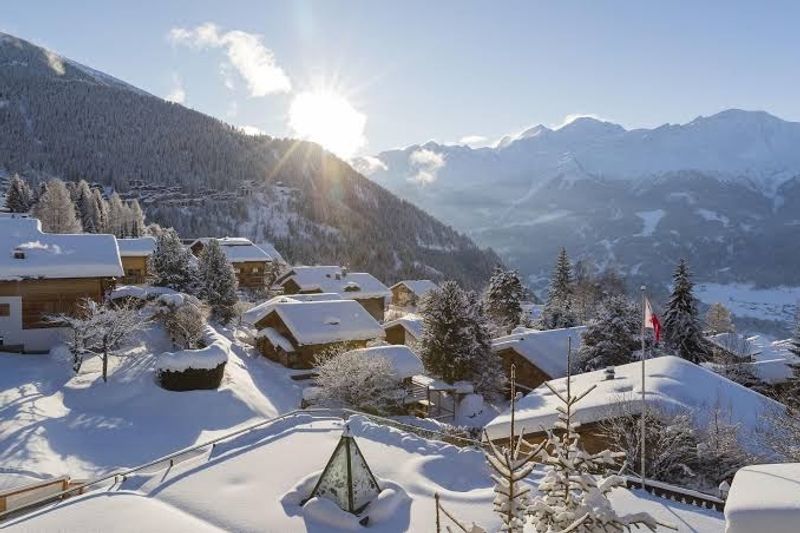
Ask a group of expert skiers where to find steep and snowy fun, and someone will say Verbier. This Swiss village anchors the 4 Vallées network, a giant playground of linked slopes.
It is famous for freeride terrain and wild off-piste routes.
Mont Fort rises above 3,300 meters and rewards you with sweeping views. The descents from the top are demanding, so this is not the place to test brand new skills.
Hire a local guide if you want to explore the deep powder safely.
Down in the village, the mood turns lively and international. Chalet hotels, tasty restaurants, and busy bars fill with visitors from all over the world.
Skiers swap tales of the day while boots thump across wooden floors.
Verbier suits confident skiers who still want a polished resort after the lifts close. Check avalanche reports every morning, and carry the right safety gear if you leave the groomed runs.
Smart choices keep the adventure fun.
St. Moritz, Switzerland
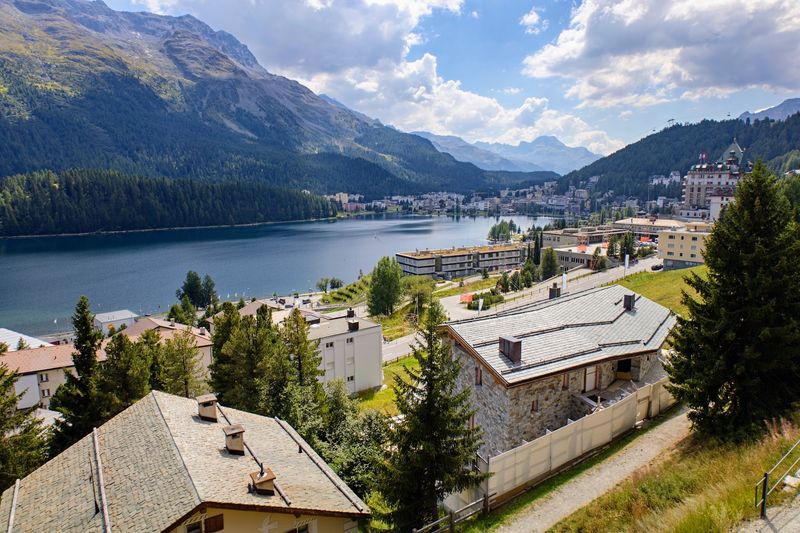
Winter tourism in the Alps pretty much started here more than 150 years ago. St. Moritz still wears that history with pride.
Grand hotels line the hillside, and the frozen lake hosts events that look like scenes from a movie.
The main Corviglia area offers 155 kilometers of prepared pistes served by 24 lifts. You can ski up to Piz Nair at 3,057 meters and look out over the whole Engadine valley.
On sunny days, the light on the snow is almost blinding.
Variety is easy to find in the wider Upper Engadine. Corvatsch, Diavolezza, and Lagalb add different slopes and moods, so you can switch things up during a long stay.
Food is a big part of the fun. Gourmet restaurants and cozy mountain huts both pull in hungry skiers.
Bring sunglasses, sunscreen, and a little patience, since this is a place where people love to linger over coffee and cake.
Kitzbühel, Austria
Racers fear the Streif. Everyone else just admires it from a safe distance.
This legendary downhill course gives Kitzbühel a reputation known across the ski world.
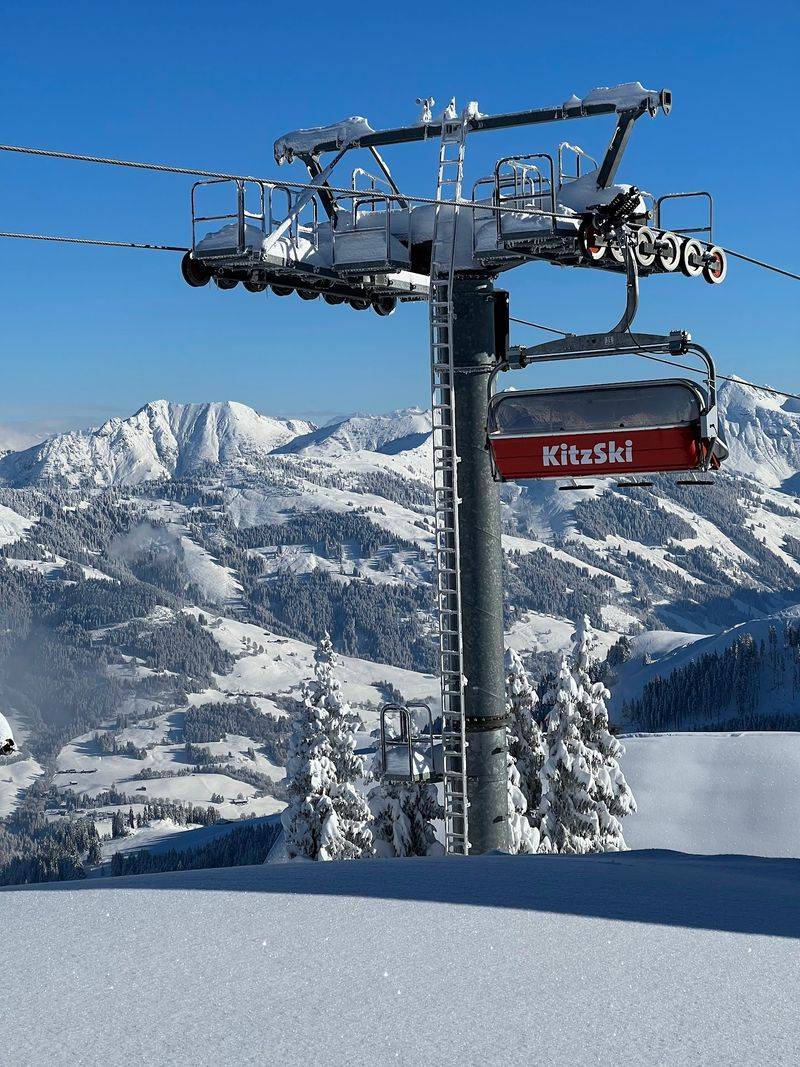
Most visitors stick to friendlier terrain, and there is plenty of it. KitzSki covers around 233 kilometers of runs and 58 lifts, spread over Hahnenkamm, Jochberg, Pass Thurn, and more.
Red and blue pistes are easy to find.
About 40 mountain restaurants and huts add cozy Tyrolean charm. Order a hearty bowl of soup or a sweet pancake, and watch skiers wander past the window.
Wooden beams and warm stoves make it hard to leave.
What sets Kitzbühel apart is the town itself. It is a medieval place with painted buildings, shops, and cafes, not a resort built just for skiers.
Evenings feel just as good as days, so leave time to stroll the streets once the lifts shut down.
Ischgl, Austria
When the lifts close, the music turns up. Ischgl is famous for lively nights and big seasonal concerts, and its reputation for après-ski is as large as its mountains.
Still, the skiing deserves its own spotlight.
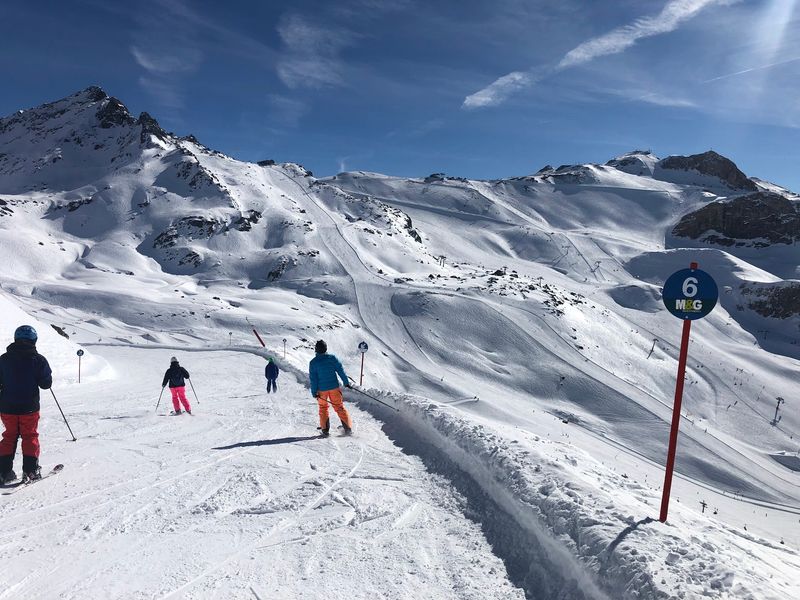
The Silvretta Arena links Austria with Samnaun in Switzerland. Together they offer 239 kilometers of groomed slopes between roughly 1,377 and 2,872 meters.
Forty-six lifts move skiers around quickly, so you spend more time sliding and less time waiting.
The 2026-2027 season is planned from late November to early May. Good snow tends to hold up, which makes it a solid choice for early or late trips.
Advanced skiers and confident intermediates will enjoy it most.
Skiing across a border is a fun bonus. You can pop into Switzerland for lunch and be back in Austria by afternoon.
Save some energy for the evening, because the party starts earlier than you might guess.
Chamonix-Mont-Blanc, France
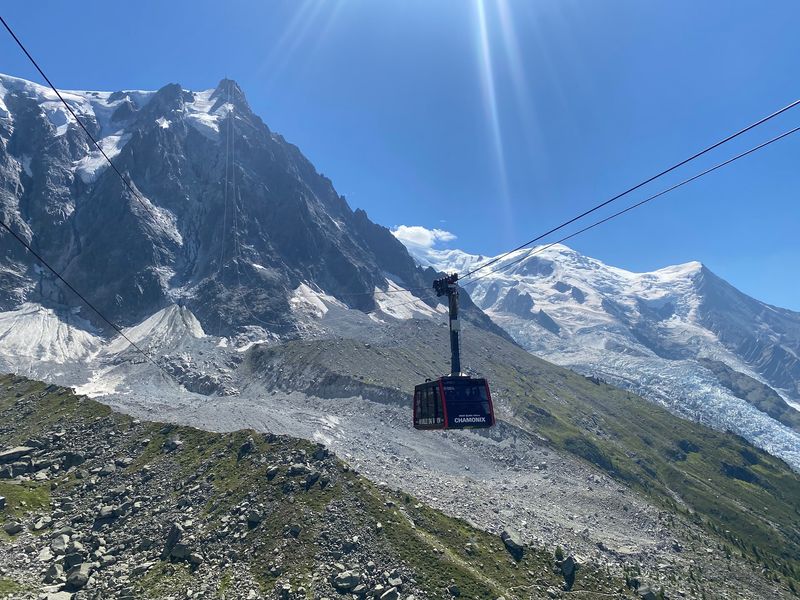
Stand in Chamonix and look up. Mont Blanc towers over everything, and the whole valley feels like the start of an adventure.
This place is less a single resort and more a legendary mountain valley.
Several ski areas share the valley, including Grands Montets, Brévent-Flégère, Balme, and Les Houches. Skiing ranges from about 1,035 to 3,300 meters.
Expert skiers come for steep slopes and the famous Vallée Blanche.
Do not worry if you are new to the sport. Beginners have learning areas lower in the valley, so everyone can find a spot.
Just be honest about your level before riding any big cable car.
Chamonix has a strong climbing and freeride culture, and you can feel it in the shops and cafes. People wander past carrying ropes and skis like it is nothing.
Visit on a clear day for the best views, and ask locals for tips on where to eat after skiing.
Saalbach Hinterglemm Leogang Fieberbrunn, Austria
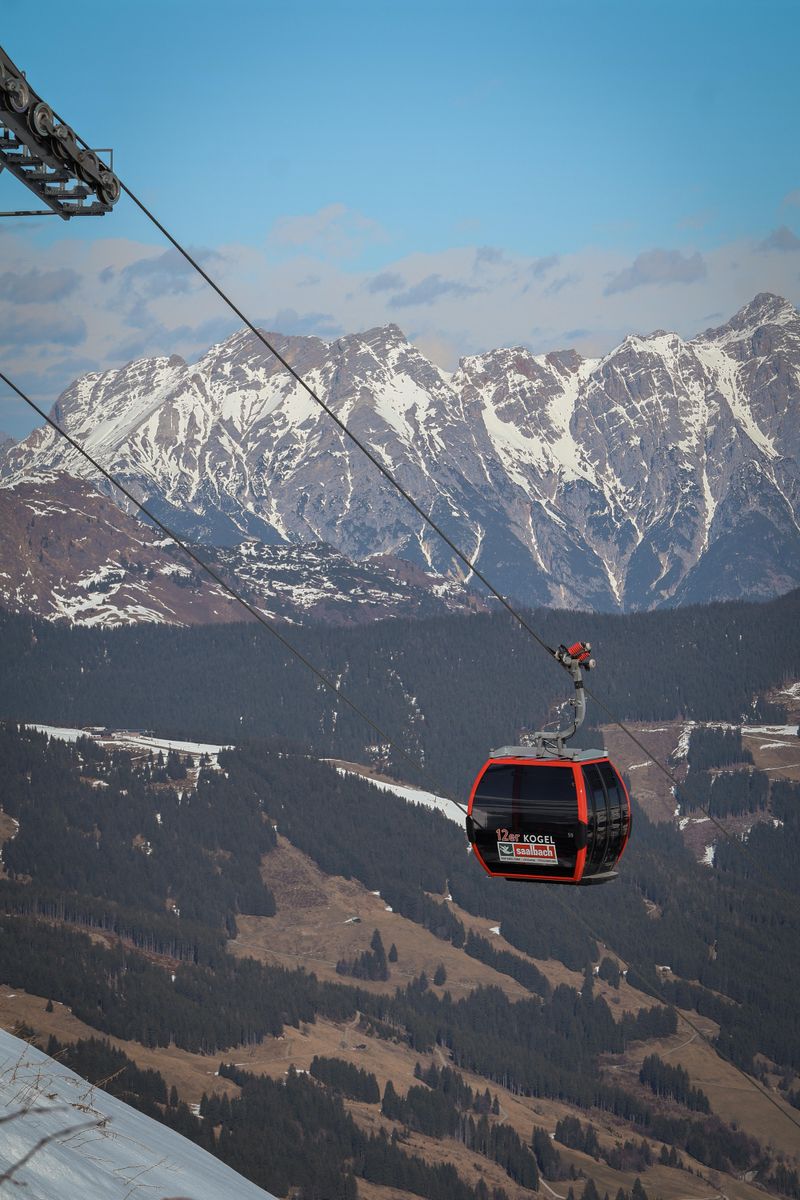
Some ski areas make you backtrack. Skicircus Saalbach Hinterglemm Leogang Fieberbrunn lets you keep moving.
With 270 kilometers of slopes and 70 lifts, you can roam between villages all day.
The mix of runs is friendly: about 140 kilometers are blue, 112 are red, and 18 are black. That balance works well for groups with different abilities.
Nobody has to sit out, and nobody gets bored.
Fieberbrunn brings a strong freeride reputation to the party. Saalbach and Hinterglemm are known for lively mountain huts and fun après-ski.
You can sip something warm on a sunny deck while music drifts across the snow.
If you want even more, the Ski ALPIN CARD stretches access to as much as 408 kilometers of slopes in neighboring areas. Pick a different village each day for lunch, and you will feel like you visited a few resorts in one trip.
Cortina d’Ampezzo, Italy
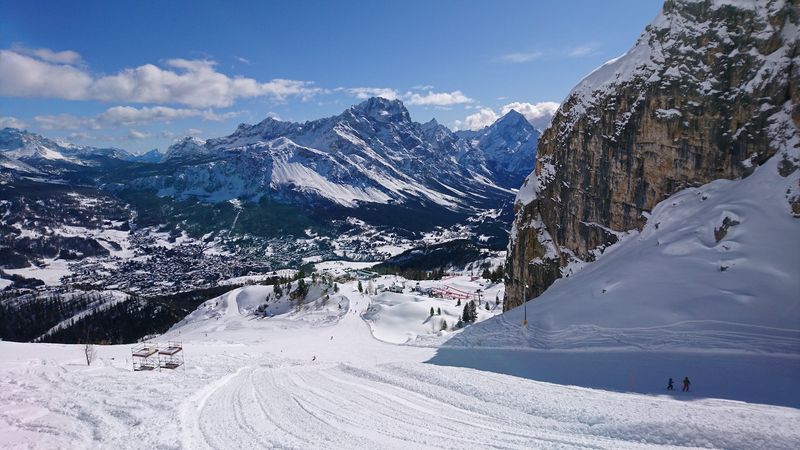
At sunset, the Dolomites blush pink and orange, and Cortina looks like a painting. Jagged cliffs surround the valley and make every ski run feel scenic.
Even a coffee break comes with a view.
The local ski area has roughly 120 kilometers of slopes. Cortina is also part of Dolomiti Superski, a huge network of resorts across northeastern Italy.
That gives you loads of options if you want to explore beyond the town.
Italian style shows up everywhere. Boutiques, restaurants, and elegant hotels line the center, and locals stroll the main street in smart winter coats.
Dinner is a proper event, often with pasta, wine, and long conversation.
Cortina suits travelers who care about atmosphere as much as vertical meters. Give yourself time to wander between ski sessions.
Bring a camera, because the light changes by the hour, and each shot looks a little different.
Breuil-Cervinia, Italy
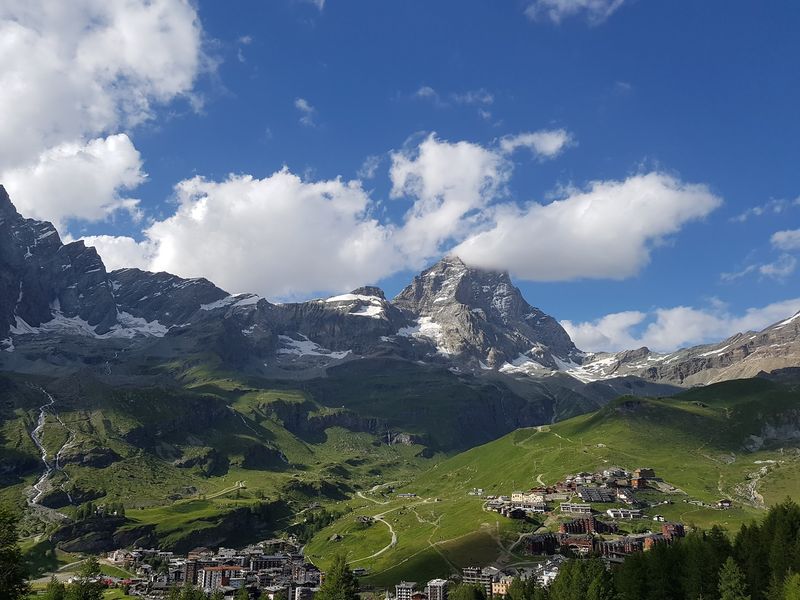
Long lunches and sunny terraces are practically a rule here. Cervinia sits under the Italian face of the Matterhorn and offers some of the highest skiing in the Alps.
The mood is relaxed, friendly, and a bit less formal than Zermatt.
The 2026-2027 season is planned from late October to early May. That is an exceptionally long winter window.
High altitude helps snow last well into spring.
Wide, long cruising runs are the star of the show. They suit intermediates who love to carve big, easy turns.
Beginners can find gentle slopes too.
Here is a fun perk. A lift link with Zermatt lets you ski into Switzerland when the weather and operating conditions allow.
Pack your passport, just in case, and enjoy a cappuccino with a Matterhorn view before heading across the border.
Sestriere and Via Lattea, Italy
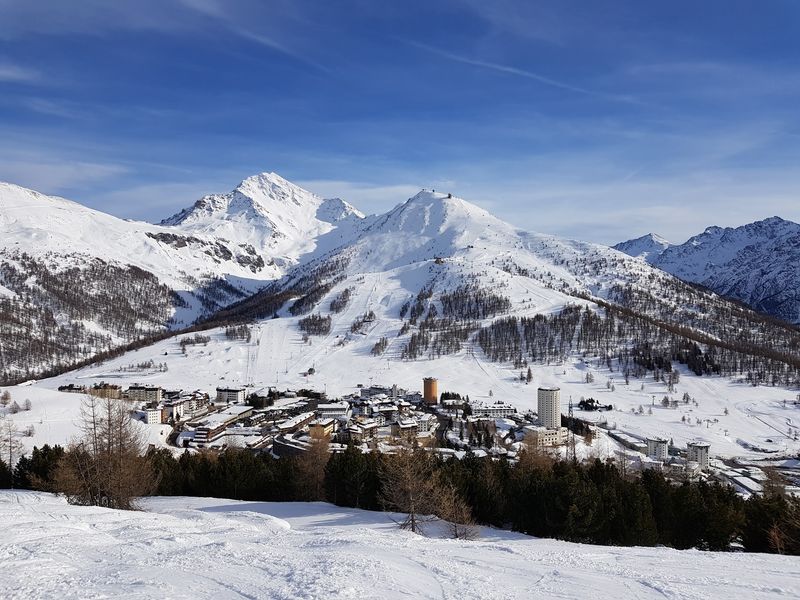
Value hunters, take note. The Via Lattea, or Milky Way, is a huge ski network that crosses Italian and French valleys.
Sestriere sits at its high-altitude heart.
Long, linked runs reach toward Sauze d’Oulx, Sansicario, Claviere, and Montgenèvre. That gives strong intermediates days of exploring without repeating a slope.
High elevations also help keep snow in good shape.
Sestriere grew famous through Olympic competition. The village is purpose-built, so it is more about practical lodging and big terrain than old-world charm.
If you want to ski a lot, that is a fair trade.
Compared with some fashionable Alpine resorts, prices can feel friendlier for the amount of terrain on offer. Your budget may stretch further here, leaving extra for hearty Italian meals.
Try crossing into France for a day, and you will see why the Milky Way earned its name.
Bansko, Bulgaria
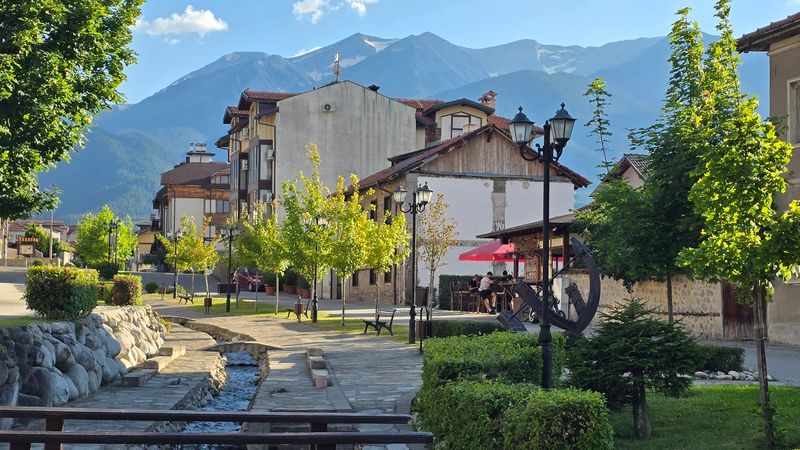
Cobblestones, stone houses, and a gondola heading into the Pirin Mountains: Bansko mixes old and new in a surprising way. It gives Eastern Europe a proud place on the ski map.
Long pistes wind down through alpine terrain and forest.
Bansko cannot match Les 3 Vallées or Ski Arlberg for size. What it offers instead is a lively mix of skiing, nightlife, and low prices.
Rooms and meals often cost much less than in Switzerland or France.
That value draws visitors from around the world. Many come for a full ski holiday without watching every euro.
You can spend the savings on lessons or an extra day of lift passes.
The old town is the secret weapon. Traditional taverns serve local dishes in cozy rooms with wooden beams, and the streets have real character.
Try a clay pot stew after a day on the snow, and you will see why people return.
Les Arcs, France
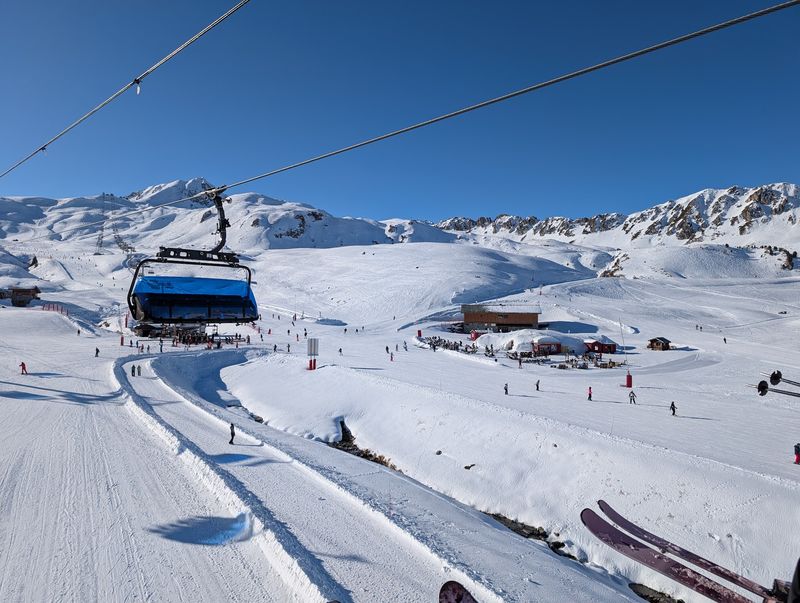
Ever wanted to ski one day and reach a village by cable car the next? Les Arcs makes that easy.
Part of the Paradiski area, it links with La Plagne through the Vanoise Express, a double-decker cable car that spans a deep valley.
Several villages sit at different heights, each with its own feel. Arc 1950 has a pedestrian-friendly center with shops and restaurants.
Higher spots give quick access to the snow, while lower ones are quieter.
Skiing suits all levels, with long cruising runs and some steep sections for thrill seekers. Families like the clear layout and plentiful beginner areas.
Clear days bring views toward Mont Blanc.
Plan a day for the Vanoise Express and wander across to La Plagne for lunch. Check lift closing times before heading back.
Les Arcs rewards people who like variety and a bit of exploration.
Share this story