A road trip does not need a long route to earn a stop. In New Jersey, an ordinary-looking drive can lead to a covered bridge that has stood through changes in the road and the community around it.
Come curious, and maybe a little hungry for a different kind of day trip: this one is about slowing down for a small piece of local history. The bridge is still part of an active road, so the best visit starts with knowing what to look for and how to do it safely.
A Covered Bridge Near Sergeantsville
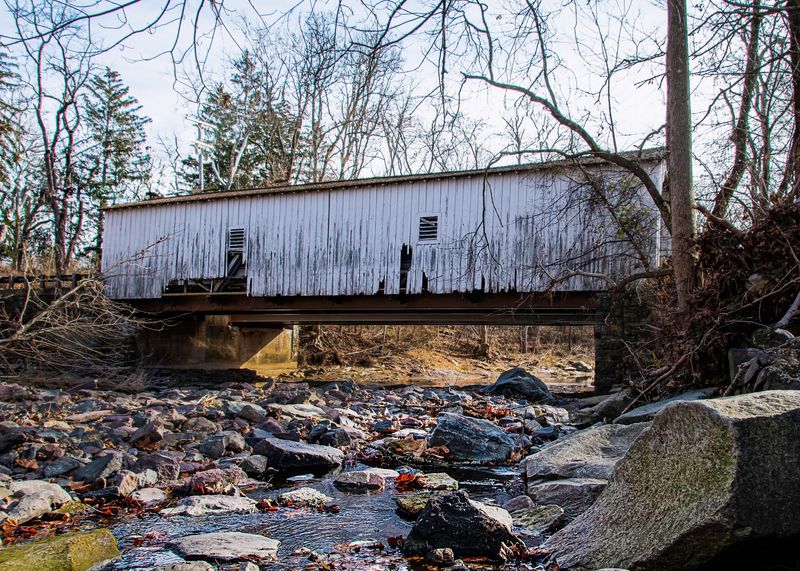
The address looks like a simple point on a driving route, but 707 Rosemont Ringoes Rd, Stockton, NJ 08559, United States, leads to Green Sergeant Covered Bridge. The historic crossing sits down the hill from Sergeantsville and spans Wickecheoke Creek.
That location matters because the bridge is not a display set apart from daily life. It remains beside an active road, with another crossing nearby, so the trip feels more like finding a piece of history in use than entering a museum.
People come for the covered structure, the creek setting, and the roads that lead to it.
Keep expectations suited to the place. This is a focused stop rather than a large attraction with a long list of facilities.
Its appeal comes from how much local character fits into one crossing. The address gets a driver there; the bridge gives a good reason to pause, take care around traffic, and pay attention to a corner of New Jersey that is easy to overlook.
A Story Reaching Back to 1872
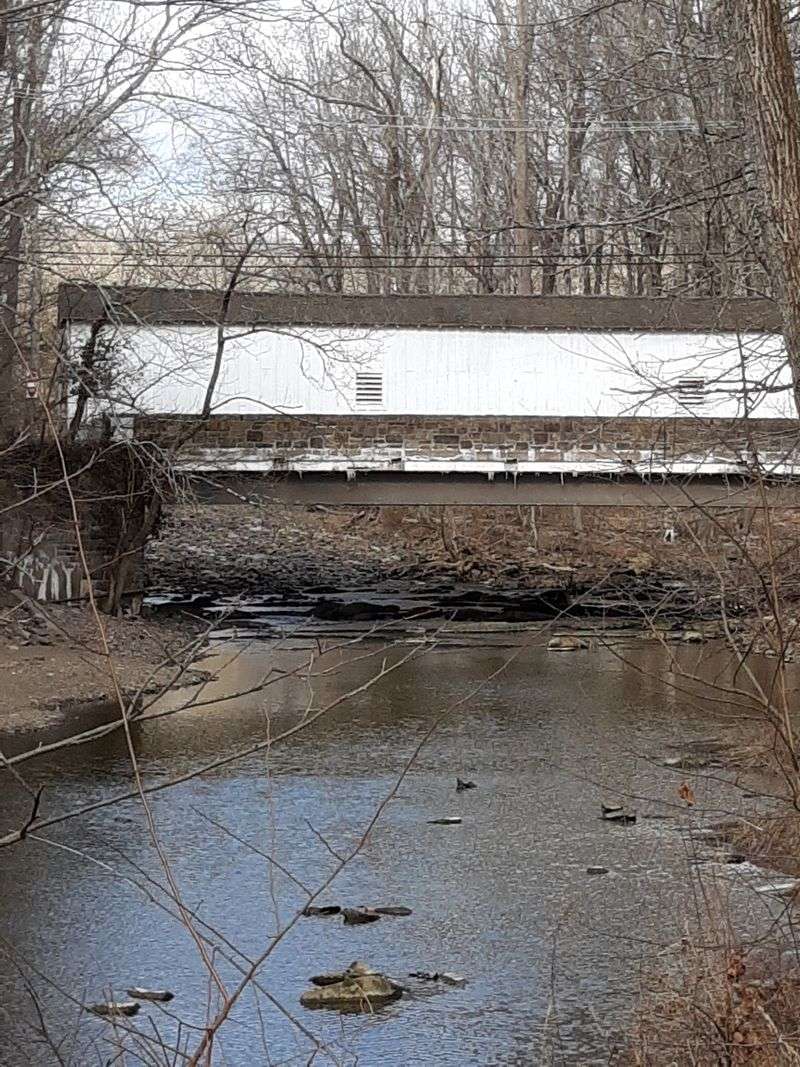
A date can change the way a roadside stop feels. Accounts of Green Sergeant Covered Bridge place its construction in 1872, making the wooden crossing part of a story that reaches well beyond the current road layout.
One account also describes stone abutments associated with an earlier crossing. That detail gives the site another layer: even before the covered bridge, this was a useful place to cross the creek.
The bridge is interesting not simply because it is old, but because its location continued to matter as transportation changed around it.
There is no need to invent a grand scene from the past to appreciate that history. A short visit offers a direct look at a structure tied to a specific year, a specific waterway, and a long-used crossing point.
For New Jersey day-trippers, 1872 is a helpful starting point. It turns an easy drive into a chance to notice how an ordinary route can carry an unusually long local story.
The Community Behind the Crossing
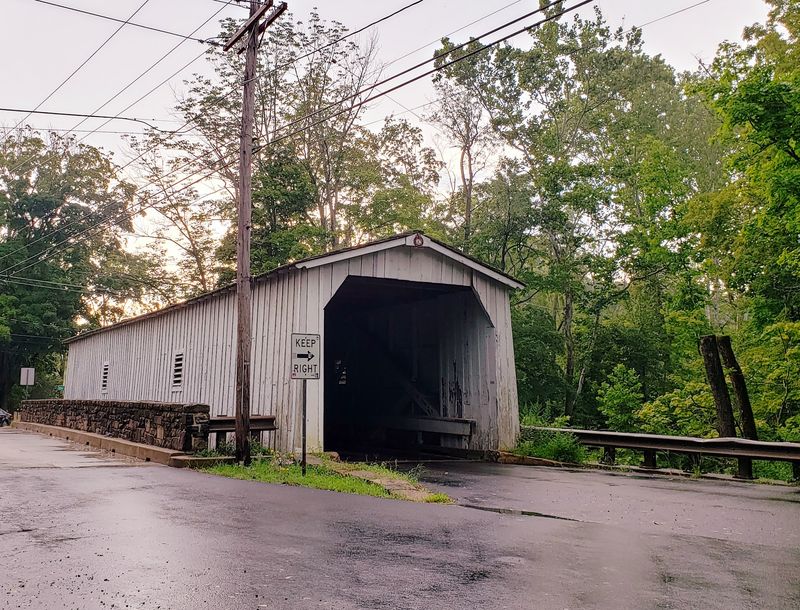
Old buildings do not stay relevant on age alone. A local account describes community members pushing to keep Green Sergeant Covered Bridge when its future was uncertain, a reminder that preservation often depends on people close to a place.
That story fits the bridge particularly well. It is not tucked inside a collection or separated from its original purpose.
It remains part of a crossing that local drivers can encounter in the course of an ordinary day. The community connection helps explain why a modest wooden structure can mean more than a convenient route over a creek.
Details of that effort are limited in the available information, so it would be unfair to assign names, dates, or a neat sequence of events. The useful takeaway is simpler.
The bridge has been cared about enough to remain a recognizable local landmark. A photograph records its shape, but knowing that people valued its place in the area gives the stop a more lasting point.
Woodwork With an Unusual Design
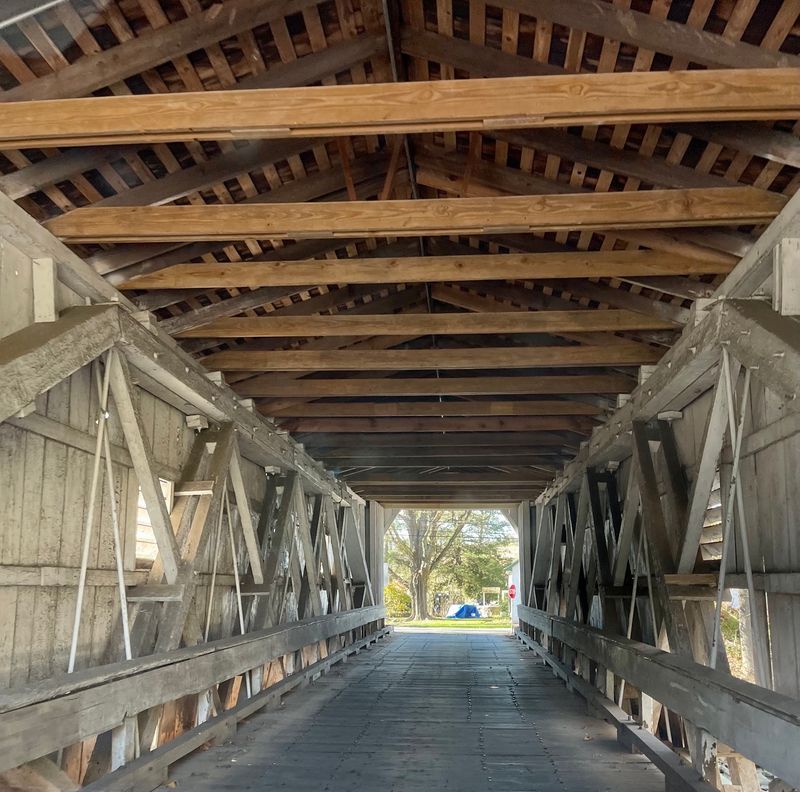
Look past the familiar covered outline, and the bridge offers a second reason to linger. A detailed account describes its truss as a heavily modified queenpost design, with changes that make it less straightforward than the name suggests.
Most people do not need an engineering diagram to enjoy that detail. It simply means the structure deserves a closer look as a piece of practical design, not just as a familiar subject for a photograph.
Wood framing, covered sides, and the span itself all contribute to its identity. The structure had to serve a real crossing, and its form reflects that job.
The available account also raises a possible connection to ideas from another truss type, but that interpretation is not certain. Treat it as an invitation to notice the construction rather than a settled label.
Even without technical expertise, a person can leave with a better question than the usual one about age: how did builders make this particular bridge work?
Wickecheoke Creek Beneath the Span
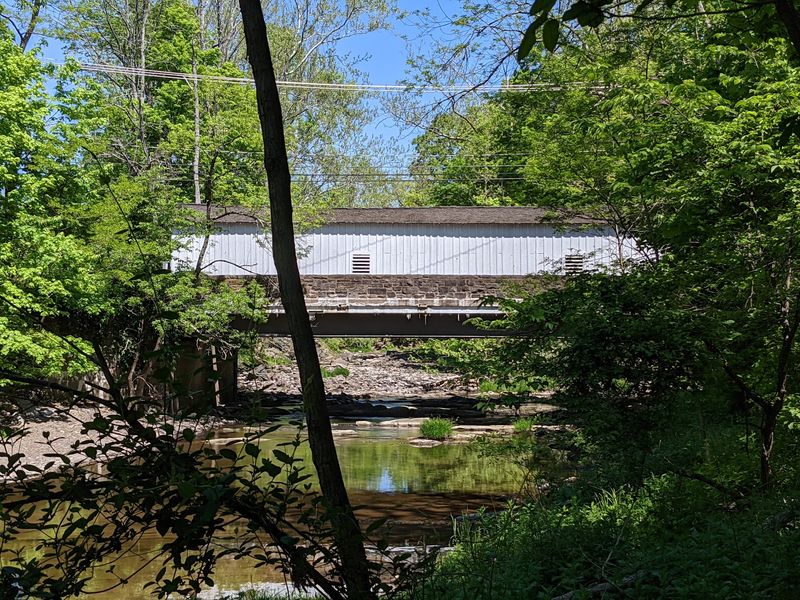
Wickecheoke Creek is easy to treat as background until its role becomes clear. The covered bridge crosses it, and the waterway is the reason this particular spot needed a bridge in the first place.
That connection makes the setting more interesting than a standalone roadside structure. The span, the creek, and the road belong to the same small geography.
Accounts of the place also mention greenery and nature around the crossing, which helps explain why people choose to stop for photographs instead of merely driving through. There is enough context here to make an image about a place, not just an object.
Still, the creek does not turn the roadside into a promised recreation area. The supplied information does not establish a trail, viewing platform, or designated waterside access at the bridge.
Keep the visit centered on public areas that are safe and available. The most useful observation may be the simplest one: this local landmark makes sense because of the creek below it.
Two Crossings, Two Road Roles
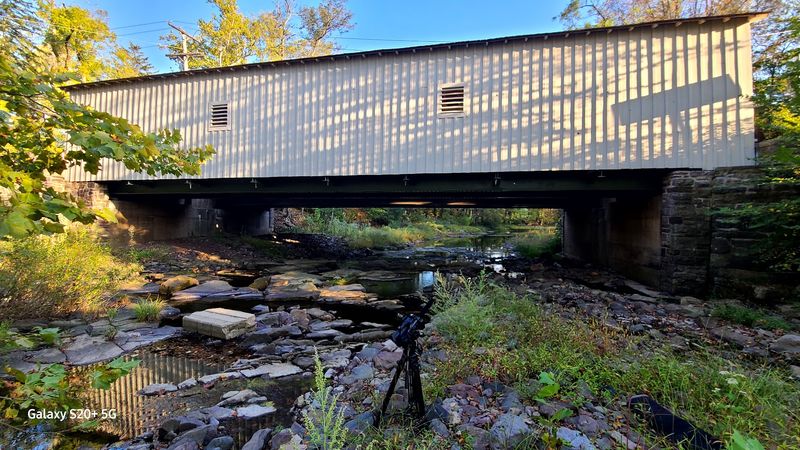
Here is the detail that keeps the bridge from feeling frozen in time: another bridge stands beside it. Accounts describe the covered crossing carrying traffic in one direction, while the neighboring open bridge serves the opposite direction.
Seeing the two together helps explain the road arrangement. The older structure remains part of the experience, but it does not have to handle both directions of traffic on its own.
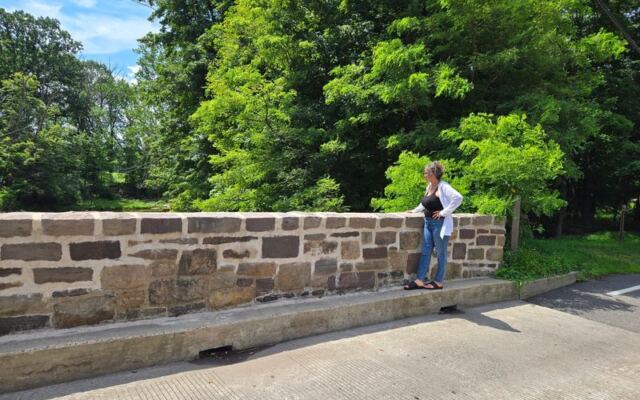
For drivers, that means this is a functioning crossing, not a place to stop in the lane and study the timberwork. For anyone hoping to photograph it, the adjacent bridge is part of the real scene rather than something to crop out automatically.
The pairing also says something useful about local history. A road can change to meet current needs without making every earlier feature disappear.
At Green Sergeant, the contrast is right there at the creek. Allow traffic to move normally, and save any closer look for a safe place away from the roadway.
A Drive That Rewards Slowing Down
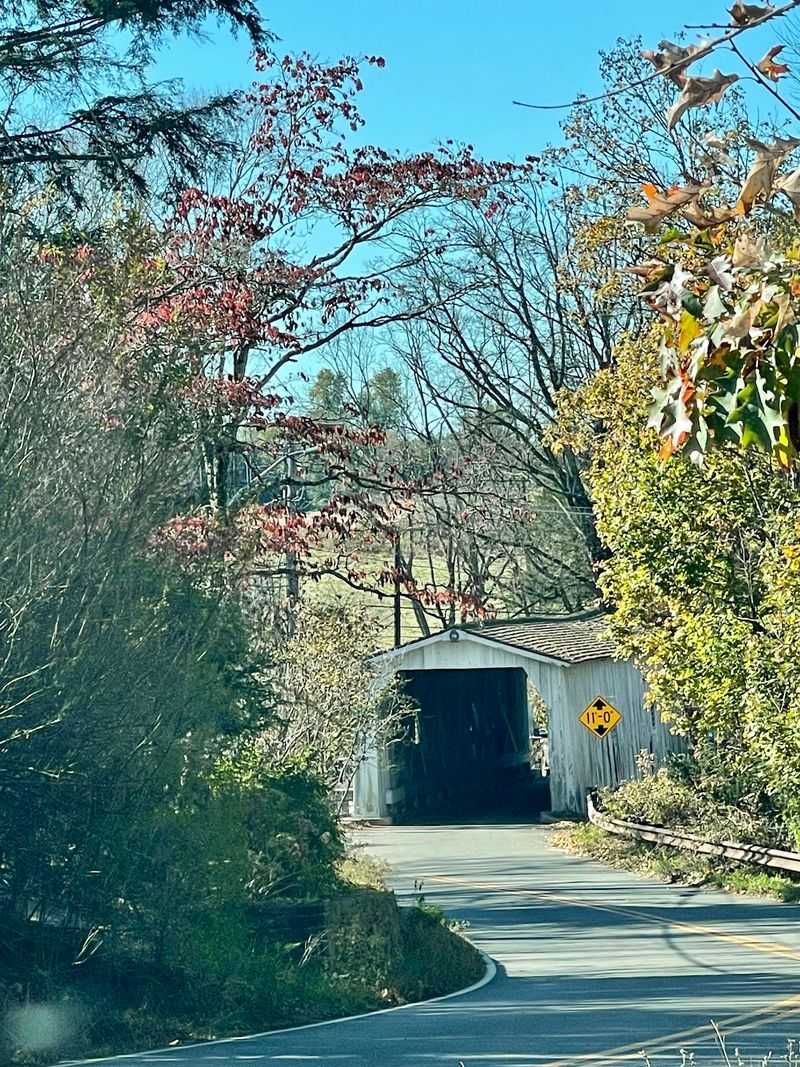
The route is part of the appeal, but it is no excuse to rush. Accounts of the trip mention a pleasant drive, including interest from someone who reached the bridge on a motorcycle.
The crossing itself can appear quickly around a bend.
That last point changes the plan. Instead of treating the bridge as something to find at the last second, use the address before setting out and follow posted road directions and speed limits on the approach.
A deliberate arrival gives drivers more time to understand the layout of the two crossings. It also avoids turning a photography stop into a problem for everyone using the road.
The destination works especially well for people who enjoy making a nearby drive about one worthwhile detail. There is no need to claim a lengthy scenic route or list stops not covered by the available information.
The simple trip has its own logic: take the road seriously, reach the bridge, and give the landmark the attention a quick pass might miss.
A Photograph With a Place Attached
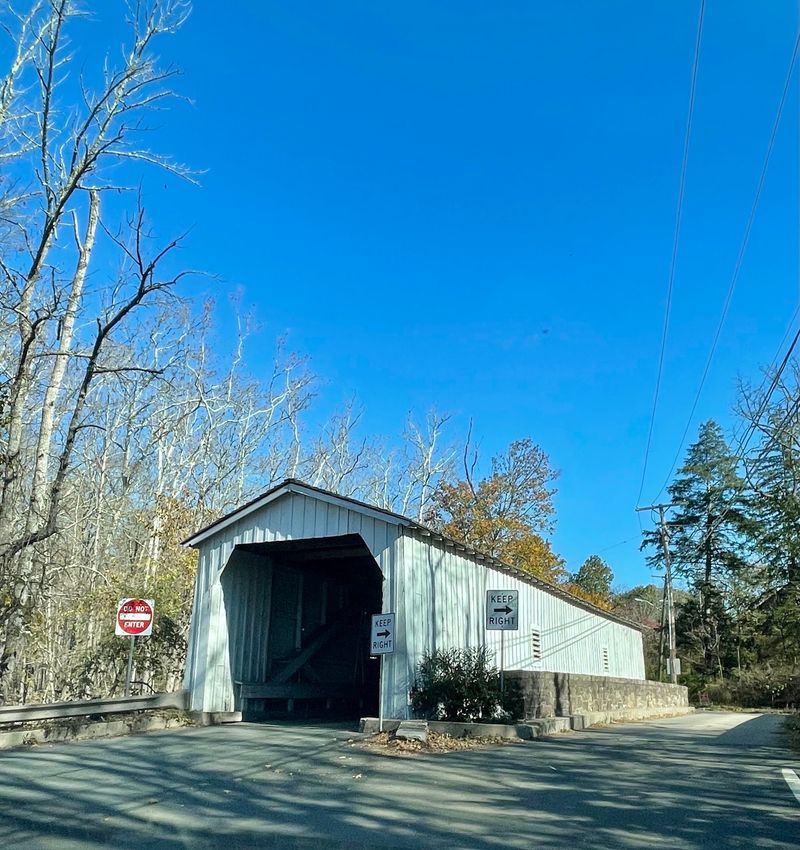
A covered bridge makes an obvious photograph, but the best reason to stop here is more specific. Green Sergeant sits at a creek crossing near Sergeantsville, with an adjacent open bridge that makes the road’s past and present easy to understand.
Those details give a photographer choices without needing to invent a dramatic backdrop. A wider composition can explain how the covered bridge fits the crossing.
A closer view can concentrate on its wooden form. Including the neighboring structure tells a different story about how the route continues to function.
Accounts from people who have stopped here repeatedly point to the photo opportunities and the surrounding setting.
Good photographs are not worth unsafe positioning. Traffic uses the road, and parking directly at the bridge is not reliably available.
Plan to work only from places where stopping and standing are permitted, and avoid blocking either crossing. The most rewarding frame is the one that captures this actual New Jersey place while respecting everyone who needs to pass through it.
A Historic Structure Showing Its Age
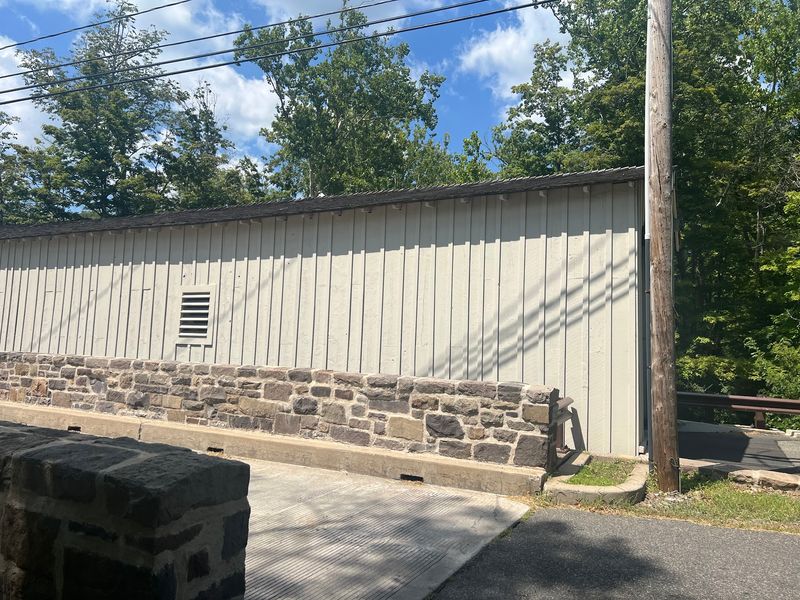
History here is not presented as a flawless finish. Older accounts mention missing boards, detached side panels, and concern about upkeep at Green Sergeant Covered Bridge.
Those observations are part of the bridge’s documented story, though they may not describe its current condition.
That distinction matters. A photograph or account from several years ago cannot confirm which repairs have happened since.
It would be just as misleading to promise a fully restored appearance as it would be to assume every reported issue remains. Arrive ready to see the bridge as it is on the day, rather than expecting a postcard version of a nineteenth-century crossing.
Visible wear, if present, should also change how a person behaves. Do not touch loose material, enter restricted areas, or use the road as a viewing platform.
The bridge is both a historic structure and part of an active route. Its appeal does not require pretending that preservation is effortless; paying attention to its condition is part of appreciating why care matters.
A Small Stop for Curious Day-Trippers
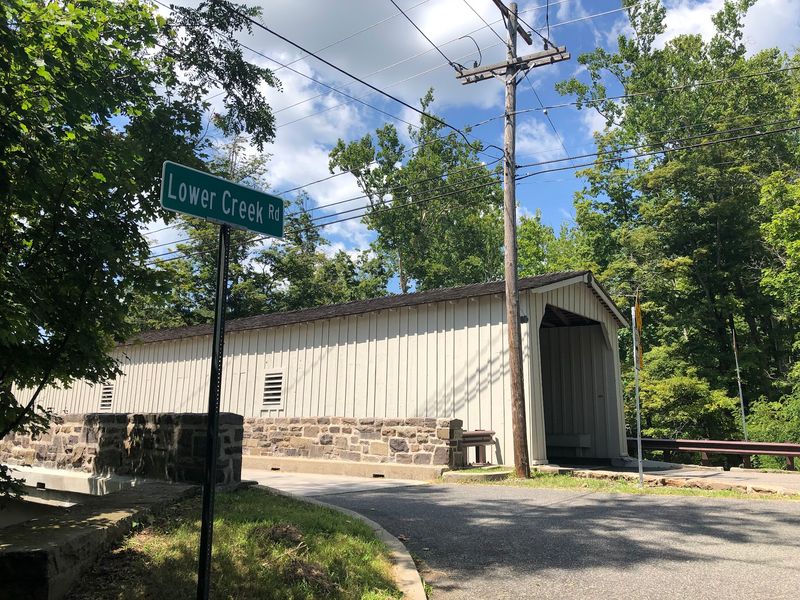
Not every outing needs a packed schedule. Green Sergeant Covered Bridge suits a short-hop day-tripper who wants a specific piece of New Jersey history, especially someone interested in covered bridges, old road crossings, or photography.
The visit is modest by design. The supplied information points to a bridge, a creek, an adjacent crossing, and a road that remains in use.
It does not describe an exhibit center, guided program, or broad set of activities on site. That makes the stop easier to understand before leaving home.
Come to see the structure and its setting, not to fill an entire day at the bridge itself.
People familiar with the area may find another reason to care: this is a local landmark that asks for attention without demanding a major detour. It offers a concrete answer to the claim that worthwhile New Jersey outings must be large or elaborate.
Curiosity is enough to start the trip; a little patience on arrival makes it worthwhile.
Roadside Access With Limits
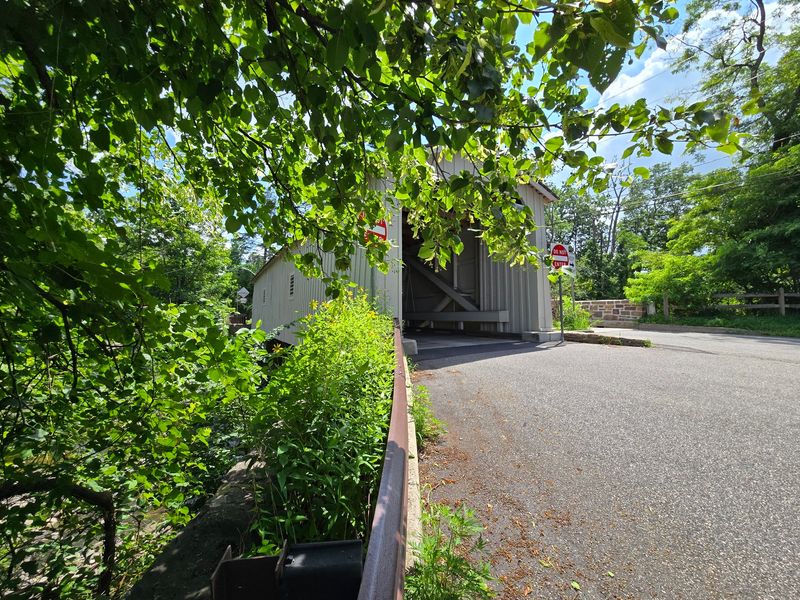
Parking is the detail most likely to change an easy stop into an awkward one. Accounts disagree about how readily a person can leave a car near Green Sergeant Covered Bridge.
Some describe parking and walking from a side street, while others report no parking at the bridge.
One account mentions Lower Creek Road as a place to park before walking toward the crossing. Treat that as a reported option, not a guaranteed space or an invitation to leave a car wherever it fits.
Check current signs and road conditions, keep entrances clear, and be prepared to continue rather than force a stop. The bridge occupies an active roadway, and people have specifically cautioned about passing cars and trucks.
The same common sense applies on foot. Do not assume a shoulder or roadside spot is a designated viewing area.
A brief visit can still be satisfying when approached carefully. Knowing about the parking uncertainty in advance is more helpful than arriving with a plan that depends on a space the location may not offer.
Open Hours and Simple Planning
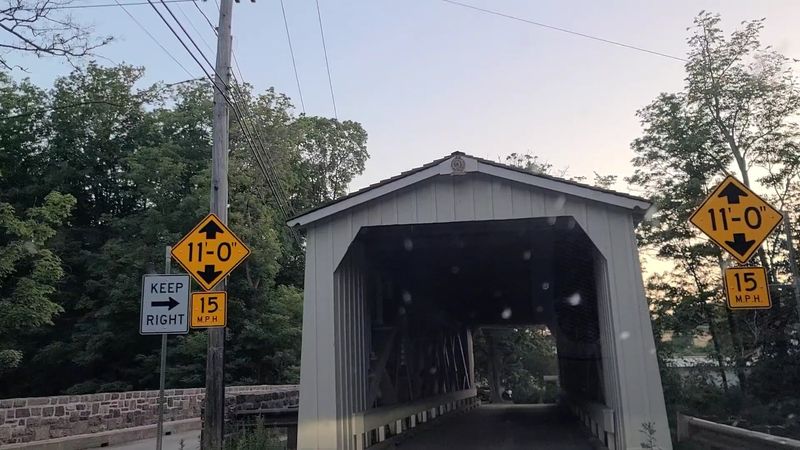
A little practical information goes a long way here. The supplied listing marks Green Sergeant Covered Bridge as open 24 hours a day, seven days a week.
That describes availability, not a promise that every hour is equally suitable for a roadside stop.
Because the bridge is part of an active road, choose a time and approach that let you see the crossing clearly and follow traffic rules. Check conditions before making the trip, particularly if photography is the main reason for going.
The available information does not establish a ticket price, an admission process, or an official parking area, so none should be assumed. Bring the address and allow for the possibility that a safe stopping place will take some judgment.
There is value in keeping the plan uncomplicated. This is a historic landmark with limited on-site information, not a timed attraction requiring a long itinerary.
The responsible approach is to confirm current access, respect posted signs, and let the actual road conditions guide the length of the visit.
One Crossing Worth the Detour
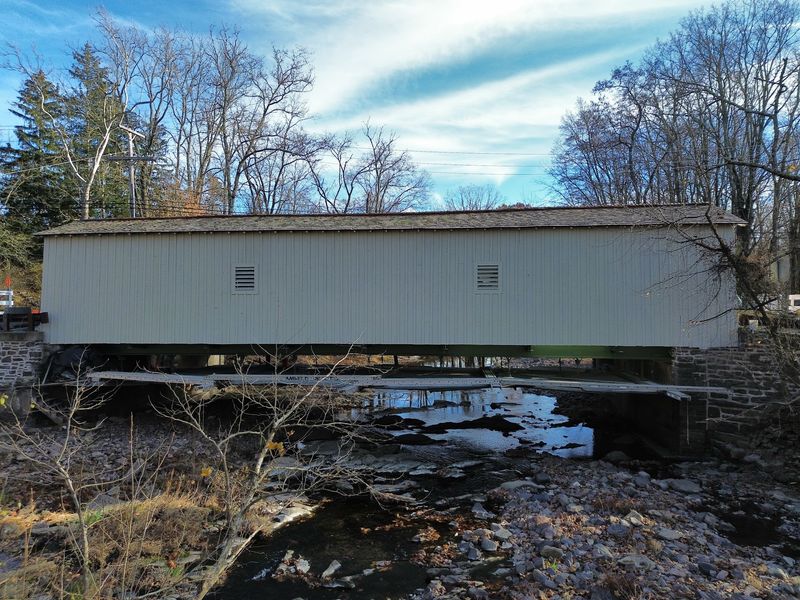
The strongest case for this trip is not that the bridge will occupy an afternoon. It is that one small crossing can hold several reasons to care: an 1872 history, an unusual wooden structure, a creek setting, and a community connection.
Green Sergeant Covered Bridge also has a useful honesty about it. Traffic still matters.
Parking may take thought. Older accounts raise questions about maintenance, and the adjacent open bridge makes clear that the road has changed around the historic span.
None of that weakens the stop. It gives a photographer or curious driver a fuller story than a bridge viewed only as a decorative object.
Make the drive with a simple goal: find the crossing, understand how it fits the place, and take a photograph only where it is safe to do so. For New Jersey residents, it is a compact reminder that local history can remain part of an ordinary route.
Sometimes that is reason enough to slow down.
Share this story