One lavish mansion in Abilene, Kansas, looks remarkably close to the way it did more than a century ago. Original furnishings fill its 25 rooms, Edison-era fixtures remain, and a rare 1904 box ball alley still hides in the basement.
Much of the decor came from the St. Louis World’s Fair, making a tour feel surprisingly close to stepping straight into 1905.
A Grand Address With a Story Behind Every Brick
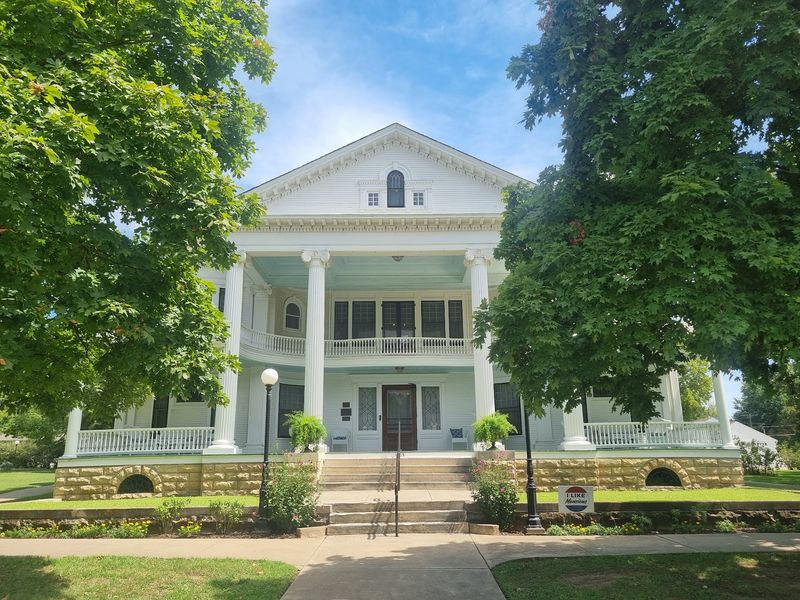
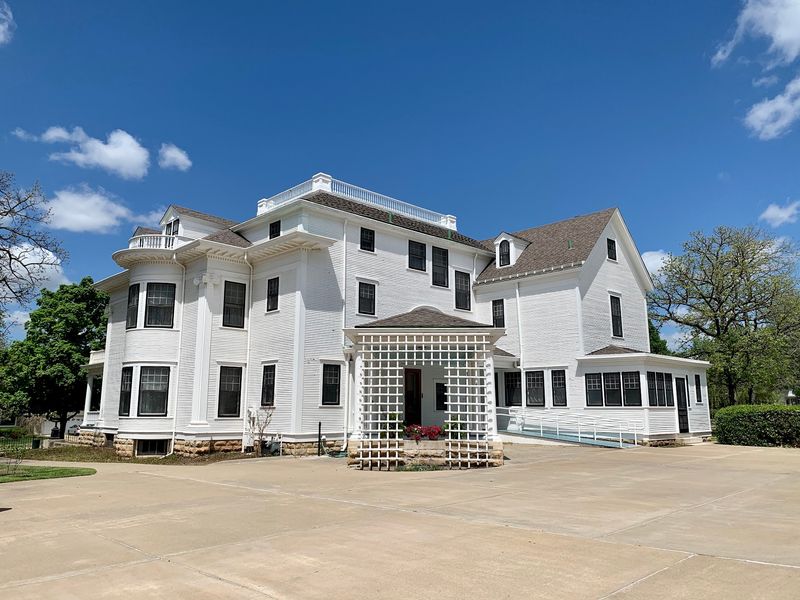
The Seelye Mansion sits at 1105 N Buckeye Avenue in Abilene, Kansas, and the moment you lay eyes on it, you understand why people drive hours just to stand in front of it.
This Georgian Revival structure was completed in 1905 and spans an impressive 11,000 square feet across 25 rooms, occupying an entire city block. Eleven bedrooms, a third-floor ballroom, and a basement full of surprises are all packed inside its elegant walls.
The mansion earned a prestigious spot on the National Register of Historic Places and has been recognized as one of the eight wonders of Kansas architecture. Those are not small honors for a home in a mid-sized Kansas town.
What makes it truly special, though, is not the size or the accolades. It is the fact that nearly everything inside looks exactly as it did when the Seelye family first moved in, right down to the original Edison light fixtures still humming in every room.
The Patent Medicine King Who Built It All
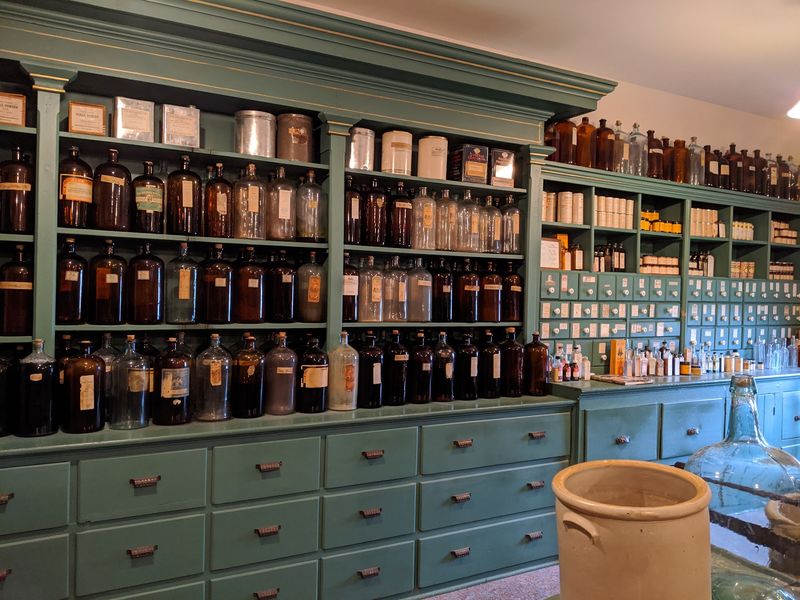
Dr. Alfred B. Seelye was not the kind of man who thought small.
By the time he commissioned this magnificent estate, he had already built a patent medicine empire that stretched across fourteen states and produced over one hundred different products.
His company, the A.B. Seelye Medical Company, was founded in 1890, and its remedies had names that sound almost poetic today: Wasa-Tusa, Ner-Vena, and Fro-Zona, among dozens of others.
These tonics and cure-alls flew off shelves at a time when the patent medicine industry was booming across America.
Dr. Seelye distinguished himself from many of his competitors by building a real business structure around production, marketing, and distribution, rather than just selling bottles from a wagon.
The mansion was his way of saying something permanent to the world. You can still visit his original laboratory, now preserved as the Patent Medicine Museum in a building behind the main house, where the bottles, equipment, and legacy of his life’s work are on full display.
Fifty-Five Thousand Dollars Worth of World’s Fair Treasure
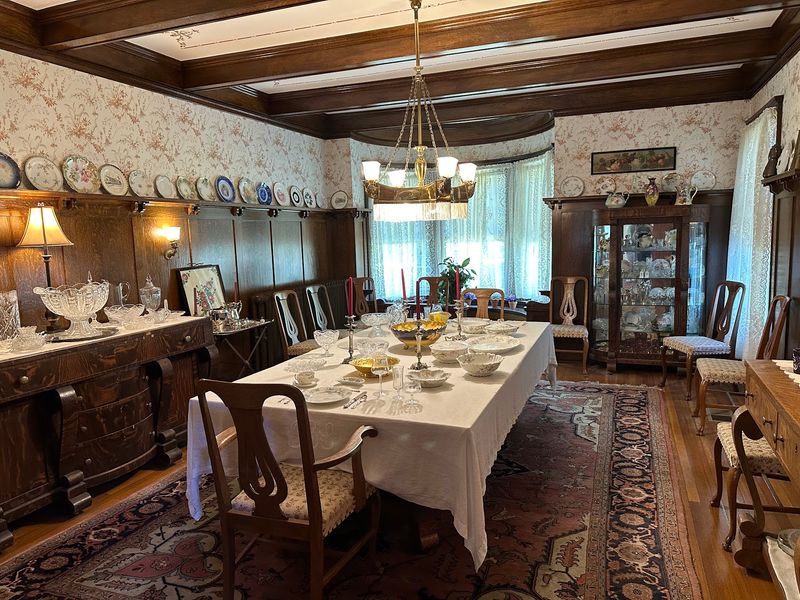
Here is a fact that tends to stop visitors mid-sentence: the furnishings inside the Seelye Mansion cost more than the house itself.
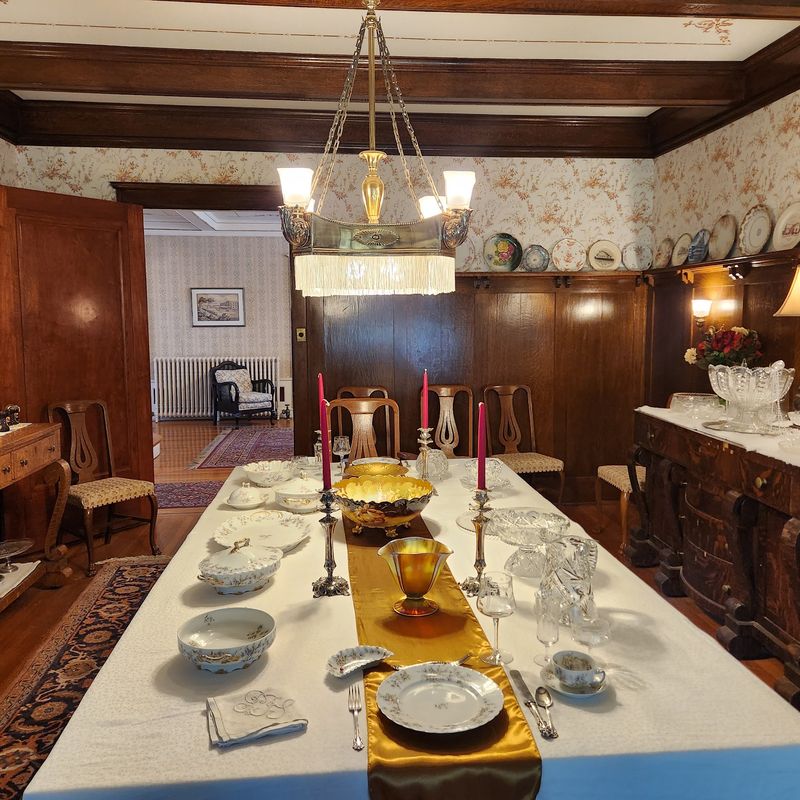
Dr. and Mrs. Seelye attended the 1904 St. Louis World’s Fair and spent over $55,000 acquiring pieces from exhibitors around the globe. The mansion’s construction, by comparison, came in under that figure.
Every chair, cabinet, and decorative accent they selected traveled from the fairgrounds directly to Abilene, Kansas, where most of it has remained ever since.
The result is a home that functions as a curated showcase of international craftsmanship from one of the most celebrated events in American history. Visitors are not just looking at old furniture; they are looking at objects that once dazzled fairgoers from around the world before finding a permanent home in this Kansas mansion.
That context transforms every room into something richer, because each piece carries two stories: one from the fair and one from the family who chose it with such obvious care and intention.
Edison Wired This House Before Most People Had a Single Bulb
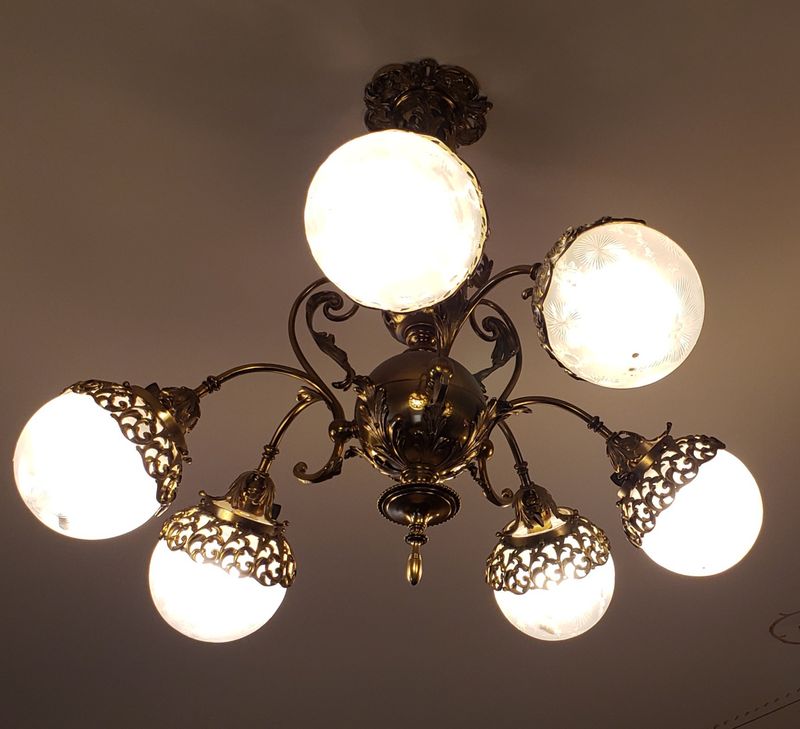
Long before smart homes became a selling point, the Seelye family was already living in one. The mansion was wired with original Edison light fixtures throughout, and the switches themselves still carry the distinctive “E” on their black knobs, a direct nod to Thomas Edison’s pioneering electrical work.
A telephone-intercom system connected rooms across the sprawling estate, which was a genuinely remarkable feature for a private home in 1905. Dr. Seelye’s office contained a clever fan designed to push air upward, keeping papers from scattering across his desk during working hours.
Mrs. Seelye had a dedicated wall socket for her iron, a thoughtful domestic innovation that saved her from hauling equipment across the house. The radiator heating system was equally advanced for its time, making the mansion one of the few homes in Abilene with reliable warmth in winter.
Seeing these early technologies still in place, and in many cases still functional, gives the tour a satisfying sense of discovery that goes well beyond admiring pretty wallpaper.
A Million-Dollar Bowling Lane Hiding in the Basement
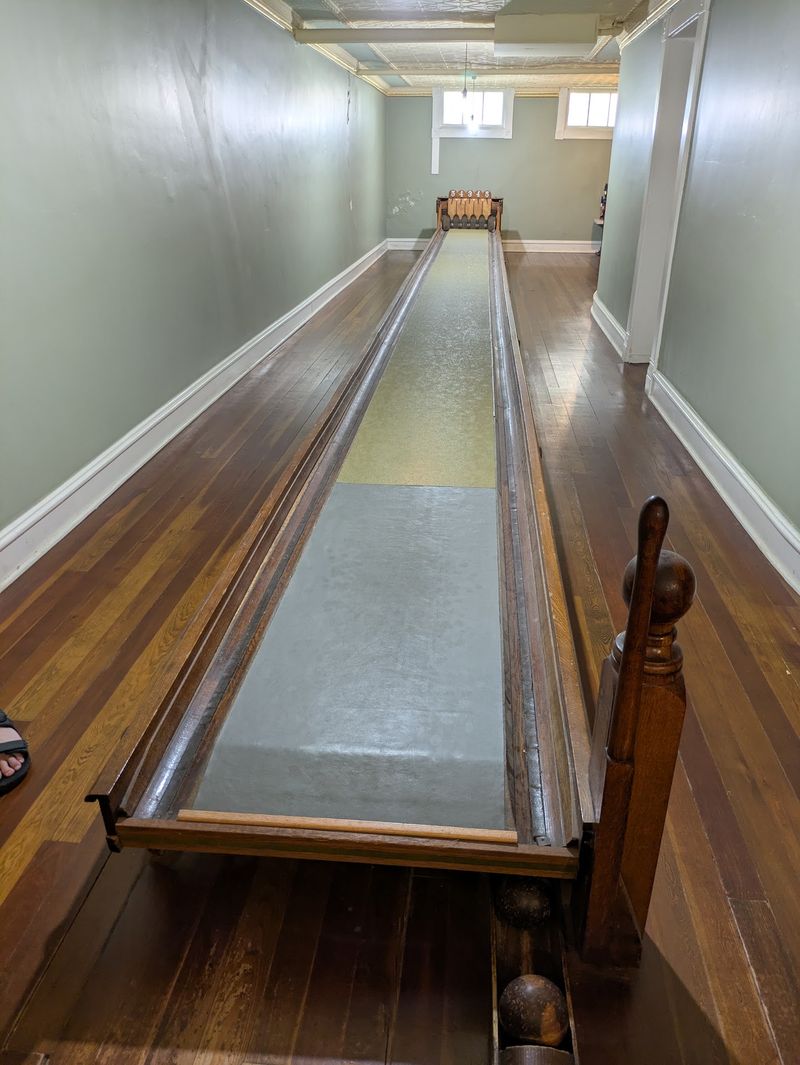
Most historic house tours do not end with you rolling a ball down a lane, but the Seelye Mansion is not most historic house tours.
Tucked into the basement is a 1904 box ball alley, an early predecessor to modern bowling, built by Holcomb and Hoke and purchased at the St. Louis World’s Fair. The lane is so exceptionally rare that a bowling museum once offered one million dollars to acquire it.
Terry Tietjens, the current owner, declined, and the lane remains right where it has always been.
Visitors can actually use it, stepping up to roll the ball, watching the automatic return mechanism do its job, and pulling a lever to reset the pins. It is interactive history in the most literal sense.
The basement also holds other surprises that reward those who make it all the way downstairs, and that sense of layered discovery is exactly what makes a tour here feel less like a school field trip and more like a genuine adventure through someone’s extraordinary home.
Tiffany Tilework and a Steinway Chosen by Mr. Steinway Himself
The Grand Hall fireplace stops most visitors cold the moment they see it. Designed by Louis Comfort Tiffany, the mosaic tilework is a masterpiece of color and precision that anchors the entire room with understated authority.
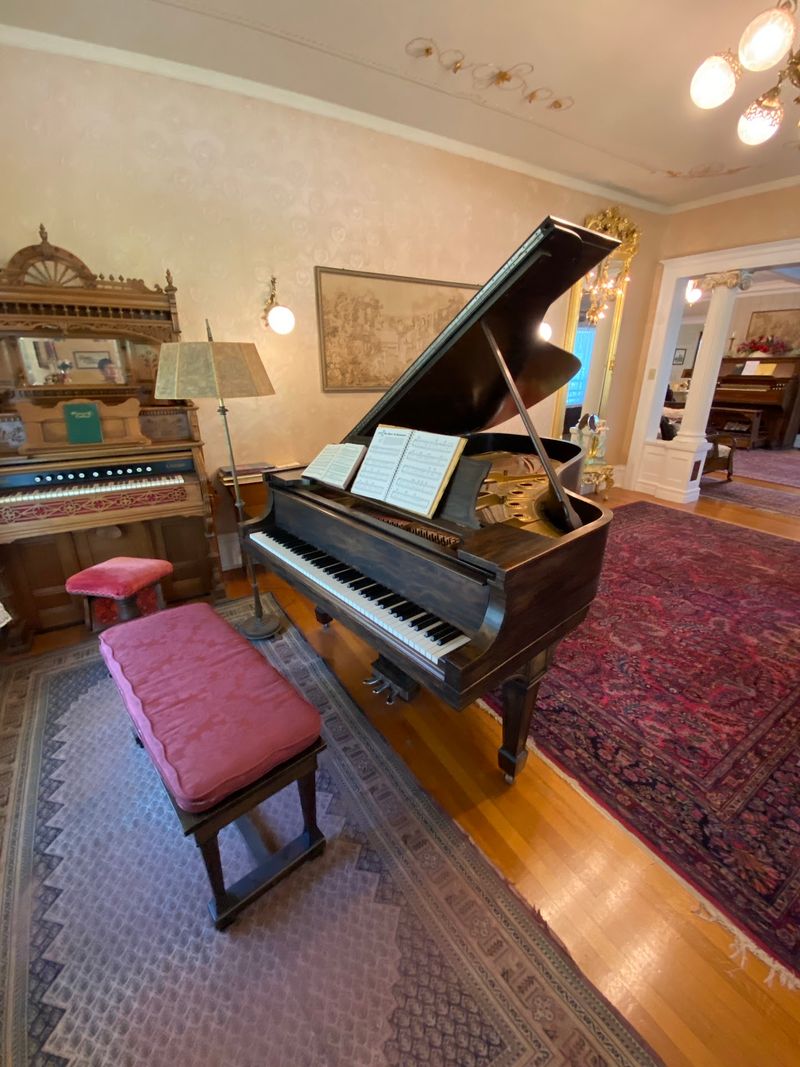
Just as impressive is the music room, where rich mahogany woodwork and gold-painted finishes create an atmosphere that feels both intimate and grand. The centerpiece is a 1920 Steinway grand piano, personally selected for Mrs. Seelye by Mr. Steinway himself, a detail that says everything about the family’s connections and their commitment to quality.
Tour guides occasionally play the piano during visits, and hearing it fill the room is one of those unexpected moments that turns a good tour into a memorable one. A working 1905 Edison Cylinder Phonograph also sits nearby, ready to add another layer of auditory history to the experience.
The dining room completes the picture with a stunning collection of Haviland China and amethyst glassware, all original, all arranged just as Mrs. Seelye would have set them for a formal dinner.
Gardens Restored From the Original 1905 Drawings
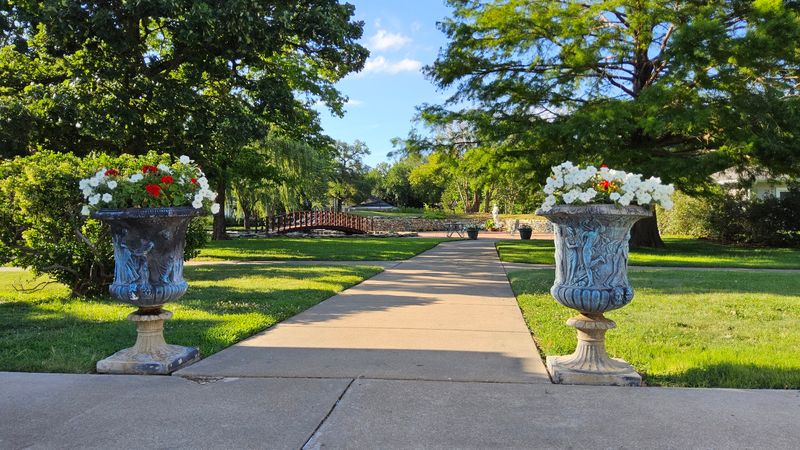
The grounds of the Seelye Mansion are every bit as considered as the interiors, and that is saying something significant given what is inside the house.
The gardens stretch across an entire city block and were restored using the original 1905 landscape drawings, meaning every path, pond, and planted bed reflects the Seelye family’s initial vision rather than a modern interpretation of it. A goldfish pond, a pedestrian bridge, and a graceful fountain anchor the outdoor spaces with quiet elegance.
Wandering through the gardens between the house tour and the Patent Medicine Museum visit gives you a natural pause that feels genuinely restorative. The landscaping is meticulous without feeling sterile, and there is a lived-in warmth to the space that matches the spirit of the house itself.
It is the kind of outdoor environment where you can easily imagine the Seelye family spending a slow summer afternoon, and that imaginative connection to the past is a quality that not every historic property manages to achieve with such effortless charm.
Two Sisters Who Never Left and Never Changed a Thing
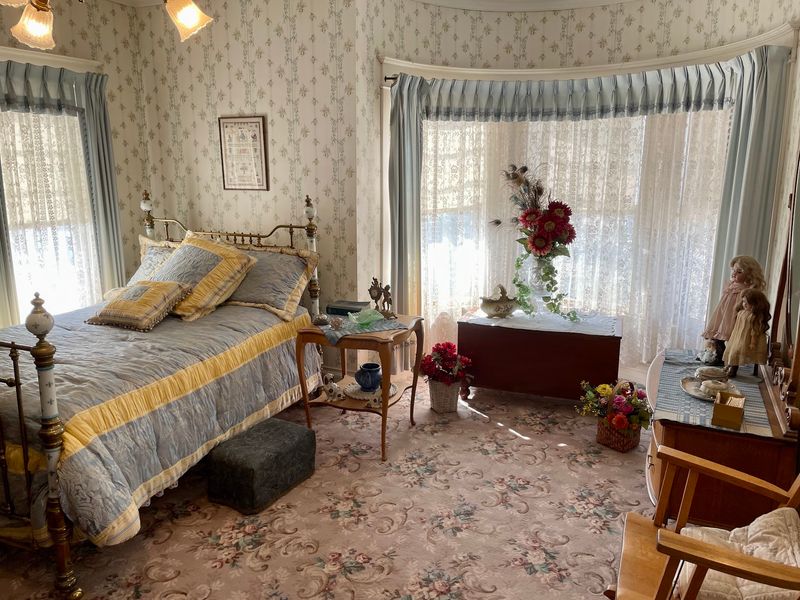
Helen and Marion Seelye, the two daughters of Dr. and Mrs. Seelye, never married and never moved out. They lived in the mansion well into their nineties, and their quiet loyalty to the family home turned it into one of the most authentic historic residences in the country.
Because the sisters maintained the house without significant alterations, almost everything remained exactly where their mother had originally placed it. The upstairs bedrooms still reflect the personal touches of the women who occupied them for decades, creating a poignant and deeply human quality that sets this tour apart from more formal museum experiences.
Their presence in the home until late in their lives meant that the mansion never went through the kind of institutional overhaul that strips character from so many historic properties. What survived is something genuinely rare: a house that feels inhabited rather than curated.
That distinction becomes more meaningful the longer you spend inside, because authenticity at this level is almost impossible to manufacture, no matter how much money or intention goes into a restoration effort.
How a Young Boy With a Dream Saved the Mansion
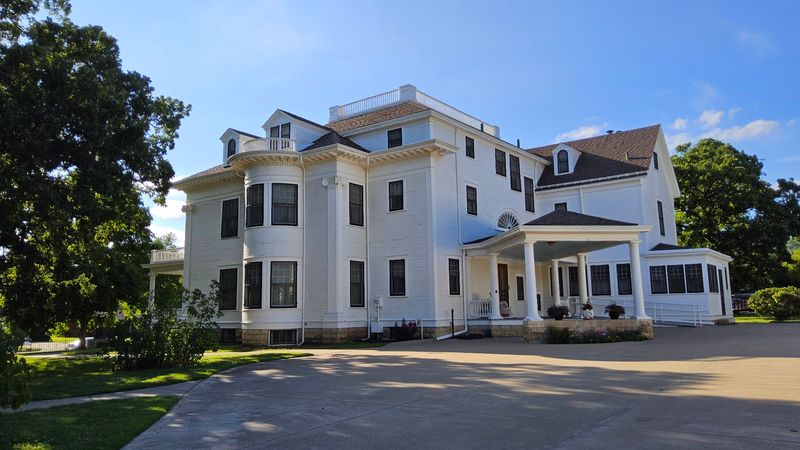
Terry Tietjens first saw the Seelye Mansion in 1970 and never quite got over it. Over the next eleven years, he cultivated a genuine friendship with Helen and Marion Seelye, eventually making them a promise: he would restore the home to its original glory while allowing them to continue living there.
In 1982, Terry and his twin brother Jerry acquired the property. By 1985, the restoration was complete, with original furnishings recovered and structural issues addressed with careful attention to historical accuracy.
Today, Terry still lives in the mansion and regularly leads tours himself, sharing stories about the Seelye family with a depth of personal knowledge that no hired guide could replicate. He encourages visitors to sit on the antique furniture, handle select objects, and experience the home as a living space rather than a roped-off exhibit.
His passion for the property is evident in every conversation, and talking with him for even a few minutes tends to be the highlight of the visit for many who make the trip to Abilene.
Presidents, Soldiers, and a Boy Who Delivered Ice
Before Dwight D. Eisenhower became a general or a president, he was a boy from the working-class side of Abilene who delivered ice to the Seelye Mansion.
Helen and Marion Seelye remembered him fondly as the kid from “the other side of the tracks,” a small but vivid detail that connects two of Abilene’s most significant stories.
The mansion’s third-floor ballroom hosted a different kind of notable visitor during World War II, when soldiers from nearby Fort Riley filled the space with music and dancing. The Seelyes opened their home generously during that period, and the ballroom earned its share of wartime memories alongside its peacetime elegance.
State governors and other prominent figures also passed through the grand dining room over the years, cementing the mansion’s role as a genuine social hub in early 20th-century Kansas.
These layered connections to American history give the Seelye Mansion a significance that goes beyond architecture, and that broader context becomes richer the more time you spend exploring the stories behind each room.
Christmas at the Mansion Is Something Else Entirely
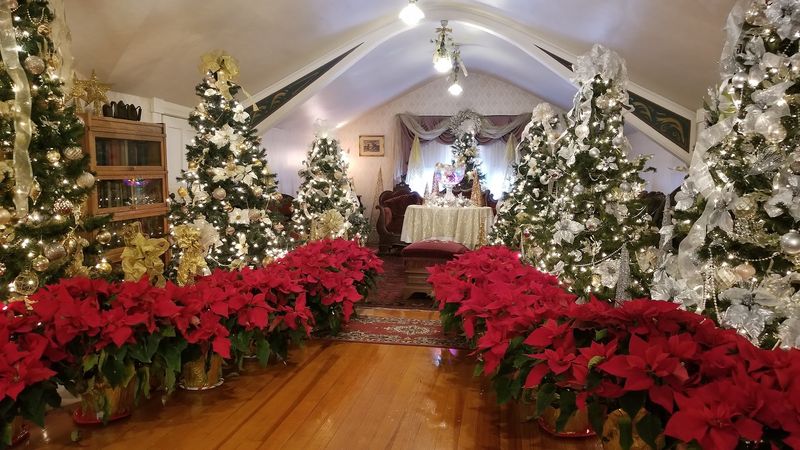
The first Christmas dinner served at the Seelye Mansion took place on December 25, 1905, in honor of Dr. Seelye’s parents’ 50th wedding anniversary. The following year, more than 300 guests attended a grand Christmas Ball, and the tradition of celebrating the season in spectacular fashion was firmly established.
That first celebration also featured a rare poinsettia, specially shipped by rail from California for its debut appearance in Kansas, a detail that captures the Seelyes’ flair for the extraordinary even in small gestures.
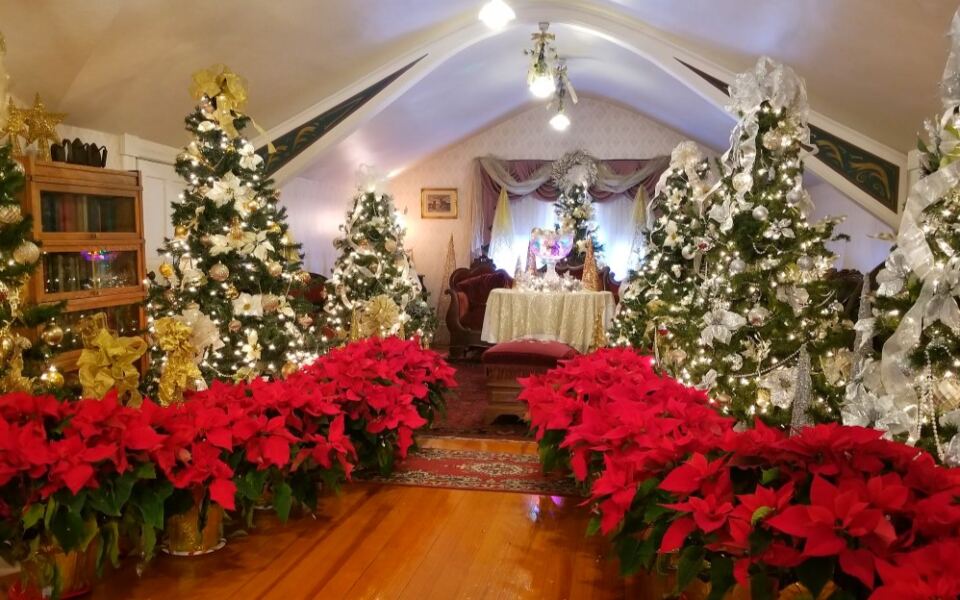
Today, the holiday season transforms the mansion into something that has to be seen to be believed. Over 65 decorated Christmas trees, nearly 100 live poinsettias, and hundreds of nutcrackers collected from around the world fill all 25 rooms with festive warmth.
HGTV even featured the mansion on its “Christmas Castles” special in 2000.
The “Seelye in Lights” events draw visitors from across the region every year, and the experience of moving through those rooms during the holidays is genuinely unlike anything else available in Kansas.
What to Know Before You Plan Your Visit
The Seelye Mansion is open Monday through Saturday from 10 AM to 3 PM and on Sundays from 1 PM to 3 PM. Walk-ins are generally welcome, though calling ahead at 785-263-1084 is a smart move, especially for larger groups or holiday event visits.
Admission runs around $15 per person, and tours typically last about 90 minutes, though many visitors end up spending closer to two or three hours once they start chatting with Terry or exploring the Patent Medicine Museum on the property.
One thing worth knowing: the mansion is not fully accessible for visitors with mobility challenges. The home spans four levels, including the basement bowling alley and the third-floor ballroom, and there is no elevator.
Comfortable shoes are a practical choice.
Unlike most historic house museums, this one actively encourages you to touch things, sit in the chairs, and engage with the space rather than observe it from a distance. That hands-on approach is what turns a pleasant afternoon outing into the kind of experience that stays with you long after you have driven back out of Abilene.
Share this story