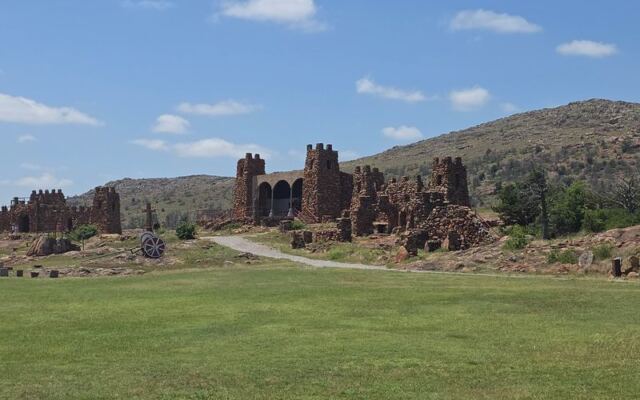
Somewhere in Oklahoma, tucked inside the rugged landscape of a national wildlife refuge, a place exists that most people drive right past without ever knowing it’s there. Once you stumble upon it, the sight stops you cold: stone buildings that look like they belong in the ancient Middle East, rising quietly from the prairie as if they always belonged there.
Few hidden gems in this state carry the same power to surprise, move, and genuinely astonish first-time visitors. If you love uncovering places that feel completely unlike anything else around them, this one belongs at the top of your list.
Location and Setting Inside the Wichita Mountains
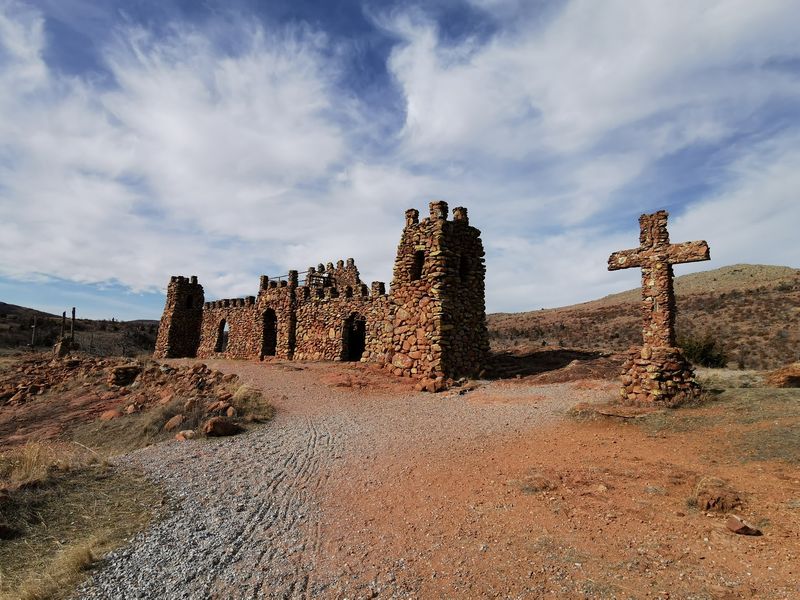
Nestled within the Wichita Mountains Wildlife Refuge near Lawton, Oklahoma, the Holy City of the Wichitas occupies one of the most unexpected addresses in the entire state. The refuge itself is a sprawling expanse of granite boulders, rolling grasslands, and open sky, making it an already striking destination before you even spot the stone structures rising from the earth.
What makes the location feel so surreal is the contrast. You are driving through classic Oklahoma prairie terrain, watching longhorn cattle and bison roam freely, and then suddenly a skyline of hand-built stone towers and archways appears on the horizon.
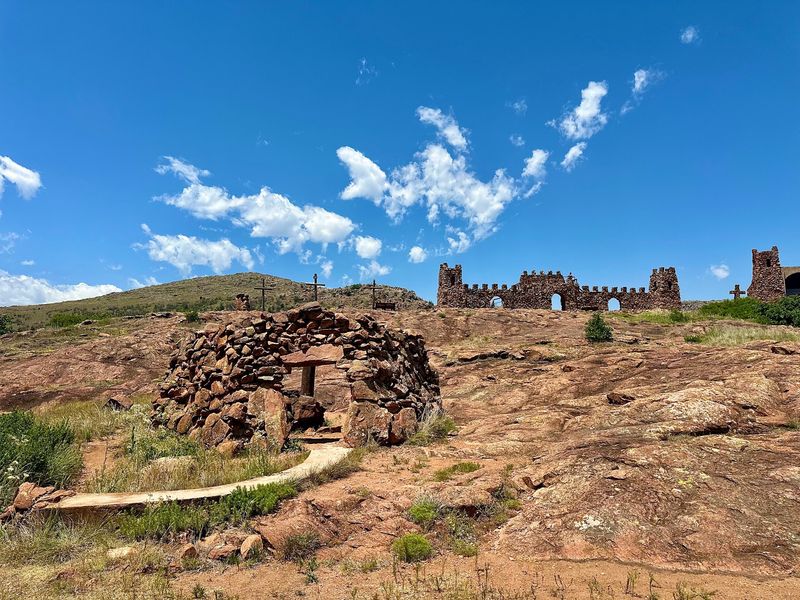
The setting is not accidental. The rocky terrain of the Wichitas was chosen specifically because it resembled the landscape of the ancient Holy Land, giving the entire site a geographic authenticity that photographs struggle to fully capture.
The address is 262 Holy City Rd, Lawton, OK 73507, and while the road signs are modest, the destination itself is anything but. Visitors often describe the moment of first arrival as genuinely disorienting in the best possible way, like the Oklahoma landscape suddenly decided to transport you somewhere else entirely.
The Origins of a Stone Jerusalem on the Plains
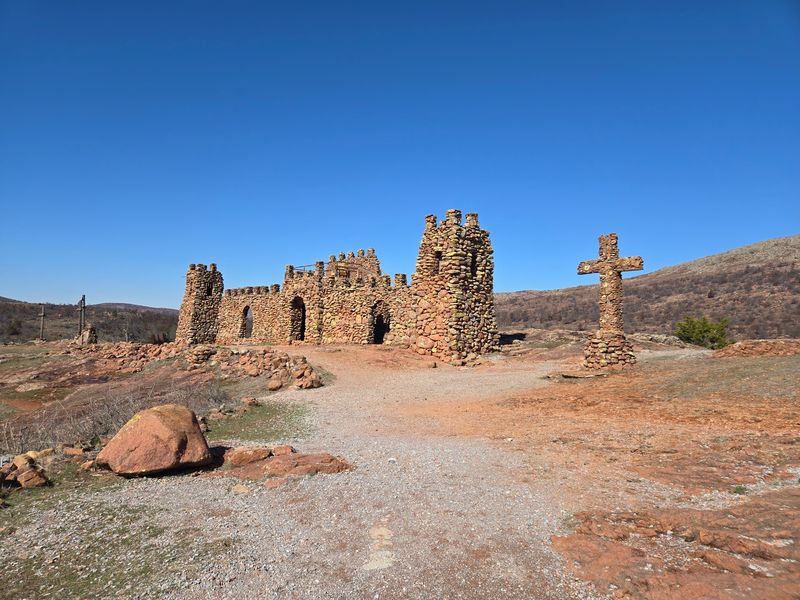
Few origin stories in Oklahoma history are as ambitious or as earnest as the one behind the Holy City of the Wichitas. The site was established in the 1920s by Reverend Anthony Mark Wallock, a Methodist minister who envisioned creating a life-sized replica of ancient Jerusalem in the heart of Oklahoma.
His goal was to build a place where biblical stories could be experienced rather than simply read about.
Construction began using local stone pulled directly from the surrounding Wichita Mountains, which gave the buildings an organic, almost ancient quality that imported or manufactured materials never could have achieved. The project grew over decades through community effort, volunteer labor, and donated funds, reflecting a collective commitment that few religious landmarks of its scale can claim.
By the time the site opened to the public in the 1940s, it had already become a regional landmark with a devoted following. Some of the displays and structures visible today still carry the character of that early era, which many visitors find adds to the authenticity rather than detracting from it.
The Holy City stands as a testament to what a single determined vision, backed by a community, can actually build from scratch.
Stone Architecture Pulled Straight From the Surrounding Land
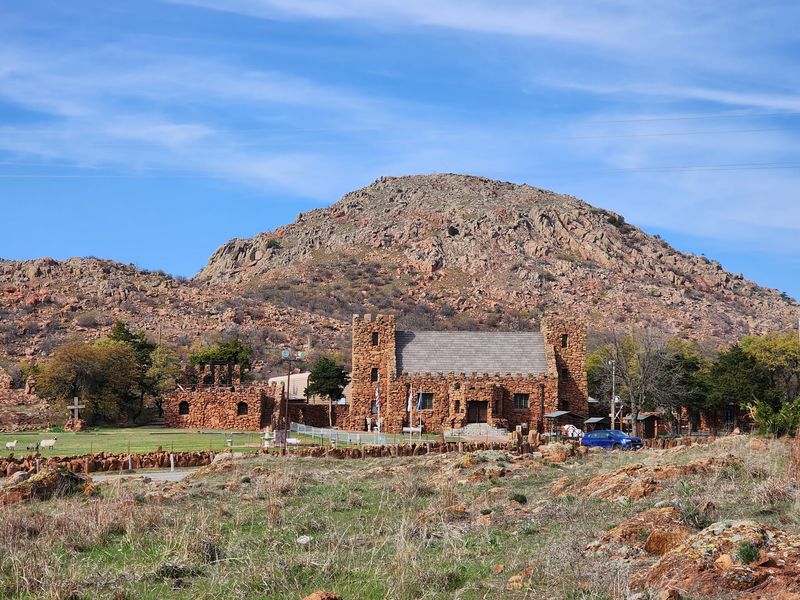
Every wall, arch, and tower at the Holy City of the Wichitas was built using stone gathered from the very land surrounding it. That single construction choice makes the architecture feel rooted in a way that modern builds simply cannot replicate.
The granite used throughout the site carries the same color and texture as the boulders scattered across the Wichita Mountains, blurring the line between human construction and natural landscape.
Visitors who appreciate architecture often linger longer than expected, running their hands along the rough surfaces and studying how the builders fitted irregular stones together without the benefit of modern precision tools. The craftsmanship is honest and deliberate, reflecting the skills and patience of the volunteers and laborers who worked on the project over many years.
Archways frame open courtyards. Low stone walls border pathways that wind between structures.
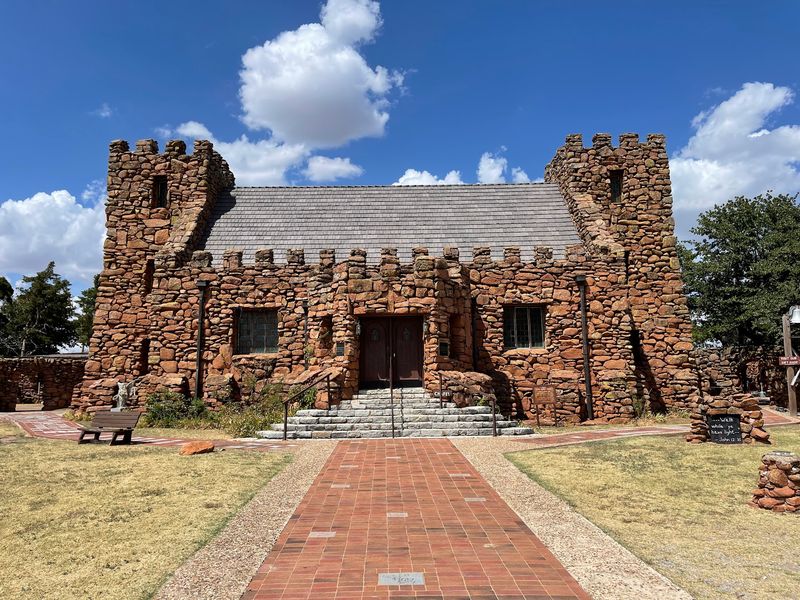
The chapel, one of the most visited buildings on the grounds, showcases the same locally sourced stonework on a more intimate scale. Reviewers consistently mention the architecture as a genuine highlight, noting that the use of native materials gives the whole complex an earthy, timeless quality that photographs come close to capturing but never quite do justice to in person.
The Famous Easter Pageant That Draws Crowds Every Year
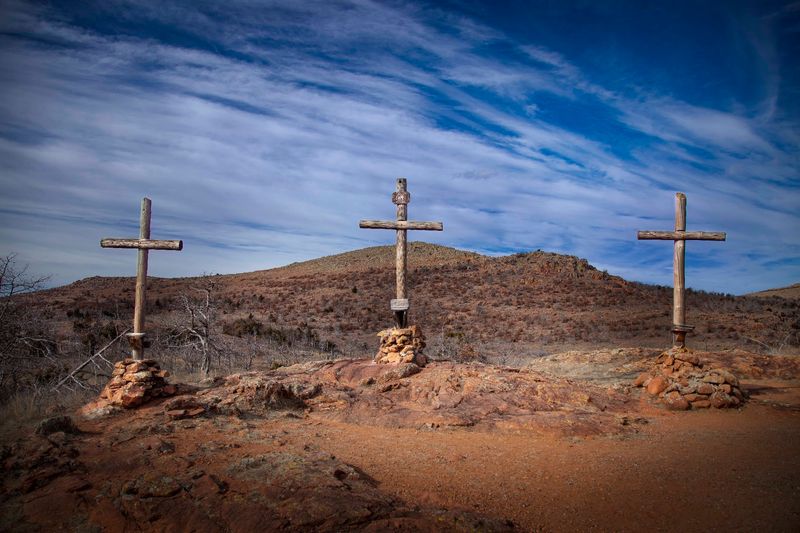
Ask anyone who has visited during spring and the Easter pageant will almost certainly come up within the first sentence. The annual performance at the Holy City of the Wichitas is one of the longest-running outdoor passion plays in the region, drawing visitors from across Oklahoma and neighboring states who come specifically for the experience.
It has been performed since the mid-1900s, and that longevity speaks for itself.
The production takes full advantage of the outdoor stone stage, a dramatic natural rock formation that serves as the backdrop for a live reenactment of the story of Jesus Christ. The rugged terrain amplifies the atmosphere in a way no indoor theater could match.
Performers in period costumes move through the landscape while audiences gather on the surrounding hillside, watching a story unfold against a backdrop that feels genuinely ancient.
Preparation for the pageant typically begins weeks in advance, and visitors who arrive during the setup period may find portions of the grounds temporarily closed off. Even so, most find the glimpse of behind-the-scenes activity adds its own layer of interest.
The Easter season transforms the Holy City from a quiet historical site into a living, breathing community gathering point that carries real emotional weight for many attendees.
The Chapel and the Statue of Christ
Among all the structures spread across the grounds, the chapel draws the most consistent attention from visitors. Compact and unpretentious, it was built in the same locally quarried stone as everything else on the site, giving it a humble quality that feels appropriate for its purpose.
Visitors are welcome to step inside, and the interior offers a quiet, contemplative space that feels genuinely set apart from the outside world.
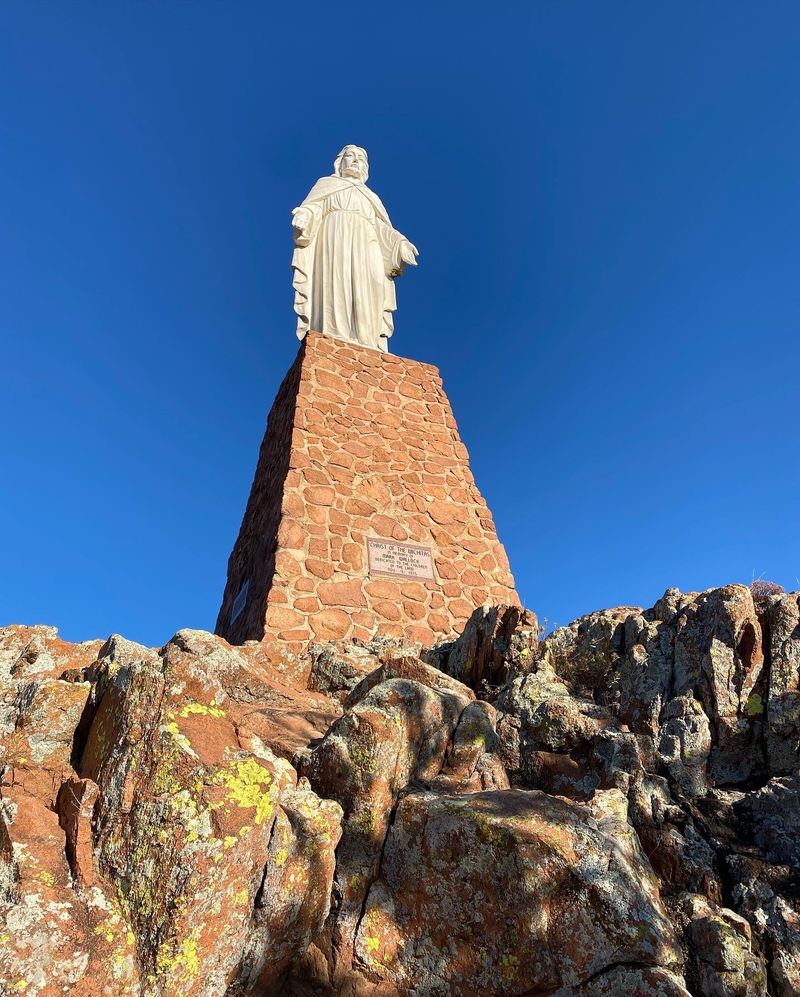
Near the chapel stands a statue of Christ that visitors frequently mention as one of the most memorable visual elements of the entire site. The statue is positioned in a way that allows it to be seen from multiple points across the grounds, giving it a presence that anchors the whole complex.
Whether you approach it from the main pathway or catch a glimpse of it from a distance against the Oklahoma sky, the effect is striking.
Admission to the chapel and the surrounding grounds is free, which surprises many first-time visitors who expect a fee for a site of this scale and character. That open-door approach reflects the mission behind the Holy City from its earliest days: a place meant to welcome anyone who shows up with curiosity or faith, without a ticket price standing in the way.
Wild Bison and Prairie Dogs Sharing the Grounds
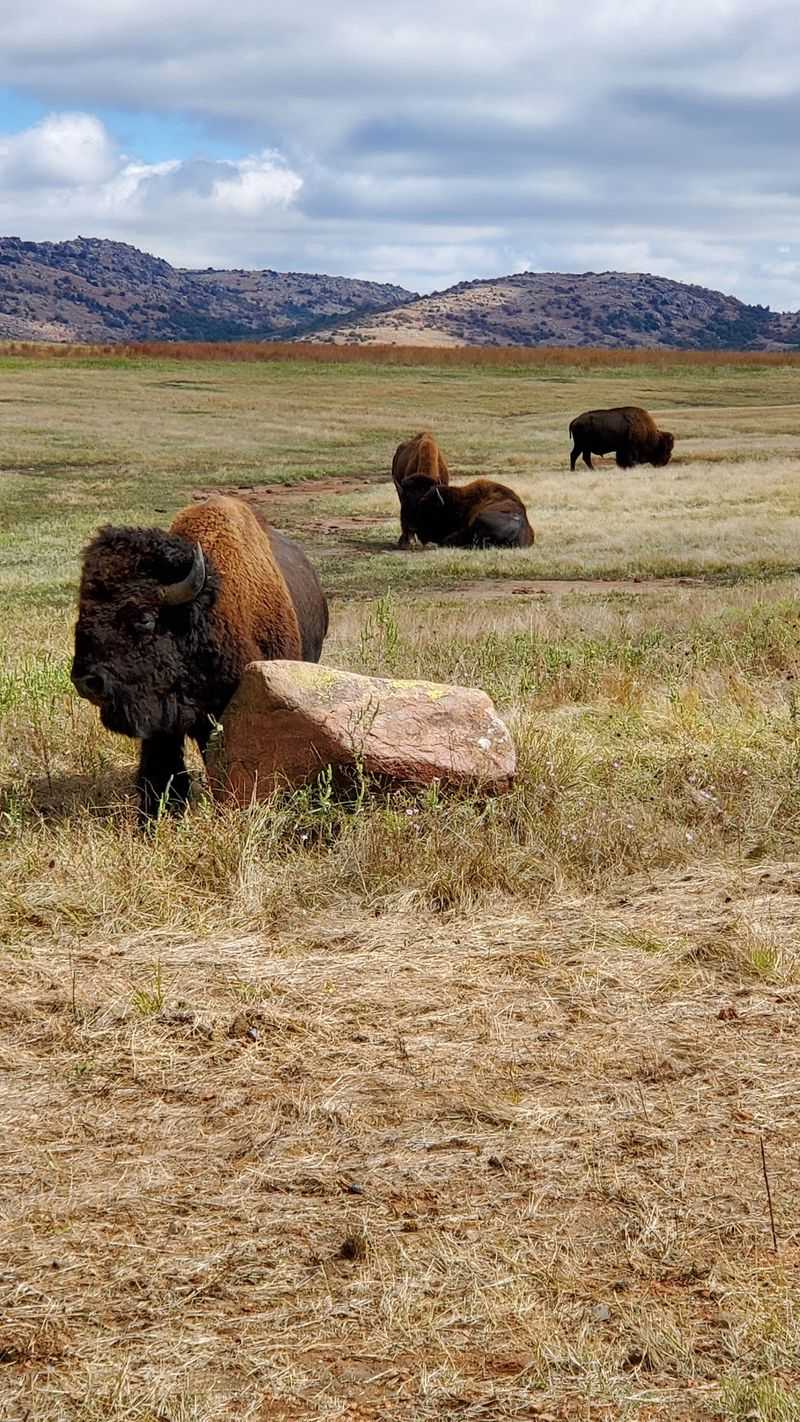
One of the most unexpected delights of visiting the Holy City of the Wichitas has nothing to do with stone walls or biblical history. The site sits inside the Wichita Mountains Wildlife Refuge, which means the local wildlife treats the grounds as their own territory too.
Bison, massive and completely unhurried, have been spotted casually napping on the road near the site, drawing clusters of curious onlookers who cannot quite believe what they are seeing.
Prairie dogs are another frequent sighting in the area, their little heads popping up from burrow entrances as visitors walk the pathways. For families with children, these wildlife encounters often become the most talked-about part of the trip.
There is something genuinely funny and wonderful about watching a historic Jerusalem replica share its neighborhood with creatures that are entirely, unmistakably Oklahoma.
Visitors are always advised to keep a respectful distance from the bison, which are wild animals and can be unpredictable despite their seemingly relaxed demeanor. Reviews also mention keeping an eye out for bees in certain areas of the grounds, so awareness of your surroundings is always worthwhile.
The combination of ancient-looking architecture and roaming wildlife creates a sensory experience that is genuinely unlike anywhere else in the state.
The Peaceful Atmosphere That Sets It Apart
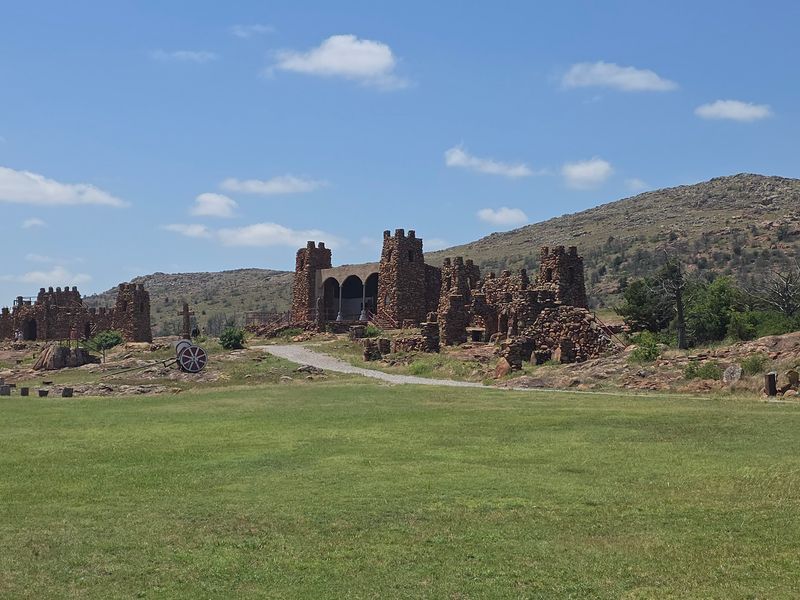
Peaceful is the word visitors reach for most often when describing the Holy City of the Wichitas, and spending even a short time there makes it easy to understand why. The grounds are open and unhurried.
There are no loud attractions, no commercial distractions, and no pressure to move quickly from one point to the next. The site simply exists, quietly and confidently, inviting you to slow down and take it all in at your own pace.
On a quiet weekday morning, some visitors report having the entire grounds almost entirely to themselves. That kind of solitude in a place with this much visual and historical weight creates an atmosphere that many describe as genuinely moving.
The combination of open sky, rough stone, and stillness produces a mood that is hard to manufacture and impossible to fake.
Even for visitors who do not come with a spiritual intention, the atmosphere carries a calming quality that tends to linger after you leave. The site has been welcoming visitors for decades without changing its essential character, and that consistency is part of what makes it feel trustworthy.
Regulars mention returning multiple times over the years and finding the same sense of quiet waiting for them each time, which says something meaningful about what the Holy City offers beyond its visual appeal.
Wedding Venue and Community Gathering Space
Beyond its role as a historical and spiritual site, the Holy City of the Wichitas has quietly built a reputation as one of the more distinctive wedding venues in the region. Couples drawn to the combination of natural Oklahoma landscape and ancient-looking stone architecture have chosen the grounds for ceremonies, and it is easy to see the appeal.
Few backdrops in the state offer the same combination of rugged beauty and solemn grandeur.
Visitors occasionally arrive to find a wedding in progress, which means access to certain areas may be temporarily limited. Most people take it in stride and either return later or explore the accessible portions of the grounds while the ceremony takes place.
The staff has always managed to keep the site welcoming to all guests, whether they are there for a once-in-a-lifetime event or a casual afternoon visit.
The community dimension of the Holy City extends well beyond weddings. Military families stationed at nearby Fort Sill frequently visit on family days, and the site has become a meaningful stop for scout troops, church groups, and school outings over the years.
That broad reach reflects a place that has never been precious about who it welcomes, keeping its doors open to everyone who finds their way to its stone-lined pathways.
The Gift Shop and Visitor Experience
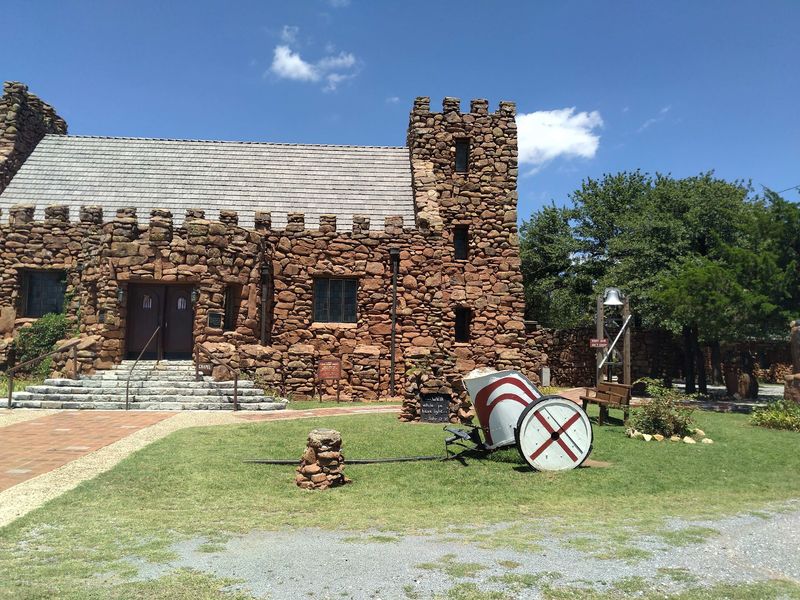
Tucked within the grounds, the gift shop at the Holy City of the Wichitas has earned its own loyal following among visitors. Reviewers consistently mention the staff as warm, knowledgeable, and genuinely enthusiastic about the history of the site.
For first-time visitors who arrive with questions and leave with a much deeper appreciation for what they just saw, a conversation with someone at the gift shop often makes the difference.
The shop carries a range of souvenirs, trinkets, and refreshments that give visitors a chance to take a small piece of the experience home. Nothing about it feels corporate or mass-produced.
The selection reflects the character of the site itself, modest and purposeful, with items that feel connected to the place rather than interchangeable with gift shop merchandise anywhere else.
For families visiting with children, the gift shop often serves as a natural endpoint to the exploration, a place to decompress and pick up a small memento before heading back to the car. The overall visitor experience at the Holy City is shaped by small moments like this one, where the people running the place clearly care about making guests feel welcomed.
That human warmth is part of what keeps visitors coming back long after their first trip.
Hours, Admission, and Getting There
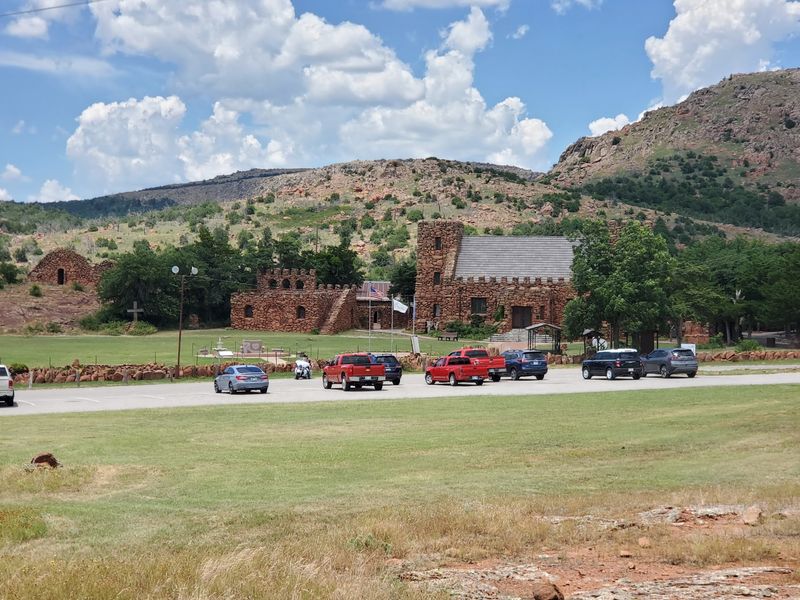
Planning a visit to the Holy City of the Wichitas is straightforward once you know what to expect. The site is open Monday through Saturday from 8 AM to 5 PM, with Sunday hours running from 1 PM to 5 PM.
Arriving earlier in the day on a weekday gives you the best chance of having the grounds to yourself, which significantly changes the feel of the experience.
Admission to the grounds is free, making this one of the most accessible hidden gems in Oklahoma for families, solo travelers, and road-trippers working with a tight budget. The gift shop is available for those who want to support the site financially, and donations help sustain the upkeep of the structures and grounds.
The Holy City operates as a non-profit organization, so visitor contributions go directly toward keeping the place running.
Getting there requires a bit of navigation, and some visitors note it can feel like an out-of-the-way find. The address is 262 Holy City Rd, Lawton, OK 73507, and the site sits within the Wichita Mountains Wildlife Refuge.
For questions, the phone number is 580-429-3361, and additional information is available at theholycityofthewichitas.org. Building a visit around a broader Wichita Mountains trip makes excellent logistical sense and maximizes the day.
Who Should Make the Trip and Why It Sticks With You
History lovers, road-trippers, families looking for something genuinely different, and anyone who appreciates places that carry a sense of purpose will find something real at the Holy City of the Wichitas. The site rewards curiosity without demanding anything in return.
You can spend an hour or an entire afternoon, and either way you will leave having seen something that most people in Oklahoma have never encountered.
For visitors with a spiritual connection to the subject matter, the experience carries obvious personal significance. For those without one, the architectural achievement, the wildlife, and the sheer oddity of finding ancient Jerusalem in the middle of the Oklahoma prairie make for a compelling afternoon all on their own.
The site manages to serve both audiences without feeling divided or uncertain about what it is.
What tends to linger after a visit is not any single feature but the overall feeling of having found something that should not exist where it does, and being genuinely glad it does. Visitors who stumble upon the Holy City while exploring the Wichita Mountains often describe it as the unexpected highlight of their entire trip.
That kind of quiet, lasting impression is exactly what the best hidden gems deliver, and the Holy City of the Wichitas delivers it with remarkable consistency.
Share this story