Long before calendars existed, ancient peoples tracked the sun with remarkable precision, building monuments, lighting bonfires, and gathering in communities to mark the moments when daylight reached its longest or shortest point of the year. The solstice was not just an astronomical event for them; it was a signal for planting, praying, feasting, and connecting with something much larger than everyday life. Thousands of years later, many of those same traditions are alive and surprisingly accessible to modern travelers. From a prehistoric stone circle in England that draws tens of thousands of visitors every June to a candlelit Persian gathering that stretches through the longest night of the year, these celebrations span continents, cultures, and centuries.
The best part is that you do not need a time machine to attend any of them. Pack your curiosity, check the calendar, and get ready to celebrate the sun the way your ancient ancestors did.
1. Stonehenge Summer Solstice, Amesbury, Wiltshire, England
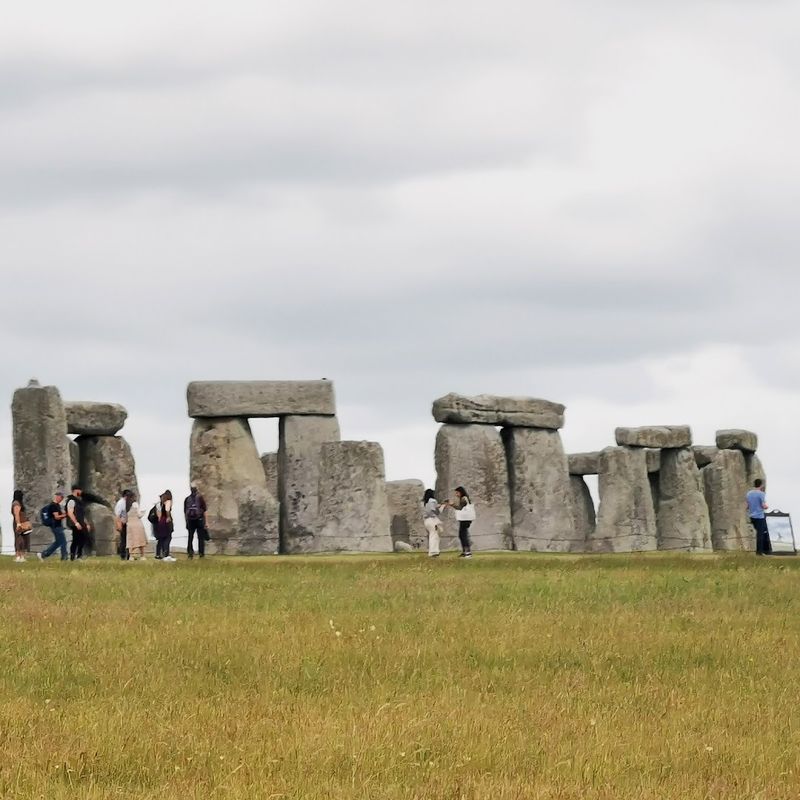
Every June, somewhere between 20,000 and 25,000 people gather in a field in Wiltshire to watch the sun rise over a pile of rocks, and somehow it is one of the most extraordinary things you can do on planet Earth.
Stonehenge was constructed between 3000 BC and 1600 BC, and its alignment with the summer solstice sunrise was no accident. The rising sun positions itself directly behind the Heel Stone, sending light along the central axis of the monument with architectural precision that still impresses modern engineers.
English Heritage opens the site for managed public access on the solstice, allowing visitors to walk among the stones rather than viewing them from a distance. Arrive several hours before dawn to navigate parking and security.
Druids, neo-pagans, Hare Krishnas, and curious travelers all share the field together. No camping, no glass, and no climbing on the stones are permitted. English Heritage also streams the event live on YouTube for those watching from home.
2. Newgrange Winter Solstice, County Meath, Ireland
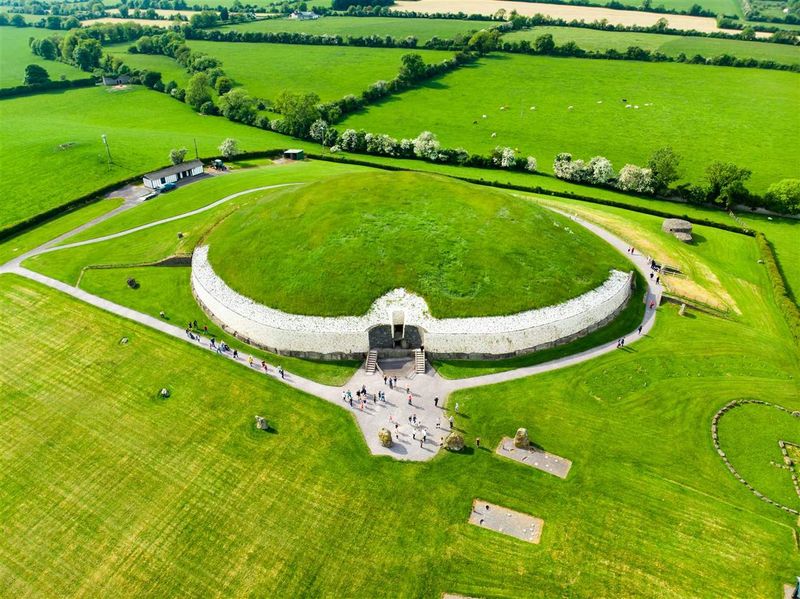
Built around 3200 BC, Newgrange predates both Stonehenge and the Egyptian pyramids, and yet its builders managed to engineer a roof-box above the entrance so precisely that sunlight enters the inner chamber for just seventeen minutes around the winter solstice.
The catch is that only a handful of lottery winners get to stand inside the chamber during the actual event each year. Tens of thousands of people apply annually for a small number of spots, making it one of the most competitive sunrise experiences in the world.
Everyone else gathers outside the monument on the surrounding grounds, which is still a genuinely memorable experience given the age and scale of the site. The Office of Public Works manages the lottery and the visitor center nearby.
County Meath in December is cold and often wet, so layering up is essential. Newgrange sits within the Bru na Boinne UNESCO World Heritage Site, surrounded by other Neolithic monuments worth exploring before or after the main event.
3. Inti Raymi, Cusco, Peru
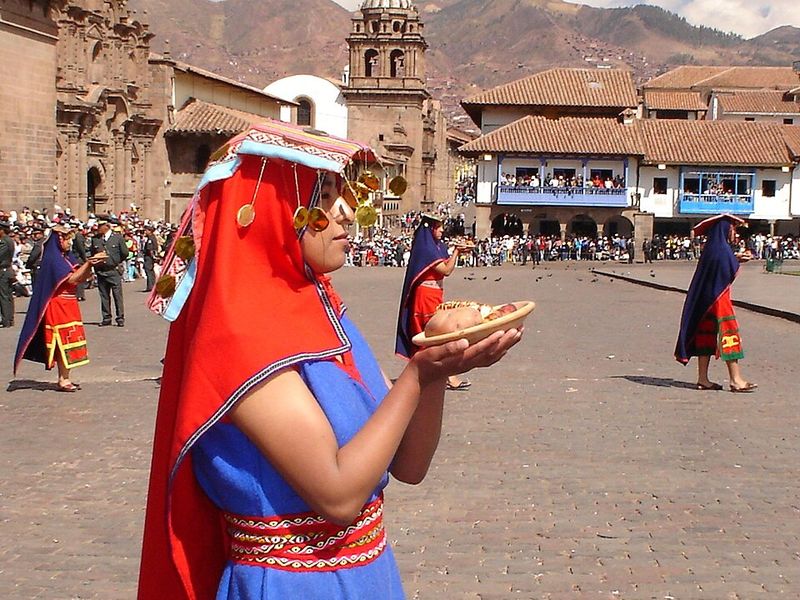
On June 24th each year, the ancient Inca capital of Cusco transforms into a living history pageant that draws around 100,000 spectators from across the globe.
Inti Raymi, which translates as Festival of the Sun, was the most important ceremony in the Inca calendar. Spanish colonizers banned the celebration in 1572, but Peru revived it in 1944 as a cultural and theatrical reenactment, and it has grown steadily in scale and international attention ever since.
The day begins with a ceremony at Qorikancha, the original Temple of the Sun in central Cusco, before a procession carries the Sapa Inca actor through the Plaza de Armas. The grand finale unfolds at the massive Sacsayhuaman fortress on the hill above the city, where the main theatrical performance takes place.
Tickets for the Sacsayhuaman portion are sold in advance and tend to sell out. The Plaza de Armas ceremony is free to watch from the surrounding streets. Book accommodation in Cusco months ahead, as the city fills up quickly for this event.
4. Jani Festival, Riga, Latvia
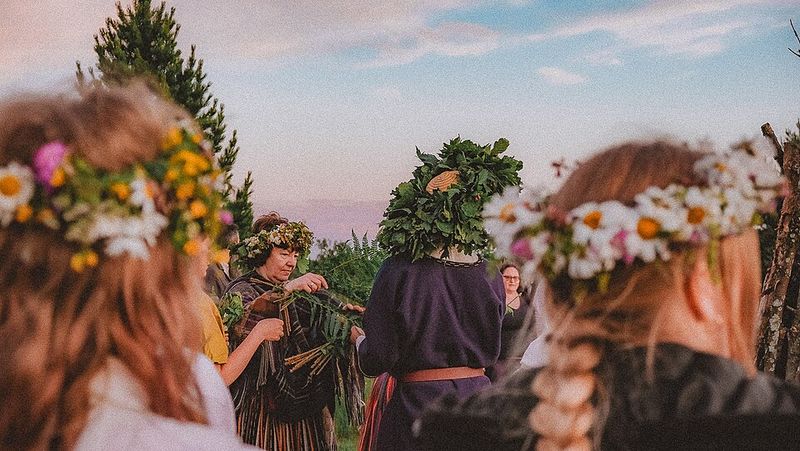
Latvia takes midsummer seriously enough to make June 24th a national public holiday, and the Jani Festival is the reason why.
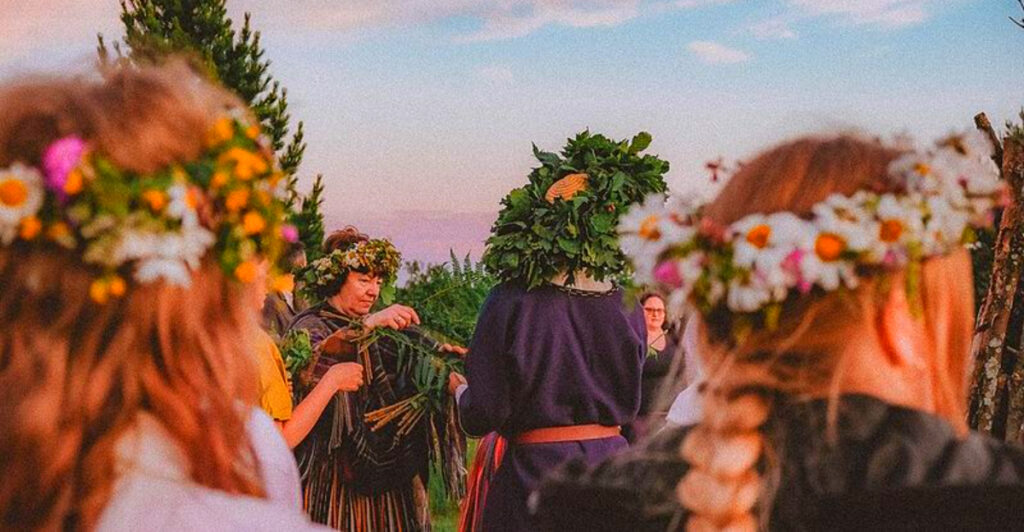
Rooted in pre-Christian Baltic traditions that predate Latvia’s recorded history, Jani celebrates the peak of summer with bonfires, flower wreaths, folk singing known as dainas, and festivities that run through the entire night. Oak leaves are particularly significant for men, who wear oak-leaf crowns instead of the flower wreaths favored by women.
The festival is celebrated across the whole country, but Riga hosts organized public events that welcome visitors. The Open-Air Ethnographic Museum outside the city is a popular venue, offering traditional programs in an authentic rural setting.
One well-known custom involves searching for the mythical fern flower at midnight, said to bring luck to whoever finds it. Nobody ever does, but the search is half the fun. Jani is fundamentally a community celebration, so joining a local family gathering if invited is the most genuine way to experience it.
5. Jonines (Rasos), Kernave, Lithuania
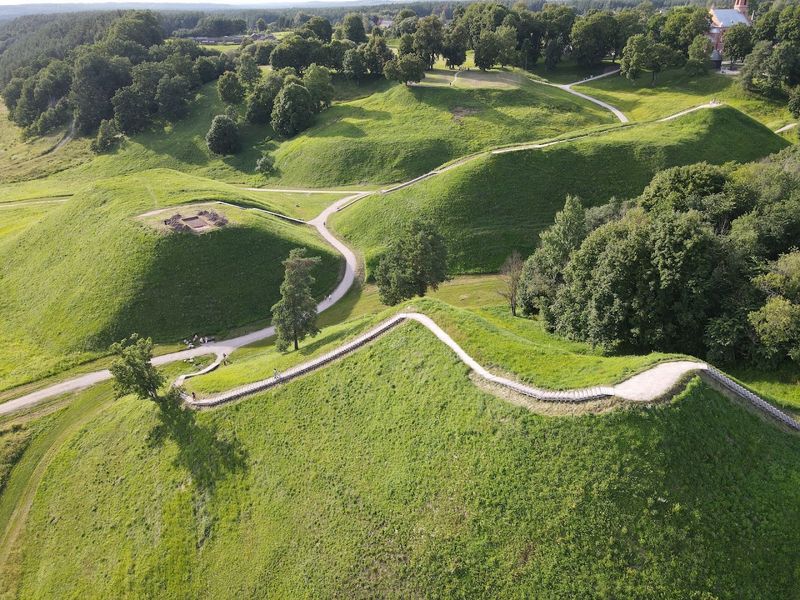
Lithuania’s Jonines festival, also called Rasos, is celebrated at one of the most atmospheric locations in the entire Baltic region: the Kernave Archaeological Reserve, a UNESCO World Heritage Site and the ancient capital of medieval Lithuania.
The setting alone is remarkable, with five hillfort mounds rising above the Neris River valley, providing a backdrop that makes the pagan customs feel genuinely connected to the landscape they originated from. Bonfires are lit on the hilltops, and participants float flower wreaths on the river as part of a tradition linked to the midsummer goddess Rasa.
The fern-flower legend also features prominently here. According to old Lithuanian belief, ferns bloom only on midsummer night, and finding the blossom grants wisdom and fortune. Couples jump over bonfires together as a symbol of unity and good luck for the year ahead.
The Kernave festival runs over several days in late June and includes folk music performances, craft markets, and historical reenactments alongside the ritual elements. Entry fees apply for the organized program.
6. Jaanipaev, Tallinn, Estonia
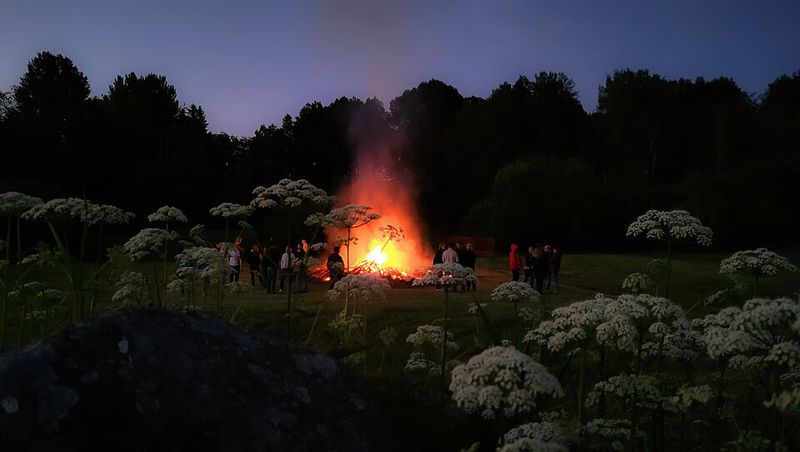
Estonia’s relationship with midsummer is so fundamental to national identity that Jaanipaev is an official public holiday, and the country essentially shuts down for several days of outdoor celebrating.
The tradition predates Christianity by centuries, rooted in ancient Estonian beliefs about the power of the midsummer period to influence harvests, health, and fortune. Bonfires are the centerpiece of the celebration, traditionally lit on hilltops to ward off negative forces and signal the height of summer to surrounding communities.
Tallinn hosts organized Jaanipaev events, but the most authentic experiences happen outside the city in the countryside, where local communities gather on private land or at village centers. The Estonian Open Air Museum in Tallinn’s Rocca al Mare district holds a well-regarded public program with folk music and traditional activities.
The Nordic midsummer sky barely gets dark at this time of year, which gives the bonfire a slightly surreal quality when it burns against a pale twilight horizon. Visitors should book accommodation well in advance, as Estonians travel home for the holiday en masse.
7. Golowan Festival, Penzance, Cornwall, England
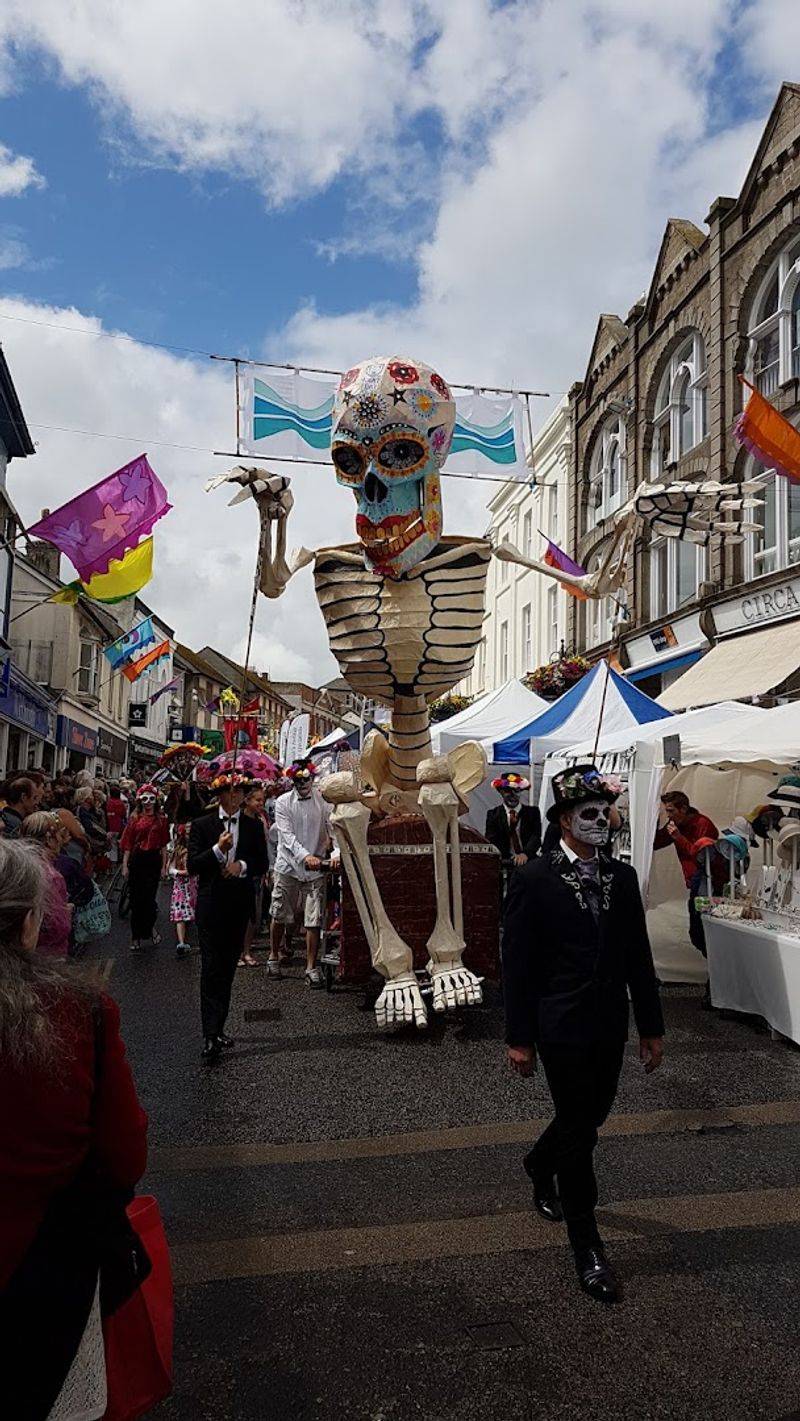
Penzance pulls off something genuinely rare: a street festival that feels ancient even though its modern version only relaunched in 1991 after a long ban dating back to the 1890s.
Golowan, derived from the Cornish word for the feast of St. John, has roots stretching back through medieval tradition into much older Celtic midsummer customs. The festival runs across eight days in late June and peaks on Mazey Day, a street celebration involving processional performances, community art, and large-scale outdoor events throughout the town.
The Quay Fair and the Mock Mayor of the Ordinalia election are quirky local highlights that give the festival a distinctly Cornish character. Torchlit processions and fire elements connect the event visually to its pre-Christian bonfire heritage.
Penzance is the westernmost major town in England, sitting on the tip of the Penwith Peninsula in Cornwall, which adds a geographic sense of being at the edge of something. The festival is free and family-friendly, with the town center serving as the main stage for most activities.
8. Alban Hefin at Bryn Celli Ddu, Anglesey, Wales
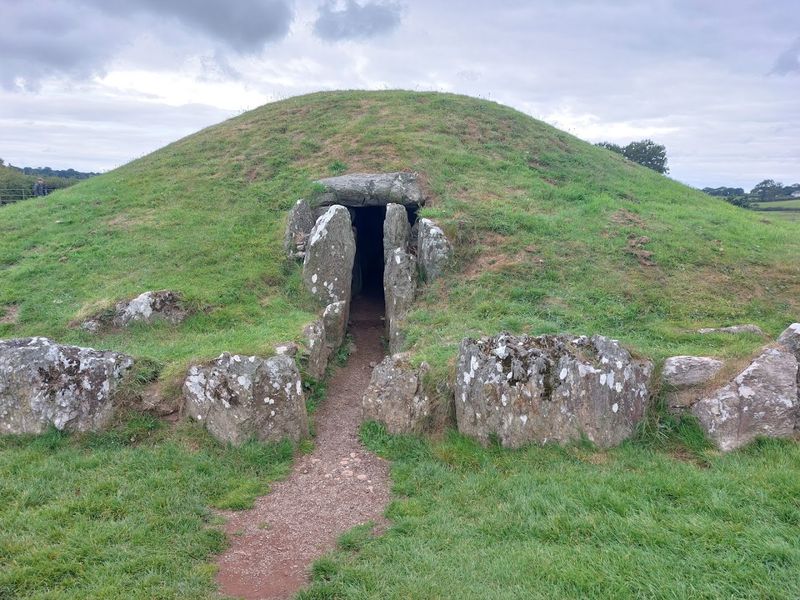
Not many people have heard of Bryn Celli Ddu, which is arguably one of the best reasons to visit it on the summer solstice.
This Neolithic chambered tomb on the Isle of Anglesey in North Wales is roughly 5,000 years old, and its passage aligns with the midsummer sunrise in a way that allows light to penetrate the inner chamber on the longest day. Modern Druids mark the occasion with a ceremony they call Alban Hefin, gathering at the site as dawn approaches.
Unlike Stonehenge, Bryn Celli Ddu receives a fraction of the visitors, making the experience quieter and more personal. The monument is managed by Cadw, the Welsh government’s historic environment service, and access during the solstice is generally open to the public.
Anglesey itself is a fascinating island connected to mainland Wales by road and rail bridges across the Menai Strait. The surrounding landscape is full of prehistoric sites, and a solstice visit pairs well with exploring the broader archaeological heritage of the island over a couple of days.
9. Alban Arthan at Maeshowe, Orkney, Scotland
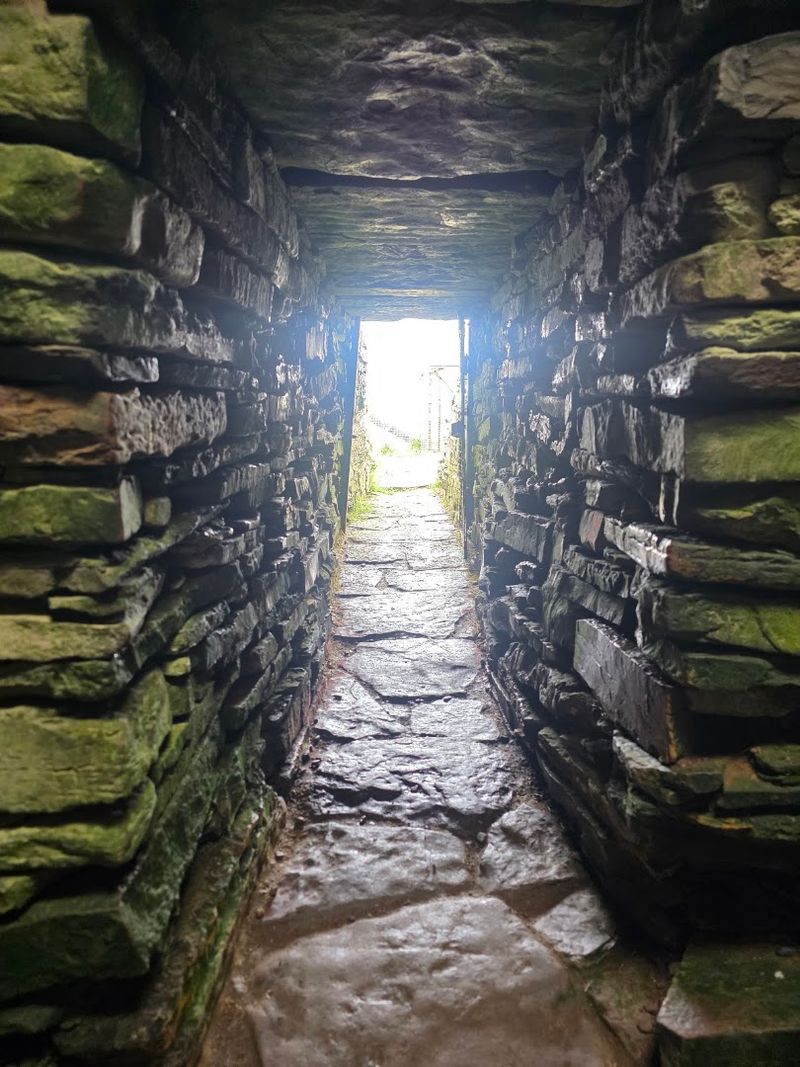
Orkney has a way of making visitors feel like they have stumbled into a prehistoric textbook, and Maeshowe is its most dramatic chapter.
Built around 2700 BC, this Neolithic chambered cairn is engineered so that the setting sun on the winter solstice shines directly down its entrance passage and illuminates the back wall of the chamber. The alignment works for several weeks around the solstice, but the effect is most pronounced on the shortest day of the year.
Historic Environment Scotland manages Maeshowe and organizes special winter solstice events and webcasts that allow a much wider audience to witness the phenomenon. Entry to the chamber itself requires a guided tour booked through the Orkney visitor center at Stenness.
The Orkney archipelago sits off the northern tip of Scotland and is home to an extraordinary concentration of Neolithic monuments, including the Ring of Brodgar and the Stones of Stenness, both within easy distance of Maeshowe. Visiting in December means short days and cold conditions, but the winter light on Orkney has a quality that photographers actively seek out.
10. Soyal Ceremony, Oraibi, Arizona, USA
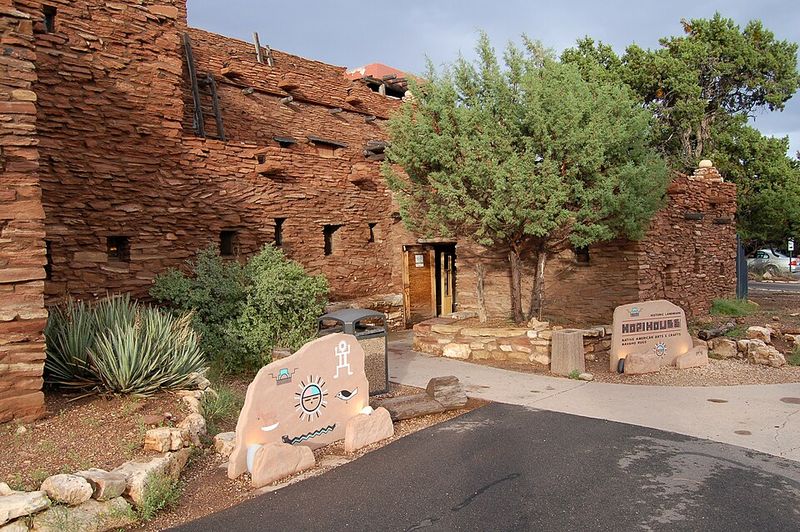
Old Oraibi, a Hopi village perched on Third Mesa in Arizona, is widely recognized as one of the oldest continuously inhabited settlements in North America, with occupation dating back to at least 1100 AD.
The Soyal ceremony marks the Hopi winter solstice and is among the oldest living ceremonial traditions on the continent. It involves prayer, ritual preparation, and spiritual practices tied to the return of longer days and the renewal of life in the coming agricultural season.
Public access to Soyal and most Hopi ceremonial events is extremely limited, and visitors should not attempt to observe sacred ceremonies without explicit official permission from the Hopi Tribe. The Hopi Cultural Center on Second Mesa provides information about what aspects of Hopi culture and history are open to respectful visitors.
Approaching any visit to Hopi lands with humility and thorough advance research is essential. Photography, recording, and sketching are prohibited in many areas. The most respectful way to engage is through officially sanctioned cultural programs rather than attempting to witness ceremonies independently.
11. Dongzhi Festival, Tainan, Taiwan
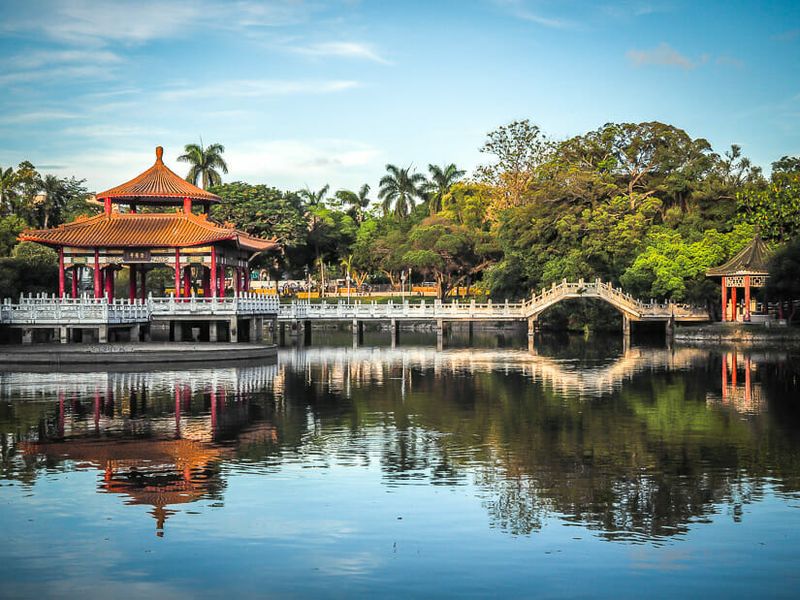
Tainan is Taiwan’s oldest city and its most temple-dense, which makes it the natural capital of Dongzhi celebrations on the island.
The Dongzhi Festival, rooted in Chinese tradition going back more than 2,000 years, marks the winter solstice as a time for family reunion and gratitude. Tangyuan, small glutinous rice balls served in sweet broth, are the signature food of the occasion, and their round shape symbolizes togetherness and completeness.
In Tainan specifically, the festival has a distinctive local character centered on temple rituals and community offerings. Families visit ancestral shrines and present tangyuan as part of a ceremonial practice that connects the living with those who came before them.
The city’s historic temples, including the Confucius Temple and Tzu-Chi Temple, host public Dongzhi activities that welcome curious visitors. Tainan’s old streets and traditional architecture give the festival a setting that feels genuinely historic rather than staged. Winter in Tainan is mild by most standards, making it a comfortable time of year to explore on foot.
12. Dongzhi Festival, Beijing, China
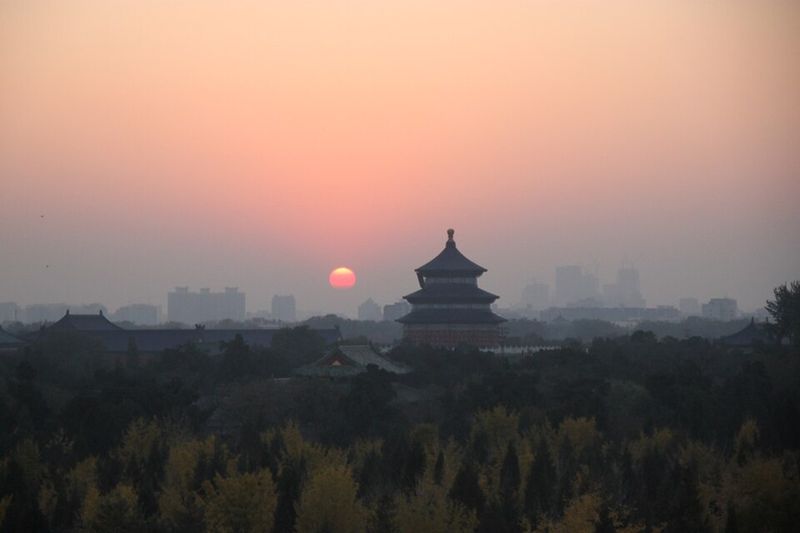
In Beijing, Dongzhi carries a weight that goes well beyond a simple seasonal marker. For centuries, the emperor performed elaborate rituals at the Temple of Heaven on the winter solstice, offering prayers for a prosperous harvest in the year ahead.
The Temple of Heaven complex, a UNESCO World Heritage Site, is one of the finest examples of imperial Chinese architecture and remains open to visitors year-round. During Dongzhi, it becomes a particularly meaningful place to visit given its direct historical connection to the festival.
Across the city, families gather for meals that prioritize dumplings in the north of China rather than the tangyuan more common in southern regions. The dumpling tradition in Beijing is tied to an old belief that eating them on the solstice protects against cold-related illness through the winter months.
Beijing’s hutong neighborhoods host community Dongzhi gatherings where locals make dumplings together in courtyards, and some cultural tourism programs offer visitors a chance to participate. The festival falls around December 21st or 22nd each year, coinciding with Beijing’s coldest season.
13. Shab-e Yalda, Tehran, Iran
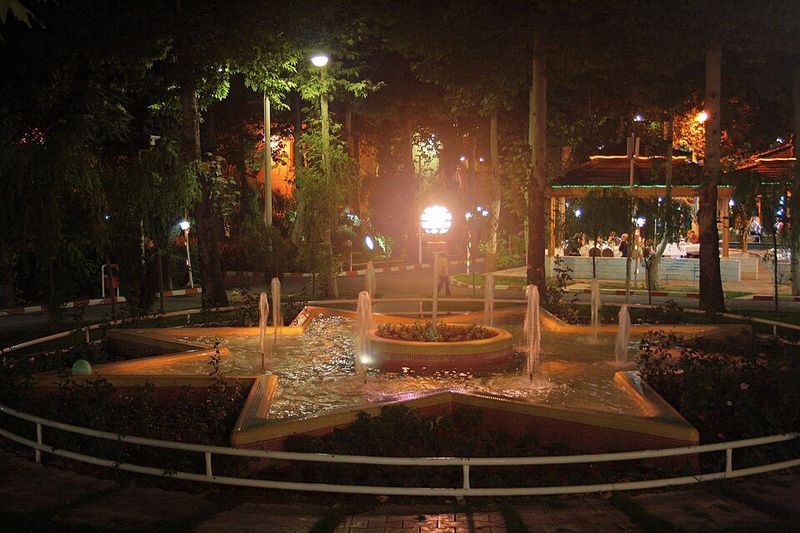
Shab-e Yalda might be the only ancient solstice tradition where poetry is considered as essential as food, and that alone makes it stand apart from every other celebration on this list.
Observed on the longest night of the year, Yalda Night has been part of Persian culture for more than 2,500 years. Families gather to stay awake through the darkness together, reading verses from the 14th-century poet Hafez and interpreting them as personal guidance for the year ahead.
The table spread for Yalda is distinctive: pomegranates and watermelons are central, along with dried fruits, nuts, and sweets. The red color of pomegranate seeds represents the dawn and the return of light, giving the fruit a symbolic role that goes beyond nutrition.
Tehran hosts public Yalda events in cultural centers and parks during the holiday, and the celebration is observed by Iranian communities worldwide. The date falls on December 21st or 22nd. For travelers in Iran during this period, receiving an invitation to a family Yalda gathering is considered a genuine mark of hospitality.
14. Midsummer at Skansen, Stockholm, Sweden
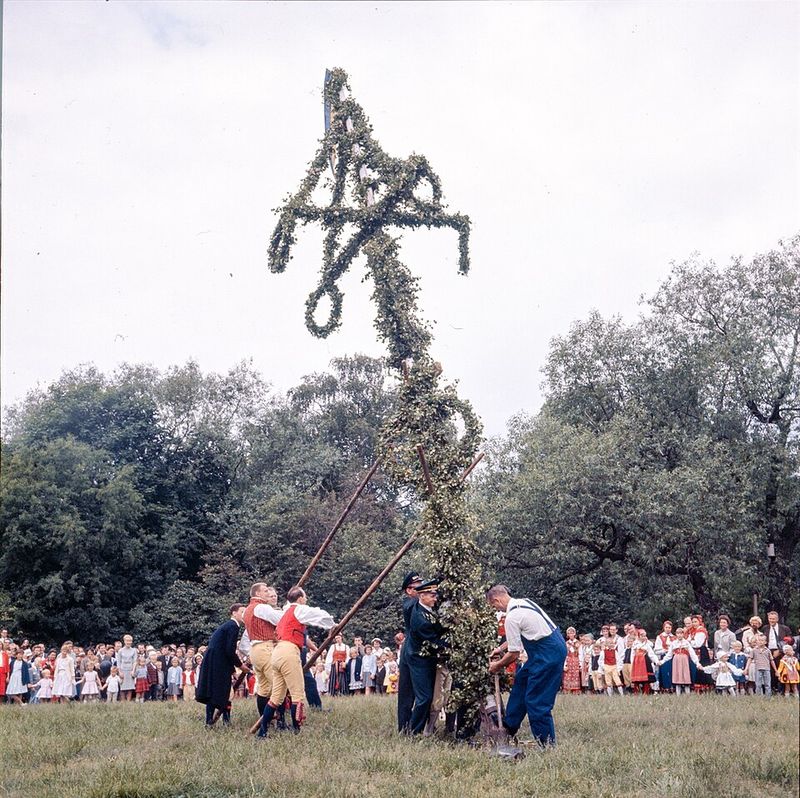
Sweden’s Midsummer is often described as the country’s most beloved holiday, and Skansen in Stockholm is where the nation puts its best folkloric foot forward for the occasion.
Skansen, founded in 1891, is the world’s oldest open-air museum, preserving historic Swedish buildings and cultural traditions across a large park on the island of Djurgarden. Every Midsummer, it hosts what is widely considered the most iconic public celebration in the country, centered on the raising and dancing around a maypole decorated with leaves and flowers.
The maypole tradition has pre-Christian roots connected to midsummer fertility customs, and the dances performed around it, including the frog dance, are known by most Swedes from childhood. Flower crowns are worn by participants of all ages, and folk musicians perform traditional tunes throughout the day.
Tickets for the Skansen Midsummer event sell out in advance, so booking early is strongly recommended. Swedish Midsummer typically falls on the Friday and Saturday between June 19th and 26th. The museum’s elevated position offers views across Stockholm’s waterways, adding a scenic dimension to the cultural program.
15. Midsummer at Seurasaari Open-Air Museum, Helsinki, Finland
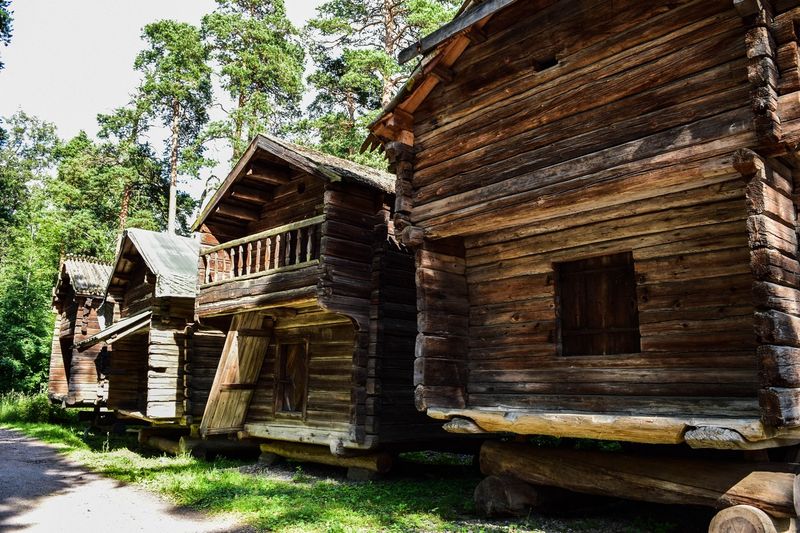
Finland’s Juhannus is the kind of holiday that empties cities and fills lakeside cabins, but for those who stay in Helsinki, Seurasaari provides a remarkably authentic alternative to the countryside.
The Seurasaari Open-Air Museum occupies a forested island connected to the mainland by a footbridge, and its collection of historic Finnish wooden buildings from different regions provides a genuinely traditional backdrop for the midsummer program. The centerpiece is a large bonfire lit on the waterfront, a custom with roots in ancient beliefs about fire’s power to protect communities during the vulnerable midsummer period.
Folk dancing performances, traditional music, and a ceremonial midsummer wedding reenactment are standard features of the Seurasaari program. The wedding tradition is a crowd favorite and draws large numbers of spectators each year.
The museum is managed by the Finnish Heritage Agency and charges an entry fee for the Juhannus event. Juhannus falls on the Saturday between June 20th and 26th. Helsinki’s midsummer sky stays light well past midnight at this latitude, giving the bonfire and the surrounding festivities a uniquely Nordic atmosphere that is hard to replicate anywhere further south.
Share this story