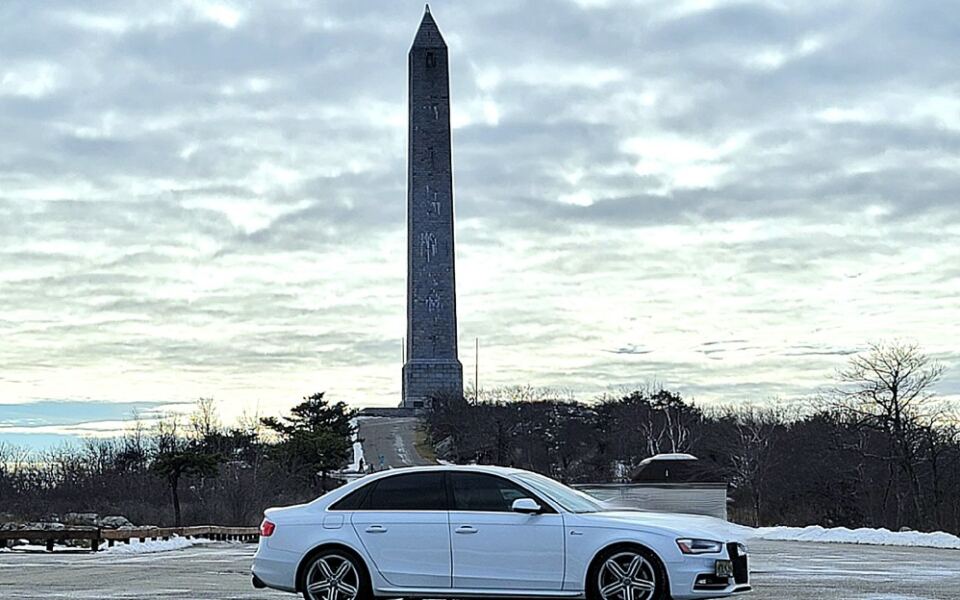
A New Jersey outing can begin with a curious thought: how much can one lookout really show you? Here, the answer reaches well beyond the state line.
A monument, trails, and a lake turn a simple stop into a trip with several ways to spend the day. The best part is finding out why people come for the view and then make time for the rest.
A Lookout on Monument Road
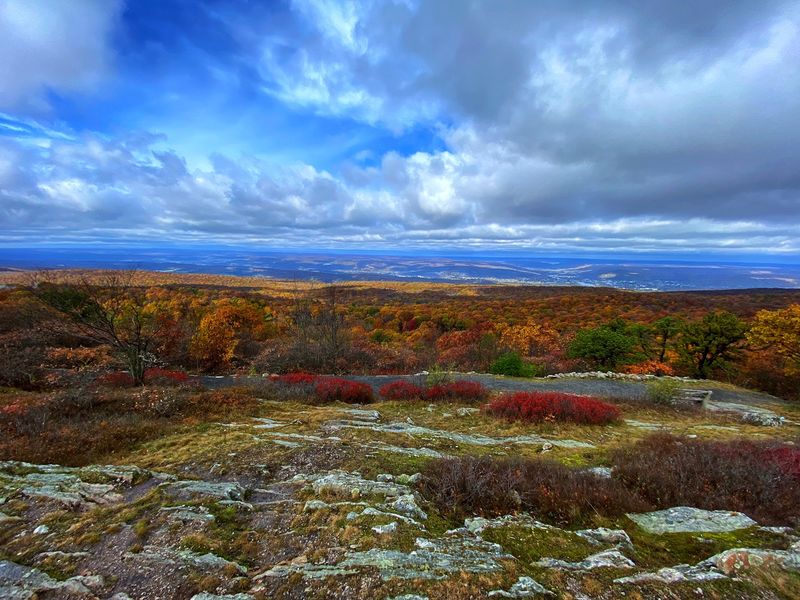
A short trip can have a surprisingly large destination. High Point Lookout is a scenic spot at Monument Rd, Wantage, NJ 07461, United States.
It sits in the High Point area, where the monument and nearby viewpoints give a trip here more to do than simply stop, look, and leave.
The first thing to know is that the lookout is part of a larger park experience. Accounts of the area mention trails, a lake, picnic spaces, and several places to take in the landscape.
That makes it useful to decide what kind of outing you want before you go. A brief monument stop and a longer day on the trails call for different amounts of time.
There is also a good reason to begin at the lookout: it establishes the scale of the place. New Jersey holds the high ground here, and the view introduces two neighboring states before the rest of the park enters the plan.
New Jersey’s Highest Point
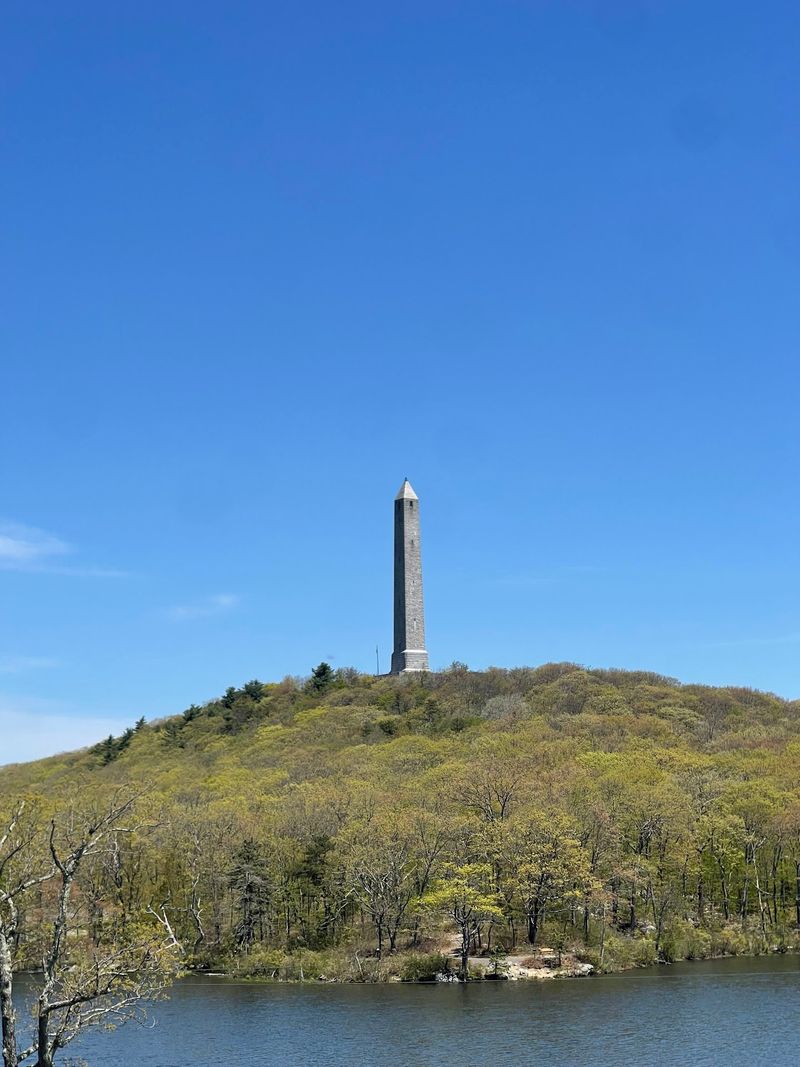
New Jersey does not need a coastline to make a geographical point. The High Point area includes the state’s highest elevation point, a distinction that gives the lookout an easy story to carry home.
The appeal is not a number on a sign. It is the chance to stand in New Jersey and understand how far the surrounding landscape extends.
That fact also helps explain why the monument draws attention. A stop near the top puts the state’s geography into context without requiring a long lesson or a complicated route.
Families can make the highest-point idea part of a day outdoors, while adults who know the state well may find the perspective a pleasant reset.
The distinction is worth keeping precise: the high point is a feature of this area, not a promise that every spot in the park offers the same outlook. Start near the monument, then see how the wider grounds change the trip.
The Monument’s Place in the Trip
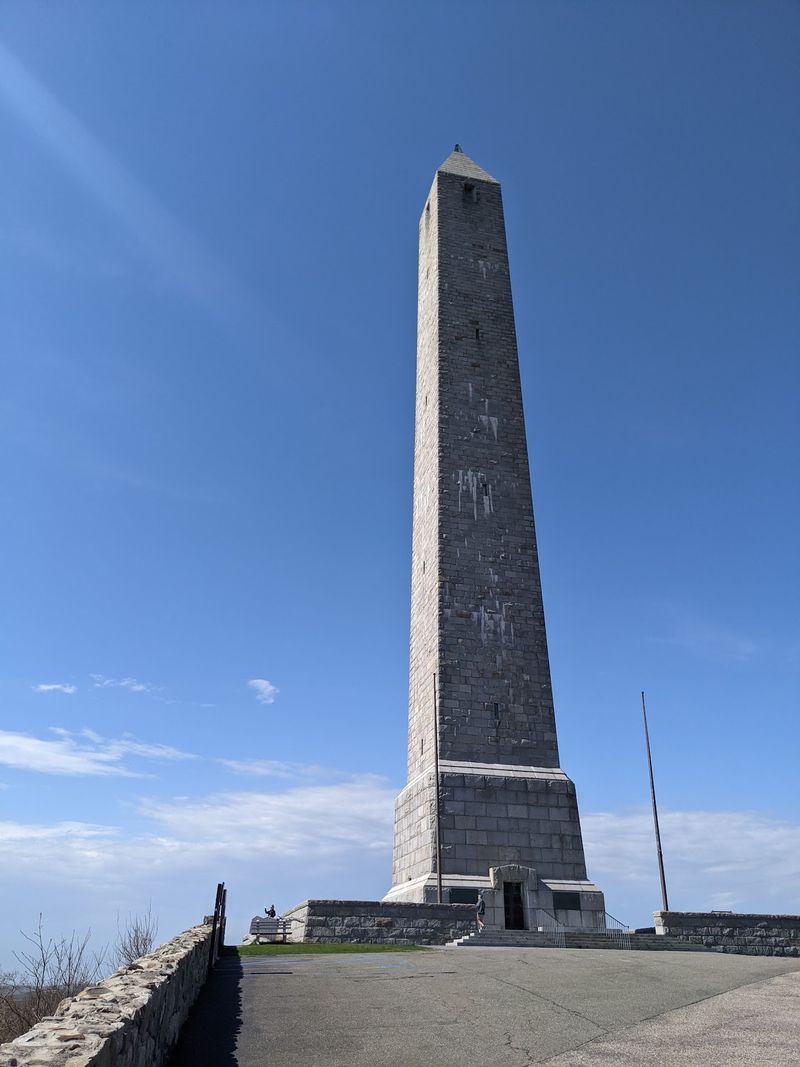
Some landmarks give an outing a clear center. High Point Monument does that here: it is the feature people head toward, the point around which a walk can be planned, and a reason to pause before choosing another activity.
The supplied accounts describe the tower area as a notable place for vistas.
There is history associated with the monument, though the available details do not establish dates or a full account of its origins. Rather than guess at either, it is better to let the site lead the visit.
Take time around the structure and look for information available on the grounds. One account also mentions informative displays outside a museum in the park area.
Access to any interior stairs should not be assumed for a particular day. An account describes climbing many steps, but current opening arrangements are not provided.
The monument still gives the outing a clear focus even when the visit stays outside.
Three States in One Outlook
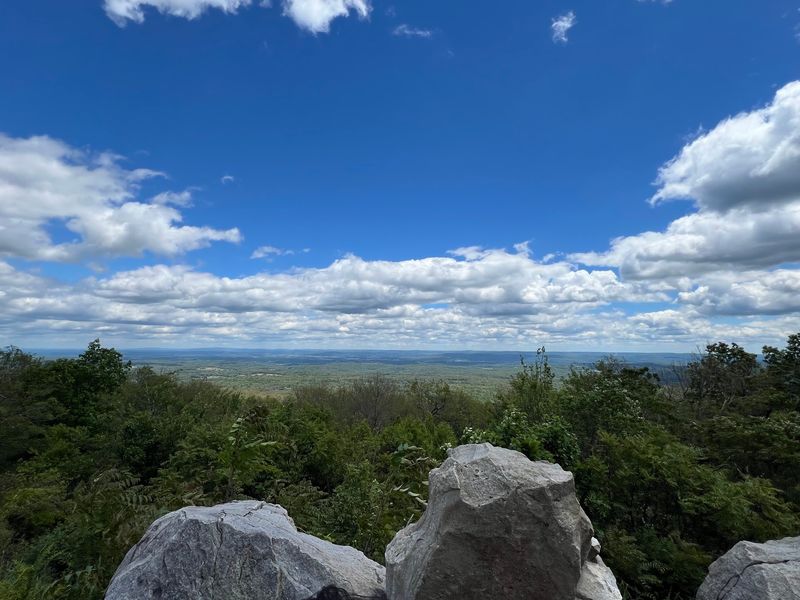
The state lines are the trick that makes this stop memorable. From the monument area, the panorama takes in New Jersey, New York, and Pennsylvania.
A day trip that began within one state becomes a chance to consider all three without changing destinations.
It is easy to rush a view once the main photograph is taken. Here, the more interesting task is working out what lies in each direction.
An account of the park mentions outdoor information that points out which states people are facing and identifies features in the surrounding area. Those details can turn a broad outlook into something more understandable, especially for younger travelers learning their regional map.
Conditions can affect how far anyone can make out distant features, so the sensible expectation is the tri-state perspective rather than a guaranteed list of landmarks. The attraction is the geography itself: a single New Jersey stop provides a shared frame for three neighboring landscapes.
More Than One Vantage Point
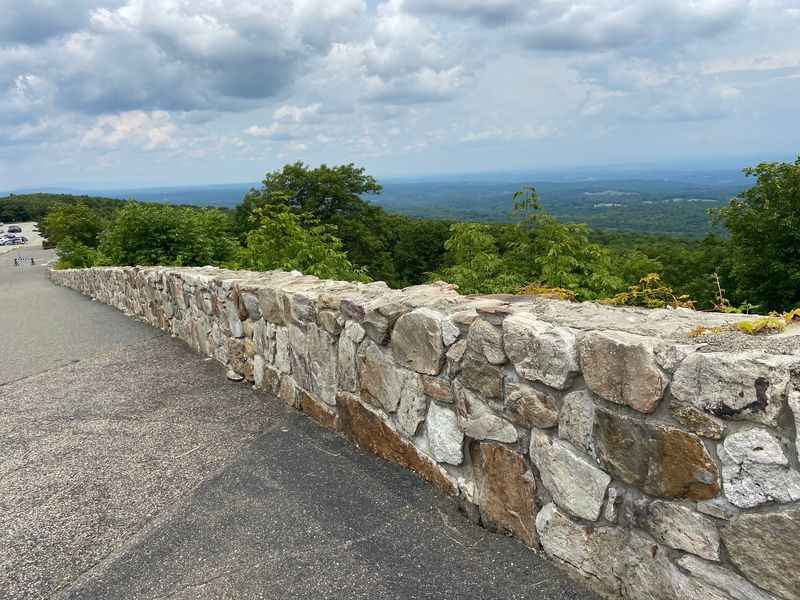
One lookout need not be the whole assignment. Accounts of the surrounding park describe several vistas, with the tower area singled out as a notable one.
That gives curious travelers a reason to keep exploring after the first pause near the monument.
Different stops can change how much of the terrain fits into view, even when the same three-state setting remains the main draw. There is no need to race between them or claim that one is universally best.
The useful approach is to treat the monument as an anchor and any additional vista as a bonus that suits the time and energy available.
This matters for mixed groups. Someone content with a shorter outing can focus on the main area, while a companion who wants more walking has a reason to continue.
Rather than turning the visit into a checklist, the park leaves room for a simple question: is the first viewpoint enough for today?
Trails Beyond the Monument
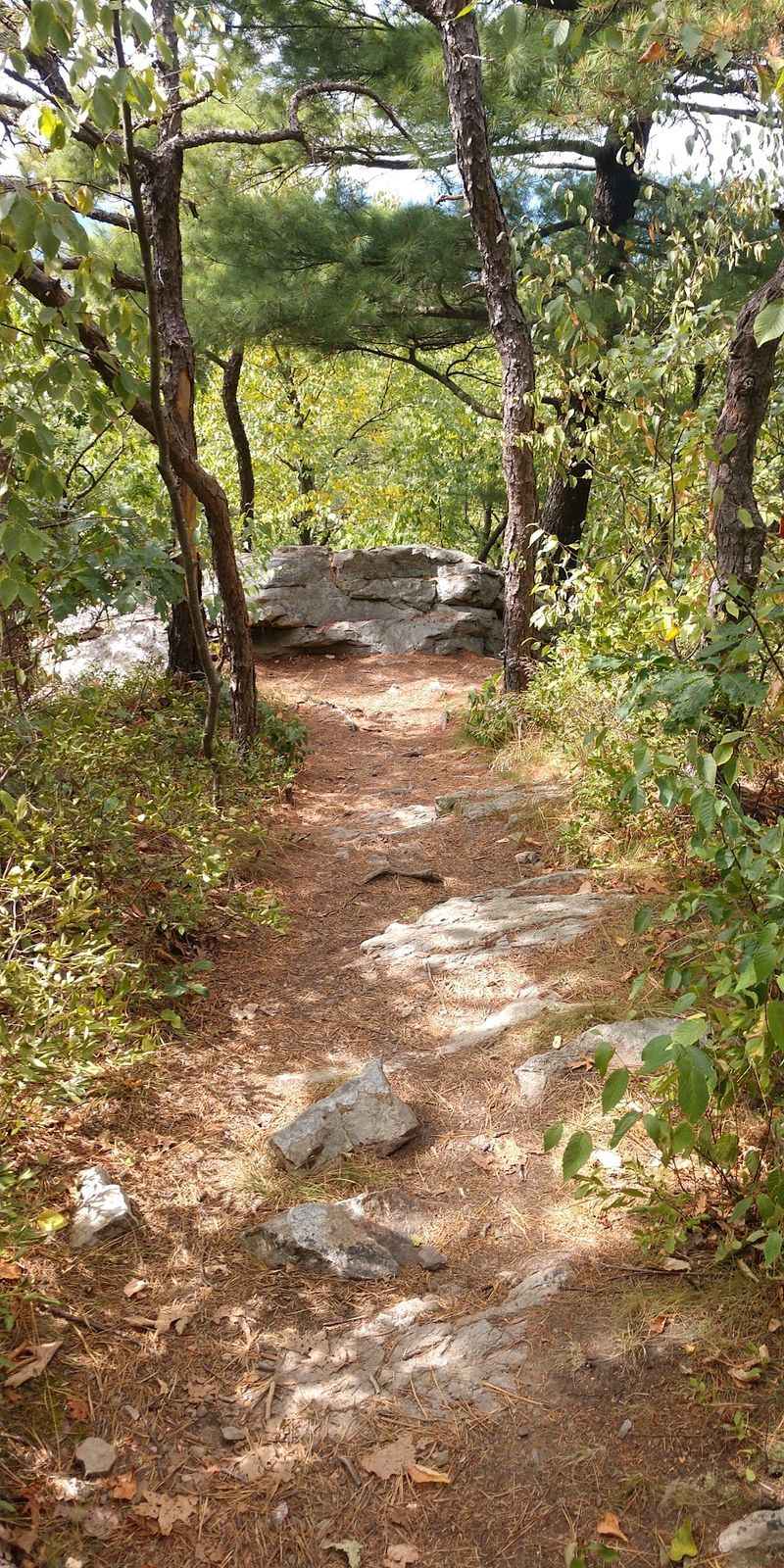
A monument stop can become a hiking day with very little change of subject. The park has multiple trails, and accounts describe choices for different ability levels.
One account mentions a moderate route of about 3.5 miles leading to the monument, while another describes walking along the mountaintop and down toward a cedar bog.
Those reports are helpful starting points, not a substitute for checking a current trail map. Route conditions and the effort required can differ from a quick stop by car.
A trail walk also changes the pace of the outing: the monument becomes a destination reached on foot rather than the first thing on the schedule.
Choose a route that fits the whole group, including the return journey. An uphill approach to the monument is noted in the supplied accounts, so an easy-looking finish should not be assumed.
For travelers who like to earn their pause, the trail network supplies options without making a hike mandatory.
The Lake as a Second Stop
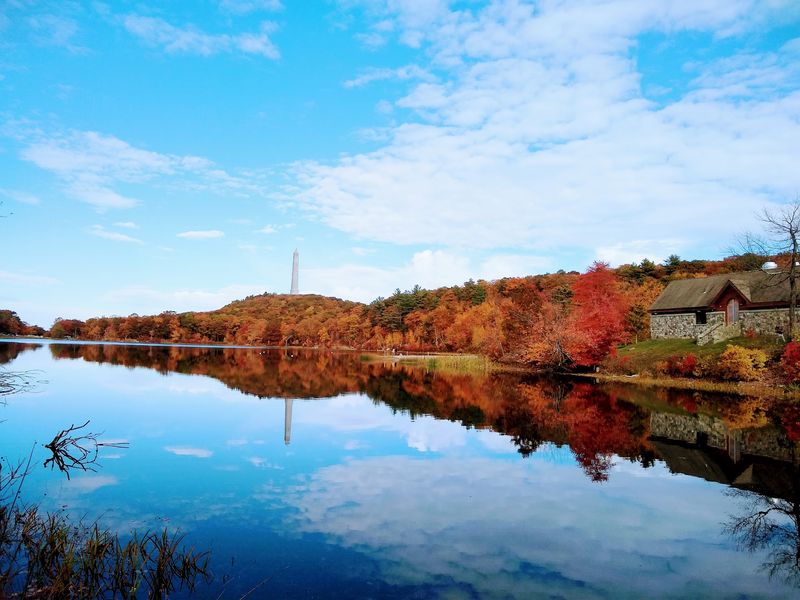
The lake changes the shape of a High Point day. After time near the monument, the park’s beach area offers another place to spend time, with sand and grass both mentioned in accounts of the grounds.
It is a useful contrast to an outing built entirely around viewpoints and trails.
Swimming is also described in the supplied accounts, including one mention of a lifeguard. That report does not confirm current staffing, beach hours, or swimming dates.
Check official park information before making the lake the central plan, particularly when traveling with children. The beach can draw a crowd on a hot day, so it is wise to leave room for plans to change.
For a group with different interests, the combination has an obvious advantage. Some may want a walk, others may prefer time near the water, and the lookout remains the shared reason for coming.
The lake gives the day another chapter, not a competing destination.
A Picnic-Friendly Park Day
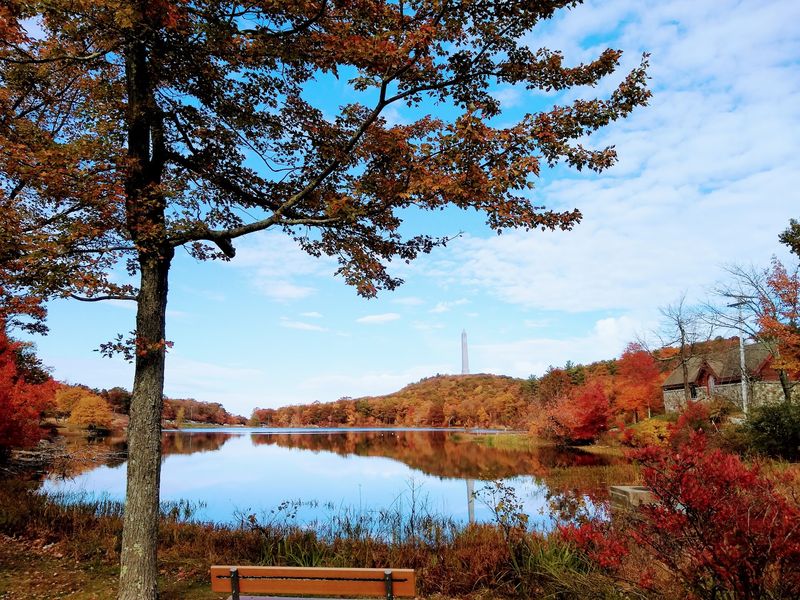
Not every good park plan needs another mile. Picnic sections are mentioned in accounts of the High Point area, giving groups a way to spend longer here without committing to a trail.
A pause between the monument and the lake can make a full day feel manageable.
The practical appeal is flexibility. A group can center the outing on the viewpoint, take a break in a designated picnic space, and decide afterward whether another walk makes sense.
Accounts also mention a playground and restrooms in different areas of the park. Their exact locations and current availability are not established in the supplied information, so a current park map remains useful.
Bring what the group needs rather than counting on a particular bench or table being open. One account raised a concern about seating near the monument, which is a reminder that facilities can affect a plan.
A picnic keeps the outing adaptable when everyone’s energy differs.
Wildlife Along the Way
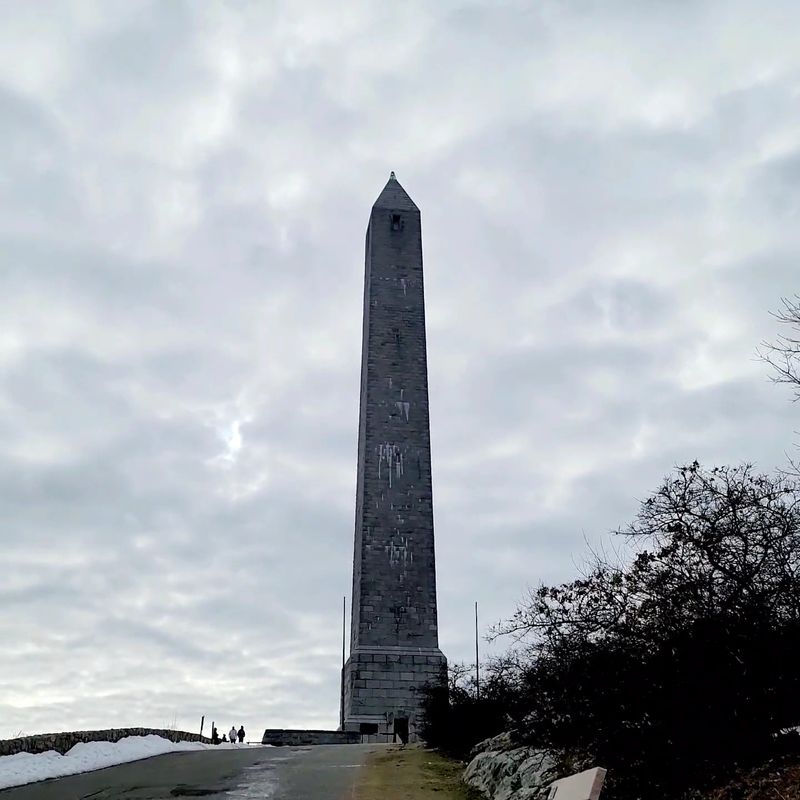
A lookout rewards attention in more than one direction. An account of a High Point trip mentions hawks and deer in the wooded areas, giving nature-minded travelers another reason to take their time.
Wildlife is never scheduled, of course, and no particular sighting should be treated as part of the ticket.
The useful habit is simple: allow space in the day for the park beyond its headline panorama. A shorter walk or a pause between activities may reveal details that a quick monument stop would miss.
Those moments do not require leaving established paths or approaching animals. They fit naturally into an outing already built around outdoor observation.
Families can turn that attention into a low-pressure activity, keeping track of what they notice without needing to identify everything on the spot. Other travelers may prefer to let the landscape set the pace.
Either way, the possibility of wildlife broadens the visit without asking the park to make guarantees.
Room for Different Kinds of Outings
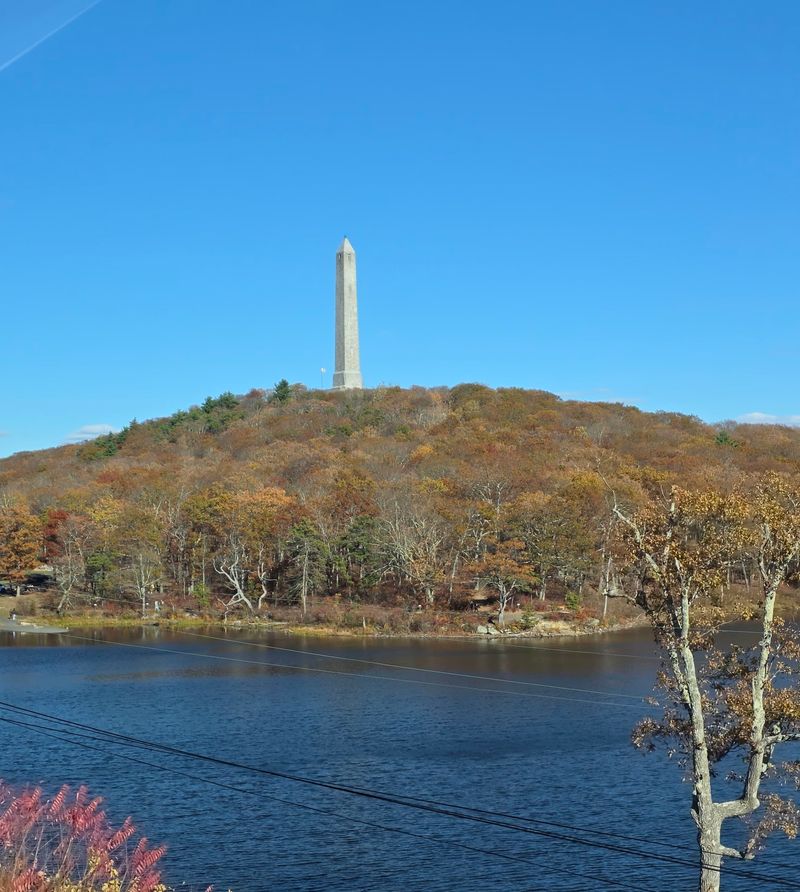
Groups rarely agree on the ideal length of a hike. High Point has an answer that does not require everyone to follow the same plan: a monument area reached by car, trails for those who want to walk, and lake and picnic options elsewhere in the park.
That mix makes the place suitable for several styles of day trip, but it does not make every part equally easy for every person. Accounts describe accessible parking spaces nearer High Point for vehicles with the appropriate placards or plates.
Another notes an uphill, worn walking path to the monument. Those details belong together when planning an outing with mobility needs.
Children may find the three-state idea engaging, and the wider park gives adults ways to adjust the schedule. Still, any plan involving monument stairs, a trail, or swimming needs its own current access check.
The strongest group itinerary is not the busiest one; it is the one everyone can comfortably share.
Spring Days and Winter Walks
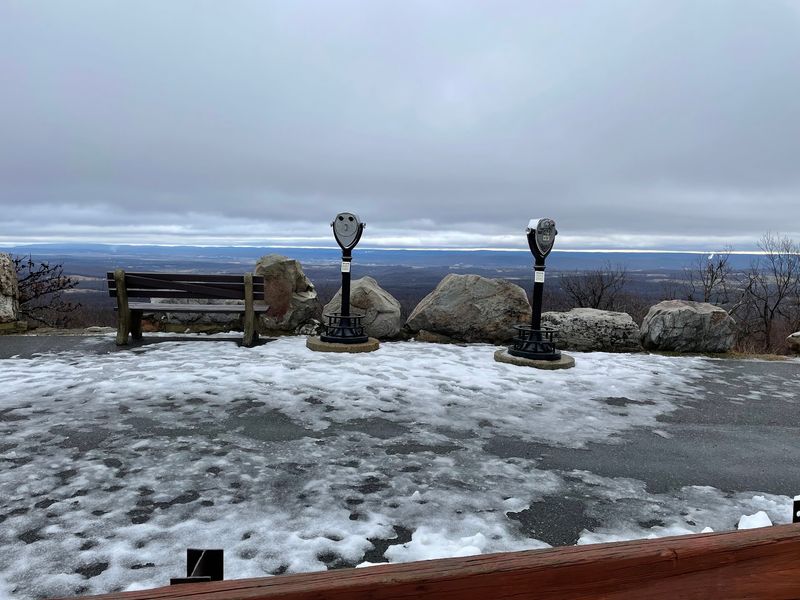
The calendar changes what kind of High Point outing makes sense. One account describes a first-weekend-of-spring hike; others mention a winter hike and a quieter off-season trip.
A separate account found a Monday in May quiet, but that single day cannot promise the same conditions on every weekday.
Seasonal planning is less about choosing a universally perfect month than matching the activity to the day. A trail-centered trip asks different things of a group than a brief visit near the monument.
The lake and beach, meanwhile, call for a separate check of current swimming arrangements rather than an assumption based on the date.
Keep the schedule flexible enough to favor the parts of the park that are available and comfortable when you arrive. The monument’s geographical appeal does not depend on a particular season.
What changes is how much of the surrounding park you want to add to it, and that is a decision best made with current conditions in mind.
Sunrise and Sunset Plans
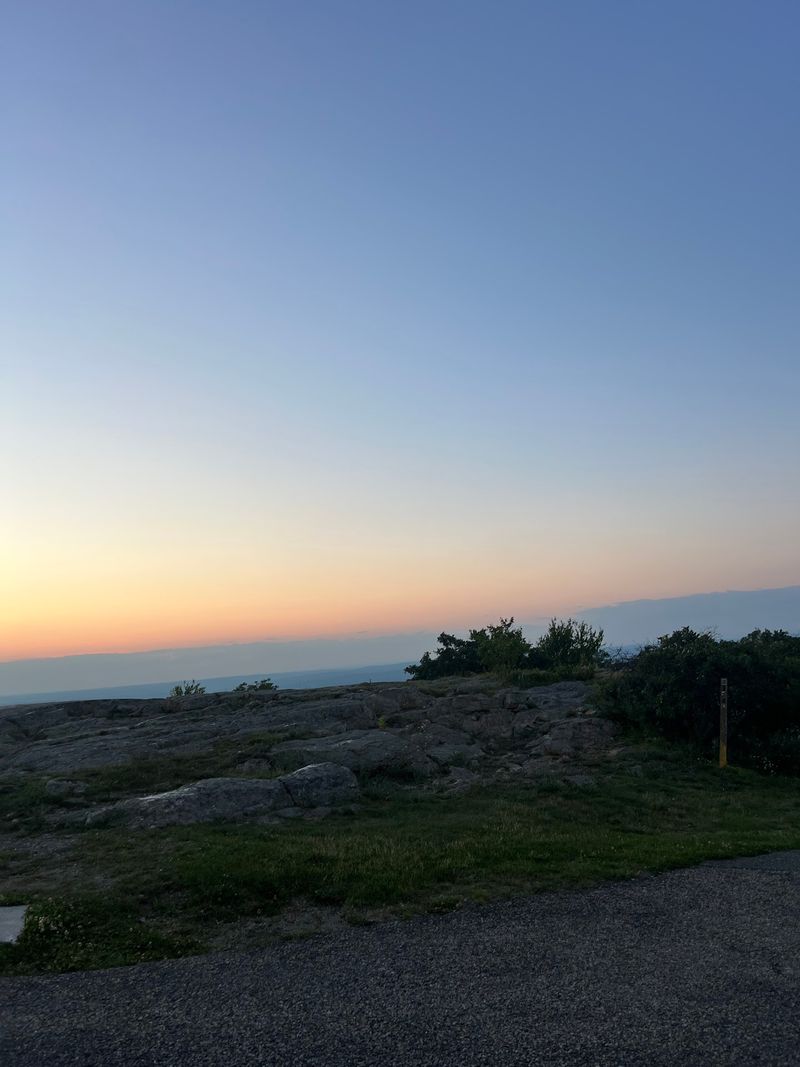
Timing can give a familiar route a different purpose. Sunrise and sunset are both mentioned as reasons to visit the High Point area, and the broad outlook makes it easy to understand why people plan around those hours.
The focus remains the same landscape, approached at a more deliberate time of day.
There is an important planning gap, however: the supplied information does not establish current park hours or whether every area is accessible at either time. Check official access details before arranging an early or late trip.
A photograph or past account is not a reliable schedule, and arriving for a closed area would miss the point of careful planning.
Even without building the whole day around a particular hour, the suggestion is useful. It encourages travelers to think about when they want to reach the monument instead of treating it as a stop to fit anywhere.
A little timing can give the three-state view more attention.
The Practical Route to the Top
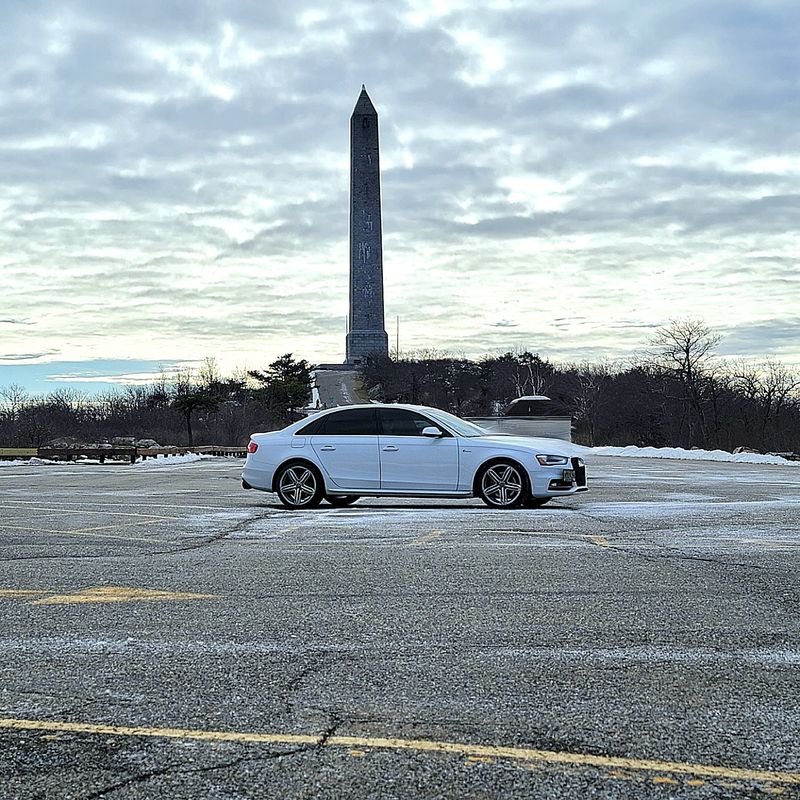
A smooth outing starts by choosing the right approach. Accounts describe the monument as reachable by car and mention a large parking lot.
There are reportedly closer parking spaces for vehicles displaying the appropriate accessible placard or plate. Those details make a shorter stop possible without committing to a long hike.
The last stretch still deserves thought. One account describes an uphill walk on a worn path to the monument, so parking nearby should not be confused with a completely level approach.
Travelers who need specific access information should confirm current conditions with the park before leaving home.
Cost and hours need the same caution. An account mentions a vehicle charge, but the supplied information does not establish today’s fee, when it applies, or current opening hours.
Check official park details for those answers rather than relying on a past trip. Monument Road provides the destination; a current access check supplies the plan that gets you there.
A View Worth Making Time For
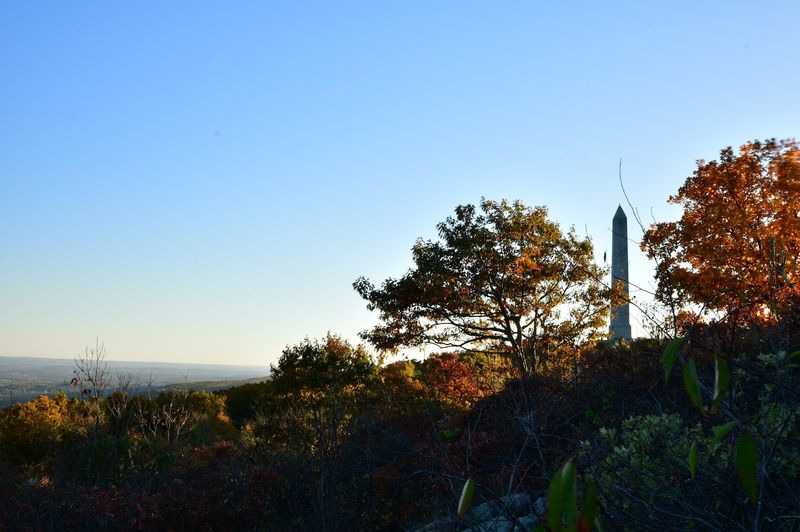
The best reason to make this trip is also the easiest to remember. High Point offers a New Jersey viewpoint connected to the state’s highest ground, with New York and Pennsylvania in the wider outlook.
The monument gives that geography a clear destination, while the surrounding park makes it possible to stay longer.
A worthwhile day does not have to include every trail, the lake, and a picnic. Pick the part that fits your group, then leave enough time for the main view.
Check current hours, any vehicle charge, and activity access before going, since those details are not settled by the supplied accounts.
There is a satisfying simplicity to the plan. Travel to one place, spend time around the monument, and let the map become a little more concrete.
For New Jersey residents who think they know their state well, a viewpoint shared with two others is a good reason to take another look.
Share this story