Most people assume that great bands are born in recording studios or on famous stages, but the real stories are far more ordinary and far more interesting. A church picnic, a school bulletin board, a classified ad in a local newspaper, a family living room, a college dorm room, these are the actual birthplaces of some of the most celebrated music acts in history. The 1960s through the 1990s produced an extraordinary number of bands whose origin stories say as much about chance and circumstance as they do about talent. What follows is a look at 15 famous bands and the surprisingly everyday places where it all began, from a Liverpool church fête in 1957 to a one-night joke performance in a small Los Angeles club in 1983.
Each story is a reminder that legendary careers rarely start with a grand plan.
1. U2
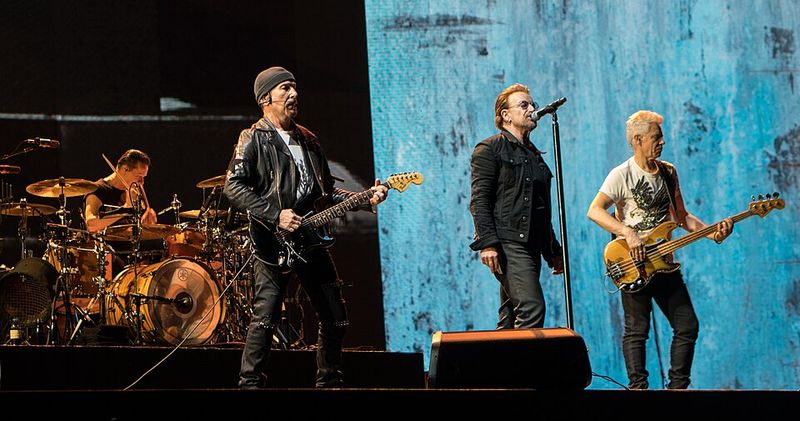
In September 1976, a 14-year-old drummer named Larry Mullen Jr. pinned a handwritten note to the bulletin board at Mount Temple Comprehensive School in Dublin. The note was straightforward: he was looking for musicians to form a band. The responses that came back changed everything.
Paul Hewson, later known as Bono, David Evans, who would become The Edge, his brother Dik Evans, and Adam Clayton all showed up. Their first rehearsal took place on September 25, 1976, in Mullen’s kitchen. The group cycled through names like “Feedback” and “The Hype” before landing on U2.
Dik Evans eventually departed, leaving the classic four-piece lineup intact. A handwritten note on a school bulletin board, the kind students typically use to sell textbooks or find study partners, launched one of the most commercially successful rock bands in history.
2. Metallica
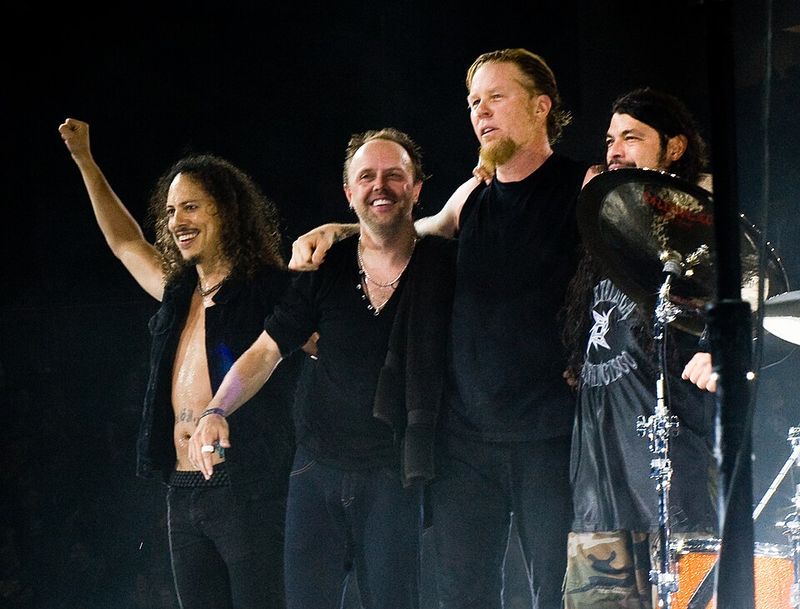
Before anyone could post on social media or music forums, musicians relied on classified ads in local newspapers to find collaborators. In 1981, Danish drummer Lars Ulrich placed an advertisement in The Recycler, a Los Angeles free paper, searching for fellow metal musicians inspired by bands like Diamond Head and Iron Maiden.
James Hetfield responded to the ad, and the two began working together. The band was officially formed on October 28, 1981. Dave Mustaine later joined as lead guitarist after answering a separate notice and impressing Ulrich and Hetfield with his equipment and playing ability.
Mustaine was eventually replaced by Kirk Hammett, completing the lineup that would record “Kill ‘Em All” in 1983. A small print advertisement in a free weekly paper turned out to be the starting point for one of heavy metal’s most enduring and influential acts.
3. Green Day
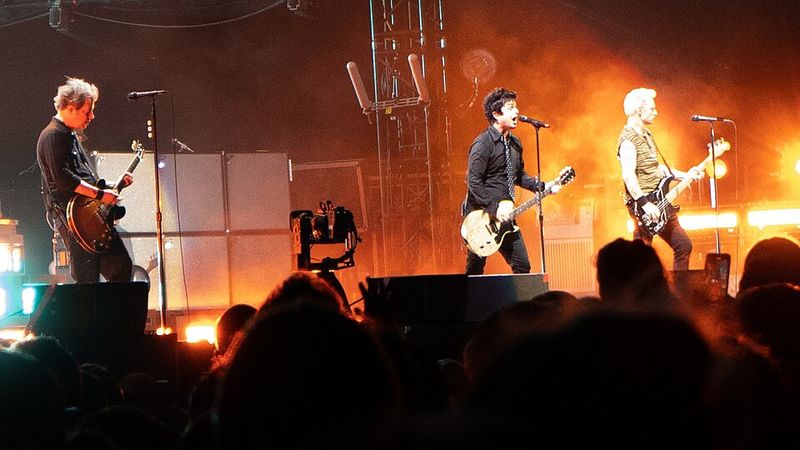
Billie Joe Armstrong and Mike Dirnt were just 10 years old when they met in the cafeteria of Hillcrest Elementary School in Rodeo, California. Their shared interest in music was obvious from the start, and that early bond never faded. Most school friendships do not survive middle school, let alone decades of touring.
By 1987, at age 15, the two had formed their first band, Sweet Children. Their debut performance took place on October 17, 1987, at Rod’s Hickory Pit in El Cerrito, a restaurant where Armstrong’s mother worked. The name Green Day came in April 1989.
Drummer Tre Cool replaced original drummer John Kiffmeyer in 1990, locking in the classic trio. A lunchroom conversation between two kids who liked the same music eventually produced one of pop-punk’s most recognized and commercially successful bands of the 1990s and beyond.
4. AC/DC
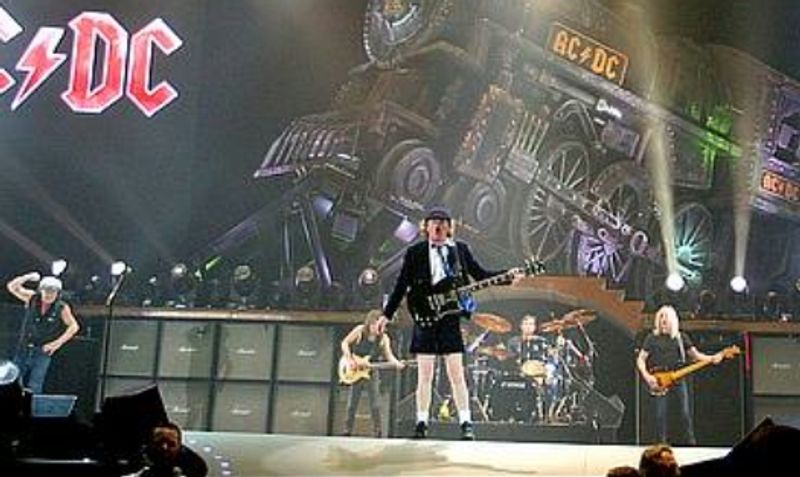
Malcolm and Angus Young began playing together inside their family home at 4 Burleigh Street in the Burwood suburb of Sydney, after the family had relocated from Scotland in 1963. Malcolm had the idea to start a new band, and Angus was the natural partner. Those early rehearsals in a modest Australian home had no particular ambition attached to them.
Their sister Margaret contributed two lasting decisions. She suggested the name AC/DC after spotting the abbreviation on the power adapter of her sewing machine, and she also proposed that Angus wear his schoolboy uniform as a stage costume. Both ideas stuck permanently.
AC/DC officially formed in November 1973. The schoolboy uniform became one of rock’s most recognizable visual signatures, and the band went on to sell over 200 million records worldwide. It all started with brothers rehearsing in a family living room in suburban Sydney.
5. Foo Fighters
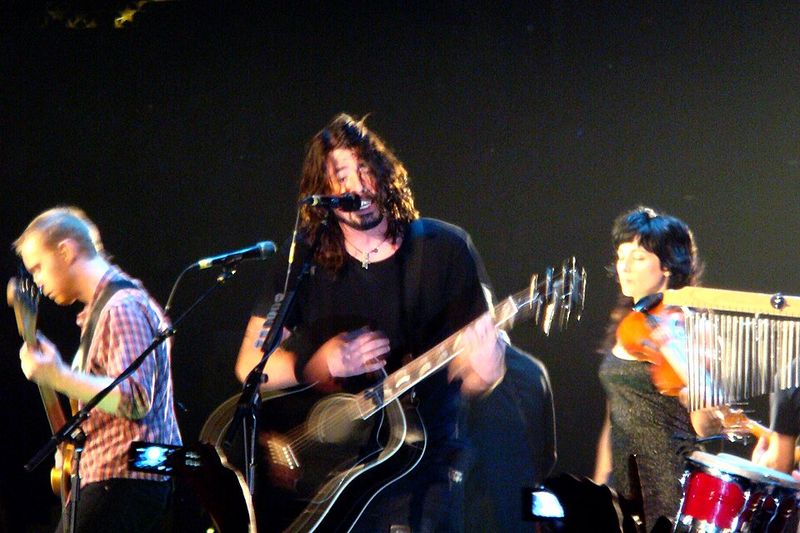
After Nirvana disbanded in 1994, Dave Grohl did not immediately seek out collaborators. Instead, he booked six days at Robert Lang Studios in Shoreline, Washington, from October 17 to 23, 1994, and recorded an entire album essentially by himself, handling vocals, guitar, bass, and drums.
His intention was personal rather than commercial. Grohl chose the name Foo Fighters to keep the project anonymous, borrowing the term from a ufology book. He made roughly 100 cassette and LP copies to share with friends, with no plan for a wider release. Record labels took notice anyway.
Grohl signed with Capitol Records and assembled a proper band, including Nate Mendel, William Goldsmith, and Pat Smear. Their first full-band performance came in February 1995. A solo home-recording project driven by personal need quietly became one of the most commercially durable rock bands of the late 1990s and 2000s.
6. The Beatles
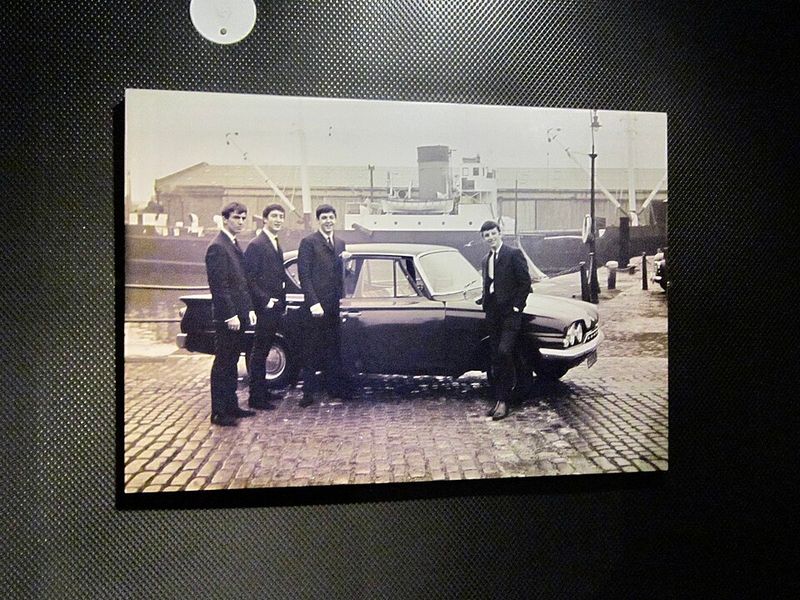
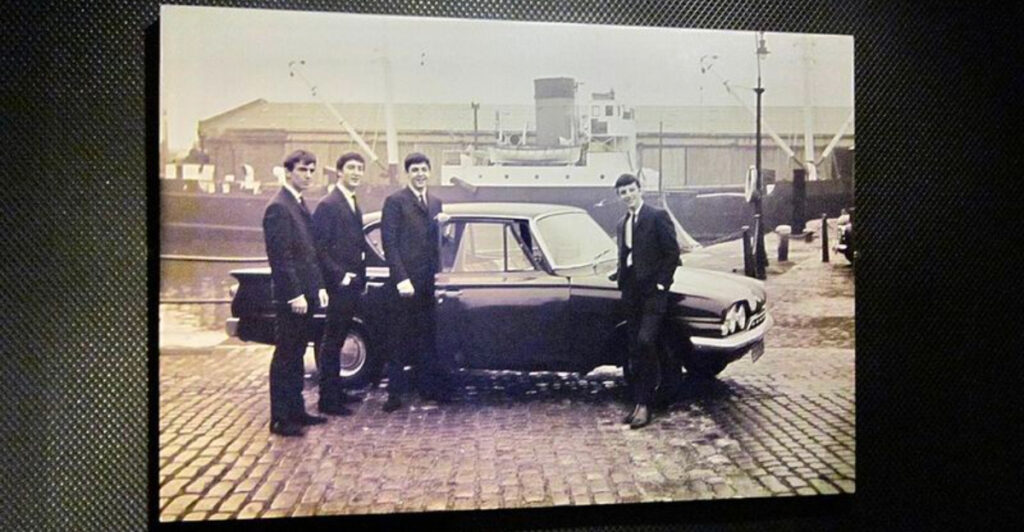
On July 6, 1957, a 16-year-old John Lennon performed with his skiffle group, The Quarrymen, at the St. Peter’s Church fête in Woolton, Liverpool. A mutual friend introduced him that afternoon to 15-year-old Paul McCartney, who then demonstrated his guitar skills by playing “Twenty Flight Rock” and “Be-Bop-A-Lula.” McCartney even showed Lennon how to tune his guitar correctly.
About two weeks later, Lennon invited McCartney to join The Quarrymen. George Harrison followed not long after, recruited through McCartney. That single church event in a Liverpool suburb set in motion a chain of introductions that would reshape popular music entirely.
The Quarrymen later evolved through several name changes before becoming The Beatles in 1960. A neighborhood church fundraiser, of all things, turned out to be the most consequential music venue of the 20th century.
7. The Monkees
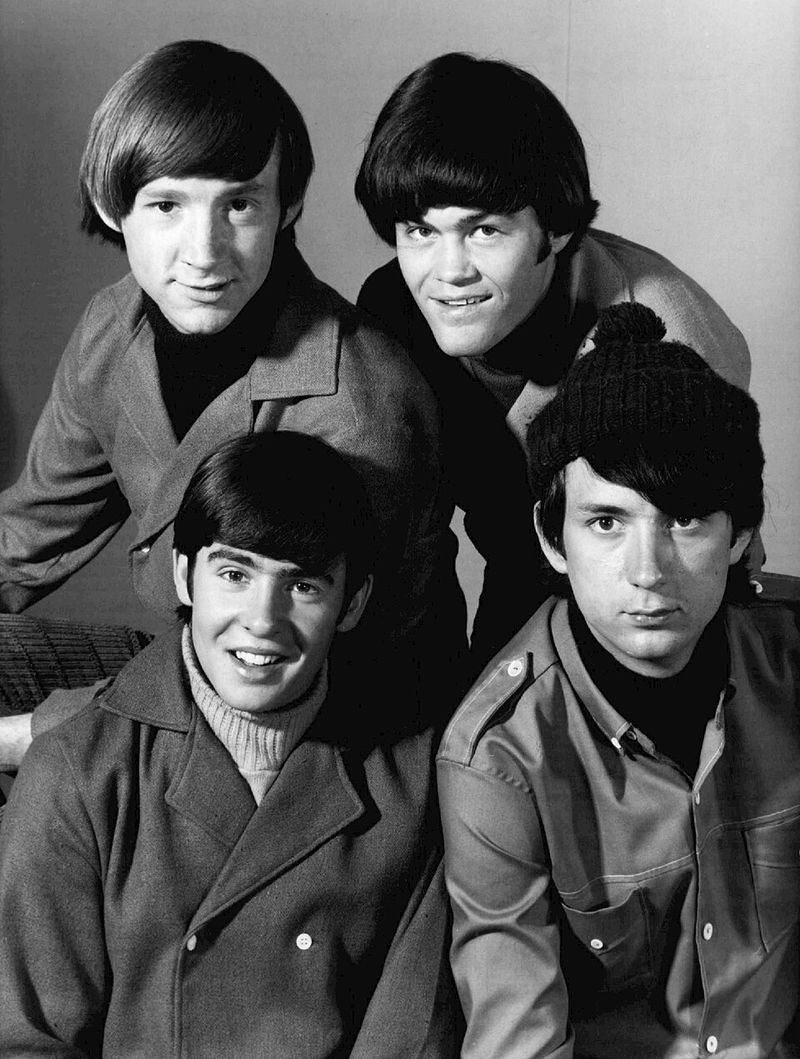
Television producers Bert Schneider and Bob Rafelson placed an advertisement in Daily Variety and The Hollywood Reporter in September 1965, calling for “4 insane boys, age 17-21” who were “folk and rock musicians-singers for acting roles.” More than 400 people auditioned for the four spots on a planned NBC sitcom.
Micky Dolenz, Davy Jones, Michael Nesmith, and Peter Tork were selected. Interestingly, Nesmith was the only one of the four who actually responded directly to the published ad. Jones already had a Columbia Studios contract, Dolenz came through his child-acting background, and Tork was recommended by another auditionee.
The Monkees television series debuted in September 1966 and became a massive hit. The band sold millions of records and, by early 1967, was reportedly outselling both The Beatles and The Rolling Stones combined. A trade-paper casting call created one of the decade’s biggest pop phenomena.
8. Blink-182
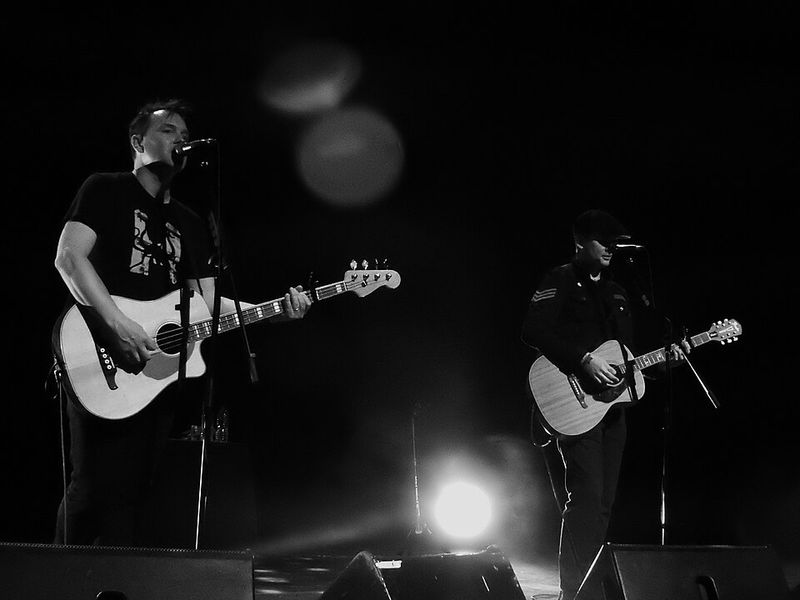
Tom DeLonge’s expulsion from Poway High School in 1992 sent him to Rancho Bernardo High School for a semester. There, he befriended Kerry Key, whose girlfriend happened to be Anne Hoppus, the sister of Mark Hoppus. Anne introduced the two on August 2, 1992, and they immediately connected over a shared passion for punk rock.
The two began writing songs together in DeLonge’s garage. In one early meeting, Hoppus reportedly climbed a lamppost and jumped off to impress DeLonge, landing hard enough to need crutches for six weeks. DeLonge later recruited Scott Raynor, a 14-year-old drummer he met at a Battle of the Bands event at Rancho Bernardo High.
The band released their debut album, “Cheshire Cat,” in 1994. An expulsion from school, a girlfriend’s brother, and a lamppost stunt formed the unlikely chain of events behind one of pop-punk’s most recognizable names.
9. ABBA
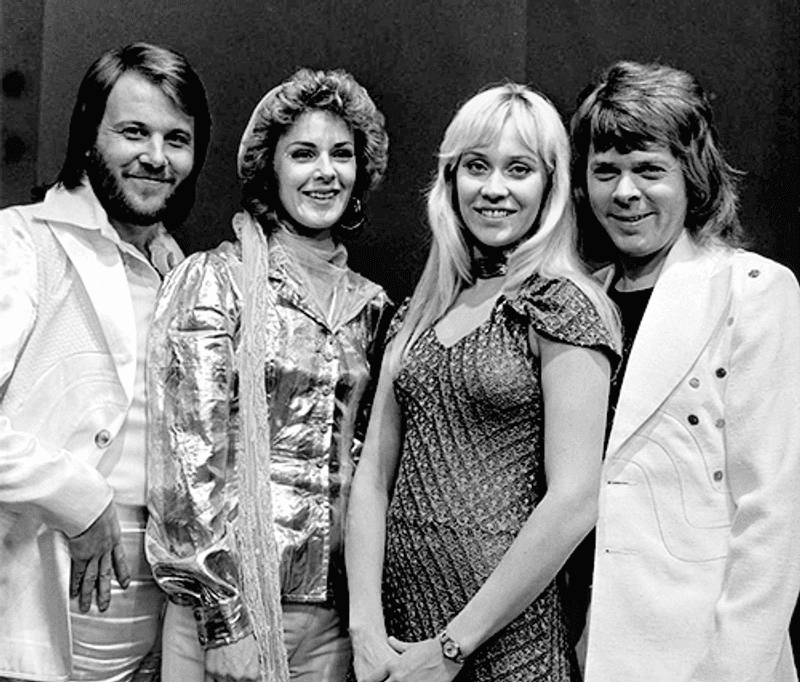
All four members of ABBA had already built individual careers before they ever performed together as a unit. Björn Ulvaeus and Benny Andersson first met in June 1966 and developed a close songwriting partnership over several years. They met Agnetha Fältskog and Anni-Frid Lyngstad in the spring of 1969.
Their first joint stage appearance as a quartet, billed as “Festfolket” (Party People), took place on November 1, 1970, in Gothenburg. The name ABBA, an acronym of their four first names, was officially adopted in 1973 by their producer Stig Anderson. Their international breakthrough came at the Eurovision Song Contest in April 1974, where they won with “Waterloo.”
Before Eurovision, they were a moderately successful Swedish act. The leap from local celebrity to global pop phenomenon happened in a single televised contest. Few groups have traveled such a precise and documented path from collaborative experiment to worldwide recognition.
10. Queen
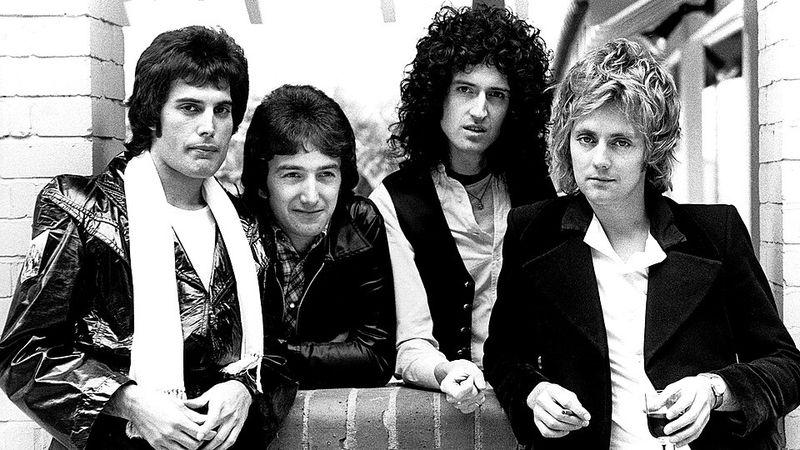
Guitarist Brian May placed a notice on a noticeboard at Imperial College London in 1968, looking for a drummer. Roger Taylor responded, and the two formed a band called Smile with vocalist Tim Staffell. The university setting gave the group rehearsal space, an audience, and a sense of creative momentum.
Freddie Mercury was a devoted fan of Smile and encouraged May and Taylor to push their ambitions further. When Staffell left in 1970, Mercury joined and proposed renaming the group Queen. Bassist John Deacon, an electronics student at Chelsea College, completed the lineup in February 1971.
Queen’s first full-lineup concert took place at Imperial College Union Hall on July 18, 1970. A commemorative plaque was unveiled there in 2013, attended by May and Taylor. A university noticeboard seeking a drummer quietly set off one of the most theatrical and technically accomplished careers in rock history.
11. Coldplay
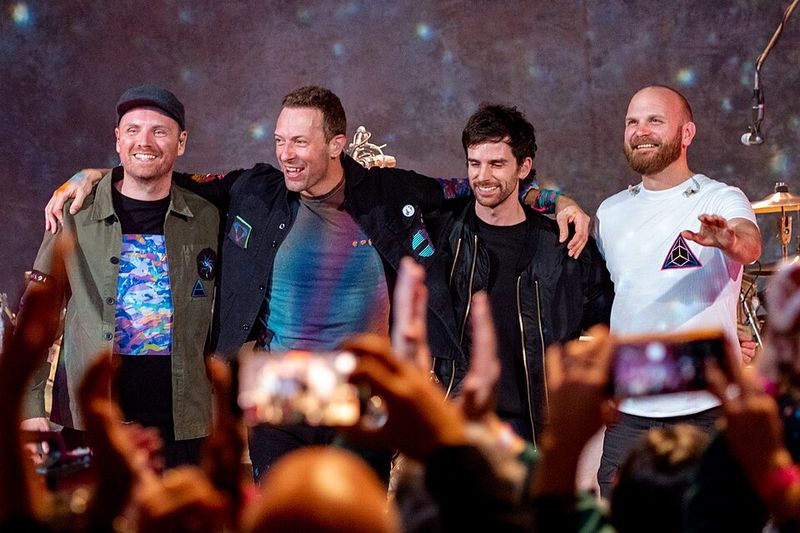
Chris Martin and Jonny Buckland met during orientation week at University College London in September 1996, specifically in Ramsay Hall, a student dormitory in Bloomsbury. They began writing songs together in early 1997, initially performing as a two-piece called “Pectoralz,” which says a great deal about the confidence levels of most university freshmen.
Guy Berryman joined as bassist after meeting the others around the student residence. The trio briefly used the name “Starfish” before Will Champion joined in January 1998. Champion had no formal drumming experience at the time and was asked to play partly because his roommate owned a drum kit.
The band officially became Coldplay in 1998, adopting a name that a fellow UCL student had discarded. Their debut EP was released in 1998, and their first studio album “Parachute” followed in 2000. A dormitory hallway introduction during freshers week launched one of the bestselling rock acts of the 2000s.
12. R.E.M.
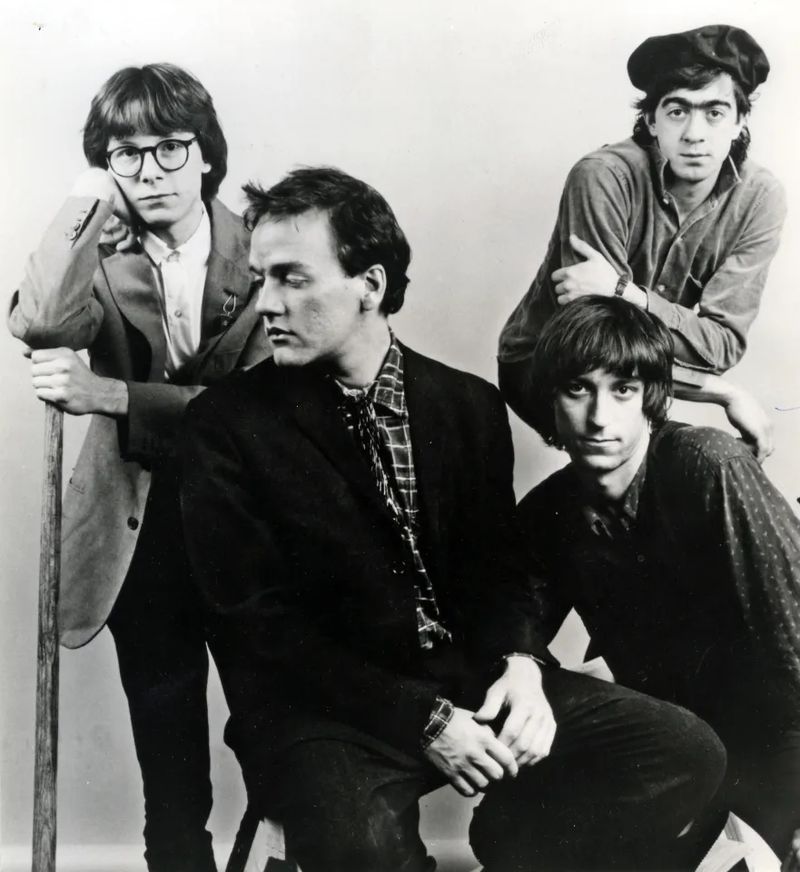
Peter Buck was working a shift at Wuxtry Records in Athens, Georgia, in January 1980 when Michael Stipe walked in. The two started talking about music and quickly realized they were buying and saving the same records. That conversation at a record store counter turned into a plan to start a band.
Mike Mills and Bill Berry, both University of Georgia students who had played together previously, completed the group. The four began rehearsing in an abandoned Episcopal church near campus. Their first public concert took place on April 5, 1980. The band tried several names, including “Twisted Kites,” before Stipe randomly selected R.E.M. from a dictionary.
All four members left their university studies in 1980 to commit fully to the band. R.E.M. became one of the defining acts of American alternative rock through the 1980s and 1990s. A record store conversation between two music fans sparked a 31-year career.
13. Imagine Dragons
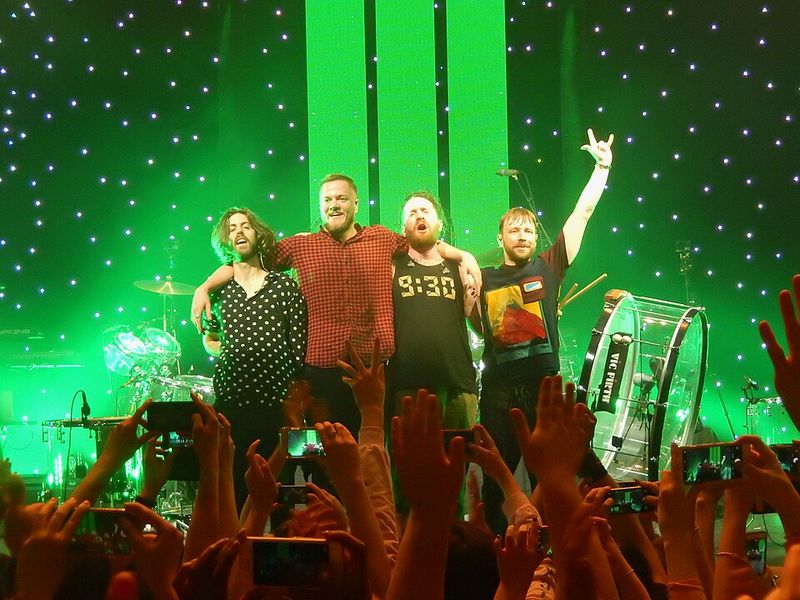
Dan Reynolds and Andrew Tolman were both students at Brigham Young University in Provo, Utah, when they met in 2008 and decided to form a band. The original lineup was a five-piece that also included Andrew Beck, Dave Lemke, and Aurora Florence. That first version of Imagine Dragons was built almost entirely from students living on or near campus.
The group gained traction quickly in the local Provo music scene. On October 25, 2008, just their third live performance, they won the BYU Battle of the Bands. They followed that with a win at the Velour Battle of the Bands on December 13, 2008.
The band’s name is an anagram of a phrase known only to its original members, a detail they have never publicly disclosed. After some lineup changes, the group relocated to Las Vegas and eventually broke through nationally. A college campus in Utah turned out to be a surprisingly effective launching pad for a global pop-rock career.
14. The Beach Boys
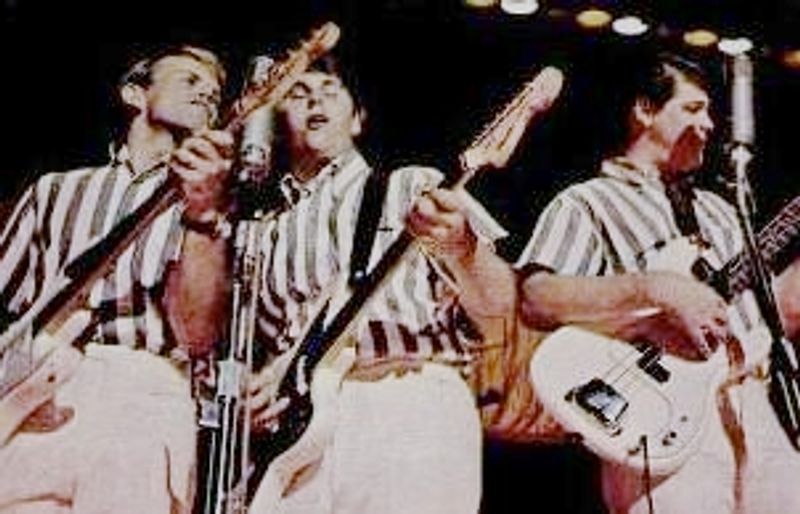
Over Labor Day weekend in 1961, three brothers and two friends gathered in the Wilson family home in Hawthorne, California, and started working out vocal harmonies. Brian Wilson, a devoted fan of The Four Freshmen, took the lead in teaching the others how to blend their voices. Those early sessions produced something that sounded distinct from nearly everything else on American radio at the time.
The original five, Brian, Dennis, and Carl Wilson, cousin Mike Love, and friend Al Jardine, performed under several names before a record distributor suggested The Beach Boys. Their first single, “Surfin’,” co-written by Brian Wilson and Mike Love, was recorded at the family home.
The Hawthorne house no longer stands. A freeway was built over the site, and a monument now marks the location. What began as family harmonizing practice in a Southern California living room became one of America’s most influential and imitated sounds of the 1960s.
15. Red Hot Chili Peppers
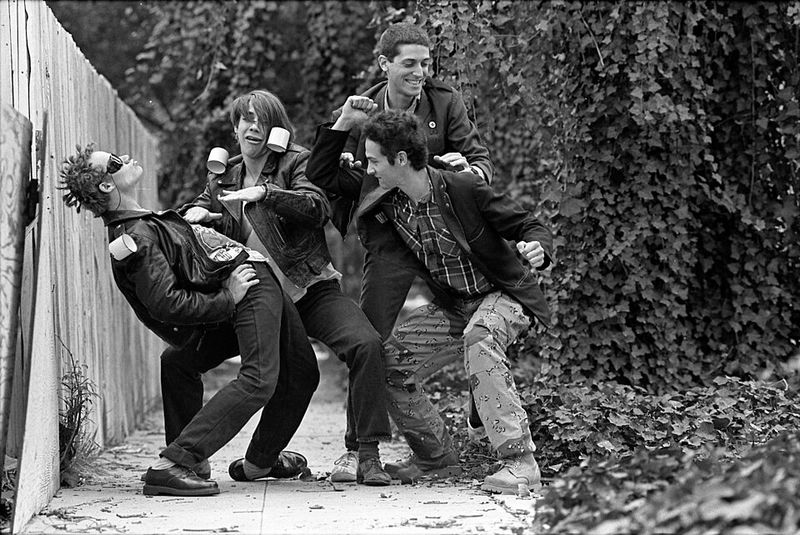
Anthony Kiedis, Flea, Hillel Slovak, and Jack Irons were all friends from Fairfax High School in Los Angeles who had no particular plan to start a band together. In 1983, they agreed to perform a single song at the Rhythm Lounge club under the name Tony Flow and the Miraculously Majestic Masters of Mayhem. The audience numbered roughly 30 people.
The performance was intended as a one-time joke. Kiedis rapped over improvised music, and the energy of the set surprised everyone in the room, including the performers. The crowd’s reaction was enthusiastic enough that the club invited them back the following week.
That return booking changed the group’s thinking entirely. They dropped the jokey name and officially became the Red Hot Chili Peppers. What started as a throwaway gig with no rehearsal and no real ambition turned into a band that has sold over 80 million records across four decades.
Share this story