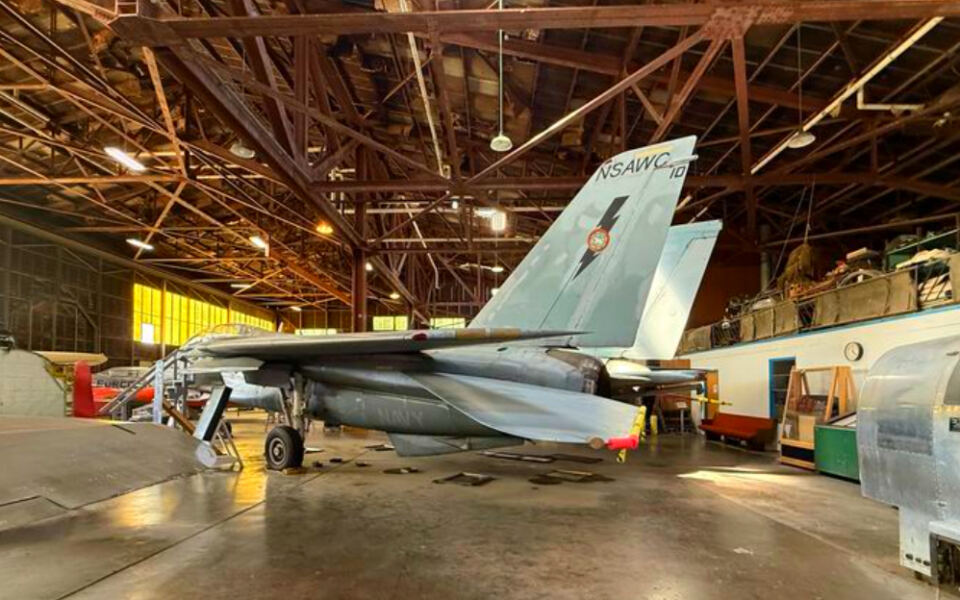
There is a place in Kansas where you can stand close enough to a real F-14 Tomcat to count the rivets on its fuselage, and nobody stops you. No velvet ropes, no glass barriers, just you and a jet that once trained pilots at the US Navy’s Top Gun School.
That alone is worth the drive. The Combat Air Museum in Topeka sits on an active airfield inside two massive World War II-era hangars, and it holds more than 40 military aircraft that span over a century of aviation history.
From fragile World War I replicas to Cold War-era fighters and hulking transport planes, the collection tells a story that most museums would need three buildings to cover. Keep reading, because what you find inside those hangars is hard to believe until you see it yourself.
Where the Museum Actually Lives
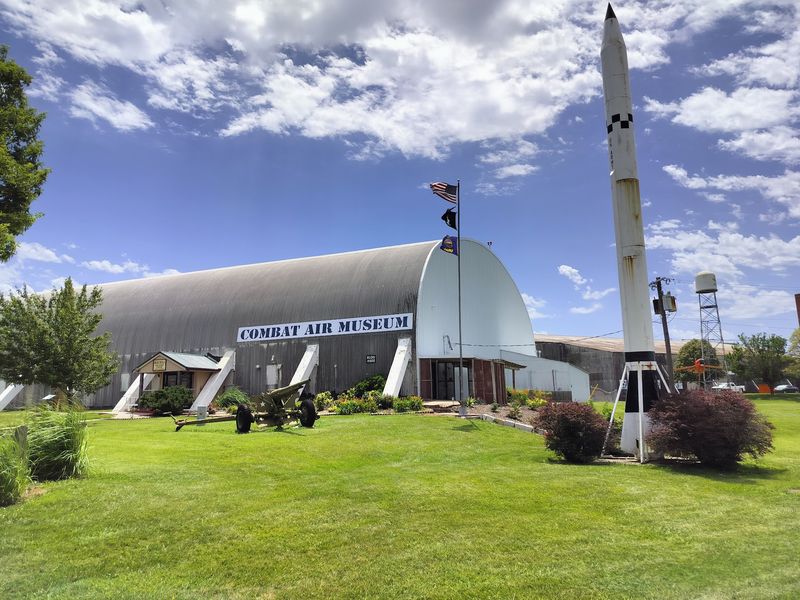
Most aviation museums sit quietly in suburban lots, but the Combat Air Museum occupies a genuinely active airfield. The museum is located at 7016 SE Forbes Ave, Topeka, KS 66619, inside the Topeka Regional Airport, which was formerly Forbes Air Force Base.
That military legacy is not just a footnote. On any given visit, you might look up and watch an active Air Force fighter jet or Army helicopter operating nearby, which adds a layer of energy that no indoor exhibit can fake.
The museum anchors the south end of Forbes Field inside Hangars 602 and 604, two enormous structures built during World War II. The hangars are not climate-controlled, so the weather outside follows you in.
Dress for the season, because on a hot Kansas summer day, the heat inside those hangars is real. The reward for tolerating it is access to one of the most impressive collections of military aircraft in the entire Midwest.
A Collection That Spans a Full Century of Flight
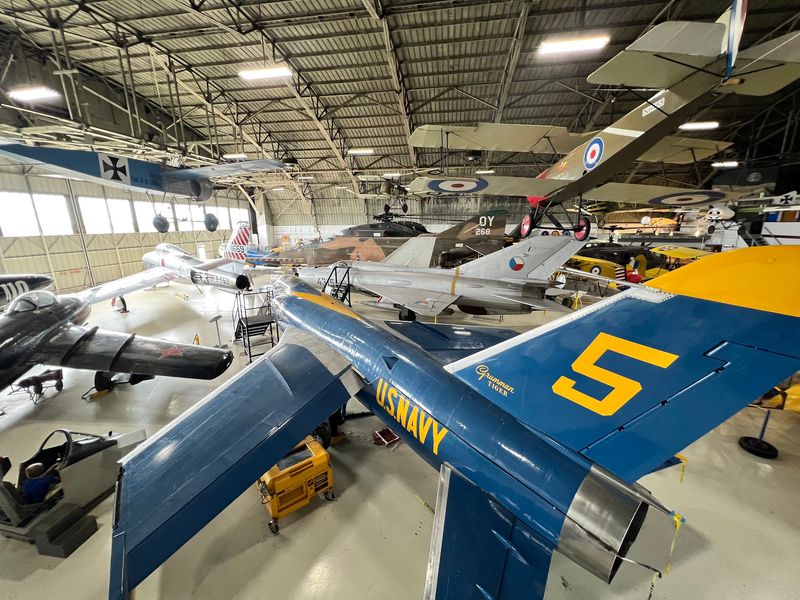
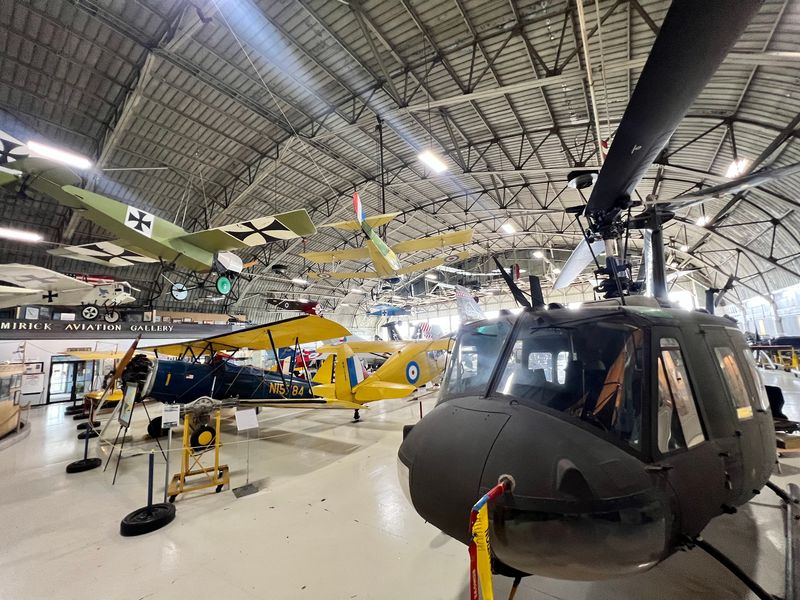
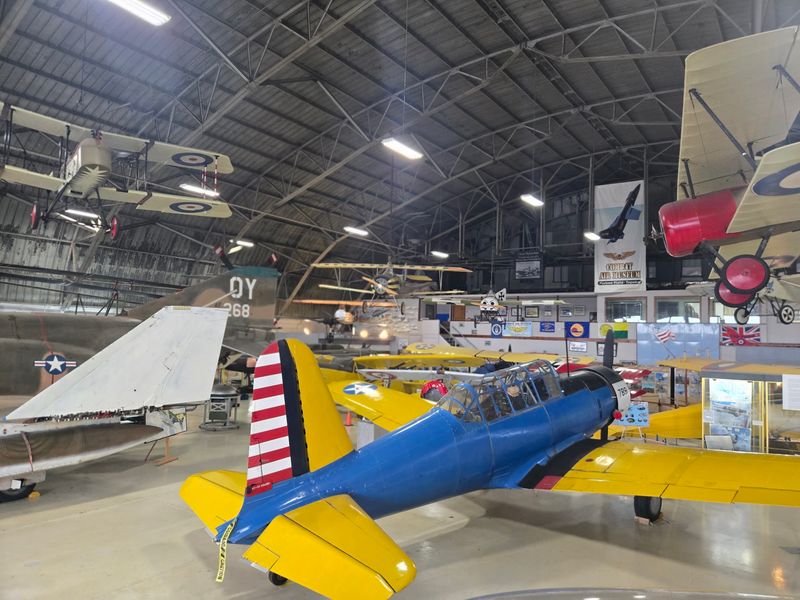
More than 40 military aircraft are spread across two hangars, and the range of what you find inside is genuinely staggering. The collection moves from fragile World War I replica biplanes all the way to Cold War-era supersonic jets without ever feeling disjointed.
Each aircraft represents a different chapter in military aviation, and the museum arranges them in a way that lets you feel that progression as you walk through. Propeller-driven transports sit near early jet fighters, which sit near helicopters, which sit near missiles and rockets displayed along the walls.
The variety keeps every visitor engaged, regardless of what era interests them most. A person fascinated by the Pacific theater of World War II will find something compelling, and so will someone whose interest starts with Vietnam-era aircraft.
Informational plaques accompany each exhibit, giving context without overwhelming you with text. The collection has grown steadily since the museum opened in 1976, and the depth of it rewards a slow, unhurried visit.
The F-14 Tomcat That Flew With Top Gun
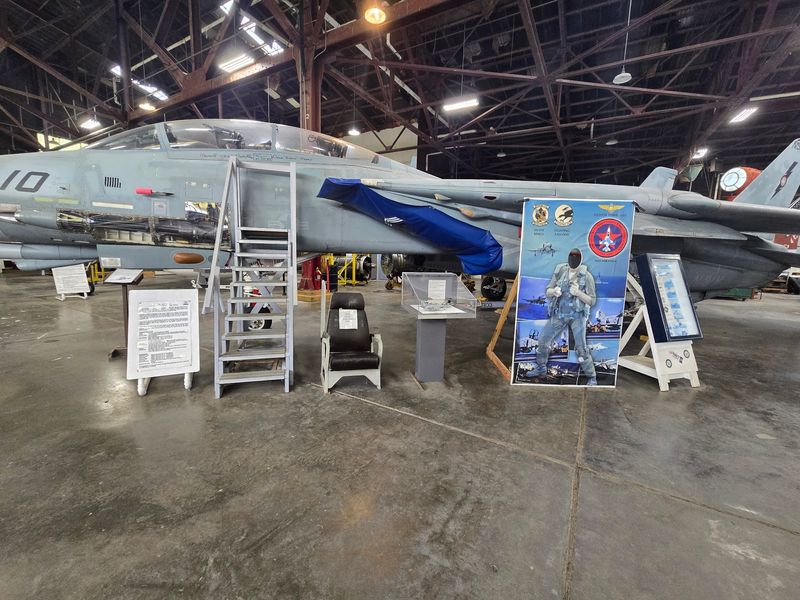
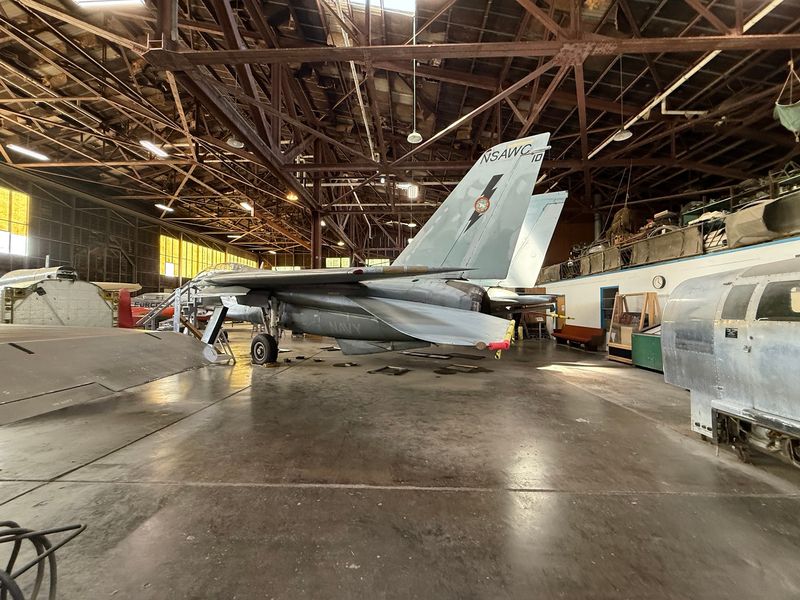
Few aircraft carry the cultural weight of the Grumman F-14A Tomcat, and the one at this museum has a backstory that makes it even more compelling. The F-14A on display flew into Forbes Field in 2003 after serving with the US Navy’s Top Gun School, which means it trained the very pilots responsible for pushing naval aviation to its limits.
Standing beneath those variable-sweep wings is a different experience than looking at a photograph. The sheer size of the aircraft is surprising up close, and the details of its design become clear in a way that no screen can replicate.
The Tomcat is consistently the aircraft that draws the strongest reactions from visitors, and it is easy to understand why. Its history connects directly to some of the most demanding flight training the Navy ever conducted.
The museum positions it where you can walk around it fully, which means every angle of this legendary fighter is available to you without restriction.
The F-15 Eagle Holds Its Own
Right alongside the Tomcat, the McDonnell Douglas F-15A Eagle makes a strong case for its own place in aviation history. The F-15 entered service with the US Air Force in 1976 and became one of the most successful air superiority fighters ever built, with a combat record that remains unmatched among jet fighters.
Having both the F-14 and the F-15 under the same roof creates a natural comparison point that aviation fans find hard to resist. The two aircraft represent different philosophies of fighter design, and seeing them side by side makes those differences tangible.
The F-15A on display at the museum is a real aircraft with real service history, not a replica or a mock-up. That authenticity matters when you are standing close enough to examine the details of its airframe.
The combination of these two iconic jets in a single visit is one of the strongest arguments for making the trip to Topeka specifically to see this museum.
Soviet Jets Parked Right Next to American Ones
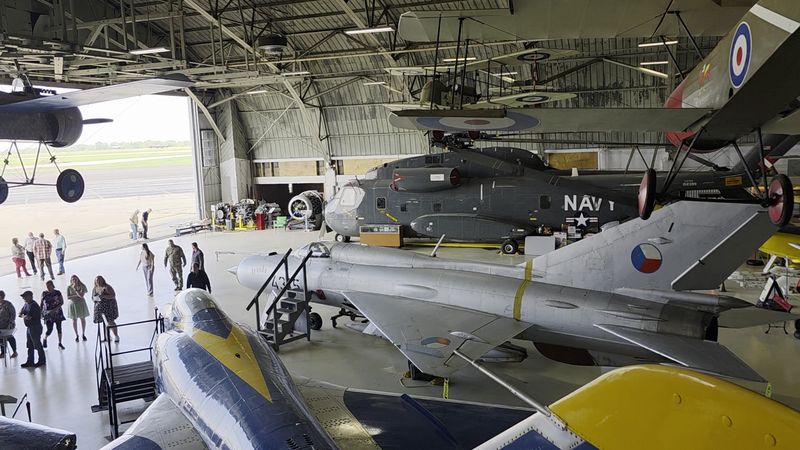
One of the more unexpected moments inside the Combat Air Museum comes when you realize that Soviet-built aircraft are parked right alongside the American jets. The museum holds a Mikoyan Gurevich MiG-15, a MiG-17, and a MiG-21, all of which were Cold War adversaries of the US aircraft displayed nearby.
That juxtaposition is not accidental. Seeing the machines that faced each other across contested airspace during the Cold War and the Korean War creates a perspective that a text book cannot provide.
The MiG-15 in particular has a fascinating history, as it shocked Western pilots when it first appeared during the Korean War and forced rapid development of new American fighter designs. The museum gives it the space and context it deserves.
Having these aircraft in the same room as the F-15 and the F-4 Phantom turns the hangar into a physical timeline of jet fighter development on both sides of the Cold War divide.
Climbing Inside the Aircraft Is Encouraged
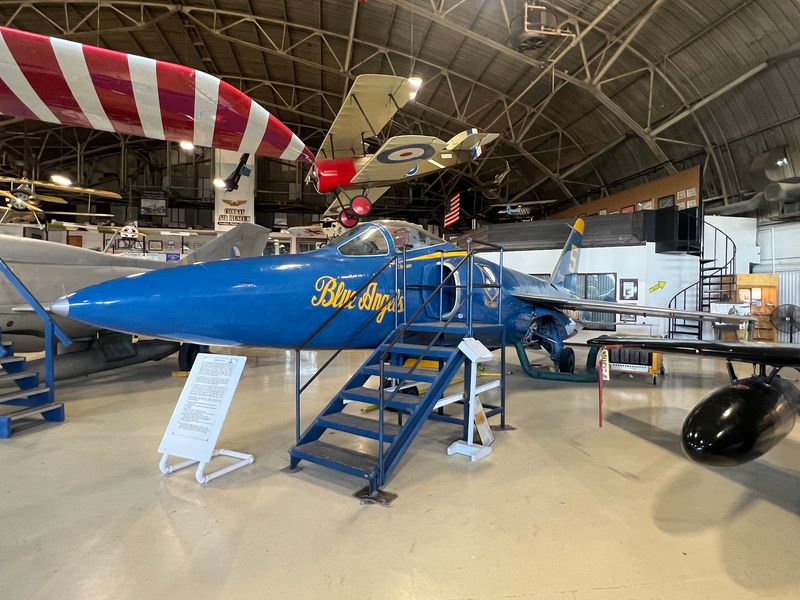
Most aviation museums keep their aircraft behind barriers, but the Combat Air Museum operates on a different philosophy entirely. Visitors are encouraged to get close, touch the aircraft, and in several cases, actually climb inside them.
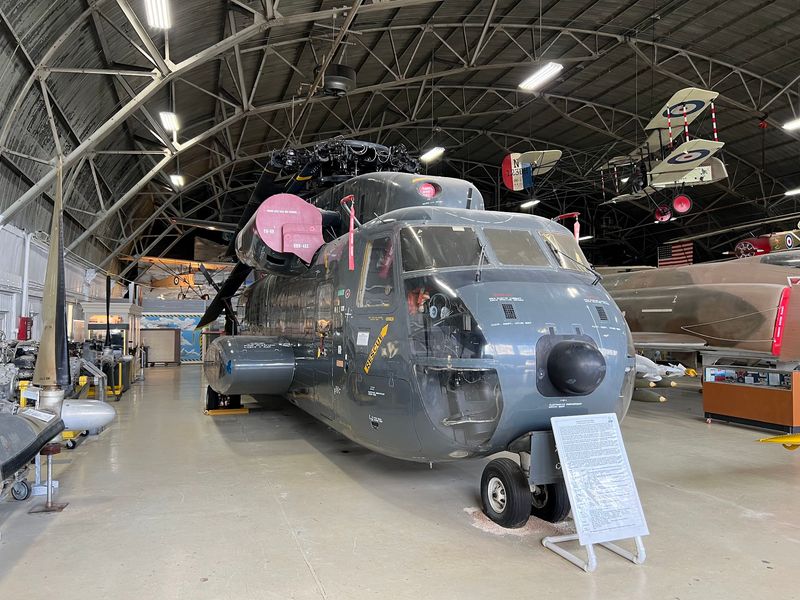
The Lockheed EC-121T Warning Star, a massive four-engine radar plane used for airborne early warning during the Cold War and Vietnam, can be boarded and explored from the inside. The same goes for a CH-53A Sea Stallion helicopter and a Skyhawk Navy attack plane, giving visitors a rare look at what the interior of these machines actually felt like.
Stairs are positioned at certain aircraft so you can lean into cockpits and examine the instrument panels up close. That hands-on access is what separates this museum from larger but more restrictive collections.
Children are especially drawn to these interactive moments, and families consistently leave with memories built around the experience of sitting where a real pilot once sat during active military service.
The Hangars Themselves Tell a Story
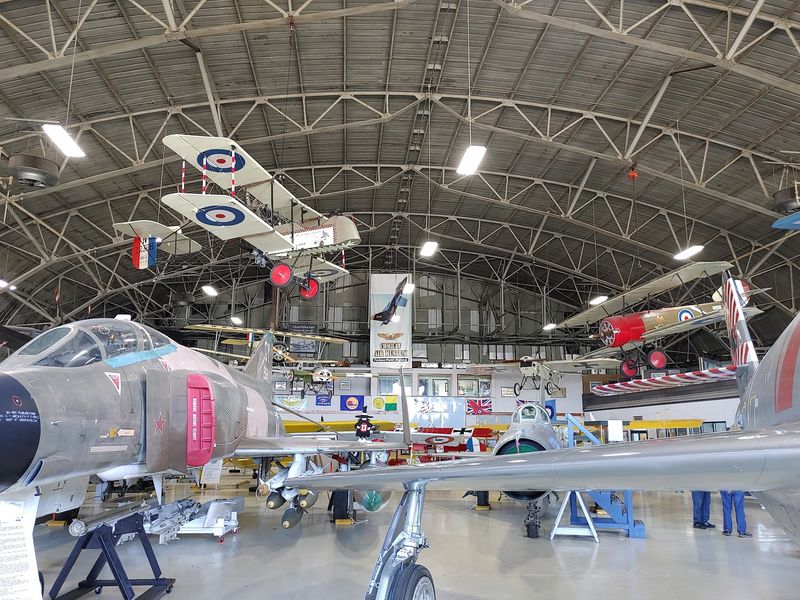
Hangars 602 and 604 at Forbes Field are not just containers for the aircraft collection. They are historic structures in their own right, built during World War II when Forbes Air Force Base was an active military installation training pilots for combat.
The high ceilings, wide floor space, and industrial construction of these buildings were designed to house and service large military aircraft, which makes them a natural fit for a museum that does exactly the same thing decades later. The bones of the building are original.
Walking through the hangars, you can feel the scale of wartime logistics in the way the space is laid out. These were working buildings, and they still feel like it.
The fact that the museum operates on an active airfield adds another dimension to the experience. The sound of aircraft operations outside the hangar doors is a reminder that Forbes Field is still very much a living piece of aviation infrastructure, not just a historical footnote.
History That Starts Before World War II
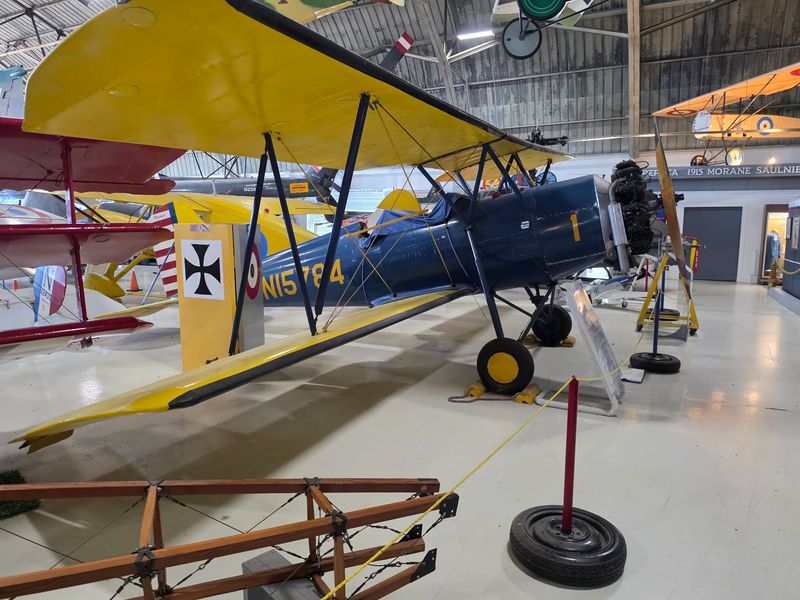
The Combat Air Museum does not start its story with jets. World War I replica aircraft anchor one end of the timeline, and they are a genuine surprise for visitors who came expecting the collection to focus entirely on the jet age.
Seeing how fragile and exposed early aircraft were, compared to the titanium and composite structures of the F-15 parked nearby, gives the collection a sense of progression that feels almost cinematic. The gap between those two points represents just over 60 years of aviation development.
Beyond World War I, the museum covers World War II extensively. The Douglas C-47D Skytrain, one of the most important transport aircraft of that war, is part of the collection and represents the logistical backbone that kept Allied operations running across multiple theaters.
The depth of coverage across different eras is one of the reasons the museum earns such strong ratings from visitors. It is not a one-era collection, and that breadth makes repeat visits worthwhile.
The Flight Simulator and Educational Programs
Beyond the static aircraft displays, the Combat Air Museum offers hands-on experiences that go a step further than just looking. A flight simulator gives visitors the chance to feel what basic flight controls are like, which is a genuinely different experience from anything else the museum offers.
A vintage Link Trainer, one of the earliest mechanical flight simulation devices used to train military pilots, is also on display and represents an important piece of aviation training history in its own right.
The museum runs educational programs specifically designed for younger visitors. The Young Aviators classes target children aged 9 to 13 and introduce them to aviation concepts in a structured but engaging format.
Girls in Aviation Day events are also hosted throughout the year, reflecting the museum’s commitment to broadening who gets excited about flight.
Guided tours led by knowledgeable volunteers are available, and those volunteers consistently earn high praise for their ability to bring the history of each aircraft to life with specific, accurate details.
Practical Tips for Planning Your Visit

Planning ahead makes a visit to the Combat Air Museum much more comfortable. From March through December, the museum is open Monday through Saturday from 9:00 AM to 4:30 PM, and on Sundays from noon to 4:30 PM.
During January and February, daily hours shift to noon to 4:30 PM, and no new visitors are admitted after 3:30 PM.
Admission is straightforward and reasonably priced. Adults pay $10, seniors and retired military pay $9, youth aged 5 to 17 and active military pay $7, and children under 5 get in free.
The museum is wheelchair accessible, though some areas of the hangars have limitations.
Since the hangars are not air-conditioned, visiting on a mild day makes the experience significantly more comfortable. Light clothing works well in spring and fall, but a summer visit calls for early arrival before the heat builds inside the metal structures.
A gift shop stocked with aviation-themed souvenirs rounds out the visit, and the nearby Museum of the Kansas National Guard is about a mile away and offers free admission.
A Museum Built on Volunteers and Dedication
The Combat Air Museum started in the fall of 1976 as the Kansas Wing of Yesterday’s Air Force, a private collection focused on preserving military aviation history. By 1979, it had reorganized and officially become the Combat Air Museum, a non-profit institution that has operated on community support and volunteer dedication ever since.
The volunteers who staff the museum are one of its most consistently praised features. Many of them have deep personal connections to aviation or military service, and they bring that knowledge into every conversation with visitors.
They know the history of specific aircraft in the collection, not just the general facts on the plaques.
Keeping a collection of this size running requires ongoing effort and funding. The museum relies on admissions, donations, and community support to maintain aircraft that are decades old and require constant care.
That commitment shows in the condition of the exhibits, and it is one of the reasons the museum holds a 4.8-star rating across more than 800 reviews from visitors who clearly felt the effort was worth celebrating.
Why This Museum Deserves More Attention Than It Gets
The Combat Air Museum holds a 4.8-star rating from more than 800 visitors, which puts it firmly among the best-reviewed aviation museums in the country. For a non-profit institution in Topeka, Kansas, that kind of sustained recognition is remarkable.
What makes the museum stand out against larger, better-funded institutions is the access it provides. No velvet ropes, no barriers, no restrictions on how close you can get.
You can touch the aircraft, peer into cockpits, and board several planes that most museums would keep behind glass.
The combination of a Top Gun-trained F-14, a combat-proven F-15, Soviet MiGs, World War I replicas, a boardable EC-121T radar plane, and an active airfield backdrop is genuinely hard to find anywhere else at this price point.
If you are passing through Topeka or planning a road trip through the Midwest, the Combat Air Museum is the kind of stop that ends up being the highlight of the whole trip, long after the drive fades from memory.
Share this story