The Cosmosphere in Hutchinson, Kansas, holds a space collection that seems almost improbable for a Midwestern city. Inside are flown U.S. spacecraft, Soviet space hardware, an SR-71 Blackbird, and thousands of artifacts tracing the Space Race from its earliest days.
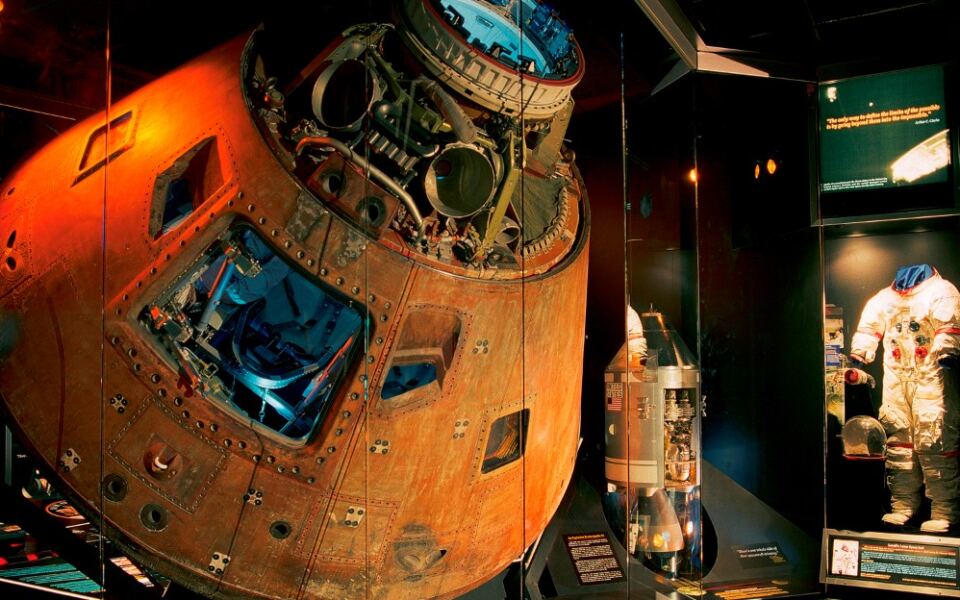
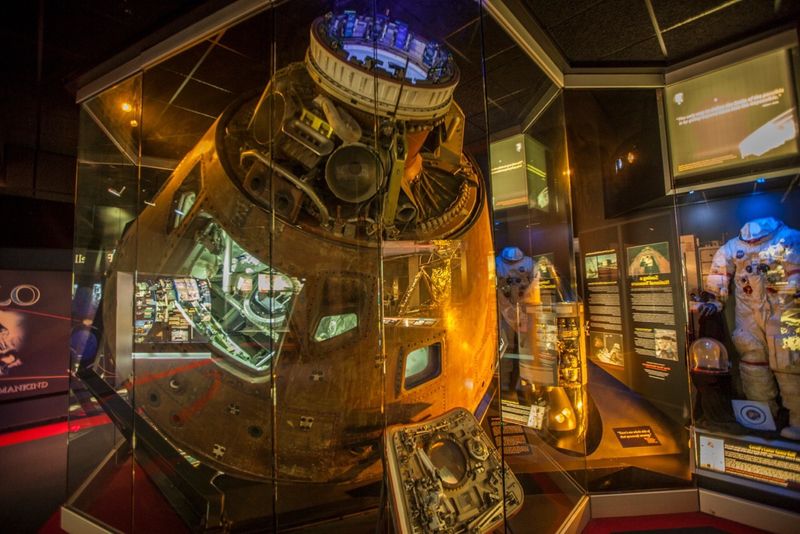
Among the biggest draws are the Apollo 13 Command Module Odyssey, Liberty Bell 7, and Gemini 10. The museum even operates a restoration division whose work has reached other major museums and Hollywood productions.
For space history fans, this is far more than a typical science museum.
A Smithsonian Affiliate Hidden in the Heartland
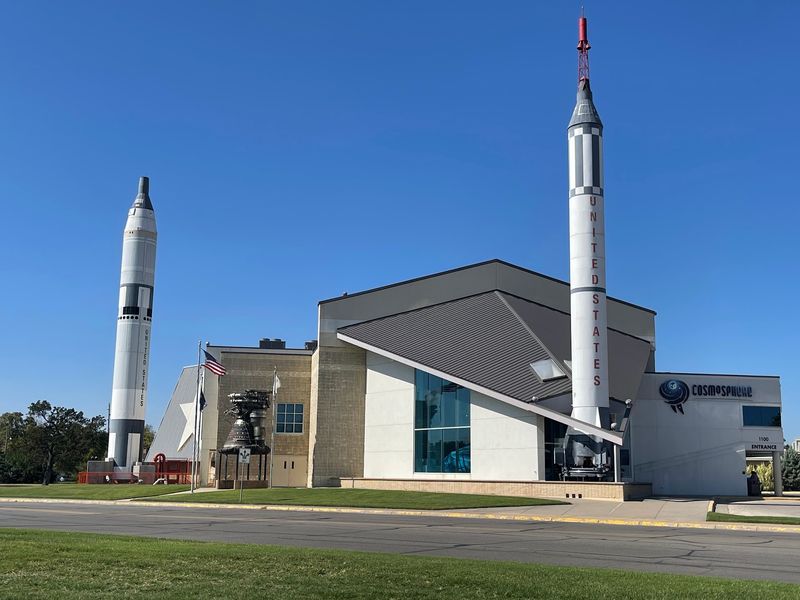
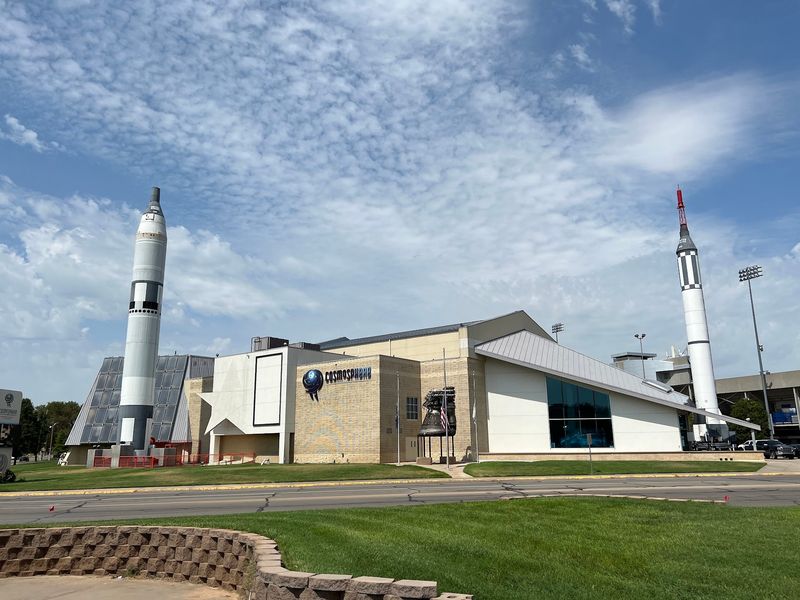
The address is 1100 N Plum St, Hutchinson, KS 67501, and the moment you pull into the parking lot, something feels different about this place. The building is modern, well-maintained, and larger than you might expect for a small Midwestern city.
It sits quietly beside a high school, which makes the whole scene feel almost surreal once you understand what is inside.
The Cosmosphere is the only Smithsonian affiliate in Kansas, a designation that carries real weight when you consider what that partnership represents. The Smithsonian does not hand out affiliate status lightly, and the collection here has earned every bit of that recognition.
Visitors come from across the country and around the world specifically to see what Hutchinson has managed to preserve and display.
You can reach the museum by phone at 800-397-0330 or visit cosmo.org to plan your trip. The building is fully ADA compliant, with elevators and wheelchair lifts available throughout.
The World Record Collection That Stops You Cold
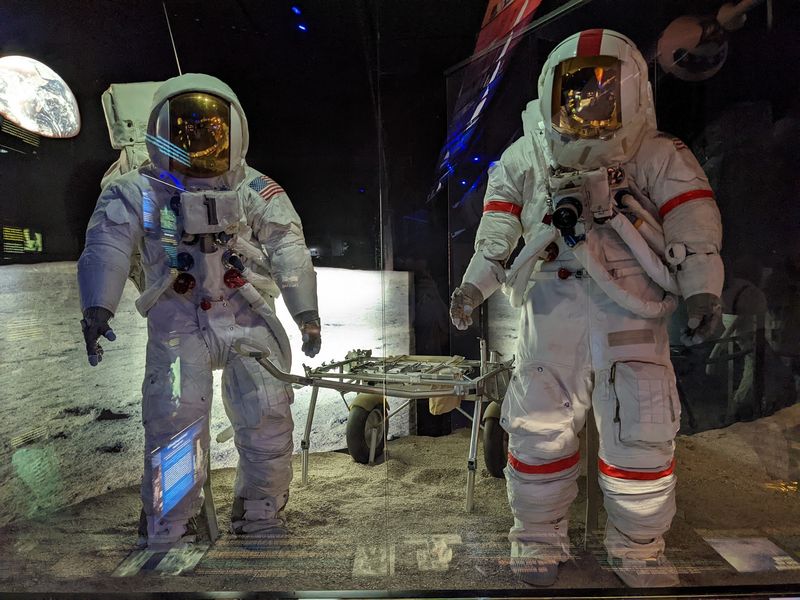
There is a moment inside the Hall of Space when the sheer number of genuine artifacts stops you mid-step. The Cosmosphere holds the largest combined collection of U.S. and Russian spaceflight artifacts anywhere in the world, with somewhere between 13,000 and 15,000 items in its holdings.
That number is not a typo, and it does not include reproductions padded to inflate the count.
The U.S. collection here is second only to the National Air and Space Museum in Washington, D.C. The Russian collection is the largest outside of Moscow.
Both programs, side by side, in Kansas.
What makes this especially remarkable is the context the museum builds around each piece. You are not just looking at hardware behind glass.
You are reading the story of two nations racing toward the same sky from completely different directions, and the artifacts on either side of the aisle make that competition feel vivid and immediate.
The SR-71 Blackbird That Greets You at the Door
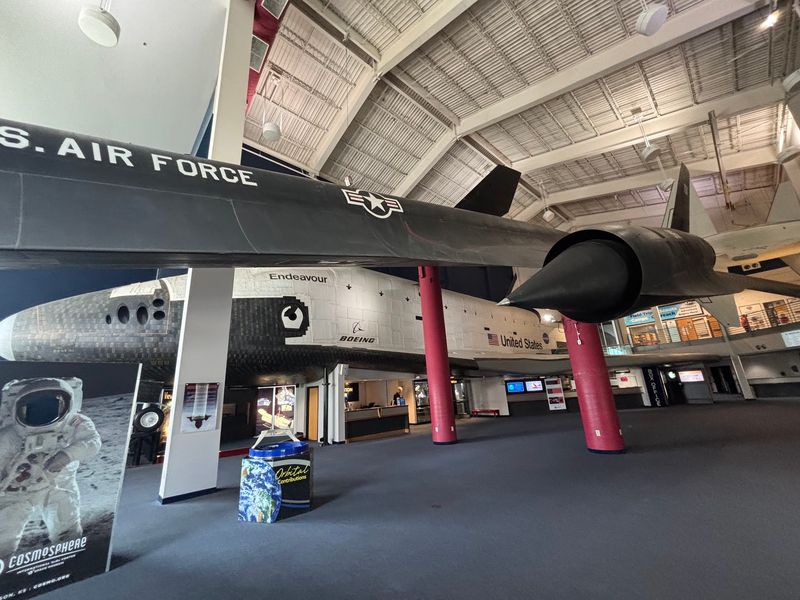
Most museums save their showstopper for the back of the building. The Cosmosphere puts a Lockheed SR-71 Blackbird right in the lobby, and the effect is immediate.
The aircraft is long, dark, and impossibly sleek, and it fills the entrance hall with the kind of presence that makes you forget what you were about to say.
The SR-71 was the fastest air-breathing manned aircraft ever built, capable of cruising above 80,000 feet at speeds exceeding Mach 3. One visitor noted that the vehicle broke the speed of sound at over 1,200 mph, which prompted an entirely unrelated meditation on high-speed rail.
That reaction is completely understandable.
According to one account, the building was actually constructed around the aircraft, which means there is no practical way to move it back out. It lives here permanently, a fitting guardian for one of the most extraordinary collections of aerospace history in the country.
It sets the tone before you even buy a ticket.
Liberty Bell 7 and the Capsules That Actually Flew
Gus Grissom’s Liberty Bell 7 Mercury capsule spent 38 years at the bottom of the Atlantic Ocean before it was recovered and brought to Hutchinson for restoration. The result of that painstaking work is now on permanent display, and it is the only privately owned flown spacecraft in the world.
That distinction alone would justify a road trip.
But the Cosmosphere does not stop there. The Gemini 10 capsule, which carried astronauts John Young and Michael Collins on their 1966 mission, is also here.
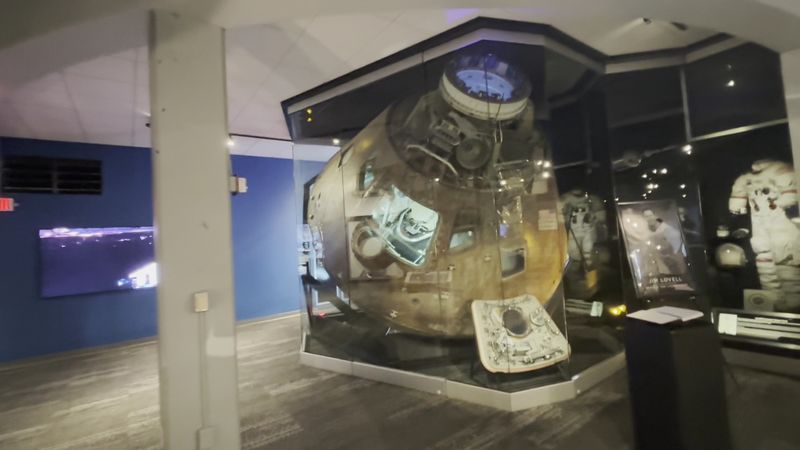
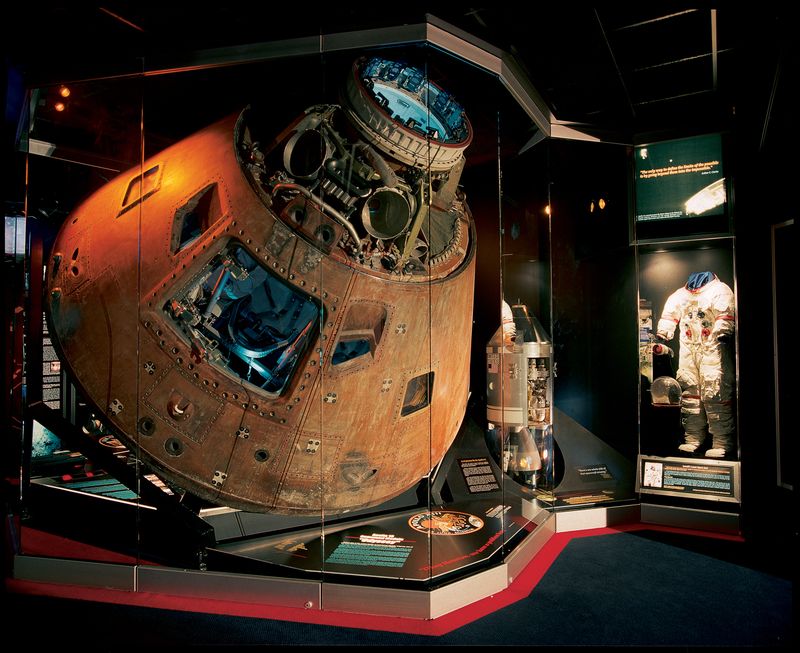
So is the Apollo 13 Command Module Odyssey, the vessel that carried Jim Lovell, Jack Swigert, and Fred Haise safely home after one of the most harrowing missions in spaceflight history.
Three flown U.S. crew capsules under one roof is something only four museums in the entire world can claim. Knowing that this particular trio ended up in a Kansas town of roughly 40,000 people makes the whole thing feel almost mischievously improbable, and completely wonderful.
Soviet Hardware You Cannot See Anywhere Else in the West
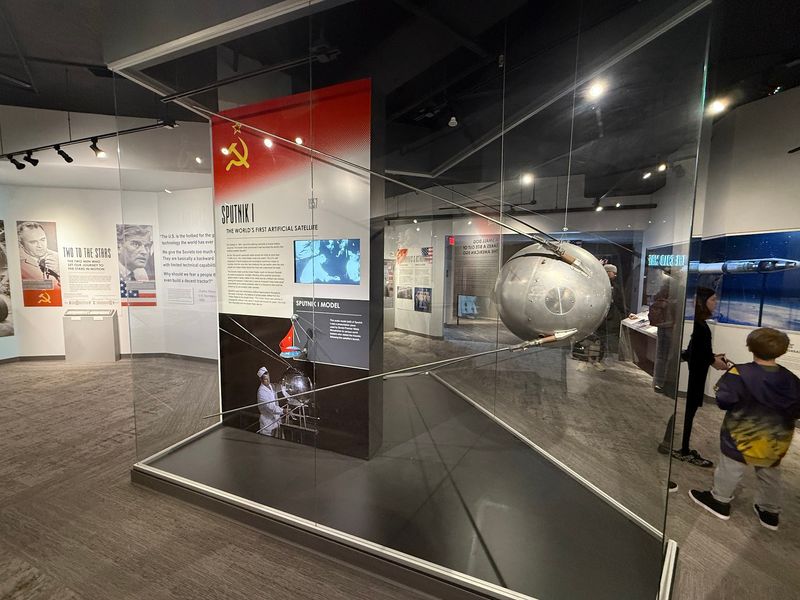
The Russian side of the Hall of Space is where the Cosmosphere truly separates itself from every other space museum in the Western world. During a financial crisis in the late 1990s, the museum acquired a remarkable number of Soviet-era artifacts that would otherwise have been scattered or lost.
The result is a collection of Russian space hardware that is unmatched outside of Moscow.
A Vostok capsule sits here, the same type of craft that carried Yuri Gagarin on the first human spaceflight in 1961. Gagarin’s watch is also in the collection.
A genuine Sputnik backup, a flight-worthy unit, is on display, though some visitors have noted that the signage does not always make clear just how significant that particular piece actually is.
Soviet spacesuits, launch vehicle components, and instrumentation round out a display that tells the other half of the Space Race story with equal depth and care. Seeing both programs together makes the competition feel human in a way that reading about it simply cannot replicate.
Where the Space Race Actually Began: The V-2 Bunker Exhibit
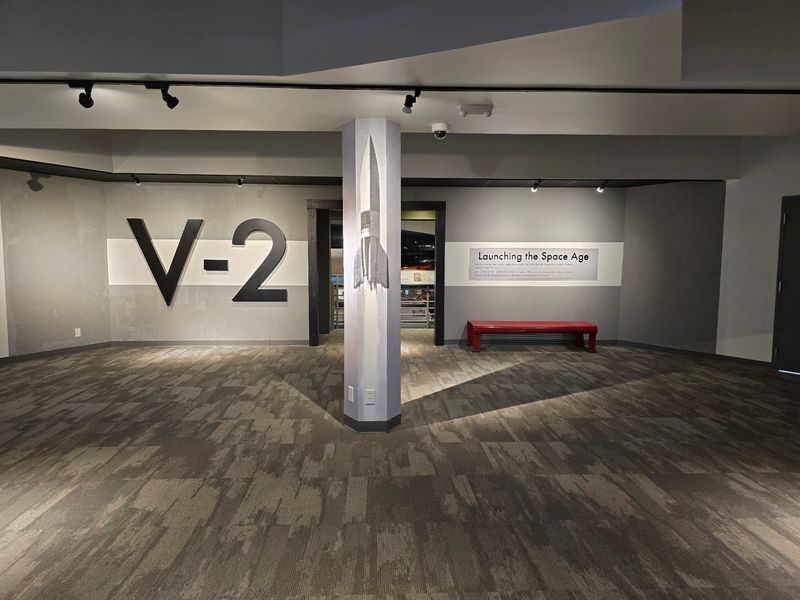
Before there were astronauts, there were rockets built under very different circumstances, and the Cosmosphere does not skip that chapter. In a sub-basement styled to resemble a World War II bunker, the museum displays a genuine V-1 buzz bomb, a genuine V-2 rocket, and an authentic ME-163 Komet engine.
The atmosphere down there is intentionally unsettling, and it works.
The V-2, developed by German engineers during the war, became the direct ancestor of the rockets that later sent humans into orbit. The Cosmosphere uses this exhibit to trace that lineage honestly, acknowledging the complicated origins of the technology without sanitizing the history.
It is one of the most sobering and intellectually serious corners of the entire museum.
Many visitors consider this bunker exhibit the most unexpectedly powerful part of the whole experience. Connecting those wartime machines to the Mercury capsules upstairs gives the entire Space Race narrative a depth and moral weight that transforms a collection of hardware into a genuinely thought-provoking story about human ambition.
SpaceWorks: The Restoration Lab That Impresses Hollywood
Most museums display artifacts. The Cosmosphere also makes them.
The SpaceWorks division is the museum’s in-house restoration and fabrication operation, and its reputation extends far beyond Kansas. Teams here restored the Apollo 13 Command Module Odyssey between 1995 and 1997, returning it to its original post-flight condition with meticulous attention to historical accuracy.
The Liberty Bell 7 restoration, after nearly four decades on the ocean floor, was another landmark achievement for this same group of specialists. Their work is so trusted that other institutions, including the Smithsonian itself, have sent artifacts to Hutchinson for conservation and restoration.
That is a remarkable reversal of the usual direction of prestige.
Hollywood noticed too. SpaceWorks fabricated approximately 80 percent of the props and hardware used in the film “Apollo 13,” starring Tom Hanks.
They also built replicated spacecraft components for “Magnificent Desolation: Walking on the Moon 3D” and the TV mini-series “From the Earth to the Moon.” Next time you watch those productions, the craftsmanship you are seeing came from central Kansas.
Dr. Goddard’s Lab: Science With a Very Satisfying Bang
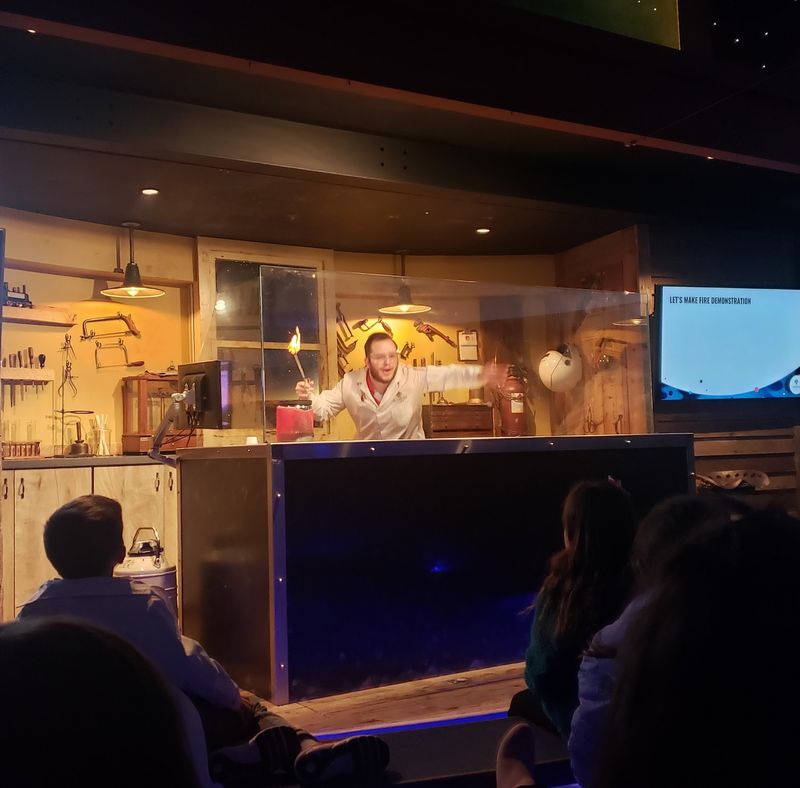
Dr. Goddard’s Lab is not a quiet exhibit. It is a live science show built around the foundational principles of rocketry, and it delivers its lessons with a combination of theatrical flair and genuine educational substance.
Robert H. Goddard, widely regarded as the father of modern rocketry, conducted early liquid-fueled rocket experiments that made everything that followed possible, and this show brings those principles to life with real demonstrations.
Presenters walk audiences through the relationship between fuel, oxygen, and combustion, building toward demonstrations that involve actual explosions and bright flashes. Children absolutely love it, and adults who thought they already understood basic propulsion often leave with a more visceral appreciation for the forces involved.
The show has a knack for making physics feel urgent.
It is the kind of presentation that sticks with you long after you leave the building. More than one young visitor has reportedly walked out of that room determined to become a rocket scientist, which seems like a perfectly reasonable response to watching something explode on purpose for educational purposes.
The Carey Digital Dome Theater and Justice Planetarium
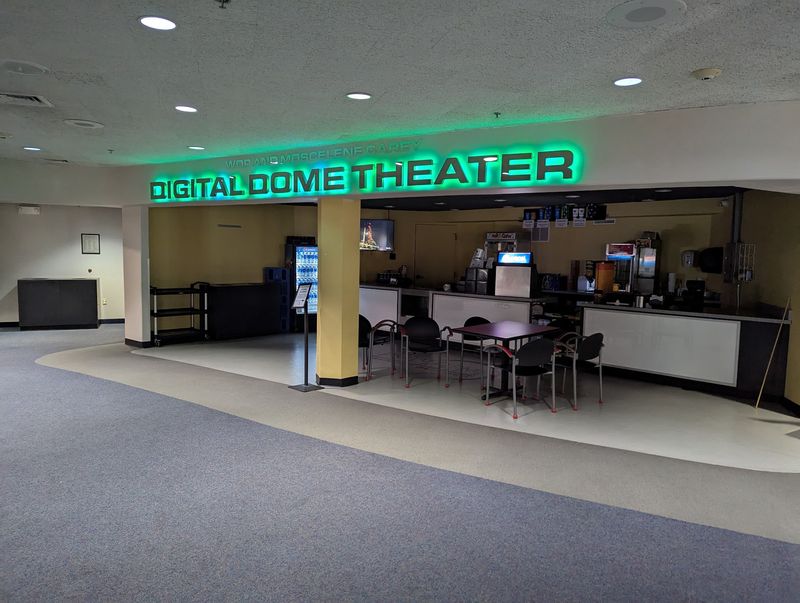
The Cosmosphere’s theater experiences are not afterthoughts tucked into a corner. The Carey Digital Dome Theater features a 4K digital projection system that fills a two-story dome, creating an immersive environment that wraps around you rather than simply playing in front of you.
Science documentaries shown here feel genuinely transporting, particularly anything involving deep space imagery.
The Justice Planetarium carries a different kind of significance. It is the modern successor to the very first planetarium ever established in Kansas, the one Patty Carey set up in the Kansas State Fairgrounds poultry building back in 1962.
Today it runs on a Spitz Sci-Dome XD digital projection system that can show exactly which planets and stars are visible over Hutchinson on any given evening.
Both venues are included in the All-Access Mission Pass, which remains the best value for visitors who want the full experience. Checking the show schedule before your visit is worth the two minutes it takes, since showtimes vary by day and season.
Hands-On Exhibits That Put You in the Pilot’s Seat
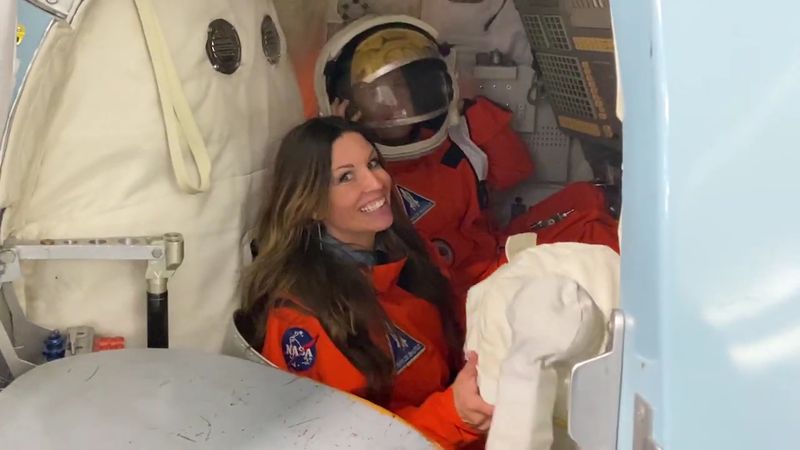
The interactive section of the Cosmosphere is where the museum shifts from observation to participation, and the difference in energy is noticeable. The Gemini Docking Simulation challenges visitors to align two spacecraft in orbit, a task that sounds straightforward until you actually try it.
The precision required becomes immediately apparent, and the exercise builds genuine respect for the astronauts who performed that maneuver in real conditions.
The rocket launch fueling interactive lets visitors work with hydrogen and oxygen proportions to prepare a mock Atlas or Redstone rocket for liftoff. Getting the mixture right and watching the sequence complete is satisfying in a way that purely passive exhibits rarely achieve.
The 3-2-1 launch countdown never really gets old.
For younger visitors, the CosmoKids STEAM area offers activities like building a Mars Habitat and experimenting with gravity wells, all framed around science, technology, engineering, art, and math. The whole interactive zone is designed so that families can engage together at whatever level feels right, without anyone feeling left behind or bored.
From a Poultry Building to a World-Class Institution
In 1962, a woman named Patty Carey set up a secondhand star projector inside the poultry building at the Kansas State Fairgrounds and called it Hutchinson’s Theatre of the Skies. Visitors sat on rented folding chairs and looked up at constellations cast across a makeshift dome.
It was modest by any measure, but the curiosity it sparked was not.
That small operation grew steadily over the following decades, driven by community support and an expanding vision for what science education could look like in a mid-sized Kansas city. The planetarium moved, expanded, and eventually became the foundation for the international science education center that stands today.
The Carey Digital Dome Theater is named in honor of the woman who started it all with a borrowed projector and a borrowed room.
The origin story matters because it explains something essential about the Cosmosphere’s character. This institution was built from genuine local passion, not handed down from a federal budget.
That grassroots energy is still present in how the staff talks about the collection and the programs they run.
Practical Tips for Getting the Most Out of Your Visit
Plan on spending at least four hours here, and that estimate assumes you are moving at a reasonable pace. The Hall of Space alone could absorb two hours if you actually read the signage and take time with each artifact.
Adding a dome show, a planetarium presentation, and Dr. Goddard’s Lab will extend your visit considerably, and none of those additions feel like filler.
The museum is closed on Mondays and Tuesdays. Wednesday through Saturday it opens at 9 AM, with Saturday closing at 7 PM and weekday closings at 5 PM on Wednesday and Thursday, and 7 PM on Friday.
Sunday hours run from 9 AM to 5 PM. The All-Access Mission Pass covers the museum, theaters, and lab shows and is the most cost-effective option for a full visit.
Do not overlook the cafe. The food there is hand-prepared and notably better than standard museum fare, which is a genuine surprise.
Wheelchairs and strollers are available on a first-come basis at no charge, and the entire facility is fully accessible throughout.
Share this story