Some of the oldest human DNA ever recorded belongs to a group of people still living today. The Khoe-San of southern Africa carry genetic lineages that stretch back more than 100,000 years, making them one of the earliest branches on the human family tree.
Their languages, traditions, and ways of reading the natural world have survived ice ages, migrations, and centuries of outside pressure. Getting to know them means stepping into a story that began long before recorded history.
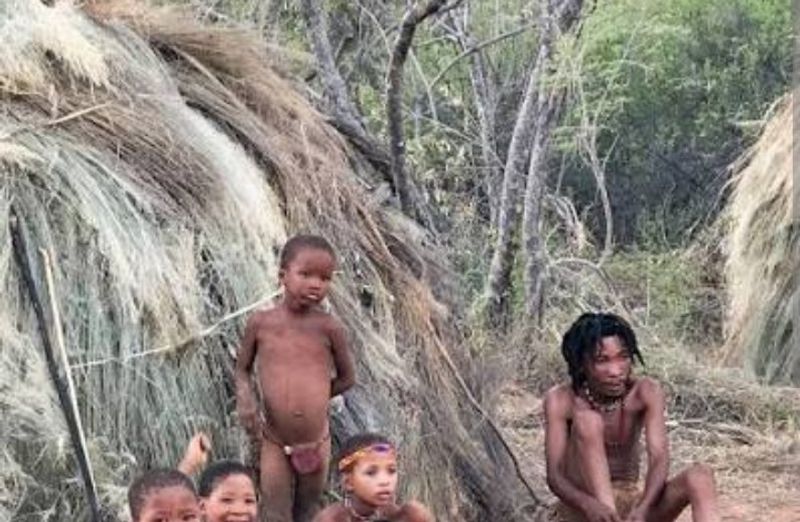
The term Khoe-San covers several distinct groups of people who have lived across southern Africa for tens of thousands of years. They are sometimes called Bushmen, though many communities prefer their own group names, such as San, Khoikhoi, or specific names like !Kung or Ju/hoansi.
What ties them together is a shared genetic heritage that scientists consider the most ancient among all living human populations. They are not one single tribe but a collection of related peoples spread across Botswana, Namibia, South Africa, Zimbabwe, and Angola.
Each group has its own dialect, customs, and territory. Understanding this diversity is the first step toward appreciating just how rich and layered their world truly is.
Lumping them all together would be like calling every European the same nationality.
Geneticists have studied human DNA from populations around the world, and the findings consistently point to one conclusion: the Khoe-San diverged from all other human lineages earlier than any other living group.
Research published in major scientific journals places this split at roughly 100,000 to 150,000 years ago. That means their ancestors were a distinct population before modern humans began migrating out of Africa.
Some studies suggest the Khoe-San may carry traces of DNA from archaic human populations that predate Homo sapiens as we typically define them. Their genome is also remarkably diverse internally, containing more genetic variation within their communities than exists between Europeans and Asians.
This level of genetic depth makes them invaluable to scientists trying to understand human origins. Every discovery adds another layer to an already extraordinary story.
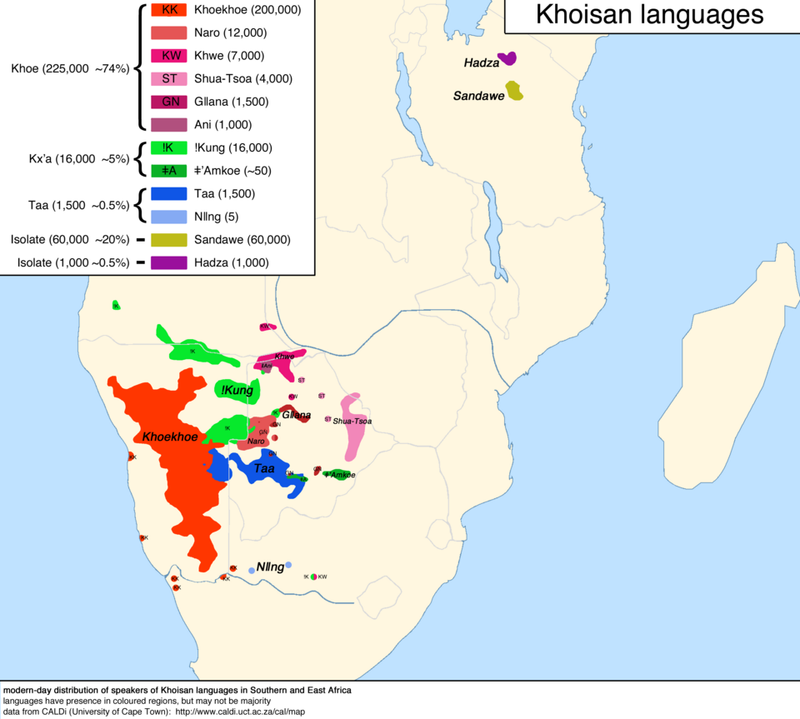
Hearing a Khoe-San language for the first time is genuinely surprising. These languages use click consonants produced by the tongue and mouth in ways that most other languages on Earth simply do not.
There are several distinct click sounds, each represented in writing by symbols like !, /, and //. Getting them right takes serious practice, and even experienced linguists have spent years mastering just a few.
What makes these languages especially fascinating is that clicks are considered a very ancient feature of human speech. Some researchers believe click languages may represent the earliest form of complex spoken communication our species developed.
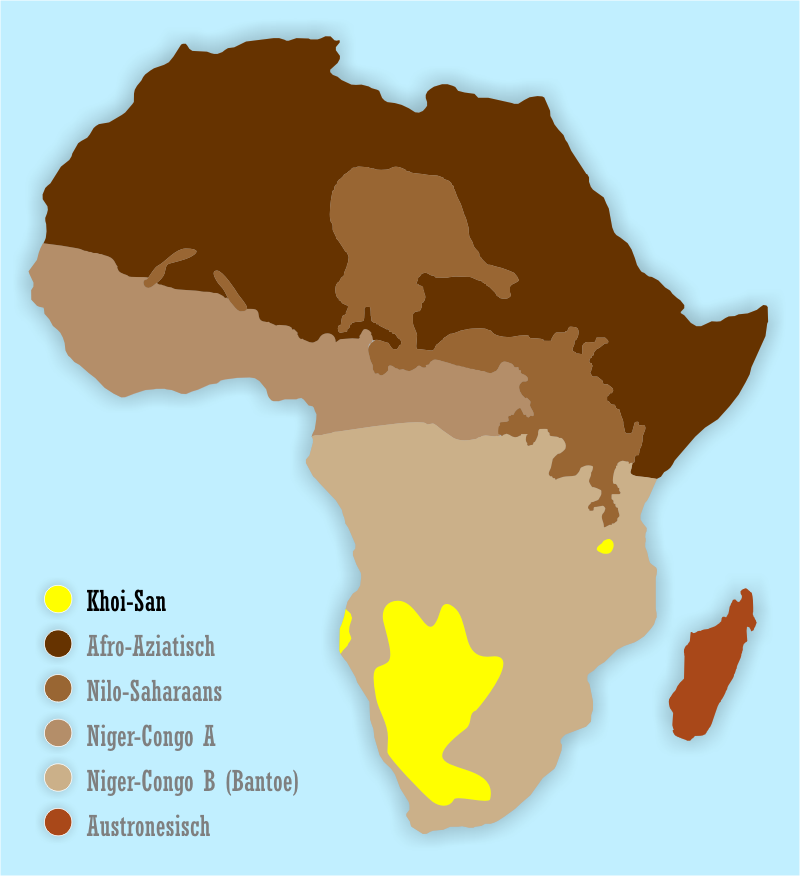
The Khoe-San languages are not related to any other language family outside their own group. They stand alone, much like the people who speak them, as a completely independent chapter in the human story.
Scattered across caves and rocky outcrops throughout southern Africa, San rock art has been dated back tens of thousands of years. Some sites in the Drakensberg mountains of South Africa contain thousands of individual images painted with ochre, charcoal, and animal fat.
These paintings are not random decoration. Researchers now understand many images represent spiritual experiences, particularly altered states of consciousness reached during healing ceremonies called trances.
Figures of eland antelope appear frequently because the eland held deep spiritual significance in San belief systems. Hunters, half-human creatures, and geometric patterns all carry layers of meaning that take years of study to interpret.
The art is also remarkably well preserved in many locations. Standing in front of a 10,000-year-old painting that still shows vivid color and fine detail is one of those moments that quietly changes how you think about human creativity.
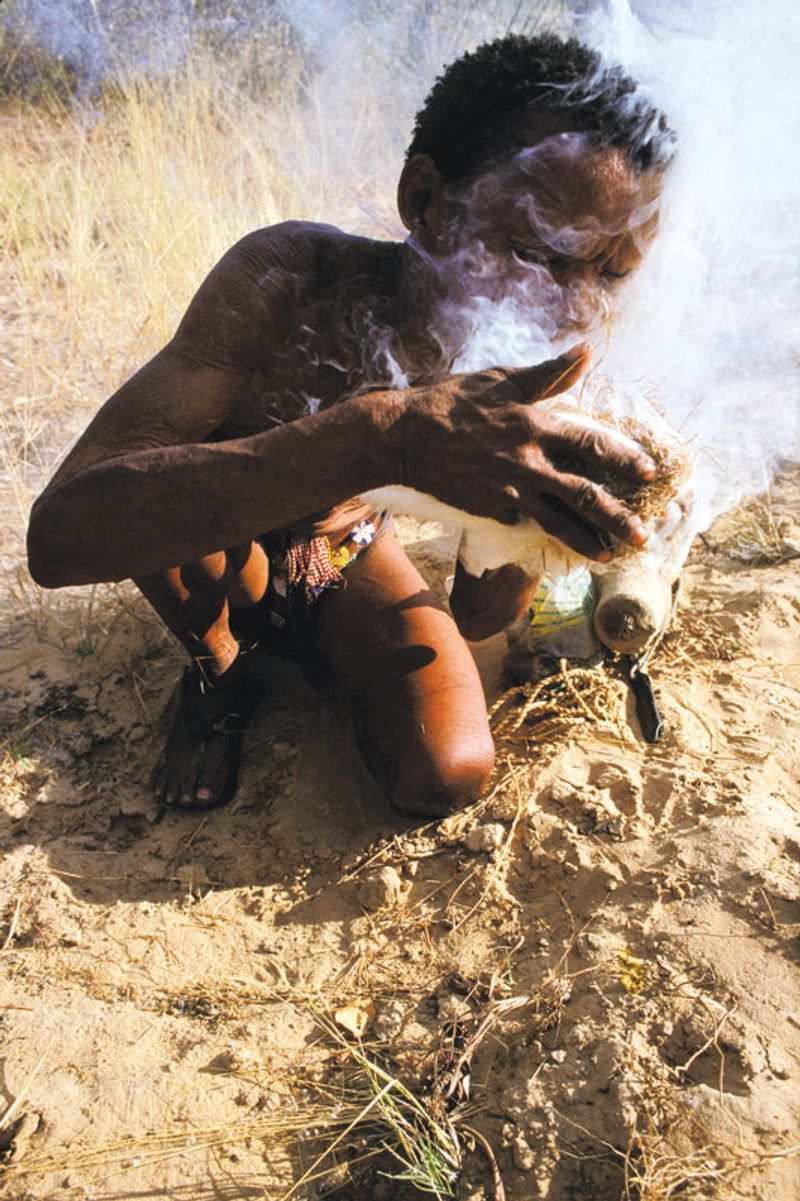
Khoe-San trackers can read a set of footprints the way most people read a page of text. From a single track left in sand or soil, an experienced tracker can determine the animal species, its size, its speed, how long ago it passed, and whether it was injured.
This skill is not guesswork. It is built on a detailed observational system passed down through generations, refined over thousands of years of hunting in environments where accuracy meant survival.
Scientists from the University of Utah and other institutions have worked alongside San trackers to document their methods. Some researchers argue that tracking may have been one of the cognitive skills that helped early humans develop complex reasoning and language.
Today, certain San trackers work with conservation organizations to monitor endangered wildlife. Their knowledge is increasingly recognized as a scientific resource, not just a cultural tradition.
At the center of San spiritual life sits the healing dance, a ceremony that can last through the entire night. Women sit in a circle clapping and singing while men dance around them in a stomping, rhythmic pattern that gradually builds in intensity.
The goal is for certain dancers to enter a state called kia, a trance in which they believe they access a healing energy called n/om. In this state, healers lay hands on community members to draw out illness or emotional pain.
Anthropologists who have observed these ceremonies describe them as among the most complex ritual practices recorded in any hunter-gatherer society. The ceremonies also serve a social function, bringing the community together and reinforcing bonds between families.
The healing dance is still practiced today in communities across Botswana and Namibia. For the people who participate, it remains as vital now as it has been for generations.
Living in the Kalahari, one of the driest environments on Earth, requires knowing exactly where food and water hide. The Khoe-San have built up an encyclopedic knowledge of edible plants, roots, tubers, and insects that most outsiders would walk right past without noticing.
The tsamma melon, a wild relative of watermelon, has long served as both food and a critical water source during dry seasons. Certain roots store moisture underground and can be dug up and squeezed for drinking water when surface water disappears entirely.
More than 100 plant species are used medicinally or as food within various San communities. This botanical knowledge has attracted attention from pharmaceutical researchers, though access and intellectual property rights remain complicated and sensitive issues.
Their relationship with the land is not simply practical. Each plant, animal, and water source is connected to a web of knowledge that takes a lifetime to fully learn.
The Khoe-San have not lived in isolation from the rest of the world. Over centuries, they faced pressure from Bantu-speaking farming communities moving southward, then from European colonial expansion that brought land seizure, forced labor, and violence.
In Botswana, the government relocated thousands of San people out of the Central Kalahari Game Reserve in the 1990s and 2000s. The communities fought back through the courts, and in 2006 the Botswana High Court ruled that the relocations were unlawful.
It was a landmark legal victory, though its full implementation has remained contested.
In Namibia, South Africa, and Zimbabwe, similar struggles over land rights, cultural recognition, and political representation continue to shape daily life for Khoe-San communities.
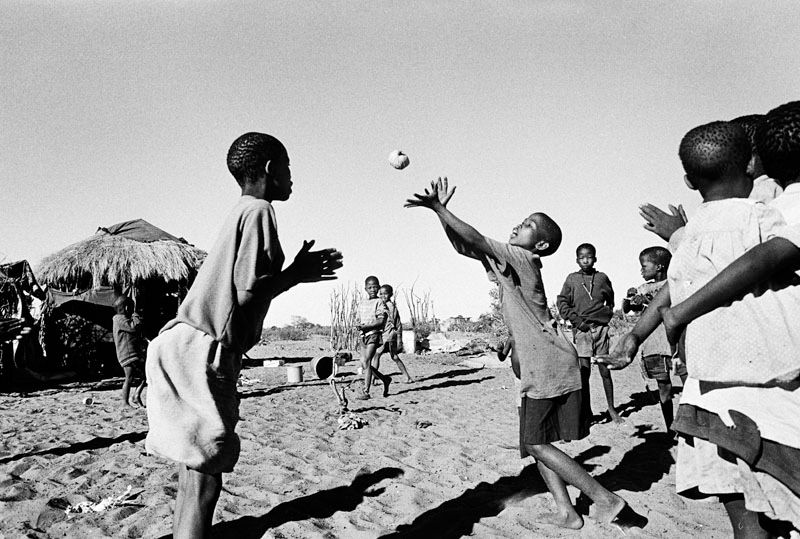
Their history is not just ancient. It is actively unfolding, and understanding it requires paying attention to what is happening right now, not only what happened thousands of years ago.
Within the broader Khoe-San grouping, the Khoikhoi represent a distinct branch with their own fascinating history. While the San were primarily hunter-gatherers, the Khoikhoi developed pastoral societies built around herding cattle and fat-tailed sheep.
When Dutch settlers arrived at the Cape of Good Hope in the 1650s, it was the Khoikhoi they first encountered. Early colonial accounts describe large herds and well-organized communities, a reality very different from the primitive stereotype colonizers later projected onto all indigenous southern Africans.
The Khoikhoi traded with passing ships for centuries before permanent European settlement disrupted their way of life. Smallpox epidemics in the early 1700s devastated their population, and land dispossession followed quickly.
Today, descendants of the Khoikhoi live throughout the Western Cape of South Africa, and there are active efforts to revive their language, Khoekhoegowab, and reclaim their distinct cultural identity.
When the international scientific community completed early phases of the Human Genome Project, the data pointed researchers back to southern Africa and specifically toward populations with Khoe-San ancestry.
A landmark 2010 study led by geneticist Stephan Schuster sequenced the genomes of several Khoe-San individuals. The results showed that two San men from the same community were genetically more different from each other than a European is from an Asian.
That single finding reshuffled assumptions about human diversity. It demonstrated that the deepest genetic variation in our species exists within Africa, not between Africa and the rest of the world.
Further research has confirmed that the Khoe-San carry the longest unbroken genetic record of any living population. Every other human group on Earth is, in a sense, a subset of the diversity that already existed among their ancestors.
That is a remarkable thing to sit with.
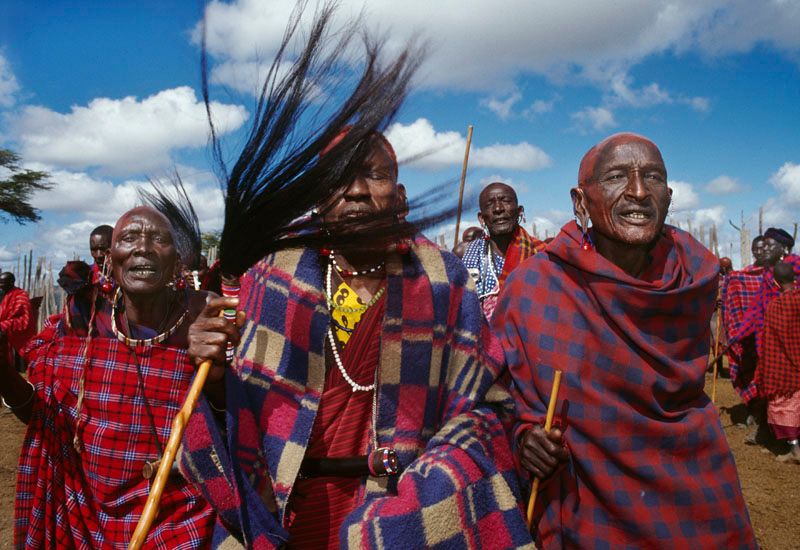
In Khoe-San communities, knowledge does not come from books. It travels through stories told at night around fires, through observation during daily tasks, and through songs that carry lessons about animals, seasons, and proper behavior.
Children learn to track by following adults and asking constant questions. They learn plant knowledge by foraging alongside grandparents who point out subtle differences between edible and toxic species.
Nothing is written down because nothing needs to be.
Storytelling traditions include tales about the trickster god /Kaggen, often associated with the praying mantis, who uses cleverness and mischief to navigate a world full of surprises. These stories are entertaining, but they also carry moral and ecological lessons woven into every detail.
The challenge facing many communities today is keeping these oral traditions alive when younger generations are pulled toward formal schooling, urban life, and digital media that operate on entirely different principles.
There is a real urgency to understanding and supporting Khoe-San communities today. Language loss is accelerating as younger generations shift to national languages like Setswana, Afrikaans, or English.
Several San languages already have fewer than a few hundred fluent speakers remaining.
Land rights remain unresolved in many areas, making it difficult for communities to maintain traditional ways of living that depend on access to specific territories. Without land, the ecological knowledge tied to that land fades within a generation.
At the same time, there is genuine momentum. Community-led schools are teaching San languages alongside national curricula.
Organizations run by Khoe-San people themselves are documenting oral histories, mapping traditional territories, and advocating for legal recognition.
The Khoe-San are not a vanishing people waiting to be studied. They are active, adaptive communities writing the next chapter of a history that began before almost anyone else’s.
That is worth paying close attention to.
Share this story