Perched above the Missouri River in Great Falls, one remarkable museum transports visitors back to one of the most important journeys in American history. Travelers come to explore immersive exhibits, interactive displays, scenic bluff-top trails, breathtaking river views, and the dramatic landscape that challenged the Lewis and Clark Expedition more than two centuries ago. It’s the kind of place where history feels less like something you read about and more like something you experience for yourself.
The experience extends far beyond the museum galleries. Hands-on exhibits, panoramic overlooks, historic walking trails, Giant Springs State Park, educational programs, and stunning views of the Missouri River have made this one of Montana’s premier historical attractions. Whether you’re fascinated by American history or simply looking for an unforgettable stop on a Montana road trip, it’s easy to understand why visitors consistently rank it among the state’s best museums.
Here’s why the Lewis and Clark National Historic Trail Interpretive Center has become one of Montana’s most rewarding destinations and one of the best places in America to experience the remarkable story of the Corps of Discovery.
A Bluff, a River, and the Address That Starts the Adventure
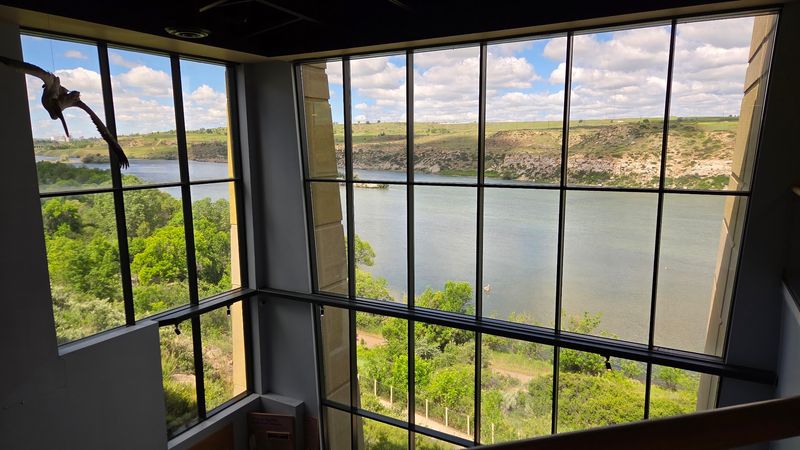
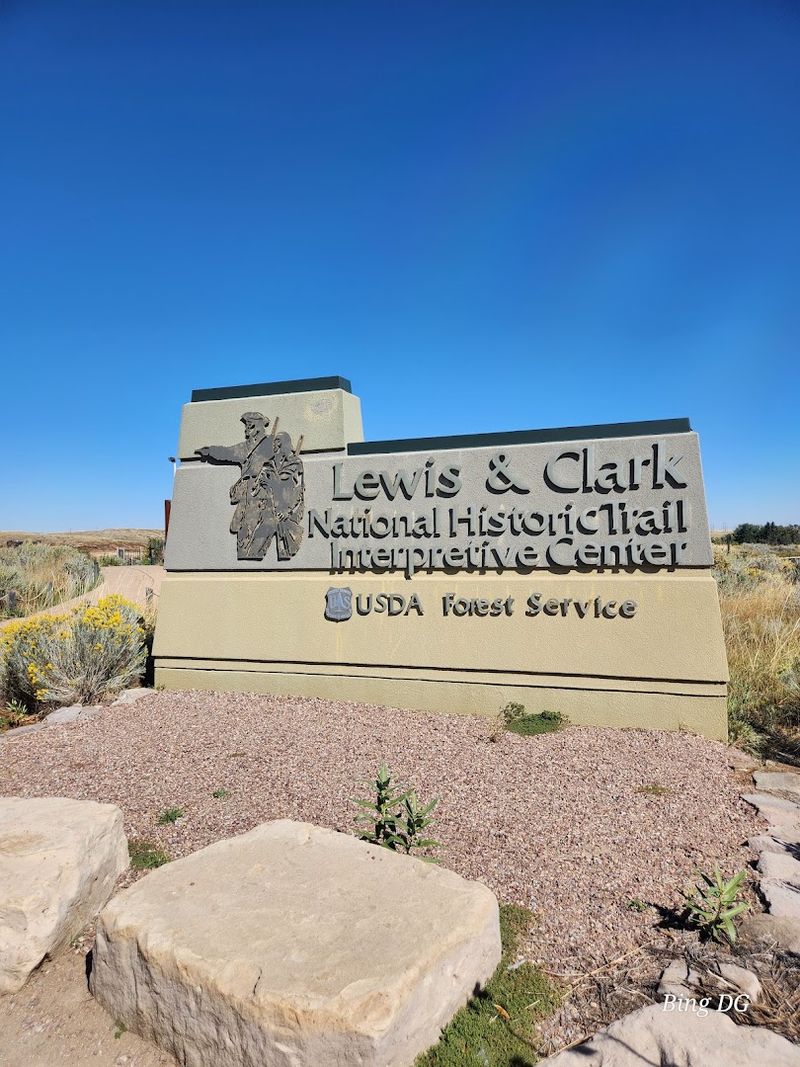
The Lewis and Clark National Historic Trail Interpretive Center sits at 4201 Giant Springs Road, Great Falls, Montana 59405, perched on a bluff inside Giant Springs State Park with the Missouri River rolling below.
That address might sound ordinary, but the view from the parking lot alone is enough to make you stop and stare. The building is designed to blend into the natural landscape, with large windows framing the undeveloped north shore of the river like a living painting.
You can almost hear the Corps of Discovery debating their next move from up here. The center is easy to find by following the brown Interpretive Center signs throughout Great Falls, and free parking is available for cars, tour buses, and RVs alike.
Whether you are arriving as a history enthusiast or just curious about the area, the setting immediately signals that this visit is going to be something worth your full attention.
How a 25,000-Square-Foot Building Tells a Two-Year Story
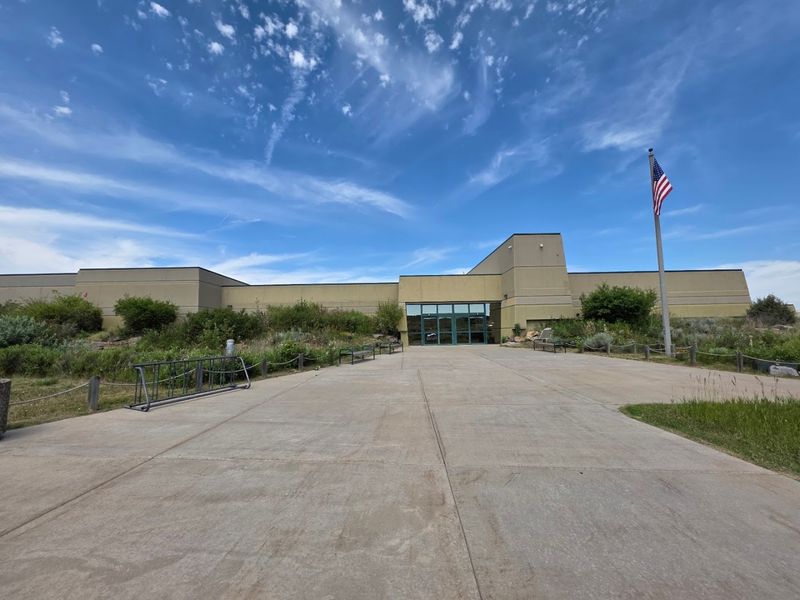
Opened in 1998 and administered by the USDA Forest Service, this 25,000-square-foot facility was purpose-built to immerse visitors in the full arc of the Lewis and Clark Expedition from 1804 to 1806.
The exhibit hall alone covers over 6,000 square feet, and it walks you through the entire journey across western North America in a self-guided format that never feels rushed or overwhelming.
The layout moves logically from room to room, so you naturally follow the expedition’s path without needing a guide to keep you on track. The lobby stretches across 1,648 square feet, giving the whole experience a grand, unhurried opening before the real stories begin downstairs.
A 158-seat theater screens orientation films at various times throughout the day, and the space also includes an outdoor amphitheater, an education room, and a gift shop called the Portage Cache store. The scale of the building matches the scale of the story it tells.
The 33-Day Nightmare That Defined the Entire Expedition
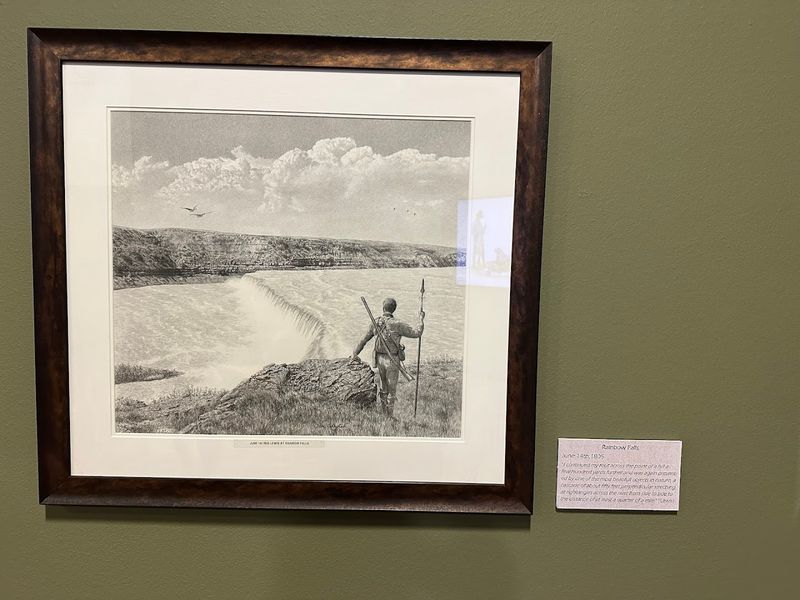
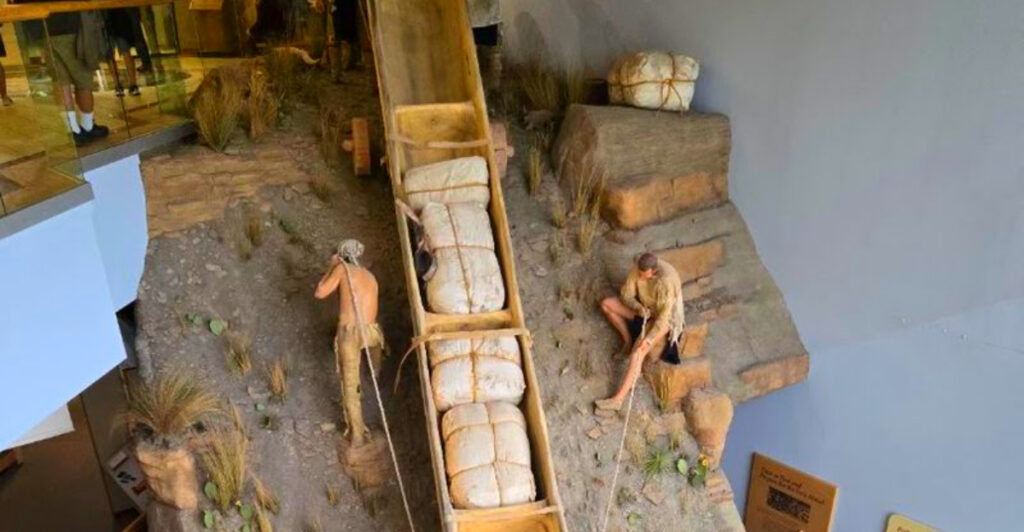
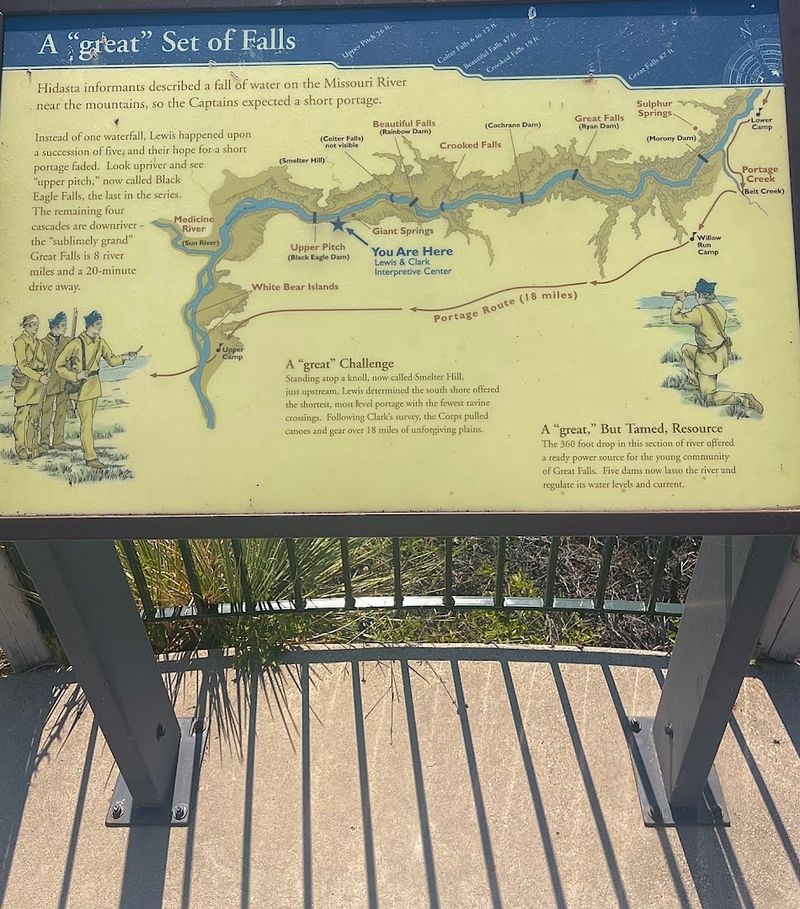
Nothing in the Lewis and Clark story hits quite as hard as the Great Falls portage, and this center makes sure you feel every painful step of it. The Corps of Discovery faced an 18-mile overland haul around five waterfalls on the Missouri River in 1805, a detour that consumed 33 days and tested every member of the group to their limits.
They built crude carts using cottonwood rounds as wheels, then dragged their canoes and roughly 30 tons of supplies across the terrain in four brutal round trips. The obstacles they faced read like a bad dream: extreme heat, hailstorms with stones reportedly up to 7.5 inches in diameter, rattlesnakes, and fields of prickly pear cactus shredding their feet through worn moccasins.
At one point, Meriwether Lewis called a halt and the men instantly collapsed and fell asleep where they stood. The center captures this chapter with vivid detail that no textbook ever quite manages to convey.
The Two-Story Diorama That Stops Everyone Cold
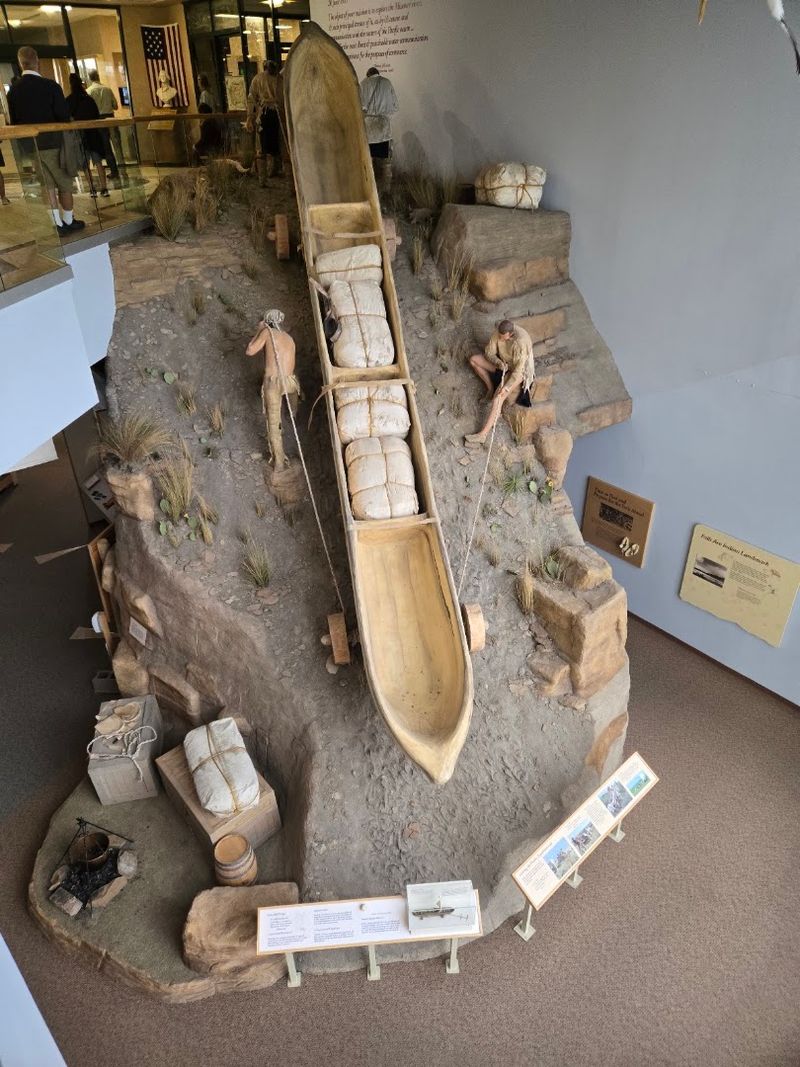
Right at the heart of the exhibit hall, a dramatic two-story diorama serves as the visual centerpiece of the entire museum. It depicts the portage scene with a scale and detail that genuinely makes your jaw drop a little, showing figures hauling gear across rough ground with the falls roaring in the background.
The craftsmanship pulls you into the moment in a way that flat panels and photographs simply cannot. You find yourself scanning the scene for small details, a figure slumped with exhaustion, a cart wheel sinking into soft earth, a sky that looks exactly as unforgiving as the journals describe.
Nearby displays include a grizzly bear skull, a recreation of the prairie dog that Lewis and Clark sent back to President Thomas Jefferson, and exhibits on the dozens of new plant and animal species the expedition documented. Some displays even feature original artifacts or specimens the team shipped back east during the journey.
The Air Rifle That Left Native Nations Speechless
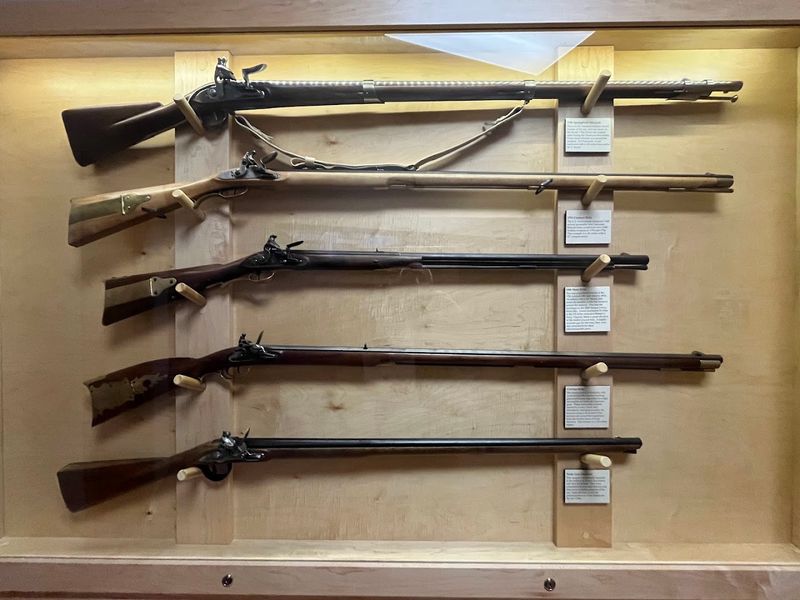
Among all the weapons on display near the end of the exhibit hall, one item stands out so dramatically that it almost feels out of place in an 1804 story. The replica Girandoni air rifle, shown prominently in a display case, was one of the most remarkable pieces of technology the expedition carried.
Unlike every other firearm of the era, this rifle required no gunpowder, made very little noise when fired, and produced no muzzle flash. When Lewis and Clark demonstrated it to Native nations along the route, the reaction was understandably astonished, since nothing in their experience suggested such a weapon was possible.
The center presents this detail with the kind of context that makes you appreciate just how much the expedition was also a diplomatic mission, not only an act of exploration. The displays covering the Corps of Discovery’s encounters with Plains and Northwest Indian nations are thoughtful and worth reading carefully, as they add real depth to the broader story.
Trails That Let You Walk the Same Ground the Corps Did
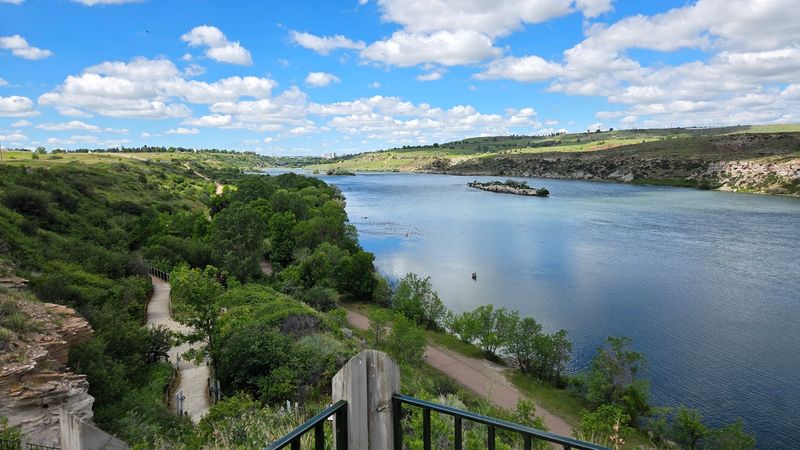
The experience here does not end when you walk back out through the front doors. Several interpretive trails wind through the natural landscape above the Missouri River, ranging from 0.25 miles to 2 miles in length, and each one offers a different perspective on the terrain the Corps of Discovery moved through in 1805.
The South Bluff Trail delivers views of coulees and dramatic cliffs, while the Grasslands Loop Trail takes you through mixed prairie that looks much as it did two centuries ago. The Cliff Trail is fully paved and ADA-accessible, making the outdoor experience available to visitors who need a smoother surface.
More than 30 informational signs along the trails identify native plants, noting what expedition members recorded about them, how Indigenous communities used them, and other historical context. Wild blue flax, prickly pear cactus, common sunflower, and serviceberry are among the species you might spot. Some trails connect directly into Giant Springs State Park, which is worth exploring on its own.
Giant Springs and the Discovery Within the Discovery
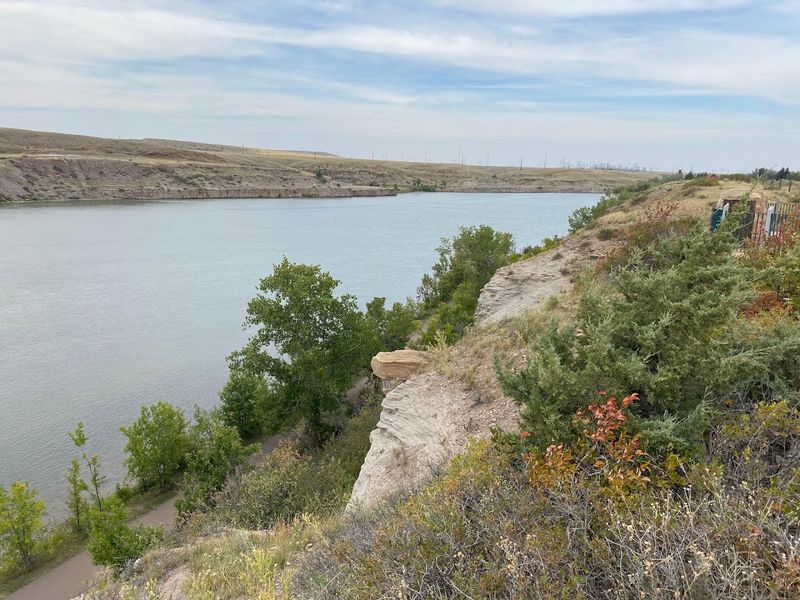
Right next door to the interpretive center, Giant Springs State Park holds one of the largest freshwater springs in the entire United States, and the Lewis and Clark Expedition was the first to document it back in 1805. The spring pushes an enormous volume of crystal-clear water directly into the Missouri River, and standing next to it feels like watching something from a different era of the natural world.
The connection between the spring and the expedition adds an extra layer to a visit here, because you are not just looking at a pretty natural feature. You are standing at a spot that Meriwether Lewis himself wrote about in his journals, noting its remarkable flow and clarity.
The trails from the interpretive center connect directly into the park, so combining both stops into one afternoon is easy and highly recommended. The River’s Edge Trail, a 53-mile system along the Missouri River, also begins nearby, giving active visitors plenty of reason to extend their time in the area.
Wildlife, Buffalo Herds, and the Natural World of 1805
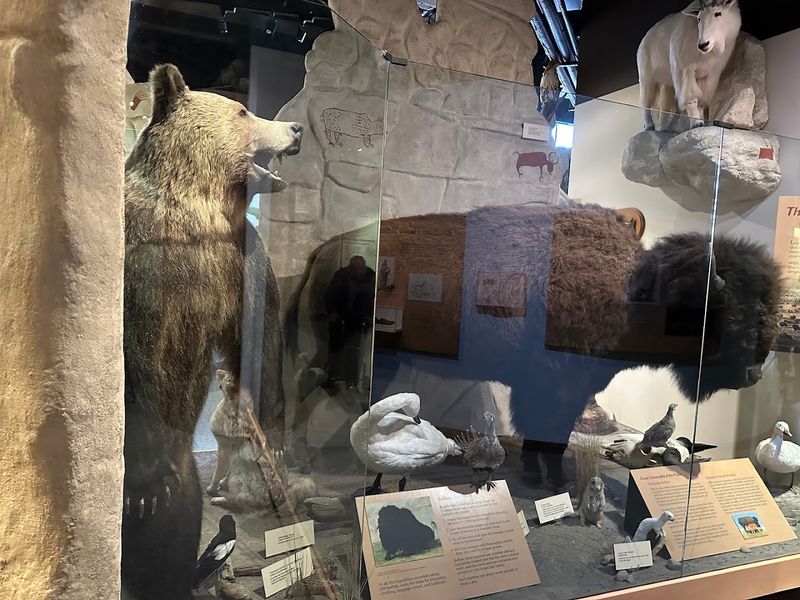
William Clark recorded seeing a herd of roughly 10,000 buffalo on the Montana plains during the expedition, a number so staggering it is almost impossible to picture today. The center addresses the natural world of 1805 with real care, weaving the story of wildlife and landscape into the broader expedition narrative rather than treating it as a footnote.
Exhibits cover the many new species of animals and plants that Lewis and Clark documented and sent back to President Jefferson, turning the Corps into a rolling natural history survey as much as an exploratory mission. Out on the trails, modern wildlife still makes an appearance, with marmots, deer, and various bird species showing up regularly depending on the season.
The native plant communities along the trails represent the same species that were growing here when the expedition camped nearby. That continuity between past and present is one of the quieter pleasures of a visit to this part of Montana, and it sneaks up on you.
Practical Tips That Will Save You Time and Energy
A few logistical details can make a real difference in how much you enjoy this place. Admission runs $8 per adult for visitors 16 and older, while children 15 and under get in free. If you carry an America the Beautiful pass, a Senior pass, a Military pass, or a 4th Grade pass, entry is free for up to four paying adults per pass holder.
During summer from Memorial Day weekend through Labor Day weekend, the center opens Tuesday through Sunday from 9 a.m. to 5 p.m. In the off-season, it shifts to Wednesday through Sunday with the same hours, and it closes on Thanksgiving, Christmas, and New Year’s Day.
Plan to arrive early rather than late, since the exhibits and films together can easily fill two to three hours. Wear sunscreen and carry water if you intend to walk the outdoor trails, as mid-summer sun on Montana bluffs is no joke. Rattlesnakes do live in the area, so staying on marked paths is genuinely good advice rather than just a legal disclaimer.
Why This Center Belongs on Every Road Trip Through Montana
A 4.8-star rating across hundreds of reviews is not something most museums achieve, and the consistency of the praise here points to something genuine. The staff are regularly described as knowledgeable and enthusiastic, the kind of people who will walk you through an exhibit even when the day is nearly over.
The center runs Junior Explorer programs, children’s summer camps, and K-12 education programs, making it a resource for the local community as well as a destination for travelers passing through on Highway 89 or Interstate 15. National Park Passport holders can also get their books stamped here, a small detail that delights a certain type of road tripper enormously.
Great Falls sits at the center of the Lewis and Clark National Historic Trail in Montana, and this interpretive center is the best single place to understand why that matters. The story of the Corps of Discovery is one of endurance, curiosity, and ambition, and this museum tells it with the honesty and depth it deserves.
Share this story