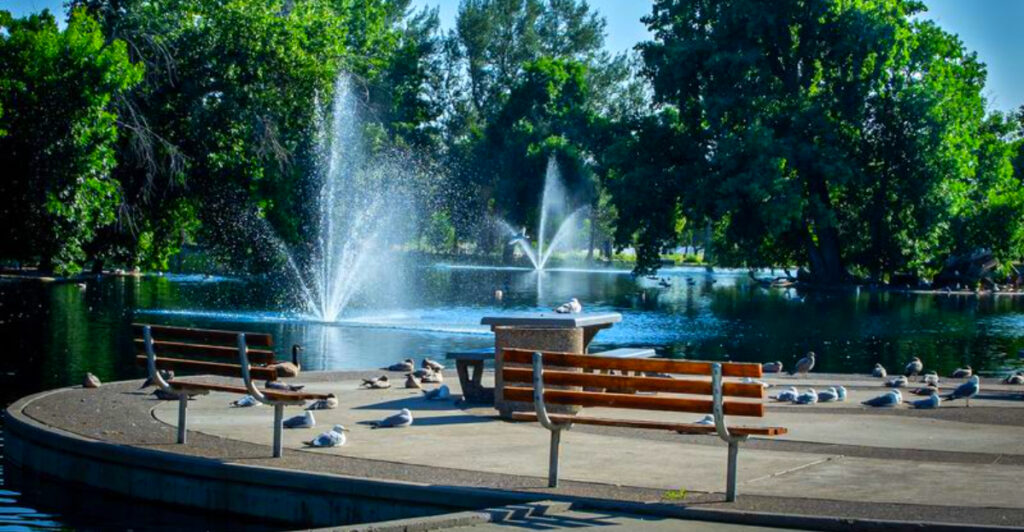
In the heart of Great Falls, Gibson Park is a favorite destination for peaceful walks, wildlife watching, and outdoor recreation. Centered around a scenic pond, the park features colorful gardens, walking trails, playgrounds, and plenty of ducks and geese, making it a welcoming escape for visitors of all ages.
Beyond its natural beauty, Gibson Park hosts summer concerts, seasonal events, and community traditions that have made it one of the city’s most treasured green spaces. Whether you’re looking for a relaxing stroll or a family outing, it’s one of the best places in Great Falls to enjoy the outdoors.
Finding the Park: Location, Address, and First Impressions
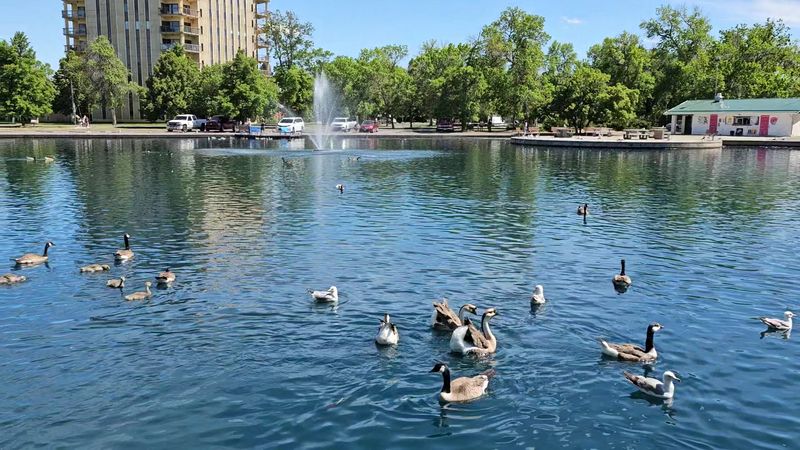
The address is straightforward: 400 Park Dr N, Great Falls, MT 59401, nestled along Park Drive between Central Avenue and 6th Street in the heart of Great Falls, Montana. What is not so straightforward is how quickly this urban park disarms you the moment you arrive.
Parking is easy to find near the entrance, which immediately removes any stress from the visit. Within a few steps of the lot, the pond comes into view, its surface catching the wide-open Montana sky in a way that feels almost cinematic.
The park is open every day from 6 AM to 9:30 PM, giving visitors a generous window to explore at their own pace. Whether you are stopping in for a quick midday break or settling in for a long evening stroll, the layout welcomes every kind of visitor with equal warmth. First impressions here tend to stick around for a while.
The Resident Waterfowl: Ducks, Geese, and a Whole Lot of Character
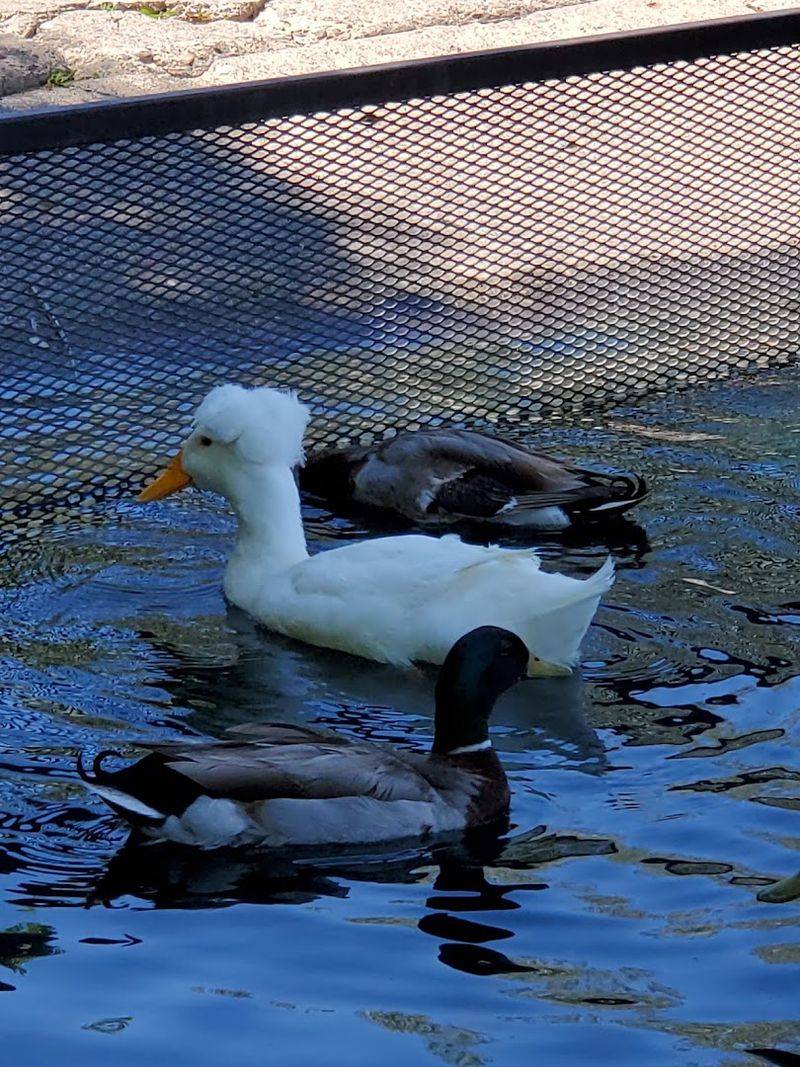
Forget birdwatching at a distance with binoculars. At the Duck Pond, the birds come to you, and they come with confidence. Ducks paddle in unhurried circles while geese march along the banks with the kind of dignified authority that suggests they own the place, which, honestly, they might.
Some of the geese will eat directly from your hand, pausing between bites to emit a soft honk that feels remarkably like a polite acknowledgment. Goslings trail behind their parents in neat little lines, and the occasional white goose drifts through the scene like a slow-moving cloud.
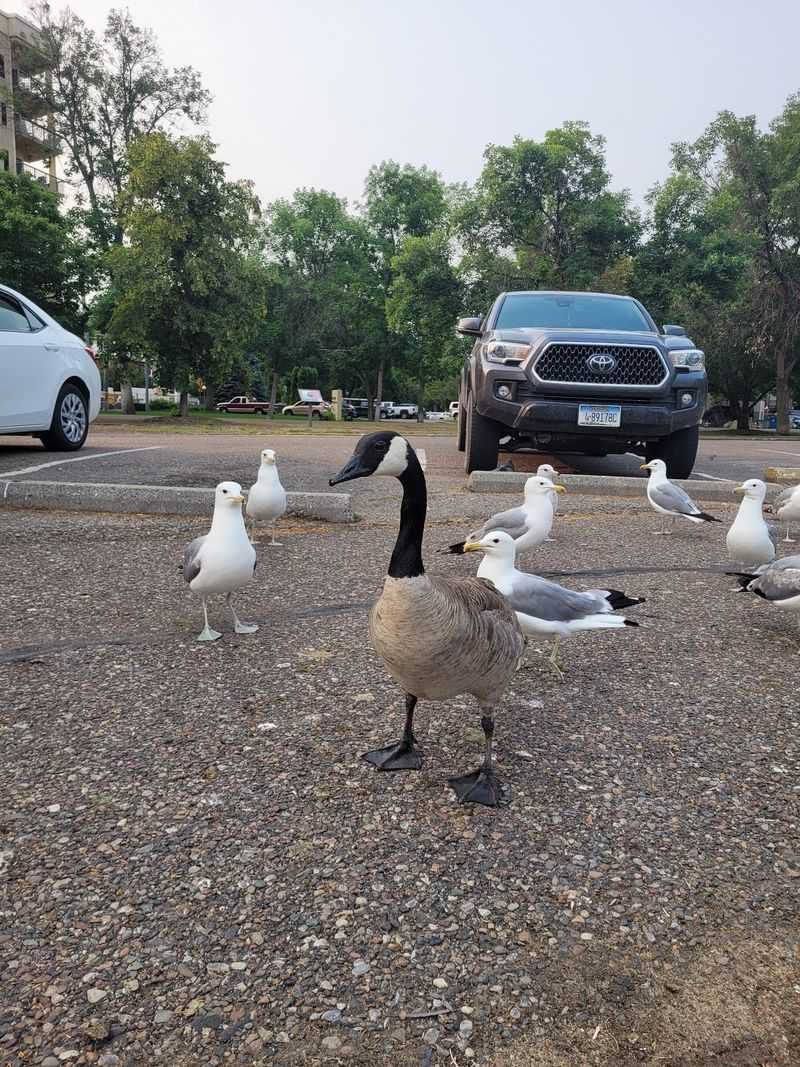
Beyond the domestic residents, wild seagulls swoop overhead and Canada geese make periodic appearances during migration season. The city does ask visitors not to feed the migratory birds to avoid overcrowding the pond. The domestic flock, however, is absolutely fair game for a friendly snack, and watching them swarm around a bag of cracked corn is pure entertainment.
The Honker Hilton: The Park’s Quirky Annual Waterfowl Tradition
Every October, something unusual happens at the Duck Pond. The Parks and Recreation team arrives to conduct what can only be described as a very organized, very caring bird roundup. The domestic ducks and geese are gently gathered and transported to their winter home, a warm, insulated building with its own indoor pond located at the north end of Gibson Park.
This winter retreat has earned the affectionate nickname “Honker Hilton,” and it is every bit as charming as it sounds. The birds spend the cold Montana months comfortable and safe while the outdoor pond rests beneath frost and, sometimes, a sheet of ice.
Come spring, usually in April, the release event draws a crowd. Local schools often time field trips around it, and special activities like story time turn the occasion into a genuine community celebration. Watching the birds waddle back toward the water after a winter indoors is the kind of moment that makes a city feel like a neighborhood. And that is a rare and wonderful thing.
The Flower Gardens: A Living Tapestry That Reinvents Itself All Summer
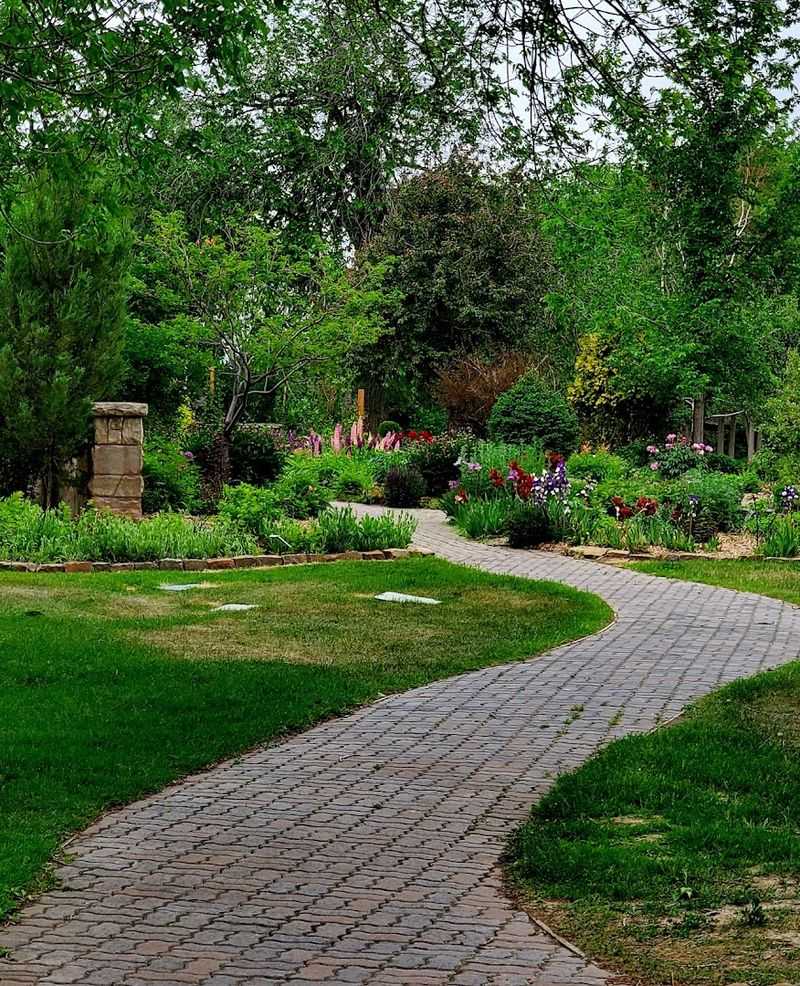
The flower gardens surrounding the Duck Pond are not a background detail. They are a full-on horticultural production that changes its lineup every few days throughout the summer, which means repeat visits genuinely reward you with something new each time.
A beautiful rock archway frames one of the garden entrances, and paved paths wind through beds packed with petunias, delphiniums, and an ever-rotating cast of colorful blooms. The fragrance on a warm afternoon is something you notice immediately and remember long after you have left.
These gardens have become a popular backdrop for weddings and special events, and it is easy to see why. The combination of structured garden design and natural abundance creates a setting that feels both curated and effortlessly beautiful. The park’s dedicated team redesigns the arrangements seasonally, ensuring that even longtime regulars find fresh details to admire. A camera is genuinely useful here, and you will likely use up more storage than you planned.
Paris Gibson’s Vision: The History Behind the Park’s Name and Purpose
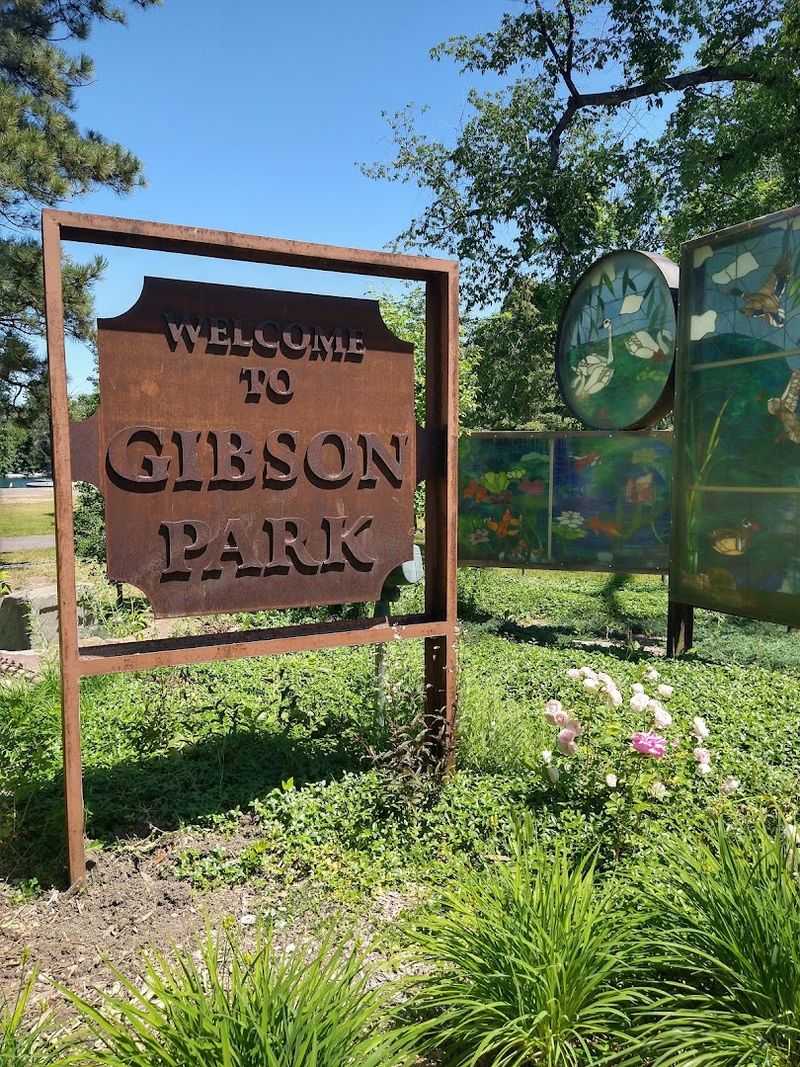
Before it carried the name it holds today, this park was called Cascade Park. In 1903, it was renamed to honor Paris Gibson, the man who founded Great Falls and whose ambitions for the city stretched far beyond commerce and industry.
Gibson drew direct inspiration from the green boulevards of Minneapolis, envisioning Great Falls as a prairie oasis lined with trees and anchored by accessible public parks. He personally oversaw the planting of elm, ash, and fir trees along the city’s streets between 1888 and 1913, many of which still provide shade today. He also set aside a remarkable 886 acres for city parkland, a decision that continues to shape the quality of life in Great Falls over a century later.
In the park’s earliest days, it even housed a small collection of wildlife, including deer, antelope, and elk. There is also a well-worn story about squirrels being introduced to the grounds, promptly escaping, and colonizing the park entirely. Their descendants are almost certainly the ones eyeing your peanuts right now.
Summer Concerts at the Bandshell: Where Live Music Meets Open Sky
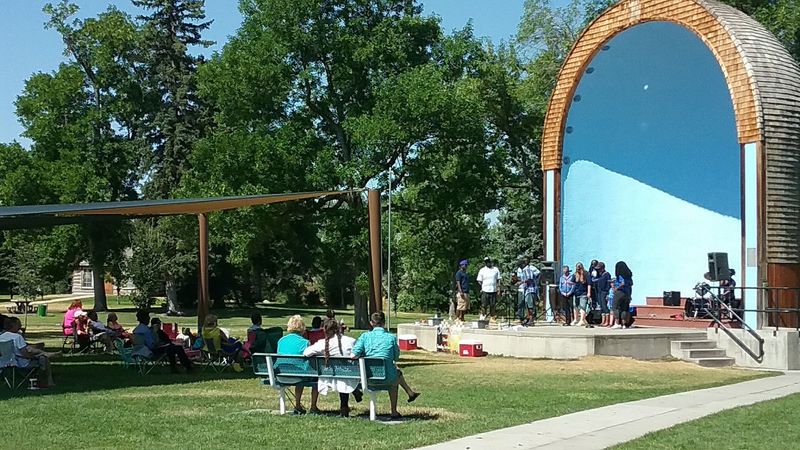
Every Wednesday evening during summer, something shifts in the atmosphere at Gibson Park. Folding chairs appear on the lawn, families spread out blankets, and the bandshell at the heart of the park comes alive with live music drifting across the evening air.
The weekly concert series draws locals from all corners of Great Falls, and the variety of performances keeps things interesting from week to week. Whether it is a brass ensemble, a local folk act, or a community choir, the setting amplifies every performance in a way that a conventional indoor venue simply cannot replicate.
I once read about visitors who wandered into the park mid-evening, stumbled onto a concert already in progress, and ended up staying for the entire show. That kind of spontaneous joy is exactly what a well-run public space should offer. The bandshell is not just a structure; it is the social center of the park during summer months, and an evening there feels like a genuine slice of Great Falls community life.
Trails, Biking, and Connecting to the Bigger Outdoor Picture
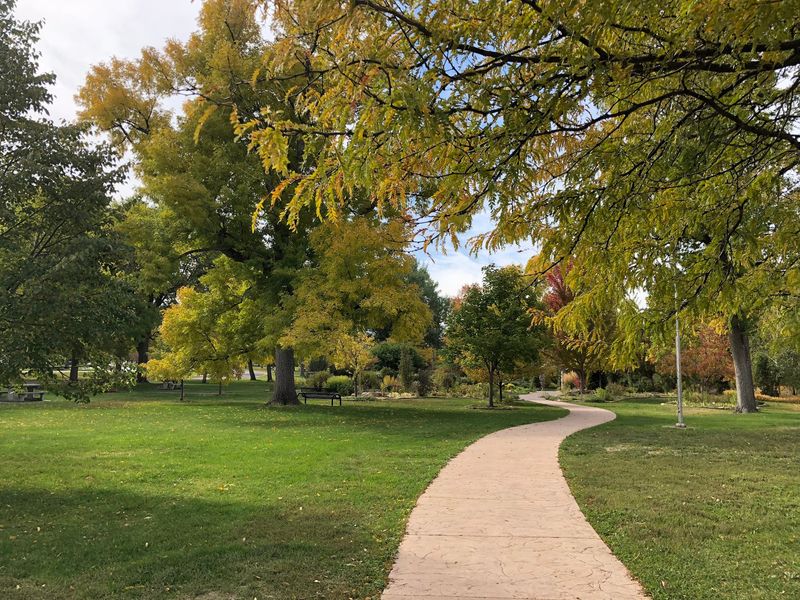
The trail system at Gibson Park is one of those features that reveals itself gradually. What starts as a pleasant loop around the pond expands into a broader network that eventually connects to the River’s Edge Trail, giving walkers, joggers, cyclists, and rollerbladers access to a much larger stretch of Great Falls’ scenic landscape.
The path around the duck pond itself is less than a mile and is stroller-friendly, making it an easy starting point for families with young children. Smooth pavement and thoughtful design mean that wheelchair users can also navigate the main routes without difficulty.
For those who want more distance, the connection to the riverside trail opens up a completely different set of views and terrain. Trees line much of the route, providing welcome shade on warmer days. The trail system is one of the main reasons locals return to the park so consistently; it is genuinely versatile, accommodating a quick twenty-minute walk and a two-hour cycling session with equal ease.
What to Feed (and What to Skip): Responsible Snacking at the Pond
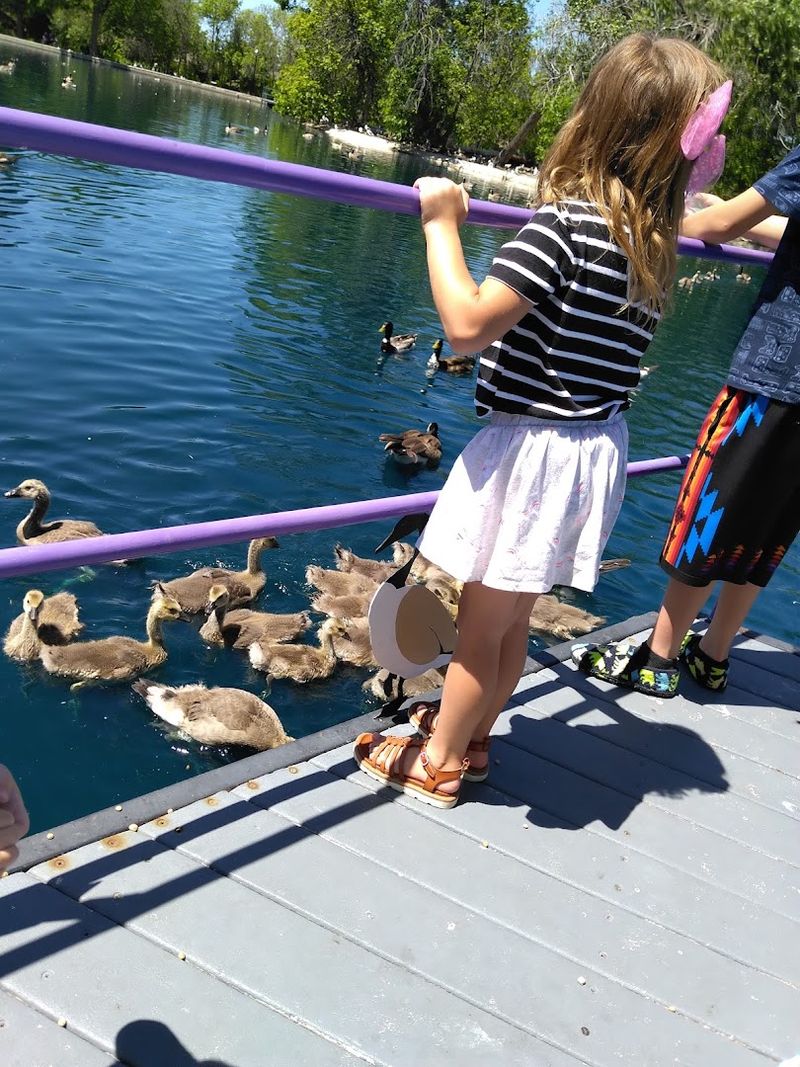
One of the first things you notice at the Duck Pond is the concession stand near the restrooms, where a one-dollar bag of duck food saves you the trouble of figuring out what to bring. Cracked corn is the approved snack for the waterfowl, and the birds make their enthusiasm for it abundantly clear the moment a bag rustles open.
Bread, despite being the traditional offering in popular imagination, is actually not great for ducks. Cracked corn is a far healthier option, and the park makes it easy to do right by the animals without any extra research on your part. For the squirrels, salt-free inshell peanuts are the treat of choice, and the park’s bushy-tailed residents have clearly received this memo.
The concession stand also sells pretzels, snow cones, ice cream, and chips, so you can snack alongside your feathered companions without anyone going hungry. It is a small but thoughtful detail that makes the whole experience feel genuinely welcoming rather than purely observational.
Beyond the Pond: Playgrounds, Courts, and Fitness Features
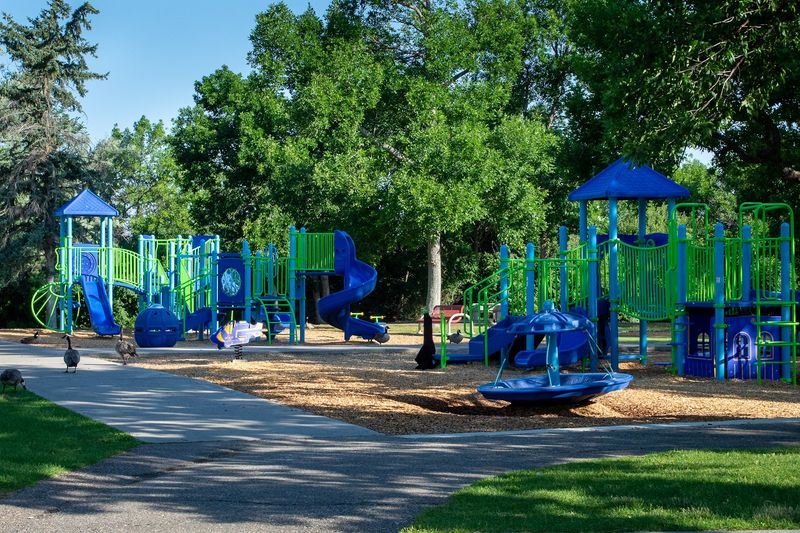
The Duck Pond draws the most attention, but Gibson Park extends well beyond its shimmering centerpiece. On one side of the pond, basketball courts and a dedicated outdoor fitness area offer workout equipment suited to gymnastics-style exercises, giving active visitors a place to move beyond just walking the trail.
On the other end of the park, a well-maintained playground with wood chip ground cover keeps younger visitors happily occupied. A second playground near the dog park means families with kids of different ages and energy levels can spread out and enjoy the space without anyone feeling shortchanged.
The skate park is another standout feature, drawing kids and teenagers who favor bikes, rollerblades, and skateboards. Open lawn areas accommodate casual baseball and soccer games, and horseshoe pits on the riverside section of the park add a retro recreational touch that feels perfectly at home in this kind of classic public space. The park essentially functions as an entire recreational district packed into one address.
A Corner of History: The First Cabin and Other Surprises
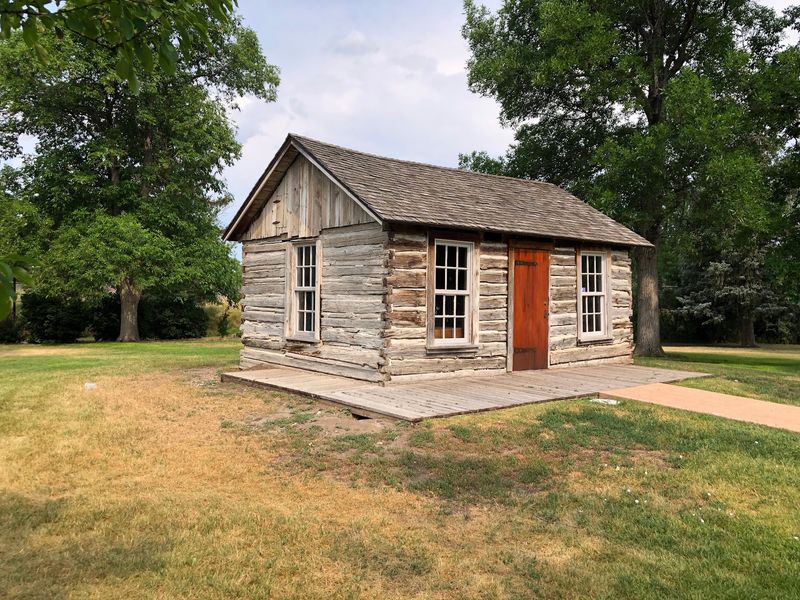
Not everything at Gibson Park is about movement and activity. Tucked into one section of the grounds is a quieter, more reflective corner where historical markers and informational displays tell the story of Great Falls’ earliest days. Among the highlights is a display connected to the first cabin ever built in Great Falls, a detail that tends to catch visitors off guard in the best possible way.
These historical elements give the park an educational layer that works well for families, school groups, and curious solo visitors alike. History here does not feel like a textbook exercise; it feels like a natural extension of walking through a place that has genuinely mattered to people for well over a century.
Combining this historical corner with the park’s natural features creates a visit that satisfies multiple kinds of curiosity in a single outing. You can watch a gosling take its first swim, admire a century-old tree, and learn something about Montana’s founding in the space of one afternoon. That kind of layered experience is harder to find than it sounds.
Winter at the Pond: Ice, Quiet, and a Different Kind of Beauty
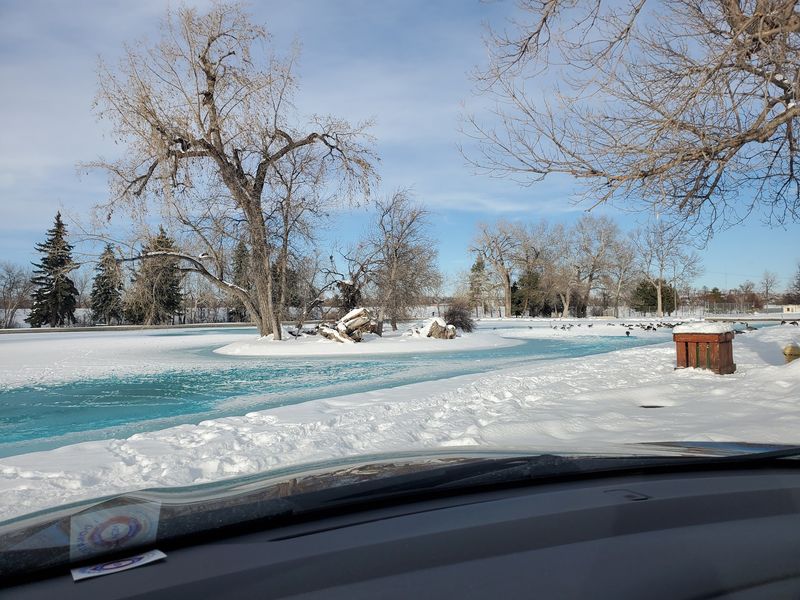
When October arrives and the Honker Hilton opens its doors for its annual guests, the Duck Pond transitions into an entirely different version of itself. The surface that spent the warmer months churning with paddling ducks and splashing geese gradually stills and, when temperatures drop far enough, freezes into a smooth expanse of ice.
Historically, locals have skated on the pond during winter, a tradition that stretches back generations. Longtime residents recall spending winters here as children, gliding across the same water where they fed ducks in summer. That kind of continuity across a lifetime is something relatively few public spaces can offer.
The park is open year-round, and bundling up for a cold-weather walk here is an experience that feels entirely separate from a summer visit, in the most rewarding way.
Practical Tips for Making the Most of Your Visit
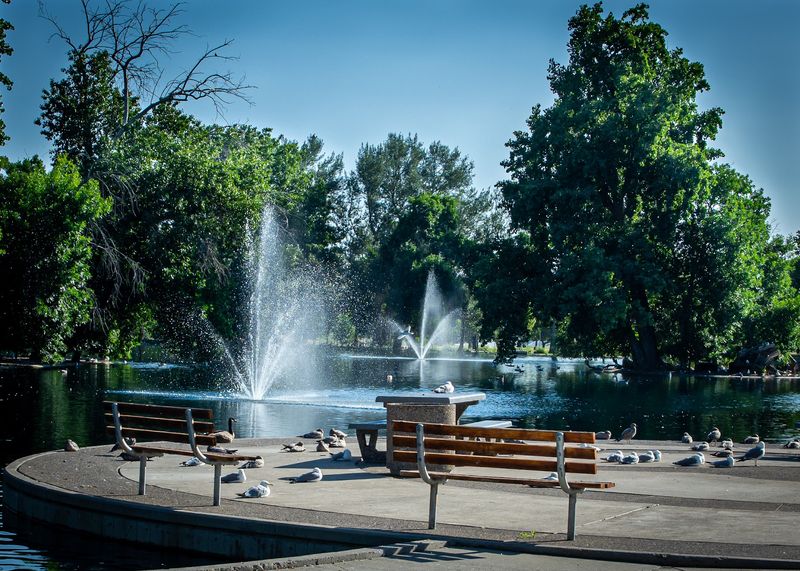
Gibson Park is open every day from 6 AM to 9:30 PM, which gives visitors a wide range of options for timing their visit. Early mornings tend to be calm and peaceful, with the birds most active and the light most flattering for photos. Summer evenings, especially Wednesdays, bring a livelier crowd drawn by the weekly concert series.
Parking is plentiful and free near the main entrance, and the park is largely accessible for wheelchair users and strollers along the paved main paths. Restrooms are available on-site and are consistently noted as clean and well-maintained. The concession stand near the restrooms sells duck food, snacks, and cold treats, but hours vary by season, so arriving with your own snacks as backup is a smart move.
Dogs are welcome in the park and have their own dedicated dog park area. For anyone passing through Great Falls on a road trip, the park sits conveniently close to major routes and makes for a genuinely worthwhile stop. You can reach the park at 406-771-1265 or visit greatfallsmt.net/recreation/gibson-park-0 for current event information.
Share this story