New Jersey has a funny way of hiding the remarkable behind everyday roads, errands, and ordinary exits. One minute, the day feels like a simple local outing, and the next, a hand-carved marble temple, fountains, gardens, and a towering golden statue turn the whole plan into something much bigger.
It is the kind of place that makes hungry, curious day-trippers pause before asking the most New Jersey question possible: how has this been here, and why did nobody mention the scale sooner? Keep reading for the story, the standout details, and the practical notes that make this one of the state’s most memorable places to visit.
A Monumental Temple in Windsor
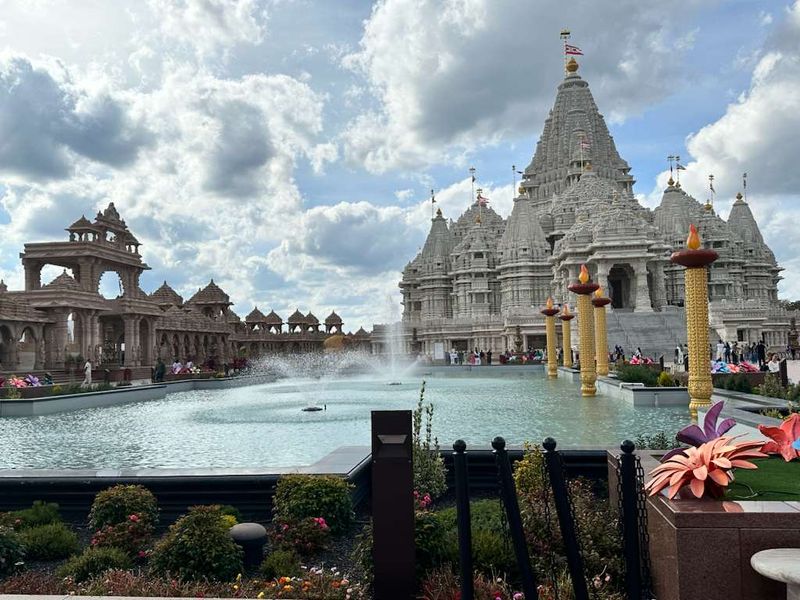
Right in Mercer County, BAPS Swaminarayan Akshardham stands at 112 N Main St, Windsor, NJ 08561, United States, and it is not a small roadside curiosity pretending to be grand.
The destination is a Hindu temple complex connected with the BAPS Swaminarayan Sanstha, and it has become one of New Jersey’s most talked-about architectural stops for people who enjoy culture, craftsmanship, and free public places that feel unusually ambitious.
The first useful thing to know is simple: the site is large, organized, and built for people who want to spend more than a quick few minutes looking around. The complex includes the mandir, outdoor areas where photography is allowed, a Welcome Center, fountains, a gift shop, and food options on-site.
New Jersey residents may know Windsor and nearby Robbinsville as quiet, practical places, which makes the scale of Akshardham feel even more surprising. The address may sound ordinary, but the visit quickly becomes a lesson in how much cultural range the state holds.
A smart first plan is to treat the temple as a half-day outing rather than a drive-by stop, because the details reward unhurried attention without requiring a complicated itinerary.
A Decade of Volunteer-Built Ambition
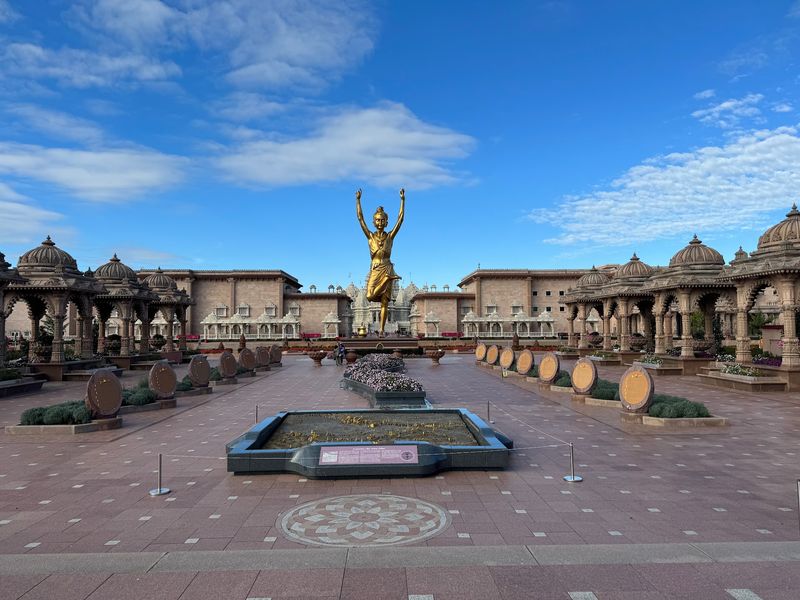
A project of this size does not happen by accident, and the story behind Akshardham is one of the strongest reasons to go beyond a quick photo outside.
Accounts shared through the site’s educational materials and visitor information describe a building effort that took roughly 10 years, with volunteers playing a major role in bringing the temple complex together. The timeline often linked to the main construction period runs from 2015 to 2023.
The craftsmanship story travels across continents before it reaches New Jersey. Stones were sourced from places including Italy and Greece, sent to India for hand-carving by skilled artisans, and then transported to the United States for assembly.
More than 2,000 people helped assemble the carved pieces, which gives the complex a human story as well as an architectural one. That detail matters because the temple is not only big, it is built from countless individual efforts that had to line up with careful planning.
The result is a destination where New Jersey’s local landscape meets a global craft tradition. It is a rare public place where the backstory makes the building feel even larger than its footprint.
Marble Carvings That Slow the Clock
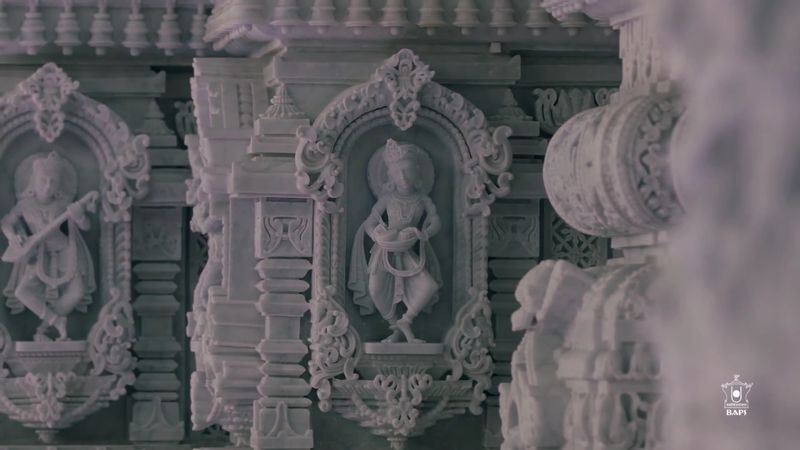
Look too quickly, and the main point slips past, because the marble work at Akshardham is built around detail rather than speed.
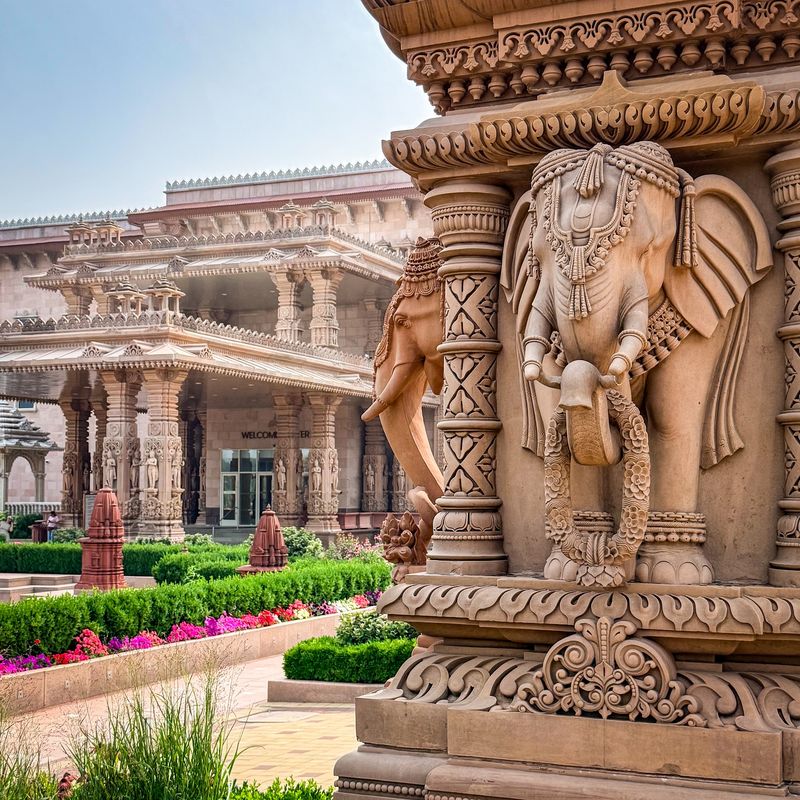
The temple is known for hand-carved marble and stone, with reliefs, domes, columns, and patterns connected to Indian religious and cultural traditions. Many guests spend their time moving slowly because the carvings change from one area to another.
The scale of the carvings is matched by the number of elements inside the mandir. Information shared by people who have toured the site points to more than 10,000 statues, statuettes, and carved motifs, including forms related to Indian music and dance.
One especially specific detail stands out: the temple includes carvings of all 108 Bharatanatyam poses. For anyone who enjoys architecture, that gives the visit a built-in treasure hunt, with art, movement, and tradition held in stone.
The marble pillars add another layer, with 548 intricately carved examples noted in site descriptions. Some are dedicated to sacred Hindu texts, including the Upanishads, Ramayana, Mahabharata, and Bhagavata Purana, turning the structure into a detailed cultural reading room in carved form.
The Golden Statue at the First Glance
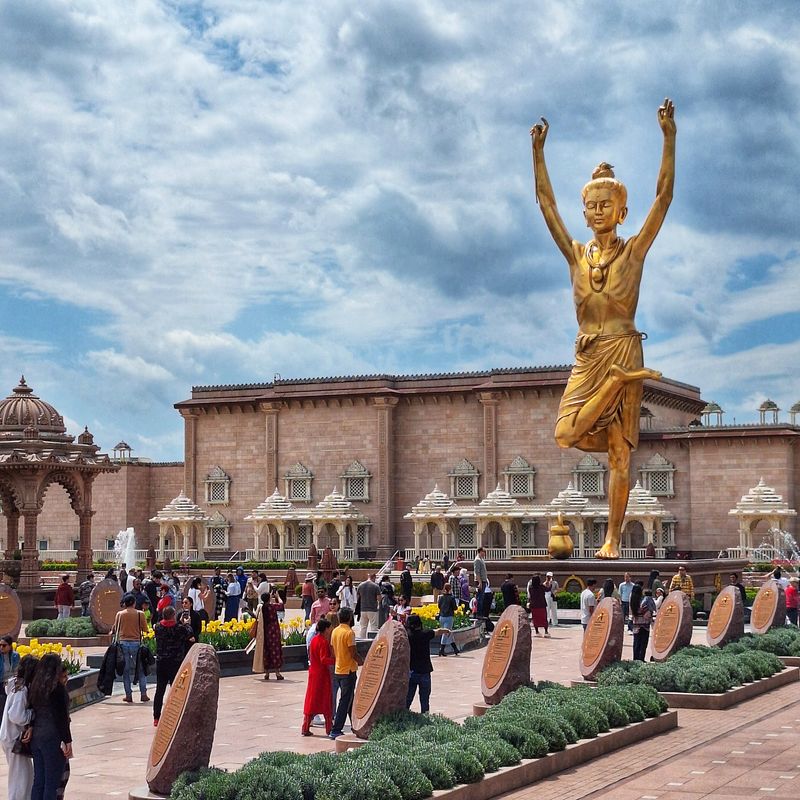
Before the marble gets its turn, the massive golden statue often claims the opening act.
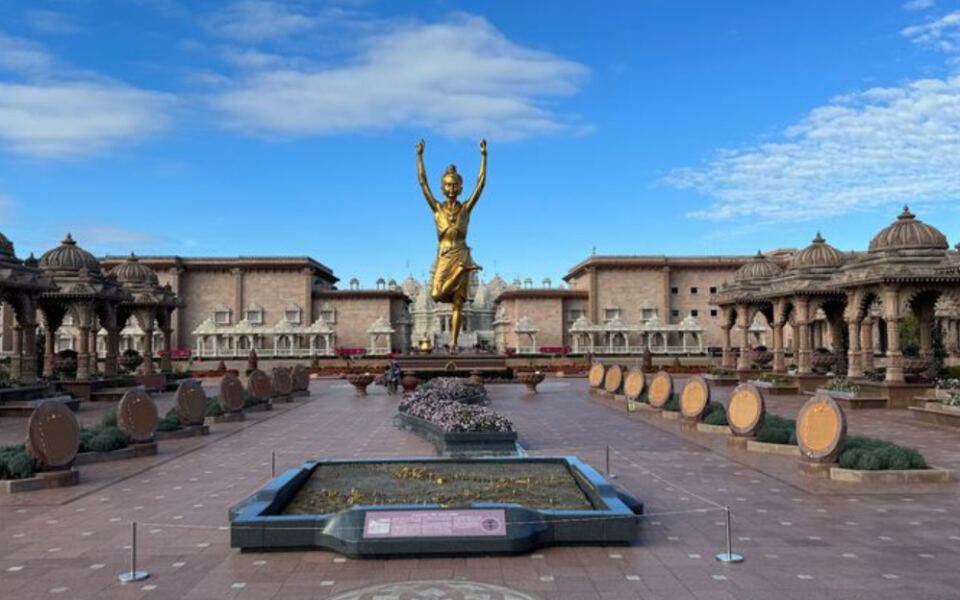
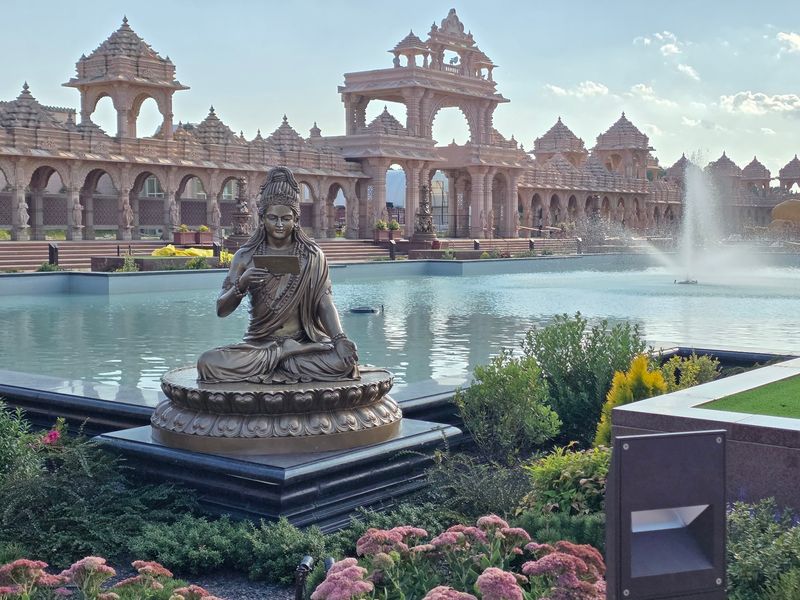
It is one of the most memorable outdoor features mentioned by people who have made the trip, and it helps set the scale before the temple’s interior details take over. The statue is part of the larger exterior experience, which can be photographed from the outside compound.
The visual order of a visit matters here. Many people arrive, park, and see the outdoor features before entering the main temple areas, so the statue works almost like a signpost announcing that this is no ordinary local stop.
Its placement within the grounds also gives first-time guests an easy point of orientation. In a complex with fountains, gardens, carved architecture, and multiple visitor areas, a striking central feature helps people understand the layout before following signs toward the next space.
There is also a practical bonus for anyone who wants a memento without breaking the rules. Since photography is not allowed inside the temple, exterior features such as the golden statue become the natural place to capture the visit while still respecting the site’s guidelines.
Fountains, Gardens, and Outdoor Breathing Room
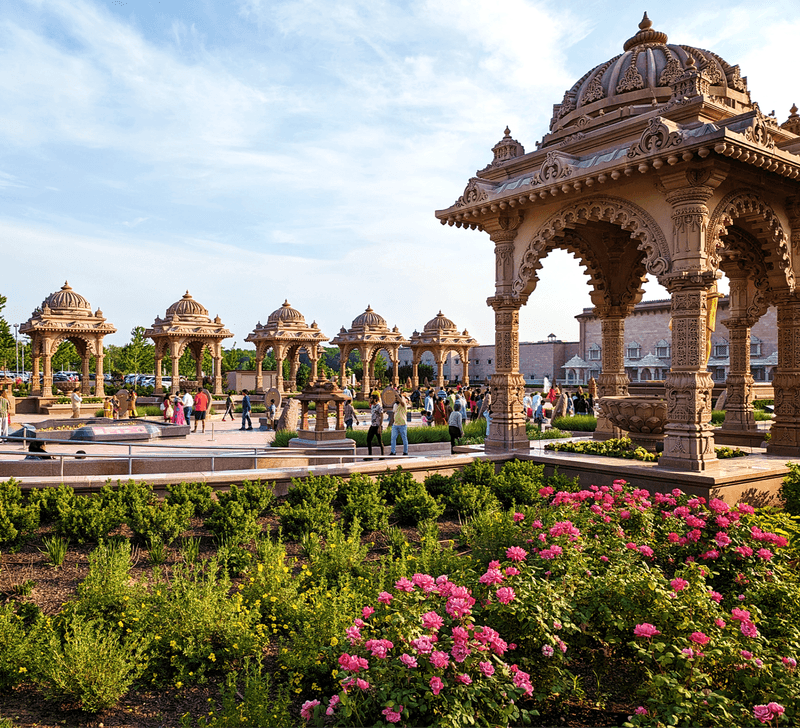
The grounds do some important work before and after the mandir, giving the visit space to unfold rather than pushing everyone straight indoors.
Fountains are among the standout features people remember from the complex, and they pair naturally with the outdoor gardens and open walking areas. The exterior is also where guests can take photos, which makes it a favorite part of the visit for families and day-trippers.
The landscaping has been described as carefully maintained, and the outdoor setting helps turn the temple into more than a single-building stop. It supports the feeling of a campus, with different places to pause, look around, and regroup before heading toward the Welcome Center or main temple areas.
Season can shape the outing, especially for New Jersey locals planning a nearby day trip. Spring and summer are often mentioned as appealing times because the grounds and greenery are part of the overall visit, though the destination remains useful year-round because the architecture is the main draw.
The outdoor portion also helps guests manage time well. A few extra minutes outside can make the visit feel complete, especially when photography inside is off-limits and the best exterior angles deserve attention.
A Welcome Center With Context
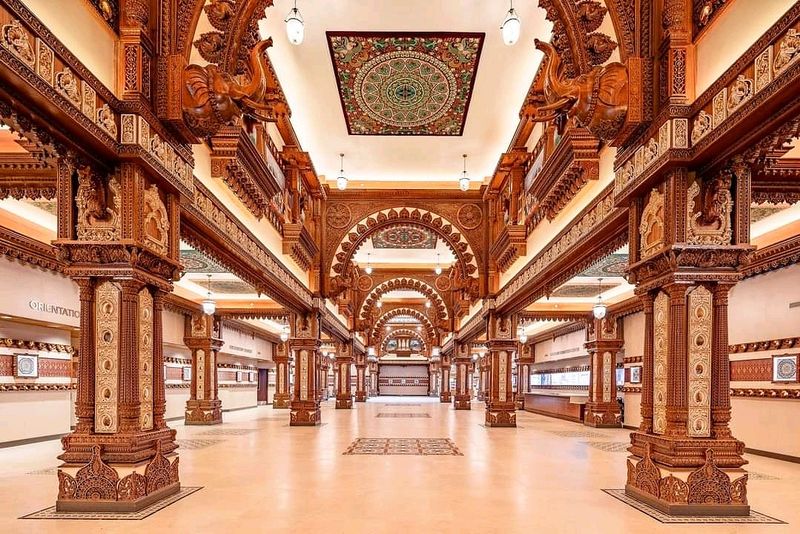
Good context can turn a pretty building into a meaningful stop, and Akshardham gives newcomers a place to start before they try to understand everything at once.
The Welcome Center is regularly pointed out as a helpful first stop, especially because it includes carved wooden interiors and short theater presentations. Those presentations run about 7 to 9 minutes and explain parts of the temple’s inception and the vision behind it.
That matters for guests who are not familiar with Hindu temple traditions or with BAPS as an organization. Instead of guessing at every symbol or carving, people can gather a basic framework and then move through the rest of the complex with more confidence.
The mini-theater format also keeps the visit accessible. A short film is easier to fit into a family outing than a long formal program, and it gives architecture lovers, culture seekers, and casual day-trippers a shared starting point.
There is a nice rhythm to beginning here: learn a little, then look again. The carvings, statues, and layout make more sense when the visit begins with a few minutes of background rather than a race toward the most photographed view.
Sacred Stories in Stone
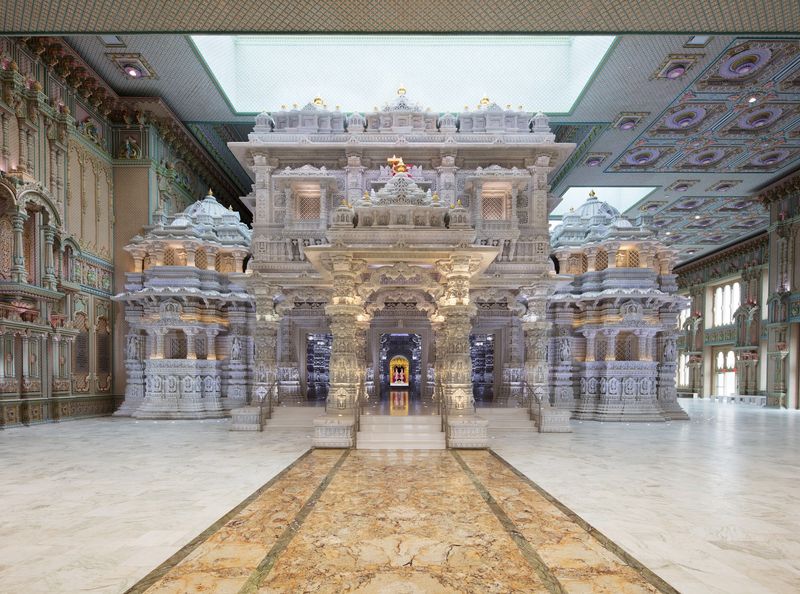
Some buildings decorate blank space; Akshardham fills it with narrative.
The mandir’s carved elements include references to Hindu scriptures, stories, music, dance, and devotional traditions. Several pillars are associated with sacred texts such as the Upanishads, Ramayana, Mahabharata, and Bhagavata Purana.
That makes the temple a place where art and teaching overlap. Even guests who arrive mostly for the architecture may find themselves reading displays, following signs, and noticing that the carvings are not random ornament.
The many statues and motifs also highlight how much interpretation is built into the visit. A person can focus on the craftsmanship, another can focus on cultural learning, and a third can follow the spiritual meaning, all while standing in the same space.
Because photography is not permitted inside, attention shifts away from collecting images and toward reading, observing, and moving respectfully. That policy may feel unfamiliar at first in a phone-first world, but it helps protect the character of the temple areas.
The best approach is to give the interior time. Rushing through the carved stories would be like opening a book and only admiring the cover, which is a very New Jersey kind of impatience to politely leave in the parking lot.
A Calm Stop for Culture Seekers
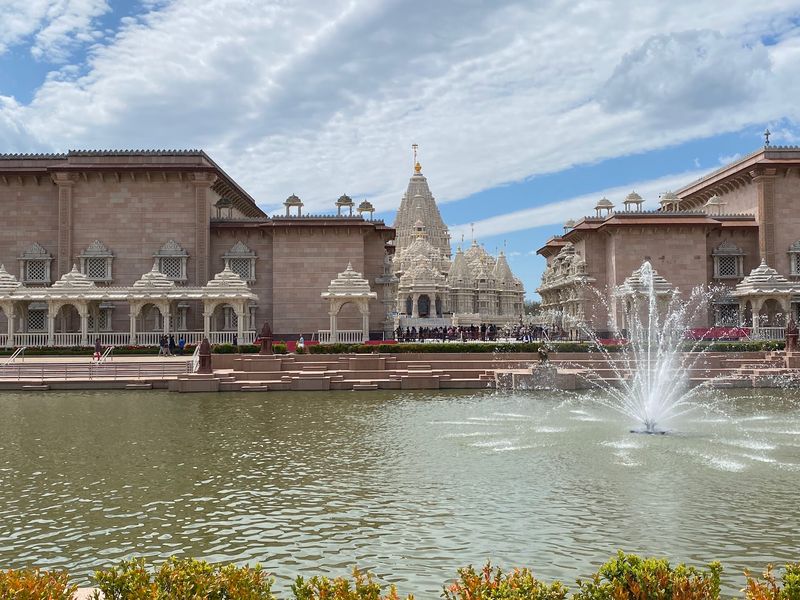
Not every memorable New Jersey outing needs a packed schedule, and Akshardham works best when the point is attention rather than adrenaline.
The complex suits several kinds of guests: people interested in Hindu culture, architecture fans, families looking for a low-cost activity, and day-trippers who want something different without leaving the region. The atmosphere is often described as orderly, respectful, and quiet enough for a slower visit.
Non-Hindu guests can still find plenty to appreciate, especially through the craftsmanship, educational displays, and explanations throughout the site. The temple is active as a place of worship, so respect is part of the experience, not an extra rule tacked on at the door.
Families may appreciate that the site can be explored in a few hours without needing a complicated plan. Some people spend about two hours, while others set aside more time for the grounds, the Welcome Center, the shop, and the on-site food options.
Accessibility is another useful note from guest experiences, with wheelchair access mentioned as a positive feature. A nursing pod has also been noted for mothers who need a private space, adding a thoughtful practical detail to a large cultural destination.
Respectful Dress and Temple Etiquette
A little preparation makes the visit smoother, and the dress expectations are straightforward once people know them.
Guests should dress modestly, with shoulders and knees covered, because Akshardham is a Hindu temple rather than only a sightseeing landmark. Shorts and similar clothing are best avoided, and bringing socks is a smart move because shoes must be removed before entering temple areas.
Photography rules also matter. Photos are allowed outside around the compound, but photos and videos are not allowed inside the temple, so anyone hoping to document the visit should focus on exterior views, fountains, gardens, and the golden statue.
Security is another part of the process. Bags may be checked thoroughly, and outside food, pets, drones, vaping, and smoking are not allowed, so leaving unnecessary items in the car can save time at entry.
Reservations are useful, especially on weekends and holidays, and advance registration through the website can make entry easier. The rules are not there to complicate the day; they help keep a sacred, busy, and highly detailed place running in a way that works for many kinds of guests.
Free Admission and a Donation Option
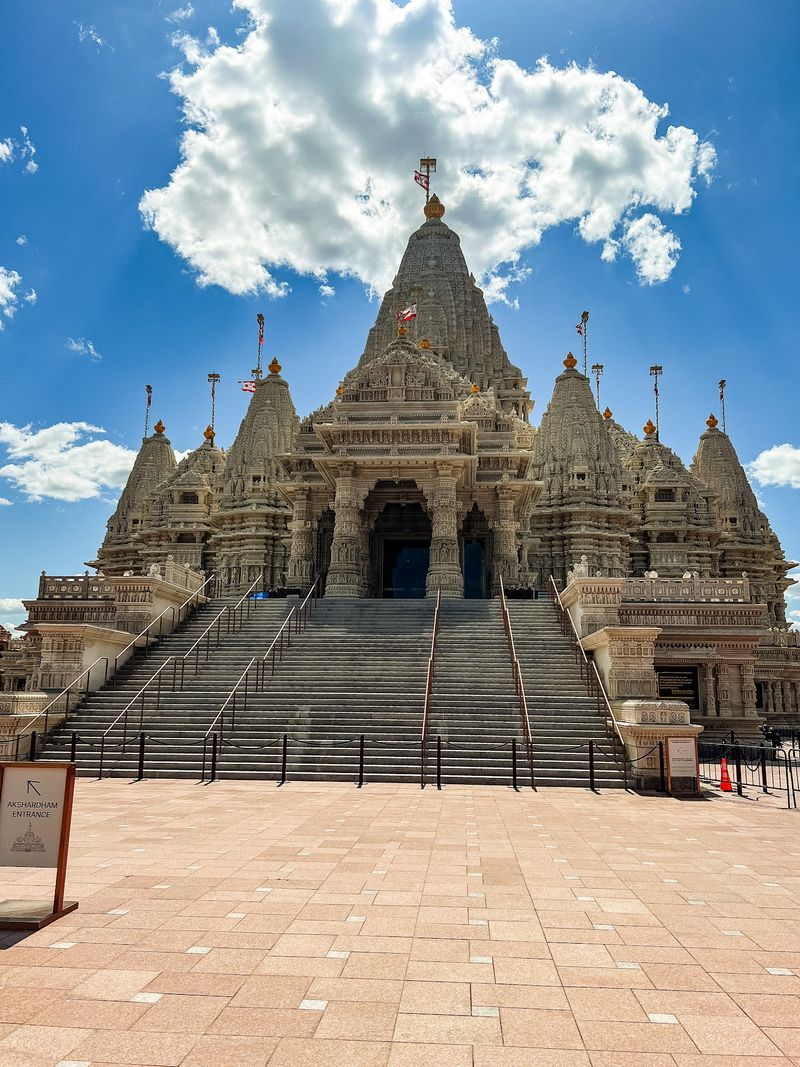
The price tag may be the most pleasant surprise: admission to the main temple is free.
Free entry makes Akshardham especially appealing for New Jersey residents who want a meaningful day trip without turning the outing into a major expense. Donations are accepted, so guests who want to support the project can do so, but the lack of a required admission fee keeps the destination accessible.
Parking is also described as free, with a large lot available on-site. That is helpful because most people will arrive by car, and the complex draws enough attention that parking capacity matters on busy days.
The free model also changes how people can approach the visit. A family can spend money at the café or gift shop if they choose, but the core experience of the temple, grounds, and cultural learning does not require a ticket purchase.
Weekends and holidays may call for a little more planning, especially with reservations encouraged for a smoother entry. On quieter days, the process can feel simpler, though Tuesday should be avoided because the temple is closed every week.
For a state where easy, low-cost outings are always welcome, this one earns attention without asking guests to empty their wallets at the gate.
Food, Gifts, and Practical Extras
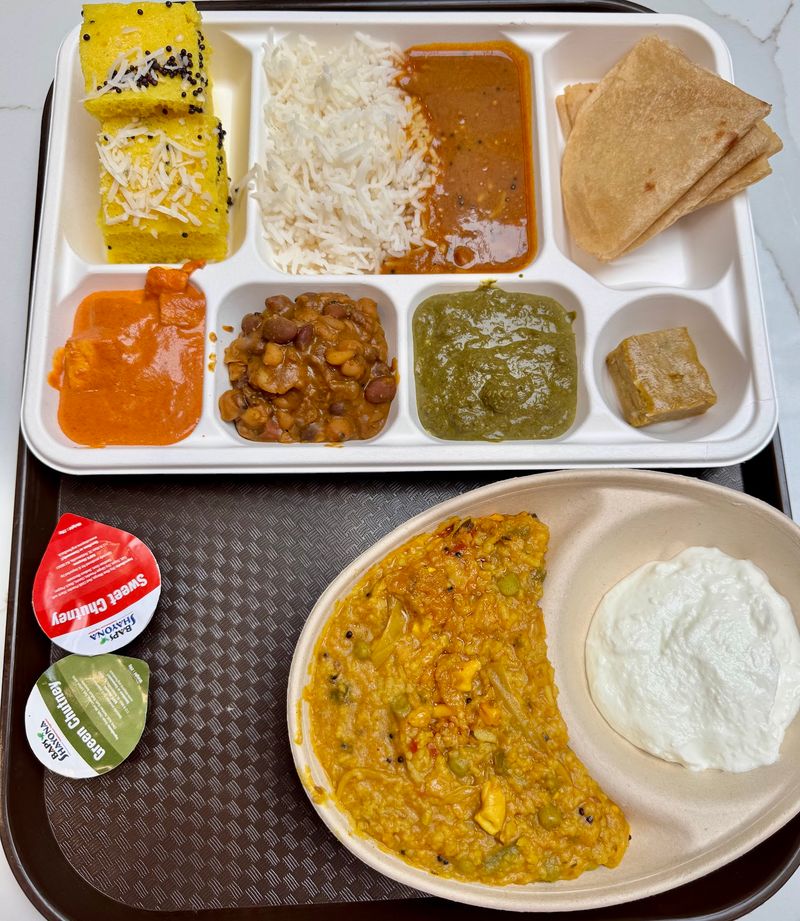
A temple visit can turn into a longer outing because Akshardham includes more than the mandir and grounds.
On-site food options include Shayona Café Express for quicker items and a main Shayona Café for fuller meals. The provided information also mentions vegetarian cafeteria options, so guests do not need to bring outside food, which is not allowed through security.
The gift shop is another part of the experience, with guests often noting reasonable costs and a broad selection of items. There is also a grocery store on-site, adding a practical stop for people who want to browse after finishing the main temple route.
Those extras help the complex work well for groups with different energy levels. One person may want more time with the carvings, another may want to watch the short film, and someone else may prefer the shop before heading home.
Because the site is large, comfortable shoes and a realistic time plan are useful. Plenty of people find that a couple of hours is enough for the main highlights, while others stretch the outing by adding the café, shop, Welcome Center, and outdoor photo time.
The result is a destination that behaves like a full campus, not a quick checkmark on a local list.
A Soft Verdict for New Jersey Day-Trippers
New Jersey does not need to borrow anyone else’s landmarks to prove it has range, and Akshardham makes that point with unusual confidence.
At BAPS Swaminarayan Akshardham, the appeal comes from the combination of hand-carved marble, fountains, gardens, sacred storytelling, a massive golden statue, and a public welcome that keeps the experience accessible. It is cultural, architectural, practical, and local all at once.
The hours are easy to remember with one key exception: the temple is open 9 AM to 7:30 PM on Friday, Saturday, Sunday, Monday, Wednesday, and Thursday, and it is closed on Tuesday. The official website, https://usa.akshardham.org/, is the best place to check current reservation guidance before going.
Drivers from New York or Philadelphia can make it a reasonable regional outing, and many people set aside a few hours to half a day. The large parking area helps, though advance planning is still wise on weekends and holidays.
The strongest verdict is simple without being overblown: go when there is time to slow down, follow the guidelines, and let the details carry the visit. Windsor may sound like a quiet spot on the map, but this temple gives New Jersey another reason to brag politely.
Share this story