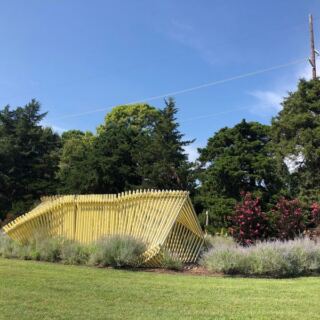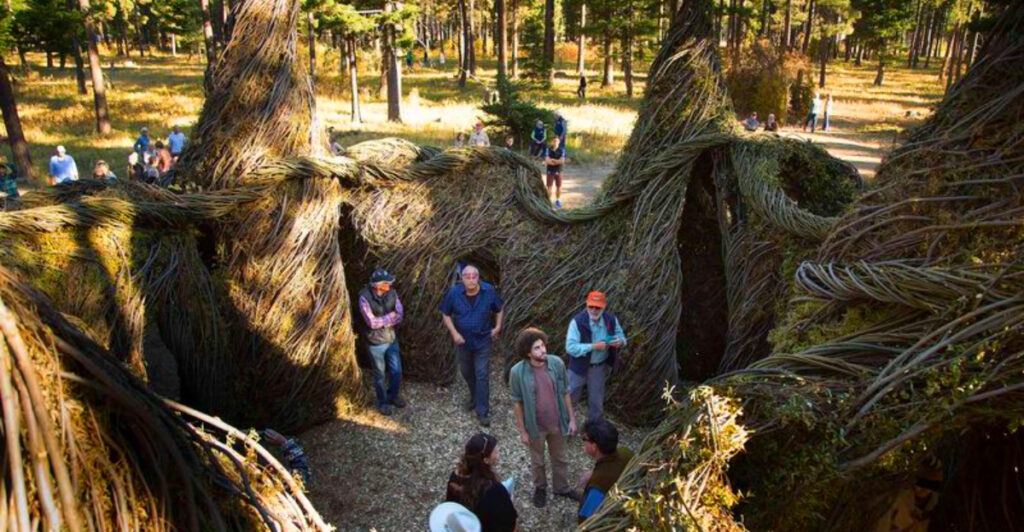
Hidden among the pines of western Montana, Blackfoot Pathways: Sculpture in the Wild combines outdoor art with the beauty of the surrounding landscape. Visitors can wander forest trails lined with striking sculptures by artists from around the world, creating an experience that blends creativity, nature, and quiet exploration.
Beyond the artwork, the site offers scenic walking paths, free admission, seasonal events, picnic areas, and live summer performances. Whether you’re passing through on a road trip or planning a special visit, Sculpture in the Wild is one of Montana’s most unique cultural attractions.
Where the Forest Becomes a Gallery
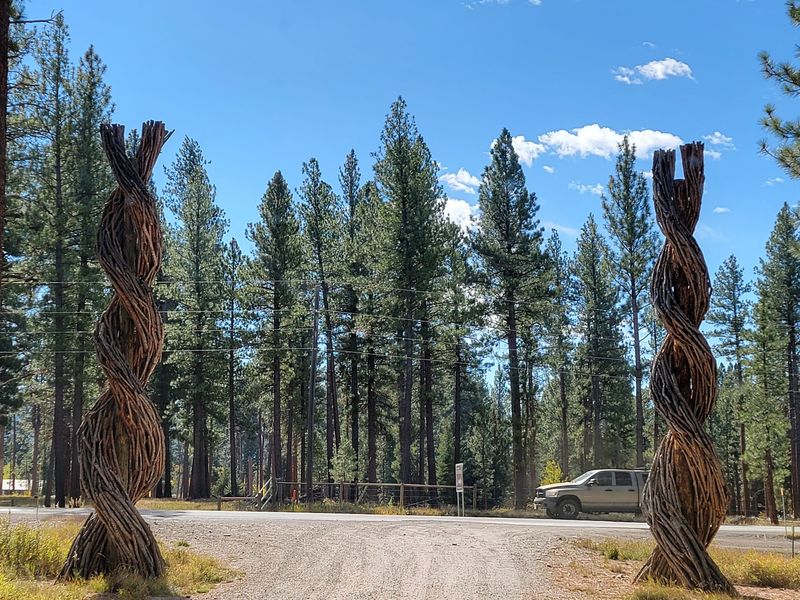
There is something genuinely disorienting about arriving at Blackfoot Pathways: Sculpture in the Wild and realizing that what you assumed would be a small roadside curiosity is actually a full 26-acre forested art park. The park sits at 1500 MT-200, Lincoln, Montana 59639, right along Highway 200, making it surprisingly easy to spot and stop at during a road trip through the Rockies.
Free parking greets you immediately, along with two accessible restrooms and a spacious picnic area near the lot. A trail map at the entrance lays out both the accessible gravel paths and the narrower dirt routes that wind deeper into the trees.
The whole loop to see every sculpture covers roughly one mile, but almost nobody moves quickly here. The forest pulls you in at a slower pace, and the art scattered throughout makes every few steps feel like a small discovery worth lingering over.
The Backstory Behind This Unlikely Art Park
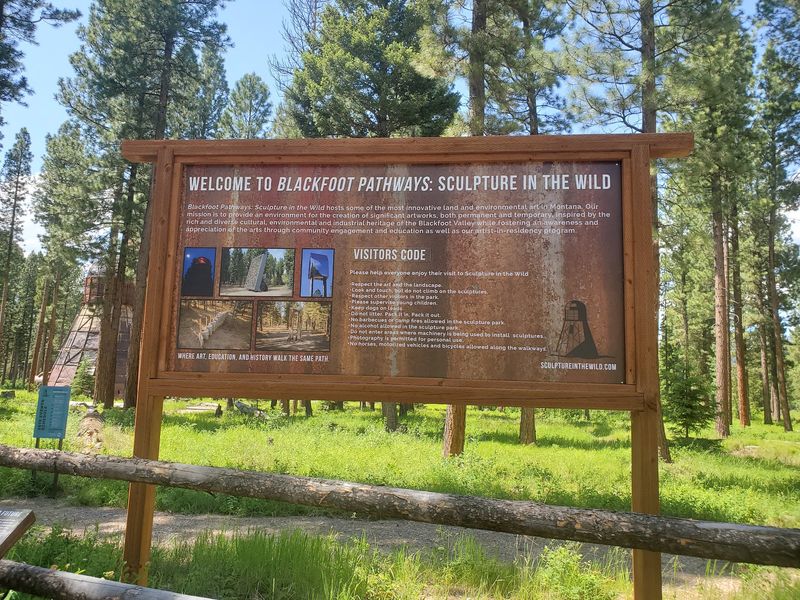
Not many outdoor sculpture parks can trace their origins to a single three-week creative sprint, but that is exactly how this one started. In 2014, sculptor and curator Kevin O’Dwyer and master bladesmith Rick Dunkerley co-founded the project in close collaboration with the Lincoln community, kicking things off with an international sculpture symposium.
During those three weeks, five artists from different countries worked on-site to create the first permanent pieces, forming the creative core of what the park is today. The mission from the start was to build something that honored the environmental and industrial heritage of the Blackfoot Valley, including its deep roots in logging, mining, and ranching.
Lincoln had been feeling the economic pressure of those traditional industries fading, and the park emerged as both a cultural response and a community catalyst. Over 25 works of art, including sculpture, video, and music composition, were commissioned between 2014 and 2023, with artists selected through a competitive residency program.
Sculptures That Actually Want You to Touch Them
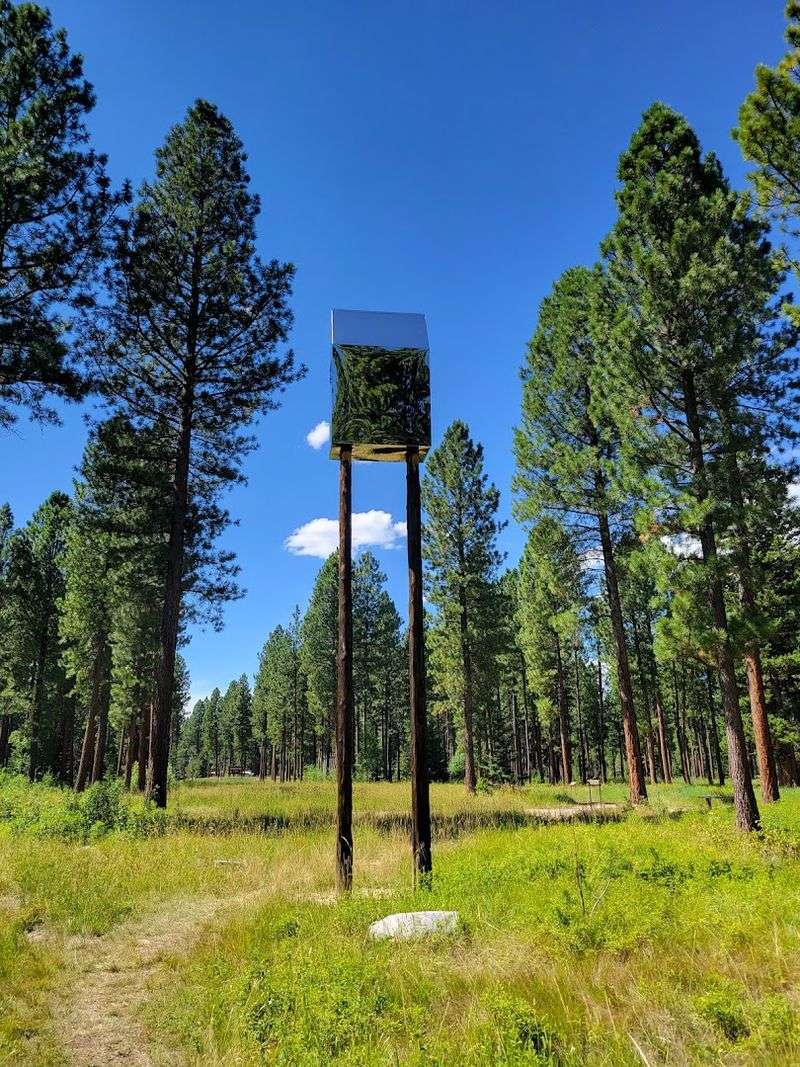
One of the most refreshing things about this park is the complete absence of “do not touch” signs. The sculptures here are meant to be explored with your hands, your feet, and your full curiosity. You can walk through them, sit on them, and yes, climb on certain pieces without anyone waving you off.
That philosophy comes directly from the artists, who designed these works to exist in relationship with the people who encounter them. The materials range from salvaged industrial objects to raw timber to carefully arranged natural elements, and the scale of many pieces is genuinely jaw-dropping up close.
Favorites among visitors tend to include the Sky House, the Circus, and the Bridge, each offering a completely different physical and visual experience. Some sculptures feel playful and almost architectural, while others carry a quieter, more contemplative weight that seems to shift depending on the light and the season.
The 30,000-Pound Newspaper Sculpture You Have to See
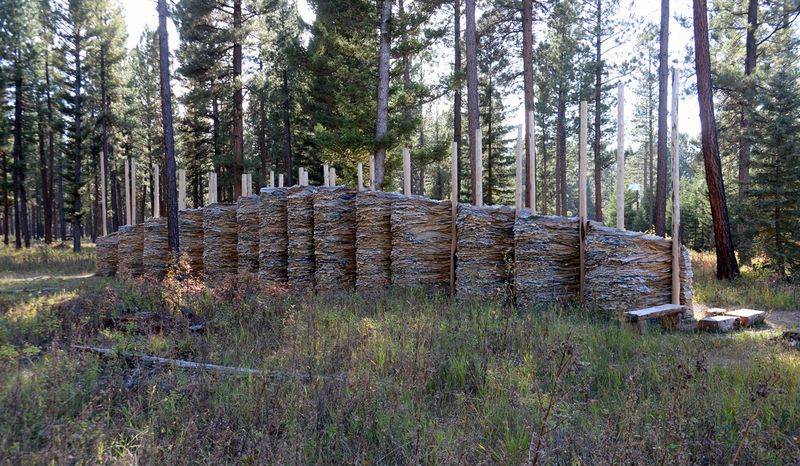
“Hill and Valley” by American artist Steven Siegel is one of those works that stops people mid-sentence. Installed in 2014 during the founding symposium, the piece was constructed using 30,000 pounds of newspaper, 400 pounds of nails, and 28 pine lodge poles, forming a dense, layered mound that rises from the forest floor in a way that feels both ancient and completely unexpected.
Up close, the compressed layers of newsprint reveal texture and depth that photographs simply cannot capture. The material choice is deliberate, connecting ideas about information, industry, and the passage of time in a way that rewards slow looking.
Siegel is known internationally for his large-scale works using recycled urban materials placed in natural settings, and this piece fits that practice beautifully. It also holds up remarkably well through Montana winters, which is a testament to both the craftsmanship and the resilience of materials that most people would never think to use in an outdoor sculpture.
The Old Sawmill Burner Reborn as a Performance Venue
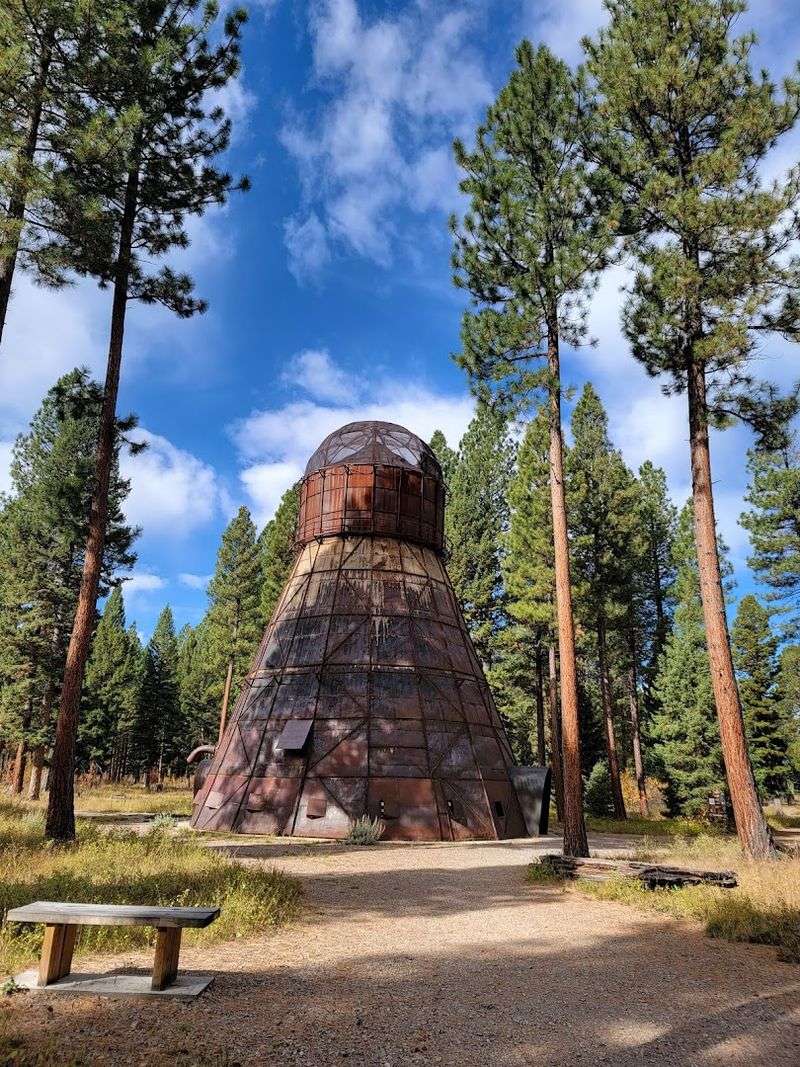
Few pieces in the park carry as much local history as “Montana Memory: Re-imagining the Delaney Sawmill Teepee Burner” by Kevin O’Dwyer. Teepee burners were once a defining feature of the logging industry across the American West, used to burn sawmill waste, and their cone-shaped silhouettes became as recognizable as smokestacks in mill towns like Lincoln.
O’Dwyer transformed this industrial relic into a sculptural landmark that tells the story of the valley’s logging heritage without sentimentality or nostalgia, but with genuine craft and respect for the material’s history. The structure is striking from a distance and even more compelling up close, where the details of its construction become clear.
Beyond its role as a sculpture, the teepee burner serves as a live performance venue during the park’s Summer Series, which runs every Saturday from after the Fourth of July through Labor Day. Music and family-friendly performances fill the space, turning a symbol of industrial history into a gathering place for the community.
Artists From Six Countries, One Montana Forest
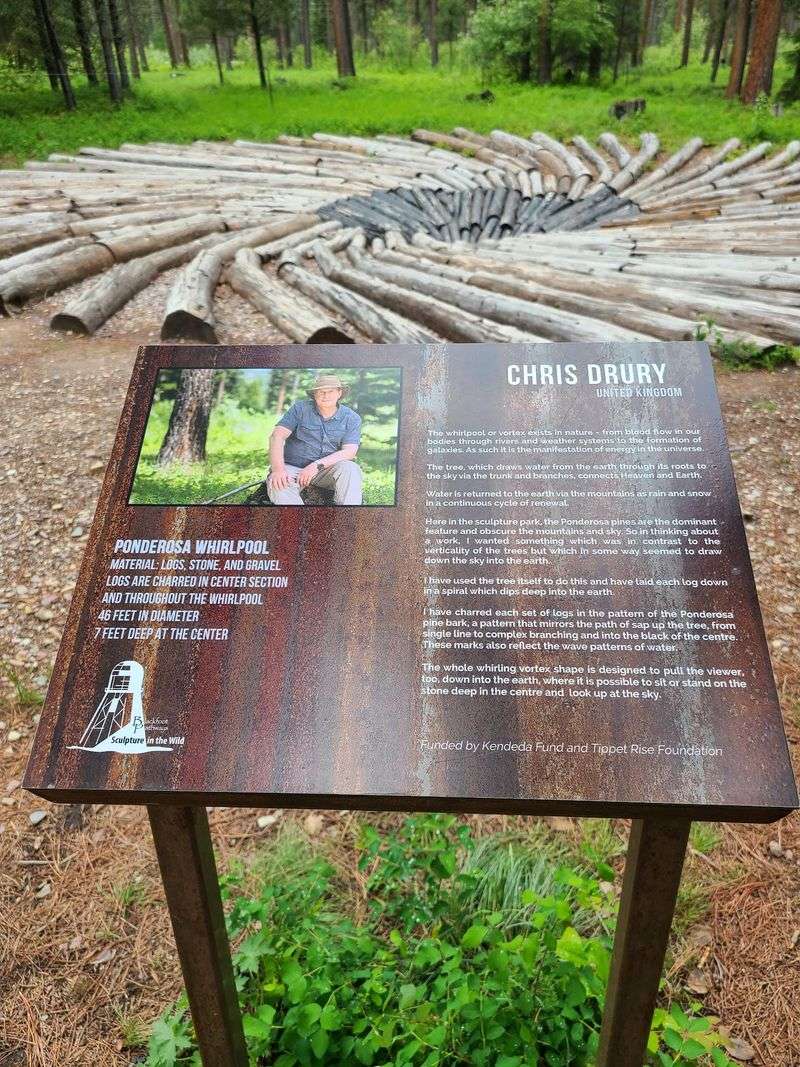
The roster of artists who have contributed to this park reads like a short list of some of the most interesting names in international land art and sculpture. Jaakko Pernu from Finland, Jorn Ronnau from Denmark, Chris Drury from the UK, Cornelia Konrads from Germany, and Alan Counihan from Ireland are just a handful of the international contributors.
American artists including Patrick Dougherty, Steven Siegel, Kate Hunt, and Michael Brolly have also left permanent works here, alongside Montana-based artists like Beth Korth and musician Phil Aaberg, whose contributions include sound and music composition woven into the park experience.
Artists selected for the residency program often stay with local families during their time in Lincoln, which creates a depth of community connection that shows up in the finished work. The sculptures feel rooted here, not just installed, because in many cases the artists genuinely got to know the land and the people before they picked up a single tool.
What the Trails Actually Feel Like Underfoot
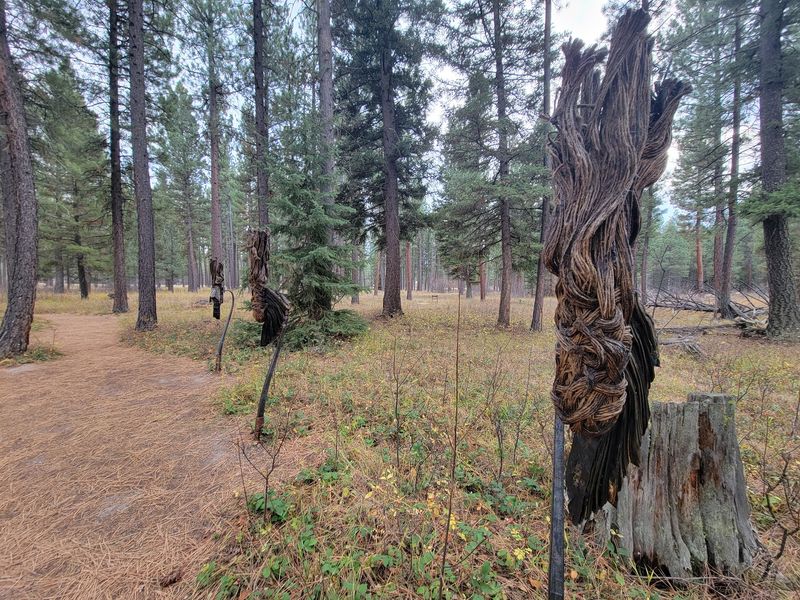
The trail system here is more thoughtfully designed than you might expect from a free outdoor park in rural Montana. Accessible routes are flat, graveled with smooth river rock, and three to four feet wide, making them genuinely manageable for visitors using wheelchairs or pushing strollers. The map at the entrance marks these routes clearly.
The non-accessible dirt paths are narrower and carry some bumps and uneven patches, but they are not dramatically different from the main trails and offer a slightly more immersive forest experience. Backless benches are placed throughout the park, some positioned near sculptures and others tucked quietly into the vegetation for moments of unplanned rest.
The full loop to see every sculpture covers about one mile, and most visitors find themselves taking well over an hour to complete it. The forest canopy keeps things cool and shaded, and the combination of tall ponderosa pines, soft trail surfaces, and the occasional sculpture appearing through the trees makes the walk feel genuinely different from any ordinary nature path.
A Park That Looks Completely Different in Every Season
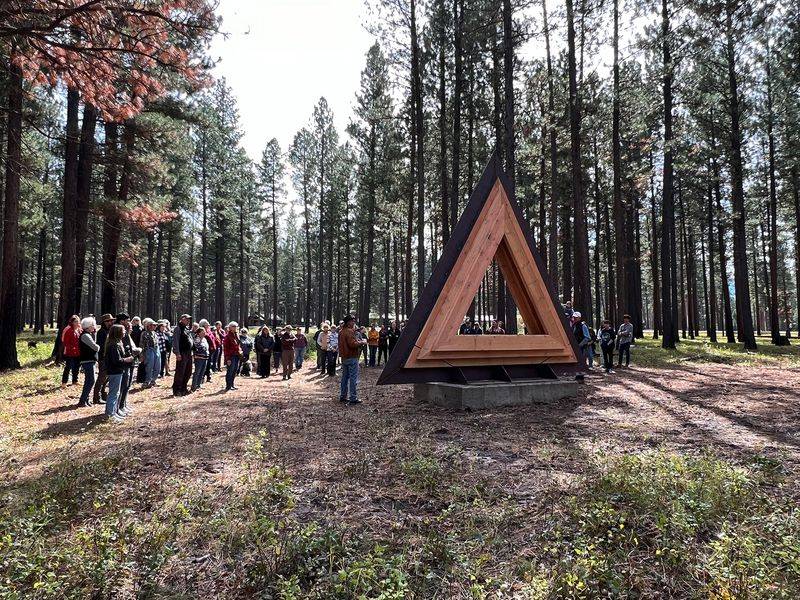
Open 365 days a year from dawn to dusk, this park genuinely rewards a visit in any season, and the experience shifts more than you might expect depending on when you arrive. Summer brings green canopy, warm light filtering through the pines, and the buzz of the weekly Summer Series events inside the teepee burner sculpture.
Fall turns the surrounding forest into layers of gold and amber, and the sculptures take on a different visual weight against the changing color. Winter is perhaps the most surprising season to visit, with snow settling on the large-scale works and the forest going very quiet in a way that makes each piece feel even more intentional and still.
Spring brings mud and fresh growth, and the park feels newly alive after months of cold. The sculptures age and weather over time as well, and repeat visitors often notice how each piece develops a patina and a relationship with the landscape that deepens year after year, making return trips genuinely worthwhile.
The Summer Series Inside the Teepee Burner
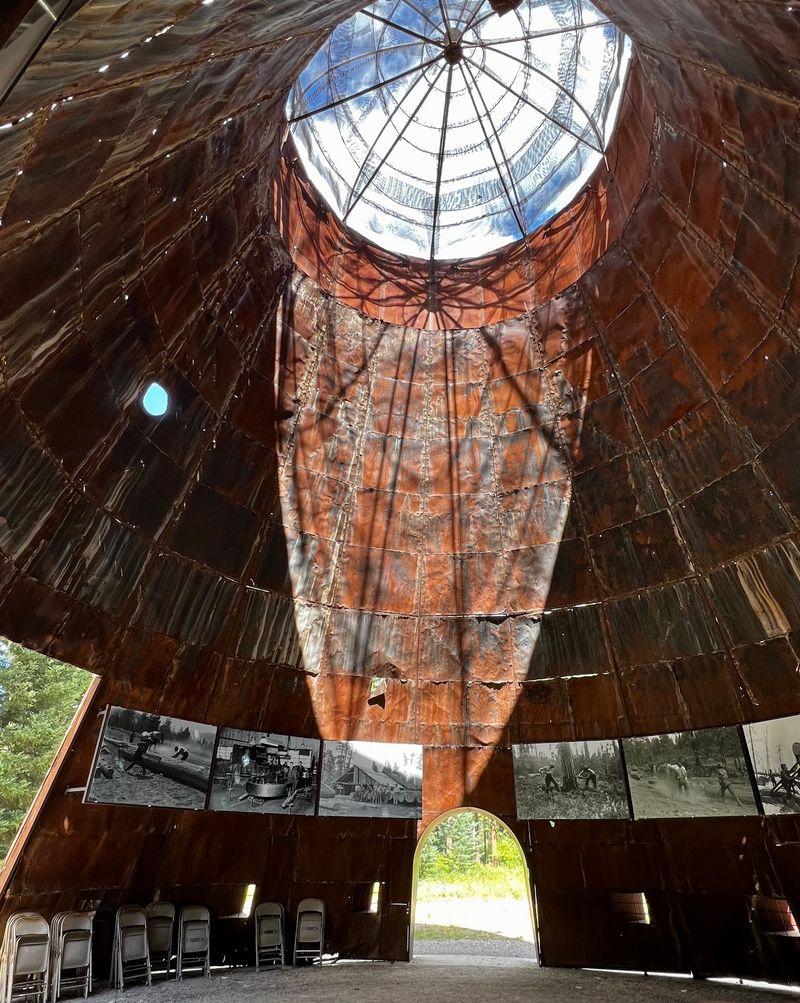
Every Saturday from after the Fourth of July through Labor Day, the teepee burner sculpture transforms from a quiet historical landmark into a live performance venue. The Summer Series brings family-friendly music, storytelling, and performances into the iconic cone-shaped structure, creating an atmosphere that feels unlike any concert venue most people have ever sat inside.
The acoustics inside the burner are part of the appeal, and the setting, surrounded by forest with the smell of pine in the air, adds a layer of atmosphere that no indoor venue could replicate. Families spread out on the grass, kids wander around the interior, and the whole thing feels relaxed and genuinely community-centered.
The events are free, like everything else at the park, and they draw both locals and travelers passing through on Highway 200. For anyone planning a summer road trip through western Montana, timing a stop in Lincoln to catch one of these Saturday performances adds a whole extra dimension to the visit.
How This Park Became a Lifeline for a Small Town
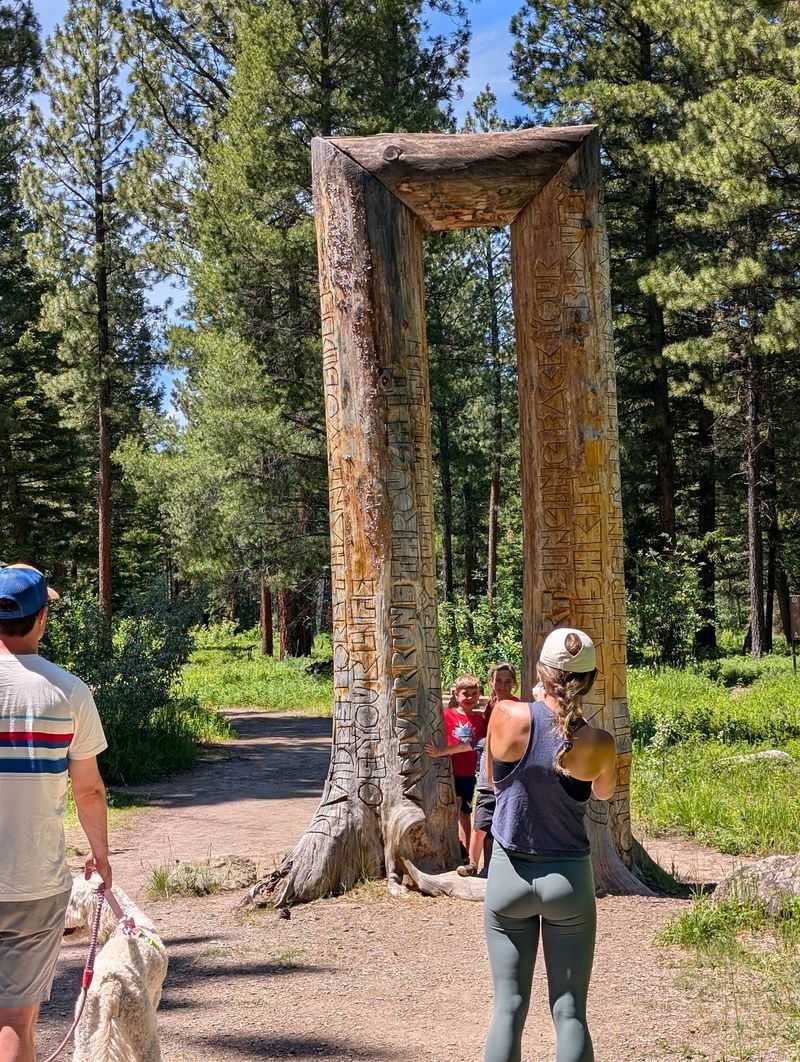
Lincoln, Montana is a small town with a population that has long depended on logging, mining, and ranching for its economic identity. When those industries began to decline, the community needed something to fill the gap, not just economically but culturally. Blackfoot Pathways was conceived as a direct response to that need.
The park functions as a creative and economic catalyst, drawing visitors from across the country and internationally to a town that most highway travelers might otherwise pass without stopping. Artists who come for residencies stay with local families, building genuine relationships that leave a mark on both the artists and the community long after the sculptures are installed.
Educational programs for elementary and secondary schools, community workshops, and outreach initiatives extend the park’s reach well beyond its 26 acres. The result is a place that carries a sense of shared ownership and pride that you can feel when you talk to anyone in Lincoln about what has been built here over the past decade.
Practical Things Worth Knowing Before You Go
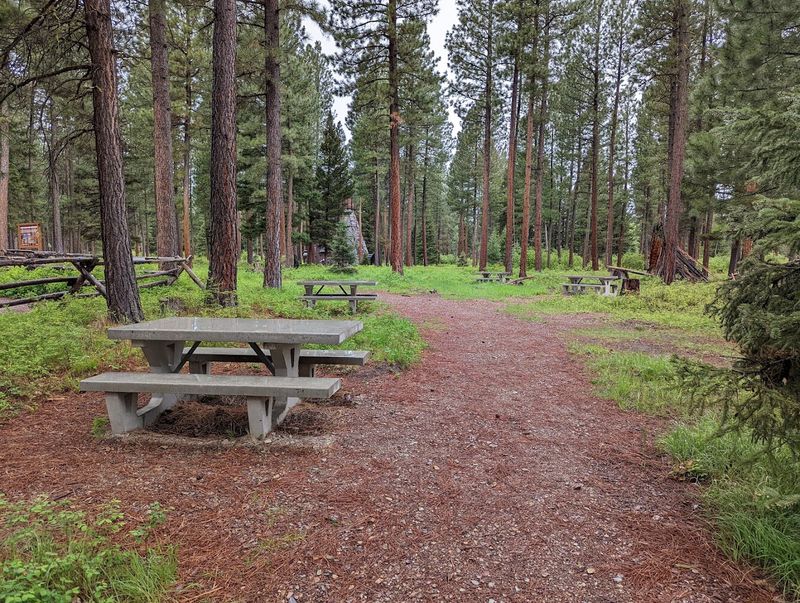
A few practical details can make your visit here noticeably smoother. Admission is completely free, parking is free and graveled, and the two accessible restrooms are well maintained. The park accepts donations near the restrooms and at the entrance, and given what has been created here, most visitors feel happy to contribute something on the way out.
Dogs are welcome on a leash, which makes this an excellent stop for road-trippers traveling with pets. Each sculpture comes with an interpretive sign giving the artist’s name, their background, and an explanation of the work, so you never have to guess at the intention behind what you are looking at.
A disc golf course also runs through the park, which adds a casual, recreational layer to the experience. Cell service is limited in the area, so downloading the park map or screenshot of the trail layout before you arrive is a smart move. The park’s website is sculptureinthewild.com, and the phone number is 406-431-0325.
Why This Place Stays With You Long After You Leave
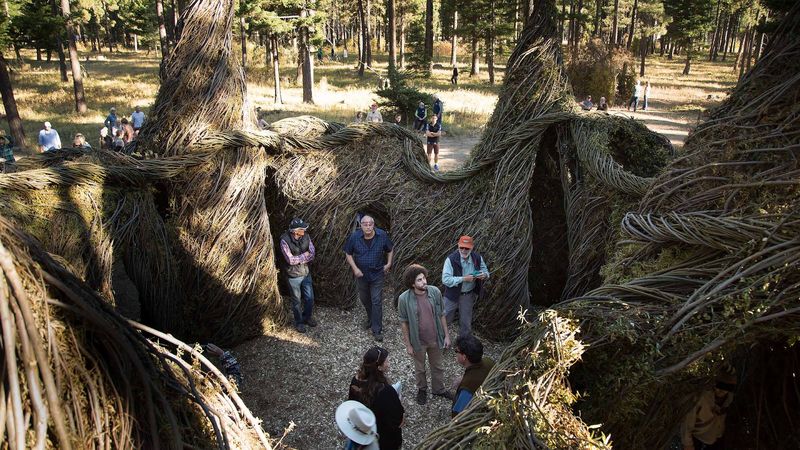
There is a quality to this park that is genuinely hard to describe without sounding like you are overselling it, but the 4.8-star rating across hundreds of reviews suggests the feeling is consistent and real. People arrive expecting a quick roadside stop and end up spending two or three hours wandering the trails, reading every interpretive sign, and finding small visitor-made sculptures tucked into the roots of trees.
The sculptures are not arranged to impress from a distance. They reward close attention, physical engagement, and the kind of slow looking that most people rarely give to art in traditional museum settings. The forest setting amplifies that effect, stripping away the usual gallery context and replacing it with wind, birdsong, and the smell of pine.
What lingers after a visit is not just the memory of specific pieces but the feeling of a place that was built with genuine intention and community care. That combination of wild landscape, international art, and small-town heart is something that very few places in the United States can honestly claim.
Share this story