Somewhere in Oklahoma, tucked along a busy street in Tulsa, sits a place that looks modest from the outside but absolutely floors you once you step through the door. Most people walk in expecting a quiet row of old machines behind velvet ropes, and walk out three hours later with stories they can’t stop telling.
The Vintage Sewing Machine Museum is one of those rare finds that reminds you why spontaneous detours are always worth taking. If you have even a passing curiosity about history, craftsmanship, or the people who shaped everyday life, this place was made for you.
Where the Museum Lives and What It Actually Is
Sitting at 5528 S Peoria Ave in Tulsa, Oklahoma, the Vintage Sewing Machine Museum occupies a storefront that gives almost nothing away from the outside. You could drive past it a dozen times without suspecting that one of the most singular collections in the country waits just beyond that door.
Tulsa is a city full of unexpected cultural gems, and this one ranks among the most genuinely surprising.
Calling it simply a museum feels a little reductive. Visitors consistently describe it as part living history exhibit, part hands-on workshop, and part community gathering space.
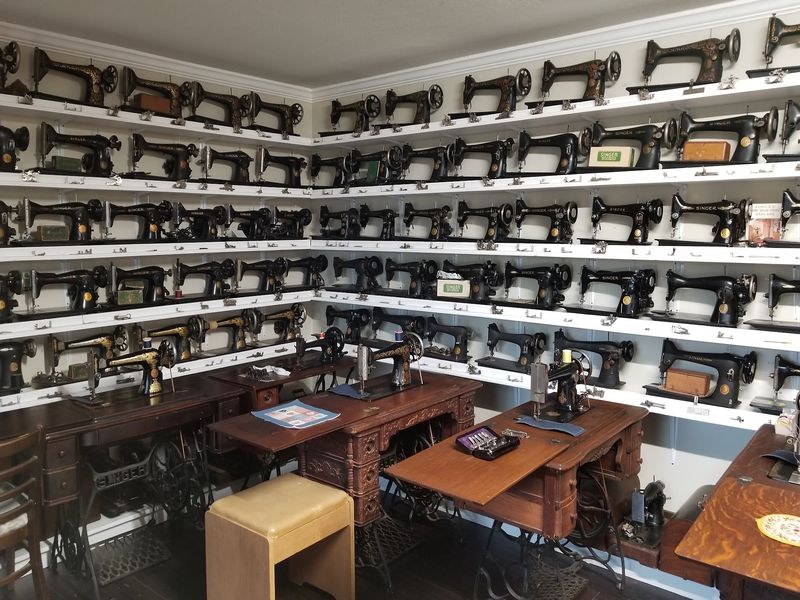
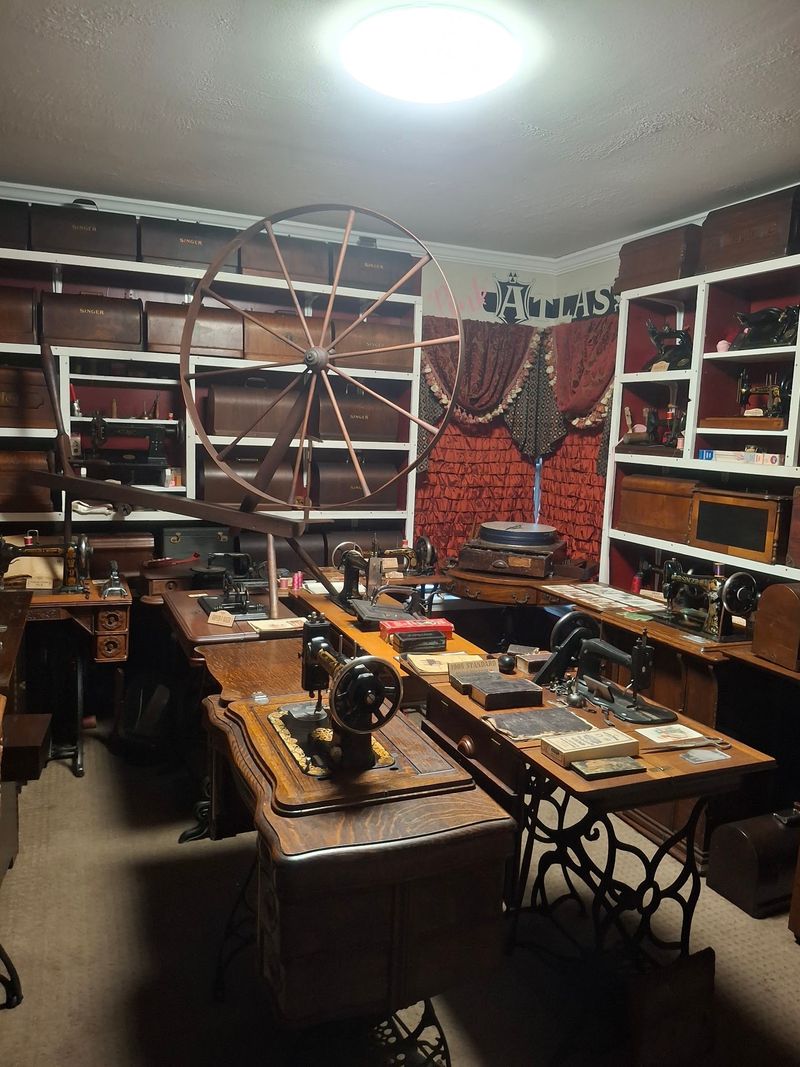
The collection reportedly numbers in the thousands, with machines sourced from across the globe and spanning well over a century of manufacturing history.
Founded around 2017 by W.K. Binger, the museum grew out of a personal project that snowballed in the most wonderful way.
What started as one man trying to fix an upholstery problem turned into a sprawling, passionate archive that now draws road-trippers, sewing enthusiasts, history lovers, and curious families from across the region. Few places in Oklahoma offer this kind of layered, personal discovery in such an unassuming package.
The Accidental Origin Story Behind the Collection
Sometimes the best collections in the world start with a broken machine and a stubborn personality. W.K.
Binger spent thirty years in the stump grinding and tree trimming business before he decided, in 2016, that he wanted to reupholster his boat. He had never sewn a single stitch in his life, but figured the learning curve couldn’t be that steep.
He bought a heavy-duty machine from a craft store for ninety-nine dollars and broke it within a couple of hours. Tracking down a replacement part led him to a contact, someone whose trees he had actually trimmed over the years, who offered him a more suitable industrial machine.
The catch was that he had to take two additional machines and find good homes for them.
That condition, small and offhand as it seemed, changed everything. Word spread, donations arrived, and the collection grew faster than anyone anticipated.
Binger, who also holds multiple patents as an inventor, threw himself into learning the history behind every machine that came through his door. By 2017, what had started as a boat-upholstery side project had officially become a museum, and it has been growing ever since.
The Scale of the Collection Itself
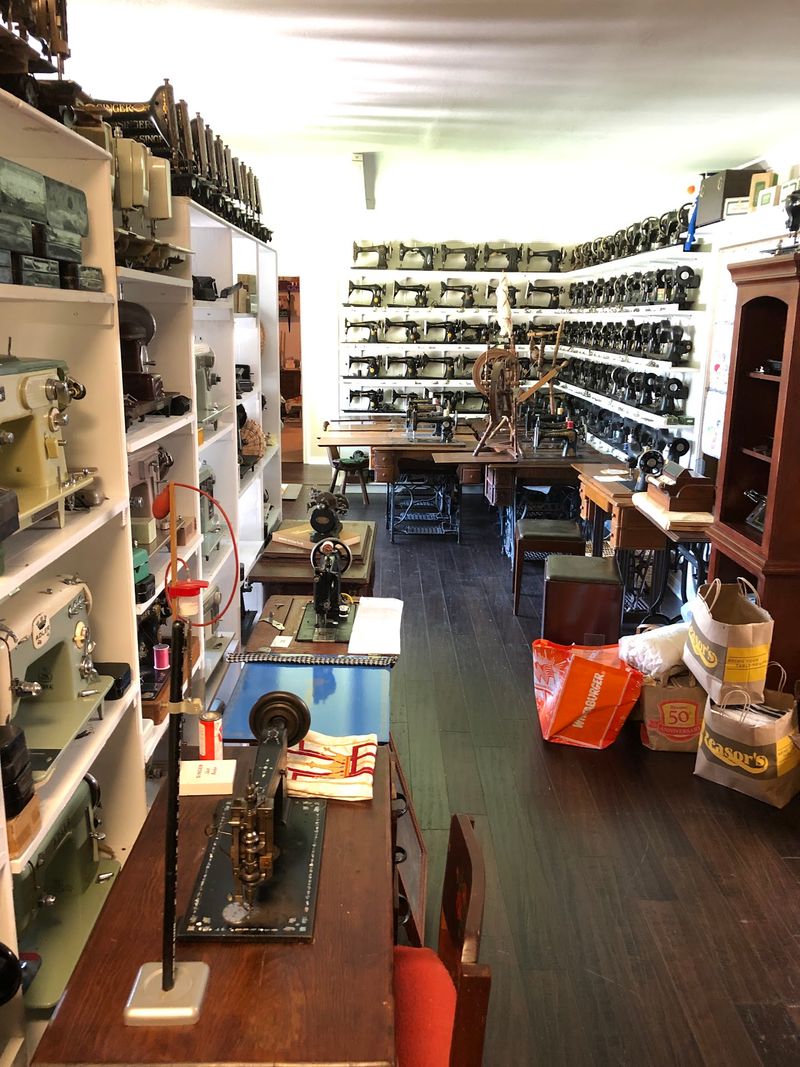
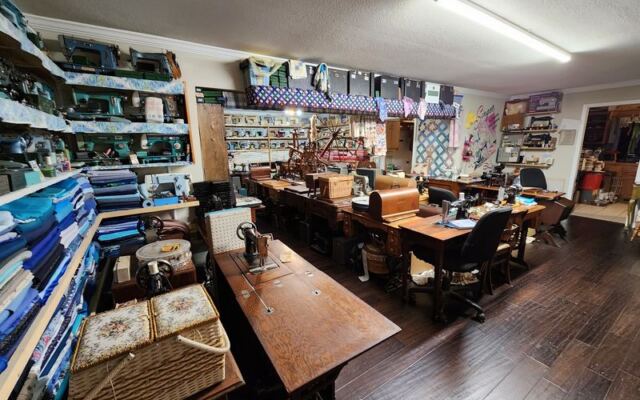
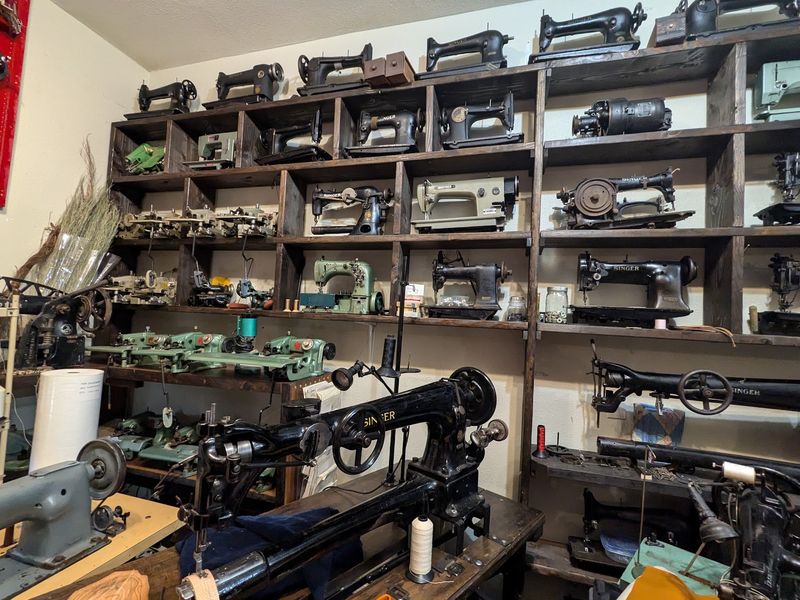
Hundreds upon hundreds of machines fill every corner of this space, and that description still somehow undersells the visual impact of walking inside for the first time. Machines from different countries, different decades, and wildly different purposes line the walls, crowd the shelves, and fill the floor space in a way that feels abundant rather than chaotic.
Visitors regularly report being genuinely overwhelmed by the sheer variety on display.
The range is remarkable. Standard home sewing machines sit near industrial-grade equipment built for tents, sails, leather, and book-binding.
One machine visitors frequently mention was designed specifically for hammocks. Another, described as roughly the size of a small automobile, was built for sewing leather and gives guests the chance to operate it firsthand.
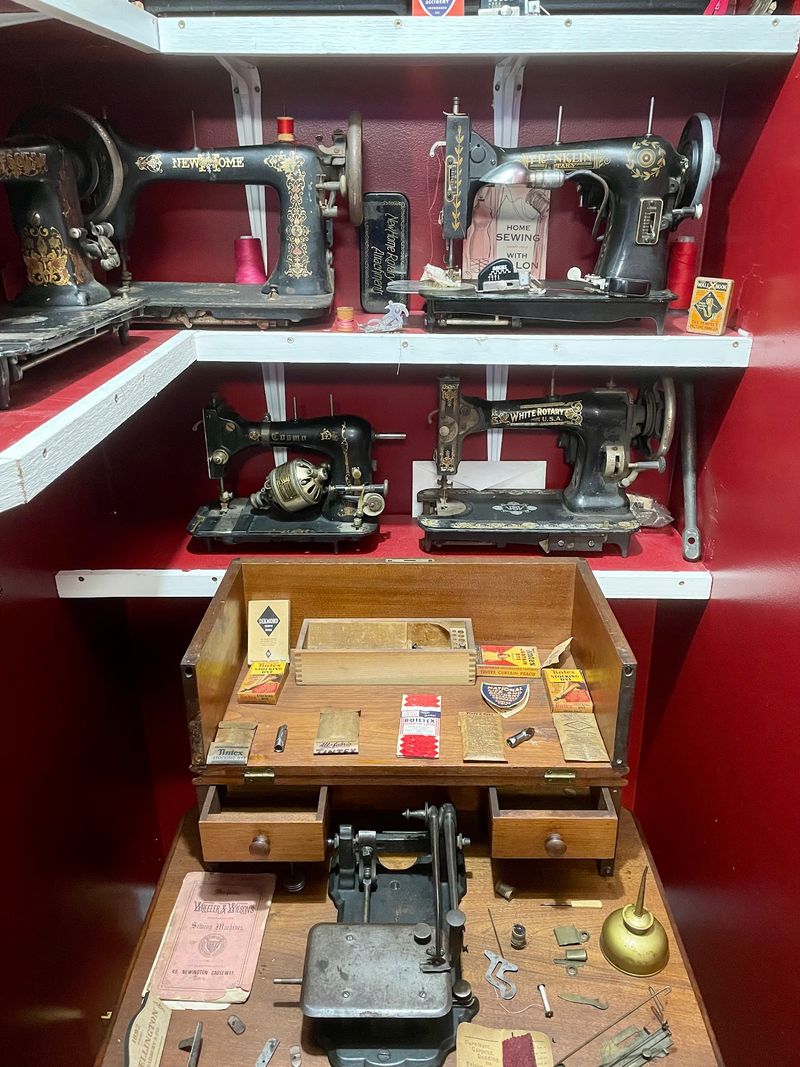
Beyond the machines themselves, the museum holds a wide assortment of related accessories, attachments, and historical artifacts that fill in the broader story of how sewing technology evolved. Sewing machines hold the distinction of being the most manufactured machine in world history, with an extraordinary level of engineering investment across their production timeline.
Seeing that history laid out physically, across so many examples in one room, makes the statistics feel real in a way that a textbook never quite manages.
W.K. Binger, the Man Who Makes It All Come Alive
No honest account of this museum can skip the person at the center of it. W.K.
Binger, known to regulars simply as Wayne or WK, is described by visitors as the kind of person who transforms a room the moment he starts talking. His knowledge of the collection runs extraordinarily deep, and he doesn’t just recite facts.
He tells stories, and those stories have names, family histories, and personal connections attached to nearly every machine in the building.
People mention being told not only who previously owned a particular machine, but the name of that person’s grandmother, what specific fabric or material the machine was engineered to handle, and the circumstances under which it ended up in Tulsa. That level of personal detail turns a collection of objects into something closer to a community archive.
His enthusiasm is genuinely contagious. Visitors who arrive with zero interest in sewing frequently report leaving as converts, or at least as people who suddenly understand why the history of sewing machines matters.
His philosophy about creativity, rooted in the idea that working at the edge of failure is where real learning happens, shapes everything about the way he runs the space. That energy is not something you can replicate with a placard on a wall.
Machines You Can Actually Touch and Operate
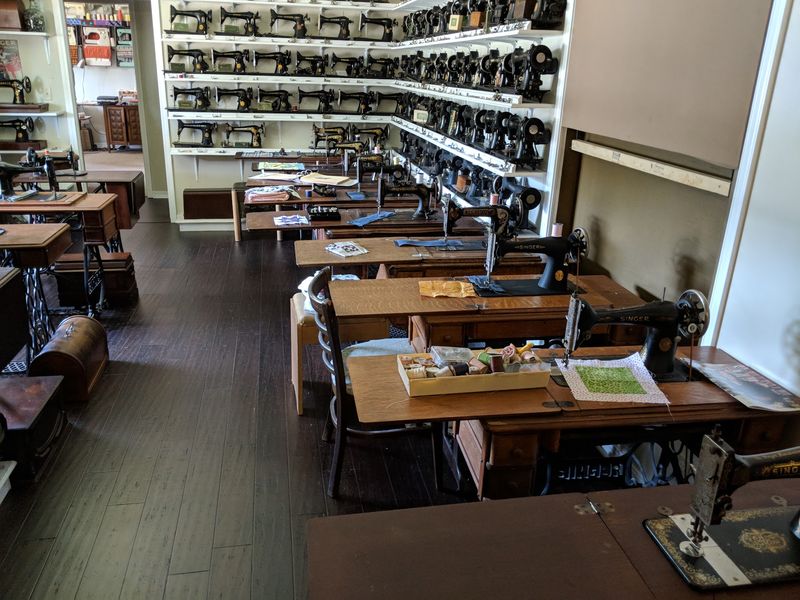
Most museums ask you to keep your hands to yourself. This one hands you the controls and encourages you to get started.
One of the most frequently celebrated aspects of the Vintage Sewing Machine Museum is that visitors are welcome to sit down at many of the machines and actually use them. That hands-on access transforms what could be a passive viewing experience into something genuinely participatory and memorable.
Treadle machines, which are operated by foot pedal rather than electricity, draw particular excitement from visitors who have never tried one before. The physical rhythm of working a treadle machine connects you to the experience of generations of sewers in a way that simply looking at the machine never could.
Guests who sew regularly often describe the chance to try unfamiliar historical models as a highlight they didn’t expect.
Even the industrial machines, some of them enormous and built for heavy-duty commercial purposes, are available for visitors to try under guidance. Operating a leather sewing machine roughly the size of a small car is the kind of experience people talk about long after the visit ends.
The museum’s commitment to keeping the collection accessible and alive, rather than sealed behind glass, is a deliberate and generous choice that sets it apart from nearly every comparable institution.
Youth Programs and the Next Generation of Makers
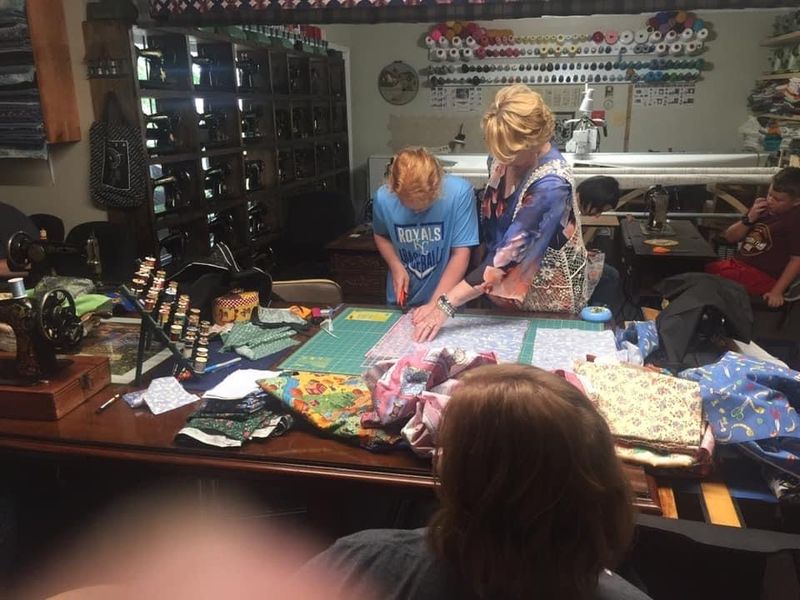
Beyond the collection and the tours, the Vintage Sewing Machine Museum runs active youth programs that bring kids in to learn through making. The approach is distinctly hands-on and deliberately low-pressure.
Binger’s teaching philosophy centers on letting students work through their own ideas rather than redirecting them toward a predetermined outcome, and visitors who witness the kids’ work on display consistently come away impressed by what young people produce in that environment.
Students with a wide range of learning needs participate in the programs, including those with autism and visual impairments. Binger’s method of meeting each student where they are, rather than fitting them into a rigid curriculum, reflects a broader belief that creativity belongs to everyone.
Visitors frequently mention seeing the results of the children’s projects displayed throughout the museum and finding them genuinely moving.
The youth program also shapes the atmosphere of the museum in a meaningful way. Knowing that the space actively serves the community, not just as a historical archive but as a living workshop for young makers, adds a dimension to the visit that goes well beyond sightseeing.
People who donate to the museum’s kids’ projects often describe it as one of the easiest giving decisions they’ve made during a travel stop. The work happening here clearly matters to the neighborhood.
Sewing Classes for Adults and Machine Repair Services
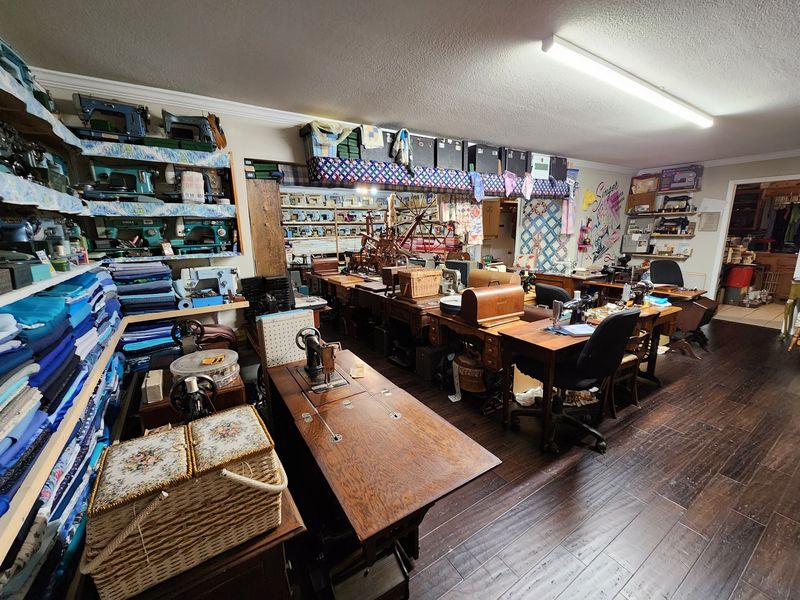
The museum doesn’t limit its educational programming to younger visitors. Adults can take sewing classes here as well, and the owner’s ability to explain mechanical concepts in plain, approachable language makes the sessions accessible even to complete beginners.
Visitors who came specifically to learn how to service their own older machines describe leaving with a clear understanding of how the internal workings operate, something they had struggled to find elsewhere.
Machine repair is another service the museum offers, and it draws people who own vintage or antique machines and want expert guidance rather than a generic fix-it shop. The depth of knowledge Binger brings to repairs reflects the same passion that built the collection in the first place.
For someone who owns a beloved older Singer or similar machine, having access to that level of expertise in Tulsa is a genuine resource.
The classes also serve as a natural gateway into the museum’s broader mission. Someone who comes in for a sewing lesson often ends up spending far more time than planned, pulled into the collection and the stories surrounding it.
The dual role of the space as both a working studio and a historical museum means that almost any kind of visit, whether educational, exploratory, or purely curious, finds something worth staying for.
Custom Tile Making and the Laser Cutter Surprise
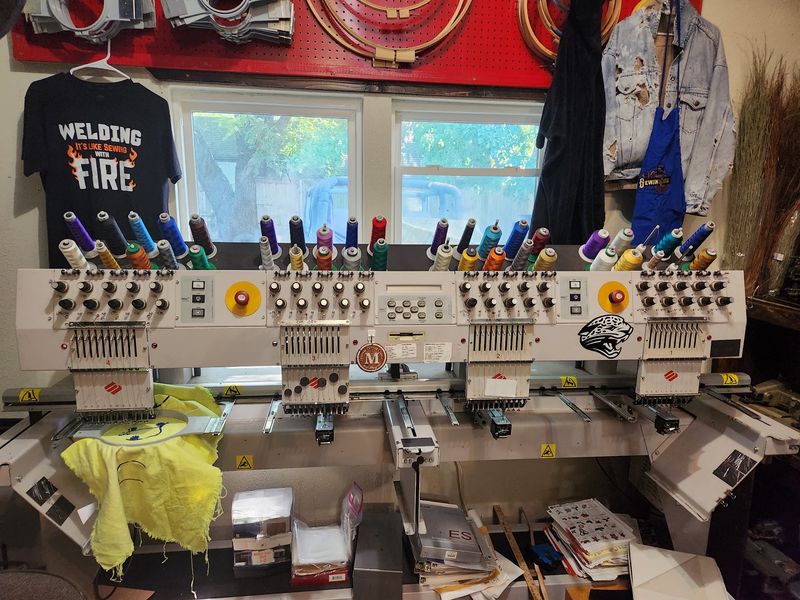
Not everyone who walks through the door is a sewing enthusiast, and the museum seems genuinely prepared for that. Visitors who mention they don’t sew sometimes find themselves guided toward a completely different kind of creative experience: custom tile design using a laser cutter.
It’s an unexpected bonus that catches people off guard in the best possible way.
Binger will ask about your hobbies, your interests, or something meaningful to you, and then work with you to design a tile that reflects it. The process takes roughly twenty minutes, and the resulting piece is yours to take home.
Several visitors describe receiving a tile and a keychain as parting gifts, and the personal nature of the exchange clearly leaves a strong impression.
The tile-making element speaks to something broader about the museum’s identity. This is not a place where you look at things and leave unchanged.
Binger seems genuinely invested in sending every visitor home with something tangible, whether that’s knowledge, a new skill, a handmade object, or simply a story worth telling. The laser cutter sits alongside the sewing machines as one more tool in a space that treats creativity as both a discipline and a gift worth sharing freely with anyone who shows up at the door.
The Atmosphere Inside and Who Will Love It Most
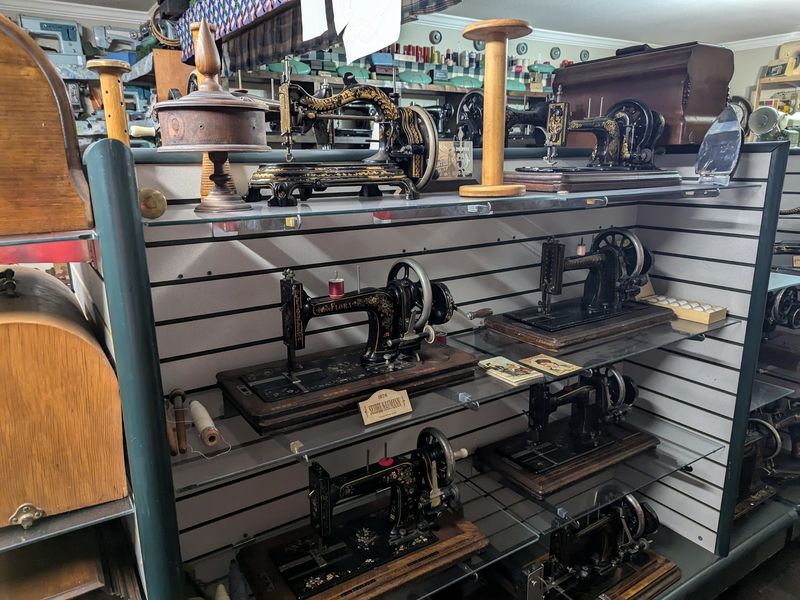
Walking into the Vintage Sewing Machine Museum feels a little like stepping into someone’s very well-organized obsession, and that’s entirely a compliment. The space is full to the brim, but it doesn’t feel cluttered so much as densely alive.
Every surface holds something with a story, and the overall effect is warm, curious, and slightly overwhelming in the most enjoyable sense.
Sewing enthusiasts will obviously find a lot to love here, but the museum has a proven track record of winning over people who arrived purely as tag-alongs. Husbands who came to humor their partners, skeptical teenagers, and visitors with no particular connection to sewing history all show up in the reviews as unexpected converts.
The common thread seems to be that the experience is personal enough to reach almost anyone.
Families with children tend to respond especially well, partly because of the hands-on nature of the visit and partly because Binger genuinely engages with younger visitors. Groups of friends or couples looking for something genuinely different from the usual Tulsa itinerary consistently describe it as a highlight of their trip.
Road-trippers passing through on a whim and solo travelers looking for a human connection both seem to find exactly what they needed without quite knowing that was what they were after.
Hours, Admission, and How to Plan Your Visit
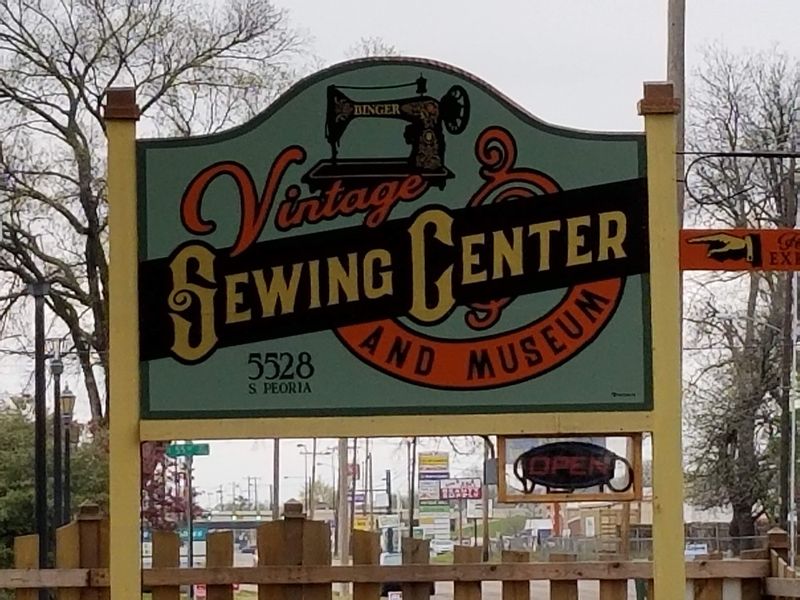
Planning ahead makes a real difference at this museum, since the hours are specific and worth double-checking before you go. The Vintage Sewing Machine Museum is open Tuesday through Saturday from noon to 6 PM.
Sundays and Mondays are closed, so a midweek or Saturday visit is your best bet. Arriving earlier in the afternoon gives you more room to linger without feeling rushed toward closing time.
Admission is ten dollars per person, which feels like an exceptional value given how much is packed into a typical visit. Many guests end up donating beyond the admission price simply because the experience exceeds expectations by a wide margin.
A donation box is available for those who want to contribute specifically to the youth programs, and visitors seem genuinely motivated to support that work after seeing it in action.
The museum is located at 5528 S Peoria Ave in Tulsa, making it easy to reach from most parts of the city and straightforward to include on a broader Tulsa itinerary. Budget at least an hour, though most visitors report staying significantly longer than planned.
Three hours is a common figure that comes up in visitor accounts, and a few people describe wishing they had even more time. You can reach the museum by phone at 918-280-0161 to confirm hours before making the trip.
Why This Place Earns a Spot on Any Tulsa Itinerary
Few attractions in Tulsa offer the combination of genuine historical depth, personal warmth, and hands-on engagement that this museum delivers in a single visit. It’s the kind of place that travel writers struggle to categorize because it doesn’t fit neatly into any single box.
Part museum, part workshop, part community program, part personal passion project, the Vintage Sewing Machine Museum earns its reputation as something genuinely one of a kind.
Visitors who describe it as the best museum they’ve encountered anywhere in America are not being hyperbolic for effect. The experience is shaped so heavily by the person running it that comparing it to a conventional institution misses the point.
What you’re really getting is access to an extraordinary mind, an extraordinary collection, and a philosophy about creativity and community that feels rare and worth seeking out.
For road-trippers moving through Oklahoma, history buffs hunting for something off the usual circuit, or Tulsa locals who somehow haven’t made it here yet, this is an easy recommendation with very few caveats. The hours are limited, so planning is essential.
But for anyone willing to show up during the open window and give the experience the time it deserves, the Vintage Sewing Machine Museum reliably delivers something that stays with you long after you’ve driven away.
Share this story