There is something quietly remarkable about a place where music belongs to everyone, not just to performers on a stage. In certain corners of the world, a fiddle tune in a pub or a chorus echoing through a cobbled square is not entertainment. It is community life in action. These are places where grandparents and grandchildren know the same songs, where festivals have been running for decades, and where the music itself is a kind of shared language that outsiders are genuinely invited to learn.
From a tiny Pyrenean village that calls itself the accordion capital of Catalonia, to a Serbian town that quietly transforms into a brass-band city every summer, the destinations on this list prove that traditional music is far from fading. It is, in many places, thriving louder than ever.
1. Arsèguel, Province of Lleida, Catalonia, Spain
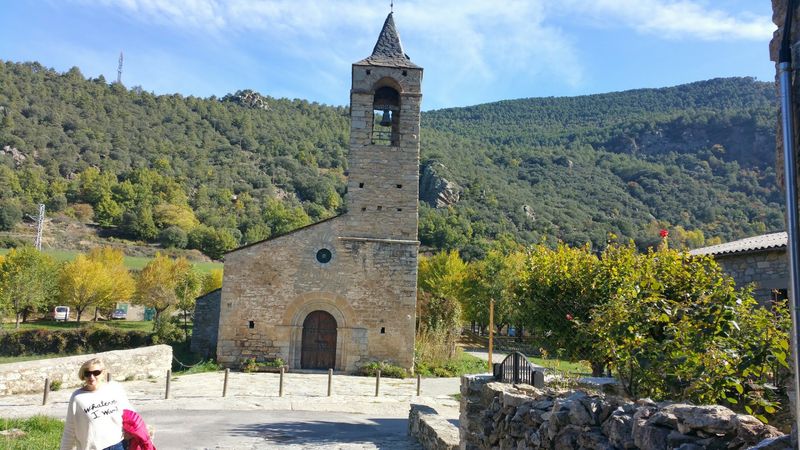
Officially known as the Catalan capital of the accordion, Arseguel is a small Pyrenean village with an outsized musical identity. Every summer since 1976, the Trobada amb els Acordionistes del Pirineu has brought together accordion players from across Catalonia, Aragon, Valencia, and far beyond, making it the oldest folk music festival in the Catalan Countries.
The gathering played a direct role in reviving the diatonic accordion across the region, and international ensembles from Quebec, Finland, Ireland, Bulgaria, and Colombia have all performed here. Concerts spread across Arseguel, La Seu d’Urgell, and Castellbo, with many performances free to attend.
The village also houses an Accordion Museum featuring instruments dating back to 1840. Residents treat this festival not as a tourist draw but as a central expression of who they are and where they come from.
2. Scapoli, Province of Isernia, Molise, Italy
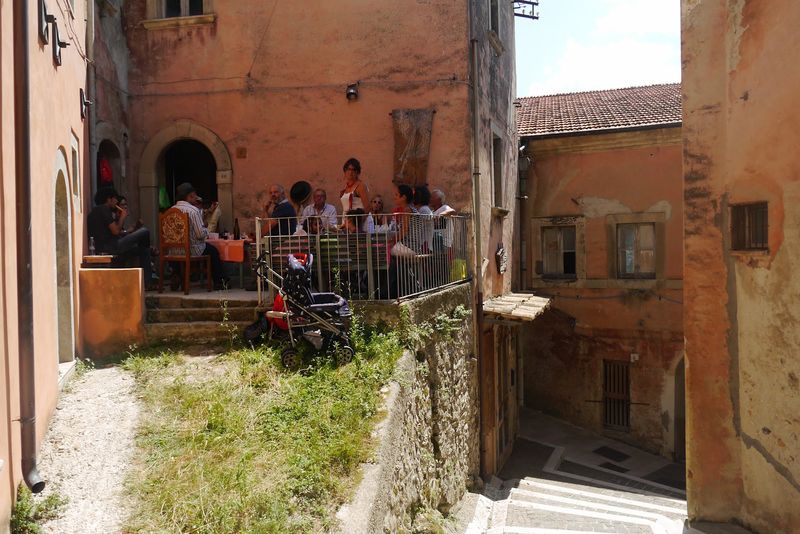
Scapoli wears its title proudly: the capital of the Italian bagpipe, known locally as the zampogna. This is not just a nickname. Local artisans have been crafting these instruments by hand for centuries, using sheepskin bags, cherry or olive wood pipes, and cane reeds to produce an instrument some historians connect to the ancestral roots of Scottish and Irish bagpipes.
Every year on the last weekend of July, Scapoli hosts its International Bagpipe Festival, which has turned the village into a large open-air stage since 1975. Musicians, scholars, and enthusiasts arrive from across Europe and beyond.
The International Bagpipe Museum provides year-round context, housing a collection of aerophone instruments from Italy and other countries. The local Circolo della Zampogna association was founded specifically to pass this tradition to younger generations, ensuring it stays rooted in community life rather than museum display cases.
3. Koprivshtitsa, Sofia Province, Bulgaria
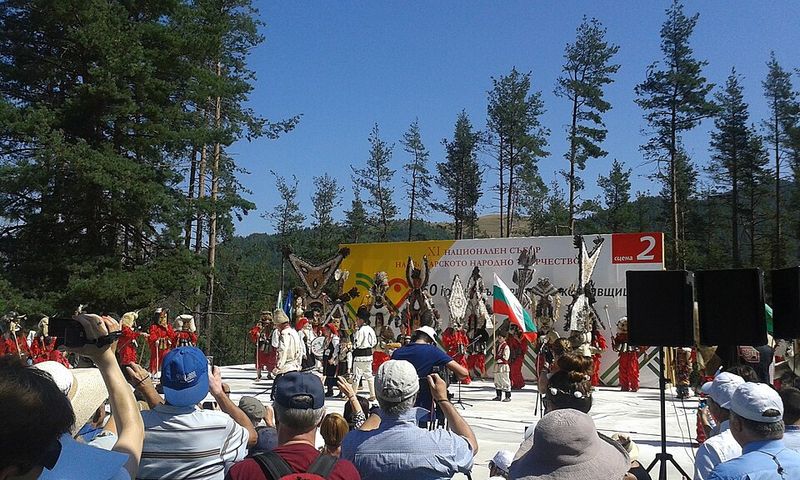
Once every five years, this beautifully preserved Bulgarian town becomes the center of the folk universe. The National Festival of Bulgarian Folklore at Koprivshtitsa gathers singers, instrumentalists, dancers, storytellers, and folk ensembles from every region of Bulgaria and its diaspora, with anniversary editions drawing over 18,000 performers to the hillside performance areas around the historic town.
The festival is competitive, with regional selection events held nationwide to determine who earns a place on the Koprivshtitsa stage. Participants showcase songs, dances, instruments, and costumes that represent their specific local traditions, making the event a kind of living map of Bulgarian culture.
The concept behind the festival grew from musicians’ concerns about urbanization erasing village traditions. Attendees are encouraged to join performances and sample traditional food prepared on-site. Even between festival years, Koprivshtitsa remains deeply connected to Bulgaria’s musical identity.
4. Črnomelj, Southeast Slovenia, Slovenia
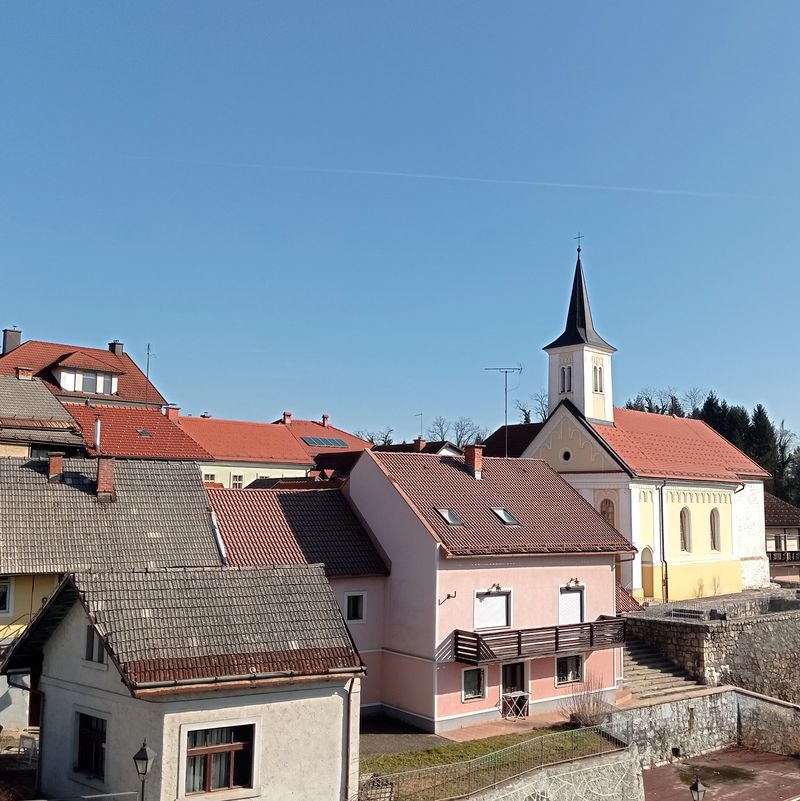
Slovenia’s oldest folklore festival has called Crnomelj home since 1964, and the Jurjevanje celebration shows no signs of slowing down. The five-day event takes its name from Zeleni Jurij, the Green George, an ancient Slavic figure representing spring and natural renewal, and the festival’s roots run deep into the customs of the Bela Krajina region.
Performances take place in the natural amphitheater of Jurjevanjska Draga and at venues throughout the historic town center, with both local and international folklore groups participating. The program includes traditional music, dance, regional food, handicrafts, interactive workshops, and art exhibitions.
What makes Jurjevanje stand out is that it genuinely feels like a community event first and a tourist attraction second. Residents take visible pride in their region’s customs, and the festival has successfully kept pace with changing times by bridging traditional and contemporary cultural expressions across its decades-long history.
5. Mértola, Beja District, Portugal
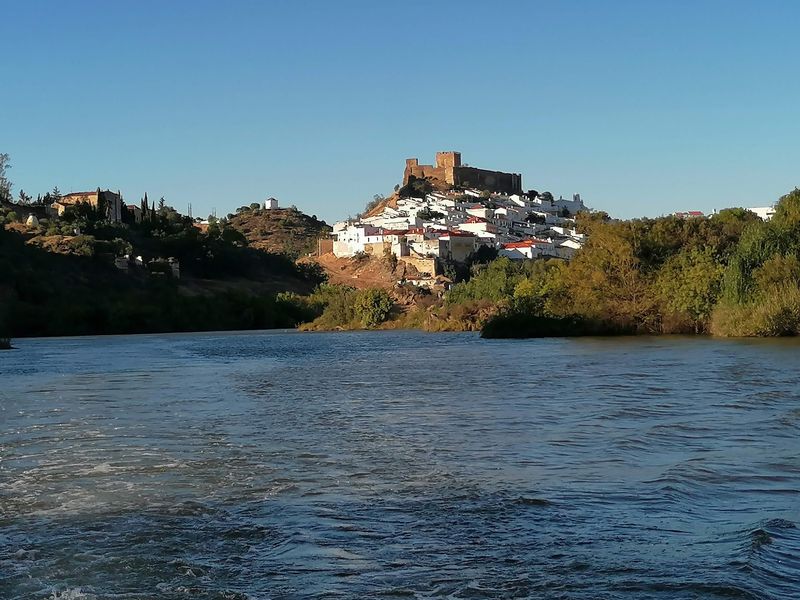
Cante Alentejano is one of Europe’s most distinctive choral traditions, and Mertola is one of its strongest living homes. Recognized by UNESCO, this form of two-part unaccompanied singing follows a specific structure: a ponto, singing in the lower range, begins the song, and an alto voice enters to harmonize and carry the melody forward.
Mertola currently hosts six active choral groups, some with histories stretching back centuries. Groups like the Grupo Coral Guadiana de Mertola and Grupo Coral As Flores de S. Joao perform at festivals, religious pilgrimages, and community gatherings throughout the year.
During summer months, cante nights bring choral groups into the streets, where they share their vocal harmonies with whoever happens to be passing. Schools in the region also teach Cante as part of local education, helping the tradition move naturally into the next generation without losing any of its character.
6. Guča, Moravica District, Serbia
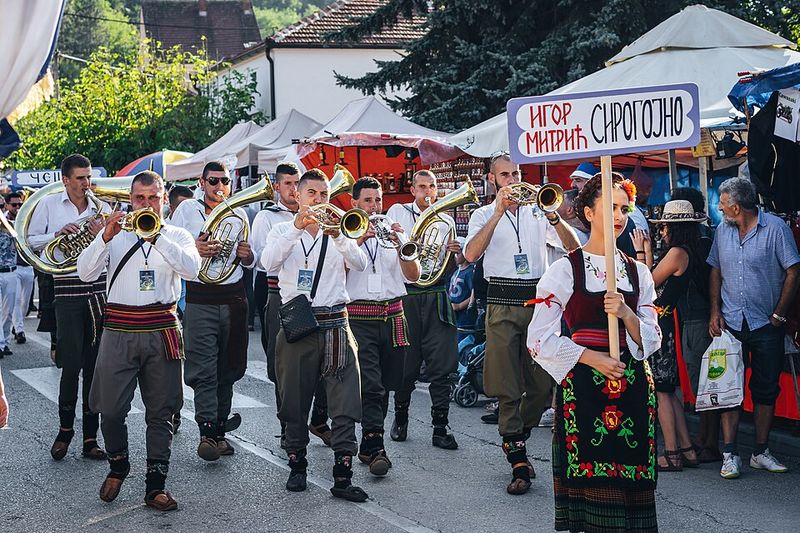
For most of the year, Guča is a quiet Serbian village with a population that fits comfortably on a few streets. Then August arrives, and hundreds of thousands of visitors descend for the Dragacevo Assembly of Trumpet Players, better known simply as the Guca Trumpet Festival. The event began in 1961 as a modest local competition and has grown into one of the Balkans’ most celebrated cultural gatherings.
Brass bands perform almost continuously, and street performances regularly turn into spontaneous kolo circle dances that pull in complete strangers. The competition for the Master of Trumpet title is fierce, with bands showcasing both technical skill and deep cultural pride.
Beyond the music, a Street of Old Crafts features local artisans, and art exhibitions and a book fair run alongside the performances. The festival maintains an open, inclusive character that makes every visitor feel genuinely welcomed rather than merely tolerated.
7. Kučevo, Braničevo District, Serbia
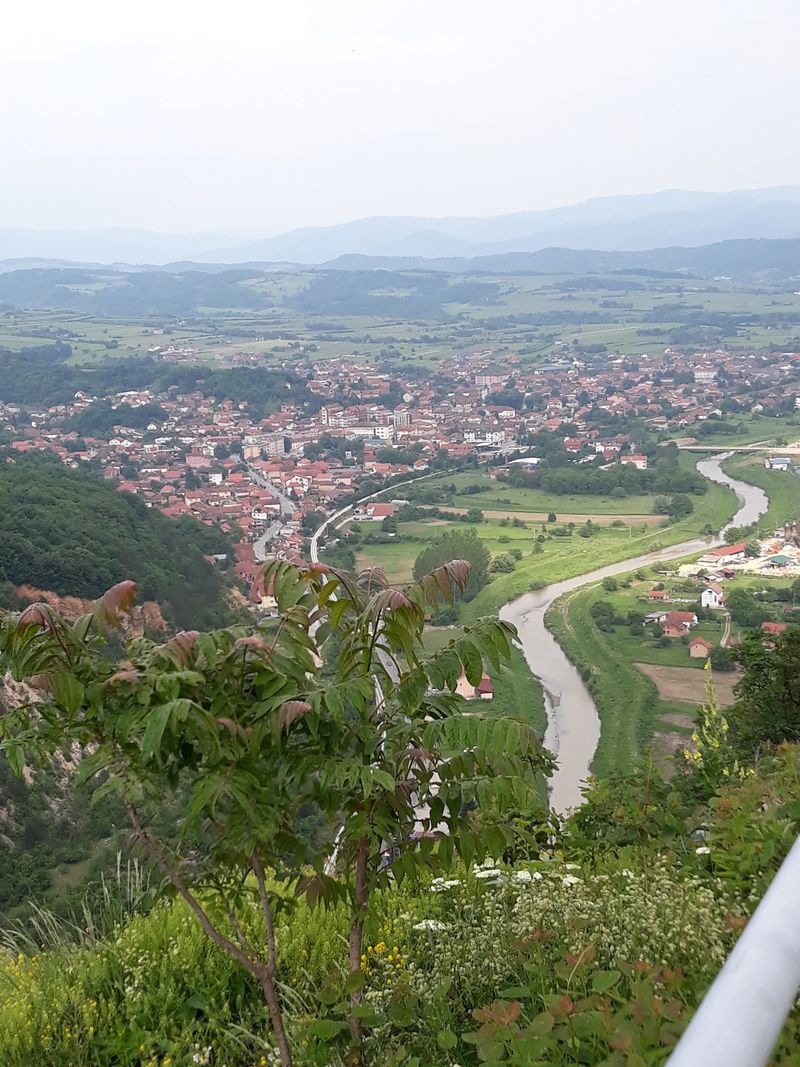
Serbia’s oldest folk heritage festival began in Kucevo in 1968, and the Homolje Motifs gathering has been protecting the region’s traditions ever since. The event showcases Wallachian songs, ritual dances, and the kind of musical customs that reflect the everyday life and seasonal rhythms of eastern Serbia’s communities.
Ancient instruments that are rarely seen elsewhere still appear here in active use. The gajde, a large bagpipe, the bušen, a type of alp horn, the duduk, and the karaba, a small bagpipe, are all still produced and played in the Homolje region. Performers arrive in beautifully maintained traditional costumes, and the streets of Kucevo come alive with music that carries real historical weight.
The festival also features folk craft exhibitions, competitions for traditional Homolje dishes, and displays of regional instruments. A separate ethnological film festival, originally part of Homolje Motifs, has since grown into its own event, extending the festival’s cultural reach even further.
8. Doolin, County Clare, Ireland
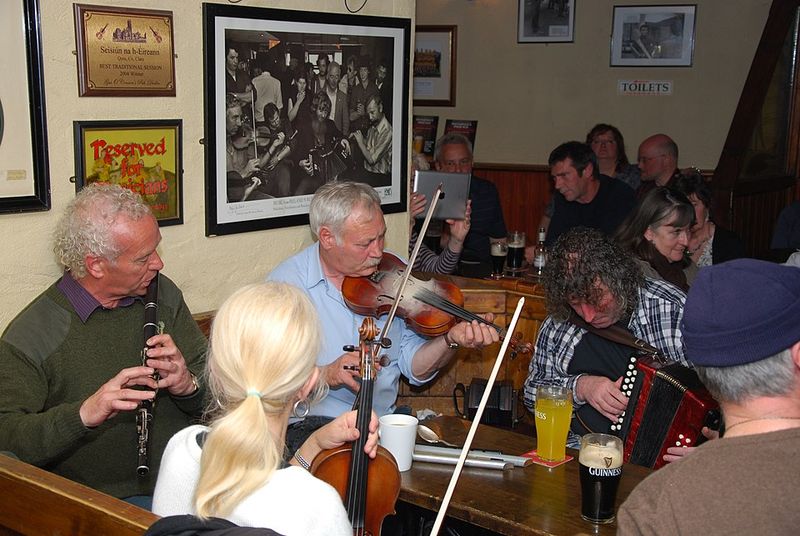
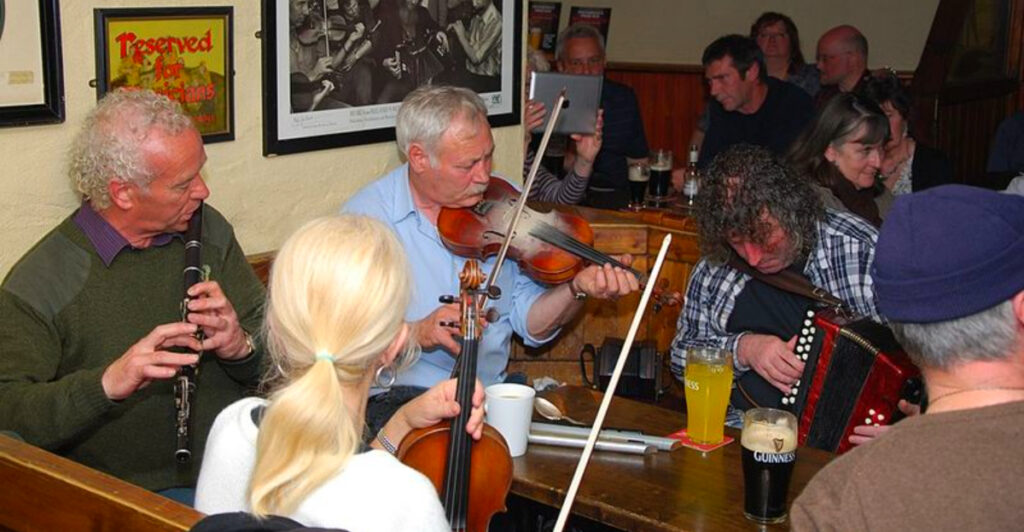
Few villages in Ireland have earned their musical reputation as honestly as this one. Doolin sits on the Atlantic coast of County Clare, and on almost any evening, local pubs including Fitzpatrick’s, McGann’s, and McDermott’s host spontaneous sessions where fiddles, flutes, concertinas, and bodhrans fill the room.
The tradition here goes back generations. Folklore collectors were already documenting Doolin’s musical life in the 1920s and 1930s, and the legacy of the Russell brothers, Micho, Packie, and Gussie, still shapes the village’s identity today.
The annual Russell Memorial Weekend draws musicians from across Ireland to honor that legacy. Beyond regular sessions, Doolin also hosts the Doolin Folk Festival and Gus O’Connor’s Sean Nos Weekend. Locals and visitors share the same bench, the same songs, and the same sense that the music belongs to everyone present.
9. Reeth, North Yorkshire, England
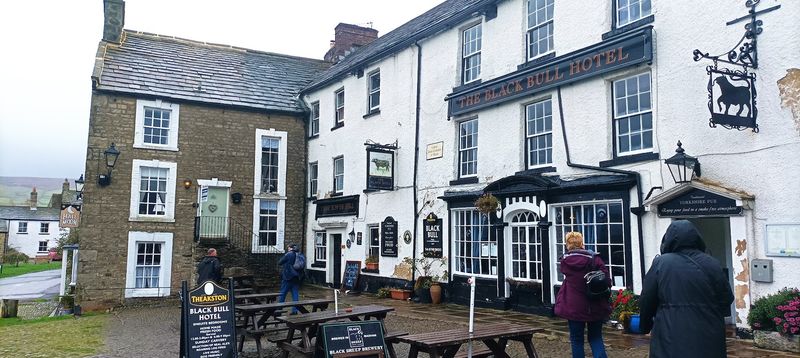
Reeth sits above the wide valley floor of Swaledale with a large village green at its center and a pair of historic inns that have been hosting community gatherings for centuries. The Black Bull dates to 1680 and The Kings Arms to 1734, and both still welcome traditional folk sessions that bring local musicians together with curious visitors.
These sessions are informal by design. No tickets, no stage, no set list posted at the door. Musicians arrive, tune up, and the evening takes its own shape from there, which is exactly how English folk music has always worked at its best.
Reeth also anchors part of the annual Swaledale Festival, which incorporates folk performances into a broader program of events across the Dales. Music here is not marketed as an attraction but treated as a natural part of how the village operates and how its residents connect with each other.
10. Setesdal, Agder County, Norway
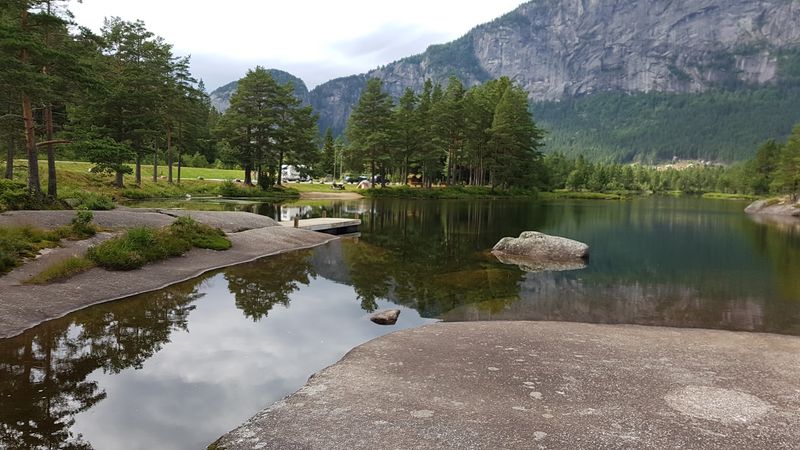
In 2019, UNESCO added the musical traditions of the Setesdal valley to its Intangible Cultural Heritage list, recognizing a living culture that has been practiced continuously since at least the 18th century. The valley’s folk expressions center on stev, short rhyming folk verses exchanged between singers in a practice called stevjing, which functions as a kind of musical conversation between participants.
The Hardanger fiddle, Norway’s national instrument, provides the backbone for instrumental performances, while the jaw harp adds rhythmic texture. The gangar, a traditional folk dance, is performed in couples or in clockwise circles, and remains a regular feature of village gatherings throughout the valley.
What makes Setesdal particularly compelling is the age range of its practitioners. Young people here are actively engaged in preserving these traditions, with some earning national recognition as performers. The Solvgarden Hotel hosts regular folk music nights, keeping the traditions accessible and alive between larger community festivals.
11. Mohács, Baranya County, Hungary
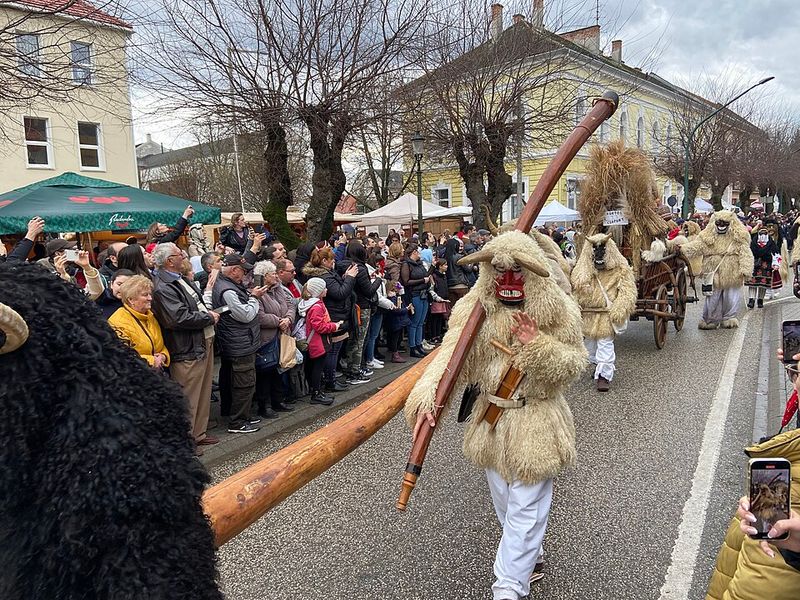
Mohacs hosts one of Central Europe’s most visually striking and culturally layered festivals. The Busójarás carnival runs for six days before Ash Wednesday each year, combining folk music, elaborate masquerade, street parades, and centuries-old customs into a celebration that UNESCO inscribed on its Intangible Cultural Heritage list in 2009.
The festival originated with the Sokci, a subgroup of Croats living in Mohacs, and its central figures are the Busós: traditionally men who wear large hand-carved wooden masks and voluminous sheepskin cloaks. During parades, the Busós move through the streets in a deliberate effort to symbolically drive away winter. A key ritual involves burning a coffin representing the cold season on a central bonfire, around which townspeople join hands to dance the kolo.
Brass bands, tamburica ensembles, craft fairs, and culinary workshops run alongside the main performances. The entire town participates, and the festival functions as a genuine expression of communal identity rather than a staged spectacle.
12. Baščaršija, Sarajevo, Bosnia and Herzegovina
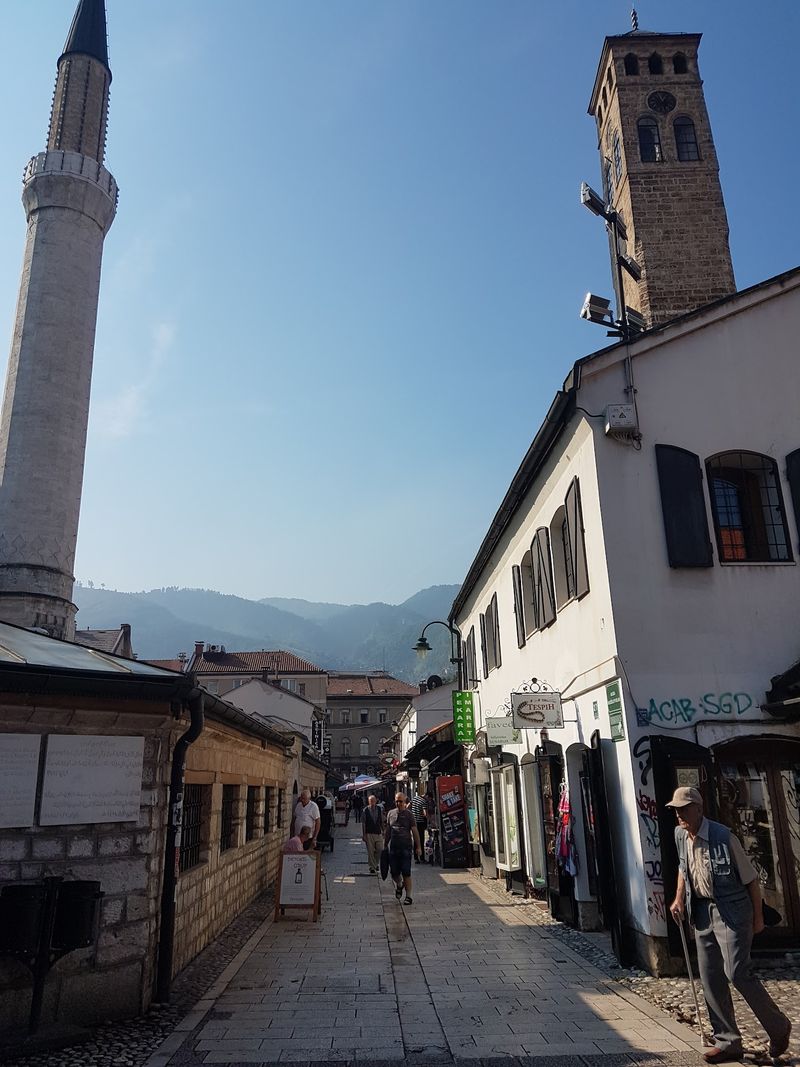
Sevdalinka earned its UNESCO Intangible Cultural Heritage status in 2024, but its roots in Sarajevo go back centuries. This distinctive urban folk music grew from a fusion of Ottoman influences and South Slavic oral traditions, and its name comes from the Turkish word sevda, meaning love, though the emotional range of the music extends well beyond romance to cover longing, memory, and the full complexity of human experience.
The Bascarsija district is the most natural place to encounter it. The Sevdah Art House, located within the historic quarter, functions as a dedicated museum honoring the tradition and its legendary performers, with a collection of personal items, instruments, and rare recordings. Its courtyard hosts performances where visitors can listen while drinking traditional Bosnian coffee.
Sevdalinka also features during the Bascarsija Nights festival and in various cultural venues throughout the city. Historically performed at weddings, social gatherings, and in courtyards, the music has always been a community experience first and foremost.
13. Palić, North Bačka District, Serbia
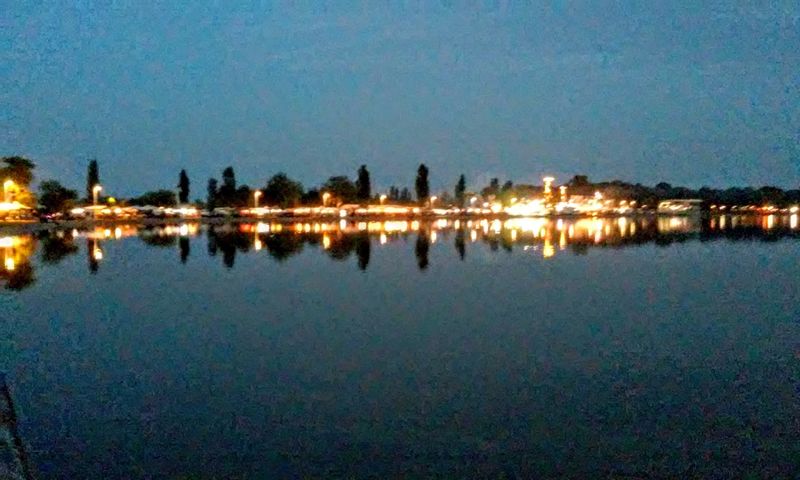
Palić is best known for its elegant lakeside setting and its historic park, but the Folk Music Fest adds a strong cultural dimension that draws communities from across the Vojvodina region. The festival brings together Hungarian, Serbian, and other regional ensembles to perform authentic folk music, traditional dances, and displays of regional costumes in a setting that feels genuinely relaxed and welcoming.
Vojvodina is one of Europe’s most ethnically diverse regions, and the Folk Music Fest reflects that diversity honestly. Rather than blending different traditions into a single generic presentation, the festival gives each community space to perform on its own terms, making the event feel like a genuine meeting point rather than a curated showcase.
Families arrive with children in tow, and participation in dancing is actively encouraged. The festival places particular emphasis on passing musical knowledge to younger generations, treating continuity as a central goal rather than an afterthought added to the program.
14. Viscri, Brașov County, Romania
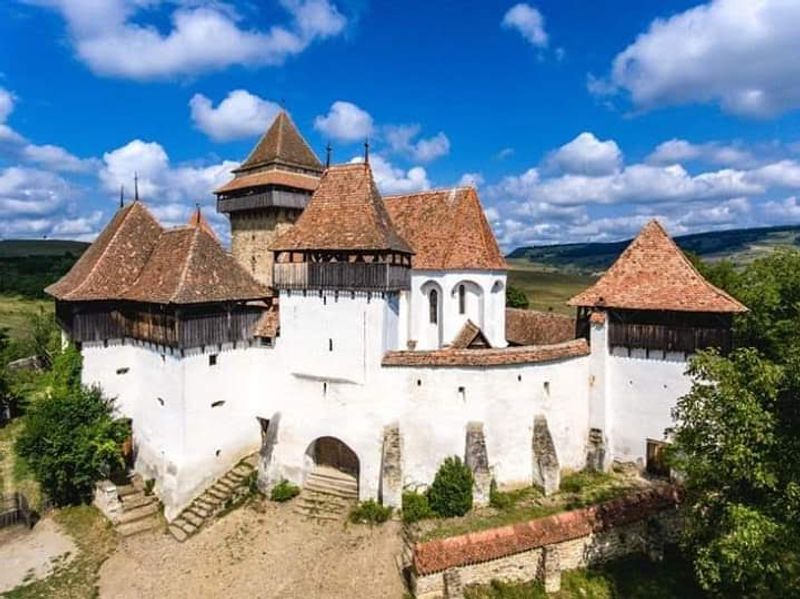
Viscri’s fortified church was built in the 12th century, and for much of that time it has served as the natural gathering point for the village’s festivals, religious celebrations, and community events. Today, local festivals continue to feature Romanian folk music, village choirs, and traditional dancing organized around this same historic structure, giving every performance an unmistakable sense of continuity.
The Haferland Festival, which includes Viscri among its participating villages, promotes Transylvanian Saxon cultural heritage through dance performances, organ concerts inside fortified churches, and demonstrations of local crafts. These events draw visitors who are genuinely curious about rural Transylvanian life rather than simply passing through.
Community participation drives everything here. Local initiatives and traditional craft projects keep residents actively involved, and the interactions between villagers and visitors form an essential part of what makes Viscri’s cultural life feel real. The preservation of its musical traditions is rooted in everyday community involvement, not in large-scale tourism infrastructure.
Share this story