Oklahoma has a way of hiding its most fascinating stories behind crumbling walls and forgotten foundations. Scattered across the state are places that were built with serious purpose, whether to lock people up, educate children, or defend a frontier, yet today they stand empty, open, and oddly peaceful.
What makes them so compelling is the contradiction: structures meant for one thing now serving as quiet monuments to something else entirely. If you have ever driven past a ruin and wondered what it was trying to tell you, these seven Oklahoma places are worth your time.
1. The Collings Castle, Davis, OK
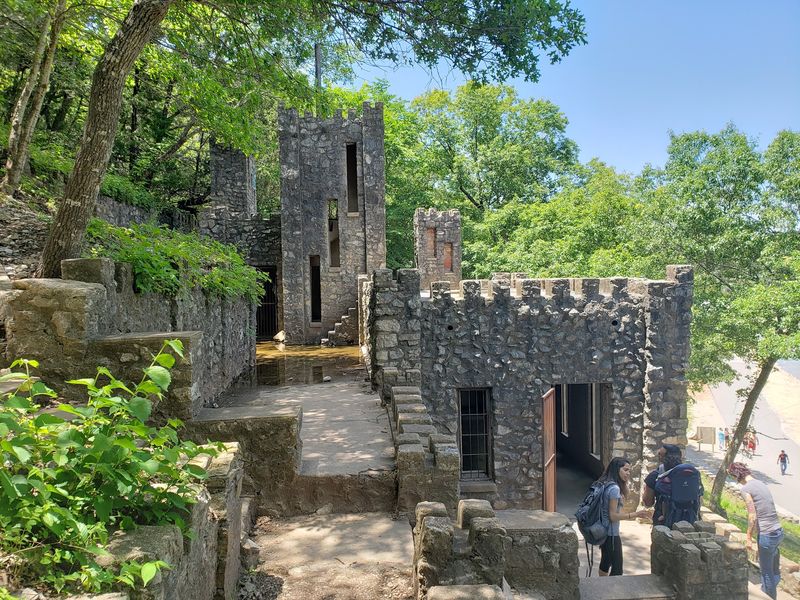
Somewhere in the rolling hills near Davis, Oklahoma, a medieval-style castle rises out of the landscape like a misplaced daydream. Built in the 1930s as a private summer retreat and academic getaway, the Collings Castle was designed to look like a grand European fortress, complete with thick stone walls, arched passages, and dramatic overlooks.
The sheer ambition of the structure makes it immediately strange and wonderful.
Walking through the grounds, the castle keeps revealing itself in layers, with corridors and chambers that seem to stretch further than expected. Some of the deeper rooms are narrow and shadowy, so a flashlight and a sense of adventure come in handy.
The surrounding scenery, including a nearby waterfall and the broader Turner Falls area, honestly rivals the castle itself for visual impact.
Admission runs about $28 for one adult and one child, which covers access to the broader park. The long, steep staircase makes portions of the site difficult for those with mobility challenges, so plan accordingly.
Even so, the Collings Castle remains one of the more unexpected sights in southern Oklahoma, a place built to echo old-world grandeur that now stands as a gloriously open ruin anyone can roam.
2. One Room Jail, Texola, OK
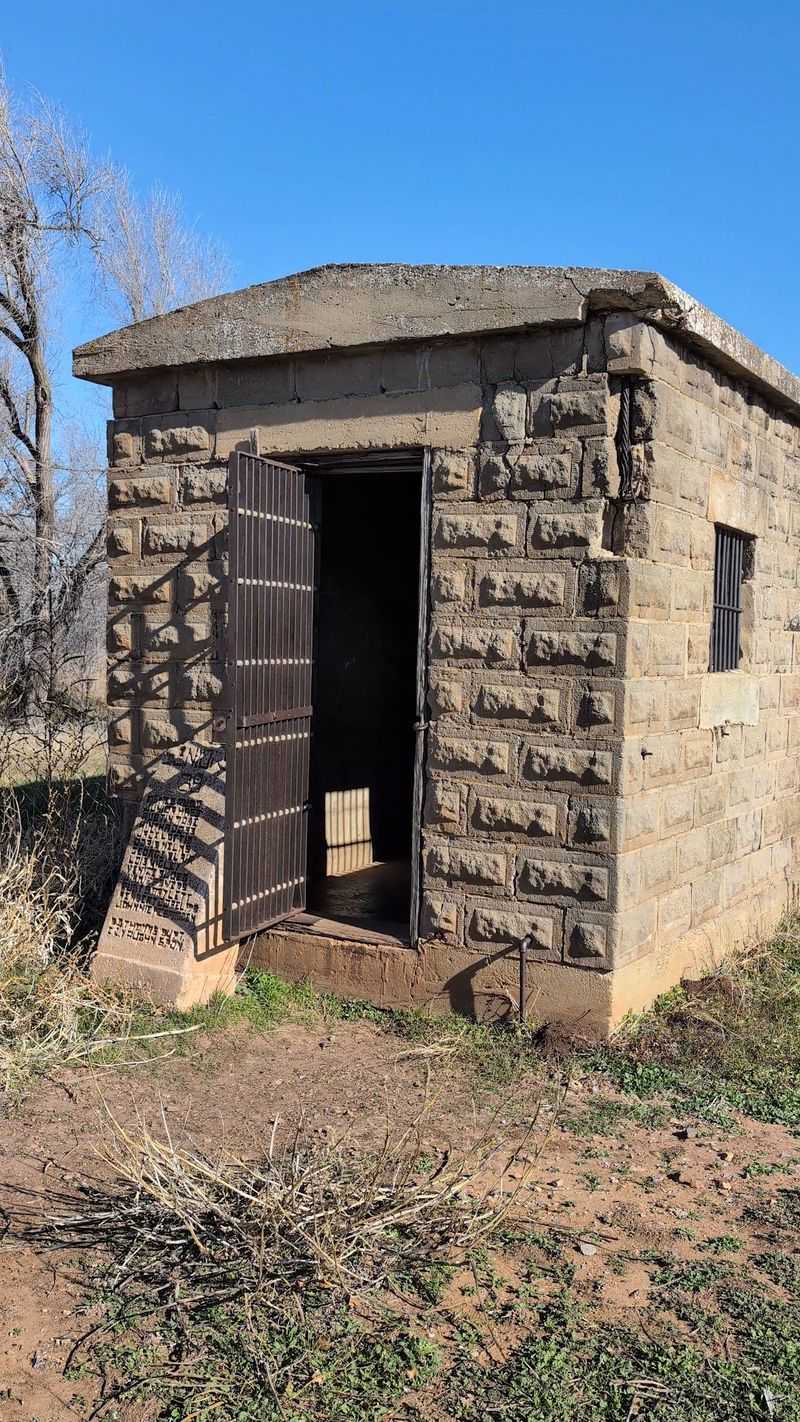
Texola sits near the western edge of Oklahoma like a town that time quietly passed by, and standing right in the middle of what remains is a single-room jailhouse that has no business being as fascinating as it is. Built in 1910, the structure is exactly what it sounds like: one brick-walled room, a metal door, a few windows, and a story that clings to every surface.
What makes it genuinely worth stopping for is what is inside, including historic photographs of past inmates and hand-written articles that lay out the full history of the jail and the town around it.
Route 66 travelers often make this a quick detour, and the stop earns its reputation as a roadside curiosity with real historical weight. The preserved 1910 construction gives a tangible sense of what frontier-era law enforcement actually looked like, raw, cramped, and stripped of any comfort.
A pallet and a small heater represent the full extent of inmate accommodations.
The jail is open 24 hours a day, free to visit, and sits in a near-ghost-town setting that adds to the atmosphere. Cicadas fill the silence, and the town itself is mostly empty, which makes the little lockup feel even more like a time capsule.
For history buffs and curious road-trippers, Texola’s one-room jail punches well above its size.
3. Fort Washita Historic Site, Durant, OK
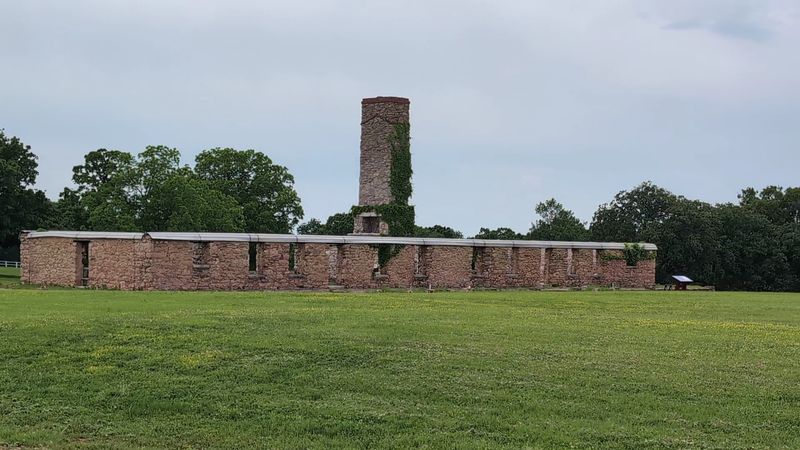
Originally constructed in 1842 as an active military garrison on the southwestern frontier, Fort Washita was built for conflict and command. Today the grounds hold something entirely different: silent stone walls, open fields, and a peaceful atmosphere that feels almost meditative.
The contradiction between its original purpose and its current stillness is part of what makes it so memorable.
The masonry itself is a quiet marvel. The walls are constructed partly from fossilized stone, which gives the ruins a texture and character that sets them apart from other historic sites in the region.
Free admission and ample parking make this an easy add to any road trip through southern Oklahoma, and the site runs living history demonstrations and reenactment events on select dates throughout the year.
Fort Washita is open Tuesday through Saturday, 9 AM to 4:30 PM, with no admission charge. The grounds are large enough to explore at a leisurely pace, and the combination of preserved ruins, open fields, and occasional events gives the site multiple layers of appeal.
Whether you come for the architecture, the frontier history, or the connection to the Choctaw Nation’s broader story in Oklahoma, the fort delivers a genuinely enriching experience that rewards the drive to Durant.
4. Welcome Schoolhouse Ruins, Hext, OK
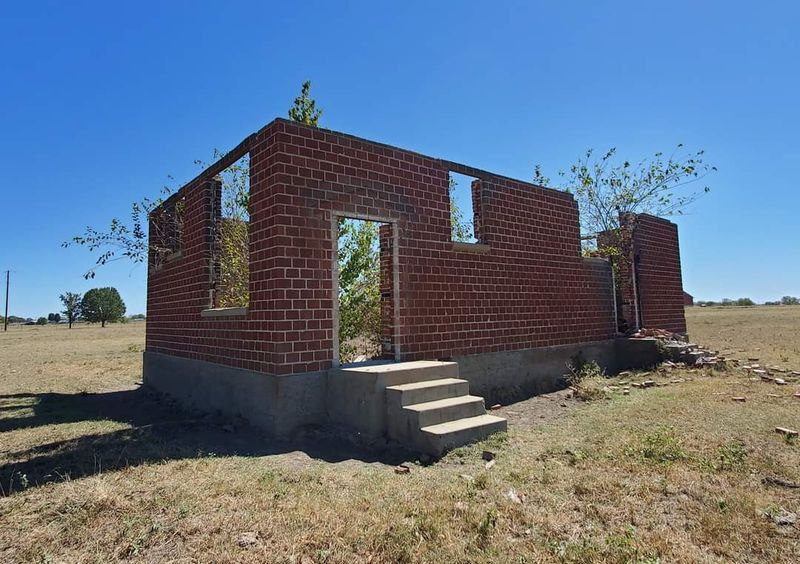
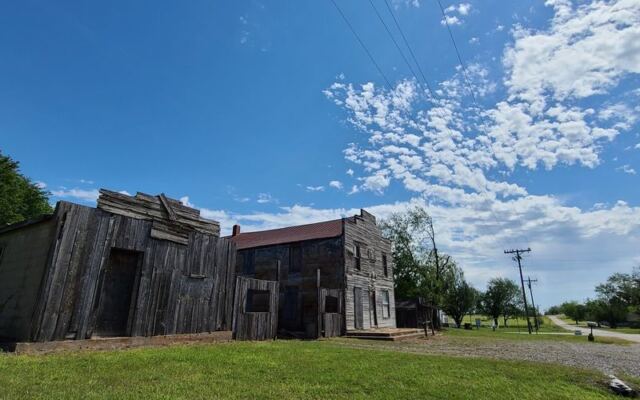
Rural Oklahoma has no shortage of forgotten buildings, but the Welcome Schoolhouse Ruins near Hext carry a particular kind of quiet sadness. What once stood as an enclosed, active schoolhouse for children in a small agricultural community now exists as a set of open-air walls, exposed to wind and weather, with no roof and no purpose left to serve.
The ruins are visible from Interstate 40, which means countless drivers pass them every day without a second thought. For those who do stop, the remains offer a stripped-down look at what rural education infrastructure once looked like in this part of Oklahoma.
There are no interpretive signs or visitor amenities, just the walls themselves and the land around them.
Access is open around the clock, every day of the week. The site is modest by any measure, and expectations should be set accordingly.
What it lacks in grandeur it makes up for in honesty: here is a building that was built for learning, left behind when the community shifted, and now stands as a plain and unadorned reminder that not every structure gets a second act.
5. Ingalls Hotel, Stillwater, OK
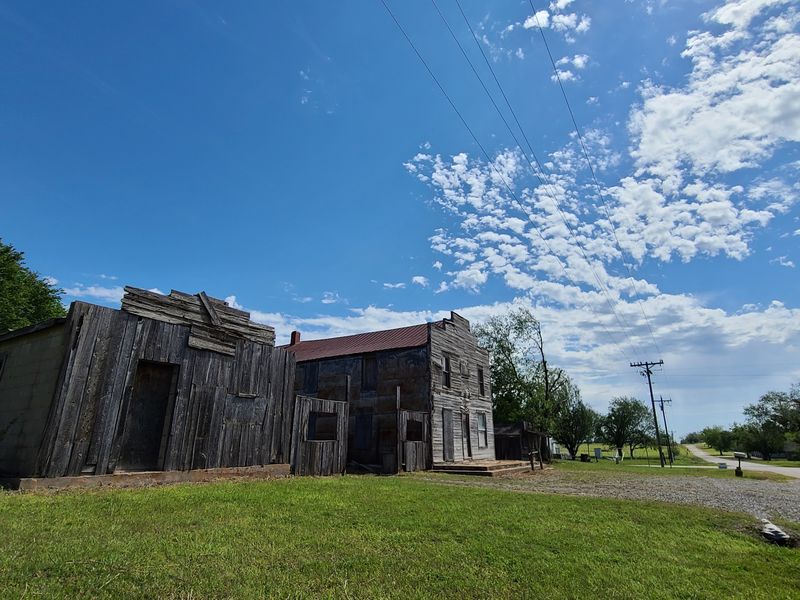
Out on a quiet country road east of Stillwater, a handful of original 19th-century buildings still stand on the site of what was once the frontier town of Ingalls. The hotel among them was built to house travelers moving through a busy Oklahoma Territory settlement, offering lodging and the basic comforts of the era.
Standing beside it now, knowing what the land around it once looked like, is a genuinely affecting experience.
History enthusiasts will recognize Ingalls as the site of a famous 1893 confrontation between U.S. marshals and the Doolin-Dalton outlaw gang. Worth noting: the buildings currently on the property are original structures from the period, but are not the specific ones directly involved in that 1893 event.
A small plaque on the grounds helps fill in the historical context for visitors who want the full story.
The site is accessible 24 hours a day, and the setting, quiet, unmanicured, and largely unchanged, makes it feel appropriately raw. There are no guided tours or interpretive centers, just the buildings and the history they carry.
For anyone drawn to Oklahoma Territory lore and the strange quiet of a place that once hummed with frontier activity, Ingalls delivers that feeling with very little in the way of modern distraction.
6. Red Bird Jail, Redbird, OK
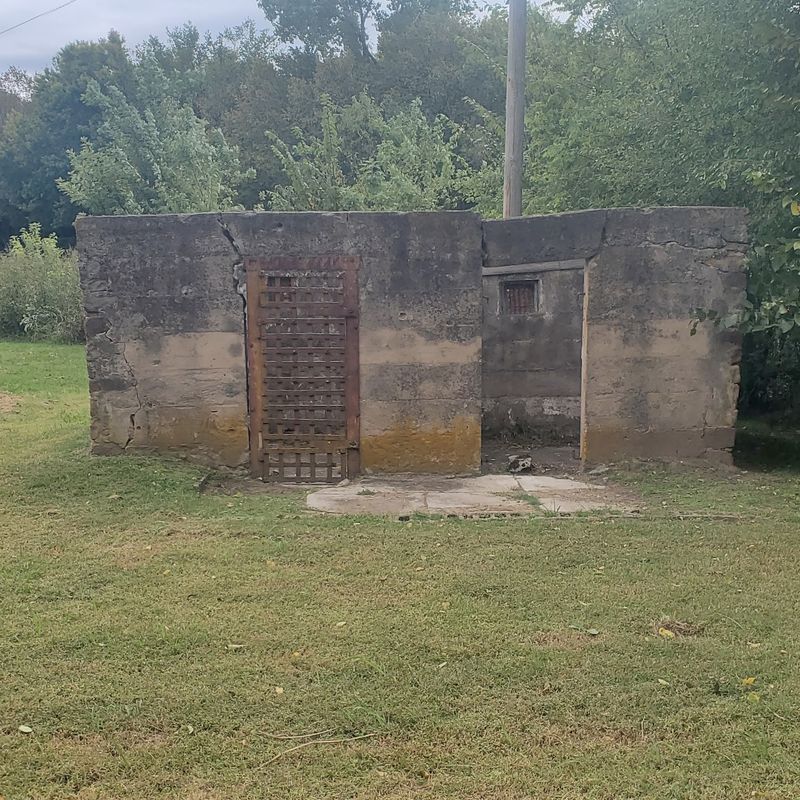
Redbird, Oklahoma was established in 1903 and today has a population of roughly 70 people within city limits. In a town that compact, every surviving structure carries extra weight, and the Red Bird Jail is no exception.
Built as a hard-sided lockup facility to hold lawbreakers behind iron bars, the building now stands completely unlocked and unattended, open to anyone curious enough to walk up and read the plaque mounted nearby.
The structure is small, genuinely small, the kind of small that makes you reconsider what frontier-era law enforcement had to work with. A historical marker provides context about the town and the jail’s role in it, turning a quick stop into something more educational than it first appears.
The building itself is described as a long-standing historical structure, and its survival in a town this size speaks to a real community commitment to preserving local memory.
Open around the clock every day, the Red Bird Jail costs nothing to visit and asks very little of the visitor beyond a willingness to pause and pay attention. The contrast at the heart of it is hard to ignore: a building designed to keep people locked in now stands permanently open, in a town so quiet that confinement and freedom feel like two sides of the same faded coin.
7. Fort Towson Historic Site, Fort Towson, OK
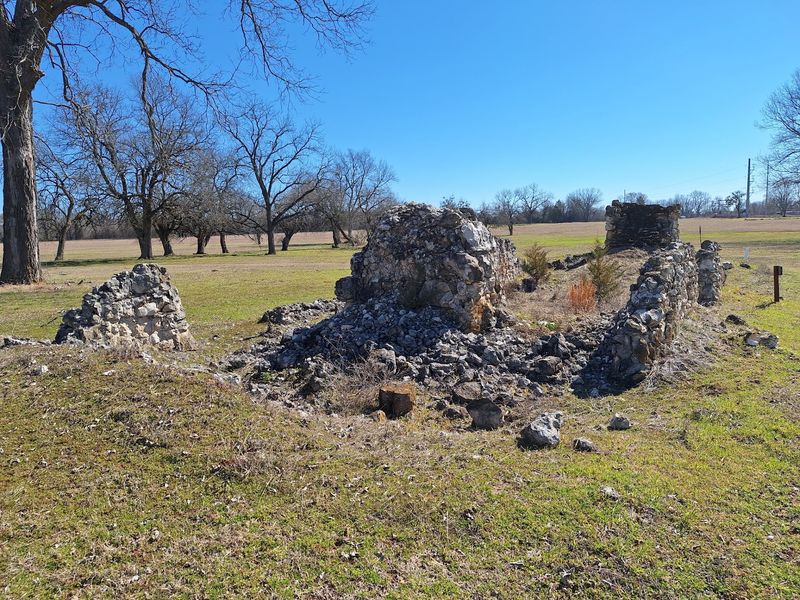
Tucked into the far southeastern corner of Oklahoma, near a cemetery that serves as the site’s unofficial front entrance, Fort Towson began its life in 1824 as a fortified military installation. It later served as a staging base during the Mexican-American War, a role that demanded permanence and strength.
What remains today are the stone foundations and structural ruins of that original fort, quiet and low to the ground, with the weight of nearly two centuries pressing down on every rock.
A small on-site museum helps visitors make sense of what they are seeing, with artifacts and exhibits that cover the fort’s military history, its connection to the Choctaw Nation, and even the excavation of a paddle wheel boat discovered in the area. The museum is open Tuesday through Saturday, 9 AM to 4:30 PM, and admission is free.
Tours are available for those who want a guided walk through the history.
Fort Towson is the kind of place that rewards visitors who come with a little patience and curiosity. The ruins themselves are not dramatic or towering, but they are real, and that authenticity carries its own power.
Southeast Oklahoma’s layered history, military, Indigenous, and territorial, converges here in a way that no replica or recreation could replicate. Arriving through the back of the cemetery, as the site directs, only adds to the feeling that you have stumbled onto something genuinely old and genuinely worth knowing.
Share this story