Tucked along a quiet stretch of south Oklahoma City, there is a place that stops first-time visitors in their tracks the moment they step through the entrance. Oklahoma is full of surprises, but few are as unexpectedly moving as this outdoor prayer garden, where winding trails, flowing fountains, and hand-crafted statues create an atmosphere unlike anything else in the region.
Whether you arrive searching for peace, curiosity, or simply a scenic walk, Tepeyac Hill has a way of leaving a lasting impression. Pilgrims, families, and wandering souls alike keep finding their way back.
Location and Identity of Tepeyac Hill
Sitting at 9016 S Shields Blvd in Oklahoma City, Oklahoma, Tepeyac Hill is part of the broader Blessed Stanley Rother Shrine campus and serves as one of the most distinctive religious outdoor destinations in the state. The site takes its name from the hill in Mexico where, according to Catholic tradition, Our Lady of Guadalupe appeared centuries ago.
Recreating that sacred geography here in Oklahoma was no small undertaking, and the result is a destination that carries genuine spiritual weight.
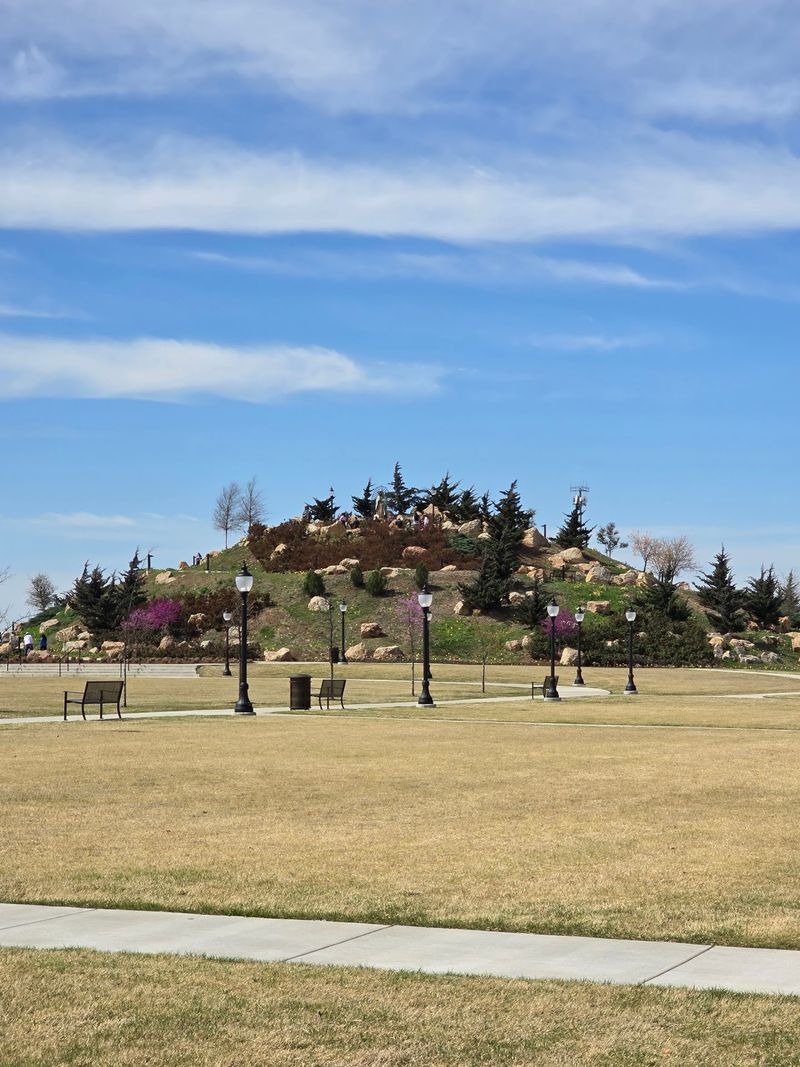
Visitors arriving for the first time often do a double-take at the scale of the property. The grounds stretch across a landscaped hillside, complete with a winding pathway that ascends toward a central shrine.
It feels removed from the surrounding city almost immediately, even though it sits just off a busy boulevard.
The connection to the Blessed Stanley Rother Shrine adds another layer of meaning for Catholic visitors, since Rother was an Oklahoma-born martyr whose legacy draws pilgrims from across the country. Tepeyac Hill functions as a living extension of that devotion, offering an open-air space for prayer, reflection, and quiet exploration any time of day or night.
The Story Behind the Shrine
Every sacred site carries a story, and Tepeyac Hill wears its origins openly. The original Tepeyac is a hill north of Mexico City where, in 1531, a young indigenous man named Juan Diego reported a vision of the Virgin Mary.
That encounter became one of the most celebrated events in Catholic history, and the image of Our Lady of Guadalupe has since become a beloved symbol across Latin America and beyond.
Bringing that story to Oklahoma City was a deliberate act of faith and community. The Blessed Stanley Rother Shrine, which oversees the site, designed Tepeyac Hill as a pilgrimage destination that honors both the Guadalupe tradition and the legacy of Father Stanley Rother, an Oklahoma priest who served communities in Guatemala before losing his life there in 1981.
The layering of these two narratives gives Tepeyac Hill a richness that visitors tend to feel even without knowing all the details beforehand. Visitors note that simply walking the path creates a sense of being part of something much larger than a single afternoon outing.
The history embedded in the landscape transforms a pleasant walk into something genuinely meaningful for people of many backgrounds.
The Winding Pilgrimage Trail
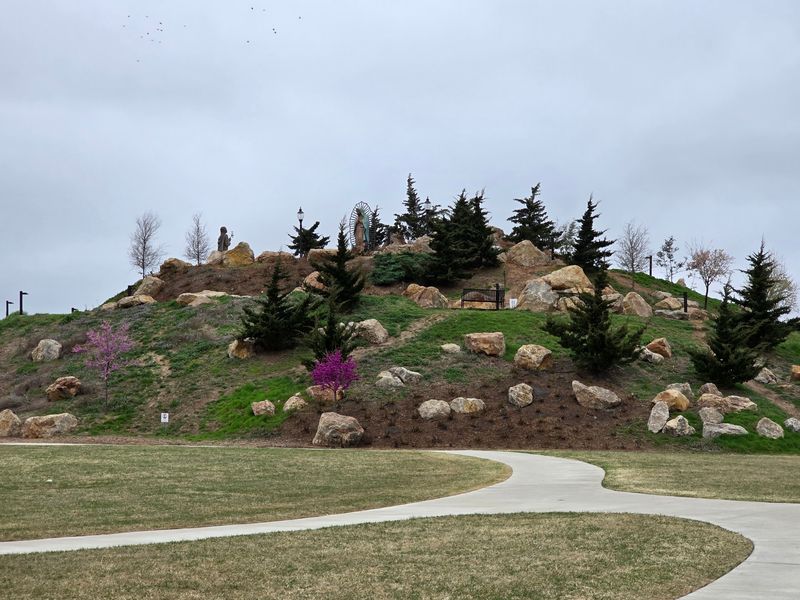
Walking the path at Tepeyac Hill is the centerpiece experience of the entire visit. The trail winds upward along the hillside in a deliberate, unhurried way, inviting visitors to slow down and absorb the surroundings rather than rush toward a destination.
Each turn reveals something new, whether a sculpted figure, a small garden alcove, or a view back across the Oklahoma landscape below.
The path is well-maintained and accessible enough for most visitors, though the gradual incline does require some modest effort. That physical element is intentional.
Pilgrimage traditions around the world use the act of walking as a form of prayer in itself, and Tepeyac Hill follows that same logic. The effort of the climb adds meaning to the arrival at the top.
Visitors consistently mention that the walk alone is worth the trip, describing it as moving and beautiful even for those who arrive without strong religious motivations. One reviewer noted that they were genuinely glad they made the climb, calling it a well-worth-it experience.
The trail is open around the clock, so early morning walkers and evening visitors alike can enjoy the path in very different kinds of light and quiet.
Statues and Sacred Artwork Along the Path
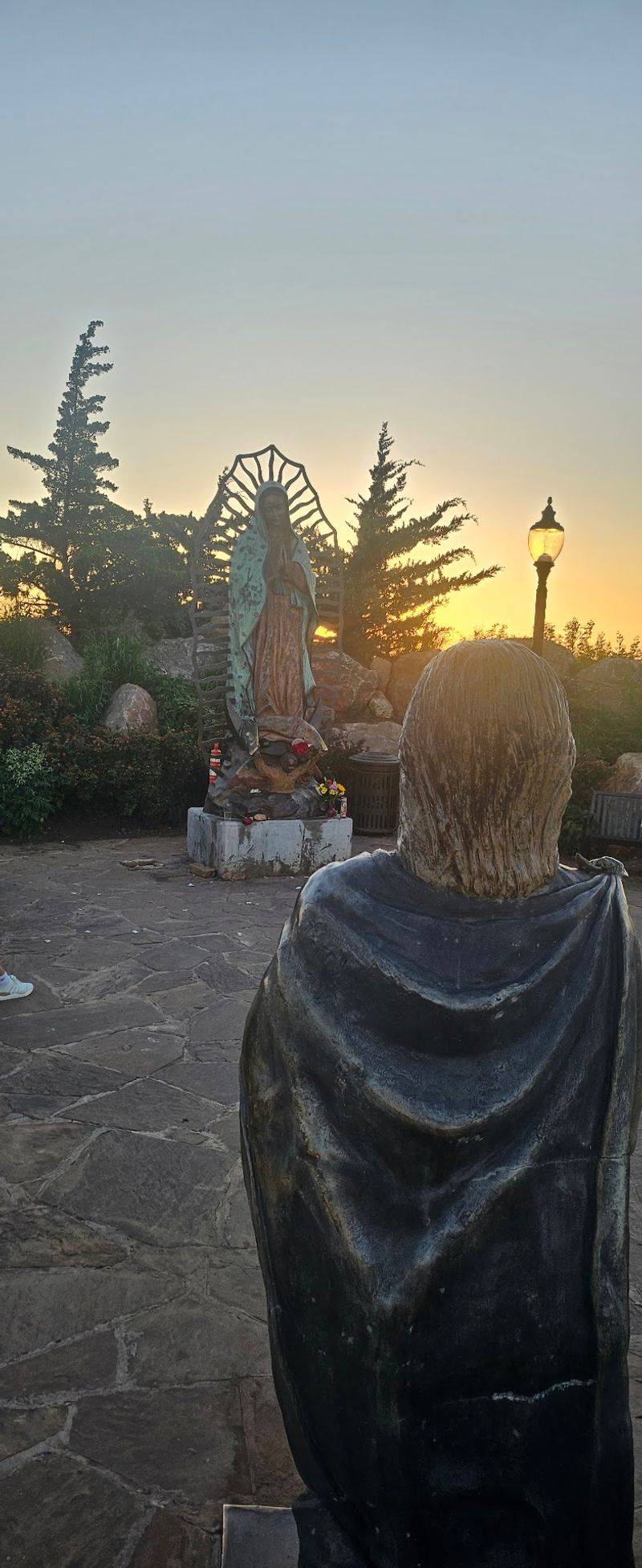
Scattered throughout the grounds, the statues at Tepeyac Hill are among the most visually striking features of the entire site. Crafted with careful attention to the Guadalupe narrative, the figures depict key moments from the apparition story, giving visitors something to pause over at multiple points along the trail.
The artistry is detailed and expressive, and even visitors unfamiliar with the story find themselves lingering in front of each piece.
Religious sculpture in an outdoor setting carries a different energy than what you encounter inside a church. Here, the figures stand against open sky, surrounded by Oklahoma greenery, and that combination of sacred imagery and natural backdrop creates a quietly dramatic effect.
Morning light and golden-hour sunsets interact with the statues in ways that shift the mood of the entire space.
Photographers, whether amateur or experienced, tend to find the statues endlessly interesting from a visual standpoint. The interplay of texture, shadow, and landscape provides compositions that feel both artistic and spiritually resonant.
Families with children often use the statues as starting points for conversations about faith, history, and culture, making the artwork as educational as it is beautiful. The collection as a whole feels curated rather than cluttered.
Fountains and Water Features on the Grounds
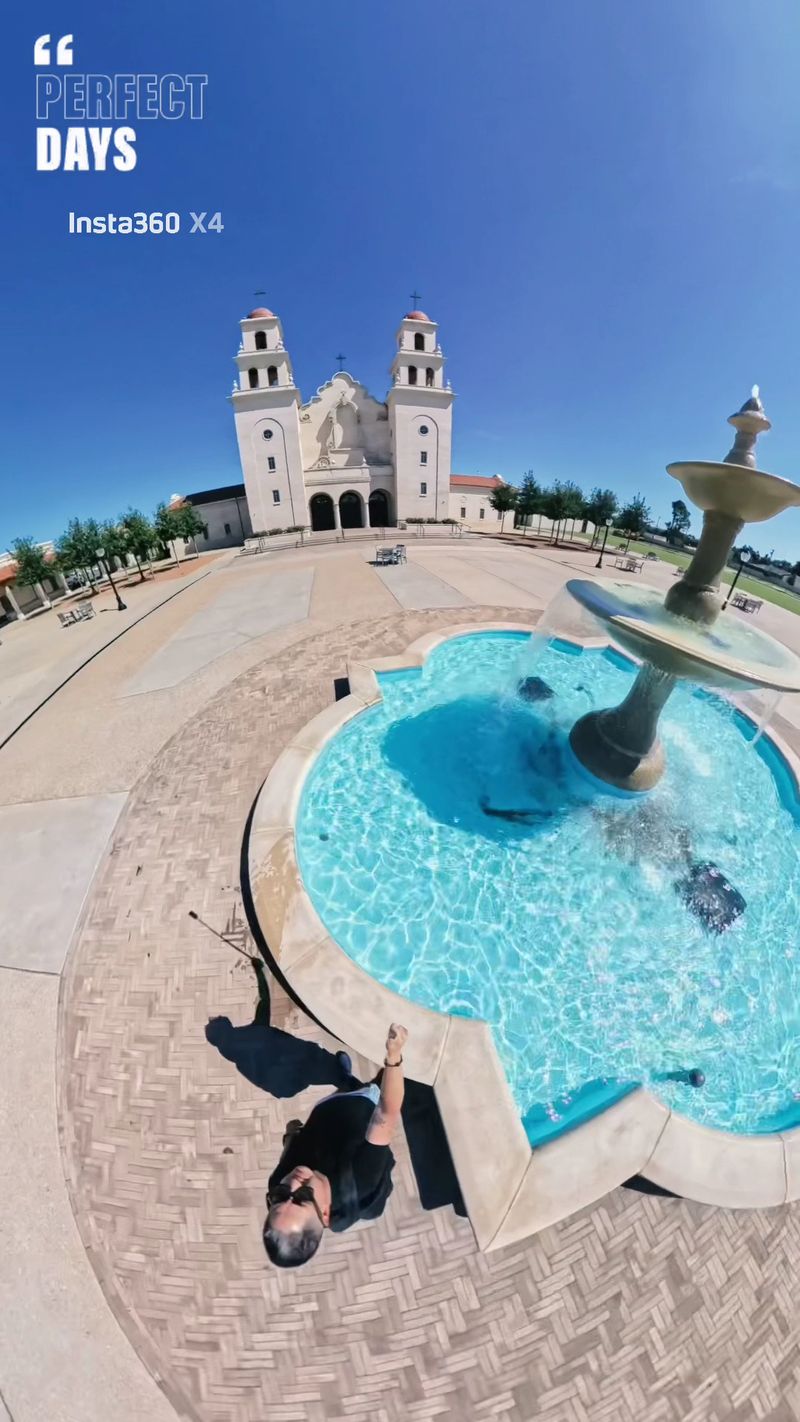
Water has carried spiritual significance across nearly every religious tradition in human history, and Tepeyac Hill uses that symbolism thoughtfully. Fountains placed throughout the grounds add both sound and visual movement to the experience, creating pockets of calm that invite visitors to stop, breathe, and settle into the atmosphere of the place.
The gentle sound of flowing water is one of those sensory details that people often mention after visiting. It works almost immediately to lower the mental noise that most people carry in from a busy day.
Combined with the natural greenery and the elevation of the hill, the fountains help establish Tepeyac Hill as a genuinely restorative environment rather than simply a decorative one.
From a design standpoint, the placement of water features at intervals along the trail ensures that no single section of the walk feels too dry or purely utilitarian. Each fountain creates its own small moment of arrival, a natural place to pause before continuing upward.
Visitors who come during warmer Oklahoma months especially appreciate these spots, since the sound and proximity of water provides a subtle cooling effect on what can otherwise be a sun-drenched hillside. The fountains feel like a considered part of the pilgrimage experience, not an afterthought.
The Central Shrine at the Summit
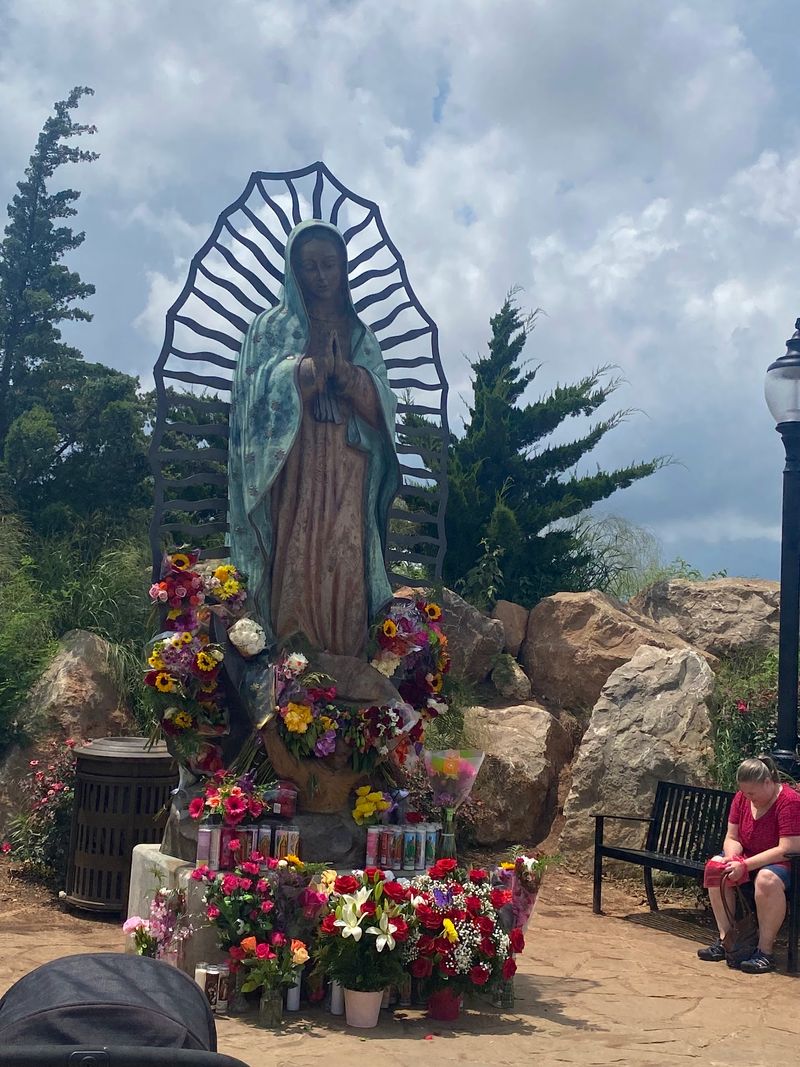
Reaching the top of the hill feels like a genuine arrival. The central shrine dedicated to Our Lady of Guadalupe anchors the entire site and serves as the focal point toward which every step of the trail leads.
Standing before it, visitors often grow noticeably quiet, regardless of their faith background. There is something about the scale and care of the installation that commands a moment of stillness.
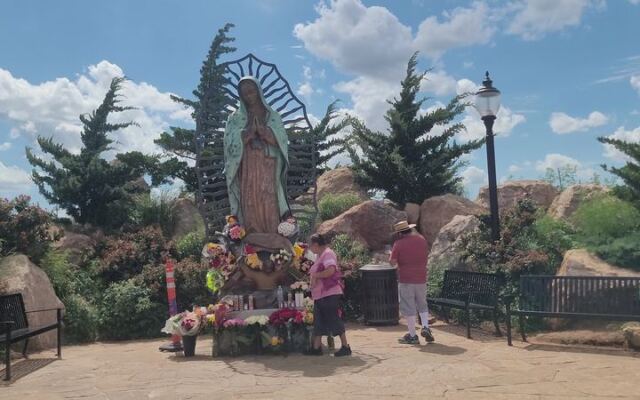
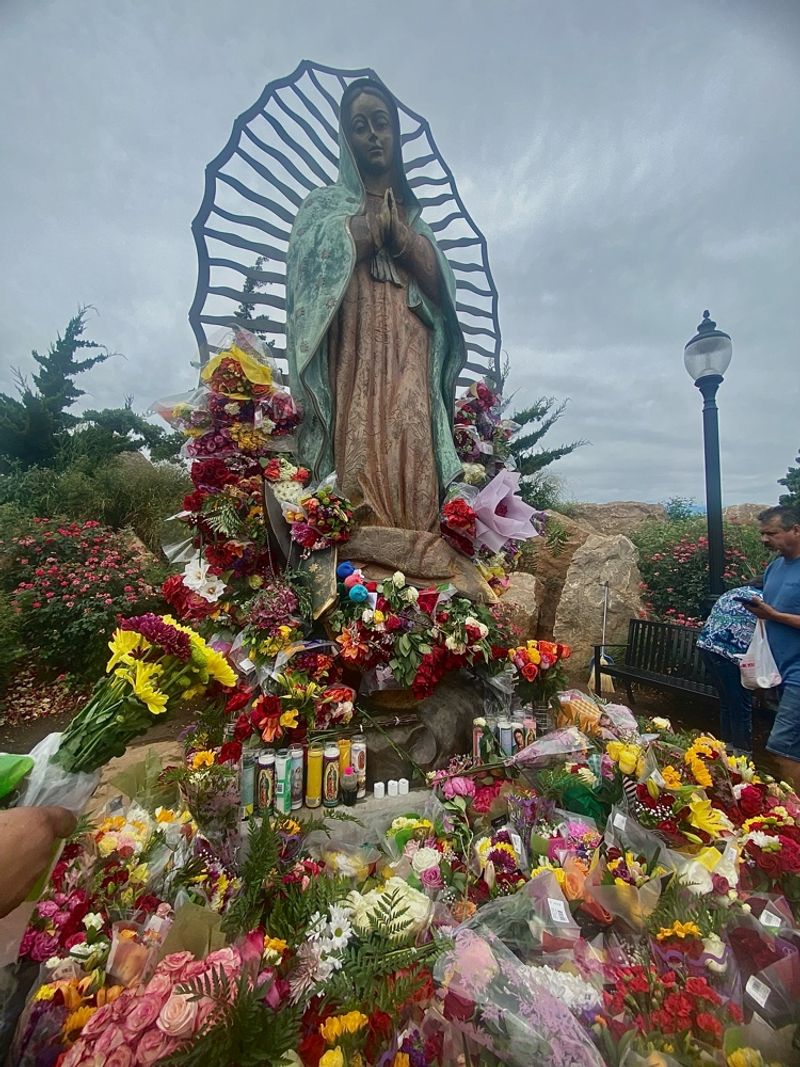
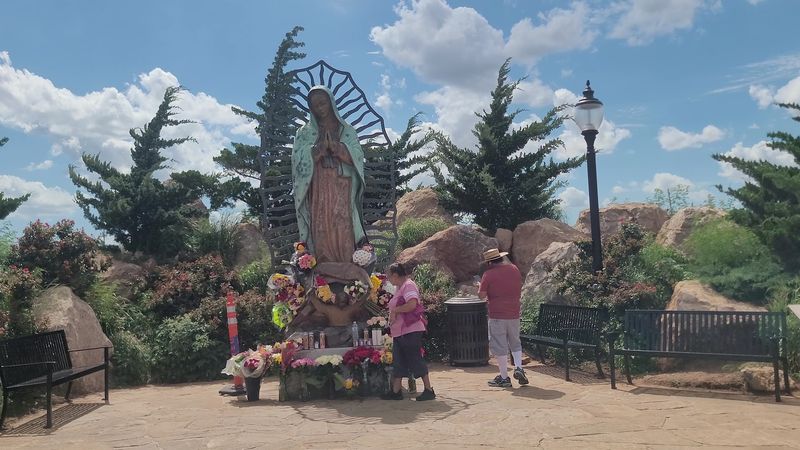
The shrine incorporates the visual iconography most closely associated with the Guadalupe tradition: the image of Mary surrounded by rays of light, standing above a crescent moon, with roses nearby as a nod to the miraculous flowers that figure into the original apparition story. Seeing these familiar symbols rendered at full outdoor scale, against an open Oklahoma sky, carries a weight that photographs struggle to fully capture.
Pilgrims who travel specifically to pray at the shrine often bring flowers, candles, or other small offerings, and the area around the central image tends to reflect that ongoing devotion. First-time visitors frequently describe the summit as the emotional high point of the visit, a place where the cumulative effect of the walk, the statues, and the landscape all converges into something genuinely moving.
Staff at the shrine are noted for being friendly and informative for those who have questions.
Atmosphere and the Feeling of the Place
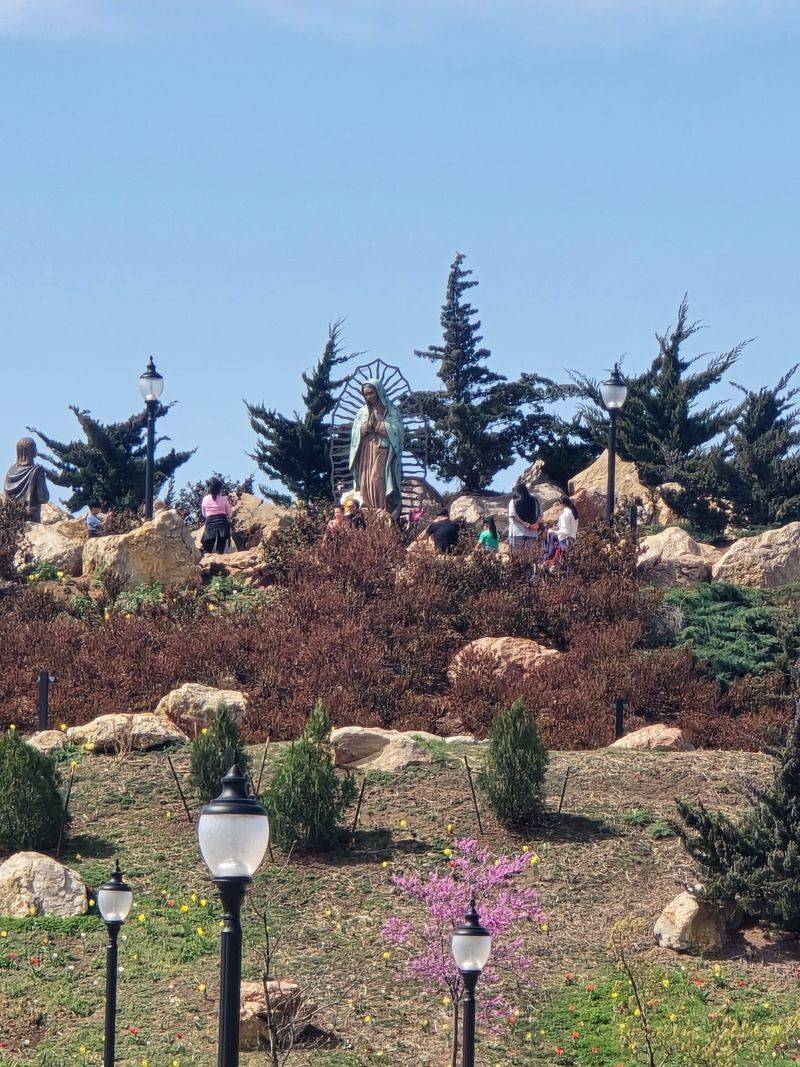
Peaceful is the word that comes up again and again when people describe their time at Tepeyac Hill. Not the hollow, brochure-style peaceful that gets attached to every garden or park, but something more specific and harder to manufacture.
The combination of elevation, natural landscaping, sacred imagery, and the sound of water creates a sensory environment that genuinely quiets the mind.
Part of what makes the atmosphere work is the absence of commercial noise. There are no vendors, no loud speakers, and no sense of being hurried through an experience.
Visitors set their own pace entirely, and the trail accommodates everything from a slow, contemplative shuffle to a more energetic family outing. The openness of the space means that even when other visitors are present, the grounds rarely feel crowded.
People who visit during difficult personal seasons tend to find the place particularly meaningful. Several visitors have mentioned that arriving during hard times in their lives made the site feel especially comforting, as though the landscape itself offers a kind of wordless reassurance.
That quality is difficult to engineer but easy to recognize when you encounter it. Tepeyac Hill has it in abundance, and it seems to be the main reason so many visitors say they cannot wait to return with family and friends.
Who Visits and Why They Come

Tepeyac Hill draws a genuinely mixed crowd, which is part of what makes the site feel so alive. Devout Catholic pilgrims come with specific intentions, rosaries in hand, ready to pray at each station along the trail.
Curious neighbors and day-trippers arrive simply because someone mentioned it and they wanted to see what all the quiet fuss was about. Families bring children to walk, explore, and ask questions about the figures they encounter along the path.
Couples also show up regularly, drawn by the combination of scenic beauty and tranquility that makes the grounds feel like a meaningful place to spend time together. The site is open twenty-four hours a day, which means night owls and early risers both find their way here at unusual hours.
One reviewer even mentioned waiting in the car while her daughter and boyfriend walked the path after dark, suggesting the trail holds appeal even when the temperature drops and the sun disappears.
What unites most visitors is a desire for something quieter and more intentional than the average Oklahoma City outing. Tepeyac Hill satisfies that need in a way that surprises people who did not expect a religious site to feel so broadly welcoming.
The staff receives consistent praise for being warm, knowledgeable, and genuinely helpful to visitors of all backgrounds.
Practical Details for Planning Your Visit
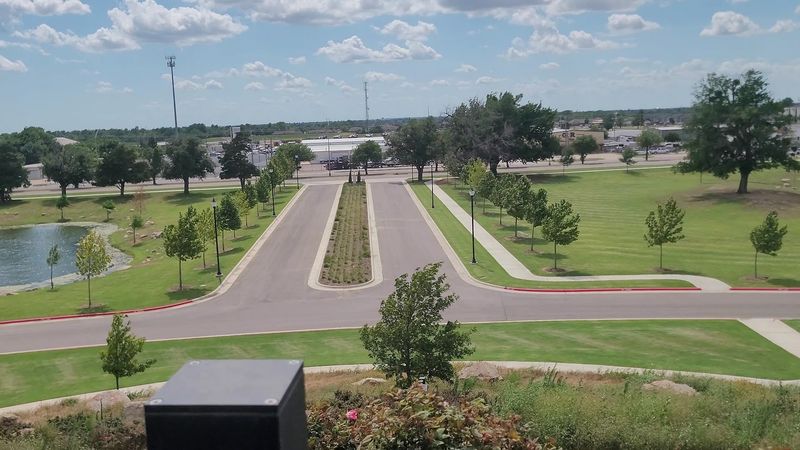
Planning a trip to Tepeyac Hill requires almost no logistical effort, which is one of its most appealing qualities. The grounds are open twenty-four hours a day, seven days a week, meaning there is no wrong time to visit.
Early mornings offer cool Oklahoma air and golden light across the hillside. Late evenings bring a different kind of stillness, with the statues lit against a darkening sky and the fountain sounds more prominent in the quiet.
The site is located at 9016 S Shields Blvd in Oklahoma City, which sits along a well-traveled corridor on the south side of the city. Getting there is straightforward whether you are coming from within Oklahoma City or making the trip from a neighboring town.
Parking is available on the campus, and the grounds are part of the larger Blessed Stanley Rother Shrine property, so visitors will find the overall campus well-organized and easy to navigate.
For those who want more information before visiting, the shrine maintains a website at rothershrine.org/tepeyac-hill and can be reached by phone at 405-421-9800. Staff are described as friendly and informative, so calling ahead with questions is a reasonable option.
There is no admission charge noted for the outdoor grounds, making this an accessible outing for visitors on any kind of budget.
A Quiet Verdict on Tepeyac Hill
Some places earn their reputation through spectacle, and others earn it through stillness. Tepeyac Hill belongs firmly in the second category, and that is precisely what makes it worth the detour.
The outdoor prayer garden does not compete for attention with flashing lights or dramatic programming. It simply exists, carefully tended and quietly extraordinary, waiting for whoever shows up.
For Oklahoma City locals, the site represents one of those genuinely hidden-in-plain-sight gems that many residents drive past for years before someone finally says, you really should stop there. For out-of-town visitors exploring the state, it offers something unexpected and memorable that fits neatly into a broader Oklahoma road trip without requiring a full day of planning.
The combination of a moving pilgrimage trail, beautifully crafted statues, soothing water features, and a summit shrine that rewards the climb creates an experience that feels both complete and personal. Whether the draw is faith, curiosity, photography, or simply the need for a genuinely peaceful hour outdoors, Tepeyac Hill delivers with a consistency that explains why visitors keep returning.
Oklahoma has no shortage of interesting places to explore, but few carry the quiet emotional punch that this hillside garden manages so effortlessly.
Share this story