Somewhere in the rolling heart of Kansas, a landscape survives that once blanketed nearly a third of an entire continent. Less than 4% of the original tallgrass prairie remains today, and the largest protected piece of it sits quietly along Kansas Highway 177, drawing visitors who often arrive expecting scenery and leave feeling something closer to awe.
Bison graze freely across thousand-acre pastures, wildflowers bloom in colors that no paint chart could capture, and limestone buildings from the 1880s still stand like sentinels over a land that refused to be tamed. This is not a reconstructed version of the past or a nature exhibit behind glass.
It is the real thing, alive and breathing, managed through a remarkable conservation partnership that has kept the plows at bay for decades. Read on to discover what makes this Kansas preserve one of the most quietly extraordinary places in the entire National Park System.
A Prairie Address Worth the Drive: Location and First Impressions
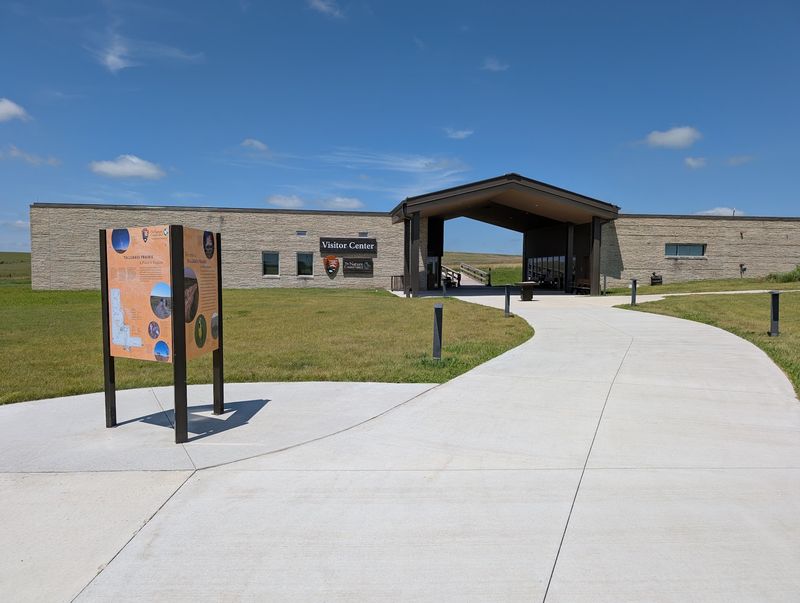
My car rolled to a stop along Kansas Highway 177 in Strong City, Kansas, and the first thing that struck me was the sheer openness of it all. The Tallgrass Prairie National Preserve sits at 2480B KS-177, Strong City, KS 66869, and it is the only unit in the entire National Park System dedicated exclusively to protecting the tallgrass prairie ecosystem.
Spanning roughly 11,000 acres in the Kansas Flint Hills, the preserve is free to enter and open 24 hours a day, every single day of the year. That kind of accessibility is rare for a place this significant.
The visitor center, staffed by knowledgeable National Park Service rangers, offers maps, exhibits, and a helpful orientation video to get you oriented before you head out. Rangers are genuinely enthusiastic here, not just going through the motions, and that energy sets the tone for everything that follows.
First impressions here tend to stick around long after you have left the parking lot.
How Ancient Seas Created the Flint Hills
Over 250 million years ago, a vast inland sea covered this entire region, depositing thick layers of limestone, shale, and chert, the flint-like rock that gives the Flint Hills their name. When that sea retreated, the softer shales eroded away while the harder limestone and chert shelves resisted, sculpting the distinctive rolling topography that exists here today.
That rocky, unplowable terrain turned out to be the prairie’s greatest protector. Early settlers bypassed the Flint Hills for more workable soil elsewhere, leaving the native grasses largely undisturbed while over 96% of the original tallgrass prairie across North America was converted to farmland.
Visitors can see these ancient formations up close along many of the trails, where exposed limestone ledges reveal fossilized marine life including brachiopods, clams, and snails. It is a startling reminder that the ground beneath your boots holds a story stretching back hundreds of millions of years, long before a single blade of grass ever took root here.
The Ranching Story Behind Spring Hill Farm
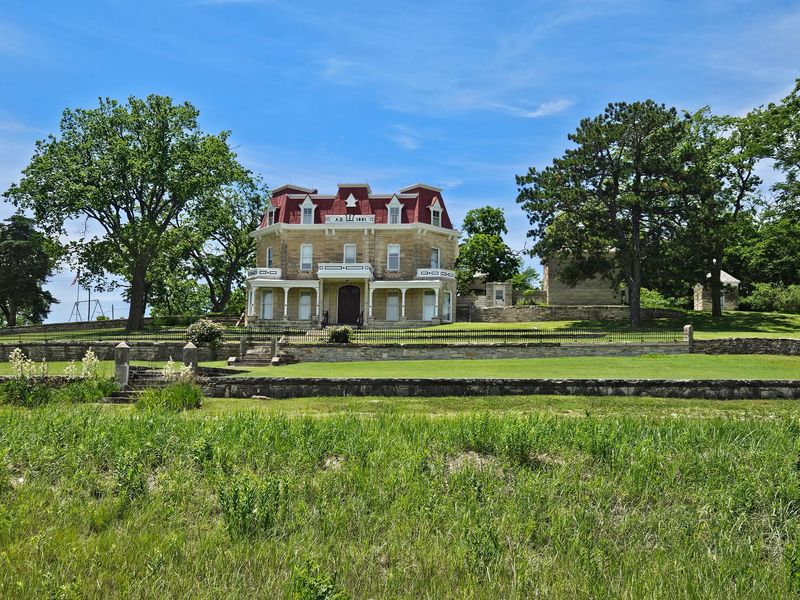
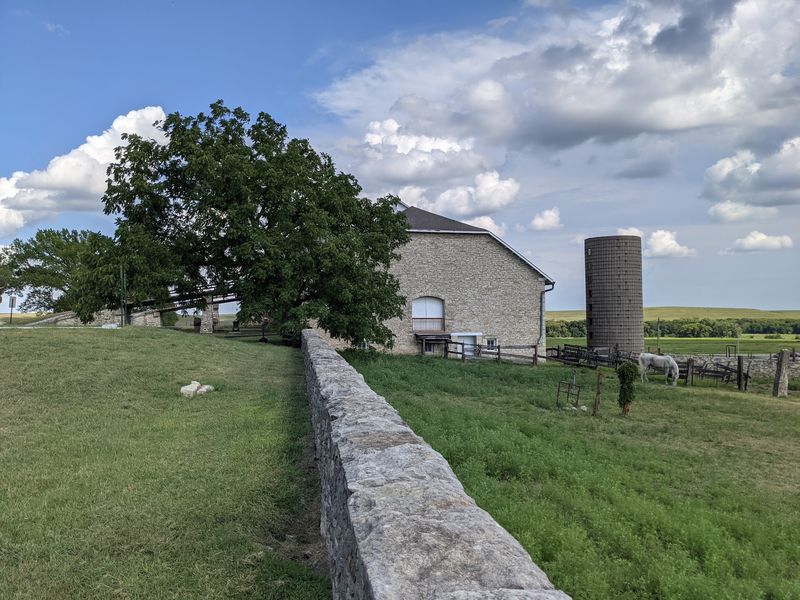
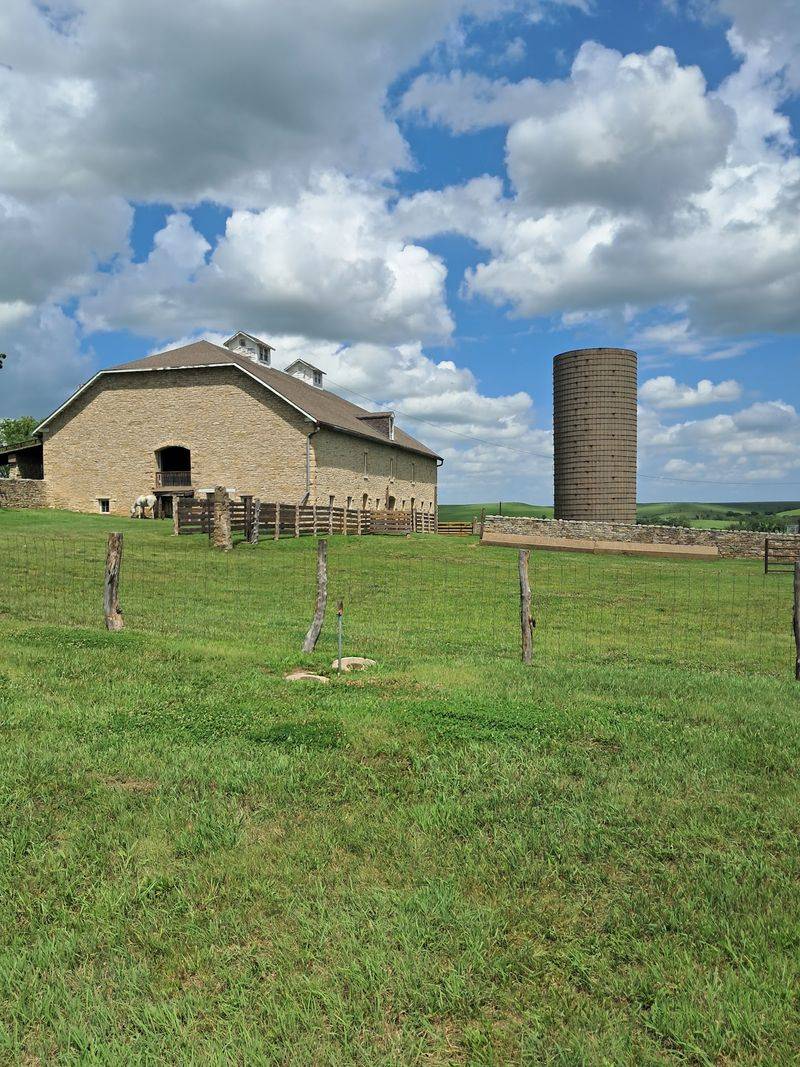
Not every national preserve comes with a mansion, but this one does. The Spring Hill Farm and Stock Ranch, established in 1878 by Stephen F. and Louisa Jones, grew into a sprawling 7,000-acre cattle operation adorned with over 30 miles of stacked limestone fencing that still partially stands today.
The centerpiece is the grand 1881 limestone ranch house, a three-story structure built with obvious ambition by people who believed the prairie would make them prosperous. Nearby, an equally impressive limestone barn from the same era hints at the enormous scale of their cattle operation.
Later known as the Z Bar Ranch, the property passed through several owners before conservation efforts secured it for public use. Ranger-led tours of the historic buildings bring the era to life with vivid detail, and a self-guided cell phone tour lets you explore at your own pace.
Running your hand along those same limestone walls, worn smooth by more than a century of Kansas weather, connects you to those early settlers in a surprisingly personal way.
Grasses That Reach Above Your Head
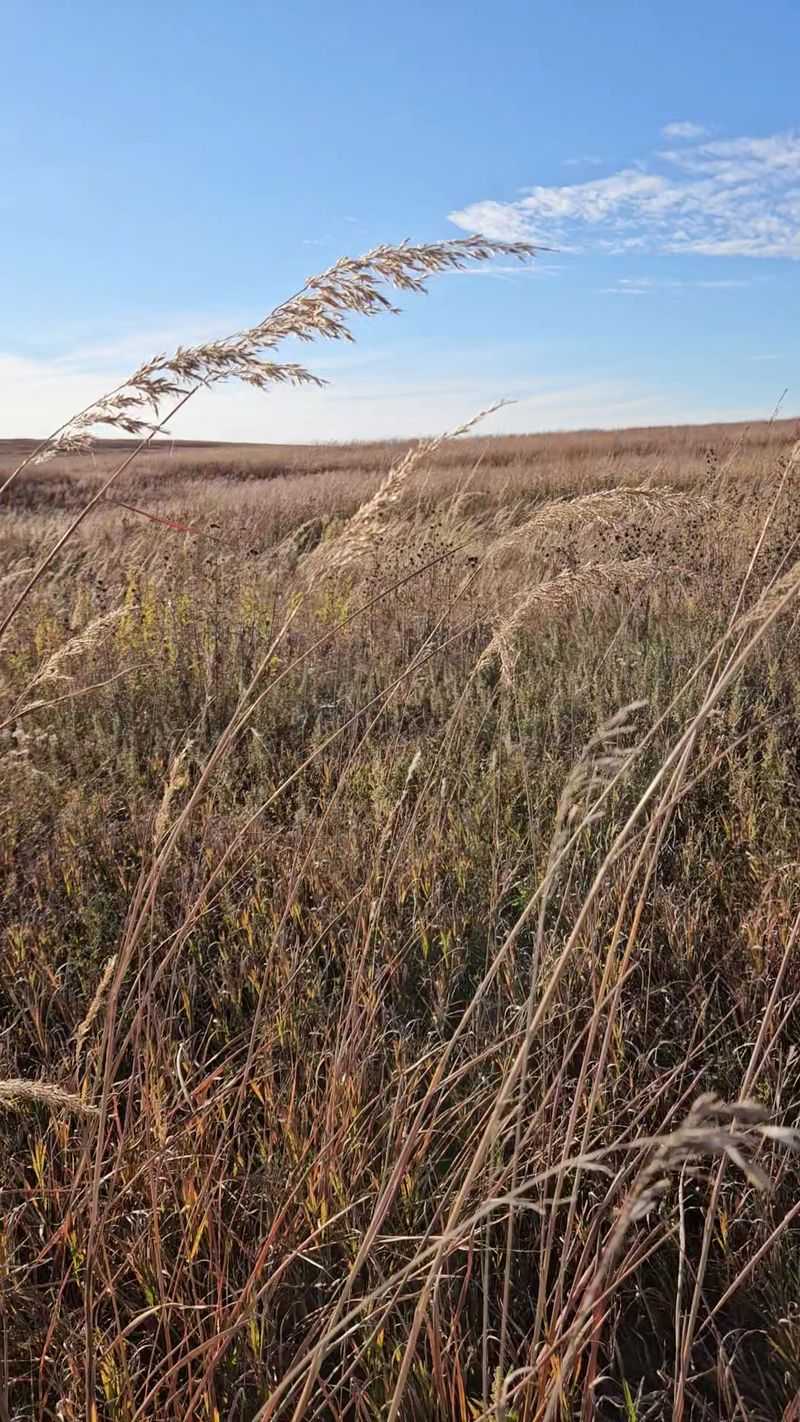
Big bluestem, switchgrass, Indian grass, and little bluestem are the headliners of this ecosystem, and they take their name seriously. By late summer, big bluestem can tower well above six feet, creating a living wall of green and gold that sways with every Kansas breeze.
What makes these grasses truly remarkable is what happens underground. Their root systems can extend up to 15 feet into the earth, anchoring the soil, storing carbon, and drawing moisture from deep below the surface during dry spells.
The above-ground display is only half the story.
Alongside the grasses, more than 500 plant species and over 450 wildflower varieties paint the rolling hills with color from spring through fall. The preserve uses prescribed burns each year to mimic the natural fire cycles that Indigenous peoples and lightning storms maintained for millennia, clearing dead vegetation and encouraging vigorous new growth.
The motto “Tall in the Fall” captures the season when the grasses blaze with red, russet, and amber tones that rival any autumn forest.
Bison Are Back, and They Mean Business
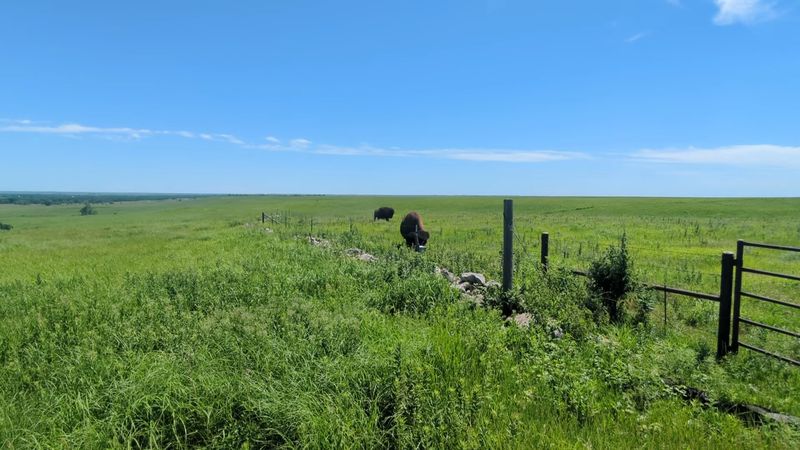
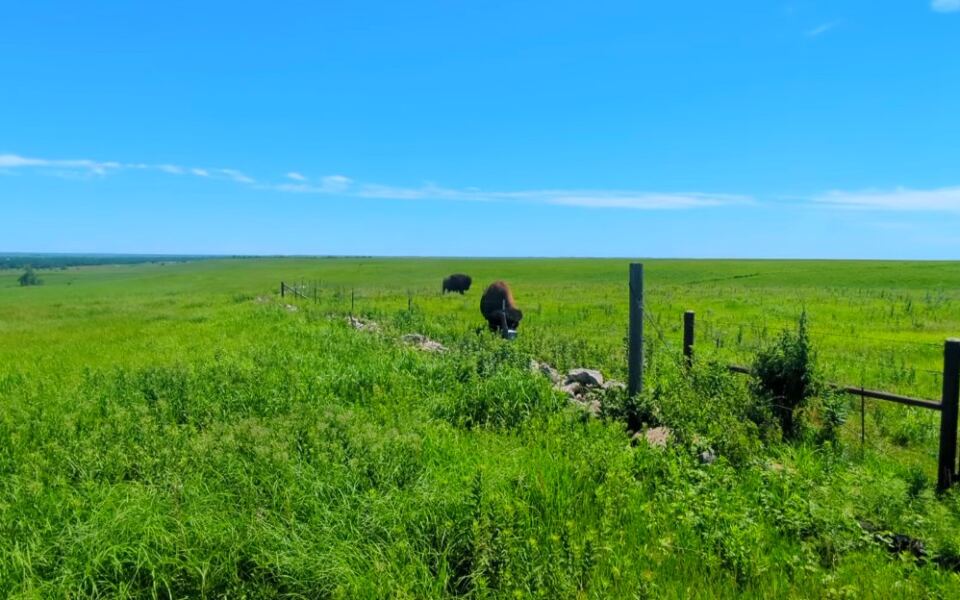
Few wildlife encounters carry the weight of watching a bison herd move across open prairie. A resident herd of roughly 90 to 100 animals roams freely across portions of the preserve, reintroduced here in 2009 after being absent from the Flint Hills for generations.
These animals are not decorative. Bison are essential to the health of the tallgrass ecosystem, their grazing patterns managing vegetation and creating diverse microhabitats that benefit dozens of other species.
Their wallowing behavior even creates small depressions in the earth that collect water and support unique plant communities.
Watching an adult bull hold his ground on a trail, as some visitors have experienced firsthand, is a vivid reminder that these are wild animals requiring a minimum viewing distance of 125 yards, roughly the length of a football field. Binoculars are highly recommended for safe, satisfying viewing.
The preserve also contributes to genetic diversity efforts among federal bison herds, meaning the animals here serve a conservation purpose that extends well beyond the boundaries of Chase County, Kansas.
Bird Sounds That Will Surprise a First-Time Visitor
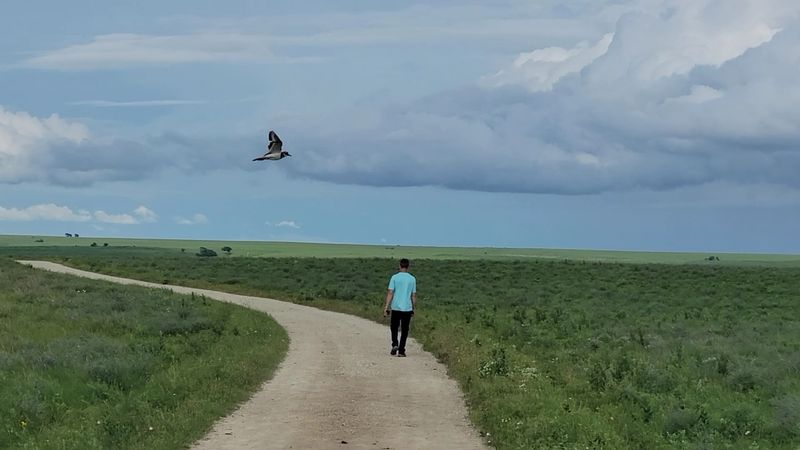
The greater prairie-chicken is the prairie’s most theatrical resident, and spring is its season to perform. Males gather at traditional display grounds called leks, inflate bright orange neck sacs, stamp their feet rapidly, and produce a haunting low-frequency booming sound that carries remarkably far across the open grassland.
Witnessing this display is one of those experiences that feels almost unreal.
Beyond the prairie-chickens, the preserve hosts over 150 to 200 bird species, many of them grassland specialists facing serious declines elsewhere due to habitat loss. Dickcissels, eastern meadowlarks, bobolinks, upland sandpipers, Henslow’s sparrows, and Bell’s vireos all find refuge here, their songs layering into a surprisingly complex soundscape.
Birders who visit with a quality pair of binoculars and a little patience are routinely rewarded with sightings that would take hours of searching in more fragmented landscapes. Common nighthawks, blue herons, and turkey vultures round out a bird list that keeps growing the longer you stand still and listen.
The prairie rewards patience like few other places do.
Forty Miles of Trails for Every Kind of Explorer
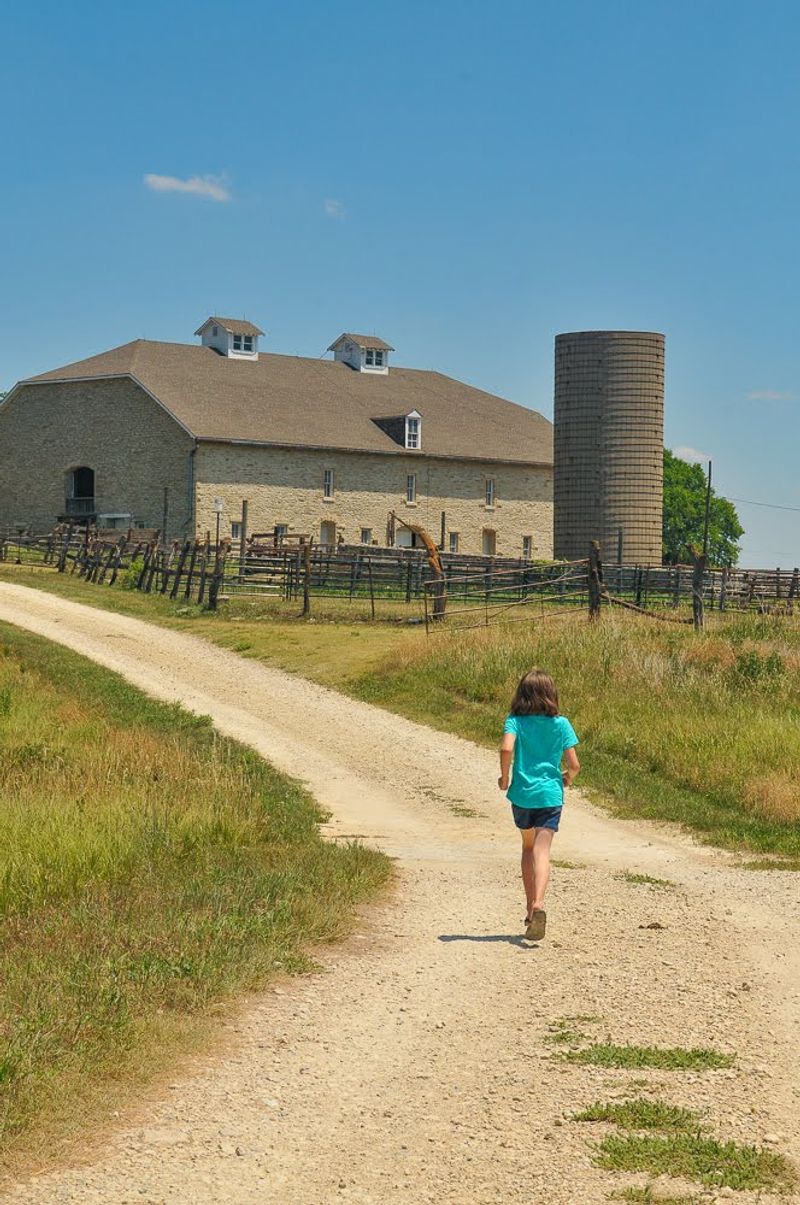
Over 40 miles of trails lace through the preserve, ranging from short, accessible loops to full backcountry routes that push deep into the most remote sections of the Flint Hills. That variety means the preserve genuinely works for everyone, from families with young children to experienced hikers looking for a half-day challenge.
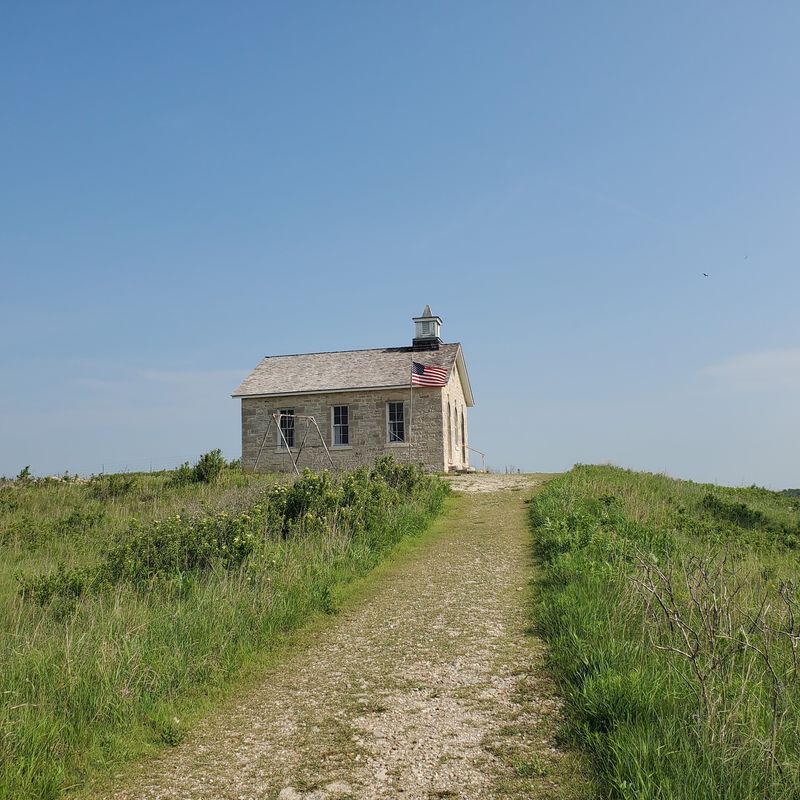
The Bottomland Trail is a standout for accessibility, featuring a paved and firm gravel surface that is wheelchair-friendly and includes interpretive waysides along Fox Creek. The Southwind Nature Trail winds through tallgrass to reach the historic Lower Fox Creek School, with scenic overlooks along the way that offer some of the best unobstructed views in the entire preserve.
Backcountry routes like the Scenic Overlook Trail and the Pasture Loop Trail follow old ranch roads and mowed paths into quieter territory, where wildlife encounters become more frequent and the sense of solitude deepens considerably. All trails are open around the clock, year-round, though backcountry sections require permits during certain months.
Bring water, solid footwear, and sunscreen regardless of the season.
Bus Tours, Cell Phone Guides, and Junior Rangers
Not everyone wants to cover 40 miles on foot, and the preserve has thoughtfully accounted for that. Seasonal guided bus tours, led by National Park Service rangers, carry visitors deep into the backcountry areas that most hikers never reach, offering a comfortable and educational way to take in the full scale of the landscape.
These tours cover the prairie’s plant and animal systems, the geology of the Flint Hills, and the ranching legacy of the region, all delivered by rangers who clearly love what they do. Many of the bus tours are also wheelchair accessible, ensuring the backcountry experience is available to a wider range of visitors.
For those who prefer going solo, self-guided cell phone tours allow you to dial in at numbered markers throughout the historic ranch area and along certain trails, hearing curated narration at your own pace. The Junior Ranger program adds an engaging layer for younger visitors, with activities and challenges that build genuine appreciation for conservation.
Living history events, where costumed interpreters demonstrate 19th-century ranch life, appear throughout the year and are worth checking the preserve’s schedule for in advance.
Fishing, Solitude, and Fox Creek
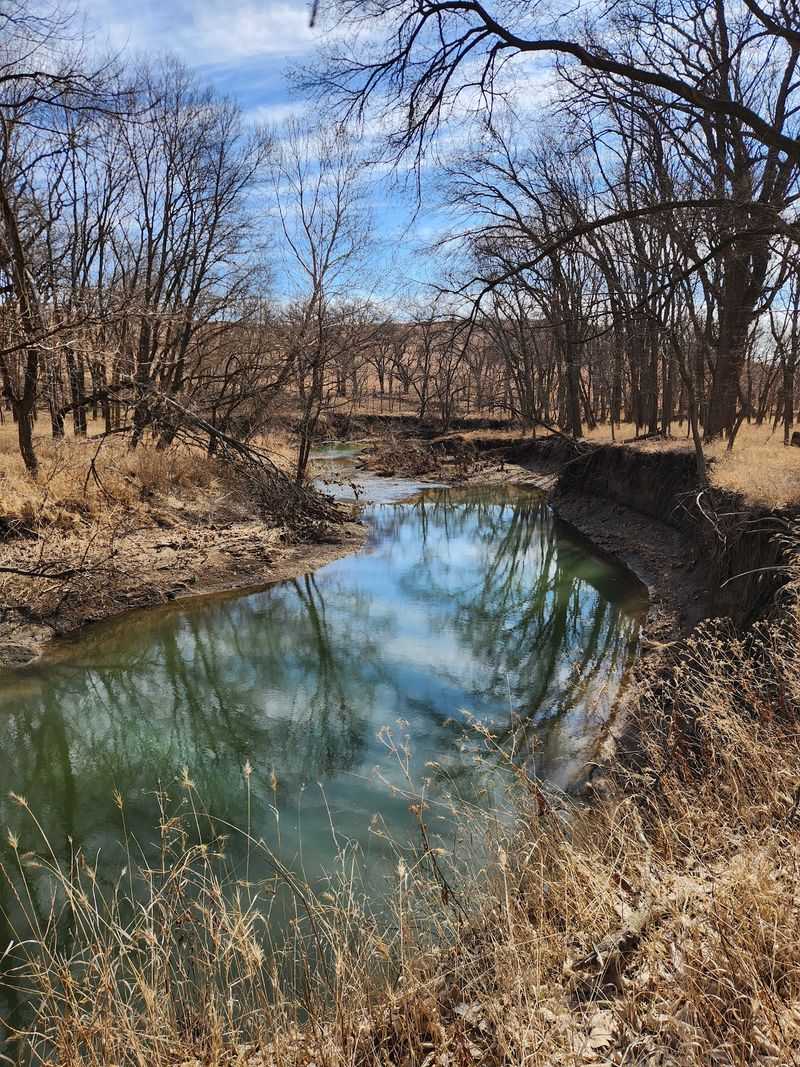
Three ponds and stretches of Fox Creek within the preserve are open for fishing year-round, offering one of the quietest ways to spend an afternoon in the Flint Hills. Catch-and-release is the rule here, keeping the aquatic ecosystem intact while giving anglers a genuinely peaceful experience far removed from crowded recreational lakes.
A valid Kansas state fishing license is required, so plan ahead before showing up with a rod. The activity draws a small but dedicated group of visitors who appreciate having a reason to sit still and absorb the sounds of the prairie at a slower pace than hiking allows.
Fox Creek itself is worth observing even without a fishing license. Beavers have been spotted along its margins, and the riparian vegetation that lines its banks creates a microhabitat noticeably different from the surrounding upland prairie.
The contrast between the open, wind-swept hillsides and the sheltered, shaded creek corridor is surprisingly striking, and it adds another ecological layer to a place that already has plenty of them. Quiet always has a way of revealing more than noise ever could.
The Best Season to Visit, Honestly Assessed
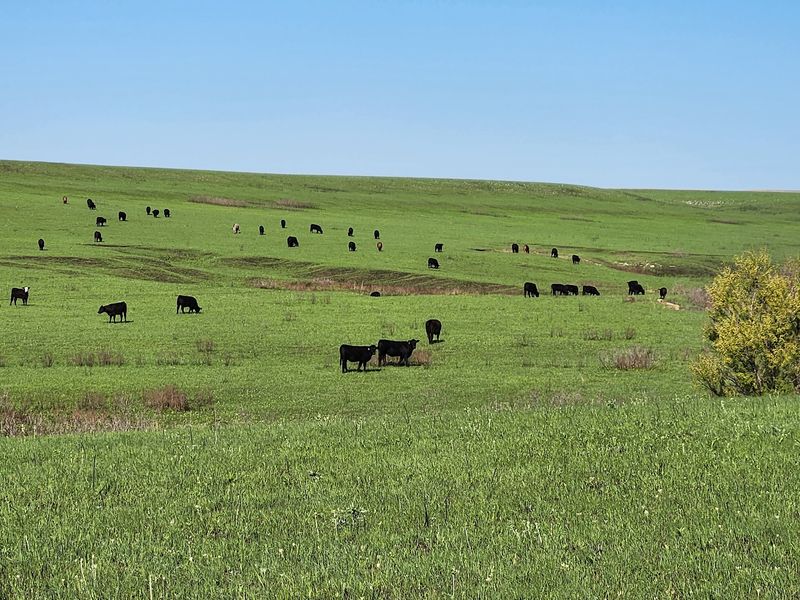
Spring, roughly April through early June, is widely considered the prime window for visiting. The prairie greens up rapidly, wildflowers begin their long bloom sequence, and the greater prairie-chicken courtship displays are in full swing.
Temperatures are comfortable, and the whole landscape has an energized, awakening quality that is hard to match.
Summer delivers lush, peak-height grasses and long daylight hours, but temperatures regularly climb above 90 degrees Fahrenheit with minimal shade on the open prairie. Carrying substantial water is not optional in July and August; it is essential.
Early morning starts make summer visits far more manageable.
Fall, from September through October, earns its reputation as the “Tall in the Fall” season, when the grasses shift into stunning shades of gold, russet, and deep red. Cooler air and dramatic sunsets make this a photographer’s favorite time.
Winter offers its own quiet appeal: dormant grasses open up the sightlines, making the bison herd easier to spot against the muted landscape. Each season here offers something genuinely different rather than just a variation on the same experience.
Practical Tips That Will Actually Help You Prepare
No reservations are needed for general entry, and admission is free, though donations are genuinely welcomed and directly support the preserve. The trails are open around the clock, every day of the year, but the visitor center and historic buildings operate on seasonal hours that can change, so checking the preserve’s website or calling ahead at +1 620-273-8494 before your visit is a smart move.
Wear closed-toe shoes with real tread, not sandals. The trails follow old gravel ranch roads and mowed paths that can be uneven, and the terrain involves more elevation change than the word “prairie” might suggest.
A wide-brimmed hat, sunscreen, and insect repellent covering ticks are essentials rather than suggestions.
Cell coverage can be unreliable in parts of the preserve, so downloading offline maps in advance is worth the five minutes it takes. Rattlesnakes are present and noted on trail signage, so staying on marked paths and watching where you step is straightforward common sense.
Camping and overnight parking are not permitted, so plan your day with enough daylight to enjoy the drive out along Highway 177.
Share this story