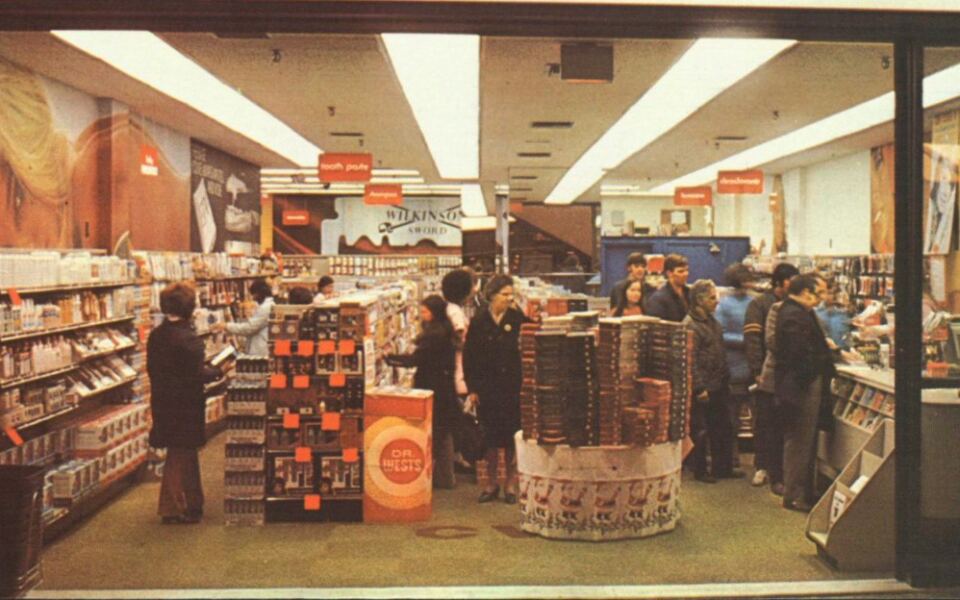
Drugstores in the 1970s were more than places to fill prescriptions. Families stopped at Walgreens, Eckerd, Revco, and other familiar chains for everything from birthday cards and film developing to cheap ice cream.
Some of those names are still around, but others have disappeared completely.
The changes weren’t always obvious. One chain became part of CVS, another survived under its old name in Hawaii, and a California favorite outlived its drugstores thanks to its famous ice cream.
A few regional chains managed to survive while national competitors bought up their rivals. Here’s what happened to 13 drugstore names Americans once saw on nearly every shopping trip, including which ones still exist today.
1. Walgreens
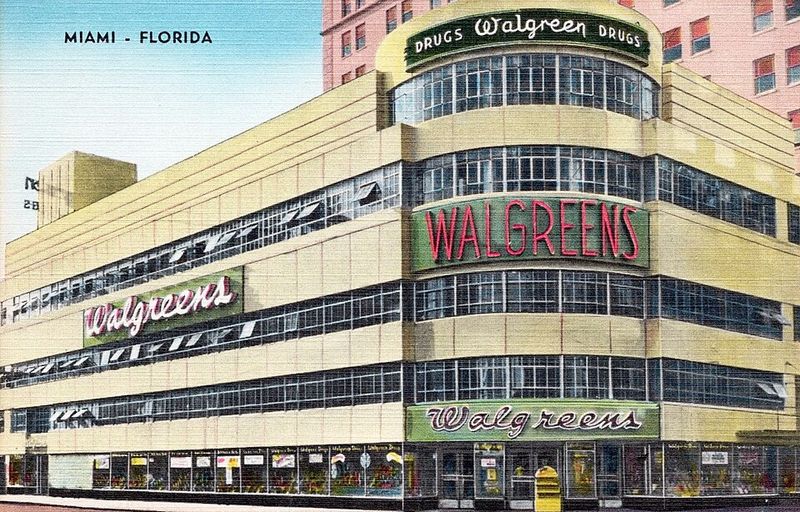
One billion dollars. That was the annual sales mark Walgreens crossed in 1975, proving drugstores had become serious business.
The company was already old news by then. Pharmacist Charles R.
Walgreen Sr. founded it in Chicago in 1901, and the chain helped popularize self-service shopping when it opened its first self-service store in 1952.
During the 1970s, a typical Walgreens sold prescriptions, cosmetics, greeting cards, toiletries, and household basics. Families could knock out a whole errand list in one stop.
Walgreens also avoided being swallowed during the merger waves that wiped out many rivals. It kept growing for decades instead.
Recent years brought bigger changes. The chain closed numerous stores, and in August 2025 it became a privately held company after Sycamore Partners bought it.
Still, the familiar name remains on storefronts across the country. Status check: very much still here.
2. Rite Aid
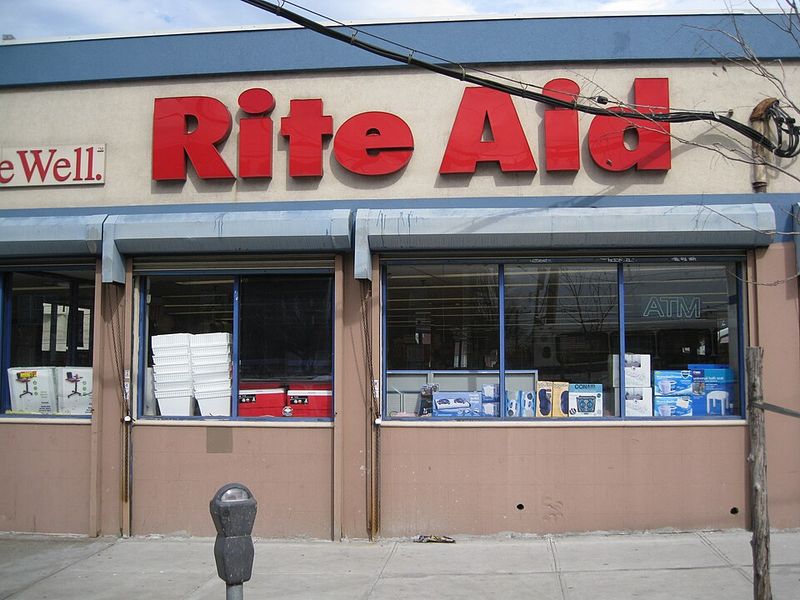
Starting life as Thrift D Discount Center in Scranton, Pennsylvania, in 1962, this company changed its name to Rite Aid in 1968 and never looked back for decades.
Its growth was quick. Rite Aid joined the New York Stock Exchange in 1970, and within ten years of its first store, it had 267 locations in 10 states.
Shoppers came for prescriptions, personal-care items, seasonal goods, and discounted household products. Rite Aid later competed head to head with Walgreens and CVS while buying up smaller chains.
The ending was rough. Heavy debt and thousands of lawsuits led to a Chapter 11 filing in October 2023.
The company emerged privately in 2024, then filed again in May 2025.
Its remaining stores closed that same year. For a name once found in shopping centers nationwide, the exit was surprisingly fast.
Status check: gone.
3. Eckerd
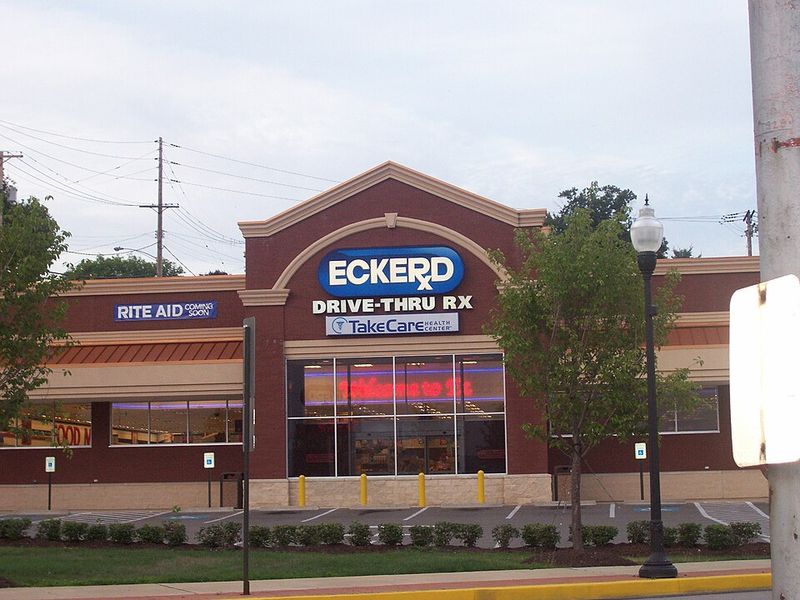
Long before Florida shoppers knew it as a strip-mall staple, Eckerd began as the Erie Cut-Rate Medicine Store in Erie, Pennsylvania, in 1898.
Founder Joseph Milton Eckerd built a business that kept growing through the twentieth century. By 1978, Eckerd sales topped $1 billion.
In the 1970s, Eckerd was a go-to stop across the South and East for prescriptions, toiletries, cosmetics, and film. Remember dropping off a roll and waiting days for prints?
Eckerd handled plenty of those.
JCPenney bought the chain in 1997 and merged its Thrift Drug stores into it. Later, the department store decided to sell.
In 2004, CVS took about 1,269 stores in Florida, Louisiana, and Texas. Jean Coutu Group took about 1,540 more and paired them with Brooks Pharmacy.
Rite Aid bought those in 2007, and the Eckerd name disappeared. Status check: retired.
4. Revco
Here is a name with a hidden meaning. Revco stood for Registered Vitamin Company, founded in Detroit in 1956.
The company moved its headquarters to Cleveland, Ohio, in 1964 and became Revco D.S., Inc. From there, it grew quickly by opening stores and buying smaller competitors.
By 1973, Revco ran about 527 stores. Only Walgreens had more at the time.
Discount prices were the big draw. Revco was also an early tech leader, using centralized pharmacy computers so customers could refill prescriptions at any location.
The late 1980s brought trouble. Revco filed for bankruptcy in 1988 but recovered by 1992.
Independence ended in February 1997, when CVS bought the company for $2.8 billion. Stores across the Midwest and South were converted, one sign at a time.
Status check: absorbed by CVS.
5. Thrifty Drug Stores
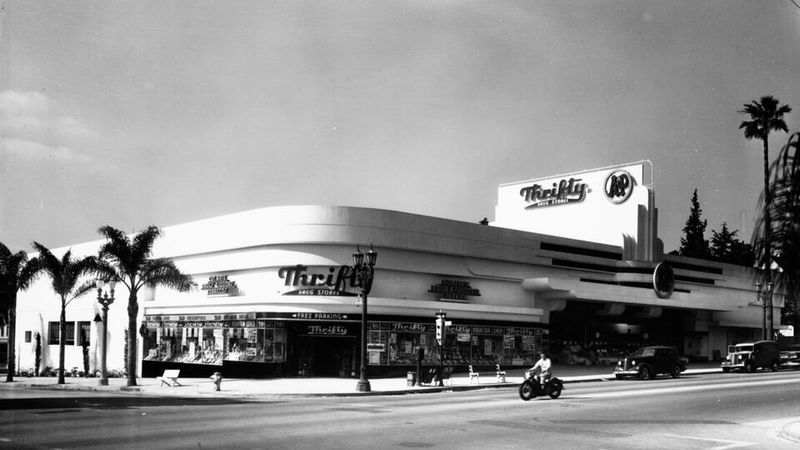
Ask a Southern Californian about Thrifty, and the conversation will likely turn to ice cream before prescriptions.
Brothers Harry and Robert Borun opened Thrifty Cut Rate Drug Stores in Los Angeles in 1929. Ice cream was first sold cheaply to pull people through the door.
In 1940, the company began making its own. That same year brought the famous cylindrical scoop, designed to make serving easier.
By the 1970s, a cheap scoop after school was a local ritual. Thrifty later merged with PayLess Drug Stores, and Rite Aid bought the combined chain in 1996.
The drugstore name faded, but the ice cream stayed in Rite Aid freezers on the West Coast. In July 2025, Hilrod Holdings bought the brand and its El Monte factory.
Quick fact: this Thrifty has no ties to Thrifty White Pharmacy in the Midwest. Status check: stores gone, scoops survive.
6. Longs Drugs
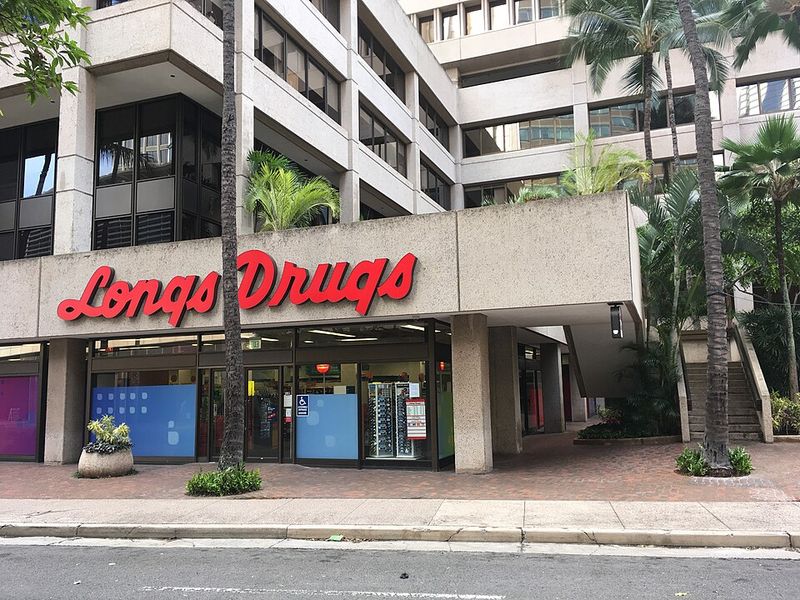
Hawaii kept something the mainland lost. Shoppers on the islands can still walk into a store with the Longs Drugs name above the door.
Brothers Thomas and Joseph Long opened Longs Self-Service Drugs in Oakland, California, in 1938. The chain arrived in Hawaii on March 29, 1954.
By 1970, Longs opened its 50th store. It sold prescriptions, cosmetics, household goods, and seasonal items, and it passed $1 billion in sales by 1982.
CVS bought Longs in October 2008 for about $2.7 billion. Mainland stores became CVS locations.
Hawaii was different. CVS kept the Longs name there because islanders knew it so well and the state sits far from other markets.
Today, roughly 70 Longs drugstores operate across Hawaii under CVS ownership. Status check: alive, but only on the islands.
7. Osco Drug
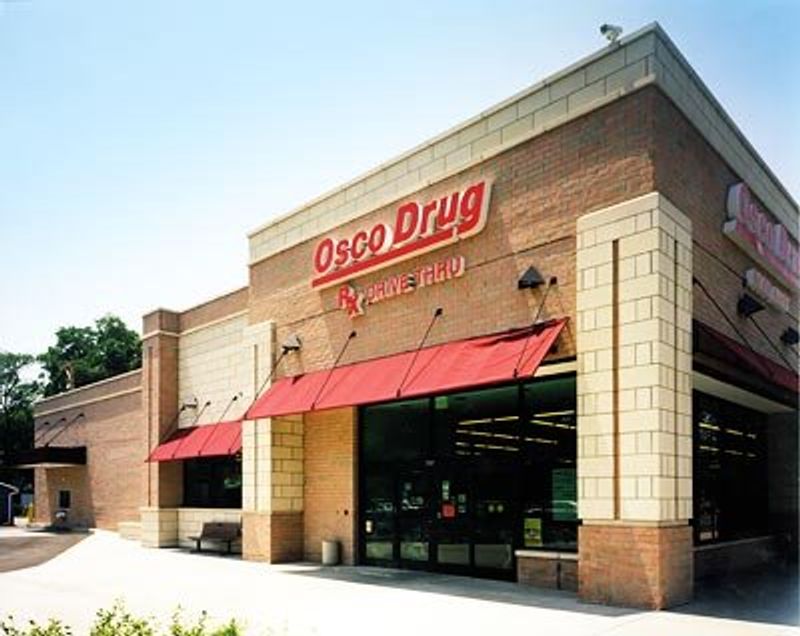
Pairing a pharmacy with a grocery store sounds normal now, but Osco helped make that idea popular.
The chain traces back to the Skaggs family. Lorenzo L.
Skaggs founded Pay-Less Drug in Rochester, Minnesota, in 1937, and the name was later shortened to Osco.
Growth came steadily. Osco had 30 stores in six Midwestern states by 1960 and 168 stores in sixteen states by 1968.
In 1961, The Jewel Companies bought Osco. That deal led to side-by-side Jewel-Osco stores, where shoppers could buy groceries and fill prescriptions in one trip.
When CVS acquired many freestanding Osco stores from Albertsons in 2006, the standalone chain faded. Yet Osco Pharmacy counters still operate inside Jewel-Osco supermarkets around Chicago.
Status check: still around, just parked next to the produce.
8. CVS
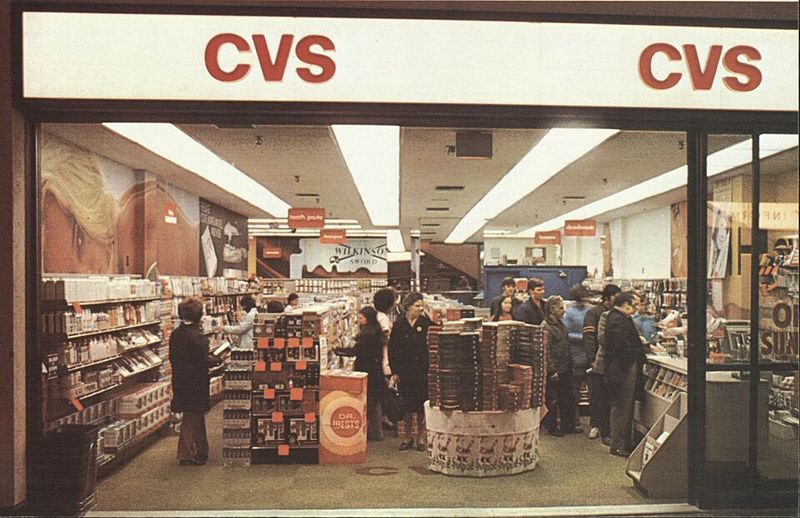
Few people in 1970 would have guessed that a modest New England chain would one day own half its competition.
CVS started in Lowell, Massachusetts, in 1963 under the name Consumer Value Stores. At first it focused on health and beauty products.
Pharmacy counters arrived in 1967 at Rhode Island locations.
By 1970, the company ran about 100 stores in the Northeast. Then, in 1972, it bought 84 Clinton Drug and Discount stores, which pushed it into Indiana and the Midwest.
That buying habit never really stopped. CVS acquired Peoples Drug in 1990 and Revco in 1997, turning former rivals into its own branches.
Today, CVS ranks among the largest pharmacy retailers in America. Its story is a good reminder that in retail, growing fast often means purchasing the store across the street.
Status check: still standing, and much bigger.
9. Peoples Drug
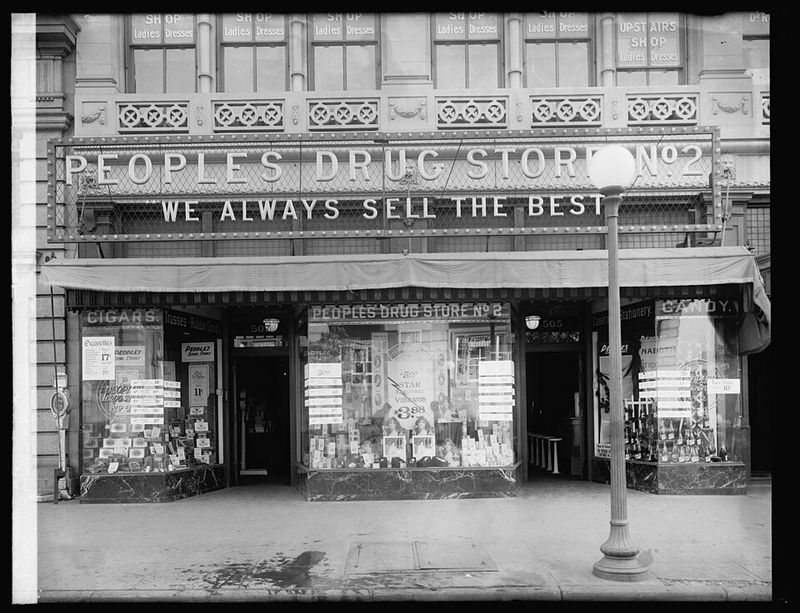
In and around the nation’s capital, Peoples Drug was practically part of the street grid.
Malcolm Gibbs founded the company in Alexandria, Virginia, in 1905. By 1970, Peoples had 252 stores in Washington, D.C., and several states, with sales of $220 million.
Customers relied on it for prescriptions, cosmetics, greeting cards, and household items. In Maryland and Virginia suburbs, the stores were everyday landmarks for decades.
The independent run ended in late 1990. CVS bought Peoples for $330 million and began switching locations to its own brand.
The final name change came in May 1994. After nearly ninety years, the Peoples sign was officially retired.
Plenty of people raised in the Mid-Atlantic still call any drugstore by its old name. Status check: gone, though not forgotten by locals.
10. Hook’s Drug Stores
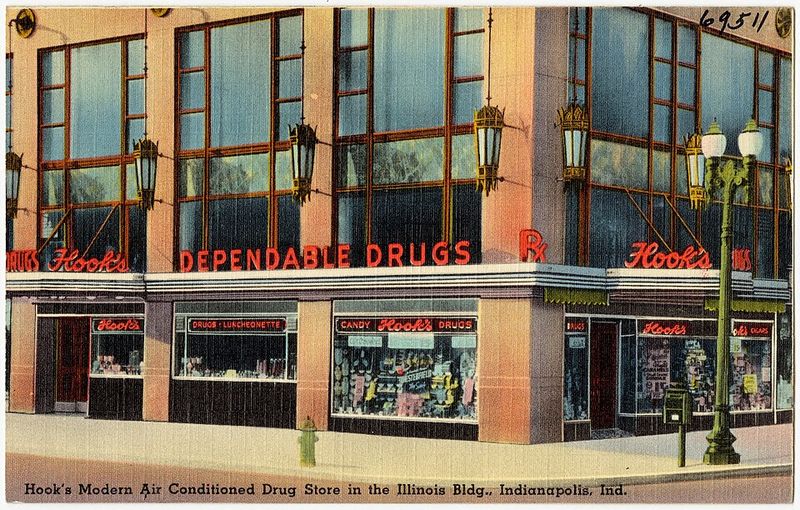
Indiana has a museum dedicated to this chain, which says a lot about how much Hoosiers liked it.
John A. Hook founded the business in Indianapolis in October 1900.
It grew into a regional chain with stores in Indiana, Illinois, and Ohio.
By 1978, Hook’s ran about 250 stores. Prescriptions, household goods, and seasonal merchandise kept customers coming back.
Ownership then bounced around. Kroger bought Hook’s in 1985 and sold it a year later.
It became Hook-SupeRx, which Revco acquired in 1994.
When CVS bought Revco in 1997, the old Hook’s stores became CVS locations.
Two pieces survive. Hook’s Apothecary, a compounding pharmacy founded in 1999 by great-grandchildren of the founder, operates in Evansville.
The Hook’s museum, opened in 1966, sits at the Indiana State Fairgrounds. Status check: chain gone, legacy preserved.
11. Bartell Drugs
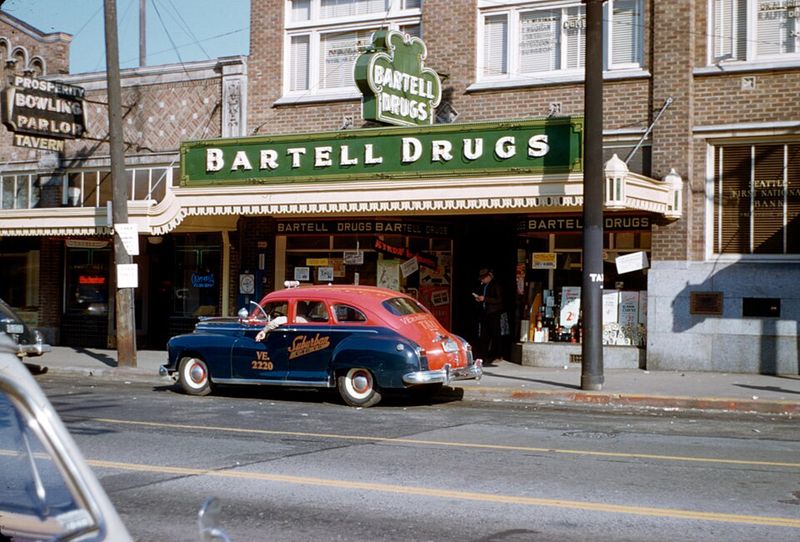
Seattle had its own hometown pharmacy, and it lasted 135 years.
George H. Bartell Sr. founded Bartell Drugs in 1890.
For a long stretch, it held the title of the oldest family-owned drugstore chain in the nation.
In the 1970s, Bartell was still fairly small, with 17 stores by the end of the decade. It modernized during those years by updating layouts and adding services such as film development.
Locals liked that it felt homegrown compared with national chains. That loyalty kept it going for generations.
Rite Aid bought Bartell in 2020 for $95 million and kept the name on the stores. Then Rite Aid’s financial collapse pulled Bartell down too.
CVS took over remaining sites as Rite Aid liquidated, and the last Bartell locations closed in late September 2025. Status check: closed.
12. Kinney Drugs
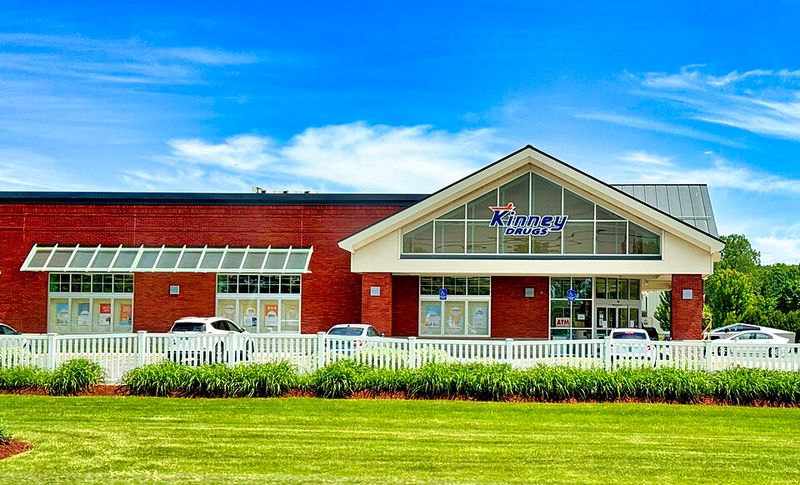
Small towns turned out to be a smart bet. Kinney Drugs proved that a chain could thrive without chasing big cities.
Pharmacist Burt Orrin Kinney opened the first store in Gouverneur, New York, in 1903. The company spread across northern and central New York and later into Vermont.
For 1970s shoppers in the region, Kinney meant prescriptions, toiletries, greeting cards, and other basics close to home.
While many regional chains were sold off, Kinney stayed independent. Its focus on serving small communities set it apart from national giants.
Here is an unusual detail. Since 2008, Kinney has been 100 percent employee-owned, which is rare in the drugstore world.
Today the chain runs about 97 locations across New York and Vermont. Status check: still independent and still busy.
13. Lewis Drug
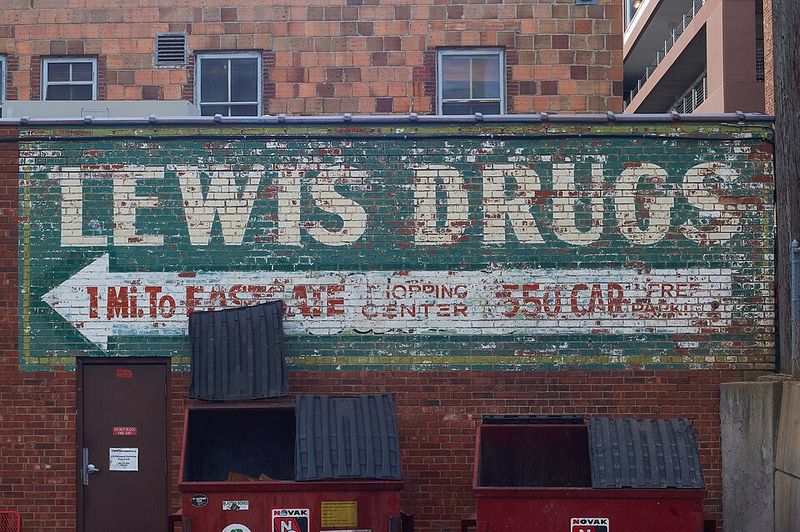
Eighty-plus years of family ownership is a rare feat in retail, and Lewis Drug pulled it off.
Jesse Lewis and George Frederickson founded the company in Sioux Falls, South Dakota, in 1942. From the start, it mixed pharmacy services with a wide range of general merchandise.
In the 1970s, that mix made Lewis handy for busy families. Prescriptions, household supplies, and personal-care items were all on the same trip.
The chain grew to 61 locations across South Dakota, Iowa, and Minnesota. It stayed in family hands instead of selling to CVS or Walgreens.
That changed in August 2025, when Lewis Drug became part of Sanford Health, a large regional health system.
Stores still serve customers, but the independent, family-run chapter is over. Status check: operating, under new ownership.
Share this story