Somewhere in eastern Oklahoma, a quiet stretch of land along a rural highway holds the remnants of one of the most sophisticated prehistoric civilizations ever to rise on North American soil. Most people speed right past without a second glance, completely unaware that the gentle rises in the earth beside them were once the heart of a powerful trading culture.
Spiro Mounds Archaeological Center sits largely unnoticed, yet its story stretches back nearly a thousand years and touches the edges of civilizations that rivaled anything else on the continent. If you have ever wondered what ancient America truly looked like, this overlooked Oklahoma landmark might just rearrange everything you thought you knew.
Where Spiro Mounds Archaeological Center Stands
Tucked into the Arkansas River valley of eastern Oklahoma near the small town of Spiro, this archaeological center occupies a stretch of bottomland that once hummed with activity. The site sits at 18154 1st St, Spiro, OK 74959, reachable by phone at +1 918-962-2062, and managed through the Oklahoma Historical Society.
Its web presence at okhistory.org/sites/spiromounds gives visitors a preview before making the drive.
Geographically, the location makes perfect sense. River valleys provided fertile ground, reliable water, and natural trade corridors, and the people of Spiro exploited all three advantages masterfully.
The Arkansas River nearby served as a highway connecting this community to distant cultures across the continent.
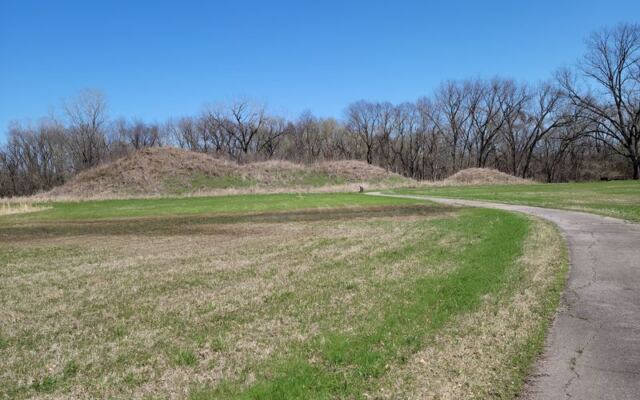
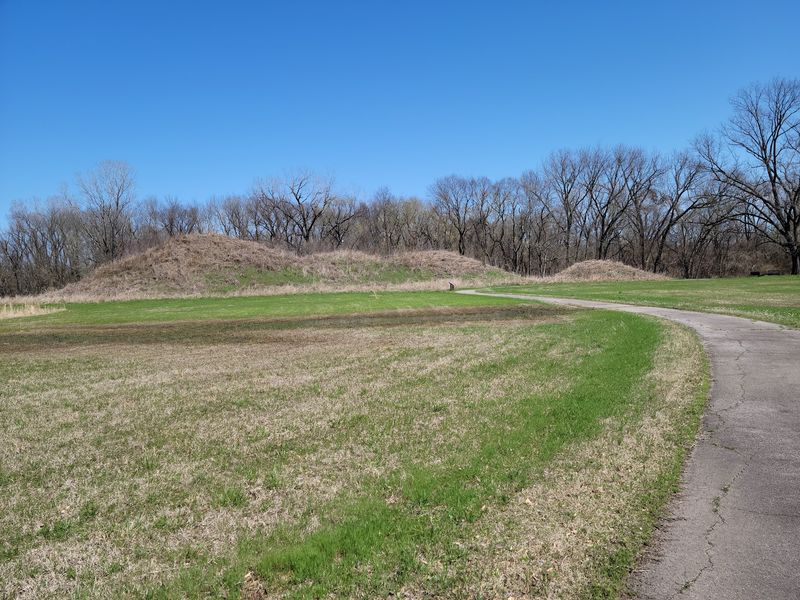
Approaching from the highway, nothing about the landscape screams ancient wonder. Low earthen rises dot a grassy field, and a modest visitor center marks the entrance.
First impressions can be deceptive, though, because what lies beneath those unassuming mounds represents one of the most archaeologically significant sites in all of North America. Few places in Oklahoma carry this much concentrated history per square foot.
The Civilization That Built These Mounds
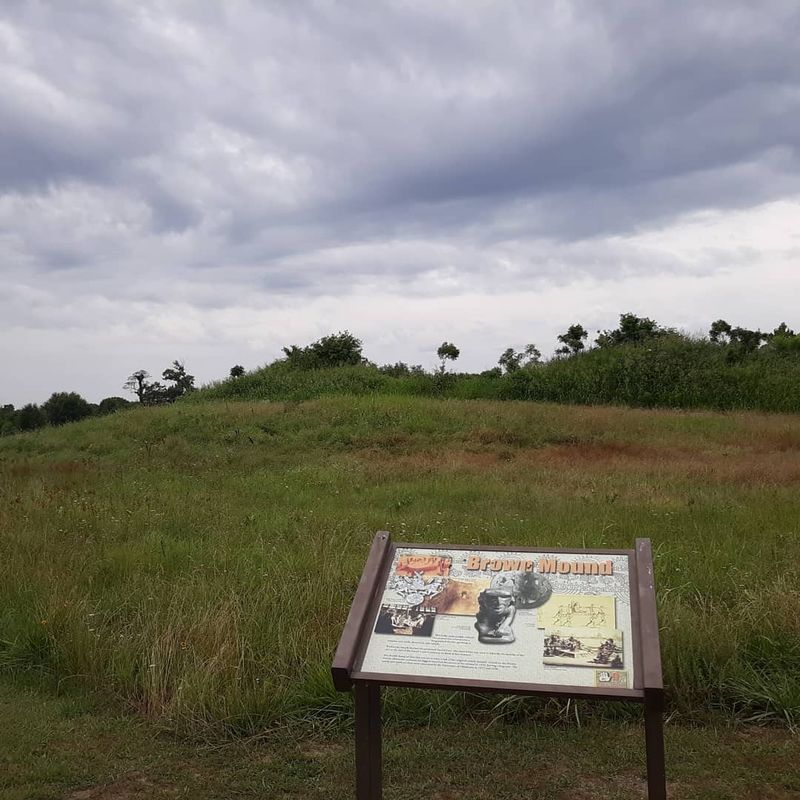
Around 900 AD, a culture archaeologists call the Caddoan Mississippian tradition began flourishing at this bend of the Arkansas River. The Spiro people, as they are commonly known, were not a simple hunter-gatherer society.
They were sophisticated builders, traders, and spiritual leaders whose influence stretched from the Gulf Coast to the Great Lakes.
At the peak of their power, between roughly 1000 and 1450 AD, Spiro functioned as a major ceremonial and trade hub. Copper from the Great Lakes, shells from the Gulf of Mexico, and exotic goods from across the continent all passed through here.
The sheer geographic reach of their trade network still astonishes researchers today.
Then, around 1450 AD, the community appears to have dispersed. No single catastrophic event explains the departure.
Scholars suggest a combination of environmental stress, shifting trade routes, and social reorganization gradually unraveled the settlement. What they left behind, buried in the mounds and scattered across the floodplain, became one of the richest archaeological discoveries ever unearthed in North America.
Understanding who they were requires sitting with the mystery a little longer than most roadside stops allow.
Craig Mound and Its Extraordinary Significance
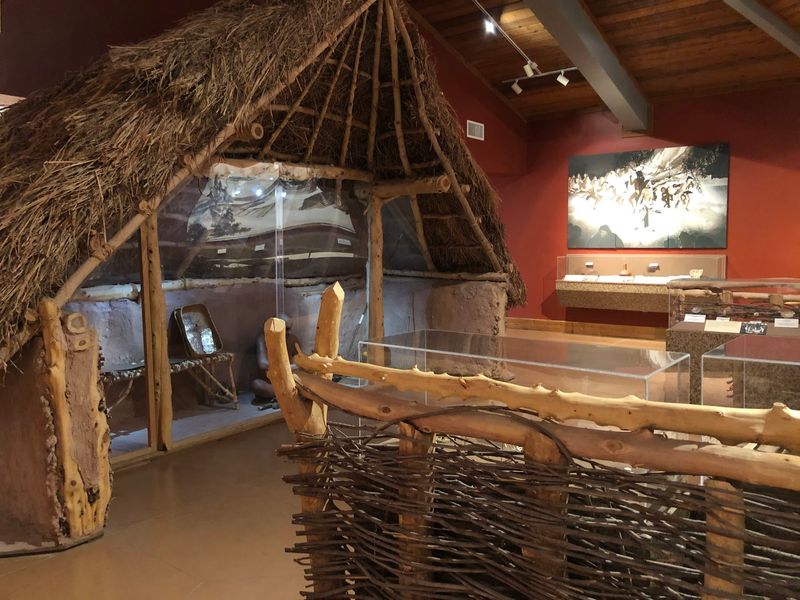
Of all the mounds at the site, Craig Mound carries the heaviest historical weight. Known also as the Great Mortuary, it served as the primary burial location for the Spiro elite and held an almost unimaginable concentration of ceremonial objects.
When looters broke into it during the 1930s before formal protections existed, the archaeological world lost irreplaceable context forever.
What the looters found inside a hollow chamber within Craig Mound stunned even seasoned collectors. Elaborately engraved shell cups, copper plates, carved wooden objects, and beaded regalia spilled out in quantities that seemed impossible for a single site.
Many of those objects ended up scattered across private collections and distant museums before any formal excavation could document them properly.
Visitors today walk near Craig Mound and can appreciate its scale, though the interior is no longer accessible. The mound’s story is told in the visitor center with careful detail, and the weight of what was lost, and what was saved, hangs over the exhibit space in a way that feels genuinely sobering.
One reviewer described it as a meditative experience, and that framing fits perfectly for anyone willing to slow down and absorb what this earthen rise once contained.
Brown Mound and the Temple District
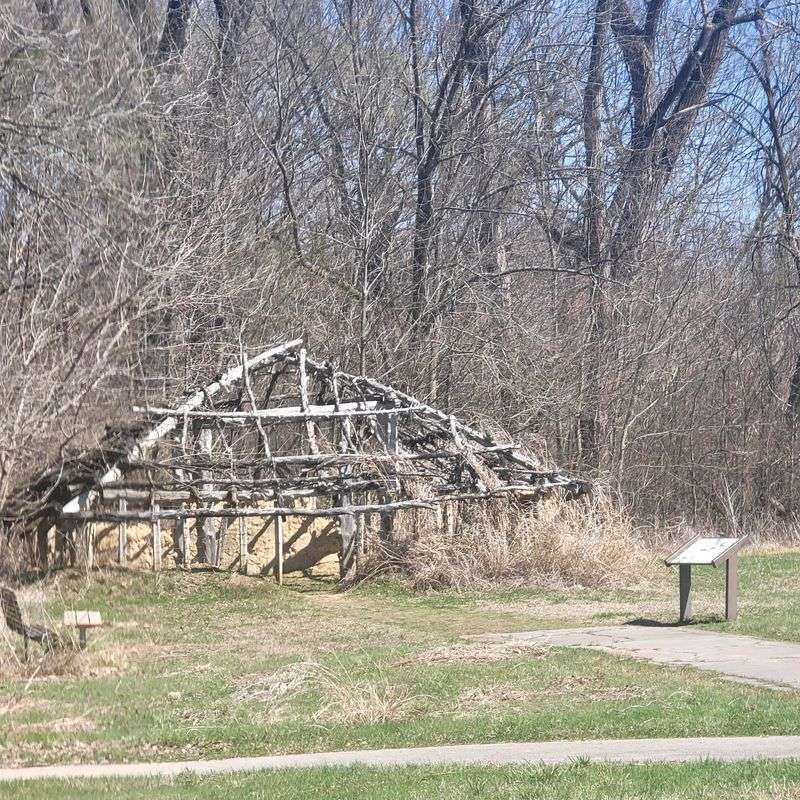
Not every mound at Spiro served the same purpose. Brown Mound, the site’s temple mound, anchored the ceremonial and political center of the community.
Platform mounds like this one supported structures used for ritual, governance, and elite residence, elevating both literally and symbolically those who held power within Spiro society.
The area surrounding Brown Mound is believed to have housed the homes of Spiro’s most prominent families. Archaeology across the broader site has revealed post holes, hearths, and storage features that paint a picture of a densely organized settlement.
Walking through that zone today, you are essentially strolling through what was once the neighborhood of an ancient ruling class.
Visitors who take the longer trail get a fuller sense of how the mounds relate spatially to one another. Seeing Brown Mound and Craig Mound in the same landscape helps the urban logic of the old settlement click into place.
The ceremonial district, the burial precinct, the residential areas: all of it was deliberately arranged across this floodplain with purpose and intention. That spatial intelligence is one of the most quietly impressive things about the entire site.
The Shell Carvings That Set Spiro Apart
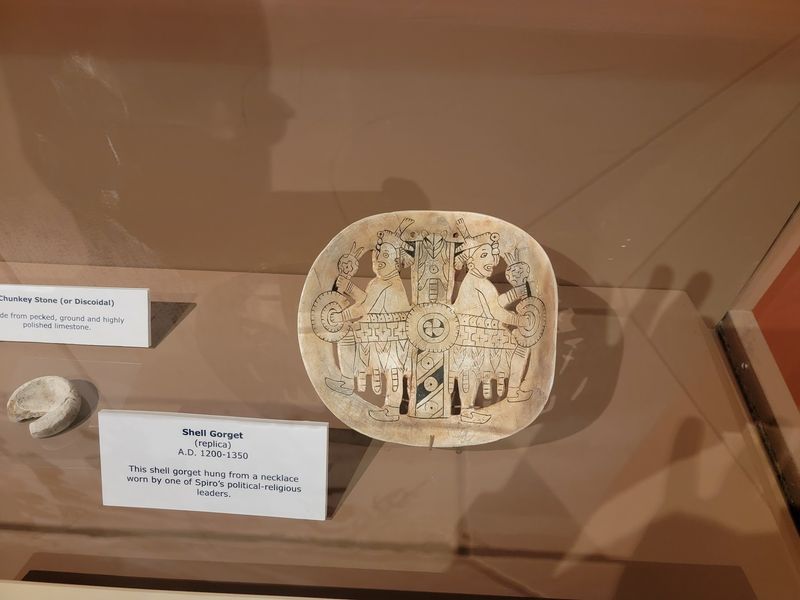
Among all the objects recovered from Spiro, the engraved shell ornaments stand in a category of their own. Artisans at Spiro carved marine shells, primarily large whelks sourced from the Gulf of Mexico, into cups, gorgets, and pendants decorated with figures of warriors, falcons, serpents, and supernatural beings.
The precision and artistry involved is staggering even by contemporary standards.
The visitor center holds volumes of detailed drawings documenting these shell carvings, and several reviewers specifically highlighted those books as a highlight of the museum experience. Because many actual artifacts are currently covered under federal repatriation law, the illustrated records become the primary window into the visual world of Spiro’s craftspeople.
Flipping through those pages feels like reading an ancient illustrated manuscript.
Scholars have used the imagery on Spiro shells to reconstruct elements of the Southeastern Ceremonial Complex, a shared religious and symbolic system that connected many Mississippian cultures across the continent. Spiro was not a peripheral outpost of this tradition.
By all evidence, it was one of the tradition’s most creatively vibrant centers. The shell carvings alone could justify a full afternoon of study for anyone with even a casual interest in ancient American art.
The Visitor Center and Museum Exhibits
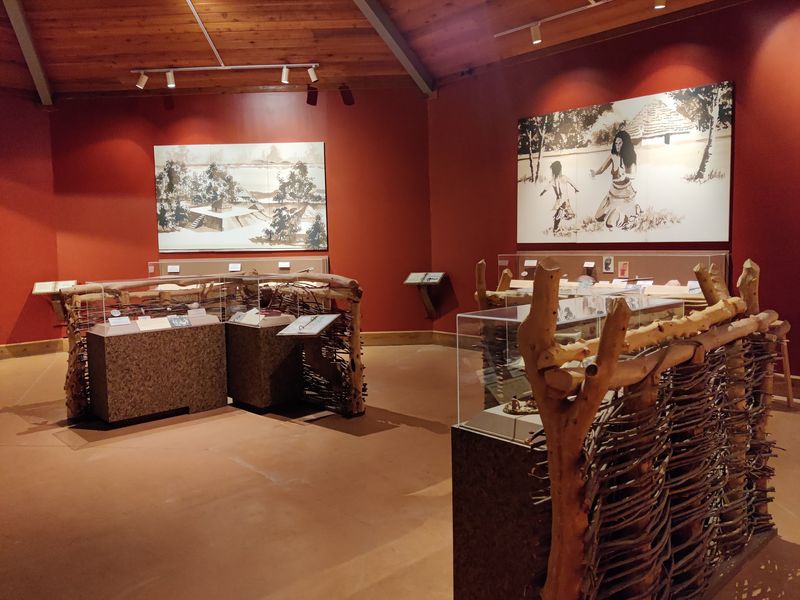
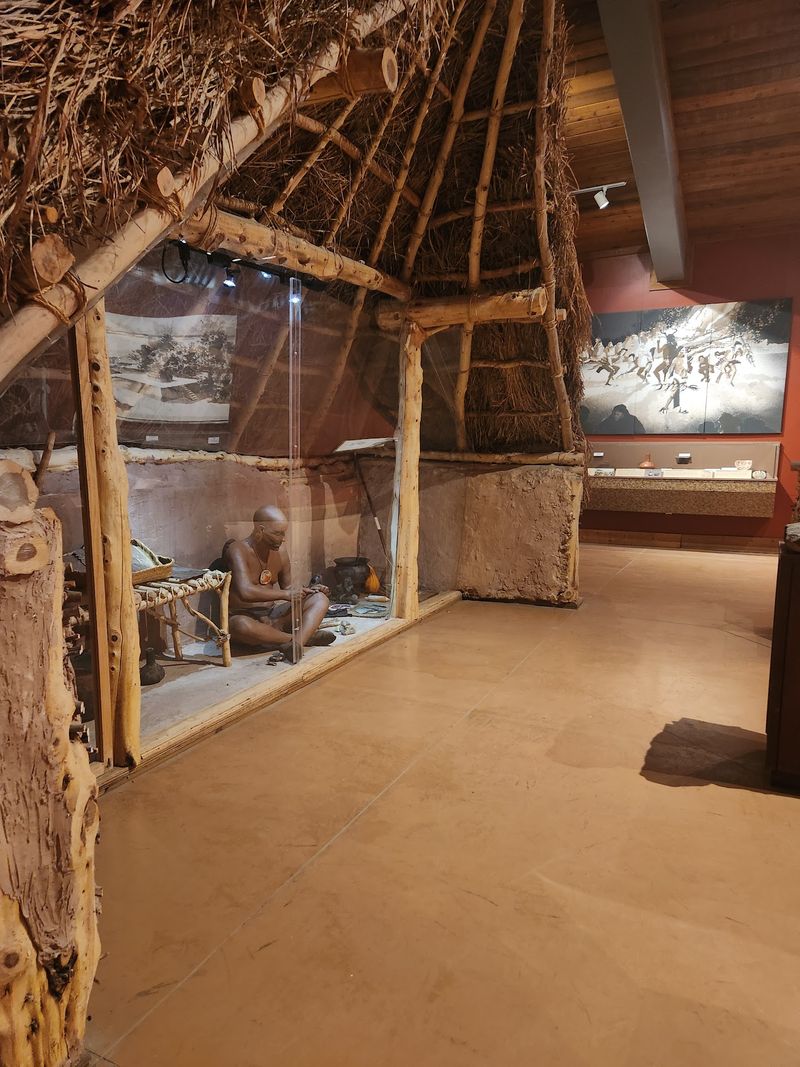
Stepping inside the visitor center at Spiro Mounds feels like crossing a threshold from an ordinary Oklahoma afternoon into something much older and stranger. The climate-controlled space offers welcome relief on warm days and houses exhibits that range from artifact replicas to detailed interpretive panels covering the full arc of Spiro’s history.
The presentation is earnest and educational even if the physical space is modest.
Currently, many original artifacts in the display cases are covered as a result of federal repatriation laws that govern the treatment of Native American cultural materials. This situation has frustrated some visitors who made long drives expecting to see physical objects.
That frustration is understandable, though the shell ornament illustration books and interpretive materials that remain available are genuinely impressive in their own right.
A $1.5 million renovation project is actively improving the center, with upgrades to parking, trails, and interpretive signage all in progress. Admission has been waived during portions of the renovation period, making it an accessible stop even for spontaneous visitors.
Reviewers consistently praise the quality of information presented and the care taken to represent Spiro’s story accurately. For a site of this significance, the center punches well above its apparent weight.
Knowledgeable Staff Who Bring the Story to Life
A recurring theme across visitor experiences at Spiro Mounds is the quality of the people working there. Reviewers mention staff members by first name and describe conversations that went far beyond standard scripted tours.
One director in particular, mentioned repeatedly in visitor accounts, has a reputation for spending as much time as visitors need answering questions and sharing context that no sign or exhibit panel could fully capture.
That kind of human connection transforms an archaeological site from a collection of grass-covered hills into a living story. Hearing someone explain the spatial logic of the mound layout, or describe what a particular shell motif might have meant to the people who carved it, rewires how you see the whole landscape.
Visitors who engaged with staff consistently rated their experience higher than those who simply walked the trails alone.
The guided solstice walks organized by site staff have drawn particular praise. Watching the winter solstice sunset from the mound site, with a knowledgeable guide narrating the astronomical and ceremonial significance of the alignment, is exactly the kind of immersive experience that stays with you.
Reviewers who attended those events described them as unexpectedly moving, which is high praise for what looks from the outside like a modest Oklahoma state park.
The Trails and What They Reveal
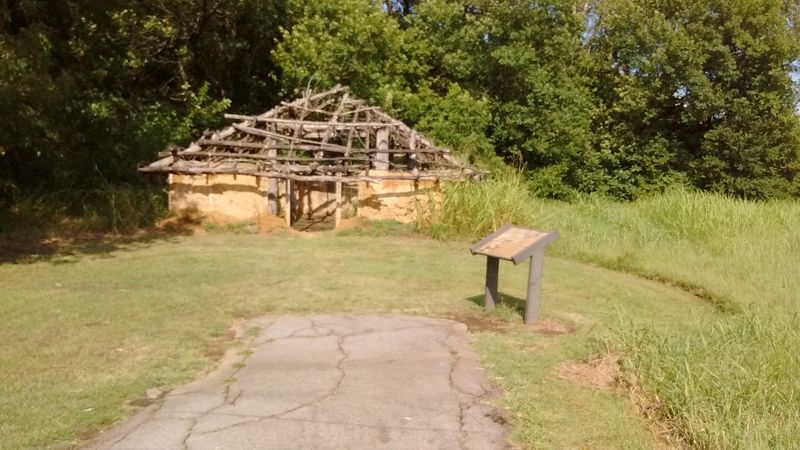
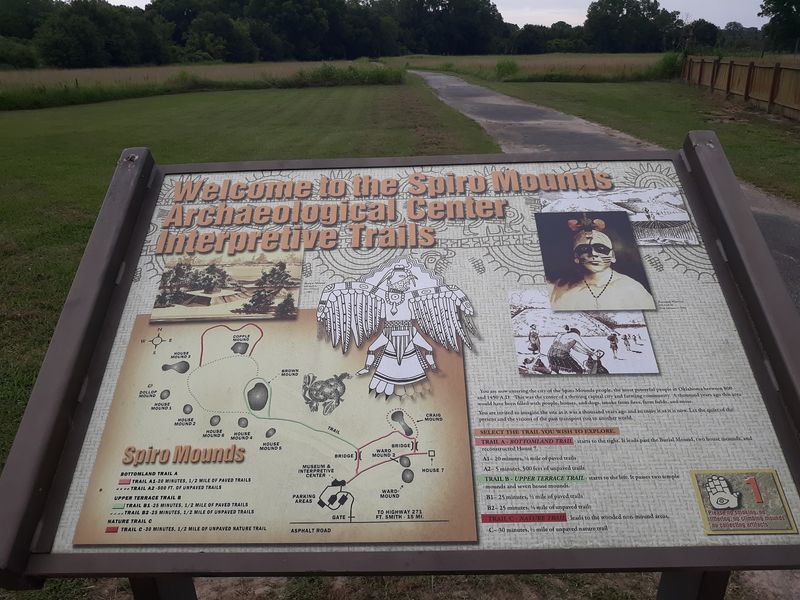
Getting out onto the trails at Spiro Mounds is where the visit shifts from informational to genuinely atmospheric. Two trail options serve different energy levels: a shorter loop of roughly one mile and a longer route stretching approximately two miles.
Both are described by visitors as easy walks with relatively flat terrain, making the site accessible to a wide range of ages and fitness levels.
Along the trails, interpretive signs explain what each mound was used for and how the landscape has changed since the site’s occupation. Some of those signs are currently weathered and difficult to read, though the ongoing renovation project is addressing that issue with new replacements.
Even with faded signage, the physical experience of walking among the mounds carries its own quiet power.
One reviewer captured the feeling well by noting how easy it becomes to visualize the area as a thriving prehistoric settlement once you are standing in it. The scale of the mounds, the openness of the floodplain, and the Arkansas River visible in the near distance all combine to make the ancient landscape feel oddly present.
Walking these trails on a winter morning after a light snowfall, as one visitor described, turns the whole experience into something close to meditative.
The Solstice Walks and Seasonal Events
Astronomy was not incidental to the Spiro people. Researchers believe the placement and orientation of certain mounds at the site reflect deliberate alignments with solar events, particularly solstices.
That connection between ancient architecture and celestial cycles is what makes the guided solstice walks offered by the center such a compelling way to experience the site.
Visitors who attended the winter solstice sunset tour led by the site director came away describing it as one of the most memorable Oklahoma experiences they had encountered. Watching the sun drop toward the horizon from a vantage point that was intentionally chosen by people a thousand years ago creates a kind of temporal vertigo that is hard to replicate anywhere else.
The astronomical framing gives the landscape a dimension that daylight trail walking alone cannot provide.
Checking the site’s calendar or calling ahead at +1 918-962-2062 before visiting is worthwhile specifically to find out whether any upcoming events coincide with your trip. The center’s website at okhistory.org/sites/spiromounds lists programming details as they become available.
Even if no special event lines up, knowing that these walks exist reframes how you look at the mounds during a standard visit, because suddenly every sight line feels intentional.
Artifacts Scattered Across Other Museums
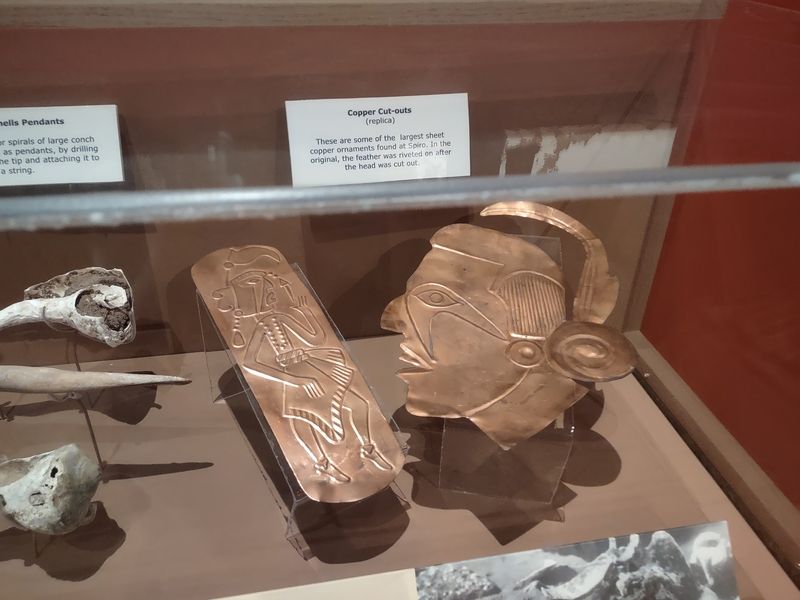
One of the stranger aspects of visiting Spiro Mounds is knowing that some of the most spectacular objects ever recovered from the site are not here at all. The looting of Craig Mound in the 1930s dispersed thousands of artifacts into private hands and eventually into museum collections across the country.
Seeing the mounds themselves requires coming to Spiro, but seeing the objects sometimes means traveling to institutions in other states.
Several reviewers mentioned having encountered Spiro artifacts in other museums before visiting the site itself, and described the experience of then standing at the mounds as a kind of emotional closing of a loop. Knowing where an object came from changes how you perceive it, and knowing what the site looked like changes how you understand the object.
The two halves of that experience complete each other.
Federal repatriation laws passed in 1990 have complicated the display situation at the center itself, with many artifacts currently covered or removed from public view as tribes work through the legal and cultural process of reclaiming ancestral materials. That process is ongoing and reflects a broader national reckoning with how Indigenous heritage is held and represented.
For visitors, it means some displays are limited, but the larger story of why that is happening is itself worth understanding.
Honest Visitor Expectations Before You Go
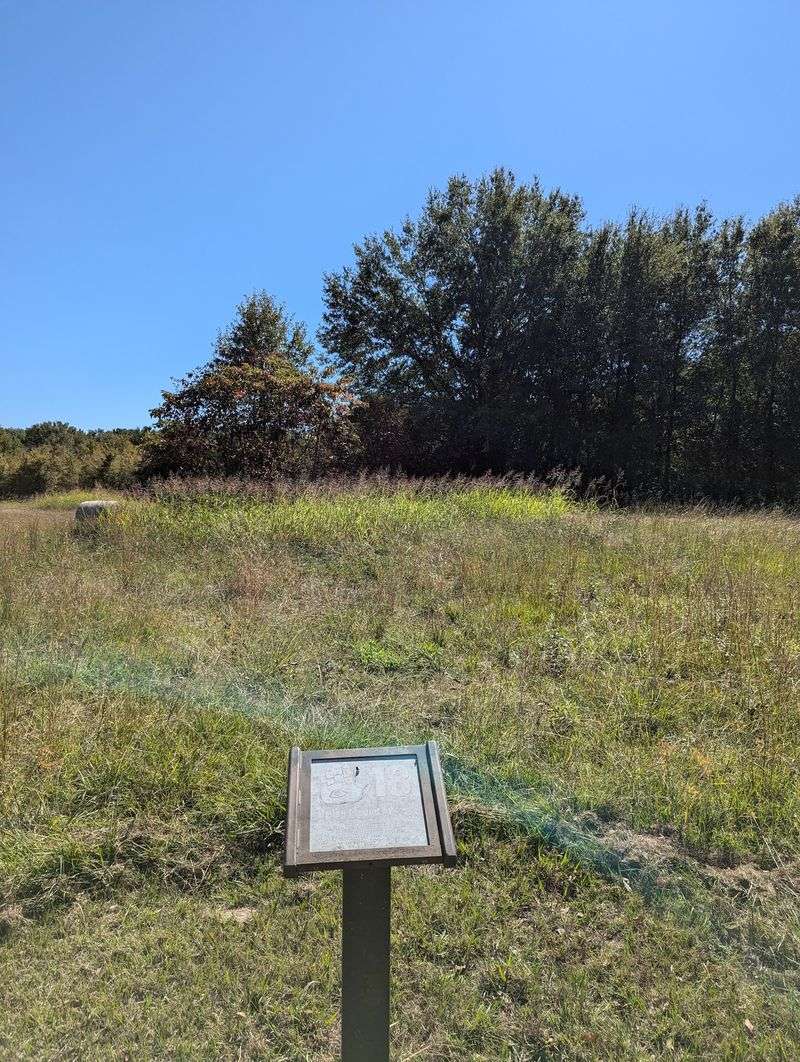
Managing expectations before arriving at Spiro Mounds makes for a much better visit. Reviewers are divided, and the split tends to fall along a clear line: visitors who came for a physical artifact experience and found displays covered left disappointed, while visitors who came for a landscape walk and historical immersion left genuinely moved.
Knowing which kind of visitor you are before making the drive helps calibrate the experience.
The site is openly in the middle of a significant renovation. Trails have had accessibility limitations during parts of the process, some outdoor signage remains faded, and exhibit cases have been partially covered.
A $1.5 million investment is actively addressing all of these issues, but construction timelines are what they are. Calling ahead at +1 918-962-2062 to confirm current conditions is a practical step worth taking.
What the site does consistently deliver, renovation or not, is a genuine sense of place. Walking ground that was once the center of a continent-spanning trade civilization is not something you can replicate at a replica attraction or a history museum.
The realness of the landscape, even in its current transitional state, is what keeps enthusiastic reviewers so enthusiastic. Come for the ground itself, and let the exhibits be a bonus.
Hours, Admission, and Getting There

Planning a visit to Spiro Mounds requires paying attention to the operating schedule, because the center keeps limited hours and is closed several days each week. Currently, the site is open Tuesday through Saturday from 9 AM to 4 PM.
Sunday and Monday are closed, so arriving on those days means finding the gates shut. Building the visit around a weekday or Saturday morning gives the most flexibility.
Admission pricing has fluctuated during the renovation period. Some reviews from recent months mention a $10 entrance fee, while others from slightly earlier indicate admission was being waived during active renovation phases.
Confirming current pricing by calling +1 918-962-2062 or checking okhistory.org/sites/spiromounds before the visit avoids any surprises at the gate.
Getting there from the highway is straightforward. Spiro, Oklahoma sits in Le Flore County in the far eastern part of the state, not far from the Arkansas border.
The address at 18154 1st St drops cleanly into any navigation app. The drive through eastern Oklahoma’s rolling hills and river bottomlands is pleasant in its own right, and the rural character of the approach actually enhances the sense of discovery when the site comes into view.
Budget at least two to three hours to do the place justice.
Why This Overlooked Oklahoma Site Deserves Your Attention
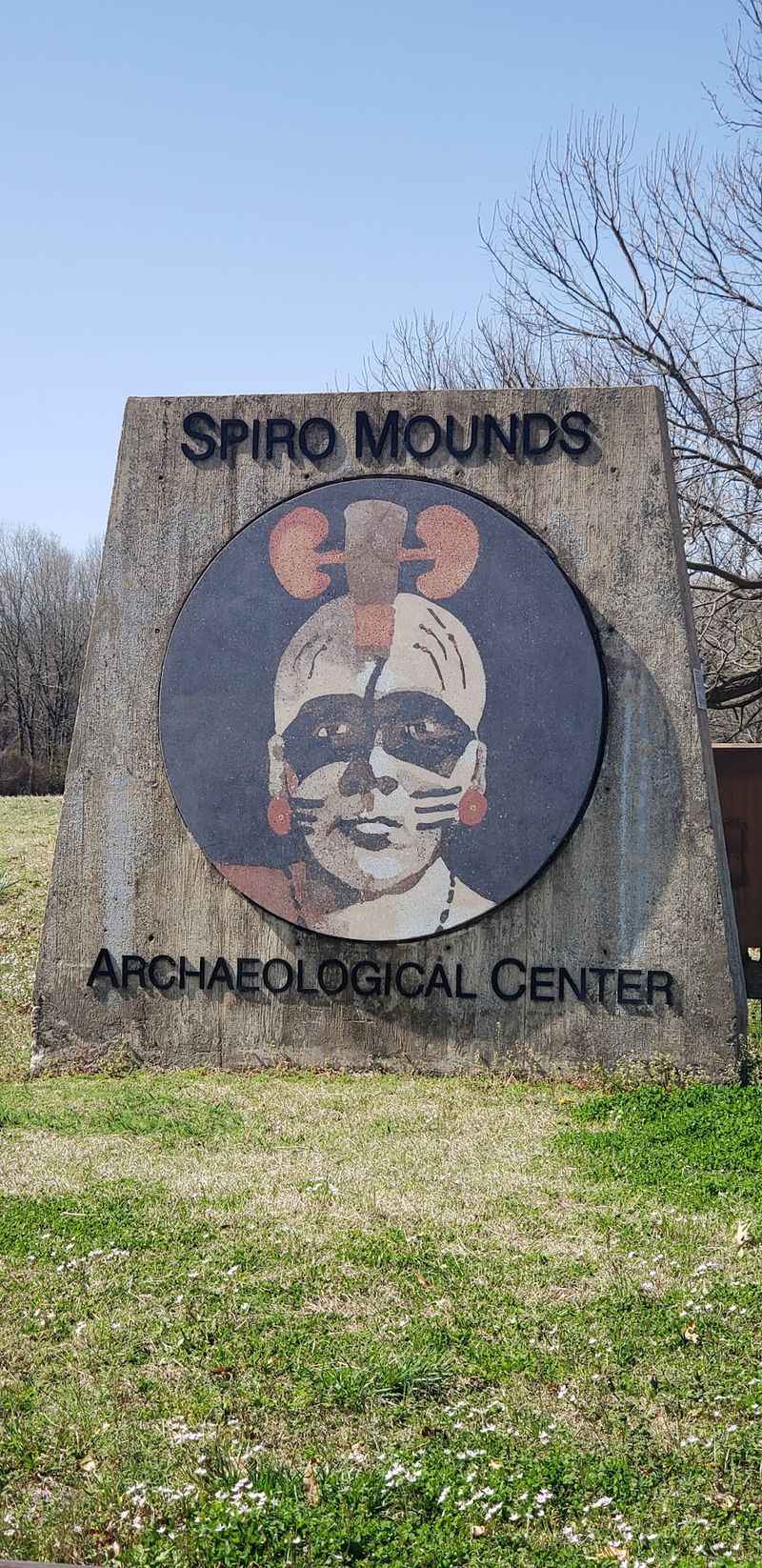
Places like Spiro Mounds exist in an awkward category: too important to ignore, too understated to demand attention. Nothing here announces itself the way a canyon wall or a famous landmark does.
The mounds are quiet. The visitor center is modest.
The parking lot is small. But the weight of what happened here over five centuries of continuous occupation is genuinely extraordinary, and that weight rewards visitors who arrive ready to feel it.
Compared to better-known Mississippian sites like Cahokia in Illinois, Spiro remains remarkably off the radar for most American travelers. That obscurity is partly a product of its rural Oklahoma location and partly a result of the looting that stripped the site of its most visually dramatic objects before formal archaeology could document them.
What remains is still substantial, and the scholarly understanding of the site has only deepened in recent decades.
Bringing children, grandchildren, or curious friends to a place like this plants something that a textbook cannot. Standing on ground where a sophisticated, creative, trade-connected civilization once thrived, and realizing that most people driving past on the highway have no idea it exists, is its own kind of education.
Spiro Mounds is the kind of Oklahoma secret that deserves to be shared a little more widely than it has been.
Share this story