Anuradhapura was once the beating heart of a mighty kingdom in Sri Lanka. For about 1,300 years, kings ruled here, monks prayed here, and engineers built wonders.
Then the jungle crept in and swallowed much of it. Today the ruins are open to explore, and they are full of surprises.
The Sacred Bodhi Tree
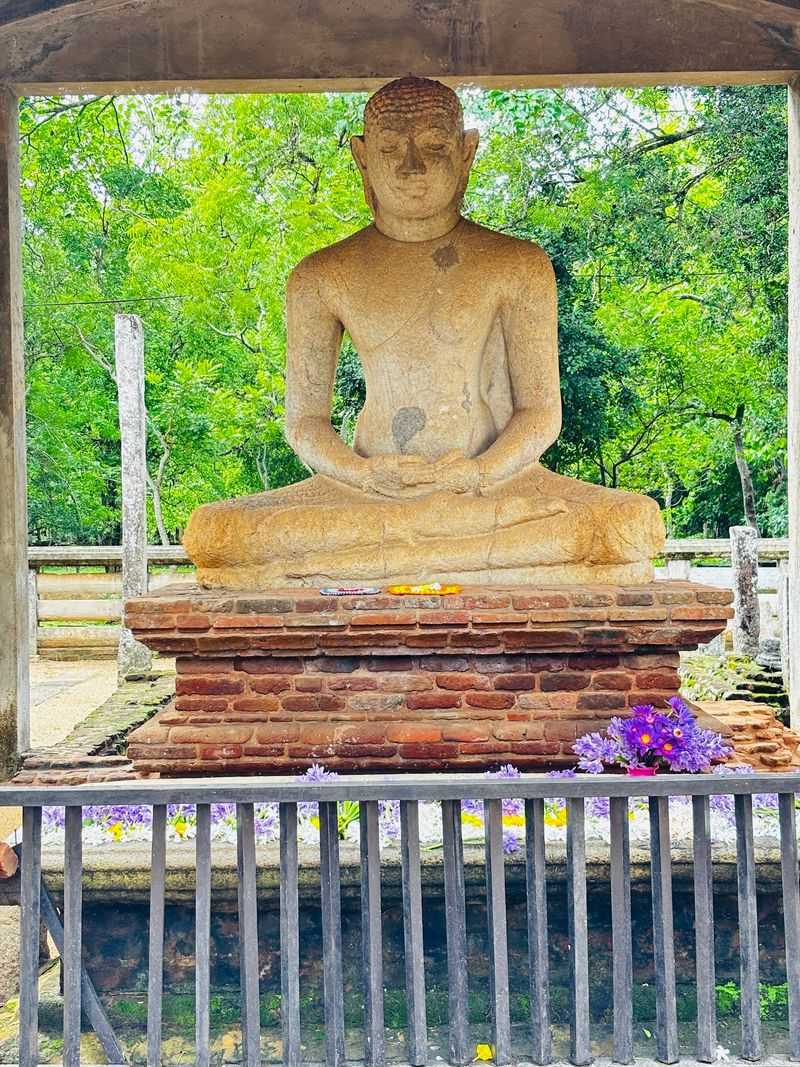
Here is a quirky fact to start: this tree has a birth certificate of sorts. Records say it was planted in 288 BCE, which makes the Sri Maha Bodhi the oldest tree with a known planting date in the world.
It grew from a cutting of the very tree in India where the Buddha found enlightenment. A princess named Sanghamitta carried the sapling across the sea.
Kings guarded it, and monks have tended it ever since.
Walk up to the site and you will see golden railings, fluttering flags, and pilgrims dressed in white. Many carry jasmine flowers and sit quietly in the shade.
The mood is calm and gentle, even when the crowds arrive.
Remember that this is a living place of worship. Take off your shoes and hat before entering the terrace.
Dress modestly, with shoulders and knees covered, and speak softly. Early morning is the best time to visit, when the air is cool and the chanting drifts through the branches.
You do not need to be religious to feel something special here.
Ruwanwelisaya Stupa
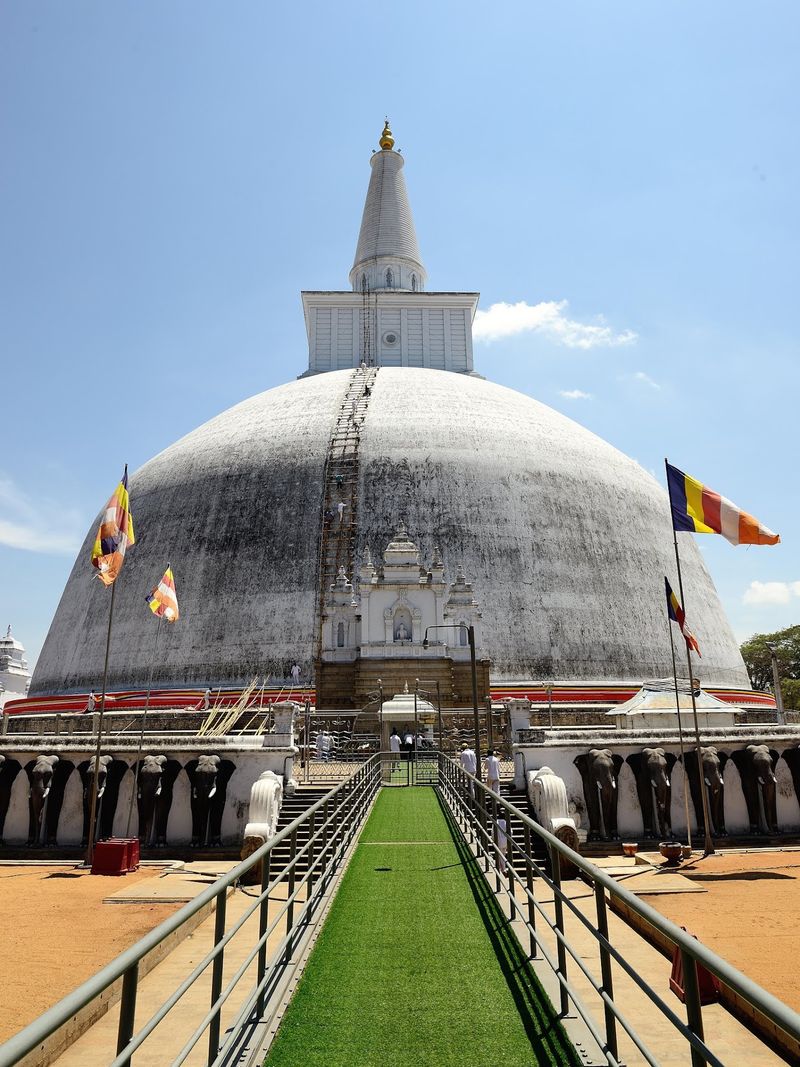
Blinding white under the tropical sun, Ruwanwelisaya is hard to miss. You may want sunglasses.
The great dome rises about 55 meters high and glows against the blue sky.
King Dutugemunu began building it around 140 BCE, after he united the island. He did not live to see it finished, but his brother completed the work.
The stupa is said to hold sacred relics of the Buddha.
Look at the wall around the base and you will find rows of stone elephants. They seem to hold up the whole platform with their heads.
Each one is carved with care, and the line stretches far around the stupa.
Pilgrims walk clockwise around the dome, often at dusk, carrying lamps and flowers. Join them if you like, but keep your pace slow.
The paved grounds can burn bare feet at midday, so visit in the late afternoon. A thin cloth to walk on can save you from hopping about.
Jetavanaramaya, the Giant of Bricks
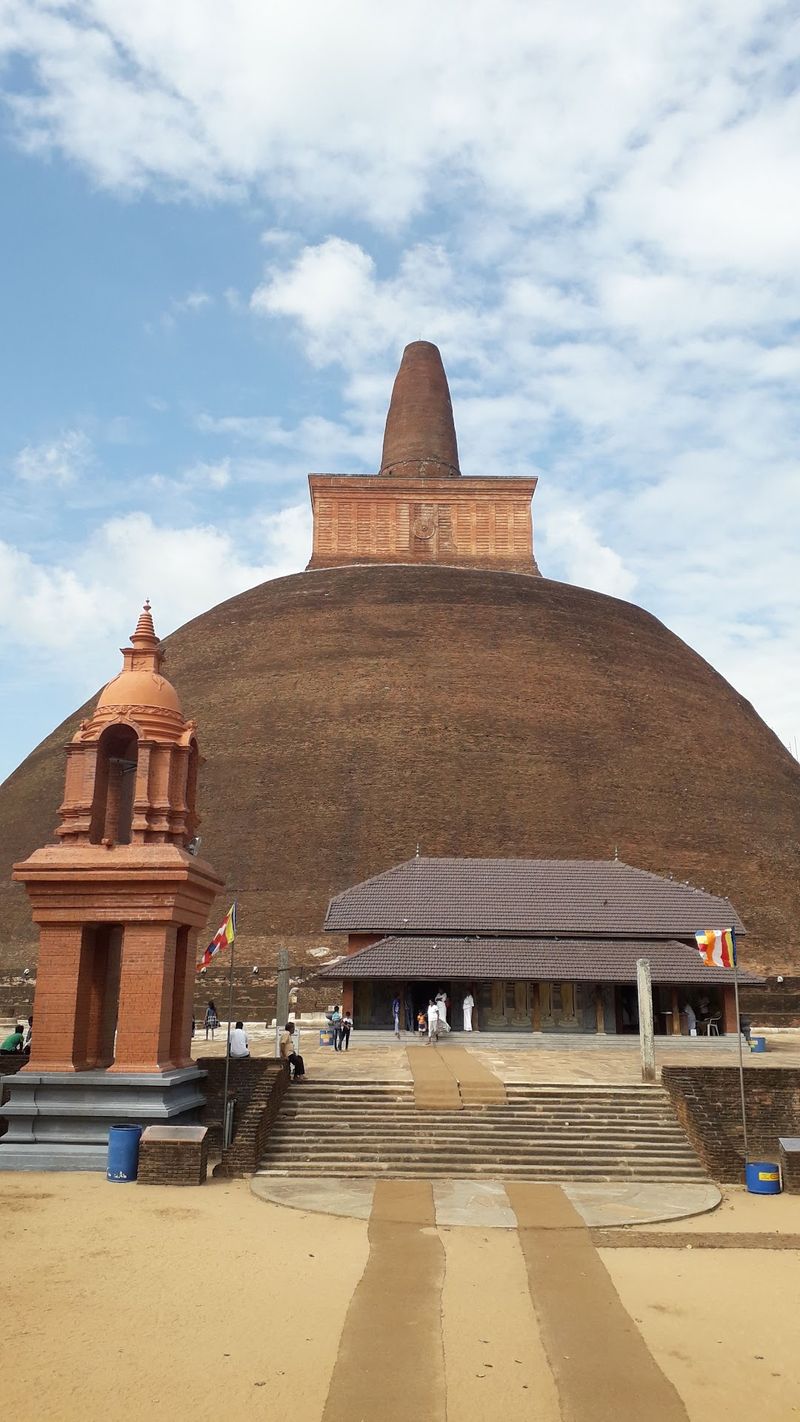
Picture a pile of about 93 million bricks. That is roughly what Jetavanaramaya is made of, and it once stood among the tallest structures on Earth.
Only the pyramids of Giza were taller in its day.
King Mahasena started it in the third century CE. The stupa reached around 120 meters in height when finished.
Even in its weathered state today, it still towers over the trees.
Stand at the base and look up. The rough red brick looks like a mountain someone shaped with care.
Visitors often say they feel tiny beside it.
The grounds are wide and grassy, with ruins of monastery buildings nearby. Bring water, because there is little shade.
A short museum on site shows items found during digs, such as tools and carvings. It adds helpful background before you wander the ruins.
Abhayagiri Monastery
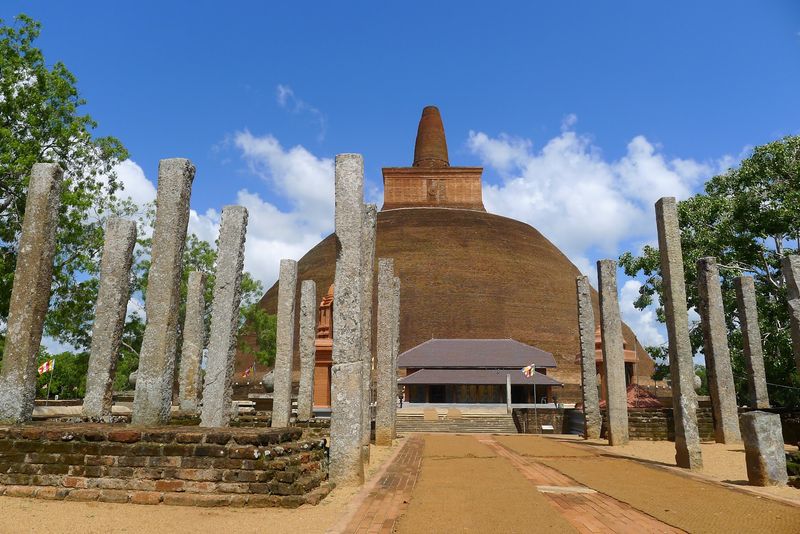
Once upon a time, thousands of monks studied here. Abhayagiri was a true university of its age, and scholars came from as far as China.
The Chinese traveler Faxian wrote about it around 410 CE.
Today the site is a big sprawl of stupa, stone pillars, and old ponds. The main dagoba is huge and stands among quiet trees.
Birds call from every branch.
Look down as you walk. Carved stone slabs called moonstones lie at doorways, with rings of animals and flowers cut into them.
Nearby, you can find a stone bath with clean, sharp lines.
Give yourself a few hours, as the area is large. A bicycle makes the trip easier and more fun.
Stop often to read the signs, and sit in the shade to take it all in.
Isurumuniya Rock Temple
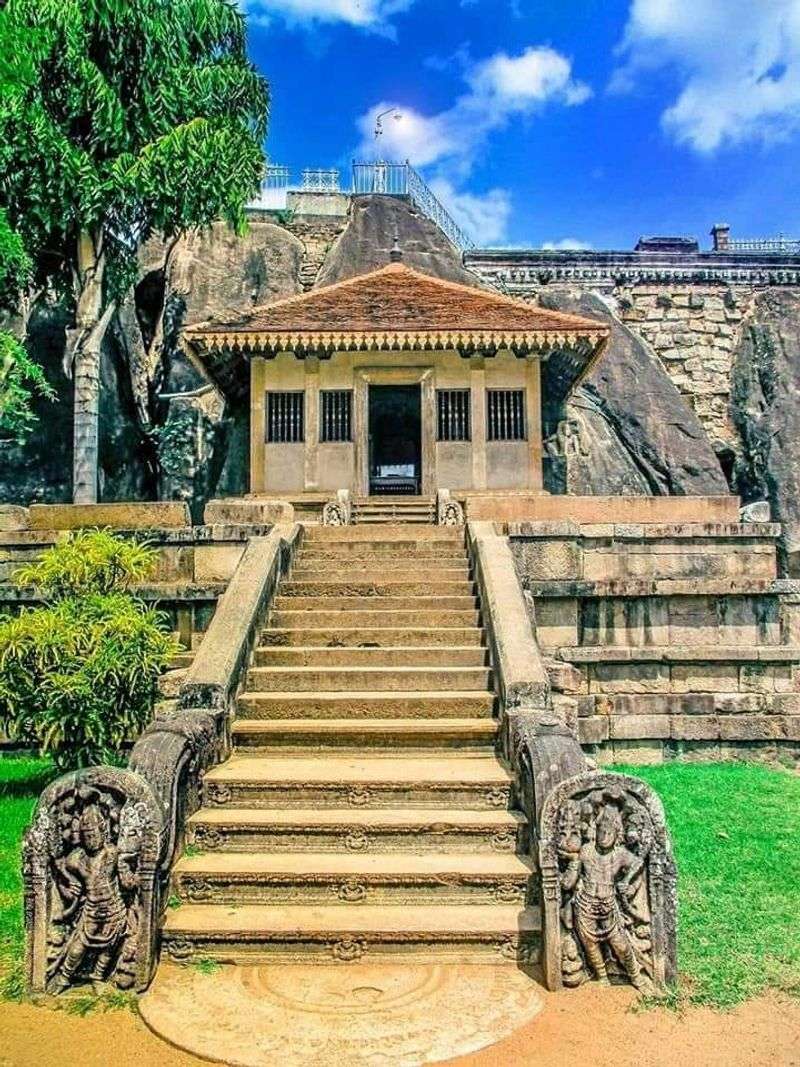
“Who are the lovers on the wall?” is the question every guide gets here. The famous carving of a couple, known as the Isurumuniya Lovers, is the star of this small temple.
Nobody knows for sure who they were.
The temple sits against a granite rock next to a quiet pond. Stone elephants seem to bathe in the water carved on the rock face.
It feels more like a hidden garden than a busy sight.
Climb the steps cut into the rock and you will reach a view over the ancient reservoir and the green plain. It is a lovely place for a short rest.
Sunset paints the stone in orange and gold.
The temple dates back to the third century BCE. A small museum holds more carvings, including a well-known horse head.
Plan about an hour here, and bring small coins for donations.
Thuparamaya, the Oldest Dagoba
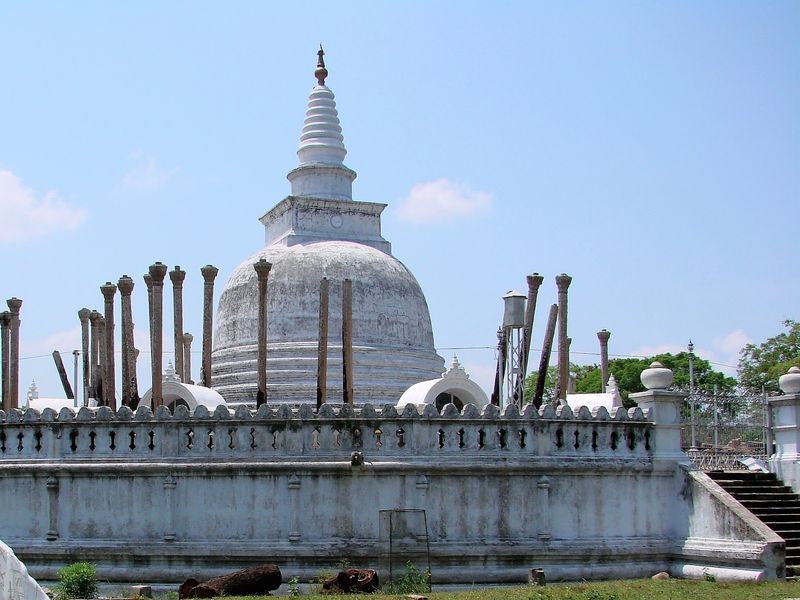
Small, but with big bragging rights. Thuparamaya is thought to be the first stupa built in Sri Lanka after Buddhism arrived, around the third century BCE.
It is said to enshrine the right collarbone of the Buddha.
Its bell shape is plain and elegant. Over the centuries it has been repaired many times, and its present form is a bit different from the original.
Still, the sense of age is strong.
Around the dagoba stand rings of tall stone pillars. They once held up a roof over the stupa.
Walking among them feels like stepping into an old, open-air hall.
Local families come here to light oil lamps and leave flowers. It is easy to join the quiet mood.
Visit in the early morning, and you will often have the place nearly to yourself.
The Lovamahapaya Brazen Palace
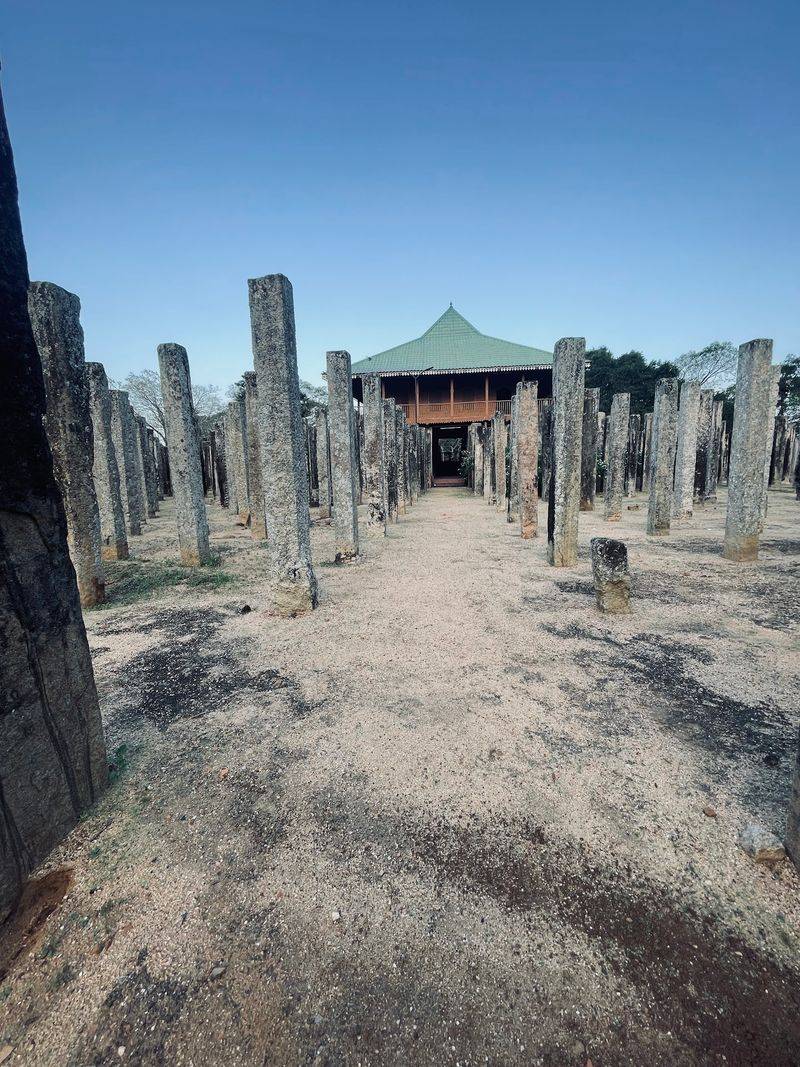
Nine stories, a roof of bronze, and a thousand rooms. That was the legend of the Brazen Palace, built by King Dutugemunu for monks.
Imagine how it must have shone in the sun.
What is left today are around 1,600 stone pillars, standing in neat rows. They stretch across a grassy field and look like a forest of gray trunks.
The pillars once supported a huge building of wood and metal.
Records say the palace burned and was rebuilt several times over the centuries. Each new version was smaller than the last.
The pillars you see belong to a later rebuild.
It takes only a short time to walk through, but the scale is striking. Kids enjoy counting the pillars and spotting the odd leaning one.
Come near sunrise for the best light and fewer people.
Ancient Tanks and Water Wizardry
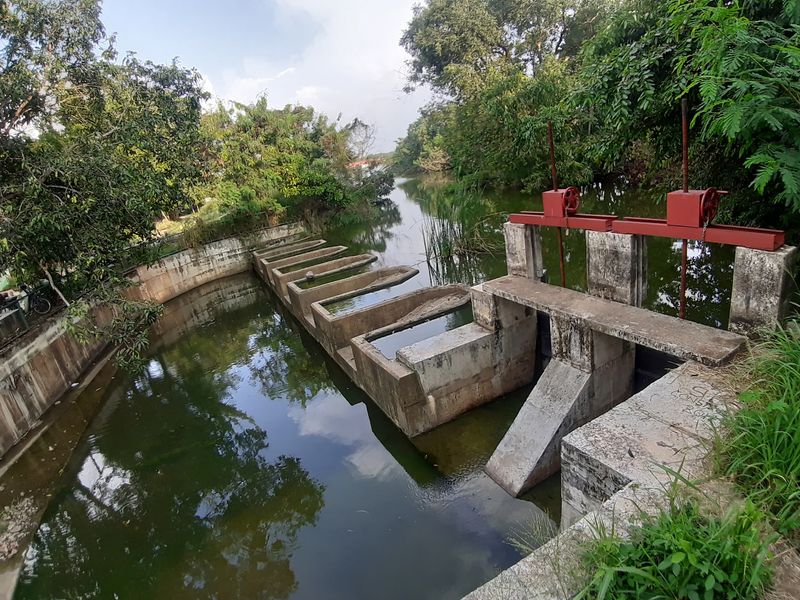
Ancient engineers here were obsessed with water. The region gets little rain for part of the year, so kings built huge reservoirs, called tanks, to store it.
Some of them still work today.
Tissa Wewa, Nuwara Wewa, and Basawakkulama are among the best known. Basawakkulama dates back to the fourth century BCE and is one of the oldest.
Canals carried water gently downhill across the land.
The builders even used a clever valve pit to control the flow. It let water out while keeping the muddy silt behind.
That kind of thinking was far ahead of its time.
Today the tanks are peaceful places for a walk. Egrets and pelicans fish along the edge, and lotus flowers float in the shallows.
Sunset here is calm and golden, a good way to end a day of ruins.
Mihintale, the Cradle of Buddhism
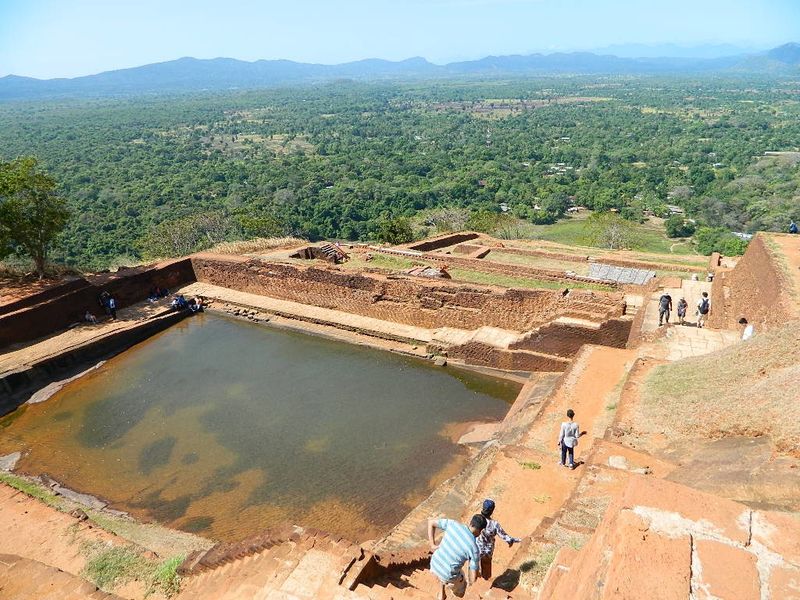
Prepare your legs, because there are 1,840 steps to climb. Mihintale is a hill just outside Anuradhapura, and it is where Buddhism is said to have first reached Sri Lanka.
The monk Mahinda met King Devanampiyatissa here in the third century BCE.
The stairs are wide, shallow, and shaded by frangipani trees. Take your time and stop for photos.
Friendly monkeys sometimes watch from the sides, so keep snacks tucked away.
At the top you will find a white stupa, a rocky ledge called Aradhana Gala, and sweeping views. On a clear day, you can spot other ancient stupas rising from the green plain.
It is a lovely place to sit and rest.
Go at dawn to avoid the heat. Poson Poya in June brings huge crowds of pilgrims, so plan ahead if you visit then.
Bring water and wear sturdy shoes.
Lost to the Jungle and Found Again
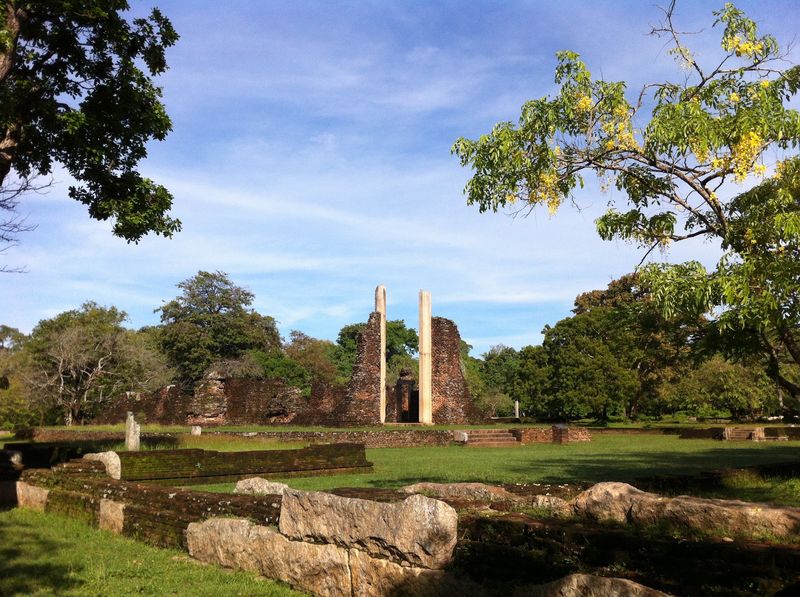
What happens when a city is left alone for centuries? The jungle moves in.
After invasions from South India and the shift of power to Polonnaruwa around the 11th century, Anuradhapura slowly emptied out.
Vines climbed the stupas, and roots split the stones. Trees grew from the tops of domes.
Local villagers knew some of the sites, but the outside world mostly forgot them.
British officials rediscovered the ruins in the early 1800s. Archaeologists began clearing and studying the area, and the work continues.
In 1982, UNESCO named Anuradhapura a World Heritage Site.
Today the sacred city mixes grand monuments with modern life. Locals still pray at many of the sites.
Buy a ticket at the Archaeological Museum, rent a bicycle, and explore at your own pace. Every corner holds a small surprise.
Share this story