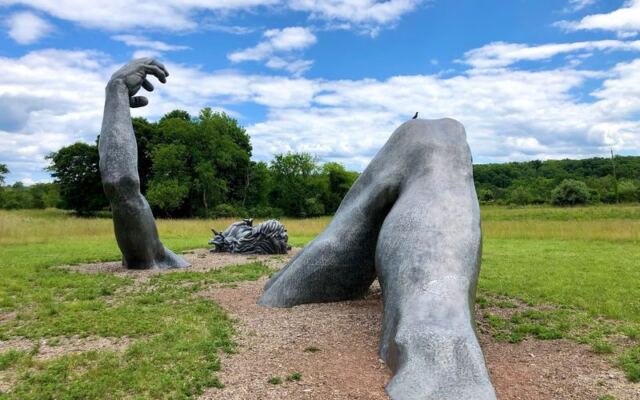
A meadow trail in New Jersey seems like a simple place to spend an afternoon, until a giant figure appears to be rising from the ground. It is the kind of discovery that makes a short stop turn into a longer look.
The sculpture changes as you move around it, and the surrounding trails give you room to see it from more than one distance. Here is what makes the stop unusual and what to know before you go.
A Giant Figure in Hopewell
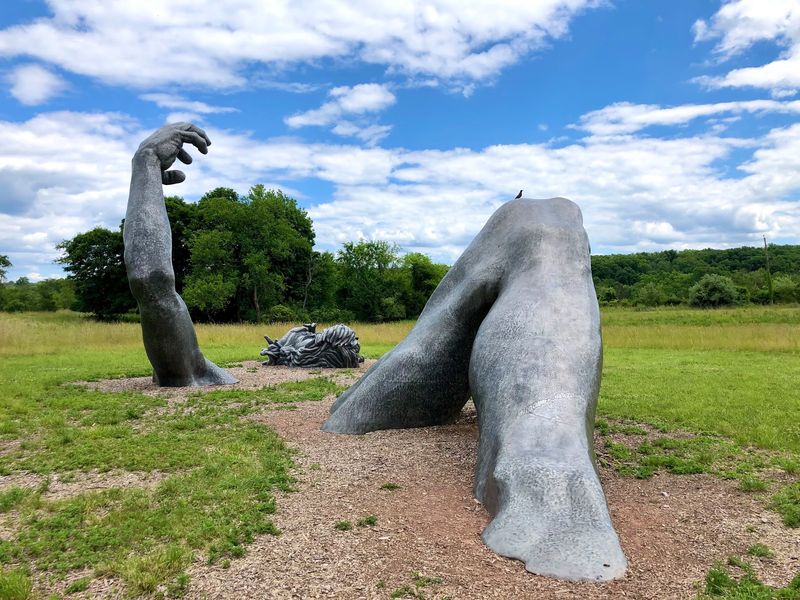
A giant figure rising from a field is not the usual reward for taking a meadow walk. The Awakening by Seward Johnson stands at Hopewell Princeton Rd, Hopewell, NJ 08525, United States, near trails at St. Michael’s Farm Preserve.
Its location gives a curious passerby a reason to stop and gives anyone already on the trails an unexpected destination.
The work is a large sculpture of a person emerging from the ground. Parts of the figure appear separately across the site, so a single glance does not explain the whole scene.
Some people first notice it from the road, then choose to stop for a closer look. Others approach it as part of a walk through the preserved farm landscape.
That flexibility is a big part of its appeal. You do not need an art background or a long itinerary to start looking.
A change in position is enough to begin discovering what the giant is doing.
The Artist and the Open Field
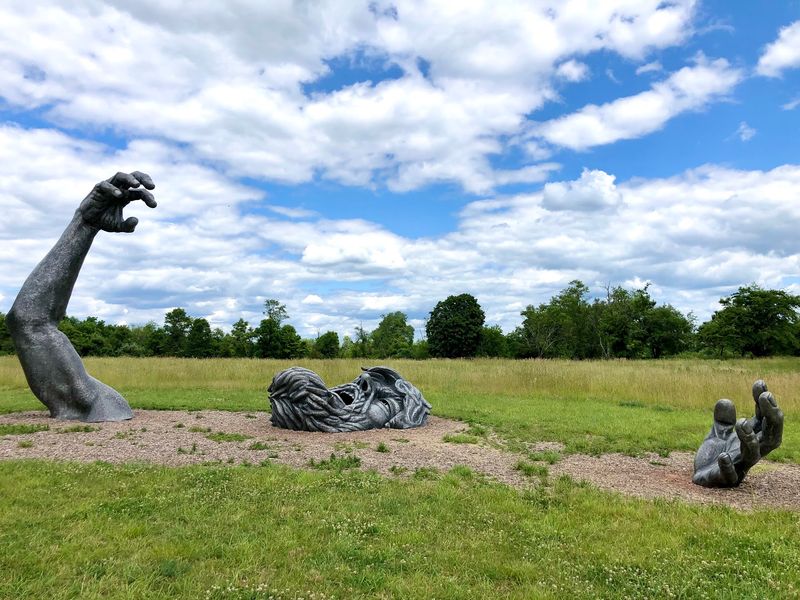
Seward Johnson’s work may be familiar to people who have spent time at Grounds for Sculpture in New Jersey. Here, though, The Awakening has a different setting: preserved farm land and walking trails, rather than a collection of artworks.
The sculpture gets space to stand on its own, and the landscape remains a major part of the visit.
That placement also changes how people come across it. A planned art outing is one option, but a walk or a drive through the area can lead to an unplanned stop.
The giant figure offers an immediate reason to pay attention to land that someone might otherwise pass without exploring.
Available information does not establish the date or details of this installation, so its story is best told through what is here now. One work, an open setting, and nearby trails create an encounter that differs from seeing Johnson’s art in a sculpture park.
A Scene That Changes With Position
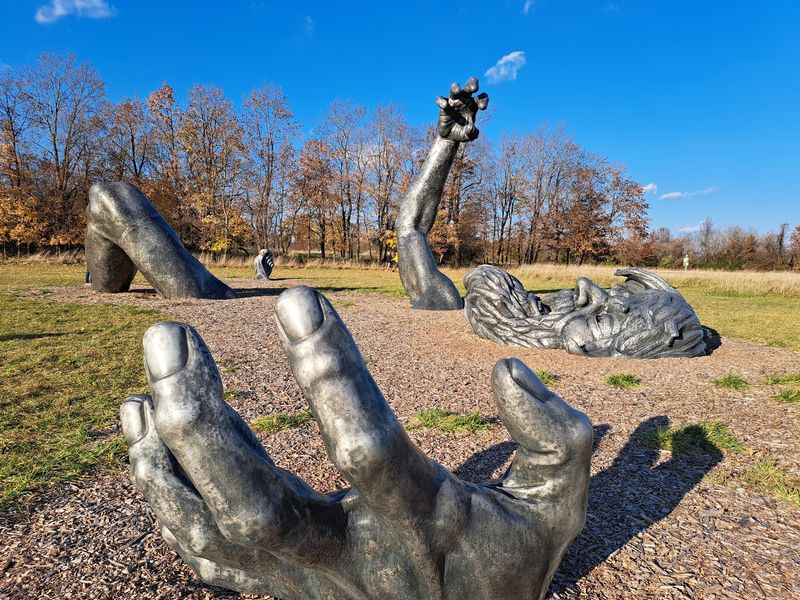
One step to the side can change the story here. Because the giant’s parts occupy different places on the ground, the figure does not present itself in quite the same way from every position.
A view that emphasizes its head gives way to another that makes its hands or the space between them more important.
That is a good reason not to treat The Awakening as a quick roadside snapshot. Move around the area where access allows, then look back at the parts you first noticed.
The artwork rewards a little patience without asking you to solve it. Its form supplies the drama; your route determines how the pieces come together.
Seeing it from several angles also helps explain the title’s appeal. The figure seems caught in the act of emerging, but no single viewpoint tells you exactly what that moment means.
The change is not in the sculpture. It is in where you stand.
The Long View From the Meadow Trail
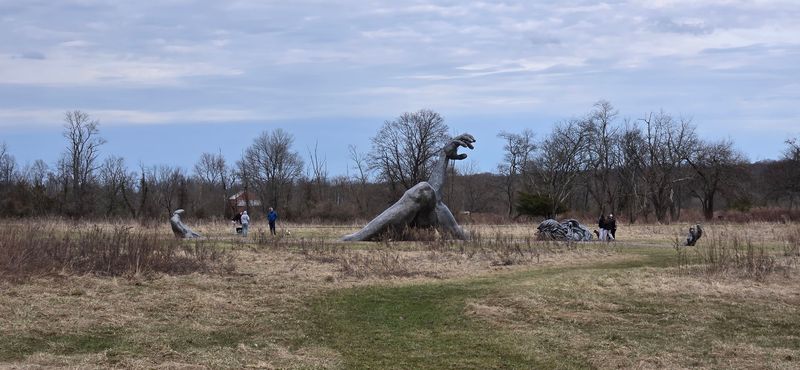
Distance gives the giant another role in the landscape. From farther along the meadow trail, The Awakening becomes part of a wider view of the old fields.
As you draw nearer, its separated parts take over the scene. That shift makes the walk itself more than a way to reach the sculpture.
Trails run through the preserved farm land around the work, and there are a few miles to explore for people who want more than a brief stop. A short outing can focus on the artwork; a longer one can follow the paths and return to it from another direction.
Either approach leaves room to notice how much the setting affects the work.
The trails are also useful for anyone arriving with a companion who is more interested in walking than art, or the other way around. Nobody has to choose between the two.
The meadow provides the route, and the sculpture gives that route a distinctive point of interest.
More Than One Reading of the Giant
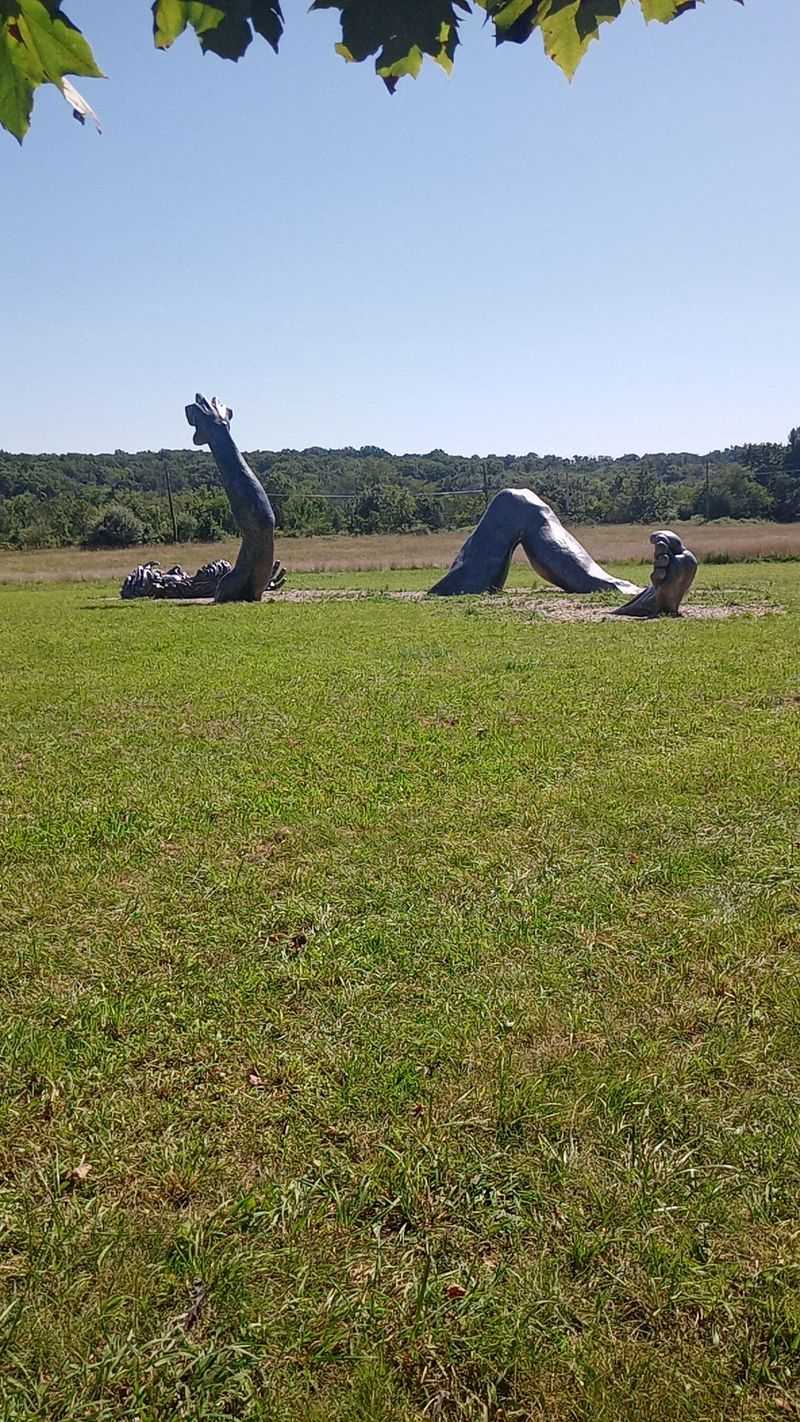
Not everyone will agree on what the emerging figure is doing. Its scale and pose can suggest effort, freedom, or uncertainty, and the sculpture offers no simple answer.
That openness gives people something to discuss after they have finished looking at the individual parts.
The setting adds another question. Some appreciate the contrast between a large human-made work and the preserved fields around it.
Others would rather have the meadow remain the focus. Both responses are possible because the sculpture is hard to separate from the place where it stands.
A visit can be about the artwork, the land, or the relationship between them.
There is no need to arrive with a prepared interpretation. Notice what changes between a distant view and a close one, and give your companion room to see something different.
The most interesting part of a stop here may be the conversation that follows the walk.
A Short Stop With Room to Roam
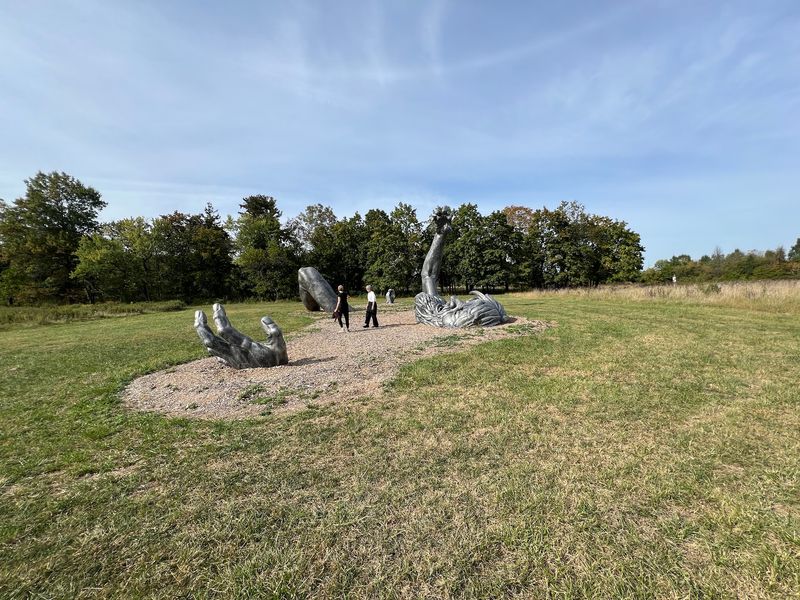
Some outings need a carefully planned schedule. This one can work as a quick stop, with the option to keep walking if everyone wants more time outside.
The sculpture is the immediate attraction, while the surrounding trails make it easy to turn a brief look into a fuller outing.
Families may find the giant figure an easy starting point for conversation. Its parts invite children to work out how they fit together, and the trails offer a next step once that puzzle has had enough attention.
People who prefer a quieter, unhurried walk can spend less time near the artwork and more time following the paths through the fields.
Respect for the sculpture matters whichever plan you choose. Look from different positions, but do not climb on the artwork.
The experience does not require it: the figure has plenty to reveal when you stay on the ground and give yourself room to move around.
Simple Plans for a Hopewell Visit
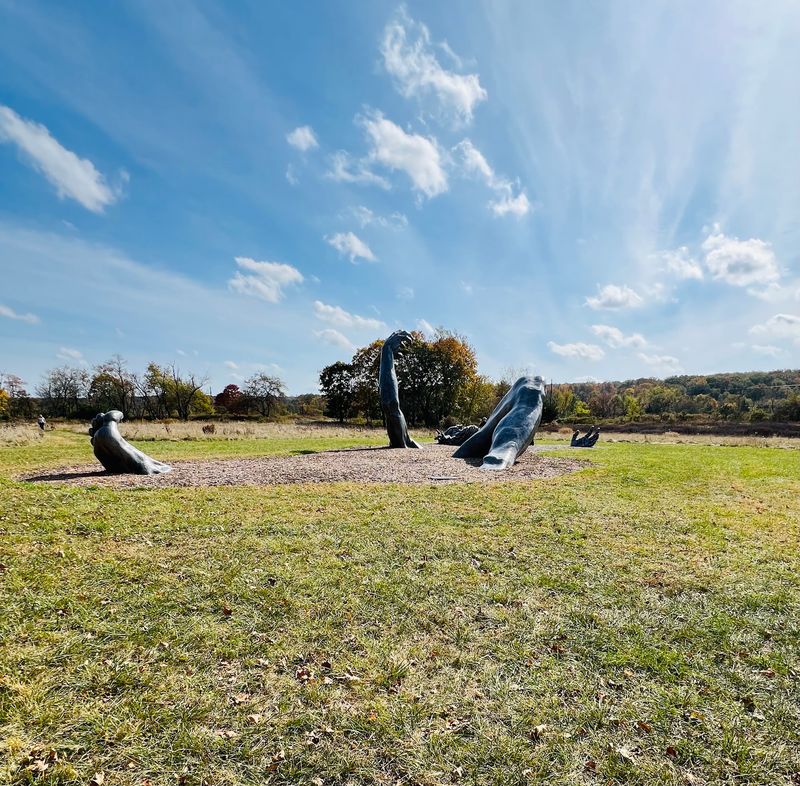
A little planning keeps the focus on the artwork rather than the logistics. The listing for The Awakening shows it as open 24 hours every day.
Accounts of the site also describe free access and a nearby free parking lot, making it possible to plan either a short look or time on the trails without an admission charge.
Use Hopewell Princeton Rd as the address when planning the drive. From there, allow time to reach the sculpture and consider the meadow paths if you want to see it from farther away.
The supplied information does not establish trail conditions, on-site facilities, or separate trail hours, so it is sensible to check current preserve information before a longer walk.
Daylight is a straightforward choice if seeing the details and following the trails are your priorities. A simple plan works best here: arrive, find an angle that interests you, and leave enough time to try another one.
One More Look Before Leaving
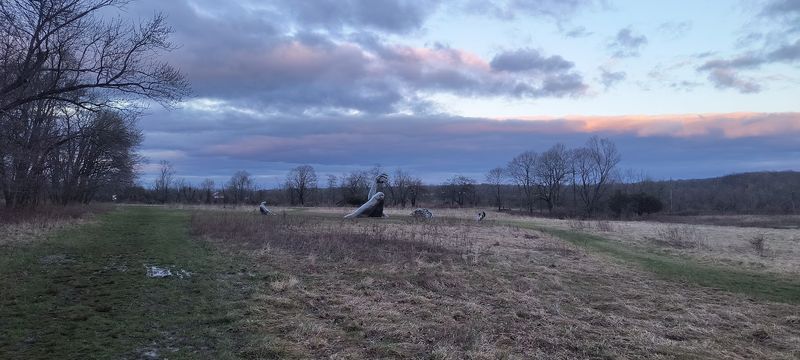
The easiest mistake at The Awakening is deciding you have seen it after the first angle. The figure changes as you move, and the path through the fields gives you a chance to look back before leaving.
What seemed like a single giant at arrival becomes a set of carefully placed parts within a much larger landscape.
There is plenty here for a modest outing. You can stop for the sculpture alone, or make it the focus of a walk through the preserved farm land.
Its size makes the first impression memorable, but the open space around it gives that impression room to change. Even someone unsure about the artwork can leave with a clearer sense of how public art and a meadow share this spot.
Hopewell’s giant does not ask everyone to reach the same verdict. Give it a little time, keep to the ground, and take one more look from farther down the trail.
Share this story