Out in the high desert of southeastern Oregon, there is a barn that has no business being as fascinating as it is. I say that with full respect, because before I made the drive out there, I figured it was just another old building on the side of a road.
What I found instead was a circular structure built in the 1880s that tells one of the wildest, most dramatic stories in Oregon ranching history. The Pete French Round Barn State Heritage Site sits on a remote stretch of land near Diamond, Oregon, and every detail about it, from its clever engineering to the legendary cattle baron who built it, pulls you deeper into a world that feels both distant and remarkably vivid.
This place genuinely surprised me, and I think it will surprise you too.
Where the Road Leads You: Location and First Impressions
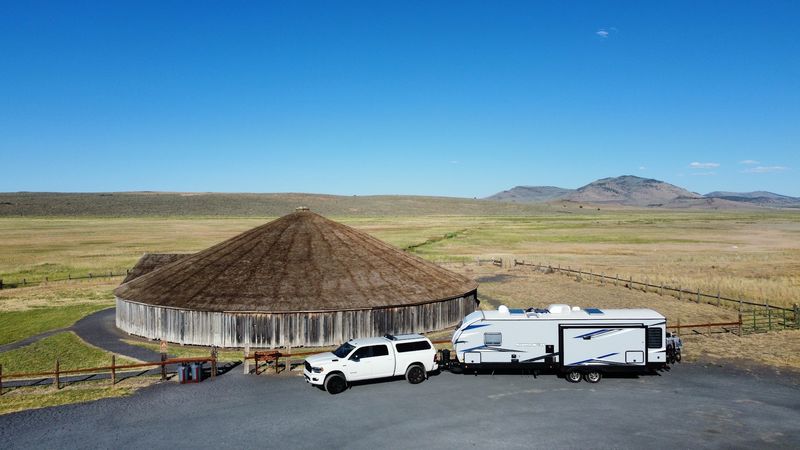
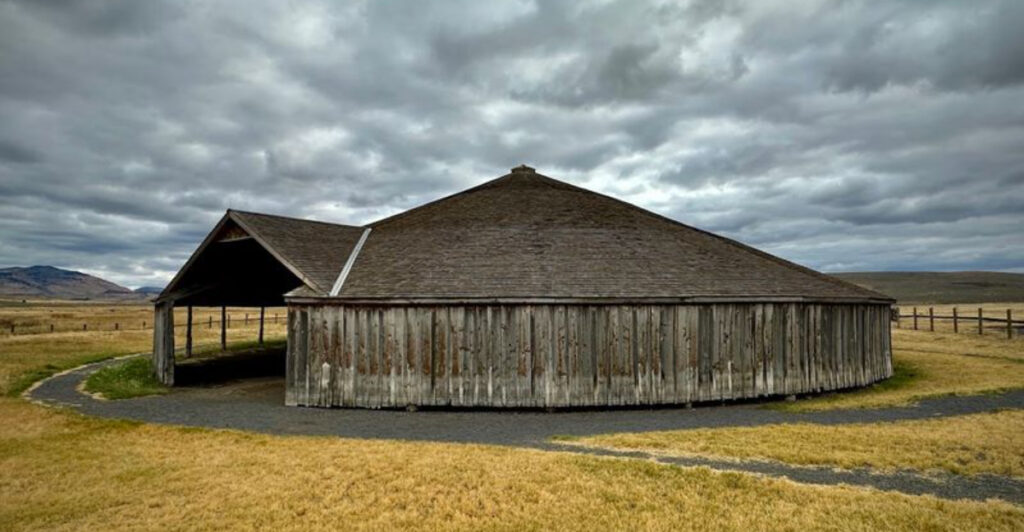
The address is 52229 Lava Bed Rd, Diamond, OR 97722, and getting there is half the experience. You follow roads that cut through miles of sagebrush and open sky, and the barn appears on the horizon well before you reach it, a low circular silhouette that looks almost out of place in the flat, golden landscape.
Diamond is a tiny community in Harney County, a part of Oregon that most people skip entirely on their way somewhere else. That is a real shame, because the high desert here has a kind of raw, unfiltered beauty that you simply cannot find closer to the city.
The air smells like sage, the light is sharp and clean, and the silence is the kind that actually settles into your chest.
The site is free to visit and open year-round, weather permitting. Parking is easy and plentiful, which matters when you have driven a long way on gravel roads.
The moment you step out of your car and see that stone-and-juniper structure up close, something shifts. You stop thinking about the drive and start thinking about the story behind what you are looking at.
The Man Behind the Barn: Who Was Pete French
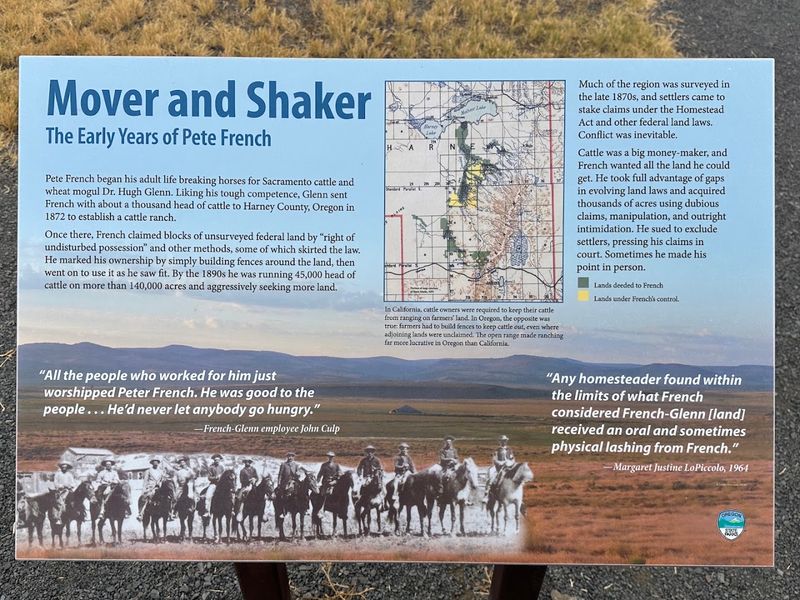
Peter French arrived in Oregon in 1872 as a young man with ambition that far outpaced his years. He was sent north from California by cattle rancher Hugh James Glenn, tasked with establishing a cattle operation in the remote Harney Valley.
What French built over the next two decades became one of the largest cattle empires in the American West.
At his peak, French controlled somewhere between 160,000 and 200,000 acres of land. He used every legal tool available, and some that pushed the limits of what was ethical, to expand his holdings.
One of the more controversial tactics involved the Swamp and Overflow Act, which allowed marshy land to be purchased cheaply. French reportedly built dams to flood areas so he could then buy them at the lower price.
He was by many accounts a commanding figure, fiercely loyal to his workers but ruthless toward anyone who challenged his land claims. The interpretive signs at the site lay out his story with honesty and detail, and by the time you finish reading them, you realize this was not a simple man.
He was complicated, driven, and ultimately defined by the land he fought so hard to control.
Engineering Ahead of Its Time: How the Barn Was Built
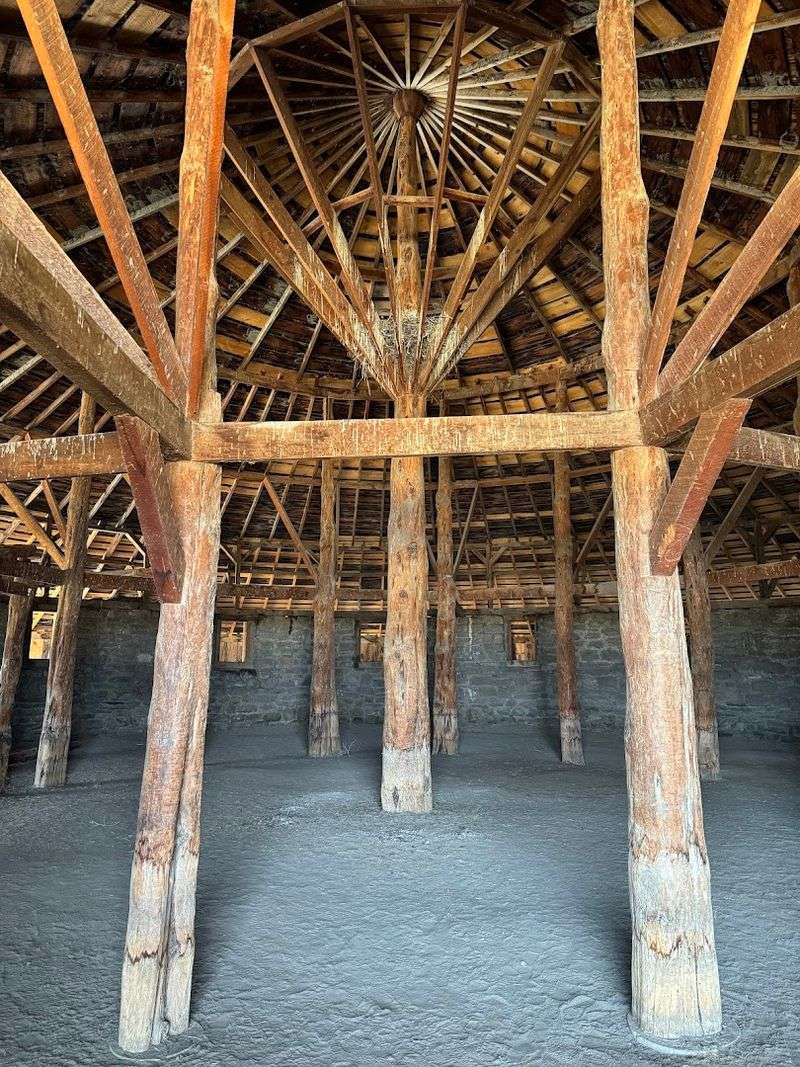
There is something almost playful about the way this barn was designed, like someone sat down and asked, what is the smartest possible solution to a very hard problem? The answer turned out to be a circle.
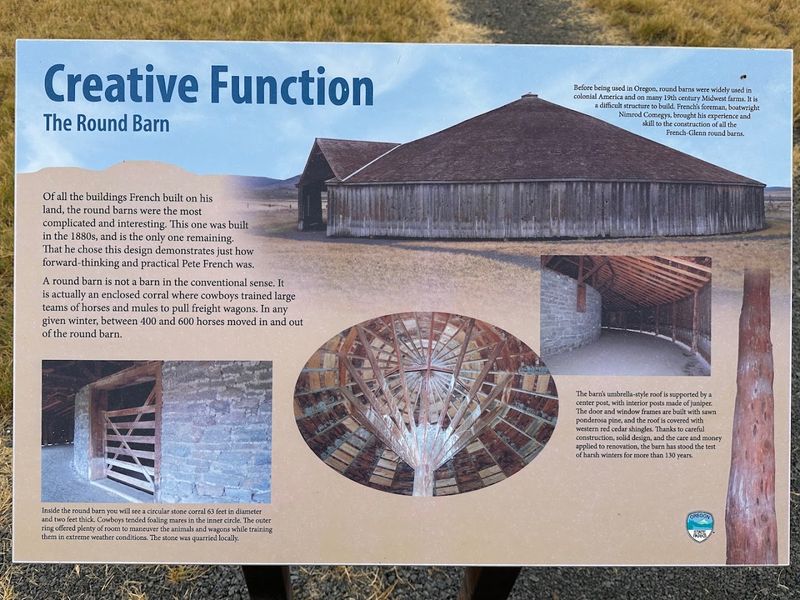
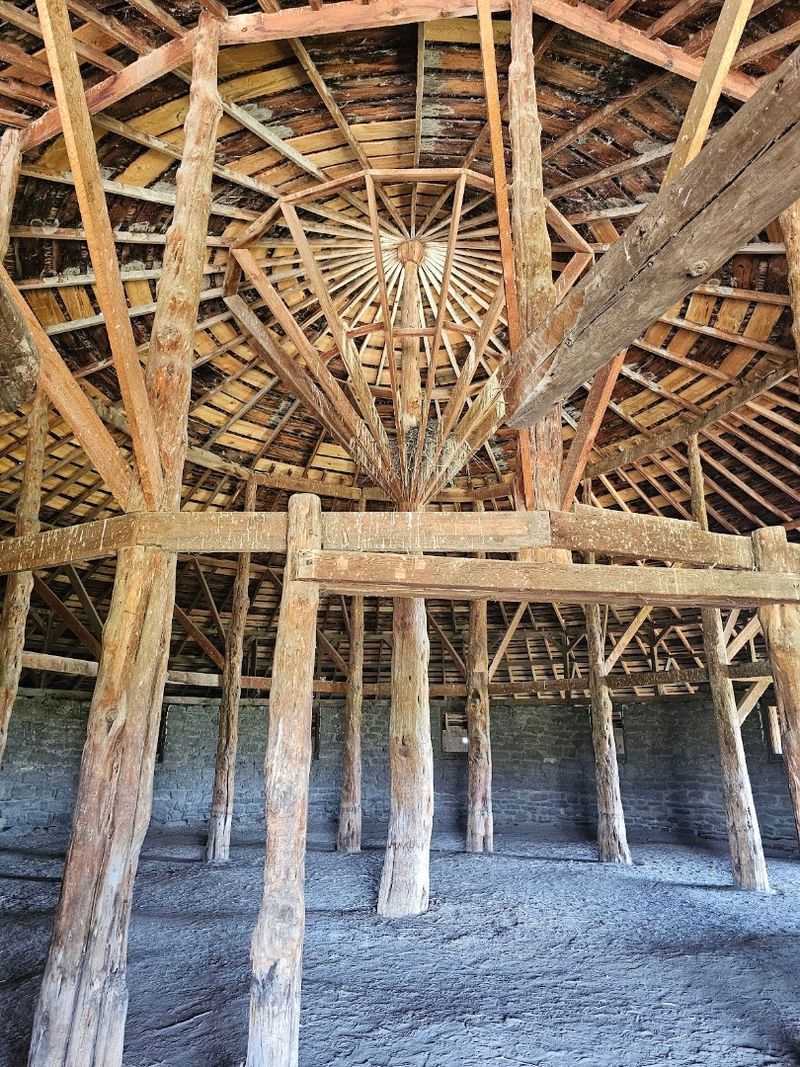
The Round Barn was constructed in the 1880s with a 100-foot diameter outer stone wall and an inner ring of juniper posts that created a covered track running around the perimeter.
Cowboys used that inner track to train horses and mules during the brutal Oregon winters, when working outdoors was not practical. The circular layout meant animals could keep moving without needing to turn around or stop, which made the training process far more efficient.
The center of the structure was used to care for foaling mares, giving the whole design a thoughtful, dual-purpose quality.
The stone walls were built from locally sourced volcanic rock, and the juniper beams came from trees harvested nearby. No concrete was used.
The whole structure was assembled with materials that the land itself provided. Standing inside it now, looking up at those aged wooden beams and running your hand along the rough stone walls, you get a genuine sense of how capable and resourceful the people who built it really were.
A Story That Ends With a Gunshot: The Final Chapter of Pete French
Not many barns come with a storyline this dramatic, and the Round Barn site does not shy away from telling it. On the day after Christmas in 1897, Pete French was shot and killed by a homesteader named Ed Oliver.
The two men had been locked in a bitter dispute over land access, and things had escalated to the point of no return.
Oliver had been forced to travel more than six miles out of his way to reach his own property because French had blocked the shorter route. On that December day, the confrontation turned fatal.
French fell from his horse and did not survive. Oliver was arrested, tried, and found not guilty by a jury that apparently had considerable sympathy for a small farmer standing up to a powerful land baron.
Even Pete French’s own brother reportedly said he could not blame Oliver for what he did. That detail alone tells you something about how French’s legacy was received by those who knew him best.
The site presents this history without sugarcoating it, which I appreciated. It is a story about power, land, and the limits of what one person can take from a community before the community pushes back.
Inside the Barn: What You Actually See and Experience
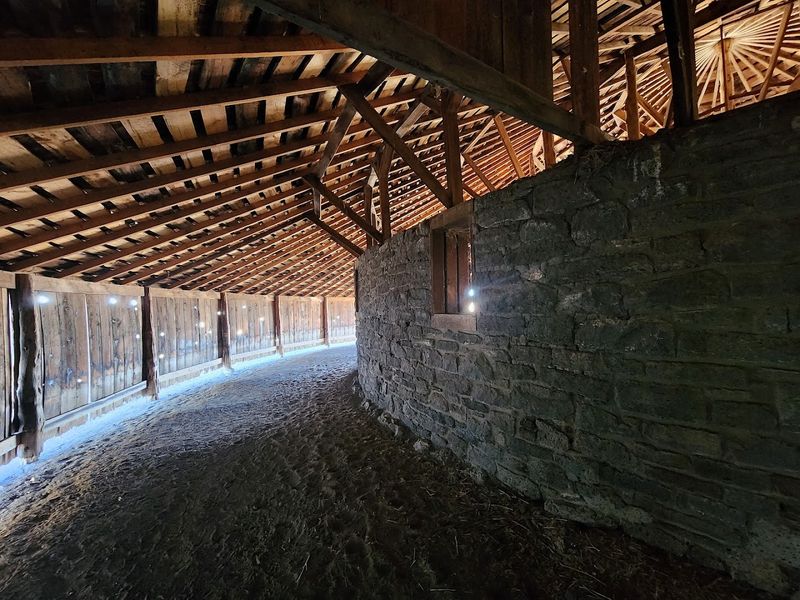
My first step through the entrance of the Round Barn produced a sound I was not expecting: the soft rustle of wings. There are barn owls living up in the rafters, and they are not shy about letting you know this is their turf.
Spotting them tucked into the beams above is one of those small, unexpected pleasures that makes a visit feel genuinely alive rather than just educational.
The interior is open and airy, with the circular track stretching out around you and the stone walls rising on all sides. It is darker inside than you might expect, so if you are a photographer, a tripod will serve you well.
The textures in here are remarkable: rough stone, weathered wood, and soft light filtering through gaps in the structure create a visual richness that photographs beautifully.
Visitors have also reported spotting snakes navigating the walls and bones left behind by the owls, signs that the building is very much part of a living ecosystem. The barn does not feel like a museum piece behind glass.
It feels like a working piece of the landscape, still breathing, still sheltering creatures, still holding its shape after more than 140 years of desert wind and winter cold.
The Visitor Center and Gift Shop: More Than It Looks
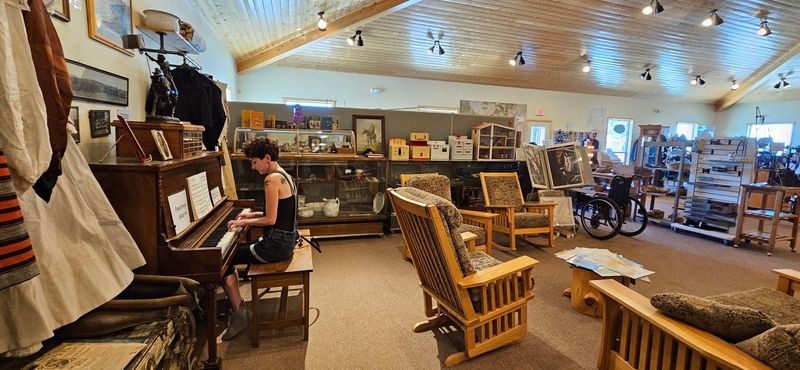
From the outside, the visitor center looks like it might contain a few brochures and a donation jar. Do not let that fool you.
The inside holds a genuinely rich collection of information about the region, Pete French’s life, the ranching era, and the broader history of Harney County. The staff are consistently described as knowledgeable, warm, and happy to spend real time answering questions.
The gift shop carries books on ranching history, local crafts, and souvenirs tied to the Steens Mountain region. There is a real toilet on the premises, which sounds like a minor thing until you have been driving through the Oregon outback for two hours.
The staff also give helpful recommendations for other things to see and do in the area, which is genuinely useful when you are navigating a part of Oregon that does not have a lot of signage.
A few visitors have noted that the shop can feel a little understocked or dusty on certain days, so the experience may vary depending on when you show up. That said, the human element here is the real draw.
The people running this place clearly care about what they are preserving, and that enthusiasm is contagious in the best possible way.
The High Desert Setting: A Landscape Unlike Anything Else
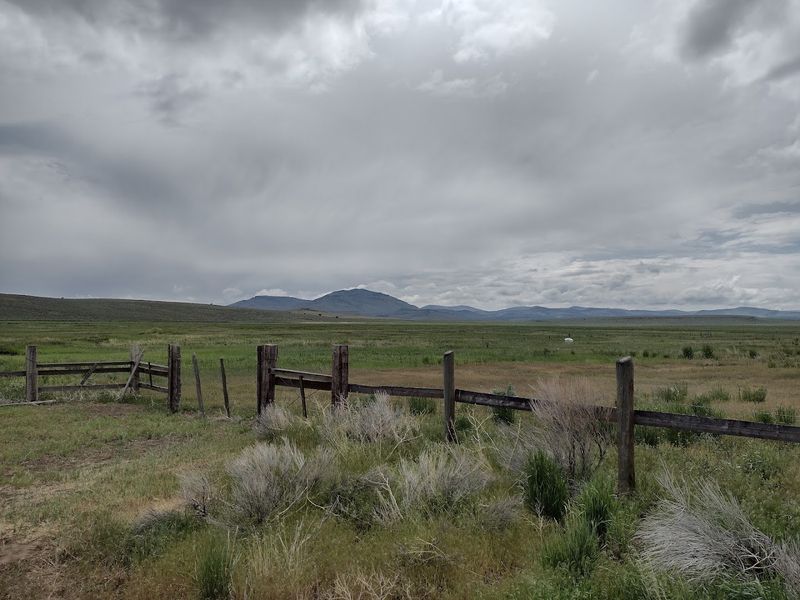
The landscape around the Round Barn is the kind that takes a moment to register. There are no trees to frame your view, no hills to give your eye a comfortable stopping point.
It is just open land stretching in every direction toward distant ridgelines, with Steens Mountain visible to the south and the Malheur National Wildlife Refuge nearby to the north.
That openness can feel almost disorienting if you are used to the forests and coastlines that define most people’s image of Oregon. This is a completely different version of the state, one that is drier, quieter, and in some ways more honest about the raw effort it took to build anything out here.
The sagebrush plains have a subtle beauty that grows on you the longer you stand in them.
Birdwatchers will find the area especially rewarding, particularly during migration seasons when the Malheur Refuge draws remarkable numbers of species. Even on a regular day, the skies above the barn are active with raptors and songbirds.
The combination of historic architecture and high-desert wildlife makes this corner of Oregon feel like two trips packed into one, and both of them are worth the drive.
Wildlife Encounters: The Barn’s Unexpected Residents
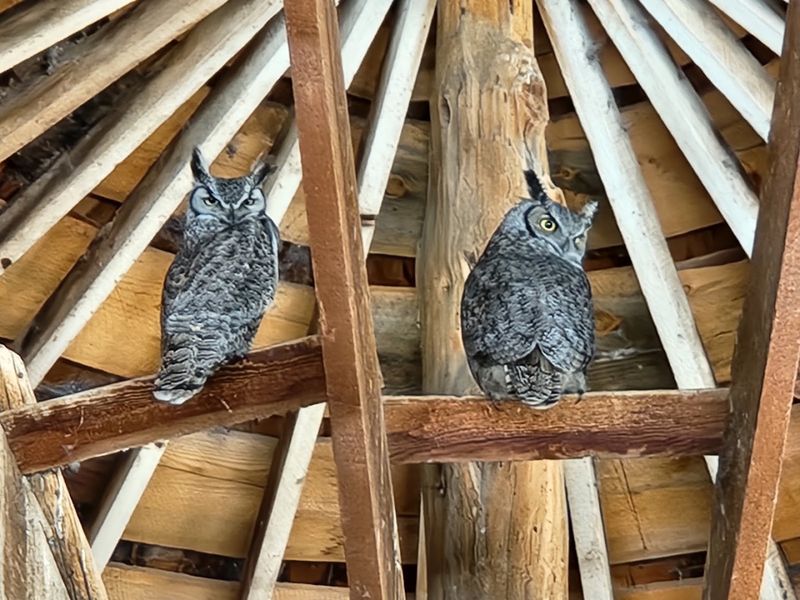
One of the most talked-about aspects of visiting the Round Barn is the wildlife, and not the kind you find in a typical nature preserve. The barn itself hosts a pair of barn owls that have claimed the upper beams as their territory.
They will peer down at you with those wide, disc-shaped faces, and if you linger too long directly below them, they are not above a warning call.
Below the owls, the ground tells its own story. Pellets and bones from the owls’ meals are scattered around the base of the structure, a very direct reminder of how the food chain works out here.
Some visitors have also spotted snakes working their way through gaps in the stonework in pursuit of mice, which is either fascinating or alarming depending on your relationship with reptiles.
The holes in the ground around the exterior of the barn are worth watching too. The terrain is uneven and pocked with small burrows, so careful footing is a smart habit to develop before you start wandering around taking photos.
None of this detracts from the visit. If anything, the presence of so much active wildlife gives the site a vitality that purely static historic landmarks sometimes lack.
The Interpretive Signage: History Told With Honesty
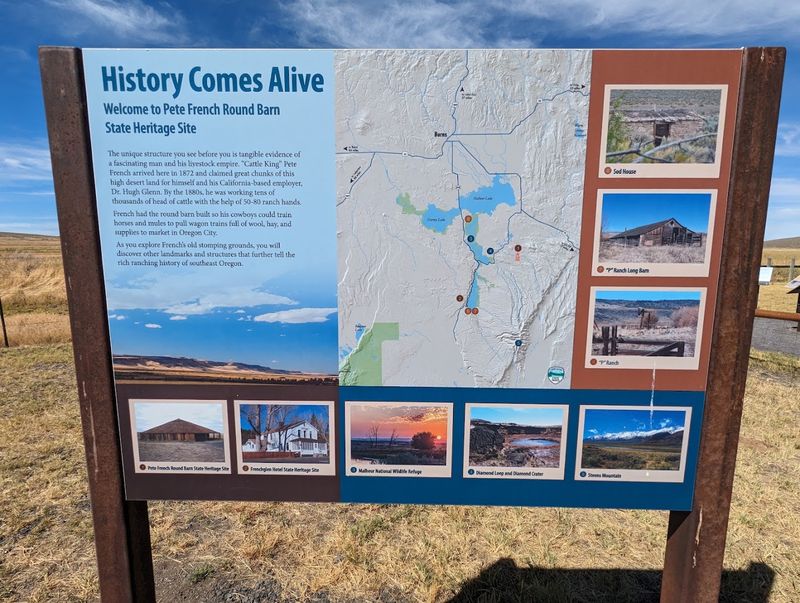
Good interpretive signage is harder to pull off than it looks. Too dry and visitors skim past it.
Too sensational and it loses credibility. The signs at the Round Barn manage to find a balance that is genuinely readable, presenting Pete French’s story, the construction of the barn, and the broader history of Oregon’s cattle industry in a way that feels honest rather than promotional.
The timeline of French’s rise from ambitious young ranch hand to one of the most powerful landowners in the West is laid out clearly, including the less flattering chapters. The signs do not gloss over his use of the Swamp and Overflow Act or his conflicts with small farmers.
That transparency makes the history feel real rather than polished, and it gives visitors something to actually think about rather than just admire.
A few reviewers have mentioned that some panels are showing their age and could use refreshing, which is a fair observation. The content, however, remains solid and informative.
For anyone who wants to understand what they are looking at before they walk through the barn doors, spending ten minutes with the outdoor signage is genuinely worthwhile. It reframes the whole visit and turns a cool old building into a meaningful stop.
Best Time to Visit and Practical Tips for the Trip
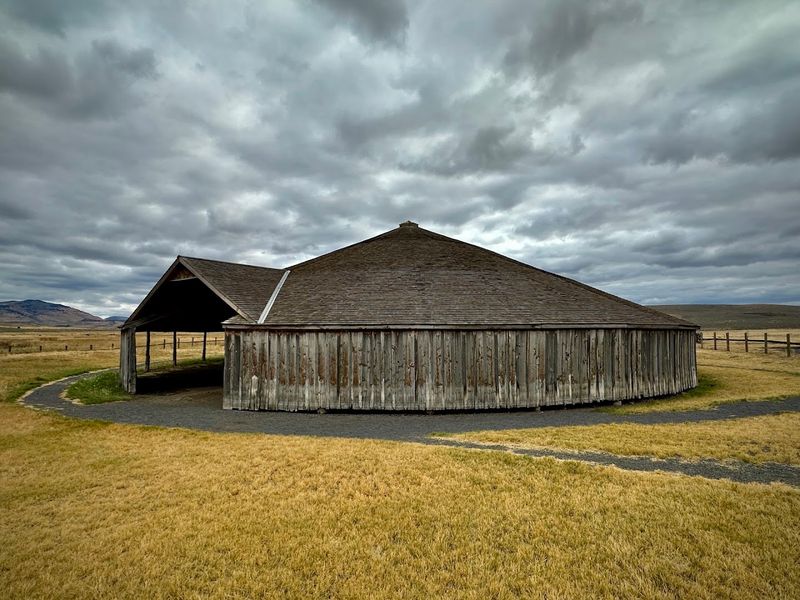
The Round Barn is technically open year-round, but southeastern Oregon winters can make the roads genuinely difficult to navigate. Late spring through early fall is the most reliable window, with May through October offering the most predictable conditions.
Summer days get warm in the high desert, so an early morning or late afternoon arrival will keep you comfortable and give you softer light for photos.
The drive in involves gravel roads, and while they are manageable in a standard vehicle under normal conditions, a truck or SUV gives you more confidence, especially if there has been recent rain. Cell service is limited or nonexistent in this part of Harney County, so downloading offline maps before you leave is a practical step that will save you frustration.
Bring water, snacks, and a camera with enough storage to do the scenery justice. The gift shop does carry some snacks, but counting on it as your only food source in this remote area is optimistic.
The site is free to enter, which makes the whole excursion remarkably good value. If you plan to also visit the Malheur National Wildlife Refuge, the two destinations pair well together and can fill a very satisfying day of exploration.
The Malheur Connection: Exploring the Surrounding Region
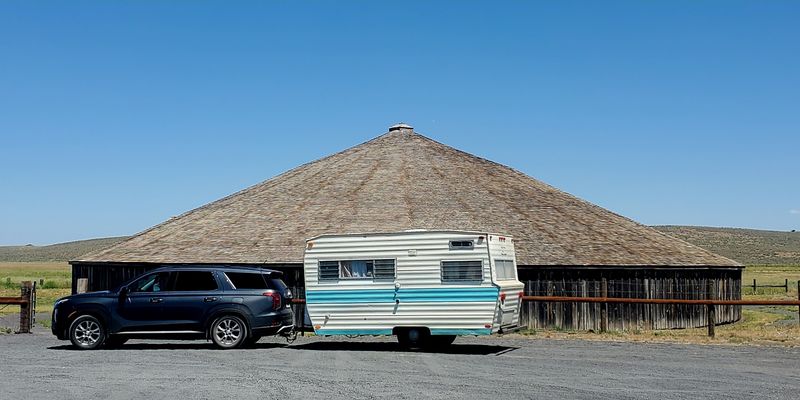
The Round Barn does not exist in isolation. The surrounding region is rich with natural and historical points of interest that reward travelers who are willing to slow down and explore.
The Malheur National Wildlife Refuge, one of the most significant bird sanctuaries in the Pacific Northwest, is a short drive away and offers a striking contrast to the dry sagebrush plains immediately around the barn.
During spring migration, the refuge draws birders from across the country, and the sheer variety of species moving through the area is remarkable. Sandhill cranes, tundra swans, and dozens of shorebird species pass through, making binoculars a worthwhile addition to your packing list.
Even outside peak migration, the refuge provides a quieter, contemplative kind of outdoor experience that feels well-matched to the tone of the barn visit.
The town of Burns, about 55 miles to the north, serves as the practical hub for the region, with lodging, restaurants, and fuel. Frenchglen, a tiny historic community to the south, is named in Pete French’s honor and sits near the base of Steens Mountain.
Combining the barn, the refuge, and a drive up Steens Mountain creates a trip that covers history, wildlife, and landscape in one deeply satisfying loop.
Why This Place Stays With You Long After You Leave
Most historic sites leave you with a fact or two and a photo you will scroll past later. The Round Barn tends to do something different.
The combination of the physical structure, the landscape around it, and the genuinely strange and layered story of Pete French creates an experience that lingers in a way that is hard to fully explain until you have been there yourself.
Part of it is the remoteness. When you have driven that far off the main road to reach something, you arrive already primed to pay attention.
Part of it is the barn itself, which is not a ruin or a replica but an actual 140-year-old working structure that has simply endured. There is real weight in that kind of survival.
And part of it is the story, which refuses to be tidy. Pete French was not a hero or a villain in any clean sense.
He was a man who built something extraordinary through a combination of vision, hard work, and a willingness to push other people out of the way. The barn he left behind holds all of that complexity in its stone walls, and that is what makes it worth every mile of gravel road it takes to reach it.
Share this story