George Washington’s original chair from the 1787 Constitutional Convention is still on display inside a Philadelphia building where two of America’s founding documents were debated and signed.
Independence Hall hosted the adoption of the Declaration of Independence in 1776 and the signing of the U.S. Constitution in 1787.
Benjamin Franklin, Thomas Jefferson, and other founding figures helped shape the country’s future inside its Assembly Room.
Today, visitors can walk through that same room, see Washington’s famous Rising Sun Chair, and explore a building that dates back to the 1730s.
Admission is free, although timed reservations carry a small fee when required. There’s also a way to visit without a ticket during designated hours, making this historic landmark easier to explore than many people might expect.
Meet the Red Brick Hall on Chestnut Street
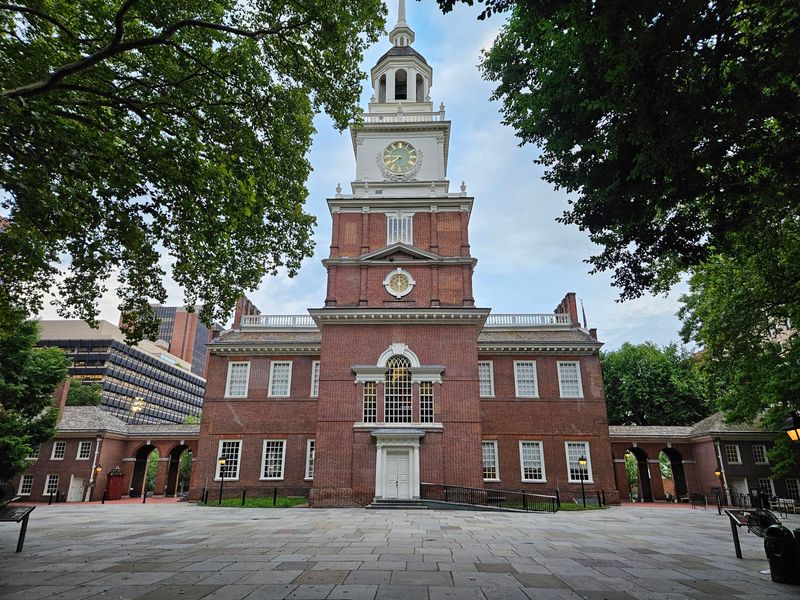
Independence Hall sits at 520 Chestnut Street in Philadelphia, Pennsylvania, in the United States. It belongs to Independence National Historical Park, which the National Park Service manages.
Construction started in 1732, and the building first served as the Pennsylvania State House. Colonial lawmakers met here long before anyone talked about a new nation.
That small detail surprises a lot of people.
The hall is built in the Georgian style. You will see red brick walls, white trim, tall windows, and a white steeple tower on top.
The tower makes the building easy to spot, even with modern offices crowding the blocks around it.
I find it interesting that such a world-changing story unfolded inside a working government office. Nobody built this place to be famous.
It earned that later, one heated debate at a time.
In 1979, the building was named a UNESCO World Heritage Site. That puts it in a short list of American places honored for their importance to the whole world, not just the country.
All of that history comes down to one main room on the first floor, and that is where the real action took place.
The Assembly Room Where Two Big Debates Happened
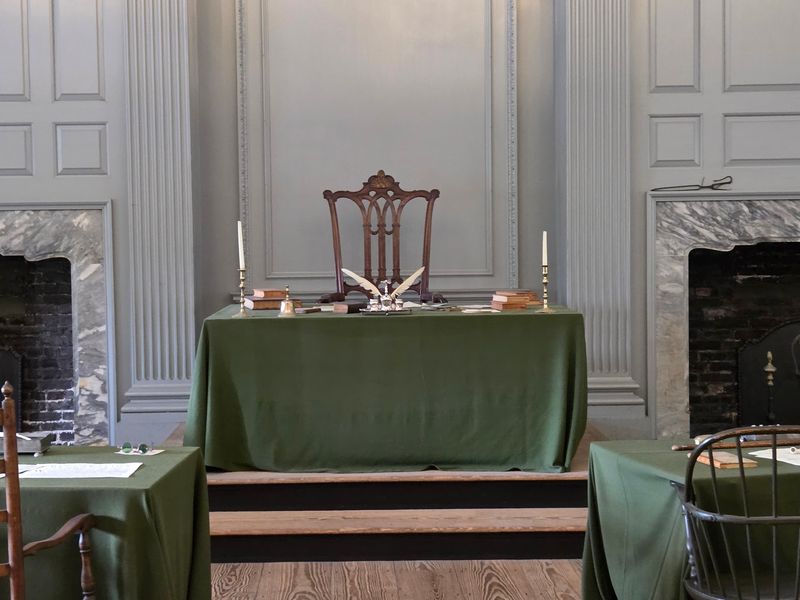
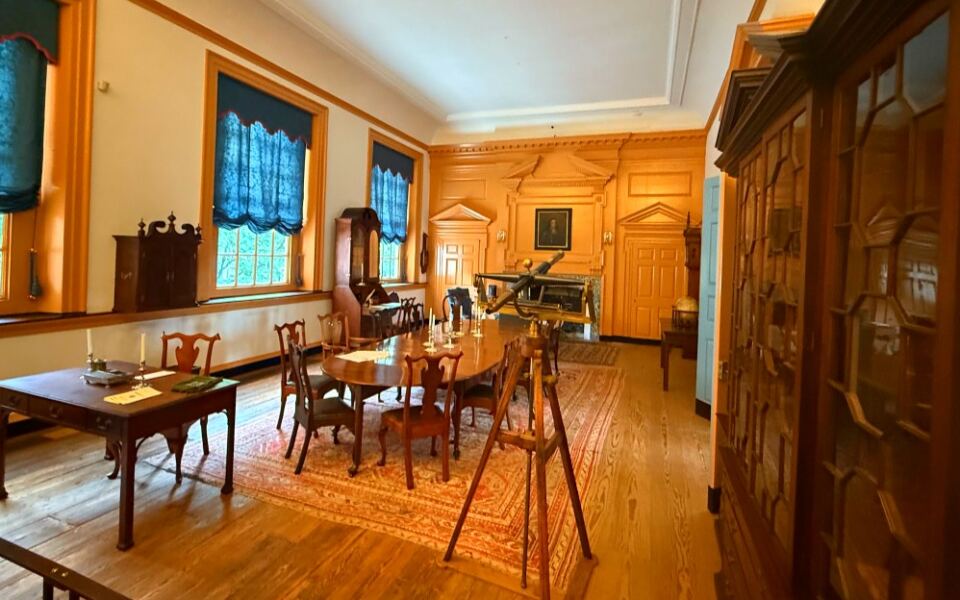
Two of the most important votes in American history happened in one room. It’s called the Assembly Room, and it sits on the first floor of Independence Hall.
In July 1776, the Second Continental Congress met here and approved the Declaration of Independence. On July 4, delegates adopted the final wording that Thomas Jefferson drafted, with edits from the group.
That date became the country’s birthday.
Then, in the summer of 1787, delegates returned for the Constitutional Convention. They spent months arguing over how a national government should be built.
On September 17, 1787, they signed the U.S. Constitution in this same space.
Today, the room is set up to look the way it did during those meetings. Tables are covered in cloth, and chairs face the front where the presiding officer sat.
Most of the furniture dates from the period, though not every piece was used by the delegates themselves.
I like picturing how hot and stuffy it must have been. The delegates kept the windows shut during the 1787 meetings to keep their talks secret.
One item in the room, however, really is original, and it has a great story attached.
Washington’s Rising Sun Chair
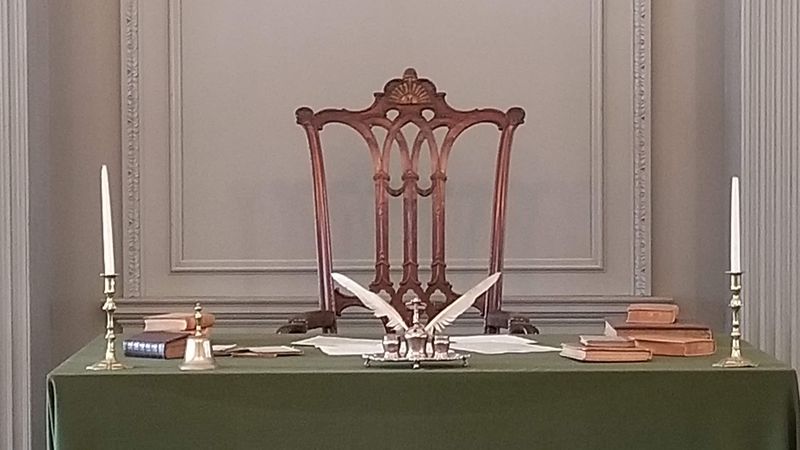
George Washington spent the summer of 1787 sitting in one particular chair. He was the president of the Constitutional Convention, so he sat at the front of the room facing everyone else.
The chair has a carved and painted half sun on its top rail. That design gave it the nickname the Rising Sun Chair.
It was made by Philadelphia cabinetmaker John Folwell in 1779.
Here’s the fun part. As delegates signed the Constitution, Benjamin Franklin pointed at the sun on the chair.
According to James Madison’s notes, Franklin said he had often wondered whether it was rising or setting. Now he was happy to say it was rising.
Franklin was 81 years old at the time. He had seen plenty of hard years, so his hopeful words carried real weight with the group.
The chair still sits in the Assembly Room today. It’s one of the few objects you can see that was actually there during the convention.
When you visit, take a moment to find it at the front of the room. I’d argue it’s the most meaningful piece of furniture in Pennsylvania.
Across the Hall Sits a Courtroom
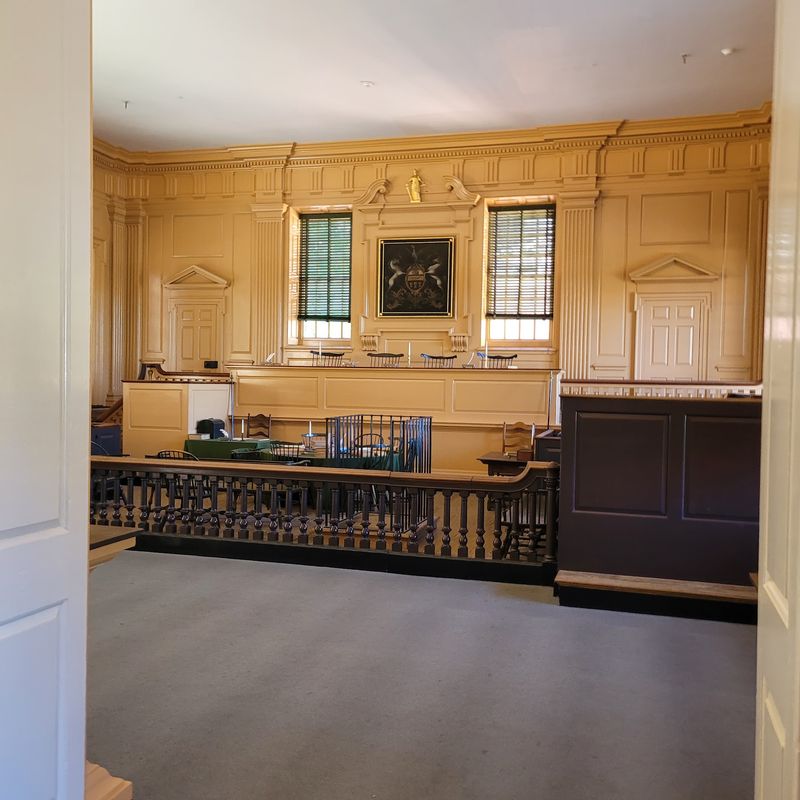
Most people rush toward the Assembly Room and barely notice the room on the other side of the hallway. That’s a shame, because it tells its own story.
This space is the Pennsylvania Supreme Court Chamber. Back in colonial times, the court held sessions here.
Judges sat on a raised bench, and the room was open to the public through a wide arched entryway.
Why leave it open? The idea was that justice should be seen by ordinary people.
Anyone walking through the central hall could look in and watch a case.
The room includes a judges’ bench, a spot for the jury, and a small enclosed area where an accused person would stand. Seeing it helps you understand how courts worked in the 1700s.
I appreciate how this room balances out the visit. The Assembly Room shows where laws and big ideas were born.
The courtroom shows where those ideas met real life.
Tours usually stop in both rooms on the first floor. Together they make up most of what you’ll see inside, so give each one your full attention.
The second floor, though, has its own surprises.
Upstairs Rooms Worth Asking About
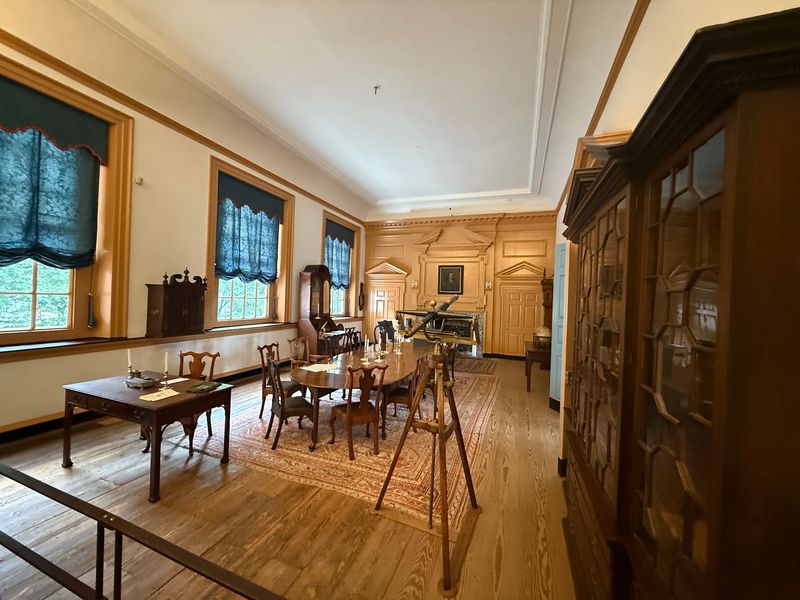
Climbing the stairs in Independence Hall reveals a very different side of the building. The second floor was used for gatherings, meetings, and official business.
The largest space up there is the Long Gallery. It stretches across the front of the building.
In colonial days, it hosted banquets and celebrations for city leaders and important guests.
Nearby rooms include the Governor’s Council Chamber and the Committee Room. Pennsylvania officials met in these smaller spaces to handle everyday government work.
Here’s a practical tip. Regular tours focus on the first floor.
Some recent visitors mention an extended tour that includes the upstairs, so check the park service website for current options before you go.
I’d make the effort if I had the chance. The second floor shows how the building worked on normal days, when there was no famous vote happening downstairs.
Also, the grand central staircase is worth a look on your way. It connects the two floors inside the tower area, which leads straight to the building’s most recognizable feature outside.
A Tower With a Bell Story
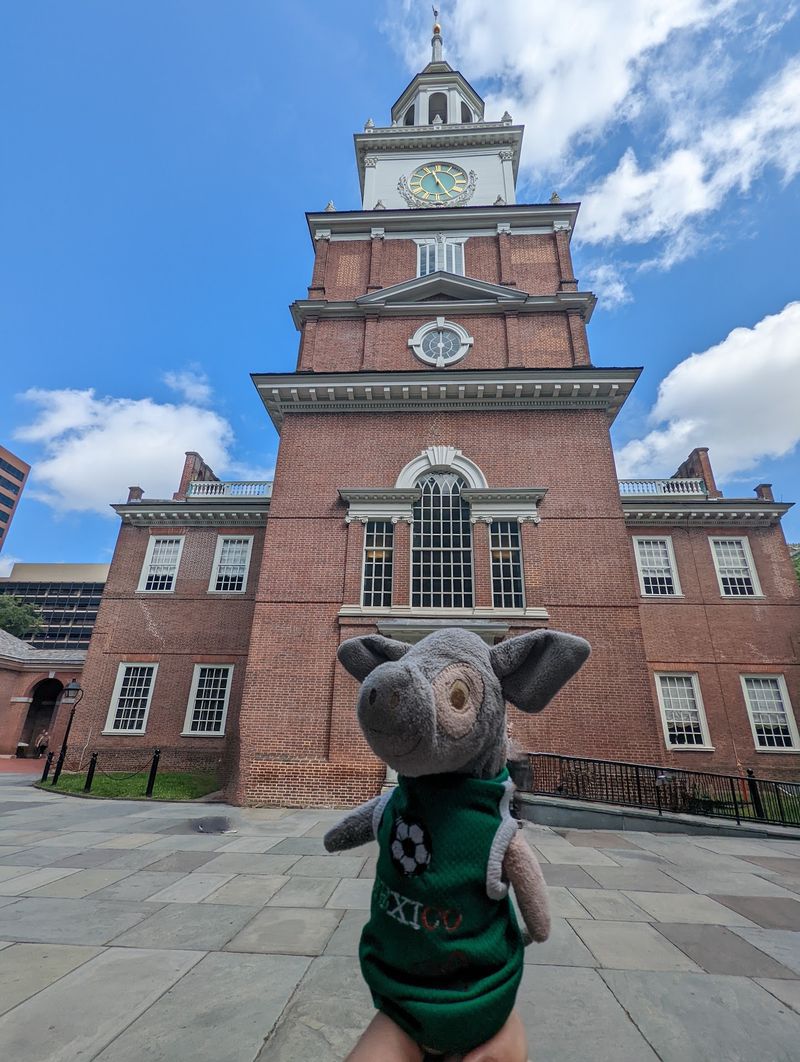
Long before it moved to its own glass building, the Liberty Bell hung in the steeple of Independence Hall. That’s right, the famous cracked bell called this tower home.
The bell arrived in 1752 to ring for the Pennsylvania State House. Its inscription comes from the Bible and talks about proclaiming liberty throughout all the land.
Much later, people fighting to end slavery adopted it as a symbol and gave it the name Liberty Bell.
The tower you see today is not the original one. The first wooden steeple was in poor shape, so it was taken down.
Architect William Strickland designed a new steeple in 1828.
The tower also holds a clock and a newer bell. That newer bell, called the Centennial Bell, was made for the country’s 100th birthday in 1876.
Standing on the lawn, look up at the steeple for a minute. It’s one of the most photographed rooftops in Pennsylvania, and for good reason.
The Liberty Bell itself now sits right across the street. Seeing both on the same day is easy, which brings up the important topic of planning.
Tickets Cost Almost Nothing but Go Fast
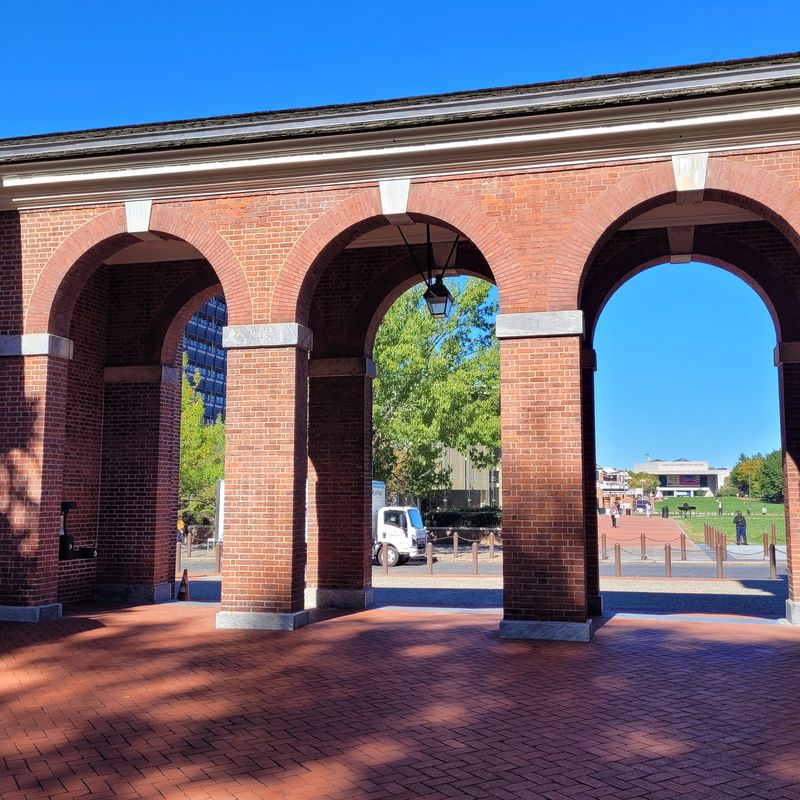
Getting inside Independence Hall takes a little planning. Entry is free, but during busy months you need a timed ticket.
Tickets are reserved through Recreation.gov, and there’s a small booking fee per ticket. They can sell out weeks ahead, especially in spring and summer.
Booking early is the safest move.
Missed out? Some tickets are released the day before, though they disappear quickly.
A limited number of same-day tickets may also be available in the morning at the Independence Visitor Center.
Hours are generally 9 a.m. to 5 p.m. Recent visitors say early hours may allow entry without a guided tour, before rangers switch to tour groups.
Policies change, so check the official park service page before your trip.
Plan to arrive about 30 minutes early. You’ll go through airport-style security, which means emptying pockets and possibly removing your belt.
I’d also pack light. Big bags slow things down at the checkpoint.
A small bag, comfortable shoes, and your ticket ready on your phone will make the morning much smoother. After that, the people leading the tour take over.
Rangers Who Make History Talk
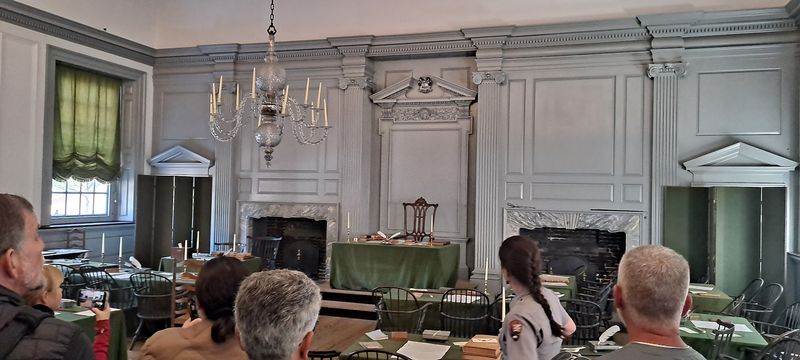
Every tour inside Independence Hall is led by National Park Service rangers. These are the folks in the flat hats and gray and green uniforms, and they really know their stuff.
Tours are short, often around 20 to 30 minutes. That might sound quick, but the rangers pack a lot into that time.
They explain who sat where, what was argued, and why it mattered.
Some rangers ask the group questions or invite visitors to help retell parts of the story. That makes the tour feel more like a conversation than a lecture.
If you have kids with you, encourage them to ask a question. Rangers are used to all kinds of curious minds, from second graders to retired history teachers.
I like that the tours stay focused. You aren’t wandering a giant museum.
You’re hearing the important parts in the exact rooms where they happened.
Write down a question before you go. Maybe you want to know how long the 1787 debates lasted.
Rangers love those kinds of details. Once your tour ends, though, your history day doesn’t need to stop.
Next Door Neighbors With Their Own Stories
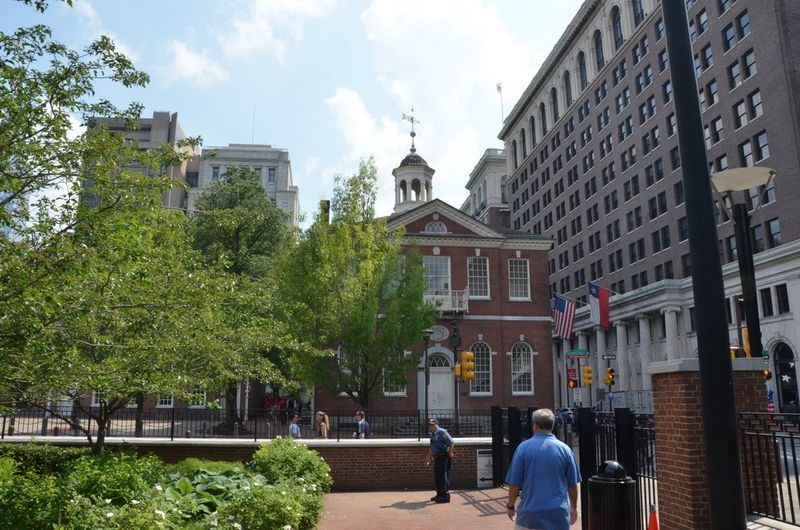
Congress Hall stands right next to Independence Hall on the west side. From 1790 to 1800, Philadelphia was the nation’s capital, and the U.S.
Congress met in this building.
The first floor held the House of Representatives. The Senate met upstairs.
George Washington was inaugurated for his second term here in 1793, and John Adams took office here in 1797.
On the east side sits Old City Hall. It once housed the U.S.
Supreme Court during those same capital years.
Recent visitors say Congress Hall can be visited without a reserved ticket, with groups going in for short ranger talks. Lines can form, so plan some extra time.
I’d strongly suggest not skipping Congress Hall. It shows what happened after the Constitution was signed, when the new government actually got to work.
Together, these three buildings sit on Independence Square. They form one of the most important city blocks in American history.
And just behind them is a green space that is easy to overlook.
A Square Where the Declaration Was Read Aloud
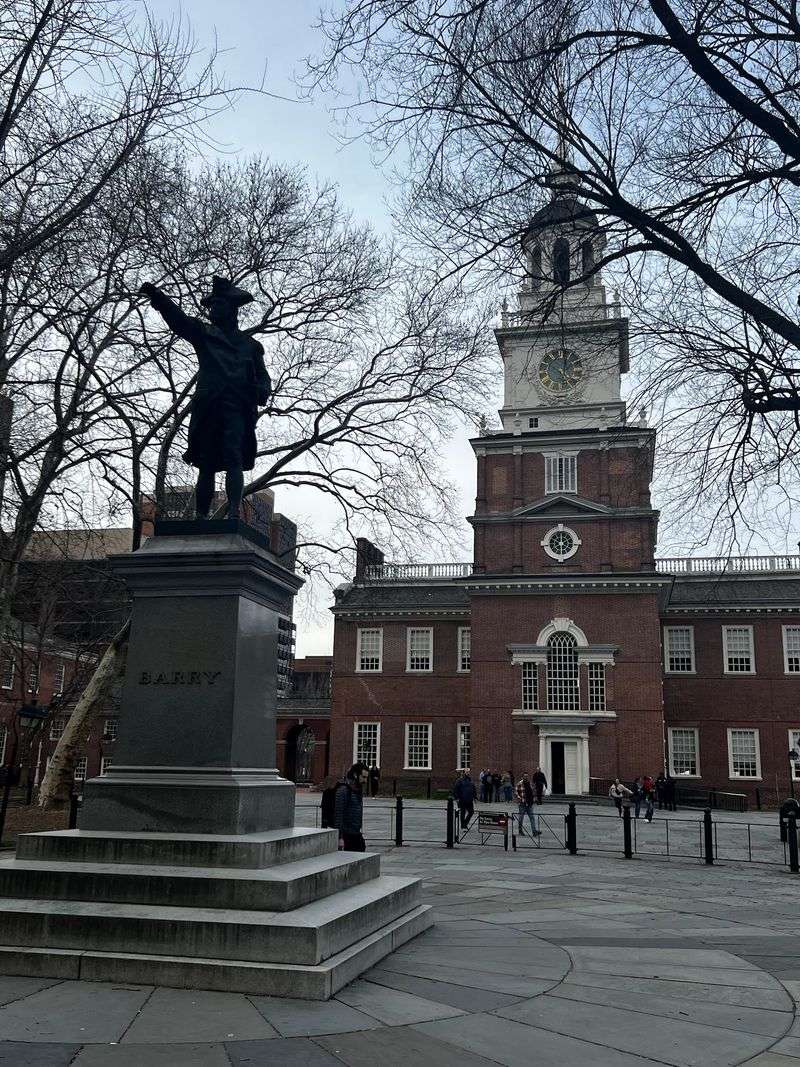
On July 8, 1776, a crowd gathered behind the State House to hear something new. Colonel John Nixon read the Declaration of Independence out loud to the public for the first time in Philadelphia.
That spot is now called Independence Square. It sits behind Independence Hall, and you can walk around it freely.
Brick paths and tall shade trees make it a calm break from the city streets.
It’s a good place to rest your feet between tours. Families often relax on the benches, and it works well for a quick snack before heading to the next site.
Out front, on Chestnut Street, look for the statue of George Washington. It stands near the entrance and makes a popular photo spot.
I like ending a visit in the square. After hearing about long debates inside, it feels right to stand where regular people first heard the words that would change their lives.
Take a slow walk around the building. Seeing the hall from the back gives you a fresh angle, and the steeple looks just as impressive from this side as it does from Chestnut Street.
Share this story