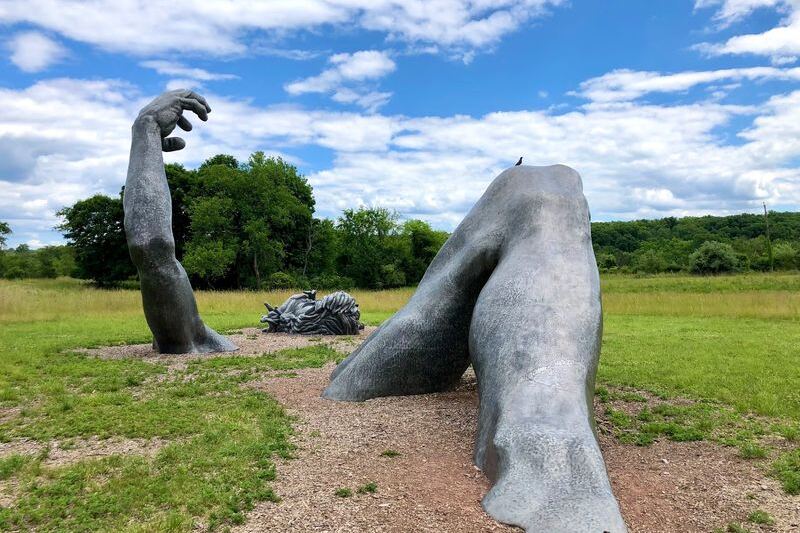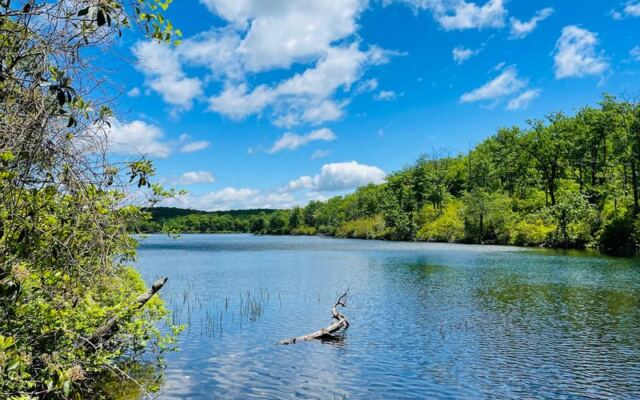
A waterfall near the parking area could easily be the whole outing. In this part of New Jersey, though, a trail keeps climbing toward a glacial lake that asks for more time and effort.
The choice is part of the appeal: stop after a short walk, or keep going to see what waits higher up. Sunfish Pond rewards curious hikers with a destination that feels very different from the quick stop below.
A Highland Lake in Hardwick Township
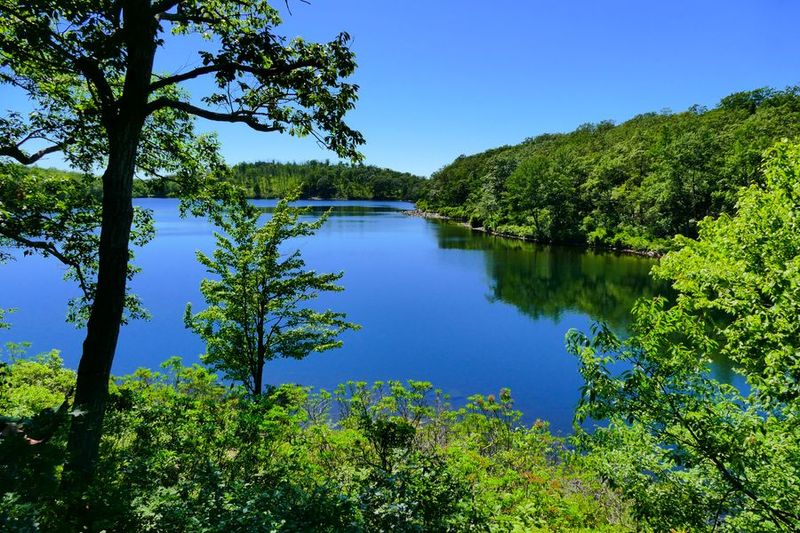
The map label gives away the destination, but not the effort behind reaching it. Sunfish Pond is a glacial lake in Hardwick Township, NJ 07832, USA, reached by hiking through hardwood forest rather than by taking a short walk from a roadside lot.
The Appalachian Trail is one way to get there, and other marked trails create different approaches.
That matters when planning the day. Sunfish Pond is not simply an extra stop beside the nearby waterfall; it is a separate hiking goal that asks you to allow time for both the climb and the return.
Descriptions of the outing range from moderate to hard, depending on the route and the hiker.
Its setting also makes a useful point about New Jersey. A trip within the state can involve a high-altitude lake, a long forest route, and careful decisions about terrain.
The pond earns its place on the itinerary well before anyone reaches the shore.
A Story Written by a Glacier
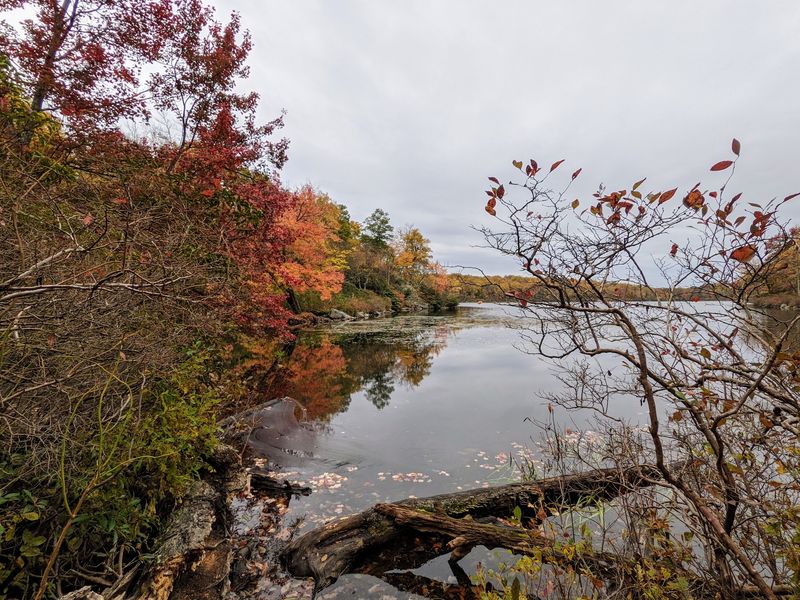
Long before hikers debated which trail to take, a glacier helped shape the basin that holds Sunfish Pond. Its glacial origin is more than a bit of background trivia.
It explains why the destination stands apart from an ordinary pond encountered during a walk in the woods.
Information described on a sign at the lake points to its unusual acidic composition. The same account identifies Sunfish Pond as one of New Jersey’s seven natural wonders and says it received a Natural Landmark designation in 1970.
Those are details worth looking for on site rather than treating the lake as just another turnaround point.
Even without a geology lesson, the basic story gives the hike a stronger purpose. The trail leads to a natural feature shaped over a far longer span than any marked route.
First comes the practical question of getting uphill; then comes the reason this particular uphill trip belongs on a New Jersey hiking list.
The Appalachian Trail Approach
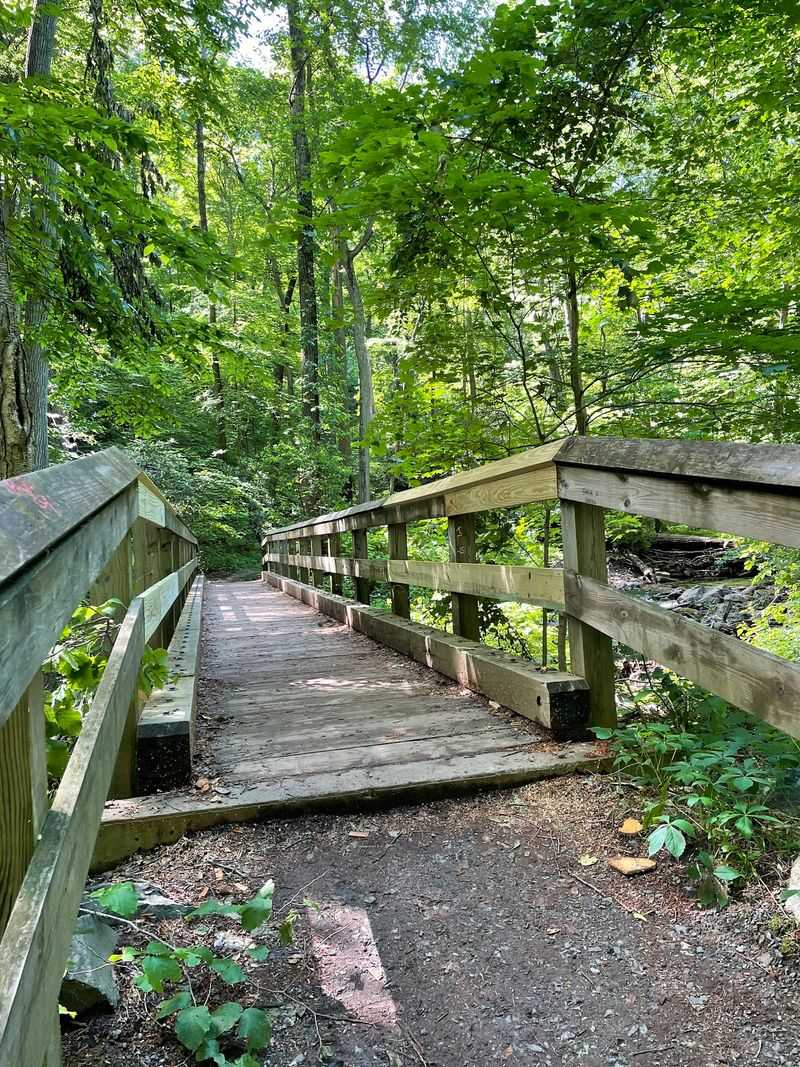
A white trail marker can turn a simple lake trip into a much bigger walking plan. The Appalachian Trail provides an approach to Sunfish Pond, and accounts of this route describe stretches that are rocky, with muddy patches possible after rain.
One account describes an uphill stretch of about four miles from the Water Gap to the pond.
Another describes a longer outing beginning near Kittatinny Park, going toward the pond on the Appalachian Trail, then returning by Dunnfield Creek Trail. That outing was reported at about 9.5 miles and included several creek crossings on the return.
It is an example of one completed route, not a fixed distance for every hike here.
Route choice deserves more attention than the lake’s small name might suggest. Before starting, decide where the return trail meets the outward route and how much time the full walk may take.
Reaching Sunfish Pond is satisfying; knowing the way back is just as useful.
A Steeper Orange Trail Option
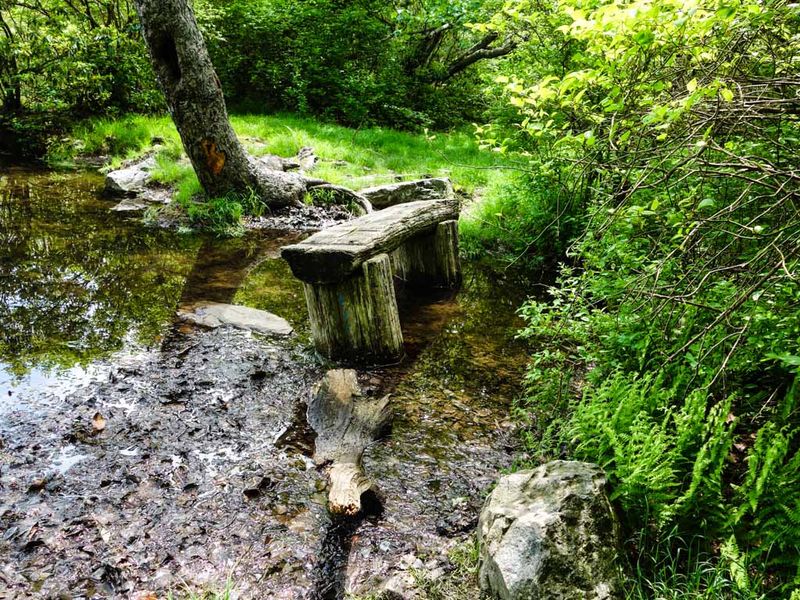
Not every route asks for the same kind of effort. Hikers describing the orange-marked approach to Sunfish Pond report a steep uphill section, with one account putting the climb at about 1.3 miles.
Shorter, in this case, does not necessarily mean easier.
An account of a Douglas parking area approach describes a choice between orange and red markings or a blue square with a white border. In that account, the first option is shorter and steeper.
Trail descriptions can be confusing when several colors and routes appear in the same area, so the useful takeaway is to choose a complete route before setting off, not to follow whichever marker appears first.
The orange option suits hikers who are comfortable with a sustained climb and who have allowed for the rocky ground near the pond as well. Anyone seeking a casual stroll should take the word uphill seriously.
Sunfish Pond does not require a race to the top, and a deliberate pace makes more sense than a quick start that leaves little energy for the return.
Rocky Ground Along the Shore
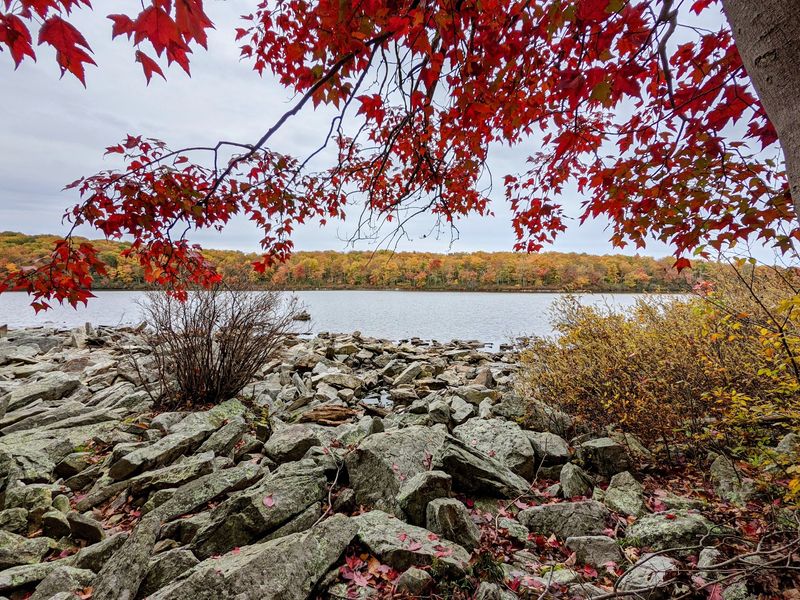
The climb is not the only part that asks hikers to pay attention. Accounts of the white-marked trail around Sunfish Pond describe rocky footing along the water.
Some people find that terrain a satisfying part of the outing; others spend so much time checking their steps that they have less time to take in the setting.
That difference is especially useful for groups to consider. A route that feels manageable to someone accustomed to uneven trails may feel much more demanding to a hiker expecting a level lakeside path.
Bringing children along also changes the pace, particularly where the ground requires careful steps.
Plan the shore section as part of the hike rather than as an easy reward after it. Allow time to move steadily, and do not assume the route becomes simpler once the lake appears.
The destination may be a pond, but the path around it still has plenty to say about the kind of outing this is.
The Pond’s Unusual Fish
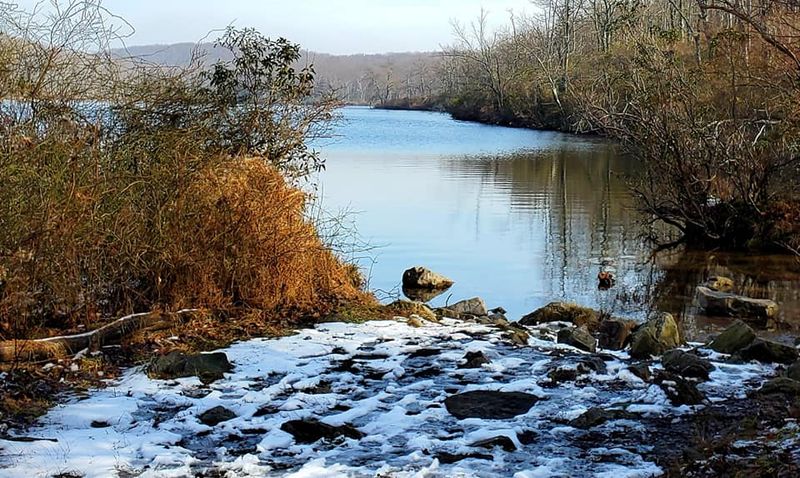
The name Sunfish Pond is more than a pleasant label on a map. Information described on a sign at the lake connects its acidic water with the small number of fish species able to live there, including pumpkinseed sunfish and yellow perch.
It is a specific natural detail that makes the destination more interesting than a generic pause at the end of a climb.
Accounts from the shoreline also mention frogs, fish, and occasional snakes near the water’s edge. Wildlife is never an appointment, so the better reason to go is the lake and its setting, with any animal encounter treated as an extra.
The reported acidity is also a reminder not to treat the pond as a swimming stop; one account describes a sign prohibiting swimming.
Sunfish Pond rewards curiosity without asking hikers to become experts. A little context about its water and hardy fish changes how the place is understood.
The trail brings people to a lake with its own distinct conditions.
The Waterfall Before the Climb
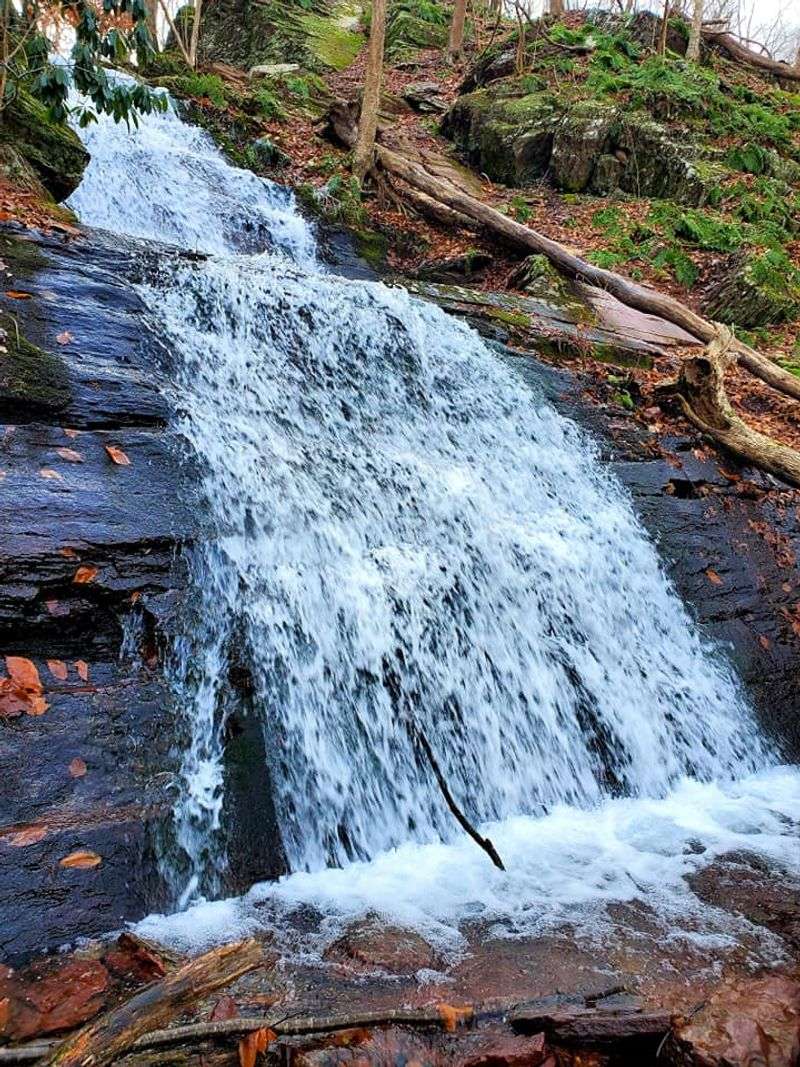
Laurel Falls gives the day an appealing decision point. One hiking account describes the falls as a walk of about five minutes from a parking area, while the route to Sunfish Pond requires a much more substantial effort.
That contrast explains the title of this outing: the waterfall can come first, and the highland lake remains the larger goal.
The shorter stop is not a substitute that everyone must avoid. Someone short on time, or unsure about a steep and rocky hike, can choose the falls without committing to the pond.
For hikers prepared for the longer route, it offers a nearby starting chapter before the trail demands closer attention.
Keep those two experiences distinct when making plans. The reported five-minute walk applies to Laurel Falls from a particular parking area, not to Sunfish Pond.
A quick waterfall stop can fit into a flexible day; the lake calls for a route, suitable footwear, and enough time to get back.
A Quieter Goal for Prepared Hikers
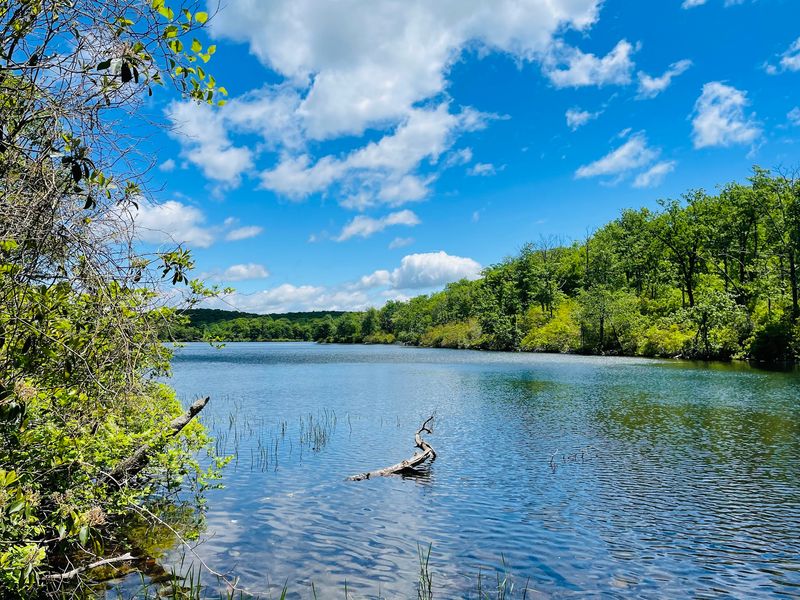
A lake reached only after a real hike appeals to a particular kind of day-tripper. Sunfish Pond suits people who want the walk to be part of the destination, not just a way to reach it.
Hiking accounts describe worthwhile views and a rewarding arrival, but they also make clear that the route can be hard work.
Quiet is possible here, not guaranteed. One account recalls a peaceful Sunday, while others describe crowded Saturdays and limited parking.
The experience can also depend on the chosen route: a longer loop may offer a different pace from the busier, steeper paths near a lot. None of that promises an empty trail, but it helps set realistic expectations.
For New Jersey residents who know the state has serious hiking beyond its most familiar outings, the pond makes a strong case. It asks for patience and sound route choices rather than special equipment or grand claims.
Its appeal is straightforward: the lake gives the effort a clear destination.
Parking, Timing, and Trail Basics
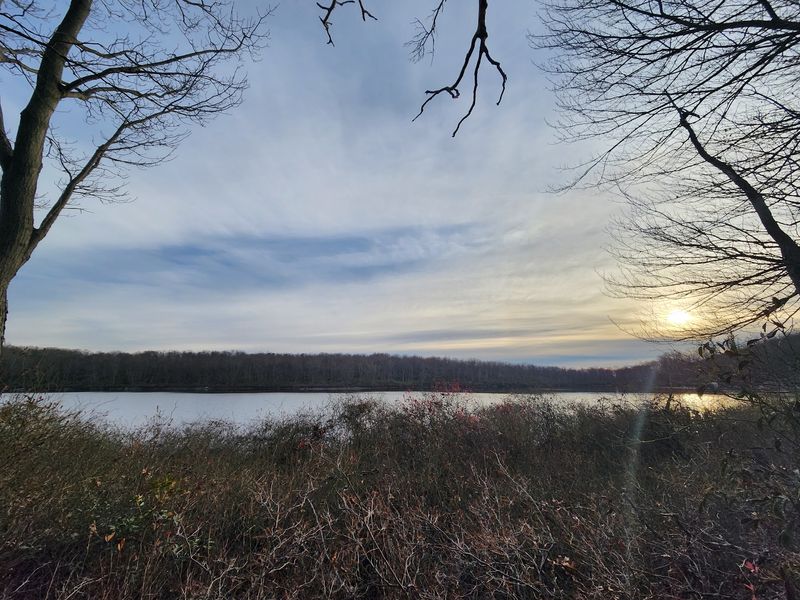
An early start may solve more than one problem on a Sunfish Pond day. Accounts describe limited parking, including spaces filling early, and one hiker found a summer Saturday especially difficult for parking.
A fall account also mentions Saturday crowds. Those reports are useful planning clues, though conditions can change from day to day.
Restroom information is mixed. One account says parking areas had restrooms, while others describe washrooms as an issue or report none along their outing.
Plan without assuming facilities will be available on the trail, and carry the water needed for a demanding hike. Mud after rain and rocky sections are also worth factoring into the schedule.
No verified opening hours, admission cost, current parking rules, or dependable shuttle schedule are supplied for Sunfish Pond. Check current access details with the relevant park or trail manager before traveling, especially if a particular lot is essential to your route.
A good plan leaves room for both the hike and a change of plans.
A Lake Worth Saving for Last
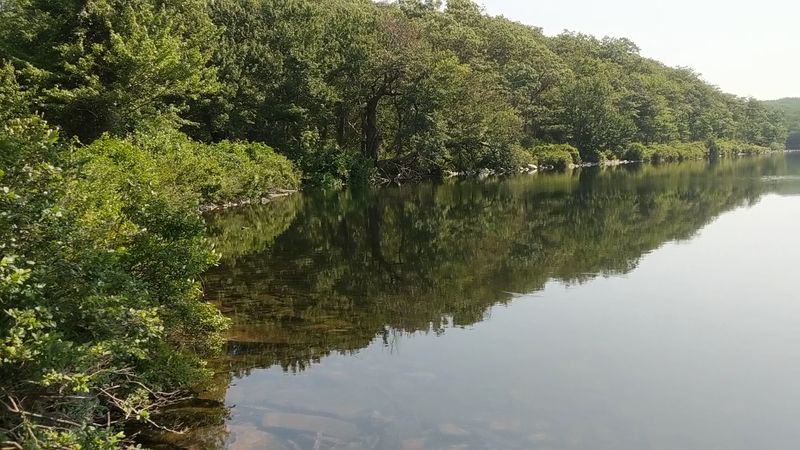
The best reason to keep going past a short waterfall outing is not that every hiker needs a harder challenge. Sunfish Pond offers a different kind of destination: a glacial lake reached through forest, with a distinct natural history and routes that demand an honest look at time and ability.
Its appeal comes with conditions. The orange approach can be steep, the shoreline can be rocky, and longer Appalachian Trail plans take preparation.
Parking and facilities may also complicate a casual start. Those details do not lessen the trip; they help people choose it for the right day and with the right expectations.
There is room for two good outcomes here. A short stop at Laurel Falls can be enough when time is limited, while prepared hikers can continue toward the pond.
For the second group, the lake provides a fitting final destination, not because it is effortless or guaranteed to be quiet, but because the journey gives this New Jersey place its character.
Share this story