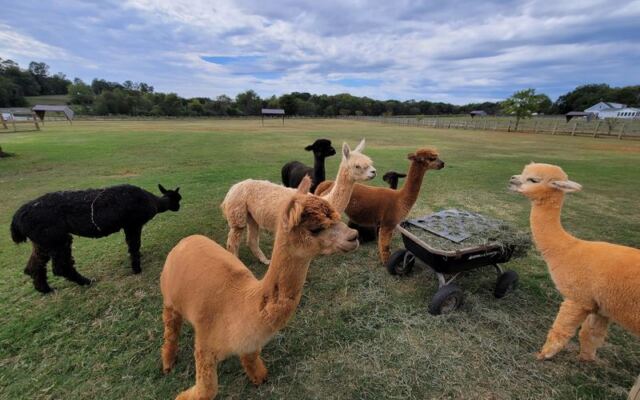
North Carolina has a way of hiding its most delightful surprises down quiet country roads, and this one involves a herd of fluffy, wide-eyed alpacas waiting to eat right out of your hand. Forget the usual farm tour where you peer over a fence and snap a photo from a distance.
Here, you actually learn to halter an alpaca, lead it down a wooded trail, and feel its soft nose nudge your palm for a treat. If you have never had a 150-pound animal blink its long lashes at you from two inches away, you are about to understand why people keep coming back to this particular corner of the state.
Meet the Stony Point farm behind the guided alpaca walk
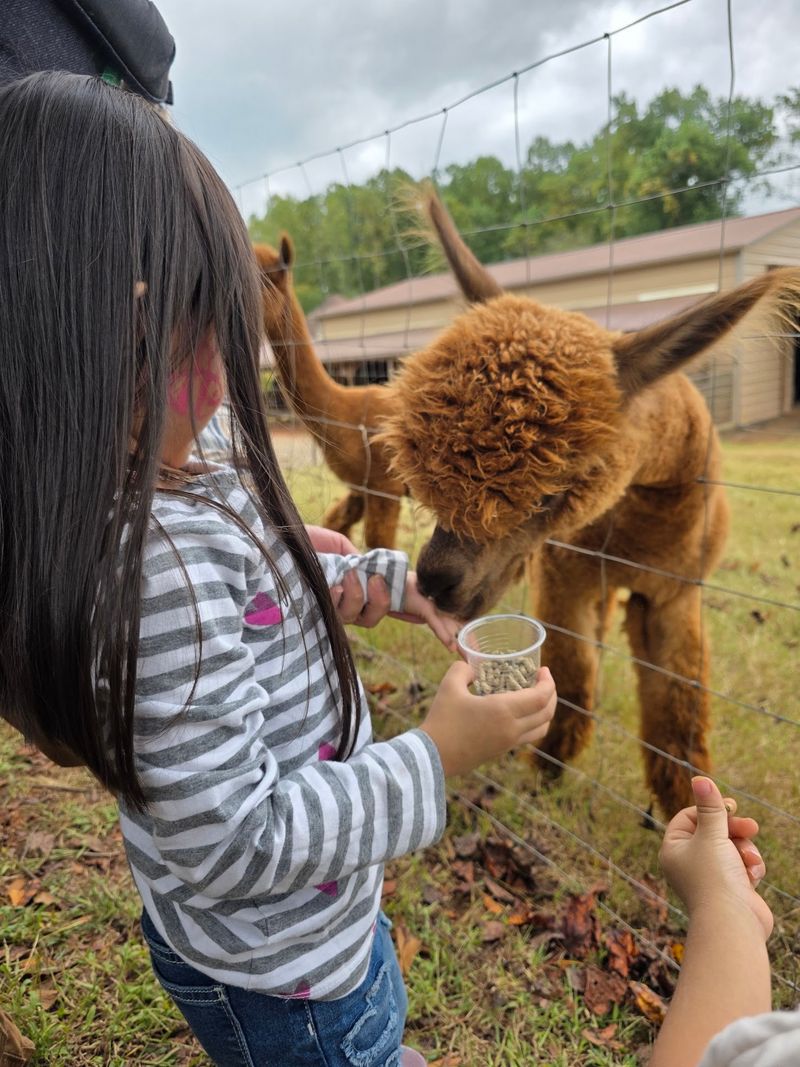
Tucked into the foothills of western North Carolina, Serenity Alpacas at 226 Walker Valley Drive in Stony Point is not a petting zoo or a drive-through wildlife park. It is a working farm that opens its gates to visitors who want a real, hands-on encounter with alpacas under the steady guidance of the farm’s own staff.
The farm sits within easy driving distance of Statesville, Charlotte, Hickory, Mooresville, and Lake Norman, making it a practical day trip for a wide stretch of the Piedmont. Serenity Alpacas’ official trail walk page describes an experience built around learning, movement, and genuine animal contact rather than passive observation from behind a rope line.
One thing worth clarifying right away: the visit is guided, not free-roaming. Guests do not wander through an entire herd at will.
Instead, they work alongside staff, learn to halter selected alpacas, and lead those animals along a designated trail.
That distinction matters because it shapes the whole experience. The farm’s approach keeps both the animals and the visitors comfortable, and it means you leave knowing you actually handled a livestock animal correctly rather than just standing near one.
The farm’s tours and amenities page describes the broader lineup of experiences available, from the flagship trail walk to shorter, differently structured options that focus on feeding and cuddling.
Serenity Alpacas positions itself as a place for families, couples, and curious first-timers who want more than a backdrop for a photo. The staff’s involvement throughout the visit is what makes the difference between a rushed snapshot and a memory that sticks.
What happens on the Alpaca Trail Walk?
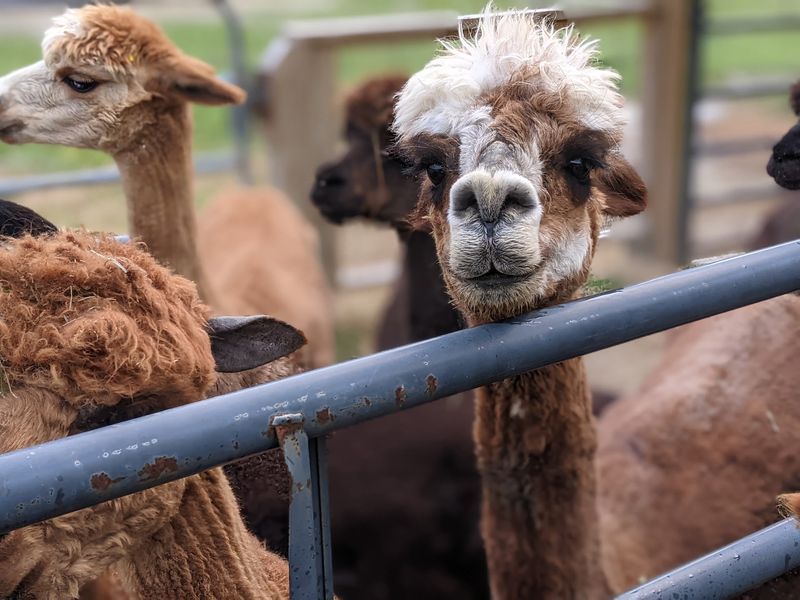
Picture roughly an hour and a half spent moving from a welcoming farm store to a wooded trail alongside an alpaca you have just learned to lead. That is the basic shape of the Alpaca Trail Walk at Serenity Alpacas, and the sequence makes the experience feel earned rather than handed to you.
According to the farm’s trail walk description, the visit opens inside the farm store, where guests get an introduction to alpacas before heading out to meet the animals in person. Staff then walk visitors through halter instruction, explaining how to fit the halter correctly and how to hold the lead so the alpaca stays calm and cooperative.
From there, the group heads onto the Alpaca Trail itself. The route covers roughly half a mile and moves through a mix of flat ground, gently hilly sections, and wooded stretches that feel genuinely rural rather than manicured.
The trail leads to a spring-fed creek and a picnic area called Camp Squirrel, giving the walk a natural endpoint that feels like a reward for the journey.
Expect an outdoor farm setting throughout. There are no paved walkways, no climate-controlled viewing areas, and no shortcuts through the terrain.
The trail’s variety of flat and hilly ground means the walk takes a little physical engagement, which is part of what makes it feel like an adventure rather than a simple attraction visit.
The farm requires a minimum of two alpacas per walk, so the experience always involves more than one animal. That minimum keeps the alpacas comfortable, since these are herd animals that do not do well in isolation.
Visitors benefit too, because leading an alpaca while another one walks nearby gives you a real sense of how these animals move and communicate with each other.
The trail walk sits at the center of what Serenity Alpacas offers across its full experience lineup, and it remains the option that puts visitors most directly in the role of handler rather than observer.
Feed and cuddle alpacas within the farm’s rules
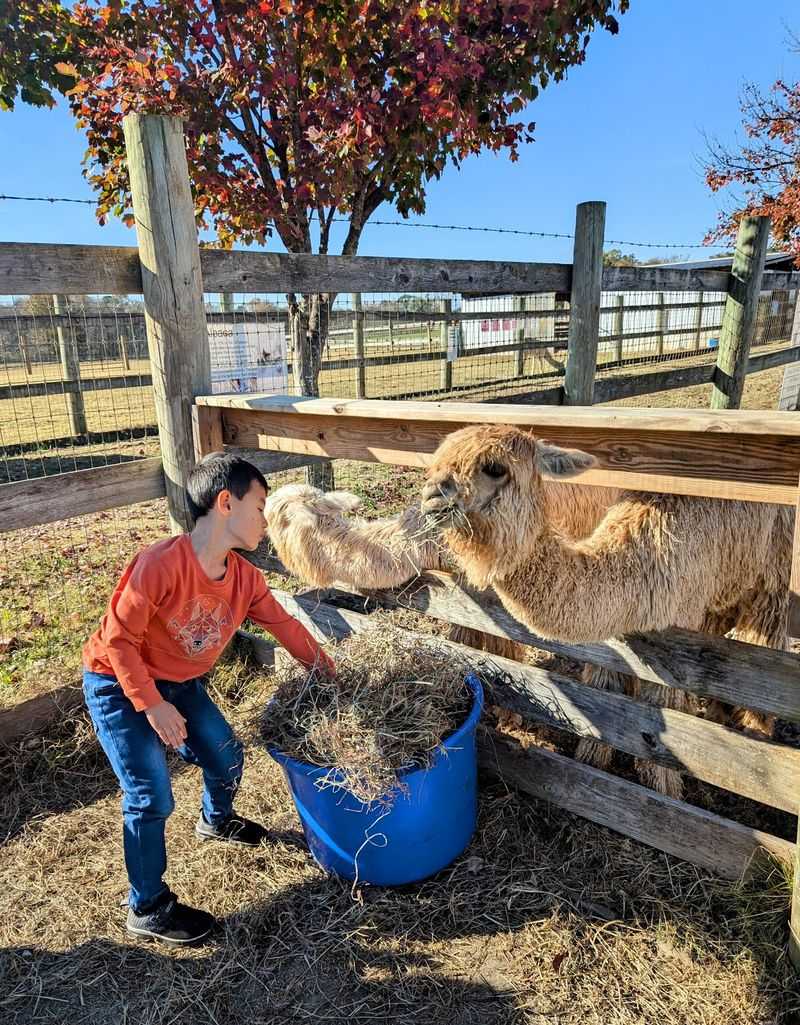
Hand-feeding an alpaca is one of those experiences that sounds simple until the animal’s warm nose actually presses against your palm and you feel the surprisingly deliberate way it picks up each piece of food. Serenity Alpacas builds that moment into the visit, but it comes with clear guidelines that protect both the animals and the guests.
The farm’s tours and amenities page describes opportunities to pet, feed, and cuddle alpacas as part of the farm experience. Those interactions are real and accessible, but they happen on the farm’s terms.
Visitors use food that the farm supplies or explicitly approves, not snacks from their own bags. North Carolina public-health guidance for animal settings is direct on this point: guests at animal contact venues should use animal food rather than human food, and that principle applies here.
Bringing carrots from home, crackers from your pocket, or any personal snack and offering it to an alpaca is something to avoid entirely. Alpacas have specific dietary needs, and feeding them unapproved food can cause digestive problems even when the item seems harmless.
The farm’s staff will provide what the animals need.
Beyond feeding, the Serenity Alpacas experience includes petting and cuddling as described in the farm’s own materials. Each alpaca has its own personality, and some are more enthusiastic about close contact than others.
Staff read the animals’ comfort level throughout the visit, and that guidance shapes what kind of cuddling is appropriate at any given moment.
Serenity Alpacas also lists two separately structured experiences on its booking page: an Alpaca Hugs Tour and an Educational Alpaca Tour. These are distinct from the trail walk and organized differently, though visitors should confirm the current format and availability of each directly with the farm before booking.
A cria encounter may depend on timing
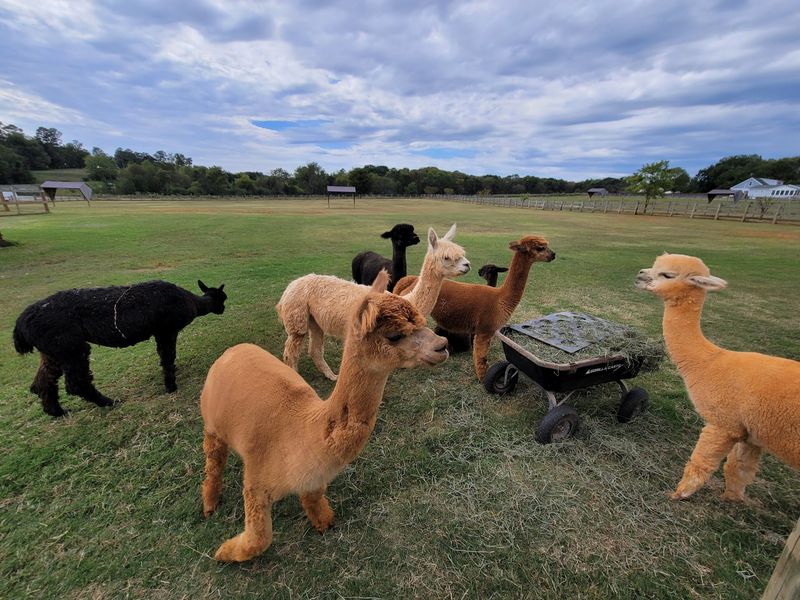
Baby alpacas carry a name that most people have never heard before they visit a farm like this one. A young alpaca is called a cria, and even the word has a softness to it that matches the animal.
Crias are born with the same oversized eyes and fluffy fiber as adult alpacas, but in a compact, wobbly package that tends to stop visitors mid-stride.
Serenity Alpacas’ herd page has identified at least one baby alpaca as part of the farm’s herd, so crias are not a foreign concept at this farm. A family-travel account published in 2025 on Kidding Around Charlotte describes a visitor holding a two-month-old cria during a visit, which confirms that this kind of close encounter has happened and is within the range of what the farm can offer.
What the farm’s current official booking materials do not do is promise that every visitor will hold or cuddle a baby alpaca. That gap between possibility and guarantee is important to understand before you go.
Whether a cria is available for handling on any given visit depends on several factors that shift from week to week.
Age and health of the cria matter significantly. Very young crias need uninterrupted time with their mothers to bond and feed properly.
Merck Veterinary Manual guidance on camelid herd health notes that newborn camelids require close maternal bonding in their earliest days, and disrupting that bond for visitor handling is not in the animal’s best interest. Staff at Serenity Alpacas make judgment calls based on each cria’s stage of development, temperament, and how the mother responds.
The most practical approach is to ask when booking whether a cria is currently available for interaction, and then hold that answer loosely. A farm visit built around the full trail walk, the hand-feeding, and the relationship with adult alpacas will be genuinely rewarding even if no baby makes an appearance that day.
A cria encounter, when it happens, becomes the unexpected bonus rather than the only thing you came for.
Check the price, age rules, and trail conditions
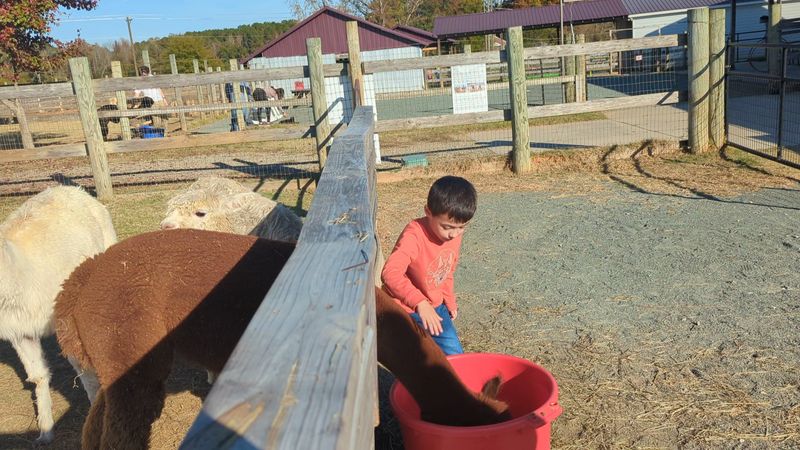
Before you load the car and head toward Stony Point, a few practical details will make the trip run more smoothly. Prices, age rules, and trail conditions each affect how the day unfolds, and none of them should be assumed without checking the farm’s current booking materials first.
As currently listed on the Alpaca Trail Walk page, the trail walk is priced at $35 per person who leads an alpaca, with an additional $15 for a participant who joins but does not lead their own animal. Children under 3 are listed as free.
These figures are time-sensitive: farm pricing can change, and what appears on the page today may differ by the time you book. Always confirm the current rate before purchasing.
The farm’s booking page also lists two other experiences at different price points. The Alpaca Hugs Tour is currently shown at $12, and the Educational Alpaca Tour at $20.
Both are structured separately from the trail walk, and visitors should verify what each includes and whether it fits their group’s interests before selecting one.
Age rules apply to who can lead an alpaca independently. Visitors must be at least 12 years old to handle their own animal on the trail.
Younger children are welcome but need to share an alpaca with an adult, which still makes for a memorable experience without putting the animal or the child in an awkward position.
The trail itself requires closed-toe shoes. This is not a suggestion, it is a practical requirement for walking alongside livestock on uneven outdoor terrain.
Sandals, flip-flops, and open-toe shoes are not appropriate for the route. Comfortable outdoor clothing suited to the weather makes the walk more enjoyable, since the trail moves through wooded and hilly sections that can feel quite different from a paved park path on a warm or breezy day.
The minimum of two alpacas per walk also shapes scheduling. Smaller groups should not expect a solo alpaca experience, and the farm may combine bookings or adjust animal assignments based on herd availability and the day’s conditions.
Confirming all of these details, including current availability and any seasonal adjustments, directly with Serenity Alpacas before your visit is the best way to avoid surprises at the gate.
Handle alpacas calmly and protect your health
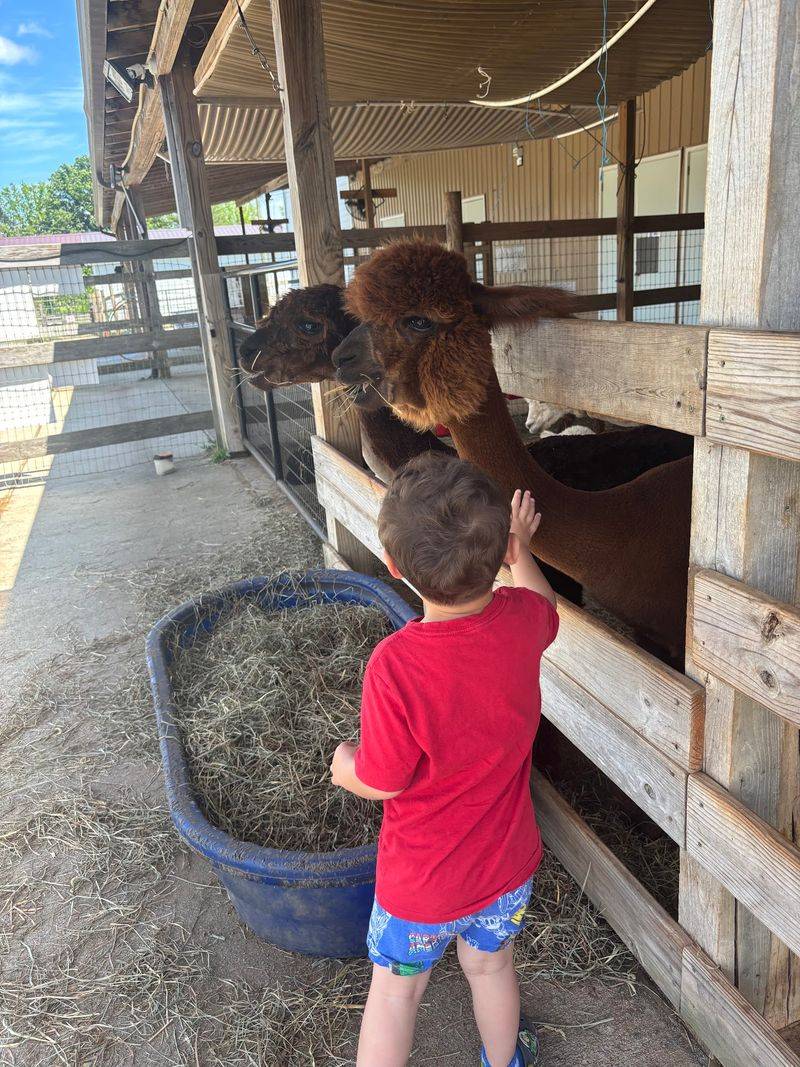
Alpacas have a reputation for being easygoing, and in the right conditions they absolutely are. But easygoing does not mean risk-free, and understanding how to behave around these animals makes the difference between a smooth, joyful visit and an uncomfortable moment for everyone involved.
The Alpaca Owners Association’s guidance on alpaca etiquette recommends approaching slowly, using a calm and quiet voice, and always asking the handler before touching or feeding an animal. Those three habits alone will carry you through most of the interaction without incident.
Sudden movements, loud noises, or crowding an alpaca from behind can trigger a stress response in even a well-trained animal.
Positioning matters more than most visitors expect. Standing directly behind an alpaca puts you in the path of a kick if the animal startles.
Grabbing its fiber, tail, face, or feet can provoke a sharp reaction because those are sensitive areas that alpacas instinctively protect. Let the animal approach you or move toward it from the side, and keep your hands in view.
According to Merck Veterinary Manual’s guidance on llama and alpaca management, camelids that are stressed, uncomfortable, startled, or in pain can bite, kick, or spit. Spitting is the behavior most people associate with alpacas, and the Alpaca Owners Association’s overview of alpaca behavior notes it tends to occur during food-related disputes or herd conflict.
Following the farm handler’s lead throughout the visit is the most reliable way to avoid triggering any of these responses.
Children need close supervision around any livestock. Keep small fingers away from the animals’ mouths, and make sure kids understand that grabbing or pulling at an alpaca is not appropriate even if the animal seems tolerant.
The farm’s staff will set the pace and signal what is welcome.
After the walk, wash your hands thoroughly with soap and running water before eating, drinking, or touching your face. CDC guidance on staying healthy around farm animals identifies handwashing after contact with animals, feed, fencing, buckets, or other farm equipment as a key step for visitors of all ages.
If soap and water are not immediately available, CDC guidance for animal exhibit visitors notes that hand sanitizer containing at least 60 percent alcohol can serve as a backup, though it does not replace soap and water. Keep food and drinks out of animal areas entirely, and eat only in designated spots away from the herd.
Book the experience for the walk, not a guaranteed baby photo
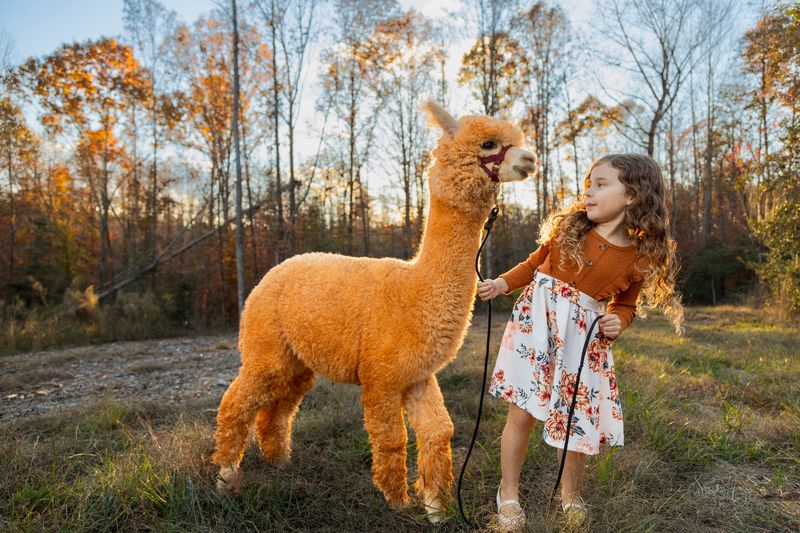
Serenity Alpacas delivers something genuinely rare: a guided outdoor experience where you are not just watching animals from a safe distance but actually walking beside one, holding its lead, and feeling the rhythm of the trail together. That core experience, the halter instruction, the half-mile route through wooded terrain, the hand-feeding at the farm’s direction, is worth the trip on its own terms.
A cria encounter, if it happens, adds a layer of magic that visitors tend to remember for years. But making a baby alpaca the only reason you go sets up a version of the visit that the farm cannot guarantee, and that is a setup worth avoiding.
Plan for the full Alpaca Trail Walk experience and let any cria interaction be the unexpected highlight rather than the ticket price you are trying to justify.
Before booking, confirm current prices, tour availability, age requirements, and any updates to the farm’s animal-access policies by checking the Serenity Alpacas booking page or reaching out to the farm directly. Details shift with the seasons and with the herd’s own rhythms.
The alpacas will be there, ready to blink those long lashes at you, and that alone tends to be more than enough.
Share this story