Oklahoma has a way of hiding its most stunning spots behind quiet back roads and unassuming trailheads. You might not expect much from a dam tucked into a wildlife refuge in the southwestern part of the state, but the moment you catch your first glimpse of the glassy water stretching out beneath granite peaks, something shifts.
The scene feels almost too serene to be real, like a painting someone forgot to hang in a museum. If you have ever needed a reason to pull off the highway and slow down, this is it.
Where Quanah Parker Dam Sits in the Oklahoma Landscape
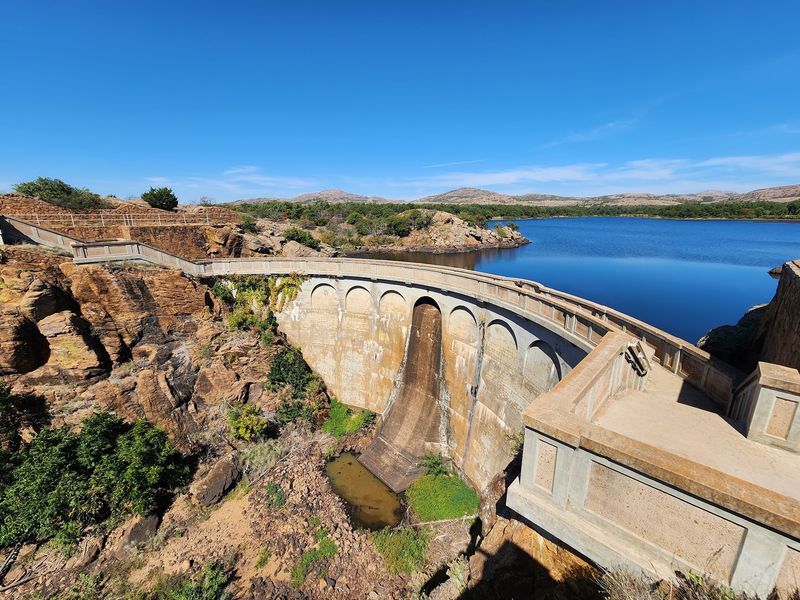
Tucked inside the Wichita Mountains Wildlife Refuge near Indiahoma, Oklahoma, Quanah Parker Dam holds back one of the most quietly spectacular lakes in the entire state. The dam sits along Little Baldy Trail, a spot that sounds modest on a map but delivers something far more dramatic in person.
Granite ridgelines rise on all sides, and the lake below mirrors the sky with an almost uncanny stillness.
The refuge itself covers hundreds of square miles of protected land in southwestern Oklahoma, making it one of the oldest federal wildlife refuges in the country. Quanah Parker Lake, which the dam creates, sits near the Doris Campground area and borders trails that wind through boulders and native grasslands.
Getting there feels like a slow reveal, with each curve of the road offering a slightly better preview of what waits ahead.
Named in honor of the legendary Comanche Chief Quanah Parker, the lake carries a sense of history that adds quiet weight to an already striking setting. Visitors arriving from Lawton or Cache often say the approach alone is worth the drive.
The dam anchors the whole scene like a stone frame around a living picture.
The Dam Itself and Its 1930s Roots
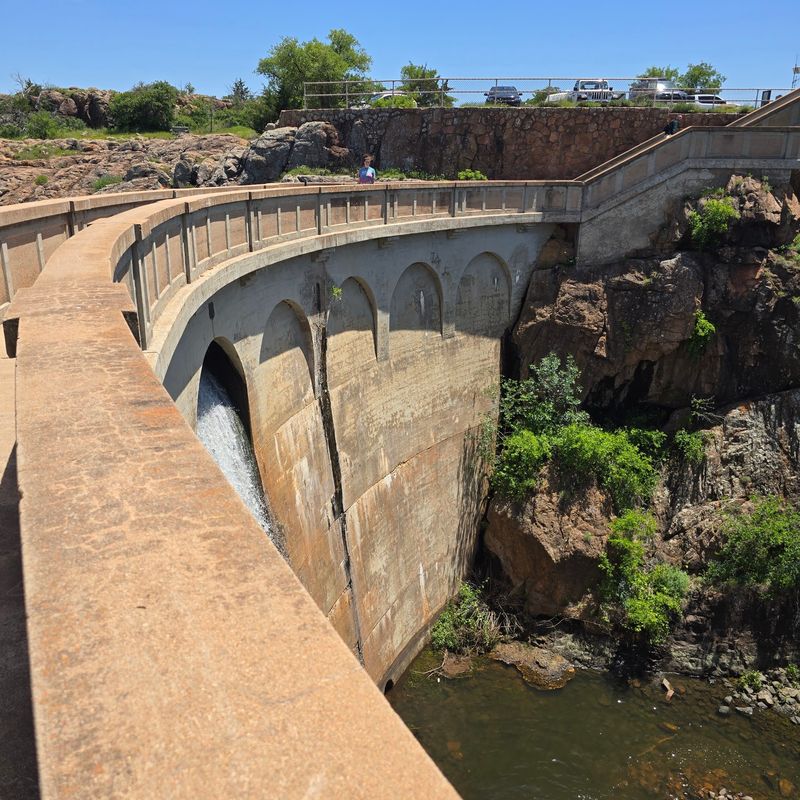
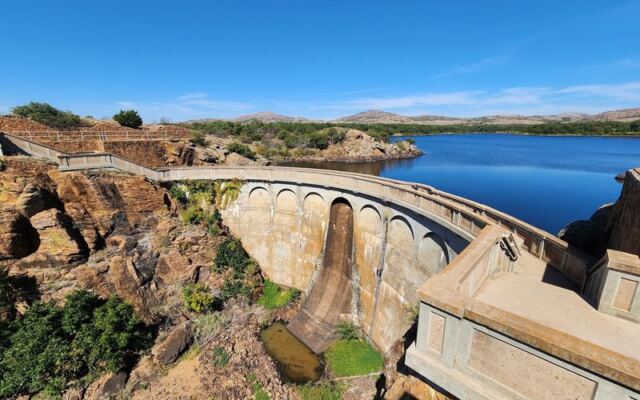
Built in the 1930s, Quanah Parker Dam carries the sturdy, deliberate craftsmanship of an era when structures were made to last generations. Visitors frequently note its impressive scale, with one person calling it one of the best-maintained dams they had ever seen.
The stonework has a rugged elegance to it, blending naturally into the granite landscape rather than interrupting it.
One of the most memorable features is the walkway across the dam itself. Crossing it puts you nearly at water level, close enough to feel the weight of all that stillness pressing against the structure beneath your feet.
When water flows over or around the dam, the sound adds a whole new layer to an already sensory-rich visit.
The architecture draws genuine admiration from people who stop expecting a simple photo opportunity and leave with a real appreciation for the engineering. Hikers heading toward Little Baldy often pause here longer than planned, taking in the view from both sides of the crossing.
For a structure that has stood for roughly nine decades, it still commands attention in a way that feels completely earned, not just historic.
The Lake Surface and Why the Views Stop People Cold
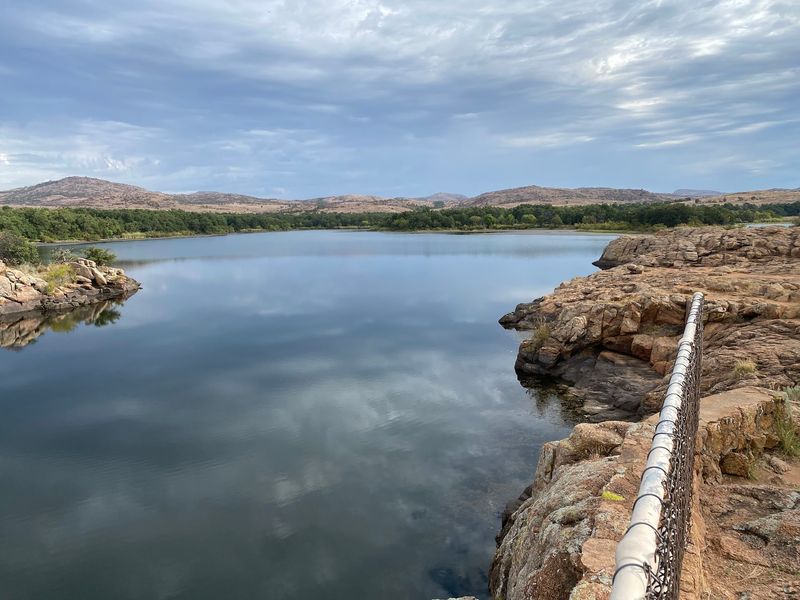
Calm barely covers it. On a quiet morning, the surface of Quanah Parker Lake reflects the surrounding granite mountains so clearly that visitors sometimes stop mid-step just to stare.
The water holds the color of the sky with a precision that makes the whole scene look slightly surreal, as though someone turned the saturation up just enough to make you question what you are looking at.
Early mornings and evenings tend to produce the most striking conditions, when the light goes low and golden and the lake absorbs every shade without a ripple to break the reflection. Photographers who make the trip specifically for the views rarely leave disappointed.
The combination of rugged rock formations and glassy water creates a visual contrast that is hard to find anywhere else in Oklahoma.
Even on busier spring weekends, the lake retains a sense of calm that feels almost protective. The surrounding refuge buffers outside noise, and the granite hills act as natural windbreaks that keep the surface smooth far longer than a typical lake might stay.
Several visitors have described the experience as genuinely breath-taking, a word that gets overused everywhere except, apparently, right here.
Wildlife That Shares the Shoreline With You
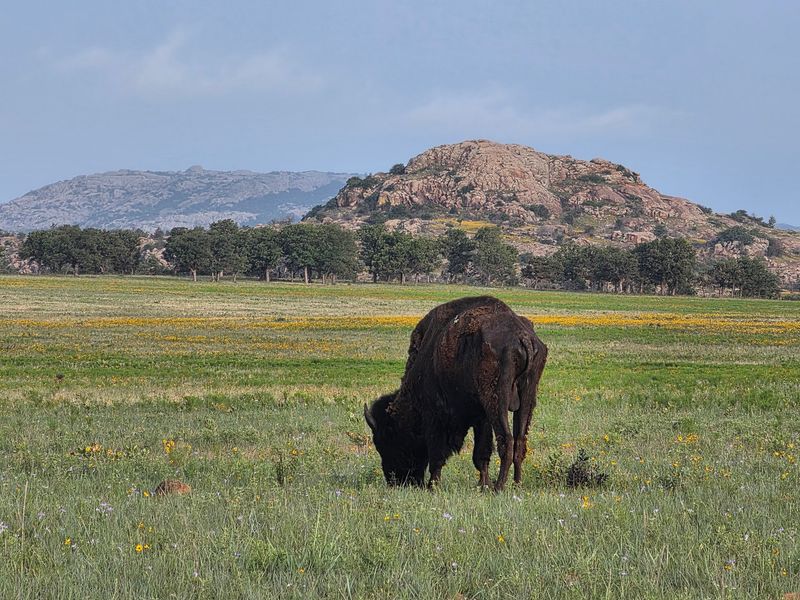
Sharing the scenery with bison is not something most people expect from a lake visit, but at Quanah Parker Lake, it happens regularly enough that visitors are advised to simply enjoy the moment from a respectful distance. The Wichita Mountains Wildlife Refuge supports thriving populations of bison, elk, white-tailed deer, and wild turkeys, all of which roam freely through the area surrounding the dam and lake.
Birds of prey are a common sight overhead, circling the granite ridges and occasionally dropping toward the water. Along the shoreline, frogs are plentiful enough that families with kids have turned catching and releasing them into a full afternoon activity.
One parent mentioned that the variety of frogs alone kept their children entertained for longer than any planned attraction might have.
Wildlife viewing ranks among the most-mentioned reasons people return to this spot again and again. The refuge setting means animals are not caged or staged but simply living out their routines in the same space you are walking through.
That proximity to something genuinely wild gives the visit a texture that no curated nature exhibit can quite replicate. Coming prepared with binoculars makes a real difference here.
Fishing the Lake and What Anglers Find There
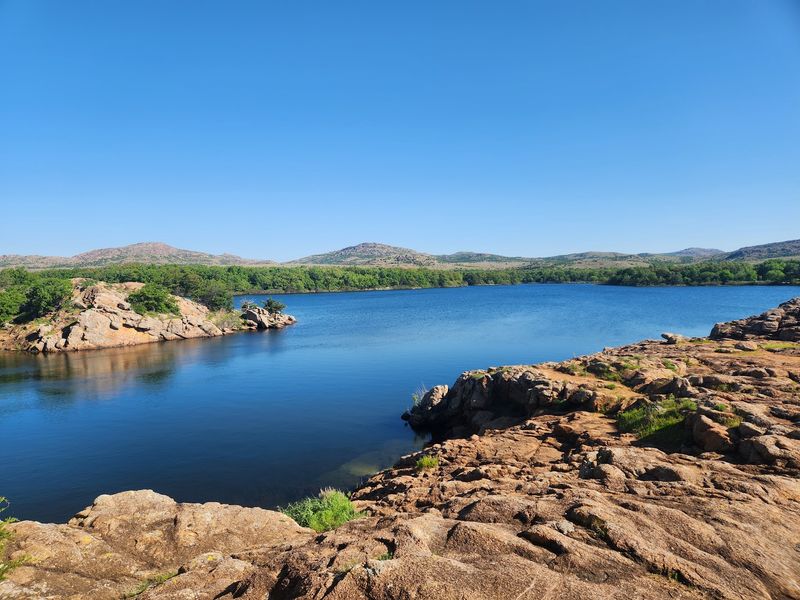
Fishing at Quanah Parker Lake comes with scenery that makes even a slow day on the water feel worthwhile. Anglers can target largemouth bass, channel catfish, sunfish, and crappie throughout the year, with early mornings and evenings consistently producing the most activity.
The water comes alive during those hours, and wildlife along the shoreline adds a bonus layer to the experience that most fishing spots simply cannot offer.
Locals who fish here regularly speak highly of the lake’s productivity, and the peaceful atmosphere makes it easy to spend several hours without feeling restless. The lack of heavy boat traffic keeps the water calm and the experience unhurried, which suits both seasoned anglers and people who are just learning to cast a line.
Families have made a tradition of combining grandparent fishing time with kids wading in the shallows on the opposite shore.
Bringing your own gear is essential since there are no rental facilities on site. A valid Oklahoma fishing license is required, as with any public water in the state.
The combination of accessible shoreline, varied species, and a backdrop of rugged mountains makes Quanah Parker Lake one of the more underrated fishing destinations in southwestern Oklahoma.
Hiking Little Baldy and the Trails Around the Dam
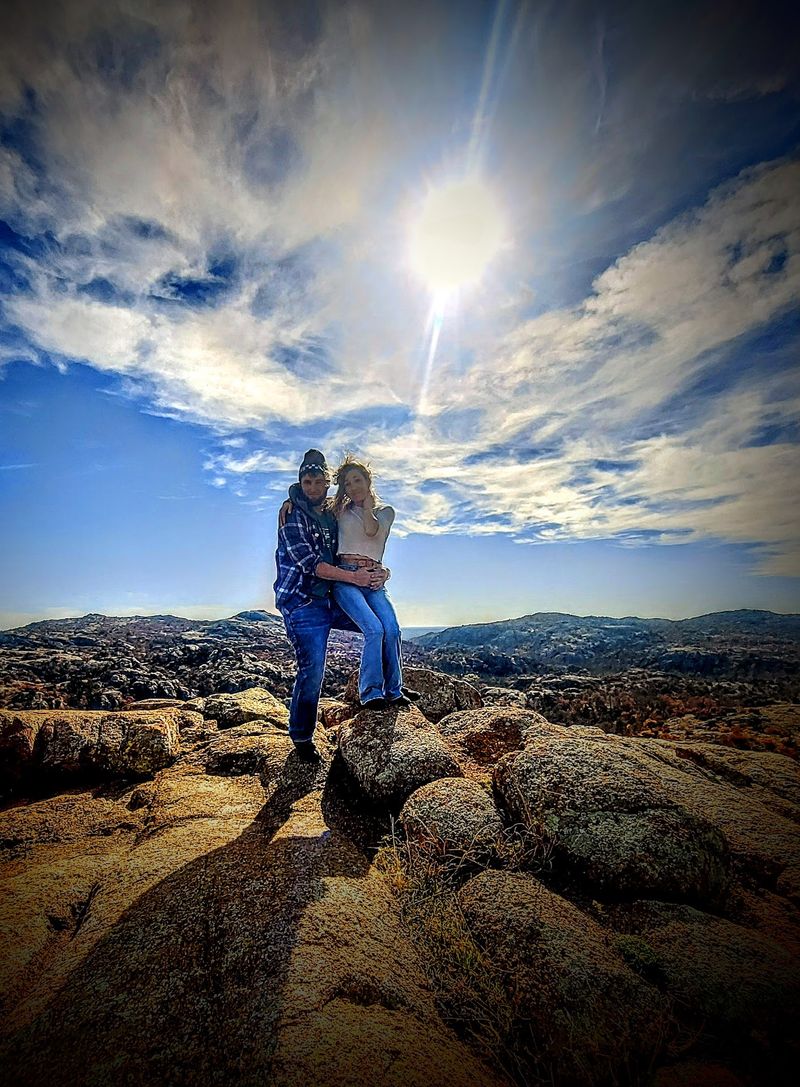
Crossing the dam on foot is just the beginning of what the trail system here offers. The path to Little Baldy starts right at the dam and leads hikers across the structure before climbing toward the granite summit above the lake.
Most people describe the hike as easy to moderate depending on fitness level, with the ascent to the top requiring a bit of agility over rocky terrain but nothing that demands technical skill.
The view from the top of Little Baldy rewards the effort immediately. Looking back down over the dam and lake from an elevated vantage point reframes the entire scene, showing just how dramatically the water sits within the surrounding mountains.
The trail is well-used but rarely feels crowded, especially on weekday mornings when the refuge is at its quietest.
Beyond Little Baldy, additional trails wind through boulder fields and native grasslands around the lake perimeter, offering routes for people who prefer flat, leisurely walks over summit hikes. Kids enjoy scrambling over the rocks near the water, which are rounded and manageable enough to feel adventurous without being risky.
The trail network makes this spot genuinely rewarding for visitors with a wide range of physical abilities and energy levels.
Who Belongs Here and When to Come
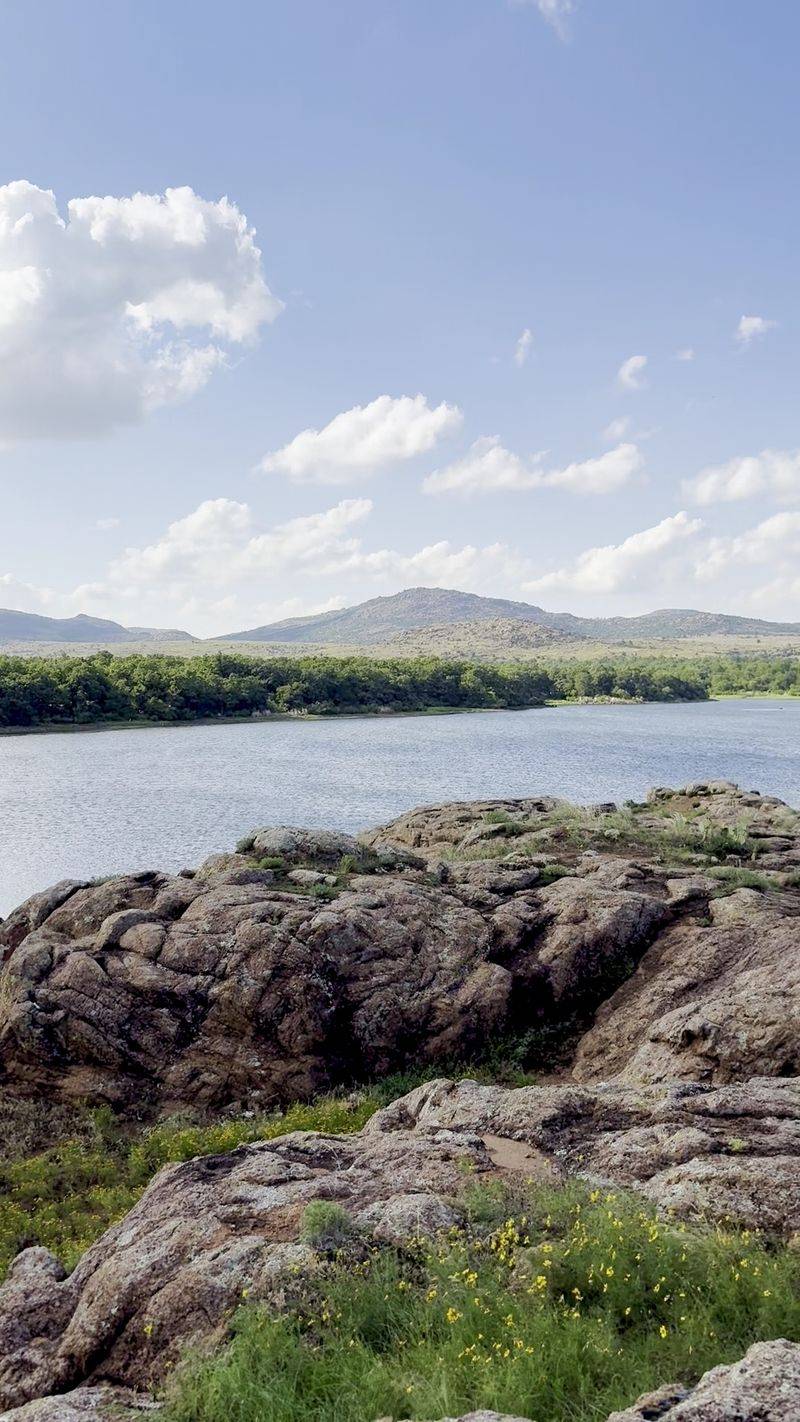
Almost anyone with a love of the outdoors will find something to enjoy at Quanah Parker Lake, but the spot has a particular pull for people who prefer their nature experiences unhurried and unscripted. Photographers, anglers, hikers, kayakers, and paddleboarders all show up here, and the lake is large enough and the trails varied enough that each group finds its own rhythm without getting in the way of the others.
Families with young children tend to do well here, especially those willing to let kids explore the boulder fields and wade in the shallows. The campground at Doris, which borders the lake, makes it easy to extend a day trip into an overnight stay for those who want more time to settle into the pace of the place.
Kayak and SUP board launches are possible at the lake, giving water-sports enthusiasts a genuinely scenic paddling route.
Spring and fall are widely considered the best seasons to visit, offering mild temperatures and peak wildlife activity. Summer visits are absolutely possible but require preparation, as daytime heat in southwestern Oklahoma can climb well above 100 degrees.
Bringing plenty of water and starting early in the day makes a summer trip not just manageable but genuinely enjoyable.
Getting There, Hours, and What It Costs
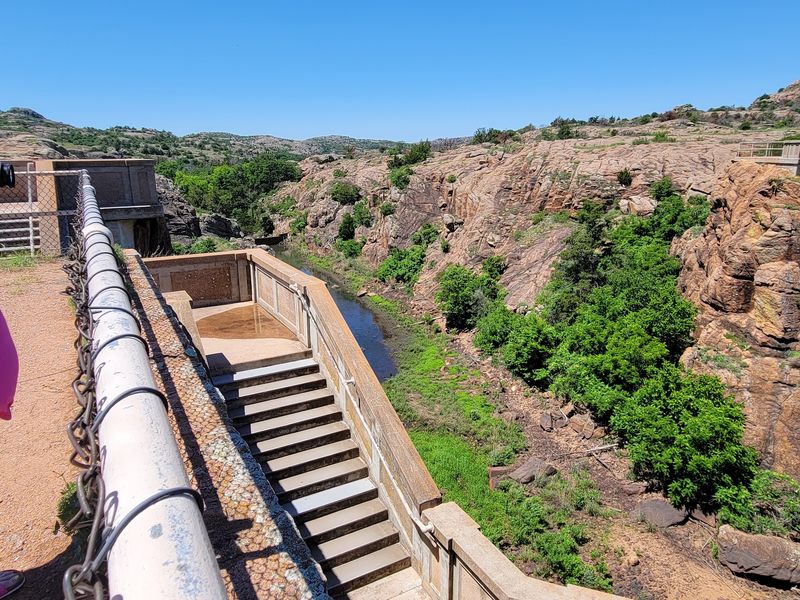
Quanah Parker Dam is located along Little Baldy Trail near Indiahoma, Oklahoma, within the Wichita Mountains Wildlife Refuge. The closest major city is Lawton, which sits roughly 25 miles to the east, making this an easy half-day or full-day trip from the Lawton-Fort Sill area.
The drive into the refuge is straightforward, and the dam is generally easy to find once you are inside the park boundaries.
One of the most pleasant surprises for first-time visitors is the admission situation: getting in and parking are free. The Wichita Mountains Wildlife Refuge does not charge an entry fee for general recreation, which means the only real cost is gas and whatever you bring for food and gear.
That free-access policy makes it an especially appealing option for families or anyone watching a budget without wanting to sacrifice the quality of their outdoor experience.
The dam and surrounding area are open 24 hours a day, seven days a week, which means sunrise visits are entirely possible and genuinely spectacular. For questions or additional information, the refuge can be reached at 580-429-3222.
Visiting on a weekday tends to mean smaller crowds, though even a busy spring weekend here feels relaxed compared to more commercialized destinations in the region.
Share this story