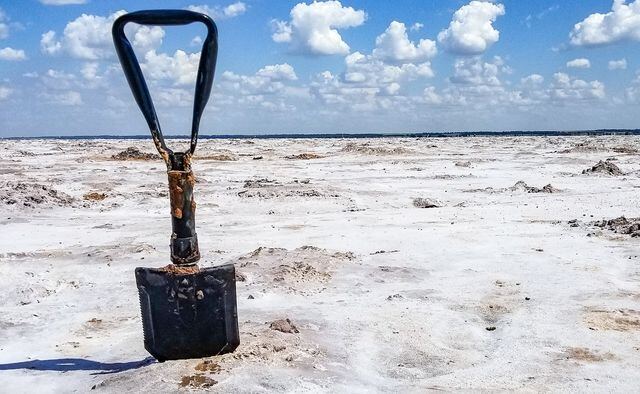
Oklahoma has a habit of hiding extraordinary things in plain sight, and this is one of the best examples anywhere in the state. Somewhere out on a wide, windswept flat of white earth, families are dropping to their knees and pulling genuine crystals straight out of the ground, and every single one belongs to them.
No ticket booth, no guide, no catch. Just open sky, soft dirt, and the very real thrill of finding something beautiful that has been waiting underground for you.
Where the Salt Plains Crystal Digging Site Actually Sits
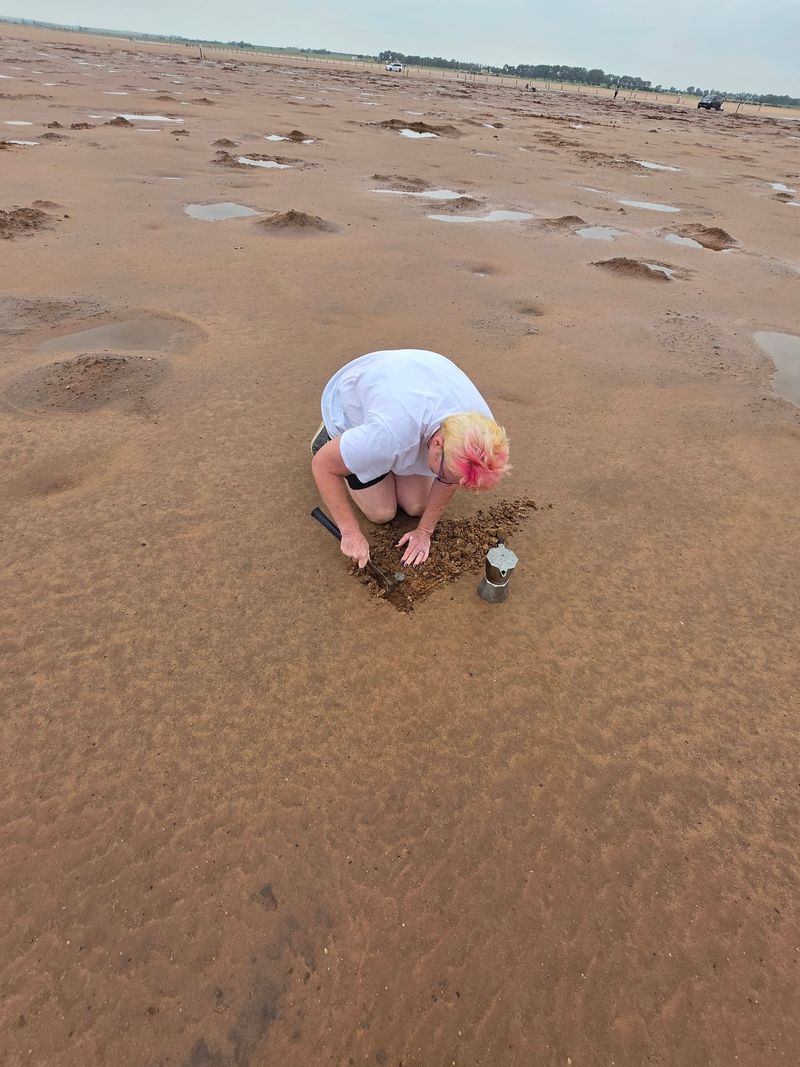
Tucked into northwestern Oklahoma near the small town of Cherokee, the Salt Plains crystal digging area sits within the broader Salt Plains State Park and National Wildlife Refuge. The address puts you on Garvin Road, about as remote as Oklahoma gets, surrounded by open prairie and a shimmering white flat that stretches farther than feels real.
The digging site occupies one side of the lake, while the park and campground sit on the opposite shore. Getting there requires navigating rural roads, and visitors frequently mention that the road into the site can develop serious potholes, especially after rain.
A vehicle with decent clearance makes the trip a lot more comfortable.
Despite being genuinely out in the middle of nowhere, the site draws visitors from across the region. Families from Tulsa, road-trippers passing through, and curious Oklahomans who stumbled across the idea online all make their way out here.
The remoteness is part of the appeal. Once you arrive, there are no stores nearby, so anything you need has to come with you.
The Geology Behind Hourglass Selenite Crystals
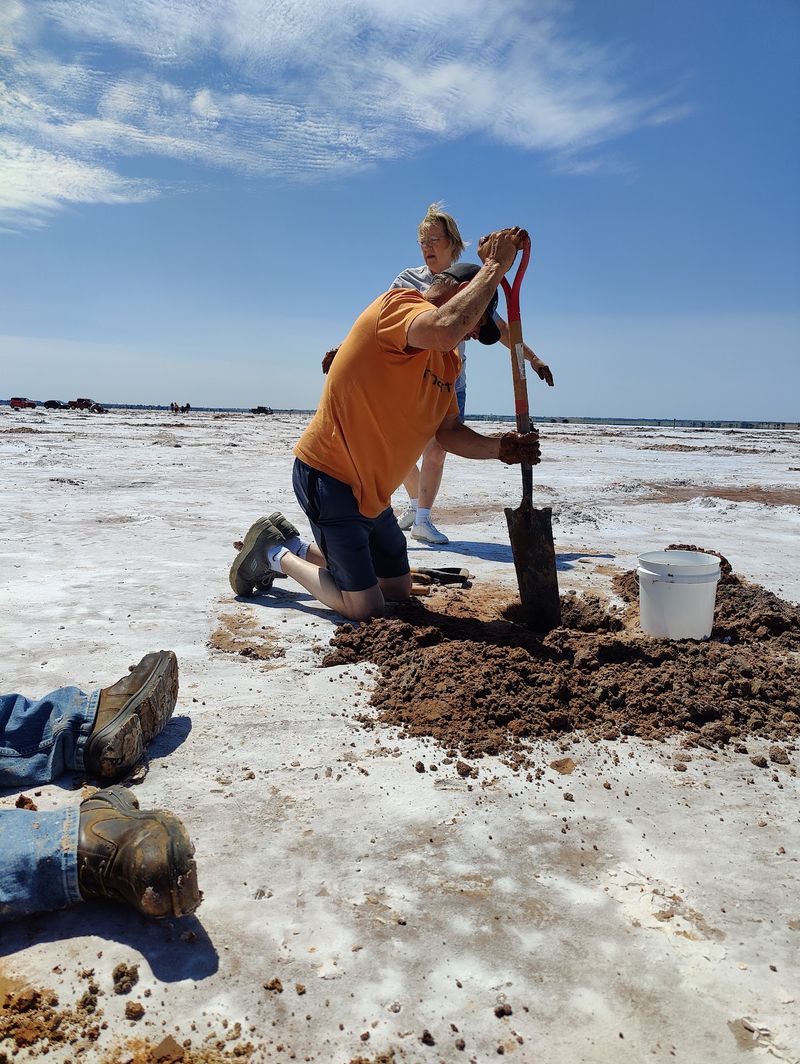
What visitors pull from the ground here is not just any crystal. The Salt Plains produces hourglass selenite, a form of gypsum that grows uniquely in this saline environment and nowhere else on earth in quite the same way.
The name comes from the rust-colored hourglass shape trapped inside each crystal as it forms, created by iron-rich sediment captured during growth.
Selenite itself is a variety of gypsum mineral, soft enough to scratch with a fingernail, which also explains why the crystals are famously fragile. Many diggers pull up broken pieces before finding an intact one, and that is completely normal.
The reward for patience is a cluster or single crystal with a perfect hourglass shadow visible right through the translucent walls.
The crystals form just below the surface of the salt flat, fed by brine seeping up through ancient marine sediment. Oklahoma was once covered by a shallow inland sea, and the Salt Plains is one of the most visible remnants of that prehistoric landscape.
Every crystal pulled from the dirt is essentially a small piece of deep geological time, shaped by conditions that no longer exist anywhere nearby.
The Free Admission Policy That Makes This Place Remarkable
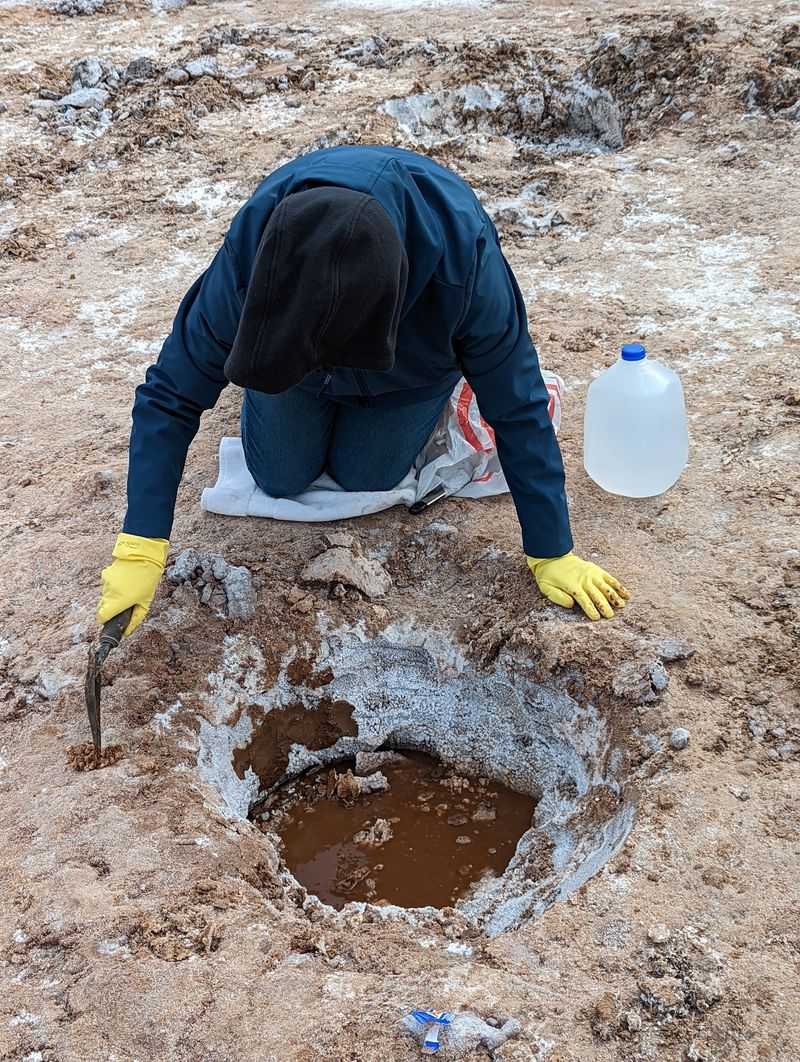
Completely free to enter, with no reservation required and no fee collected at any point during the visit. That is genuinely rare for a destination that offers something as hands-on and rewarding as crystal digging.
Visitors can walk in, dig as long as they want within operating hours, and leave with every crystal they find.
There is one limit worth knowing: a ten-pound cap per person per day on how many crystals can be taken home. In practice, most visitors are thrilled to find even a small handful of intact pieces, so the limit rarely feels restrictive.
One family reported filling nearly half a gallon of crystals over a three-hour session, which gives a sense of just how productive a good dig can be.
The free model is part of what makes the Salt Plains site feel genuinely welcoming rather than commercial. No one is trying to upsell you or gate the best spots behind a premium experience.
The whole flat is open, space is plentiful even on busy days, and every family gets to carve out their own little patch of earth to work. For a full afternoon of outdoor activity, it is hard to find better value anywhere in Oklahoma.
What the Digging Experience Actually Feels Like
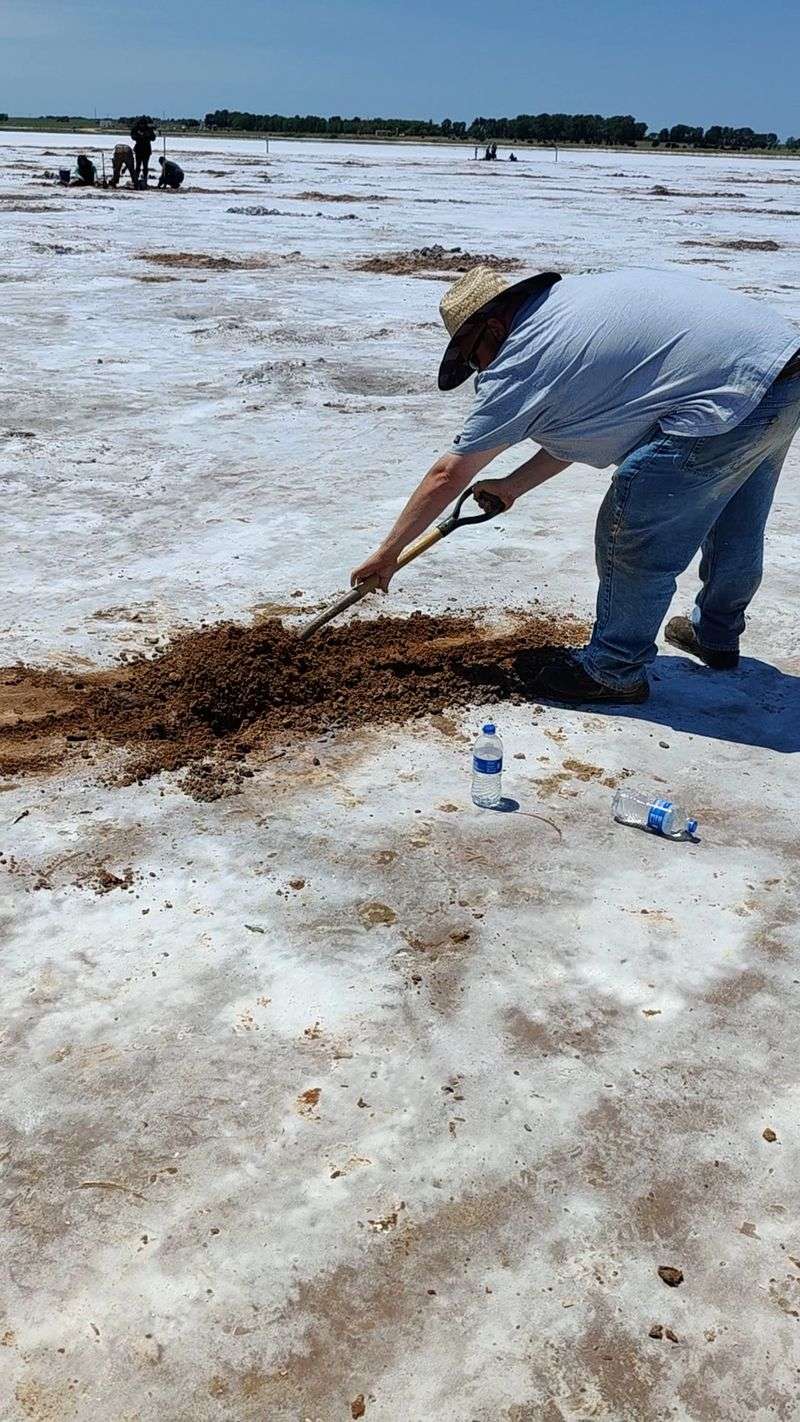
Kneeling down on the salt flat and pushing your hands into the soft, pale earth is a surprisingly meditative experience. The ground gives easily, and within the first few minutes most visitors start turning up small crystal fragments.
Bigger, more intact pieces tend to sit around eighteen inches down, though surface finds are common enough that it pays to scan the ground before even picking up a shovel.
Visitors consistently note that bare hands work better than gloves for feeling crystals as you dig. The crystals are fragile enough that heavy-handed scooping can shatter them, so a slow, careful approach rewards patience.
A metal trowel or small hand shovel works well for loosening the earth, and a medium-mesh strainer or basket lets you sift loose soil away to reveal what is hiding inside.
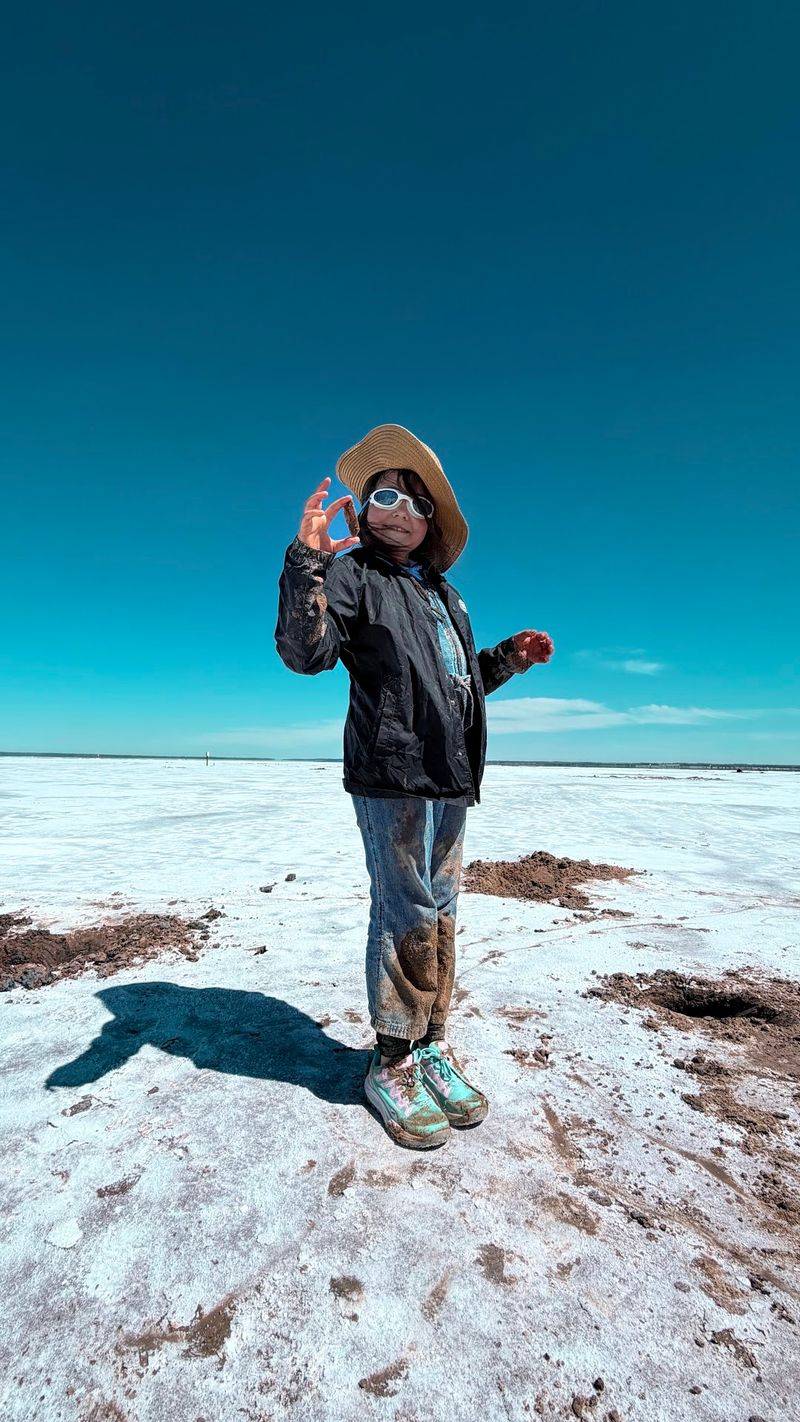
The experience is unambiguously messy. Shoes, hands, and clothes will carry salt and pale dirt home with you.
Packing a change of shoes and a few towels is smart. Water brought along for washing crystals and rinsing hands makes the process much smoother, since there is no running water available at the digging area itself.
Mud and grit are simply part of the charm here.
Gear and Supplies Worth Bringing Along
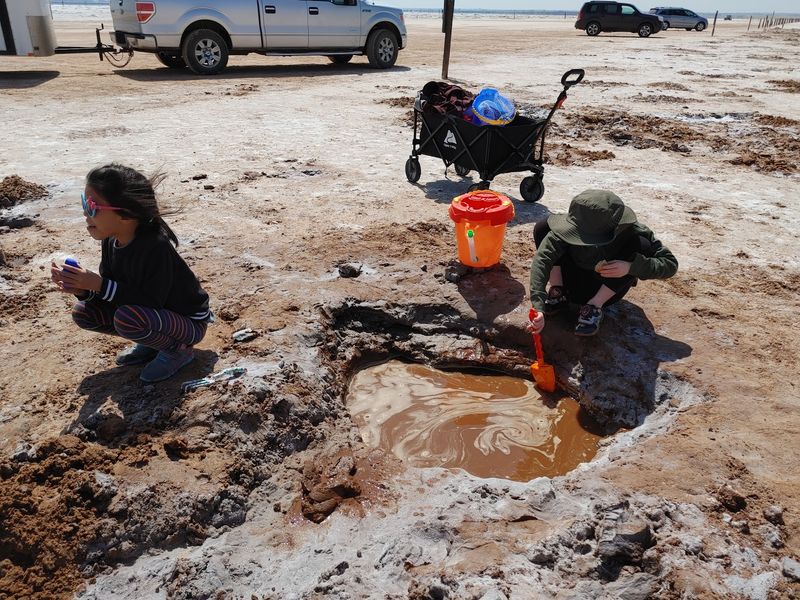
Preparation makes or breaks a visit to the Salt Plains digging site. Because the area is genuinely remote, with no stores, no food vendors, and no running water at the dig, everything needed for a comfortable outing has to come from home.
Visitors who arrive unprepared tend to cut their trips short, while those who pack smart spend hours happily working the flat.
A small metal trowel or hand shovel is the most useful tool for loosening earth around crystals. Pair it with a medium-mesh basket or strainer to shake loose soil away from finds.
A bucket or bag keeps crystals safe during transport. Bringing a separate water jug specifically for washing crystals lets you see what you have found without waiting until you get home.
Sun protection is genuinely critical. The flat offers zero shade, and the Oklahoma sun reflects off the white surface in a way that intensifies the heat.
A wide-brimmed hat, sunscreen applied generously and reapplied throughout the day, and an umbrella or small pop-up canopy all get mentioned repeatedly by experienced visitors. A wagon or cart for hauling gear across the flat is a popular tip too, since carrying everything by hand over soft ground gets tiring quickly.
The Scenery and Atmosphere Surrounding the Flat
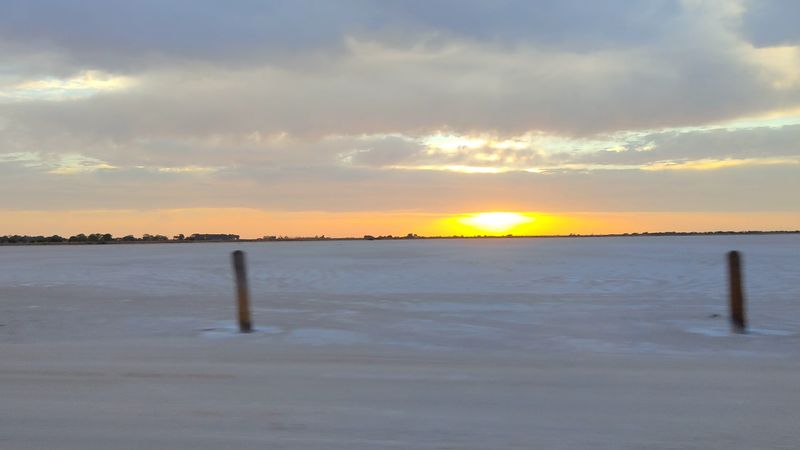
Beyond the crystals, the landscape itself is genuinely striking. The Salt Plains flat is an expanse of white and pale grey earth that looks almost lunar against the surrounding Oklahoma prairie.
In every direction, the horizon feels enormous, and the sky above the flat has a quality that photographers and casual visitors alike notice immediately.
Sunset at the Salt Plains is something visitors describe as among the most beautiful they have ever seen in the state. The flat surface catches the last light of the day and turns shades of amber and gold that are difficult to photograph accurately but easy to remember.
One visitor called it probably one of the best places on earth to watch a sunset, and that kind of enthusiasm is hard to manufacture.
Wildlife adds another dimension to the experience. Early morning visitors sometimes find small shorebirds picking their way across the flat, drawn by the brine pools and open ground.
The broader Salt Plains National Wildlife Refuge is a significant stopover for migratory birds, and the area around the digging site shares that wild, open character. Even on a purely practical crystal-hunting trip, the surroundings make it feel like a proper outdoor adventure rather than just a roadside novelty.
Who Enjoys the Salt Plains Crystal Dig Most
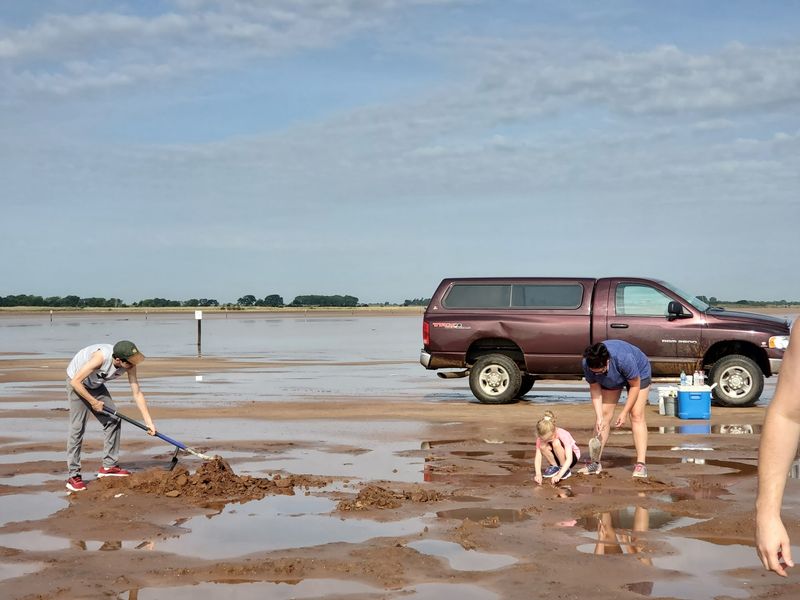
Few outdoor activities in Oklahoma appeal equally to a six-year-old and a sixty-year-old, but crystal digging at the Salt Plains manages it. Kids go absolutely wild for the combination of digging in dirt, getting muddy without getting in trouble, and walking away with real treasures they found themselves.
Parents and grandparents tend to get just as absorbed once they start pulling crystals out of the ground.
Solo visitors find the experience meditative and oddly satisfying. The quiet of the flat, the focus required to dig carefully, and the small rush of uncovering an intact crystal make for a genuinely restorative afternoon.
Rock enthusiasts and geology hobbyists have an obvious reason to make the trip, but the site attracts plenty of people who had never thought much about minerals before and leave with a new obsession.
School field trips use the site regularly, which makes sense given how naturally educational the experience is. Children learn about geology, Oklahoma history, and prehistoric environments without it feeling like a lesson.
For families planning a road trip through northwestern Oklahoma, the Salt Plains crystal dig is the kind of stop that ends up being the highlight everyone talks about on the drive home, even if it was added as a quick detour.
Hours, Facilities, and Getting There Practically
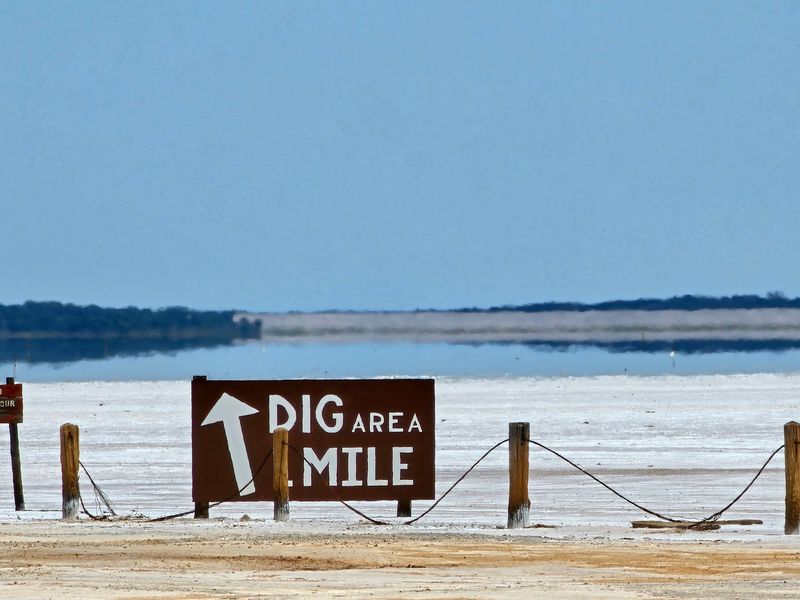
The crystal digging area opens at 7 AM every day of the week and stays open until 8 PM, giving visitors a generous window that accommodates early morning arrivals who want to beat the heat as well as late afternoon visitors chasing that famous sunset. The consistent daily schedule makes planning straightforward regardless of the day of the week.
Facilities on site are minimal. Bathrooms are available near the entrance, though the walk from the digging area is a long one.
Visitors note that facilities can be limited depending on the time of year and circumstances, so planning accordingly is smart. There is no food, no water, and no shade structure provided, which is worth repeating since the consequences of forgetting supplies on a hot Oklahoma day are significant.
The road into the site is the one element that requires attention. Deep potholes can develop, particularly after rain, and at least one visitor reported vehicle damage from a pothole that could not be avoided.
Driving slowly and carefully, and ideally choosing a vehicle with some ground clearance, reduces the risk considerably. The address on Garvin Road near Cherokee puts the site in Alfalfa County, roughly two and a half hours from Tulsa and accessible from several highway routes through northwestern Oklahoma.
A Quiet Verdict on Why the Salt Plains Is Worth Your Time
Some destinations promise more than they deliver, and some do exactly the opposite. The Salt Plains crystal digging site is firmly in the second category.
Visitors who show up with reasonable expectations, a little gear, and a willingness to get dirty almost universally leave feeling like they found something special, because they literally did.
The combination of factors here is genuinely hard to replicate. A unique geological phenomenon, completely free access, wide open space, and a take-home reward that costs nothing but effort adds up to an experience that feels both generous and memorable.
Repeat visitors are common, which says more about the place than any description can.
For anyone road-tripping through northwestern Oklahoma or looking for a weekend activity that breaks entirely from the ordinary, the Salt Plains delivers on every front. Pack water, bring shade, wear shoes you do not mind ruining, and give yourself at least two or three hours to really work the flat.
The crystals are there, just a few inches below the surface, and every single one you find belongs to you. That simple fact turns an afternoon in the middle of nowhere into something worth talking about long after the dirt washes off.
Share this story