There is a stretch of the Oregon coast where black sand beaches meet dramatic sea cliffs, and most people drive right past it without a second glance. That is honestly their loss.
Tucked away near the small community of Sixes, this trail system rewards curious hikers with sea caves, crashing Pacific waves, a hidden waterfall that spills directly onto the beach, and views so wide and wild they almost feel unreal. The path winds through forests, open meadows, and coastal bluffs, shifting scenery so often that boredom never gets a chance.
Crowds are rare here, solitude is basically guaranteed, and the whole experience feels like something you stumbled onto by accident. Keep reading, because this place deserves a lot more than a quick scroll past.
Getting There: Trailhead Location and Access
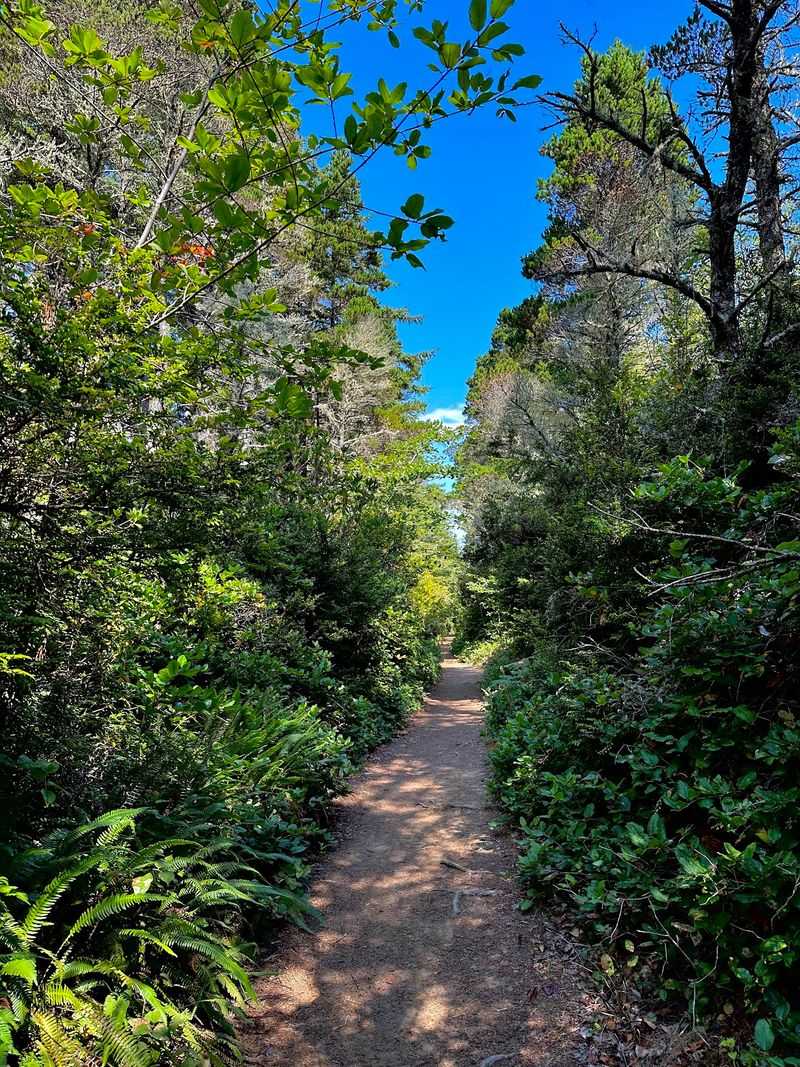
The trailhead for Blacklock Point sits at 92200 Airport Rd, Sixes, OR 97476, right on the edge of an old, abandoned airport. At first glance, the starting point looks a little rough around the edges, which has surprised more than a few first-time visitors.
The gravel lot is modest, and the airstrip nearby gives the whole scene a slightly forgotten, post-apocalyptic vibe. But do not let that fool you into turning around.
Sixes is a tiny community in Curry County on the southern Oregon coast, about 30 miles north of Gold Beach and roughly 27 miles south of Bandon. The nearest services are limited, so topping off your gas tank and packing snacks before you head out is a genuinely smart move.
Cell service along Airport Road can be unreliable, so downloading an offline map before leaving town is worth the two minutes it takes. The road itself is paved and accessible to regular passenger vehicles, which makes the approach easy even if the destination feels remote.
Parking is free, and no permit is currently required to use the trail.
The Trail Layout: What to Expect on the Ground
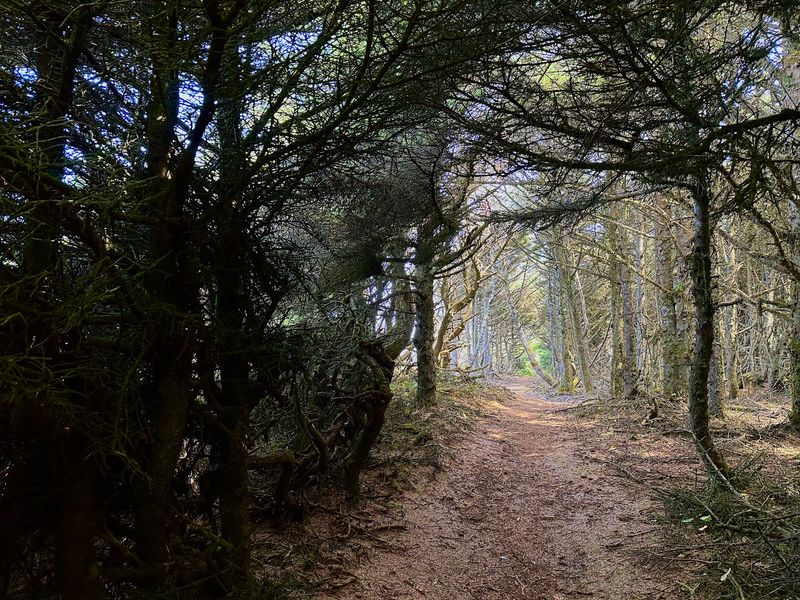
The main route from the Airport Road trailhead to Blacklock Point runs approximately 3.2 miles round trip, and the elevation gain is gentle enough that most hikers with average fitness will find it manageable.
The trail is well-marked with signs, which is genuinely helpful because the park contains a network of intersecting paths. Staying on the Blacklock Point route rather than the Floras Lake route is the key move if dramatic coastal views are your goal.
Much of the path cuts through a dense coastal forest of Sitka spruce and shore pine, keeping you shaded and cool even on warmer summer days. The first 1.7 miles are mostly flat and easy, then the trail gets slightly steeper as it approaches the cliffs.
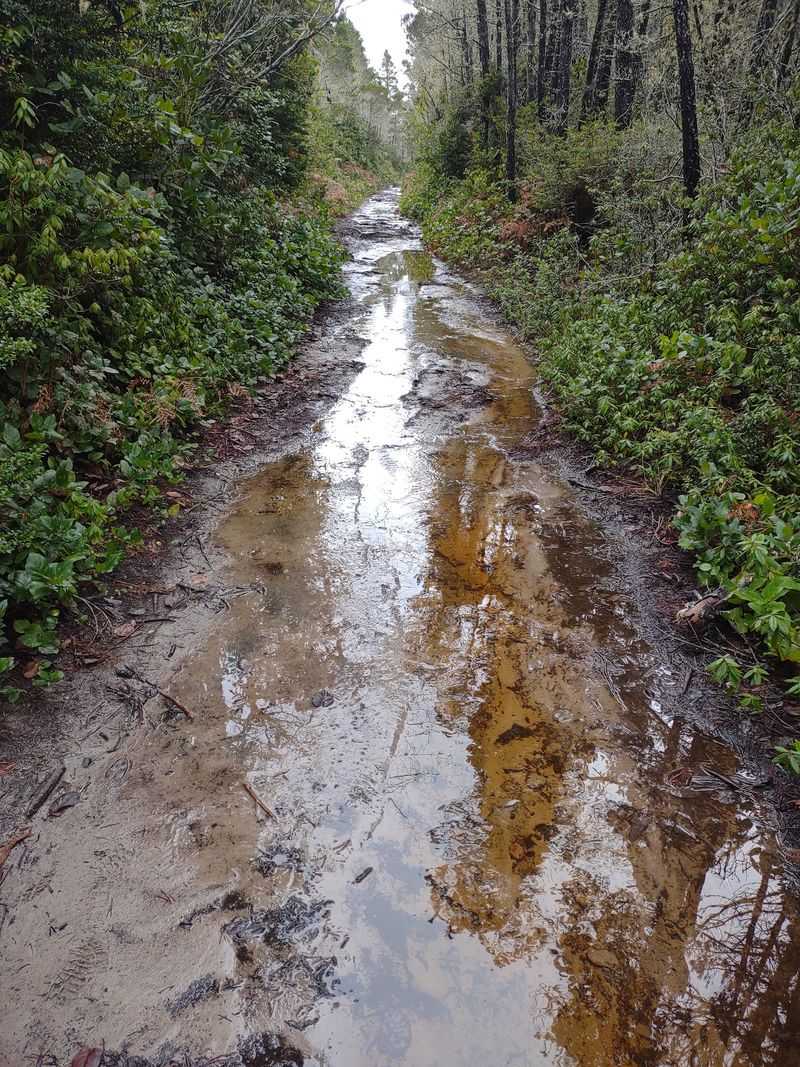
Whoever maintains these trails has installed clever boardwalks over the muddiest sections, so your socks stay dry even when the ground is saturated. Winter and spring visits will mean more mud and standing water, but the boardwalks make things surprisingly passable.
Good ankle support and waterproof footwear will serve you well here in any season.
Black Sand Beach: A Shoreline Unlike Any Other
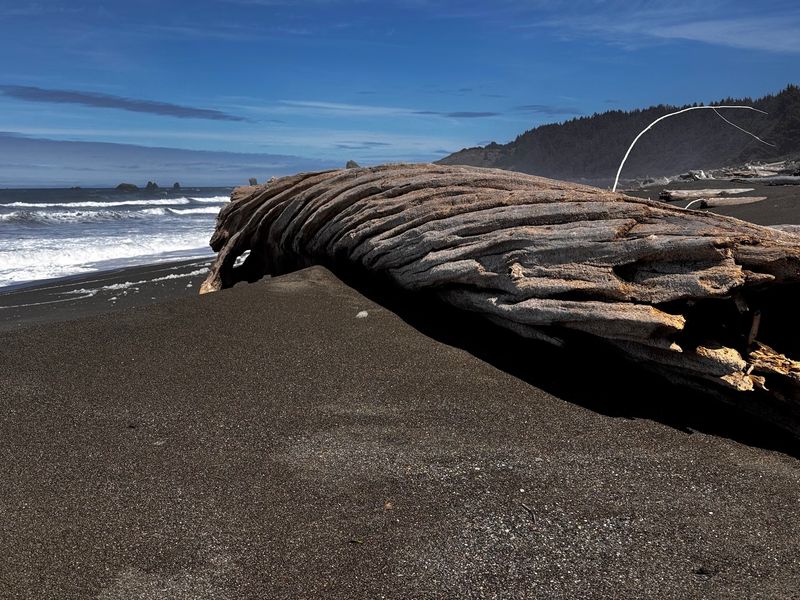
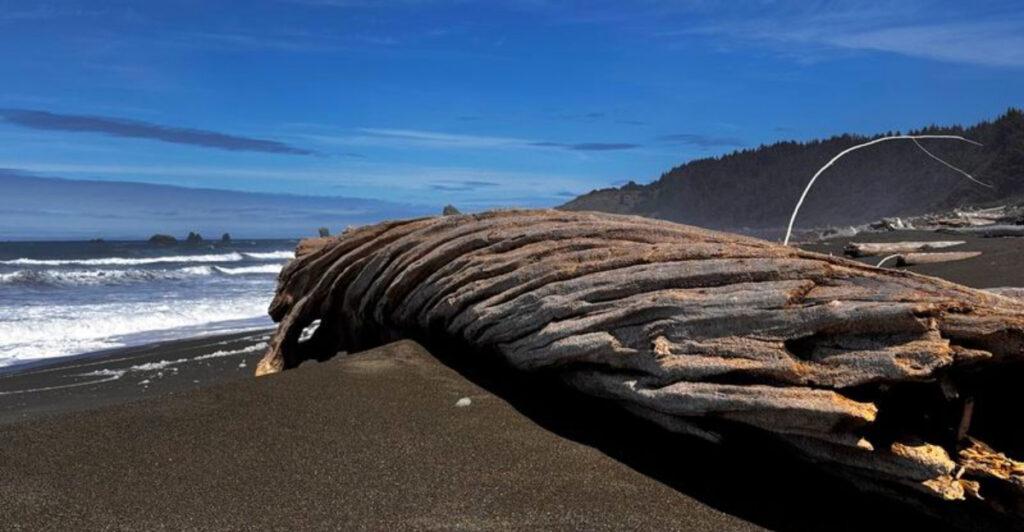
Most people picture white or golden sand when they think of a beach, so the first sight of Blacklock Point’s dark shoreline genuinely stops you in your tracks. The sand here carries a deep charcoal and grey tone, the result of the volcanic and basalt rock that makes up much of this section of the Oregon coast.
It does not sparkle the way tropical beaches do. Instead, it absorbs light in a way that makes the whole scene feel moody, ancient, and a little cinematic.
The beach is accessible via a trail that branches off near the top of the main route. A left turn at the point where the forest opens up toward the coast will bring you down to the shoreline.
The descent is steep in spots, so trekking poles are worth their weight here.
Once you are on the sand, the scale of everything hits differently. The cliffs tower above, the Pacific stretches endlessly ahead, and the dark beach curves in both directions with no signs of development anywhere in sight.
Footprints in the sand are often only your own, which is a rare and quietly thrilling thing on any coastline.
Sea Caves and Cliff Formations Along the Point
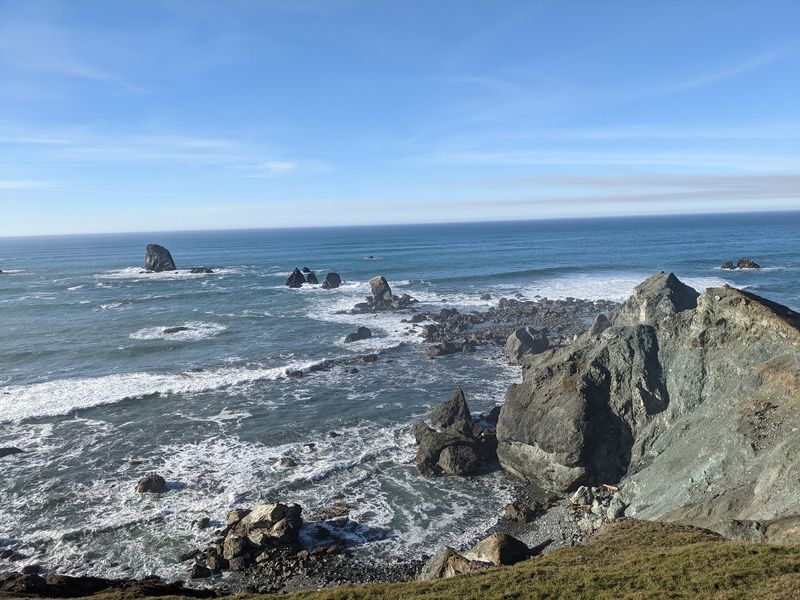
The cliffs at Blacklock Point are the kind of geological feature that makes you want to just stand still and stare. Layers of basalt and sedimentary rock have been carved by centuries of Pacific wave action into jagged walls, arches, and sea caves that look like something from a fantasy novel.
The caves are most visible from the clifftop overlooks, where you can peer down into them without any safety barrier between you and a very long drop. That is part of what makes this place feel so raw and real.
One reviewer described the cliffs as the “cliffs of insanity,” and while that might sound dramatic, the scale genuinely earns that description. The point juts out into the ocean in a way that gives you wide sightlines up and down the coast, and on clear days you can see for miles in both directions.
Approaching the cliff edges is something to do carefully and soberly. The rock can be slippery, especially after rain or morning fog, and the drop-offs are significant.
Staying back from the edges while still soaking in the views is the best way to enjoy this spot safely and without stress.
The Hidden Waterfall That Drops Onto the Beach
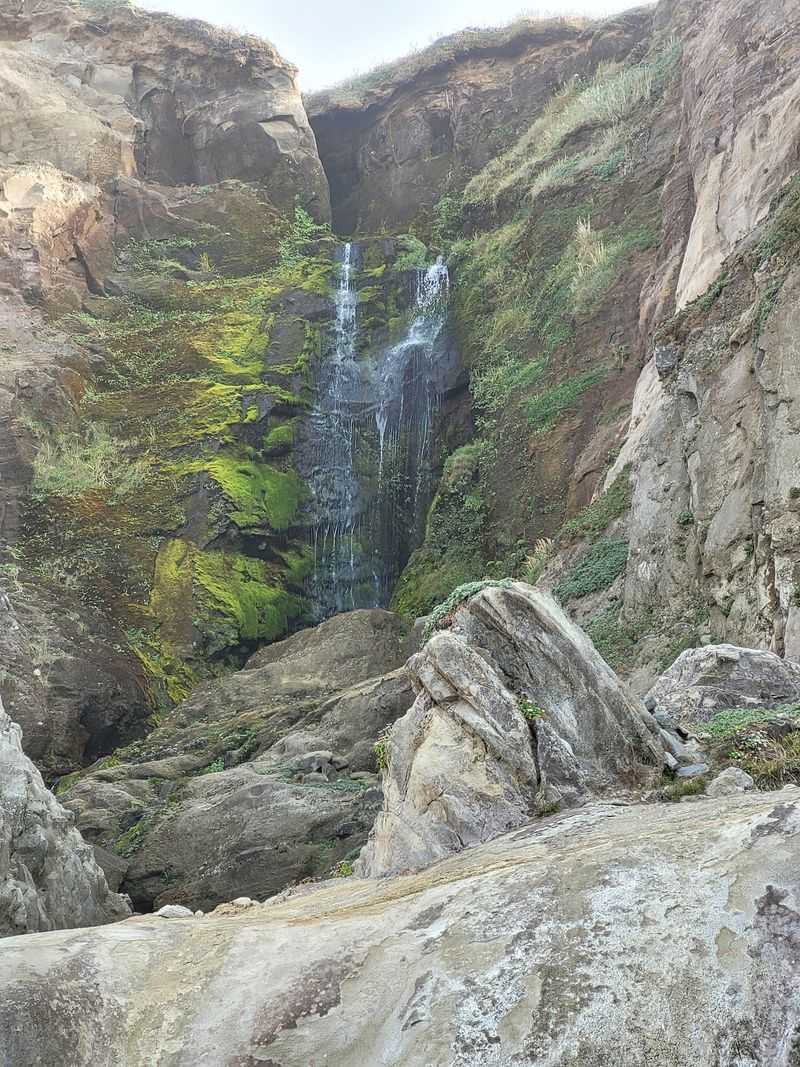
Not many beaches in the world have a waterfall tumbling directly onto the sand, which makes this feature one of the most quietly spectacular surprises the trail has to offer. The waterfall is not enormous, but its location is what makes it unforgettable.
Fresh water spills over the edge of the coastal bluff and lands right on the beach, creating a small stream that mingles with the incoming tide. Catching it at the right moment during low tide gives you the clearest view of the full drop.
Several hikers who have explored the area mention the waterfall as a highlight worth seeking out, and it is easy to miss if you are not paying attention. Heading down to the beach level rather than staying only on the clifftop is the way to find it.
The contrast between the cool fresh water, the dark sand, and the salt spray from nearby waves creates a sensory experience that is hard to replicate anywhere else. Bring a camera with good waterproofing or a dry bag for your gear, because the mist from both the waterfall and the ocean can reach further than you expect.
This is the kind of detail that makes the hike feel complete.
Peaceful Solitude: What Crowds Look Like Here
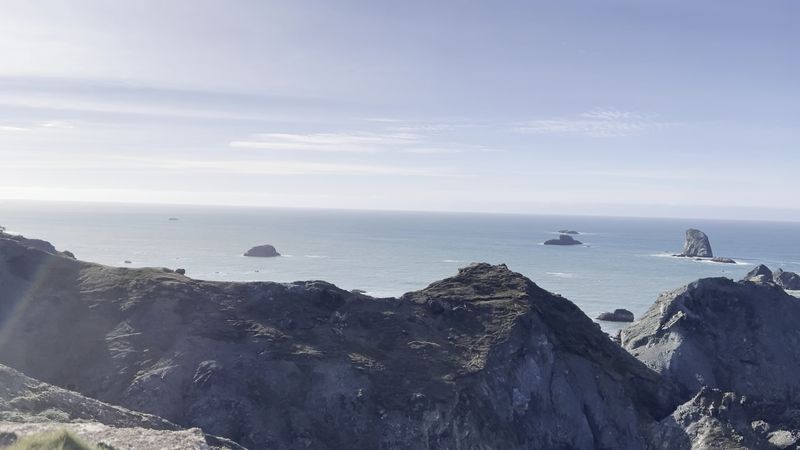
Solitude is not something most popular hiking destinations can promise, but Blacklock Point delivers it with remarkable consistency. On the day I hiked out to the point, I did not cross paths with another person until I was almost back at the trailhead.
That kind of quiet is increasingly rare on the Oregon coast, where spots like Cannon Beach and Crater Lake can feel like theme parks during peak season. Here, the relative obscurity of the location and the modest length of the hike seem to filter out the casual day-tripper crowd.
The trail earns a 4.9-star rating from reviewers, yet it remains genuinely uncrowded, which says something interesting about how well-kept a secret it still is. Weekday visits and early morning starts increase your odds of having the cliffs entirely to yourself.
There is something deeply restorative about standing on a clifftop above the Pacific with no one else around. The wind, the waves, and the occasional cry of a seabird become the only soundtrack.
No music playing from someone else’s speaker, no chatter, no line for a photo spot. Just the coast doing what it has done for thousands of years, completely unbothered by your presence.
Changing Landscapes: Forest, Meadow, and Coast
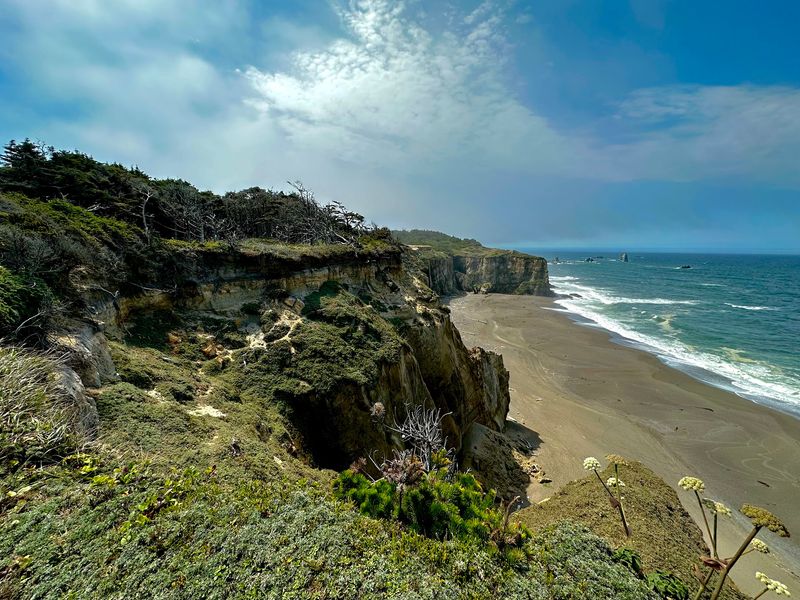
One of the most enjoyable things about this trail is how much the scenery shifts as you move through it. The hike does not commit to just one type of landscape, which keeps the experience fresh from start to finish.
The trail begins in dense coastal forest, where Sitka spruce and shore pine press close on both sides and the light filters through in soft, diffused patches. The air smells like damp earth and salt even before you get anywhere near the ocean.
As you move further along, the forest opens into sections of coastal scrub and low meadow, where the sky suddenly expands and you get your first hints of the ocean on the horizon. The transition from closed canopy to open sky feels like a small reward for the distance you have already covered.
Then the cliffs appear, and the landscape shifts completely one more time into something dramatic and exposed. The variety of terrain on a trail this short is genuinely impressive, and it means the hike never settles into monotony.
Hikers who enjoy noticing how plant communities change with elevation and moisture will find plenty to observe at every stage of this route.
Fog, Light, and the Moody Oregon Coast Atmosphere
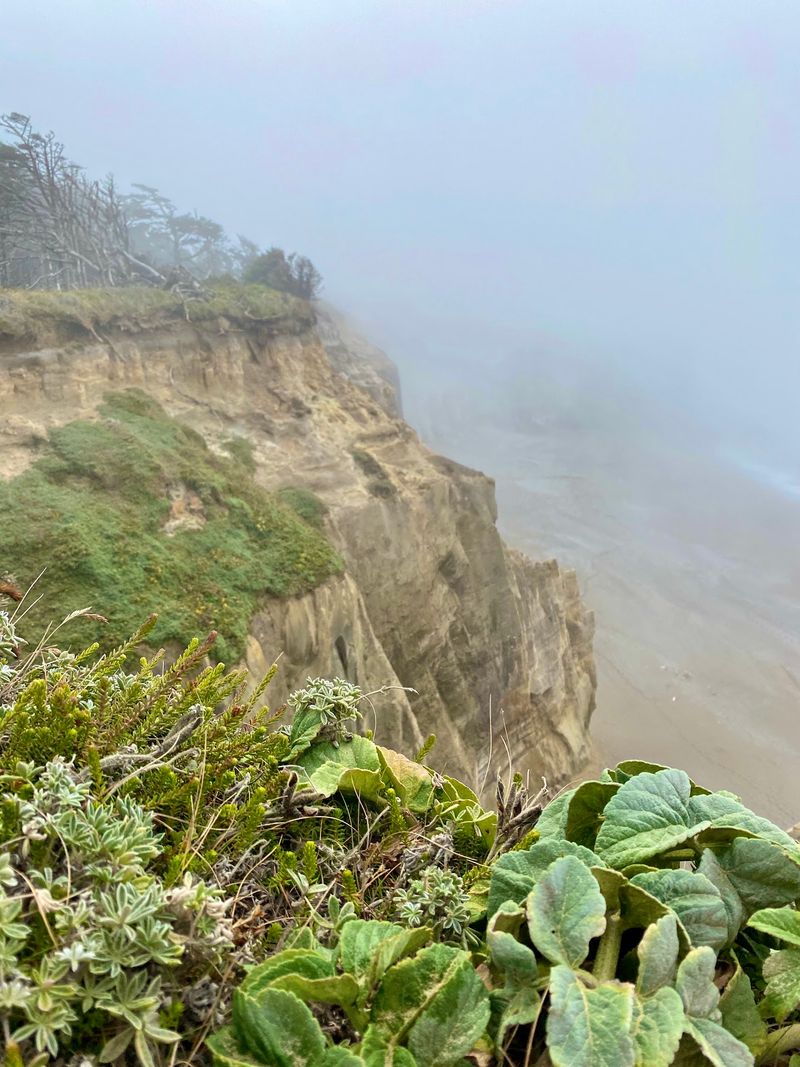
The Oregon coast has a reputation for dramatic, moody weather, and Blacklock Point leans fully into that identity. Fog is a regular visitor here, especially in the mornings and during the late spring and early summer months when marine layers settle in from the Pacific.
Rather than being a disappointment, the fog adds a layer of atmosphere that clear days simply cannot replicate. The cliffs disappear into grey mist, the waves sound louder without a clear horizon to anchor them, and the whole scene takes on a quiet, almost surreal quality.
Afternoon visits during summer months are more likely to offer clearer skies, as the marine layer typically burns off by midday. But honestly, hiking out to the point on a foggy morning and watching the mist swirl around the sea caves below is an experience worth planning around rather than avoiding.
Photographers especially will find the diffused light of an overcast day far more flattering for coastal shots than harsh midday sun. The dark sand, dark rock, and grey ocean create a naturally dramatic palette that works beautifully in almost any lighting condition.
Packing a light rain jacket regardless of the forecast is always the right call on this stretch of coast.
Best Time to Visit and Seasonal Considerations
Timing your visit to Blacklock Point makes a real difference in what kind of experience you have. Late June through September offers the driest trail conditions, the most reliable afternoon sun, and the longest daylight hours for exploring both the cliffs and the beach below.
The boardwalks installed over the muddiest sections help year-round, but winter and early spring visits still mean wet feet unless you are wearing waterproof ankle-high boots. The puddles along the route can grow into what one hiker accurately described as mini ponds after heavy rainfall.
Summer also brings the bonus of the coastal wildflowers blooming in the meadow sections of the trail, adding color to what is otherwise a green and grey landscape. Late June specifically seems to hit a sweet spot between dry trail conditions and the full green lushness of the coastal vegetation.
Fall visits are underrated here. The crowds thin out even further, the light gets warmer and lower in the sky, and the forest takes on richer tones.
Winter is genuinely wild and raw at the point, with larger surf and heavier weather, but the trail remains open and passable for those who come prepared with the right gear and a flexible attitude.
Wildlife and Nature Watching Along the Route
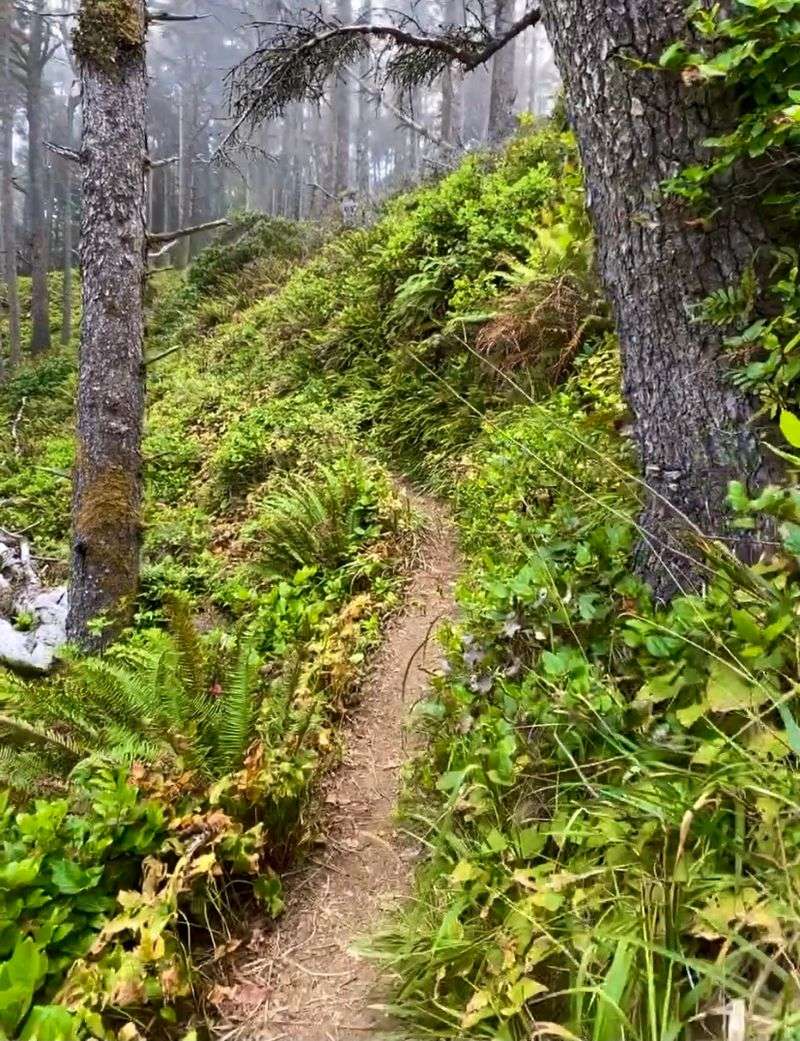
The trail corridor between the Airport Road trailhead and Blacklock Point passes through habitat that supports a solid variety of Pacific Northwest wildlife. Birders will want to keep their eyes moving in all directions from the moment they leave the parking area.
Bald eagles are a genuine possibility along the coastal section of the route, and various shorebirds patrol the beach below the cliffs. The forest sections can produce sightings of Steller’s jays, varied thrushes, and the occasional woodpecker working through the bark of a dead snag.
Marine mammals are another draw. Scanning the ocean from the clifftop overlooks during gray whale migration season, which runs roughly from December through May, gives you a reasonable chance of spotting spouts or flukes in the water below.
Sea lions and harbor seals also use this stretch of coastline regularly.
The plant life along the trail is worth attention too. Coastal columbine, wild iris, and various ferns appear in the wetter sections, while the meadow areas host different species suited to the windswept, salt-tolerant environment.
Slowing down and noticing the smaller details of the ecosystem makes the hike feel richer and more layered than a simple walk to a viewpoint.
Practical Gear and Trail Tips Before You Go
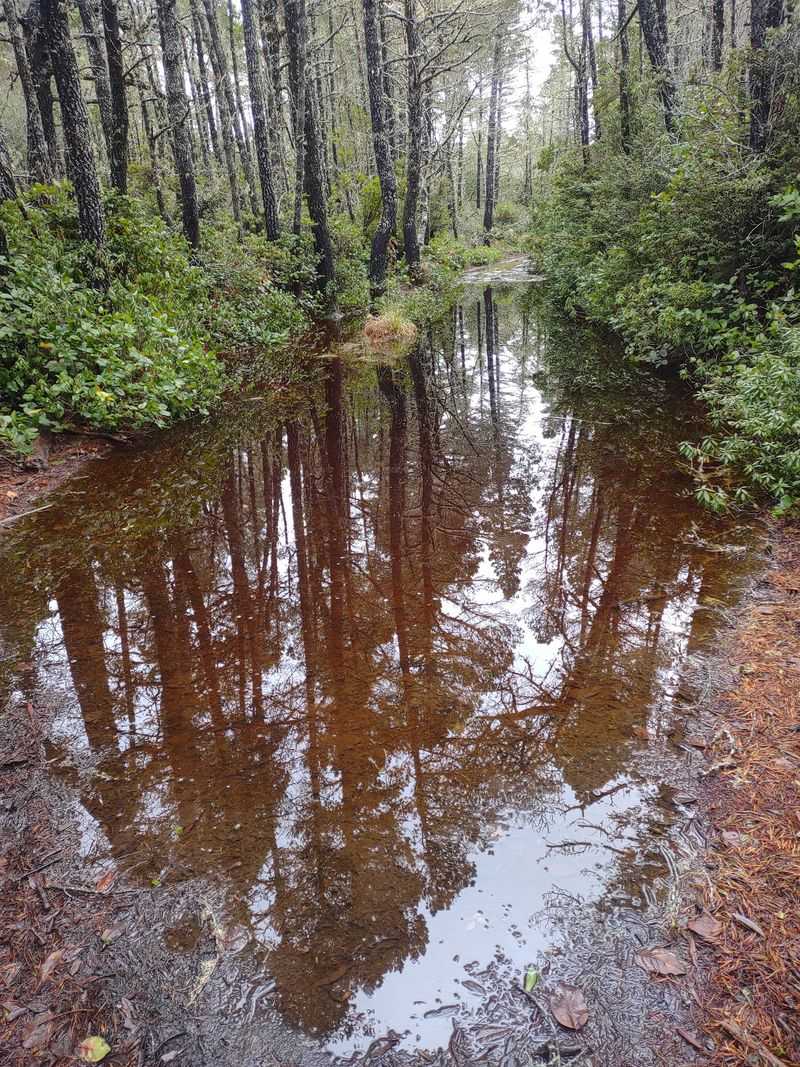
A few practical details will make the difference between a frustrating outing and a genuinely great one at Blacklock Point. Waterproof footwear is not optional if you visit between October and May, and even in summer, the shaded sections of trail hold moisture longer than you might expect.
Trekking poles are worth bringing if you plan to descend to the beach, since the trail down from the clifftop is steep and the footing can be loose in places. Layered clothing is smart regardless of the season, because temperatures at the exposed clifftop can drop quickly when the wind picks up off the water.
Pack out everything you bring in, since there are no trash facilities at the trailhead. Bringing more water than you think you need is also wise, as there are no potable water sources along the route.
The trail is free to access and requires no advance reservation or permit as of the most recent information available. Dogs are generally welcome on Oregon state-managed trails but should be kept under control near the cliff edges for obvious reasons.
Starting the hike by 9 a.m. gives you the best chance of having the point to yourself before any midday visitors arrive.
Why This Trail Deserves a Spot on Your Oregon Coast List
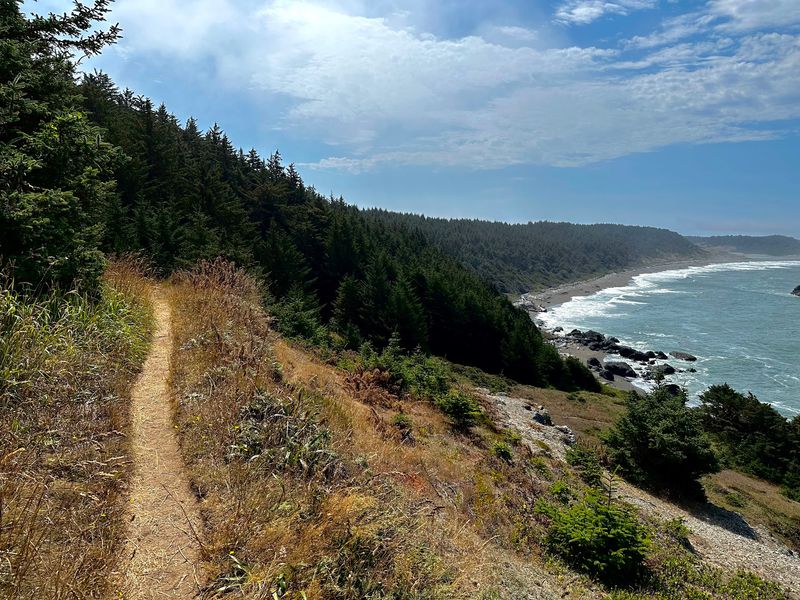
The Oregon coast is full of beautiful places, but Blacklock Point earns its reputation in a way that feels earned rather than marketed. The combination of a forested trail, a black sand beach, sea caves, a clifftop overlook, and a waterfall on the shore is genuinely unusual, and all of it sits within a 3.2-mile round trip that most reasonably fit hikers can complete in under two hours.
The 4.9-star rating from visitors is not an accident. The trail is well-maintained, well-marked, and rewards the effort with views that feel completely out of proportion to the modest distance covered.
What makes this place stick with you after you leave is not any single feature but the combination of all of them together. The dark sand, the fog, the silence, the caves below the cliffs, and the waterfall hitting the beach all add up to something that feels genuinely distinct from any other hike on the coast.
The Oregon coast has no shortage of places worth visiting, but this trail offers something harder to find: a real sense of being somewhere wild, unhurried, and far from the well-worn tourist path. That feeling is worth the drive, the muddy boots, and every step of the trail.
Share this story