There is a beach on the Oregon coast where the sand becomes a canvas every single morning, and the artwork disappears before sunset. A volunteer crew shows up at low tide, armed with rakes and ropes, and transforms a wide stretch of shoreline into an elaborate walking labyrinth that stretches for a full mile.
The whole thing is free, open to everyone, and gone by the time the tide rolls back in. I visited on a breezy weekday morning and left feeling like I had stumbled onto one of the most quietly extraordinary things the Pacific Northwest has to offer.
Keep reading, because this place is genuinely unlike anything else on the Oregon coast.
Where to Find This Coastal Wonder
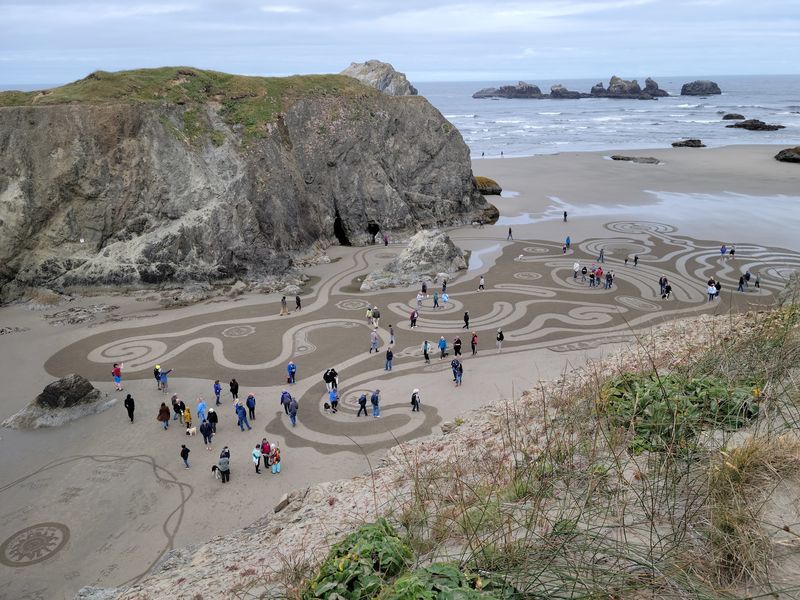
The address is 2392 Beach Loop Dr SW, Bandon, Oregon 97411, and the setting alone is worth the trip. Bandon sits on the southern Oregon coast, a small and unhurried town known for its dramatic sea stacks and wide open beaches.
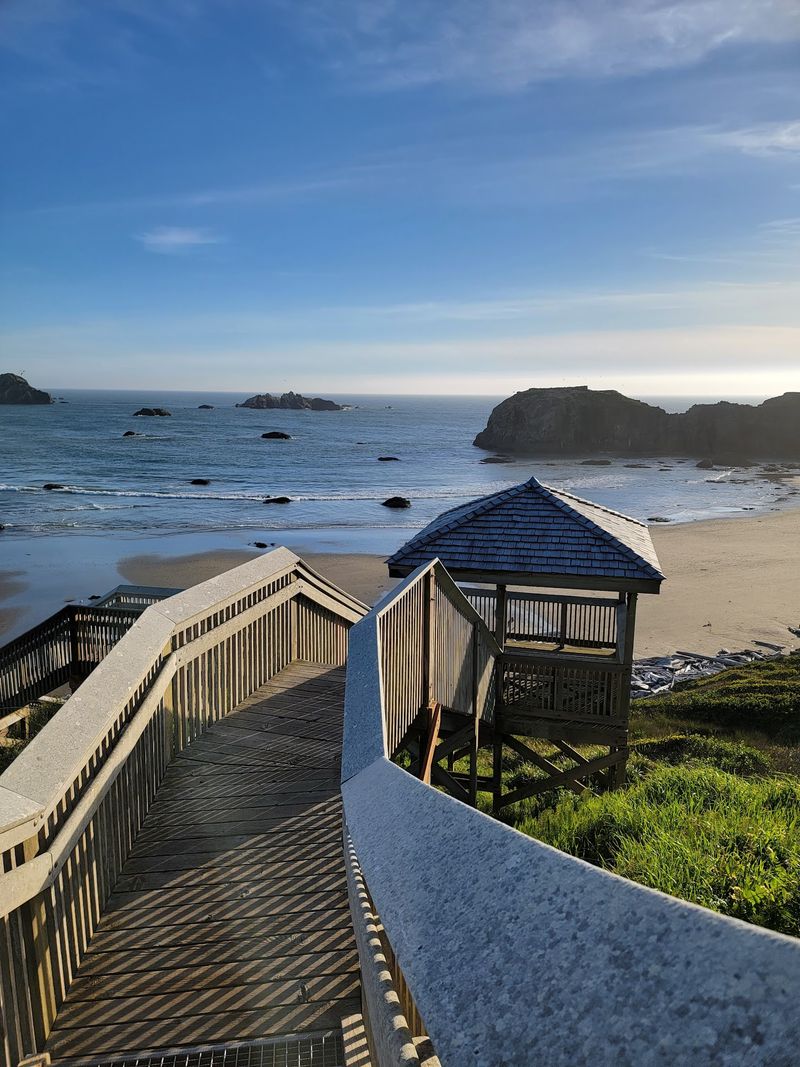
The beach where Circles In The Sand takes place is a public shoreline accessible by a staircase from Beach Loop Drive. The drive itself winds along a bluff above the ocean, offering views that make it hard to keep your eyes on the road.
Parking near the beach is extremely limited, so the organizers run a free shuttle from the Bandon Community Center. The shuttle fills up fast on event days, so arriving early is not just a suggestion, it is genuinely the smartest move you can make.
The community center is easy to find, the shuttle drivers are friendly, and the whole system runs more smoothly than you might expect for a free beach event drawing hundreds of visitors.
The Man Behind the Maze
Every great piece of art has a story behind it, and this one starts with a person the regulars affectionately call Bear. He began drawing these circles in the sand about eleven years ago, inspired by personal experiences that led him toward themes of love, presence, and human connection.
Before each walk, Bear shares a bit of that story with the crowd gathered at the trailhead of the labyrinth. His talk is brief but surprisingly moving, and it sets the tone for the entire experience.
You go in thinking you are about to take a walk on a beach, and you come out feeling like you participated in something that actually mattered.
The central theme running through every design is love, specifically the idea of sharing love and showing it openly to the people around you. That might sound a little abstract until you are actually standing inside the labyrinth, surrounded by strangers who are all quietly moving through the same winding path.
At that point, it starts to feel less like art and more like a reminder.
How the Labyrinth Gets Made
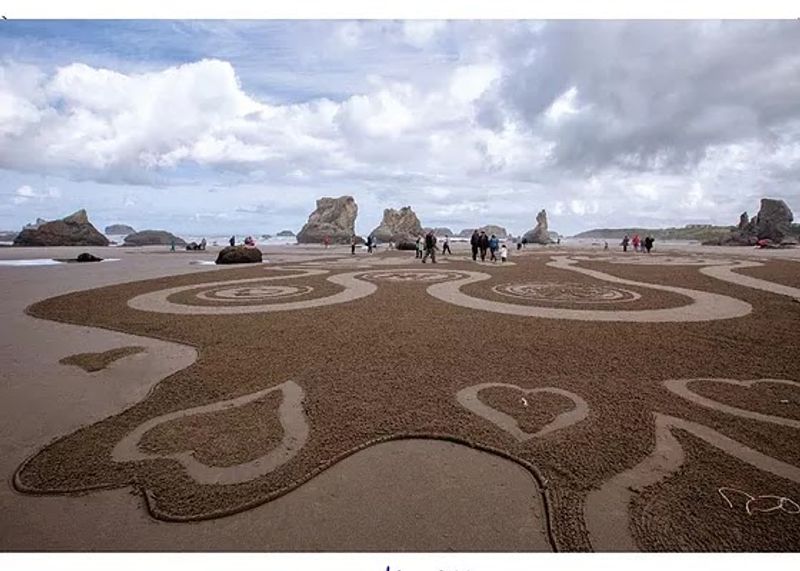
The labyrinth does not appear by magic, though it can feel that way when you see the finished result. A dedicated crew of volunteers arrives early in the morning at low tide and begins the process of drawing the design directly into the wet sand using rakes and simple tools.
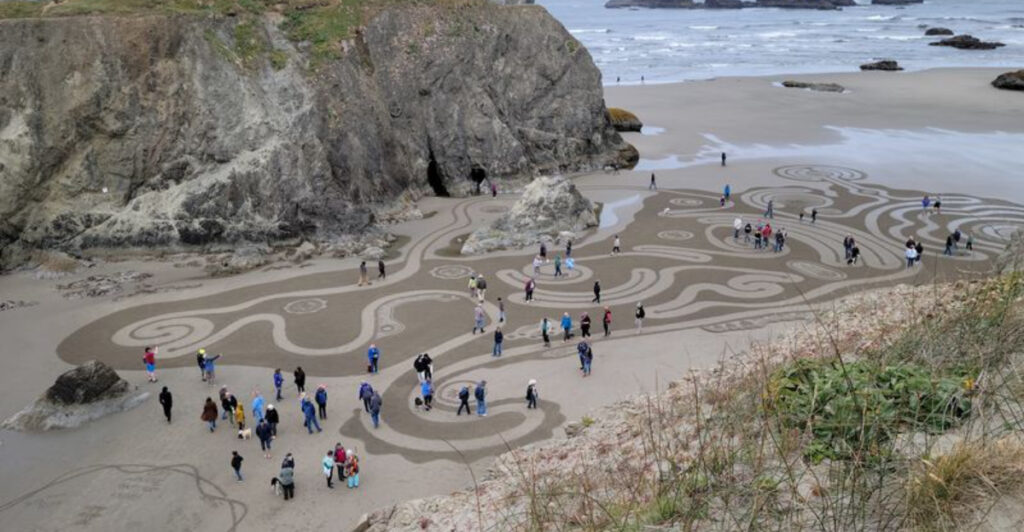
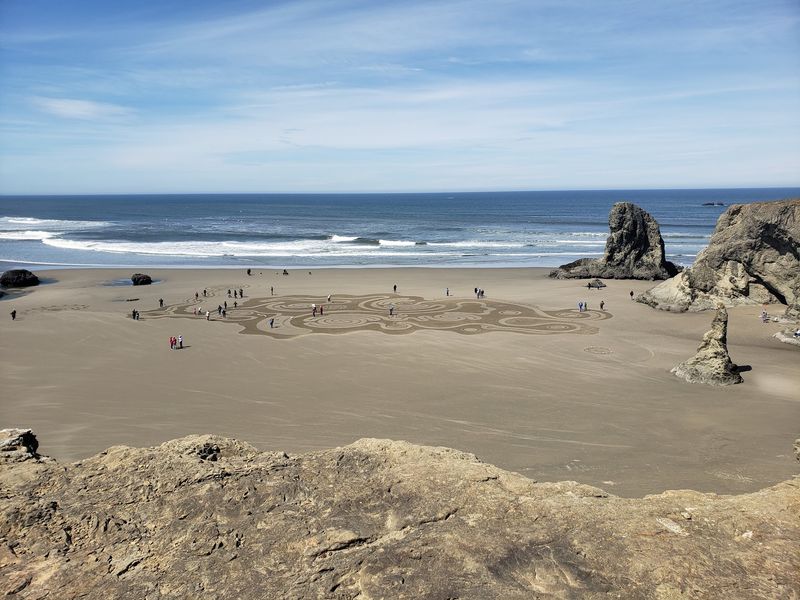
The patterns are intricate enough that a completed labyrinth can stretch a full mile in walking length, even though the footprint on the beach looks compact from the bluff above. The volunteers work with impressive speed and coordination, because the window of low tide does not stay open forever.
Each design is different. There is no repeating template, and the team creates a new pattern for every single event.
Some days the theme is geometric and precise, other days it flows in organic curves that mirror the movement of the waves nearby. Watching the volunteers finish the final sections while the first walkers begin to enter the outer ring is one of those small, specific joys that you do not expect to find on a Tuesday morning at the Oregon coast.
Walking the Labyrinth
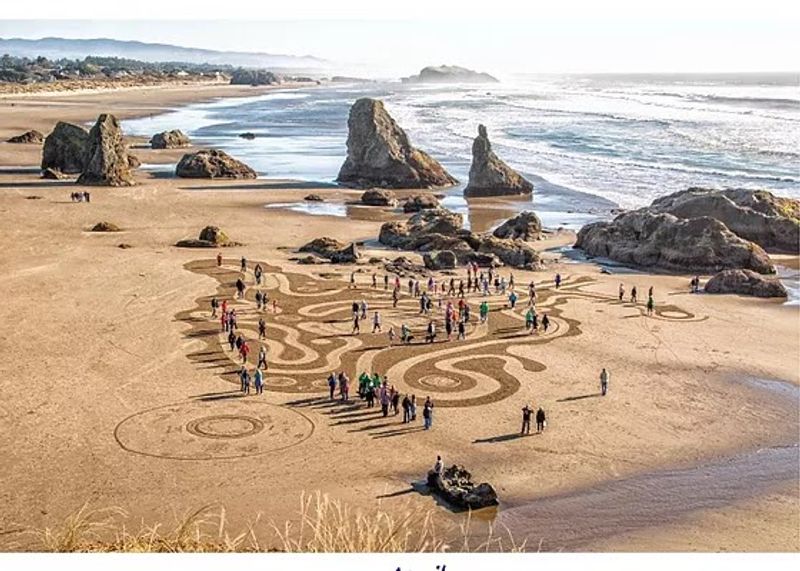
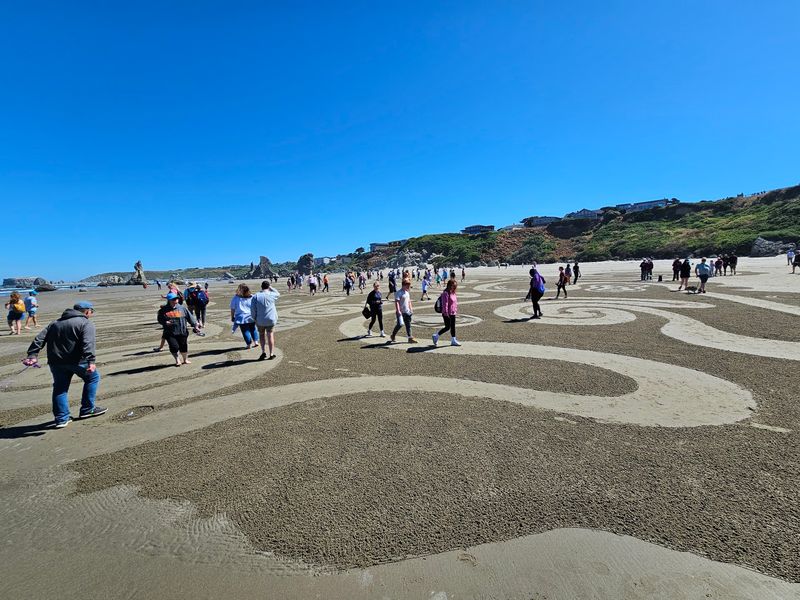
The walk itself takes somewhere between 30 minutes and an hour, depending on your pace and how long you linger at the center. The path winds inward through a series of loops and curves, and the route is always clearly defined by the raked lines on either side.
At the start, each walker is invited to pick up a small stone, which the organizers call a dream stone. You carry it with you through the labyrinth, and the idea is to bring a question or intention to mind as you walk inward, let the center of the maze serve as a moment of stillness, and then carry whatever answer or feeling you found back out with you.
The ritual sounds simple, but there is something about the physical act of walking a winding path that genuinely slows your thinking down. The beach sounds help too.
Waves, wind, and the crunch of sand underfoot create a kind of natural soundtrack that no meditation app has quite managed to replicate. By the time you reach the exit, most people are moving noticeably slower than when they started.
The Dream Stone Tradition
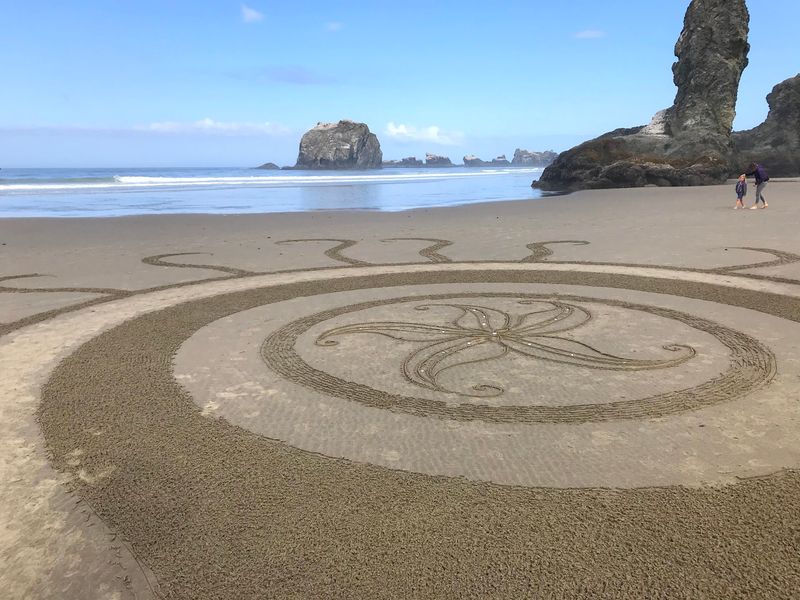
The dream stone is one of those small details that turns a pleasant beach walk into something you actually remember. Before entering the labyrinth, each visitor selects a stone from a collection provided by the volunteers.
The stones are small, smooth, and easy to hold in one hand.
The practice is rooted in the idea of setting an intention before you begin the walk. Some people bring a specific worry they want to release.
Others come with a hope they want to focus on. A few people just pick a stone they like the look of and let the walk do whatever it wants to do with them.
You keep the stone as a souvenir at the end. It is a small and low-cost takeaway, but somehow it feels more meaningful than a refrigerator magnet.
Several visitors mentioned keeping their stones on a windowsill or desk for months afterward, not because the stone is special, but because the memory attached to it is. That is a surprisingly hard thing for any travel experience to pull off.
What the Tide Takes Away
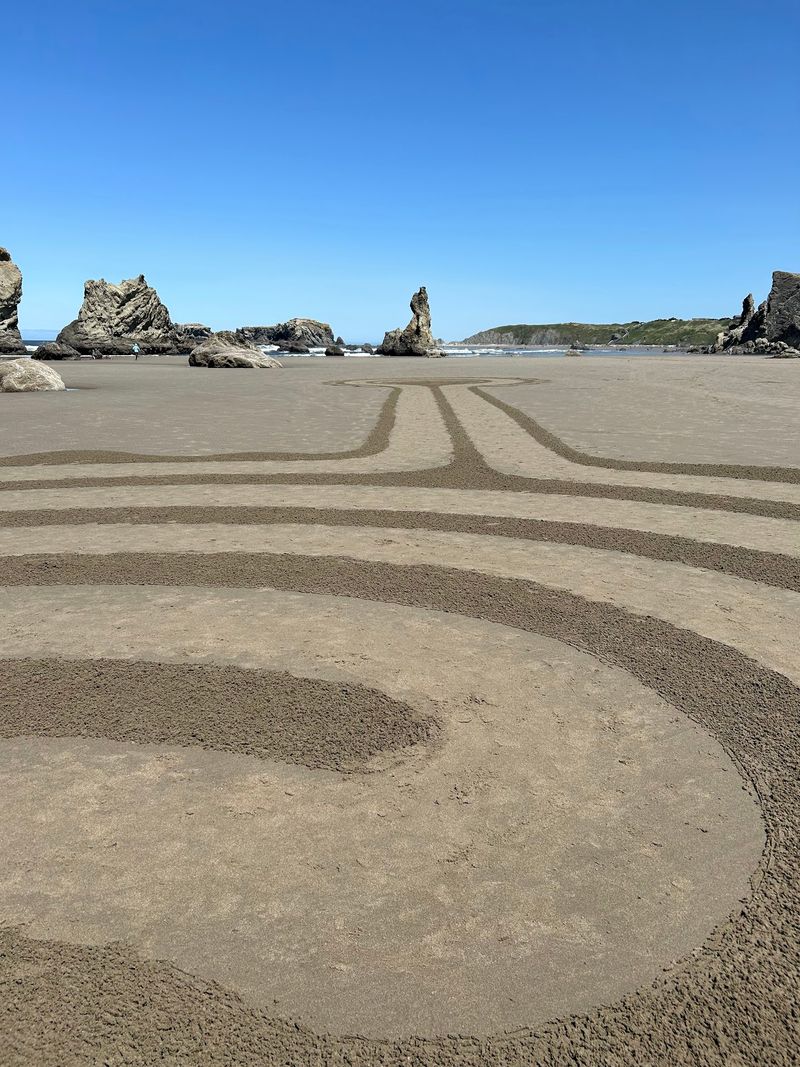
One of the most poetic parts of the whole experience is what happens at the end of the day. The tide comes in, the waves move across the beach, and within hours the entire labyrinth is gone.
No trace remains. The sand is flat and featureless again, ready for the next design.
The organizers are very intentional about this. The impermanence of the artwork is not a limitation, it is the point.
The idea is that nothing is permanent, and the only moment that fully belongs to us is the one we are standing in right now.
For some visitors, watching the tide erase the labyrinth is actually the most moving part of the visit. There is something clarifying about seeing an hour of careful, beautiful work disappear so completely and so naturally.
It does not feel like a loss exactly. It feels more like a full stop at the end of a very good sentence.
The beach simply closes the book and waits for tomorrow morning to begin a new one.
Art You Can Actually Walk Through
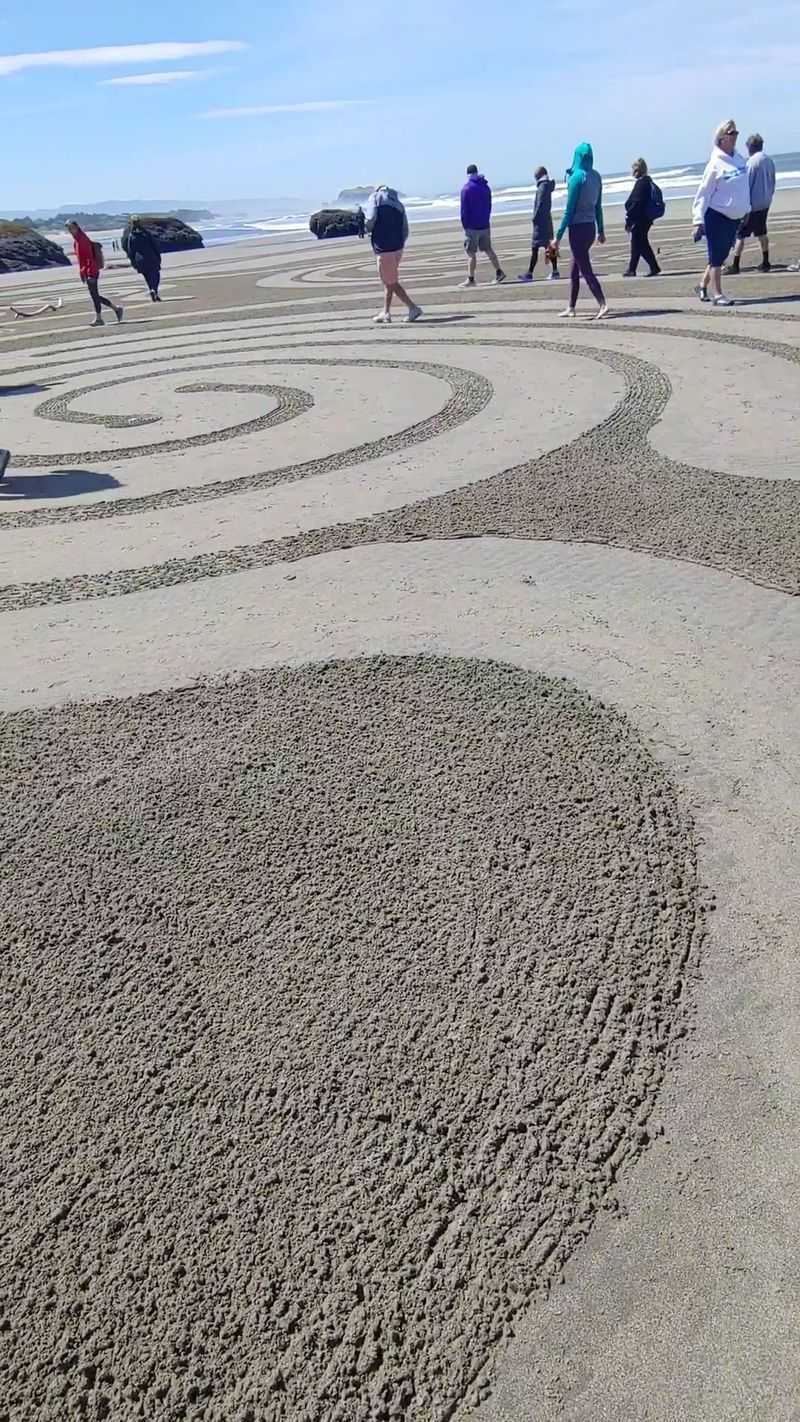
Most public art asks you to stand back and look. This one asks you to step inside and become part of it.
The labyrinth is interactive by design, and the experience of being physically inside the artwork changes how you perceive it completely.
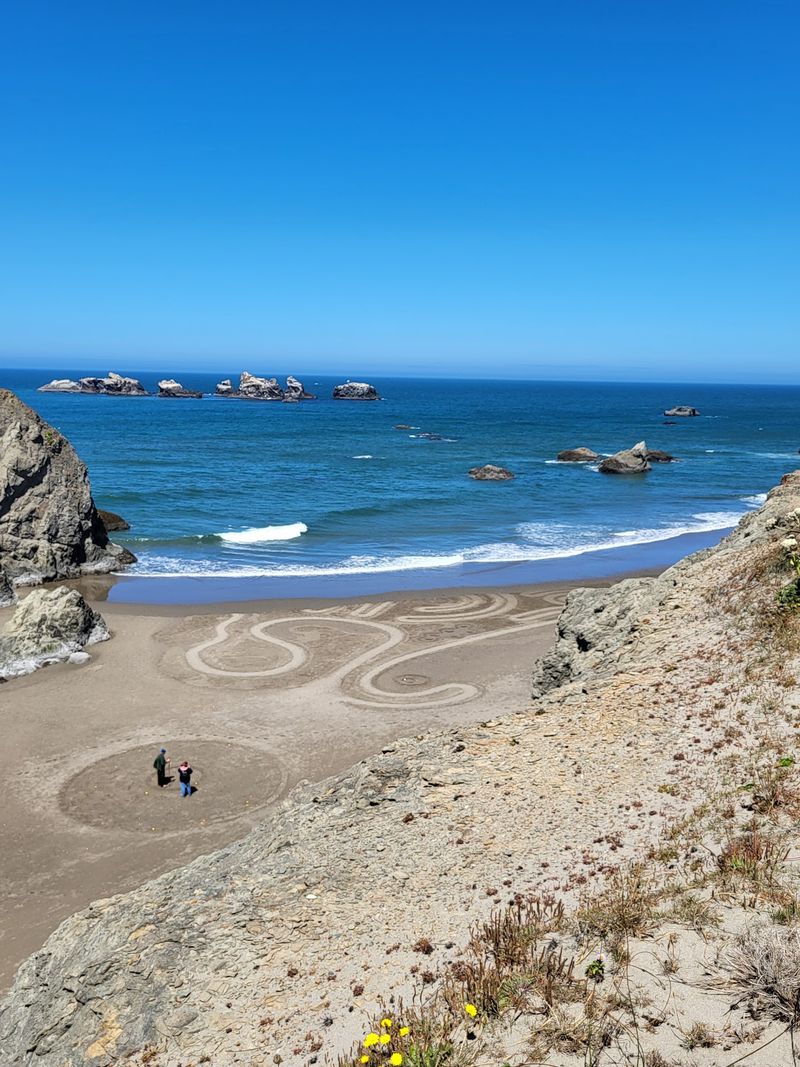
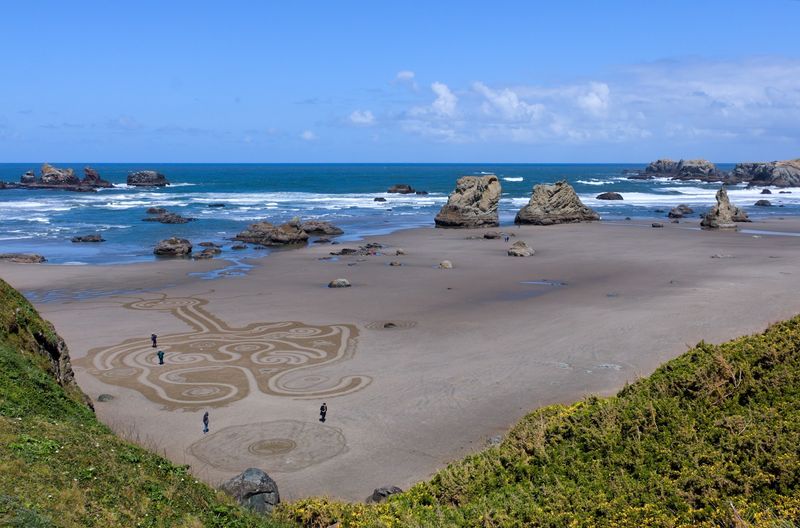
From the bluff above Beach Loop Drive, the full pattern is visible and genuinely breathtaking. The geometric precision of the design reads clearly from that height, and many visitors spend time up there before and after walking the labyrinth just to appreciate the scale.
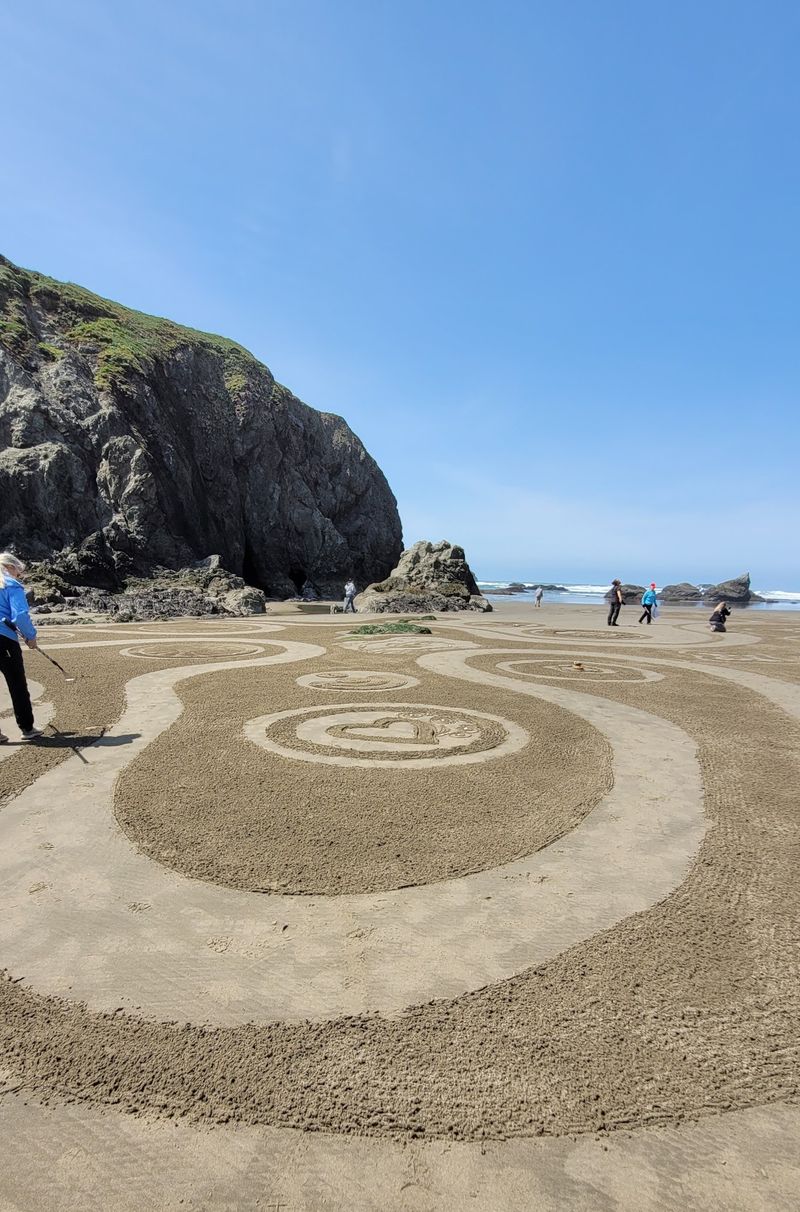
Up close, the experience is entirely different. The lines of raked sand rise a few inches on either side of the path, and the curves and spirals unfold one at a time as you move through them.
Small items collected from the beach, shells, stones, and bits of driftwood, are placed at intervals along the route as gentle markers and points of reflection. The combination of large-scale visual art and small, tactile details makes the labyrinth feel layered in a way that rewards both the overhead view and the ground-level walk.
Messages Written in the Sand
The labyrinth is not just a geometric pattern. Tucked along the path at various points, you will find words, phrases, and small drawings pressed into the sand.
These messages are placed intentionally by the volunteers, and they tend to reflect the theme of that day’s design.
Some are simple, a single word like breathe or enough. Others are short phrases that catch you off guard in the best way possible.
Walking around a curve and suddenly reading something unexpectedly resonant feels a little like finding a note someone left just for you.
Ocean objects placed alongside these messages add another layer to the experience. A piece of kelp, a sand dollar fragment, or a small arrangement of pebbles can appear beside a word and somehow make it more meaningful than it would be on its own.
The volunteers clearly think carefully about what they place and where, and that level of care comes through in every section of the walk. By the end, you have read enough small truths that the cumulative effect is hard to shake.
Best Time to Visit and What to Expect
Circles In The Sand events are scheduled around low tide, which means the timing shifts from day to day and season to season. The best way to know when the next event is happening is to check the official schedule at sandypathbandon.com before you plan your visit.
Events typically happen in the morning, and the labyrinth is usually complete and open for walking within the first hour or two after volunteers begin. Arriving right as the labyrinth opens gives you the best chance to walk the full design before the crowd grows and before the tide starts to return.
Dress for the Oregon coast, which means layers, wind-resistant outerwear, and shoes you do not mind getting sandy. The beach can be cold and breezy even in summer, and the staircase down from the bluff involves several flights that can be slippery when wet.
Children and dogs are both welcome, and the atmosphere is relaxed and genuinely family-friendly. The event is completely free, which makes it one of the most accessible and rewarding experiences on the entire southern Oregon coast.
The Free Shuttle and Getting There
Beach Loop Drive is scenic but narrow, and the parking situation near the beach access point is genuinely limited. On busy event days, cars can back up along the road, and the organizers have responded by setting up a free shuttle service from the Bandon Community Center.
The shuttle is a practical solution that works well in practice. The drivers are friendly, the ride is short, and you arrive at the top of the staircase without the stress of hunting for a parking spot.
It also keeps the neighborhood around Beach Loop Drive from getting overwhelmed, which is a consideration worth respecting.
From the shuttle drop-off point, you descend several flights of stairs to reach the beach. The stairs are manageable for most visitors, but worth knowing about in advance if mobility is a concern.
The walk back up after the labyrinth is a mild workout, and the view from the top of the stairs over the beach and the sea stacks is a genuinely satisfying final image to carry home with you after the morning.
A Spiritual Undercurrent Worth Noting
The word meditation gets used a lot in connection with Circles In The Sand, and while the experience is not religious in any formal sense, there is a genuinely contemplative quality to it that is hard to dismiss. The combination of the physical walk, the natural setting, and the intentional design creates something that feels more like a practice than a pastime.
The organizers frame the labyrinth using a simple structure: bring a question or concern to the center, sit with it there, and carry whatever clarity you find back out through the winding path. That framework is loose enough to work for almost anyone, regardless of background or belief.
Several repeat visitors described coming back five or more times, not because the labyrinth is the same each visit, but because it is never the same. A different theme, a different pattern, a different personal moment in your life, and the walk feels entirely new.
That kind of replayability is rare in any travel experience, and it says something real about the depth of what Bear and his volunteers have built on this stretch of Oregon sand.
Why This Beach Stays With You
Most beach experiences are pleasant in a general, forgettable way. You walk, you look at the water, you take a few photos, and you leave.
Circles In The Sand is different because it gives the beach a specific purpose and a temporary structure that makes the whole visit feel intentional.
The fact that the artwork disappears every single day means you cannot procrastinate on seeing it. There is no permanent installation waiting for your next trip.
Each visit is its own complete thing, and that urgency makes the experience feel more alive.
Bandon itself is a genuinely lovely town with good food, dramatic scenery, and a relaxed pace that suits a weekend trip well. But the labyrinth is the reason people drive hours out of their way to be on that particular beach on that particular morning.
It is the kind of experience that shows up in conversations months later, not as a story about a cool thing you saw, but as a story about a morning that quietly changed how you thought about something. That is a rare thing for any beach to offer.
Share this story