There is a stretch of Oregon coastline where the past refuses to stay buried. On a wide, windswept beach near Hammond, Oregon, the rusted steel skeleton of a four-masted ship rises from the sand like something out of a history book, except it is completely real.
The ship ran aground in October 1906, and more than a century later, its bones are still there for anyone to walk up and touch. The wreck draws photographers, history lovers, families, and curious travelers from all over the country, and once you see it in person, it is easy to understand why people keep coming back.
Where to Find the Wreck and How to Get There
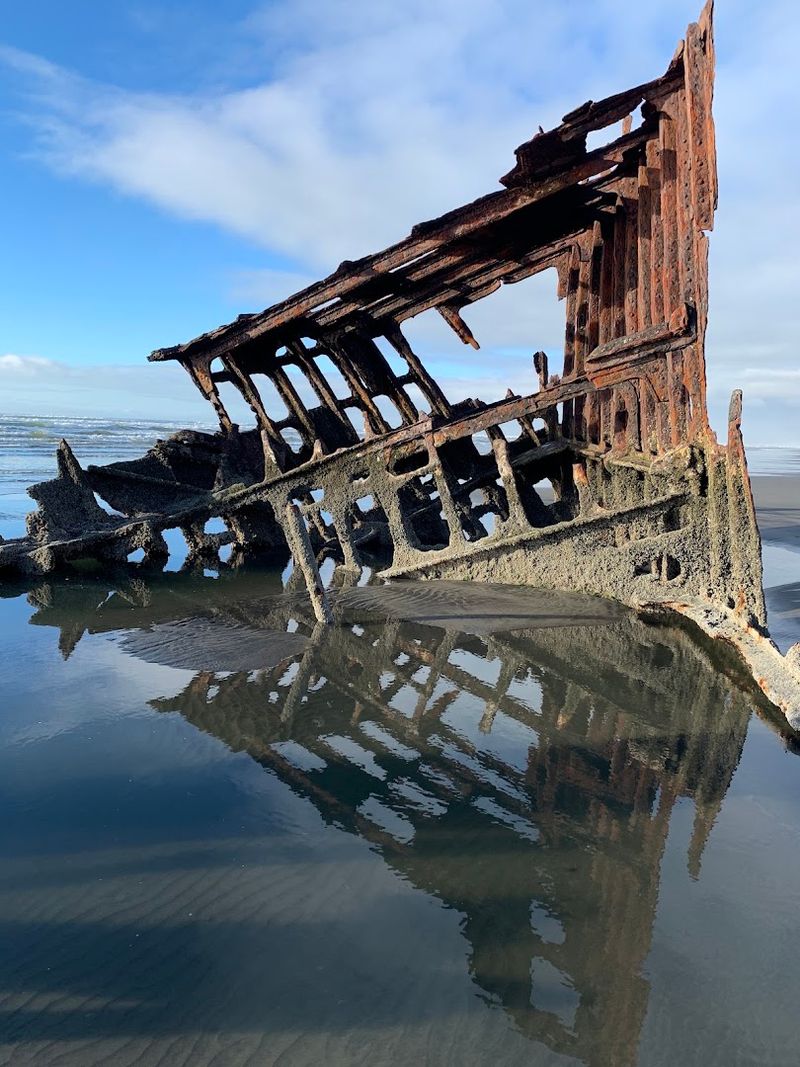
The rusted remains of the Peter Iredale sit on the beach at Fort Stevens State Park, accessible via Peter Iredale Rd, Hammond, OR 97121, right at the northern tip of the Oregon coast near the mouth of the Columbia River.
Getting there is genuinely straightforward. From Highway 101, you follow the signs toward Fort Stevens State Park, and the road leads you almost directly to the wreck’s dedicated parking area.
The park is open daily from 6 AM to 10 PM, which gives you plenty of flexibility to visit at sunrise, midday, or during the golden hour before sunset.
The walk from the parking lot to the wreck is short, roughly 100 yards across open sand, so even younger kids and older visitors handle it without much trouble. There is a fee for parking inside the state park lot, but free parking is available just outside the entrance if you do not mind a slightly longer walk.
Restrooms are available at the parking area, which is a small but welcome detail when you are planning a beach outing. You can reach the park by phone at 1-800-551-6949, and the official website at oregonstateparks.org has up-to-date park information.
The Story Behind the Stranded Ship
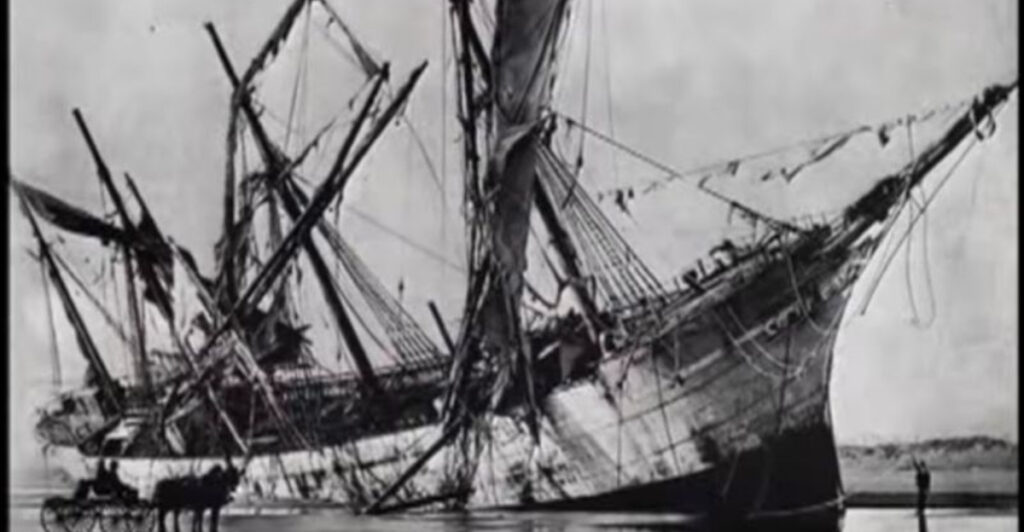
On October 25, 1906, the British four-masted steel barque Peter Iredale was sailing toward the mouth of the Columbia River when a fierce storm hit. Strong winds and powerful currents pushed the ship off course, and it ran hard aground on Clatsop Spit, which is the same beach where the wreck still rests today.
The ship was carrying a crew of about 27 men, and remarkably, all of them survived the grounding. Captain H.
Lawrence reportedly raised a toast at the scene, saying something close to “May God bless you, and may your bones bleach in the sands,” which turned out to be almost prophetic given what the ship has become over the decades.
The Peter Iredale was built in 1890 in Workington, England, and was considered a modern vessel at the time. Salvage attempts were made after the grounding, but the ship was declared a total loss relatively quickly.
What makes this story stick is not just the drama of the wreck itself, but the fact that the ship never left. The sand claimed it, the ocean worked on it, and now over 118 years later, people still travel from across the country just to see what remains.
What the Wreck Actually Looks Like Today
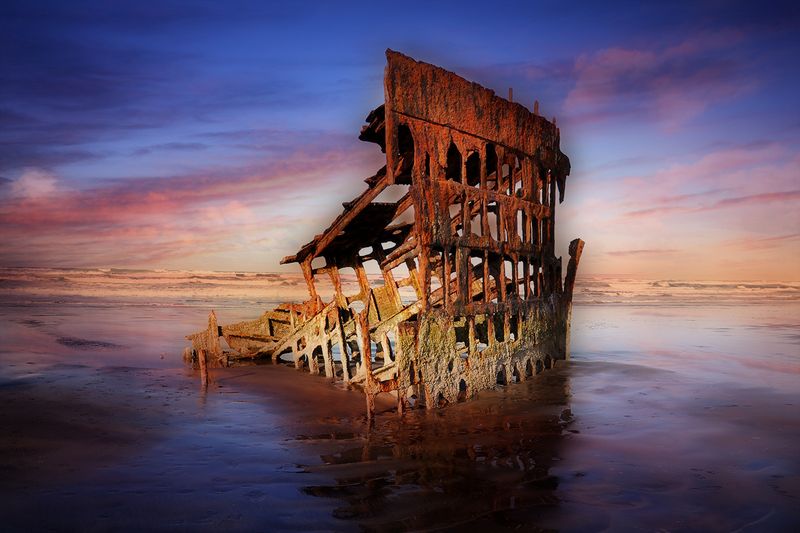
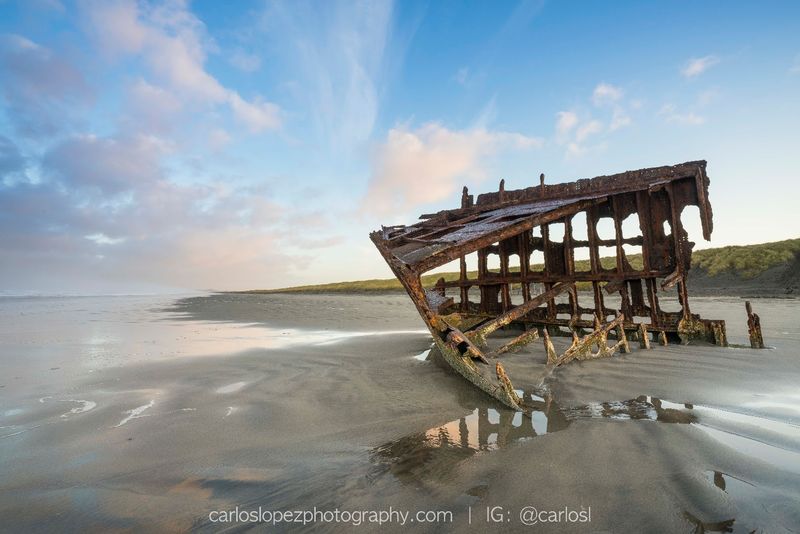
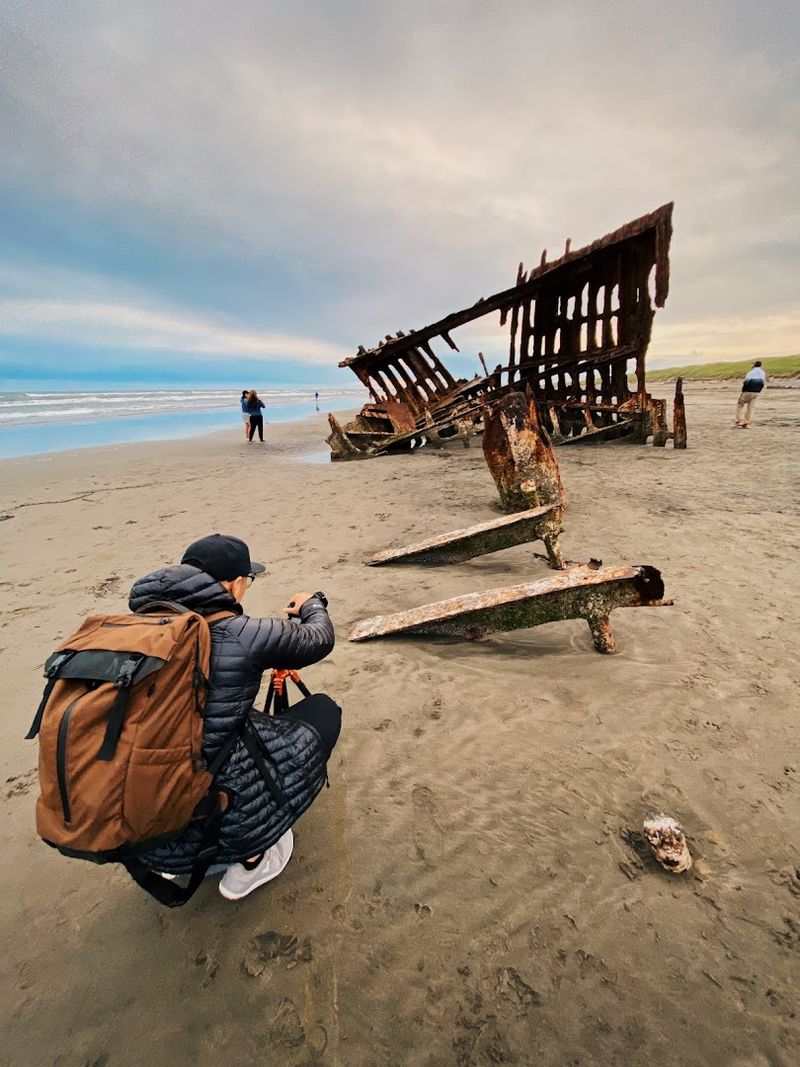
Seeing the wreck for the first time has a way of stopping people mid-step. The steel hull has been stripped down by over a century of salt water, wind, and weather until what remains is a skeletal framework of curved ribs and angular beams that jut out of the sand at dramatic angles.
The metal is a deep, layered rust color, almost orange in direct sunlight and closer to brown or charcoal when the sky is overcast. At low tide, more of the structure is exposed, and you can walk right up to it, run your hand along the corroded steel, and get a real sense of the ship’s original scale.
The wreck is not enormous compared to what you might expect from a four-masted sailing vessel, mostly because so much has eroded away over the decades. Long-time visitors who have been coming for 40 or 50 years consistently note that less of the ship is visible now than in past decades.
The remaining structure still has genuine presence on the beach, though. When the waves roll in around the base of the hull on a foggy morning, the scene carries a quiet, eerie weight that photographs simply cannot fully capture.
The Best Time to Visit for the Full Experience
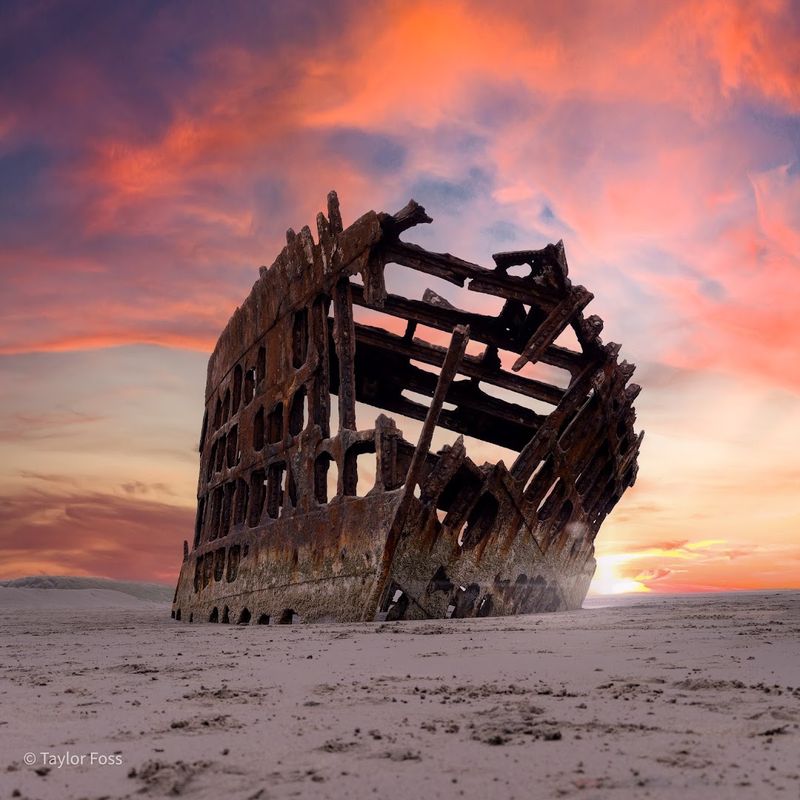
Timing your visit makes a real difference at this spot. Low tide is the clear winner for getting close to the wreck, since the sand around the base opens up and lets you walk directly up to the steel hull without wading through shallow water.
Sunset is the other timing factor worth planning around. When the light drops toward the horizon and hits the rusted metal at a low angle, the whole structure takes on a warm, almost golden glow that makes for genuinely striking photographs.
Multiple visitors have described the sunset view here as one of the more memorable coastal moments they have had along the entire Oregon coast.
Weekday mornings tend to be quieter, which matters if you want photos without other people in the frame. Weekend afternoons bring larger crowds, and getting a clean shot of the wreck alone can require some patience.
The beach can be windy and cool at almost any time of year, so a light jacket is a smart addition to your bag even in summer. The park is open year-round, and each season brings a different mood to the beach, from stormy winter drama to calm, hazy summer afternoons.
Photography Tips for Capturing the Wreck
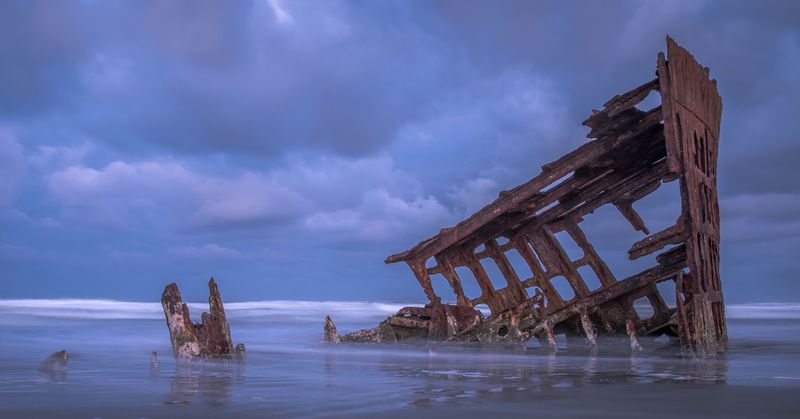
The Peter Iredale is one of the most photogenic spots on the entire Oregon coast, and it rewards visitors who put a little thought into their angles. The wreck looks different depending on where you stand, what the tide is doing, and what the sky is doing above you.
Shooting from a low angle with the camera close to the wet sand creates a strong reflection effect when the tide is partially in, making the rusted steel appear to float between sky and water. Wide-angle lenses work especially well here because they let you include both the full structure of the wreck and the open coastline stretching behind it.
Overcast days actually produce some of the most dramatic results. The flat, diffused light brings out the texture and color of the corroded metal without harsh shadows, and the moody sky adds natural atmosphere without any editing required.
Foggy mornings are another favorite condition among photographers who visit regularly. The mist softens the background and gives the wreck an almost ghostly quality that feels fitting given its history.
One practical note: this is a busy spot on weekends, so patience is part of the process. Wait for a gap between visitor groups, and the composition you want will come to you.
The Beach Itself Is Worth Your Time
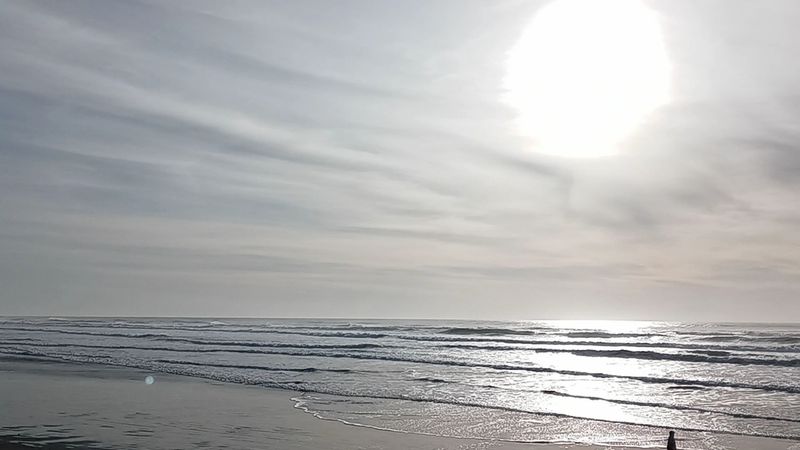
Most visitors come specifically for the wreck, but the beach surrounding it deserves attention on its own terms. The sand here is wide and open, with a fine texture that makes it comfortable to walk on for long stretches, and the shoreline extends far enough in both directions that it rarely feels crowded even when the parking lot is full.
The beach is popular with dog owners, and four-legged visitors seem to have a particularly good time running the open flats near the water. Families with kids tend to gravitate toward the small dunes near the parking area, where rolling down the sandy slopes becomes a reliable activity for younger visitors.
Sand dollar hunters have reported good luck along this stretch of beach, particularly at low tide when the receding water exposes the shallow flats. A few visitors have found five or more in a single outing, so it is worth keeping your eyes on the sand as you walk.
Four-wheel-drive vehicles are permitted on the beach during certain times of year, and some visitors choose to drive south along the shoreline all the way toward Seaside. For those who prefer to keep things simple, though, a quiet walk along the water’s edge with the wreck as your backdrop is hard to beat.
Visiting with Kids and Families
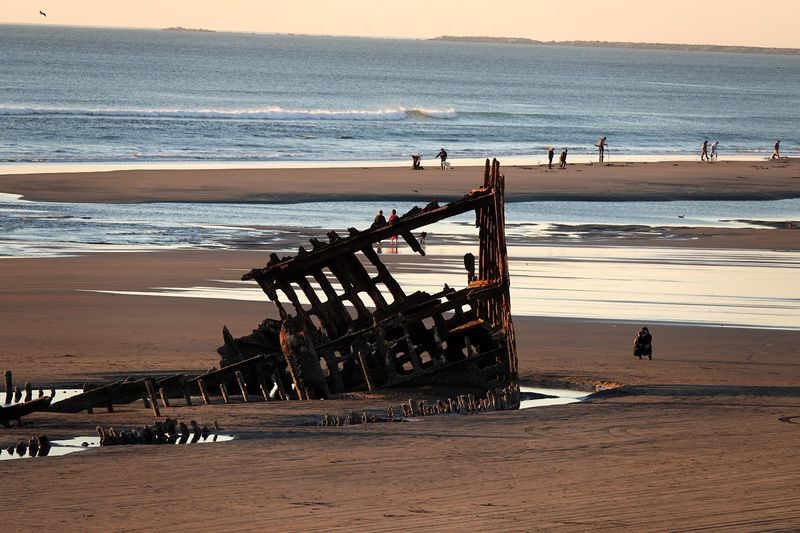
Few roadside stops hold a kid’s attention the way a real shipwreck does. There is something about seeing actual rusted steel rising out of the sand that bypasses the usual “are we there yet” energy and replaces it with genuine curiosity.
Children are generally allowed to climb on the accessible parts of the wreck, and many families take full advantage of that. The metal is solid enough in the remaining sections to support kids clambering around, though parents naturally keep a close eye on the jagged edges and uneven surfaces.
The short walk from the parking lot means even small children can make the trip without complaint. The beach itself offers plenty of room to run, dig, and explore beyond the wreck, so a family visit can easily stretch into a couple of hours without anyone running out of things to do.
One thing worth knowing if you plan to take the paved trail from the campground rather than driving directly to the beach: the wooded sections near the lake along that trail can have serious mosquito activity, especially in warmer months. Bug spray with a strong active ingredient is worth packing if you plan to use the trail route rather than driving straight to the beach parking area.
Learning More at the Maritime Museum in Astoria
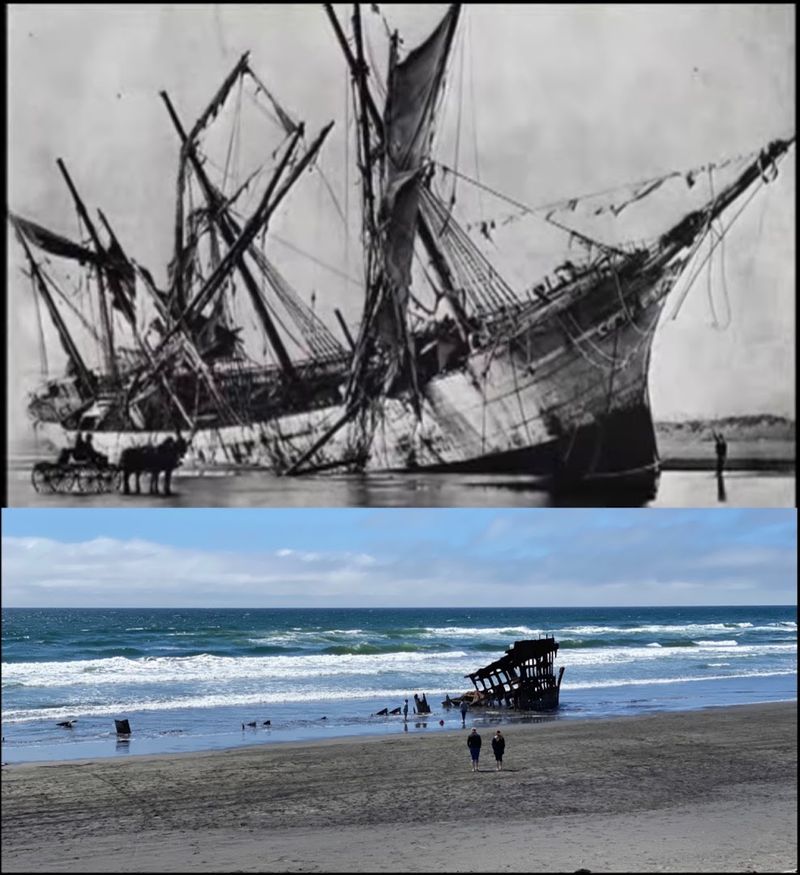
Before or after visiting the wreck, a stop at the Columbia River Maritime Museum in nearby Astoria adds a layer of context that genuinely changes how you see the remains on the beach. The museum holds the ship’s bell recovered from the Peter Iredale, along with other artifacts and historical photographs that document the vessel from its working life through the grounding and into its current state.
One of the more striking things in the museum’s collection is an age-progression series of photographs showing the Peter Iredale at the time of the wreck compared to what remains today. Seeing those images side by side makes the scale of the original ship suddenly clear in a way that standing next to the current skeleton does not fully convey on its own.
The museum is located in Astoria, which is just a short drive north of Fort Stevens State Park. Astoria itself is a worthwhile destination, with a historic downtown, the famous Astoria Column, and views over the Columbia River that are worth an hour or two of exploration.
Pairing the museum visit with the beach stop turns a quick photo opportunity into a much more complete experience, and most visitors who make that combination say it is the better way to appreciate what the Peter Iredale actually was.
Practical Tips Before You Go
A few practical details can make your visit smoother. The state park charges a day-use parking fee inside the main lot, but free parking is available just outside the entrance gate, and the extra walk is minimal.
Restrooms are located at the parking area, so no need to plan around that.
The beach can be chilly and breezy at almost any time of year, even when the rest of Oregon is warm. A windproof layer is genuinely useful, not just a suggestion.
Sunglasses help too, since the reflected glare off the sand and water can be strong even on cloudy days.
Low tide timing is worth checking before you leave home. The National Oceanic and Atmospheric Administration’s tide prediction tool is free and easy to use, and knowing when low tide falls lets you plan your arrival for the best viewing conditions at the wreck.
The park’s official website at oregonstateparks.org has current information on fees, seasonal rules for beach driving, and any closures. The phone number for the park is 1-800-551-6949 if you want to call ahead.
One final note: the wreck is slowly disappearing. Each decade leaves a little less steel above the sand, so visiting sooner rather than later means seeing more of what remains of this remarkable piece of coastal history.
Share this story