Most people pass the small roadside sign without a second glance, assuming it marks nothing more than a gravel pullout or a forgettable rest stop. That assumption costs them one of the most quietly spectacular natural areas on the entire Oregon Coast.
A modest boardwalk leads through a world of coastal wetlands, forested trails, open dunes, and a secluded beach that feels like it belongs to nobody and everybody at the same time. Once a working cattle farm on an estuary, this spot was saved from becoming a golf course or resort, and the Oregon state park system has kept it in remarkable shape ever since.
Where to Find It and What to Expect at the Entrance
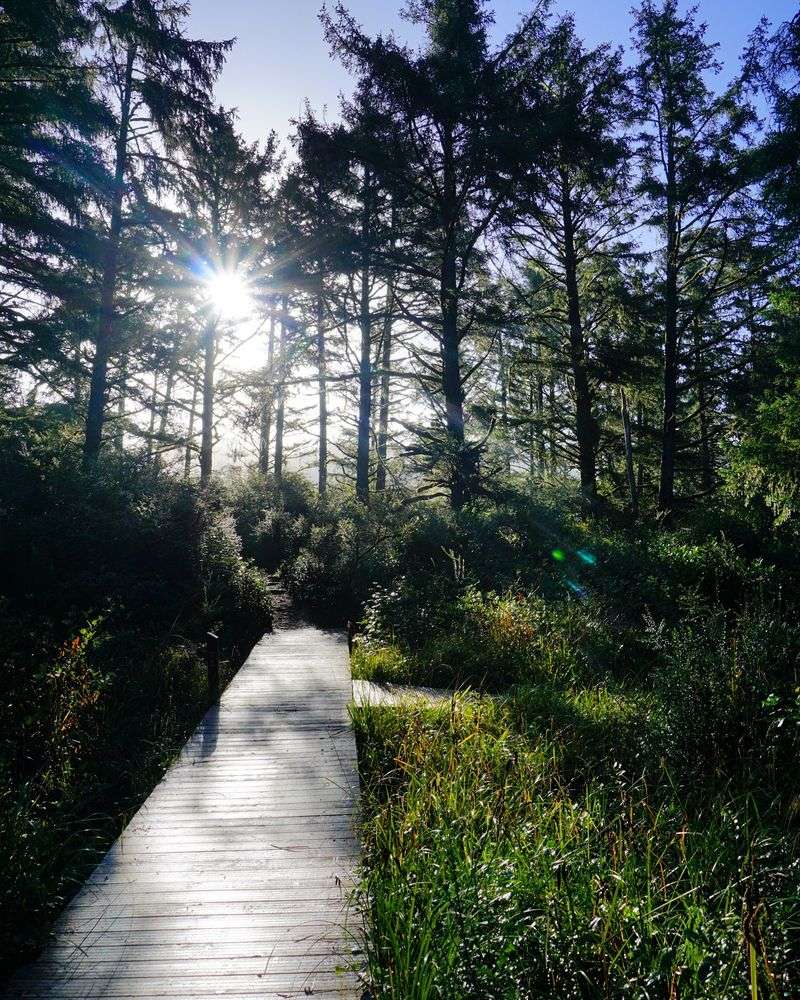
The address is Sandlake Road in Cloverdale, Oregon 97112, tucked along the Three Capes Scenic Route between Lincoln City and Tillamook. From the road, the place genuinely looks like a rest stop, and that low-key appearance is exactly why so many drivers keep going.
The parking area is small, with room for roughly 20 vehicles, and larger RVs and oversized rigs will have a hard time fitting in. Arriving early on weekends is a smart move, especially in summer, when the lot fills up faster than you might expect.
Two well-maintained vault toilets sit right at the trailhead, and a water spout is available for rinsing off after a sandy beach walk. A detailed trail map is posted near the entrance, and there are also informational boards explaining the ecology of the area and seasonal wildlife restrictions.
The park is free to enter, open daily from 8 AM to 8 PM, and the phone number for Oregon State Parks is 503-842-3182. First impressions here are quiet, but the trail ahead rewards every step.
The History Behind This Former Farm Turned Natural Treasure
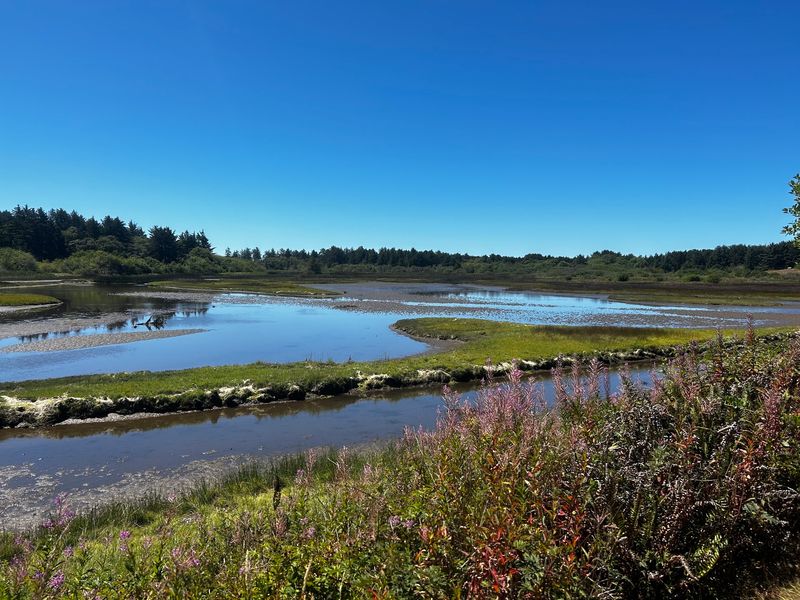
Before Oregon State Parks took ownership, this land was known as the Beltz Farm, a working cattle operation set on a coastal estuary. A California couple, the Bastich family, owned the property at one point and clearly cared for it well.
Over the years, developers proposed turning the land into a golf course and later a resort. Both plans fell through, and the state eventually acquired the property, transforming it into what is now Sitka Sedge State Natural Area.
A rusted tide gate still stands on the property, quietly doing its job of preventing the community of Tierra Del Mar from flooding. The old dike that cattle once walked across is now a trail that hikers use to cross between the freshwater stream on one side and the saltwater marsh on the other.
That dike walk is one of the most striking moments on the entire route, a physical reminder that the land carries layers of history beneath its peaceful surface. The state park system has proven to be an excellent steward, keeping the area litter-free and well-preserved for everyone who visits.
The Boardwalk and Dike Walk That Sets the Tone
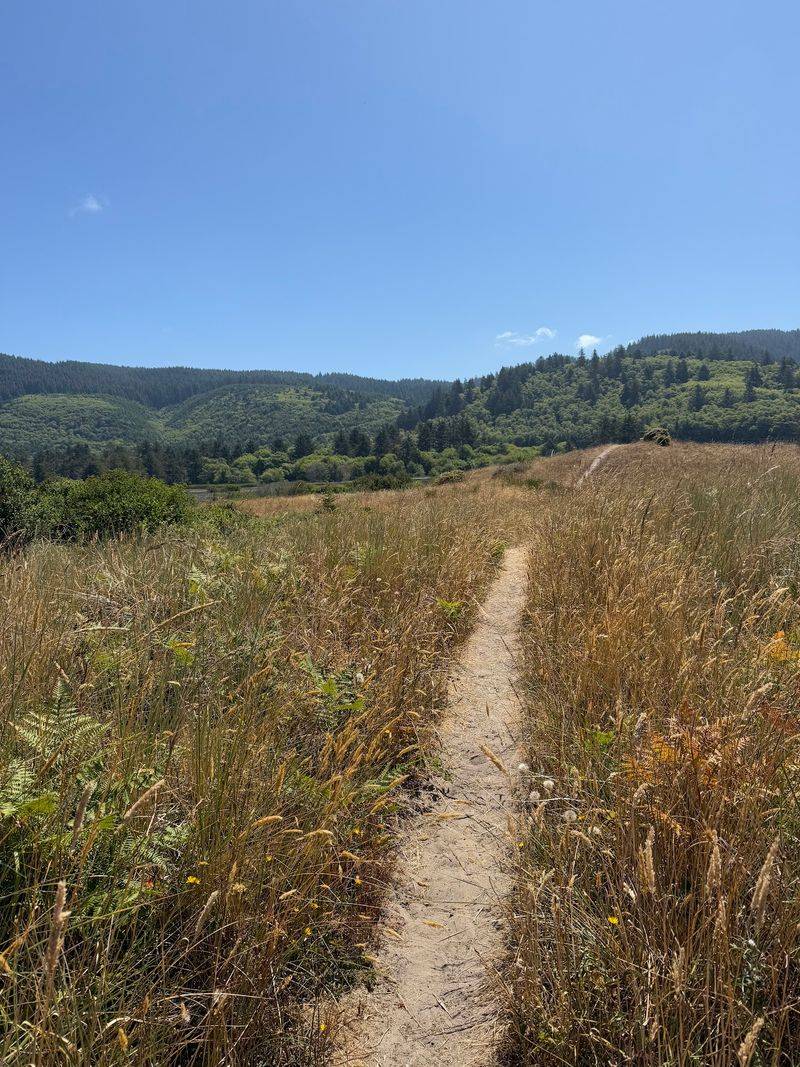
The first stretch of trail after the trailhead sets up the entire experience beautifully. A boardwalk leads out across the wetland area, and then the path transitions onto the old farm dike, a raised earthen walkway that cuts across the estuary.
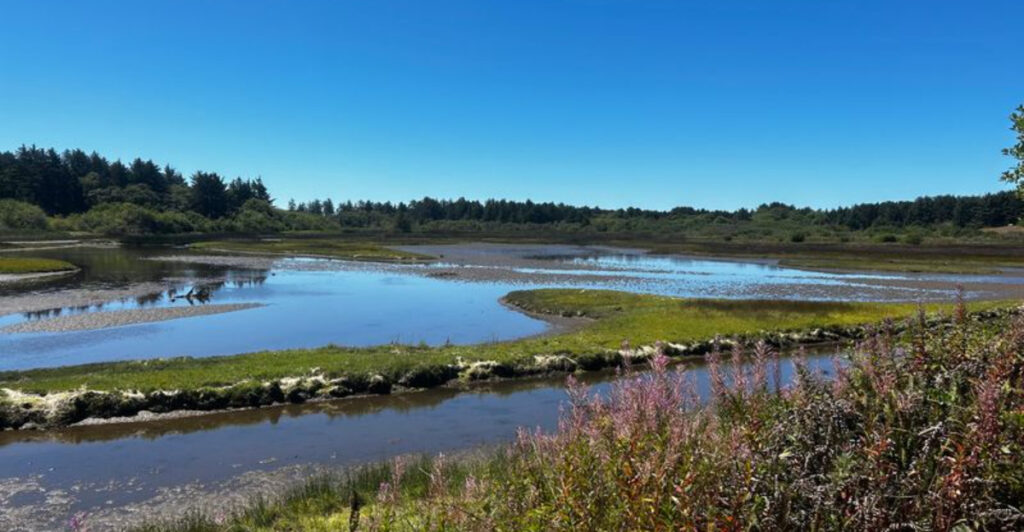
On your left, a clear freshwater stream moves quietly through reeds and grasses. On your right, the saltwater marsh spreads out in shades of olive green and brown, depending on the season.
The contrast between the two ecosystems is visible just by turning your head, and that dual perspective makes the dike walk genuinely interesting rather than just a connector between trailheads.
The footing is firm and mostly flat, which makes this section accessible to a wide range of visitors, including older adults and families with young kids. Birders will want to slow down here because the marsh edges attract herons, kingfishers, and various shorebirds throughout the year.
The dike sets the tone for the rest of the hike: unhurried, layered, and full of small details that reward anyone willing to look closely rather than rush toward the beach.
Two Loop Trails With Very Different Personalities
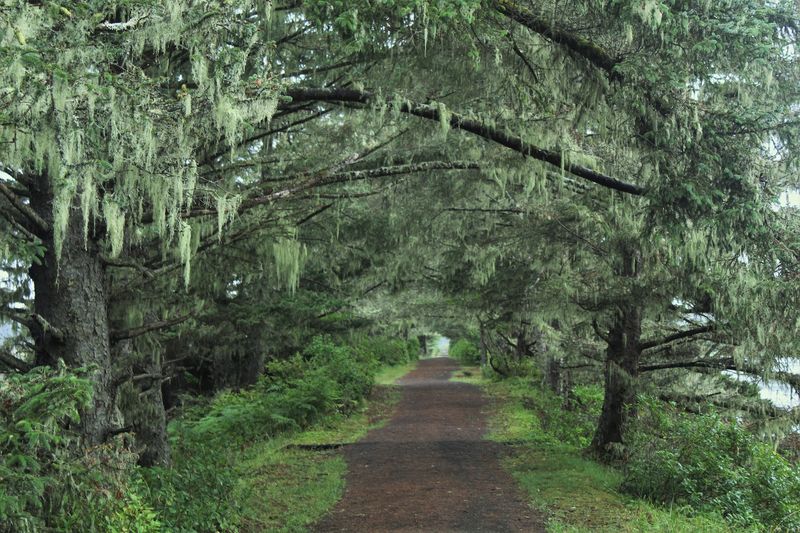
Two separate loop trails branch off from the main path, each about a mile long, and they offer noticeably different experiences. The eastern loop follows the marsh and mudflats, while the western loop moves through forested sections and eventually delivers you to the beach.
Doing both loops together adds up to roughly three miles of total hiking, which is a satisfying half-day outing without being exhausting. The terrain is mostly flat throughout, with only a few spots where small tree roots poke above the ground surface.
Shortcut connectors between the loops give you flexibility to customize the route based on how much time or energy you have. Trail posts at intersections display a map with a “you are here” marker, which makes navigation straightforward even without a cell signal.
One practical heads-up: there are no trail signs within the park itself, only at intersections, so snapping a photo of the main map at the parking lot before heading out is genuinely useful advice. The variety packed into these two loops, from shaded forest to open marsh to sandy dunes, keeps the walk from ever feeling repetitive or one-note.
The Secluded Beach at the End of the Western Trail
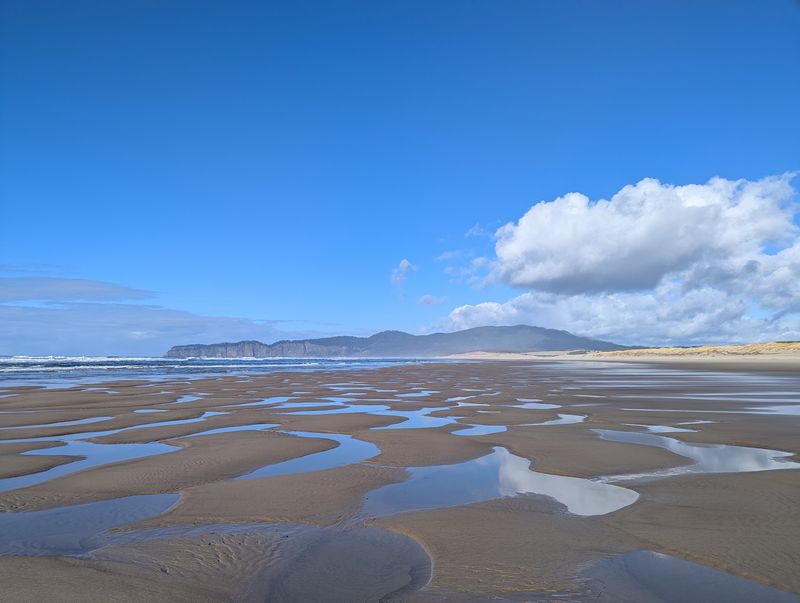
About 1.5 miles from the trailhead, the western trail opens onto a beach that feels genuinely private. There are no vendors, no beach chairs for rent, no volleyball nets, and most days, very few people.
The sand is wide and soft, and the sound of the ocean takes over the moment you clear the last line of dunes.
Views from the beach stretch across to Sandlake and Whalen Island on the far side of the river channel. On clear days, a distant glimpse of Haystack Rock is possible from the right angle, which gives the beach an unexpected sense of scale and connection to the broader Oregon Coast landscape.
The descent from the dunes to the beach is the steepest part of the entire route, and the deep sand makes the climb back up a legitimate workout. Walking barefoot through this section is genuinely worth it.
Bring a blanket and some snacks, because the beach is the kind of place where you sit down intending to stay for 20 minutes and end up spending the whole afternoon. The return loop through the forest after the beach feels like a proper ending to a well-rounded coastal adventure.
Wildlife Watching Opportunities That Will Surprise You
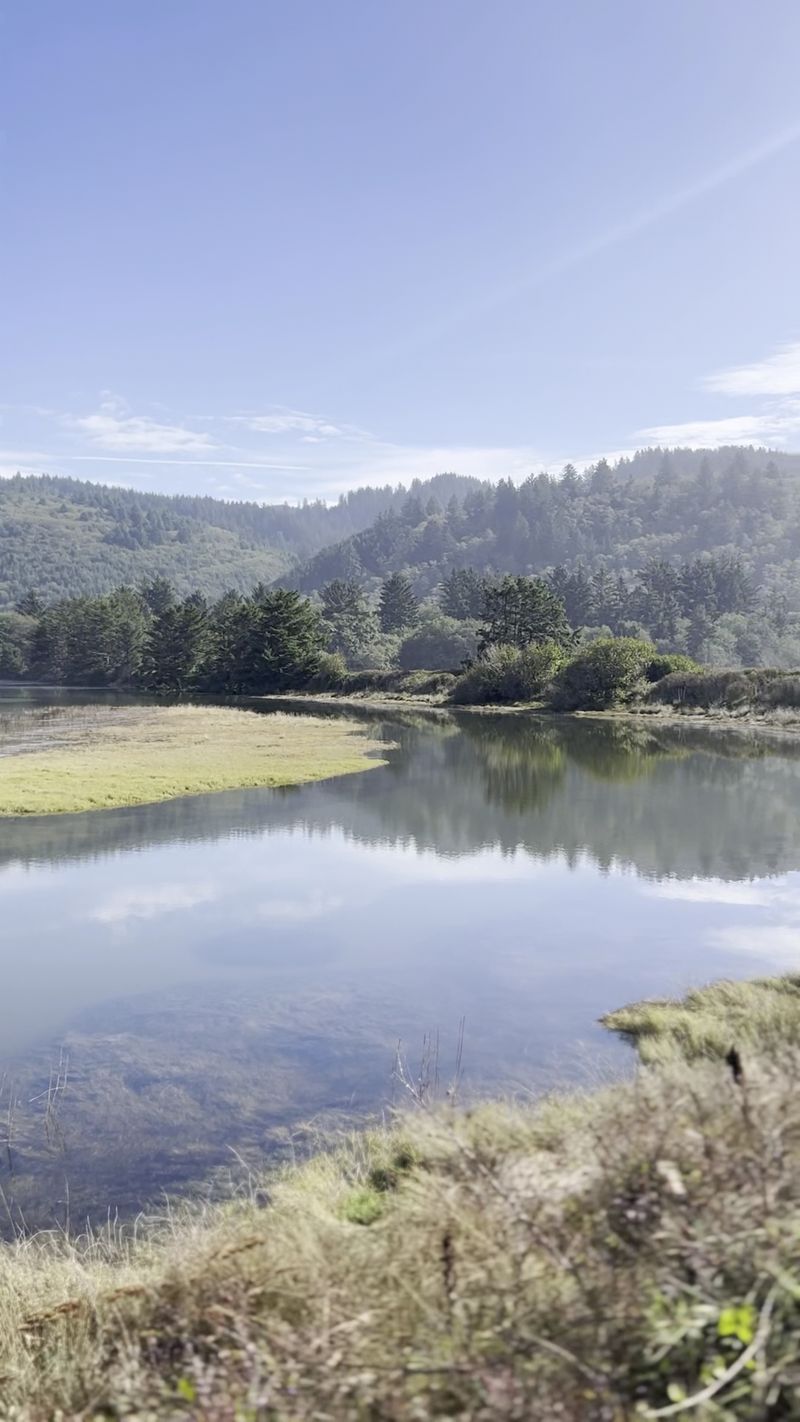
The wildlife list at this park is longer than most visitors expect from such a small and unassuming natural area. Eagles, gulls, terns, kingfishers, turkey vultures, and snowy plovers have all been spotted here regularly.
Black bears have also been seen in the area, and fresh bear tracks or scat near the trail are not unheard of.
Elk move through the property as well, particularly in the quieter morning hours before foot traffic picks up. The estuary and marsh edges are especially productive for bird watching, and the dike walk gives you elevated sightlines that make spotting wading birds much easier.
Snowy plover nesting season runs from March 15 through September 15 each year, and during that period, specific sections of the beach and dune areas are closed to protect the nesting sites. The informational boards at the parking lot clearly explain which zones are restricted for humans, dogs, and horses during that window.
Paying attention to those signs is not just a courtesy, it is a real contribution to keeping a rare shorebird population stable on this stretch of the Oregon Coast. The wildlife here makes every slow, quiet walk feel like it has a reward waiting around the next bend.
The Wetland Ecosystem and Plant Life Along the Trail
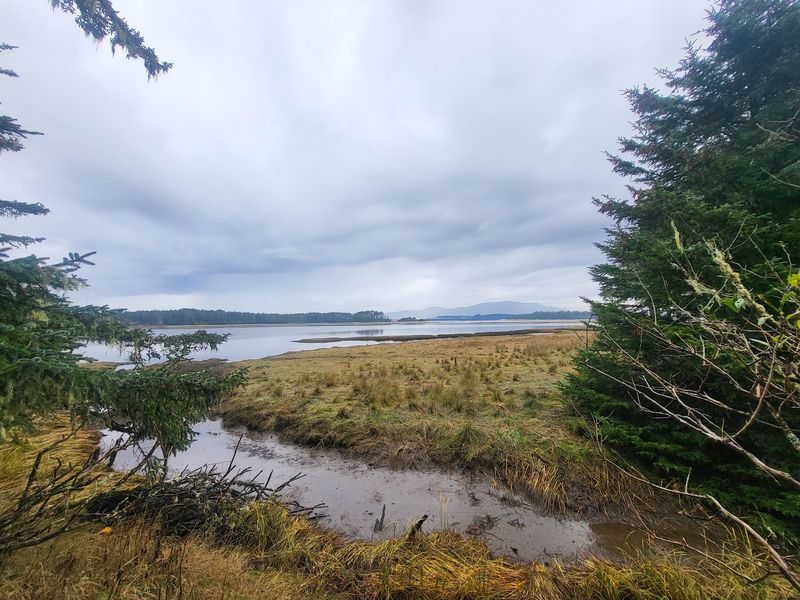
The park takes its name from the sitka sedge, a native wetland grass that grows abundantly throughout the estuary and marshy sections of the trail. That plant is not just a pretty backdrop.
It plays a real ecological role by stabilizing the soil along the water’s edge and providing habitat for insects and small animals.
Along the trail, the plant diversity is striking even for casual walkers who are not botanists. Coastal shrubs, cattails, ferns, and a variety of grasses line the path in layers, and the transition between plant communities as you move from wetland to forest to dune is easy to notice even without a field guide.
Mushroom hunters will find this park particularly interesting in the fall and early winter months, when the forested sections produce a variety of fungi worth photographing and identifying. The combination of moisture, shade, and organic matter on the forest floor creates ideal growing conditions.
The whole ecosystem here feels genuinely balanced and well-preserved, which is a credit to the state park staff and the visitors who consistently follow the pack-in, pack-out rules. No trash bins are provided on-site, and the park stays remarkably clean as a result.
Family and Accessibility Highlights Worth Knowing
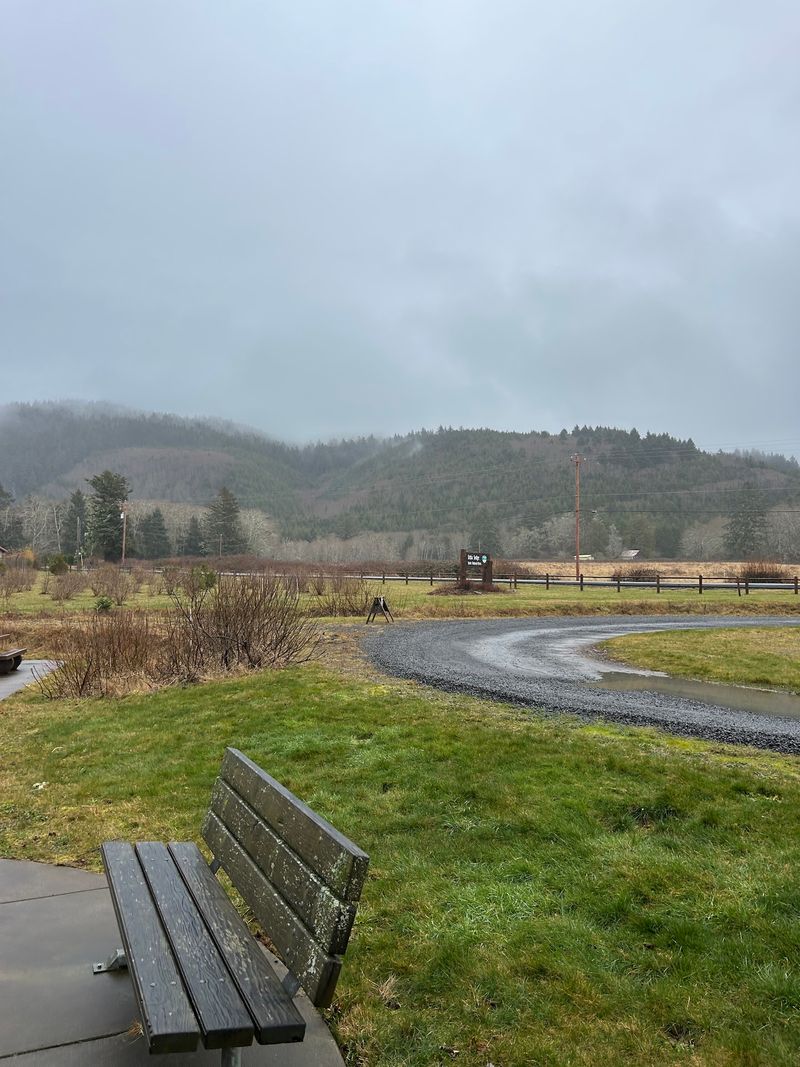
Few coastal trails in Oregon are as genuinely welcoming to a wide range of ages and abilities as the main path here. The terrain is mostly flat, the surface is firm and compact on the primary sections, and the total distance is manageable for younger kids and older adults who want a real nature experience without a strenuous climb.
Most of the beach trail is considered accessible, though a few spots have small tree roots that break through the surface and require some attention. The final quarter of the beach trail transitions to deep sand, which is less accessible for mobility devices, but the majority of the route before that point is quite manageable.
The park is also dog-friendly on most sections of the trail and on the beach, with the important exception of the plover nesting zones during the seasonal restriction period. Dogs must stay on a leash throughout the park, which is a firm rule and a reasonable one given the sensitive wildlife habitat.
Picnic tables near the parking lot are a nice touch for families who want to eat before or after the walk. The whole setup here genuinely feels designed to welcome people rather than impress them.
Best Times to Visit and What the Seasons Bring
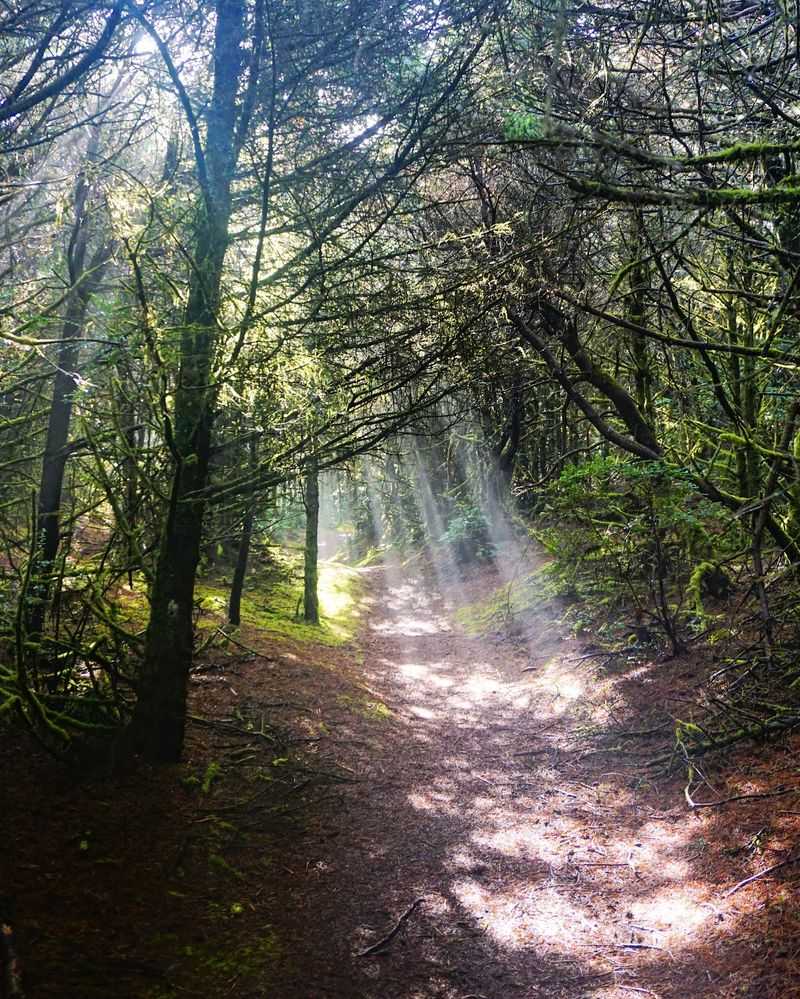
Early mornings on weekdays are the quietest times to visit, and the wildlife activity is often at its peak before the foot traffic begins. A Sunday morning visit in late July, for example, can feel almost entirely private, with the trails largely empty and the estuary birds going about their routines without much disturbance.
Summer is the most popular season, and even then the park rarely feels crowded. The beach section stays surprisingly uncrowded compared to more well-known Oregon Coast spots, which is part of its appeal.
Bug spray is a worthwhile addition to your pack during warmer months, especially near the wetter sections of the trail where insects are more active in the shade.
Fall brings mushroom season to the forested loops and a shift in the bird population as migratory species pass through. Winter visits offer a raw, windswept version of the park that has its own quiet appeal, and the trails stay mostly mud-free thanks to the sandy soil base.
Spring is when the plover nesting restrictions kick in, so checking the informational board at the trailhead before heading toward the beach dunes is especially important from mid-March onward.
Practical Tips Before You Head Out
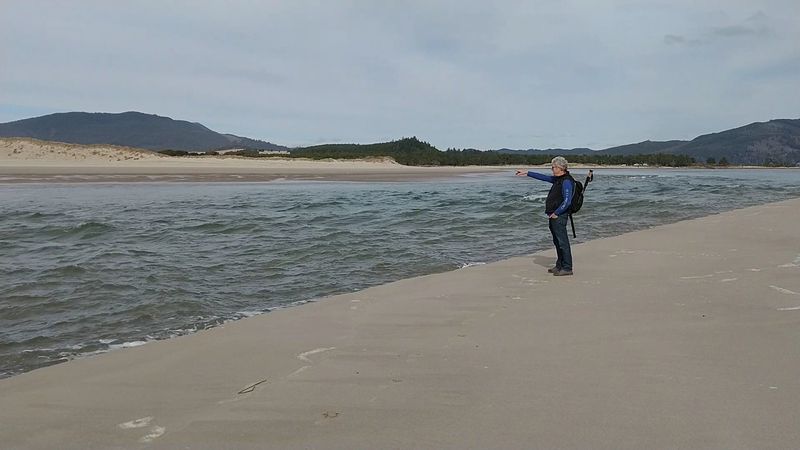
A few practical details can make the difference between a smooth visit and a frustrating one. The park has no trash bins on site, so bringing a bag to carry out your own waste is not optional.
The pack-in, pack-out policy is taken seriously here, and the trail stays clean because most visitors respect it.
Cell service is unreliable inside the park, so downloading an offline map or taking a photo of the trailhead map is a genuinely useful step before you start walking. There are no trail signs within the park beyond the intersection posts with maps, so first-time visitors who skip the trailhead map can end up confused at a fork.
One group spent over an hour lost and eventually exited onto private property before finding their way back to the parking lot via Highway 101, which is a detour nobody plans for.
Water is available at the trailhead spout, and the vault toilets are clean and well-maintained. The park closes at 8 PM daily, and a park host keeps an eye on the area to make sure everything stays in good shape.
Calling ahead at 503-842-3182 for any seasonal updates before a long drive is always a reasonable step.
Share this story