Deep beneath the pine forests of central Oregon, a volcanic tunnel stretches for over a mile underground, completely dark, perpetually cold, and absolutely unlike anything you have ever walked through before. This is not your average roadside attraction.
The cave was carved thousands of years ago by flowing lava, and today it sits quietly waiting for curious visitors to grab a flashlight and head inside. Whether you are a science enthusiast, a nature lover, or just someone looking for a genuinely memorable adventure near Bend, this subterranean journey delivers something rare: a place that feels truly out of this world, without ever leaving Oregon.
Where the Adventure Begins: Location and Access
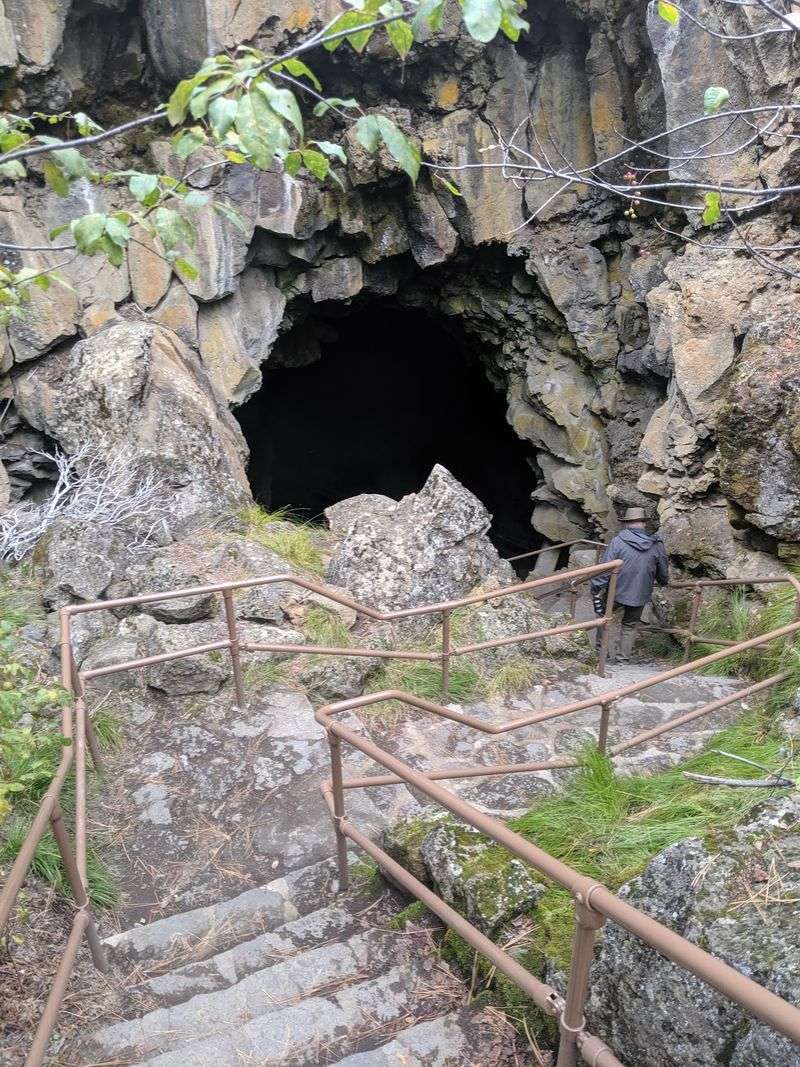
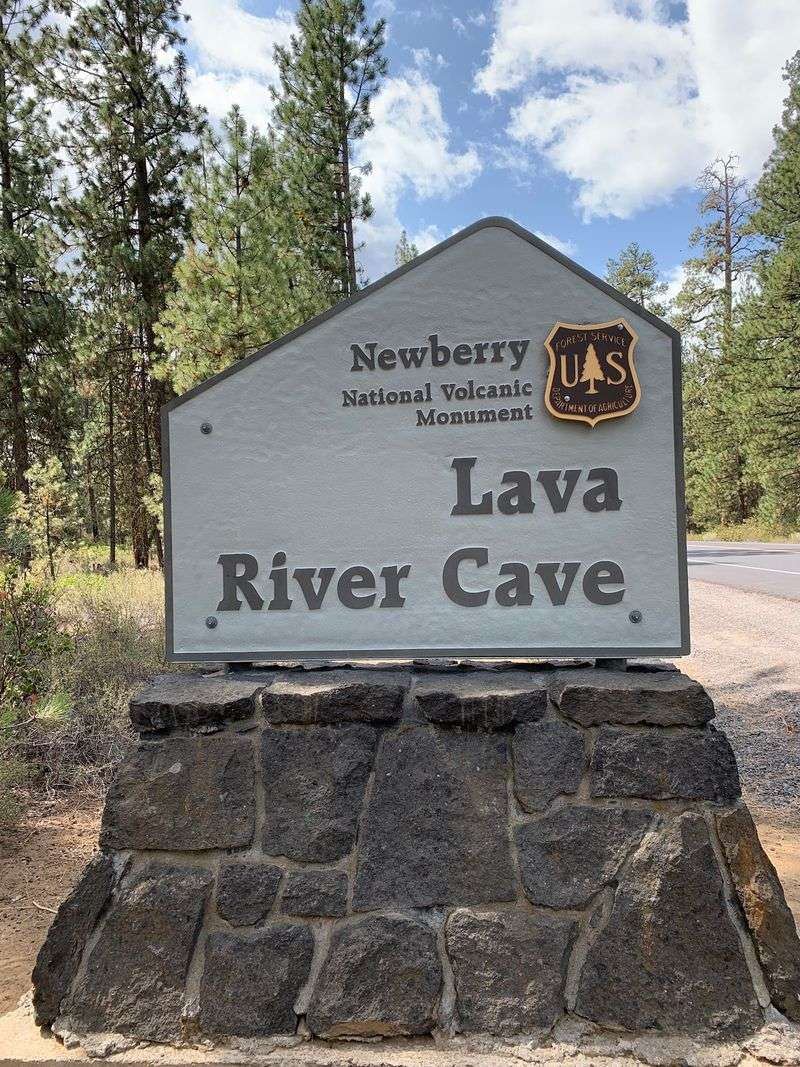
The cave sits at Cottonwood Rd, Bend, OR 97707, managed by the Deschutes National Forest, and getting there is straightforward once you know the plan. The site is roughly 11 miles south of downtown Bend, making it an easy day trip from the city.
One thing that catches many first-timers off guard is the reservation requirement. You need to book a timed entry pass through Recreation.gov for about $2, plus a $5 forest pass.
The last entry time slot is 2 PM, so morning arrivals are strongly encouraged.
The parking lot is genuinely small, fitting around 15 cars, which is why the reservation system exists. Cell signal near the site can be spotty, so download your confirmation before leaving town.
The cave is open Thursday through Monday, from 9 AM to 4 PM, and is closed on Tuesdays and Wednesdays. Plan your visit day carefully to avoid a wasted trip.
The Science Behind the Tube: How This Cave Was Formed
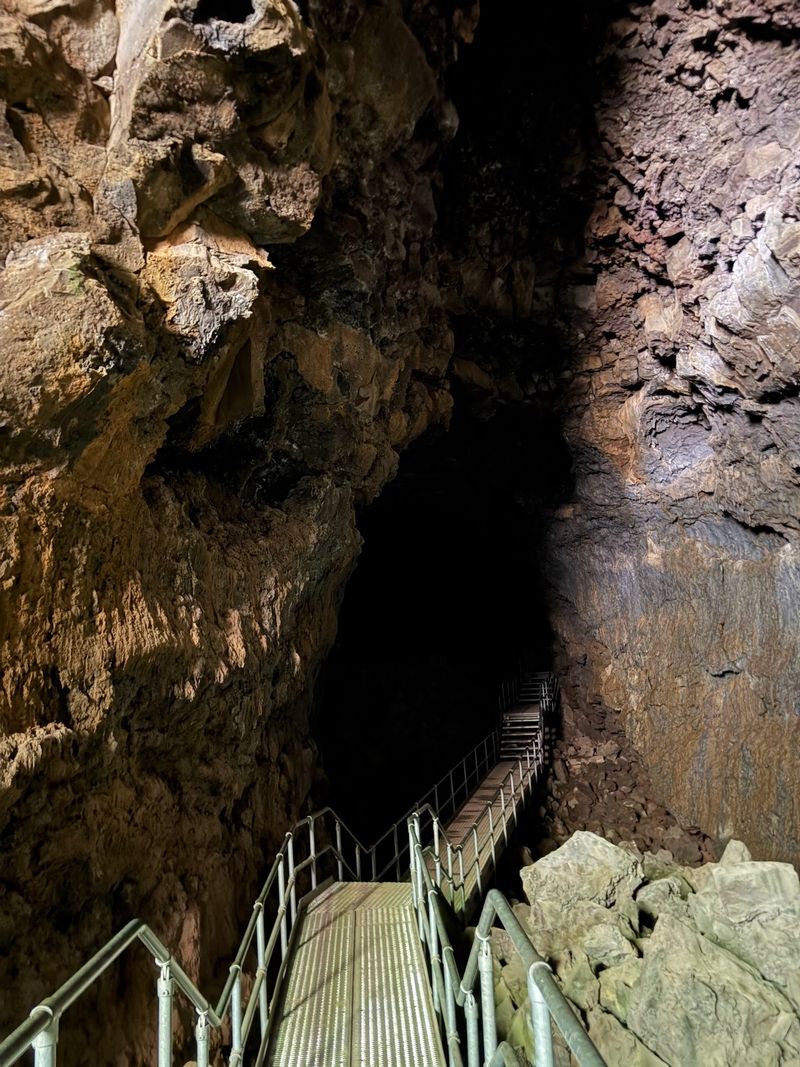
Long before anyone thought to explore it, this cave was shaped by one of nature’s most dramatic forces. Lava River Cave is a lava tube, formed when the outer shell of a flowing lava river cooled and hardened while molten rock continued moving through the inside.
Once the lava drained away, it left behind a hollow tunnel. This particular tube formed near the Newberry Volcanic Complex, close to Lava Butte, and is considered the longest continuous lava tube in the contiguous United States.
The cave stretches roughly 1.1 miles from the entrance to its far end, and at some points the ceiling reaches 60 feet high. The walls still show the smooth, layered flow marks left behind by ancient lava.
Rangers at the site provide a brief five-minute safety talk before you head in, covering geology basics that help you understand what you are actually looking at once you are underground. The science here is genuinely fascinating, and it is presented in a way that anyone can grasp.
Discovered in 1889: A Brief History of the Cave
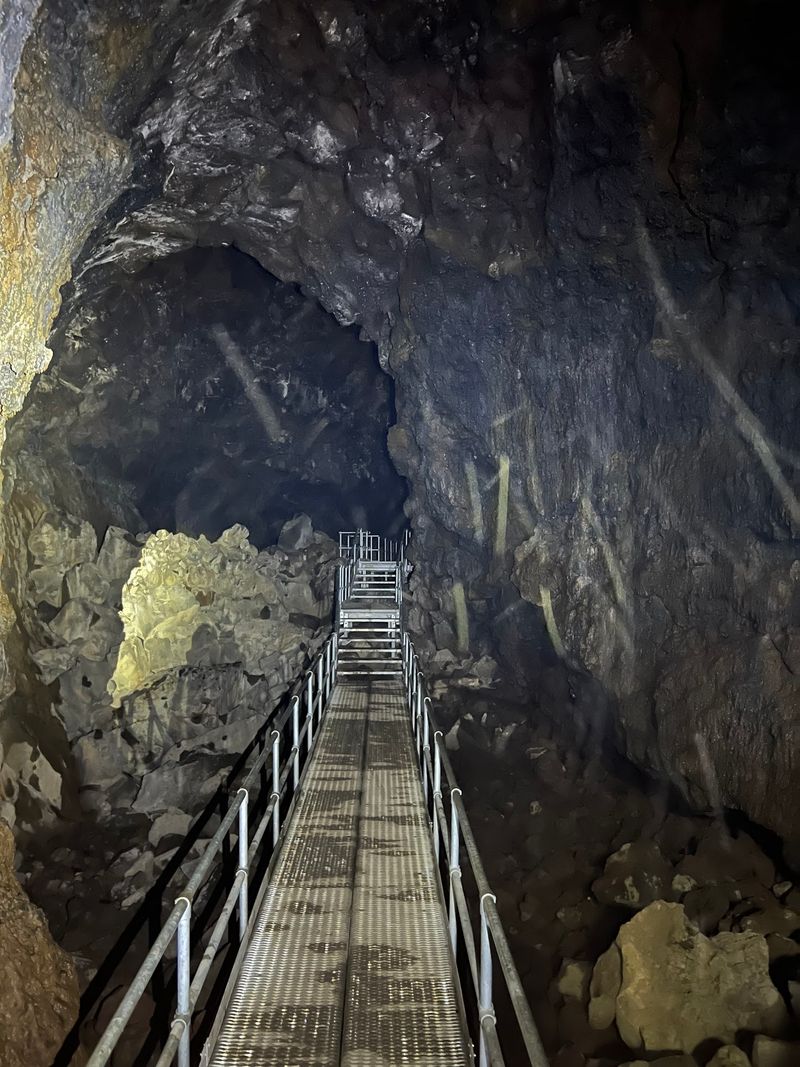
The cave was first recorded in 1889, making it one of the earlier documented natural wonders in the Pacific Northwest. Local settlers and curious explorers who stumbled across the opening had no way of knowing just how far underground the tunnel actually went.
For decades, the cave remained a local curiosity before the U.S. Forest Service began managing it as a public interpretive site.
Today it falls under the Deschutes National Forest and operates with a small ranger presence, flashlight rentals, and a gift shop near the entrance.
The cave carries a certain timeless quality that makes the history feel present rather than distant. The same volcanic rock that early explorers touched in 1889 is the same rock you run your hand along today.
Interpretive signs placed throughout the cave explain both the geological history and the human story of the site, giving the walk a thoughtful educational layer that most people do not expect from an underground hike. The past feels surprisingly close here.
The First Step Underground: Descending Into the Cave
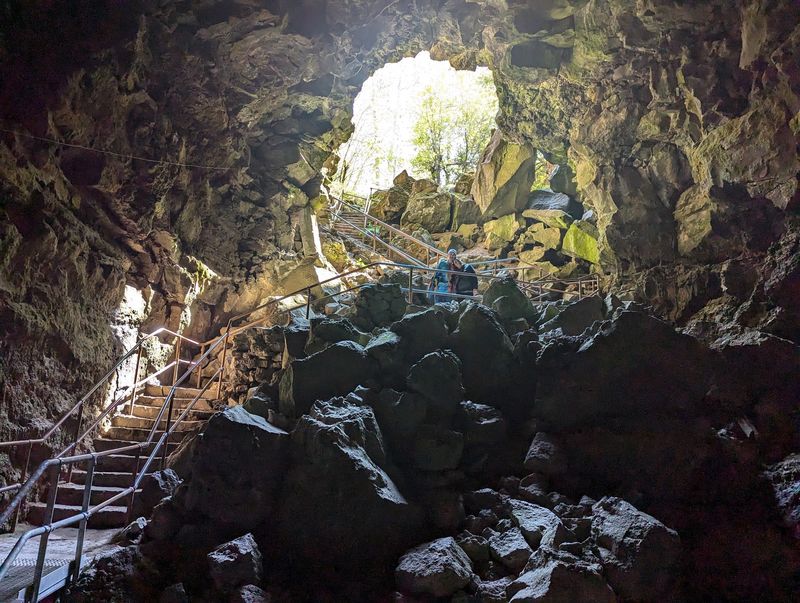
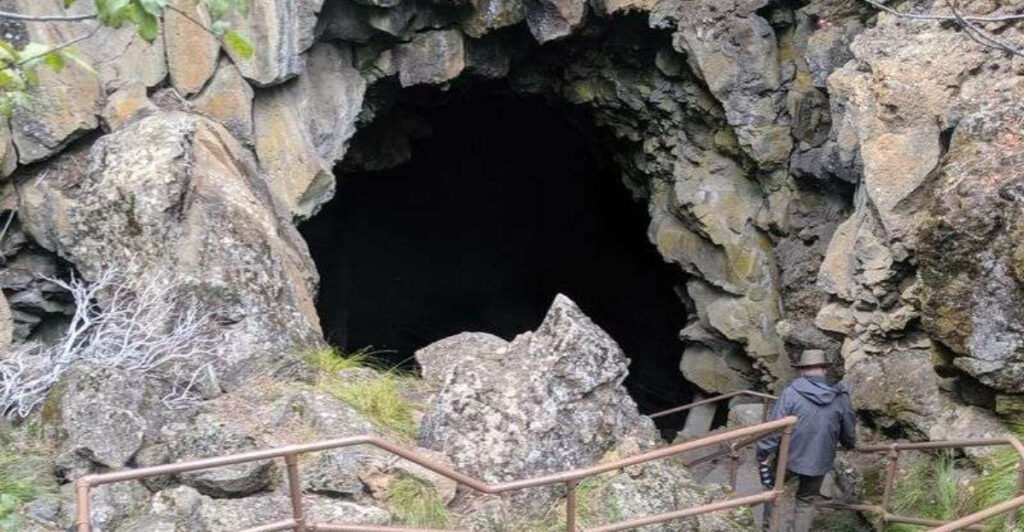
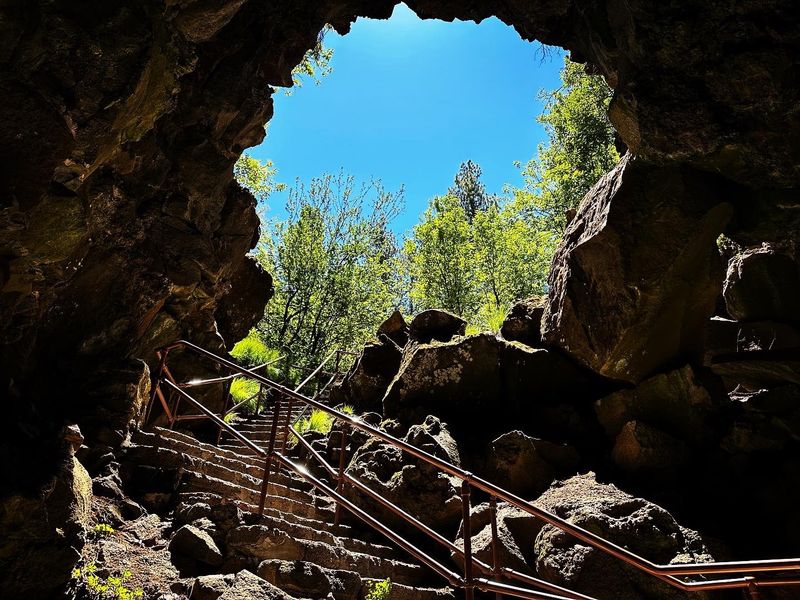
The moment you reach the entrance, the temperature drops noticeably and the darkness ahead looks absolute. Getting down into the cave requires navigating roughly 180 steps on a metal staircase, which is steep but manageable for most visitors with decent footwear.
The grating on the stairs provides solid traction, which is reassuring given how cold and slightly damp the environment feels. Once you reach the bottom, your eyes adjust slowly, and the scale of the tunnel becomes clear in a way that photographs simply cannot prepare you for.
The ceiling opens up dramatically in the first section, and the walls stretch wide enough that the space feels more like an underground hallway than a tight crawl. There is only one short stretch where you need to duck your head slightly.
For anyone with claustrophobia concerns, the cave is genuinely large and open for most of its length. That first descent, though, has a way of making your pulse tick just a little faster, in the best possible way.
The Temperature Factor: Dress Like You Mean It
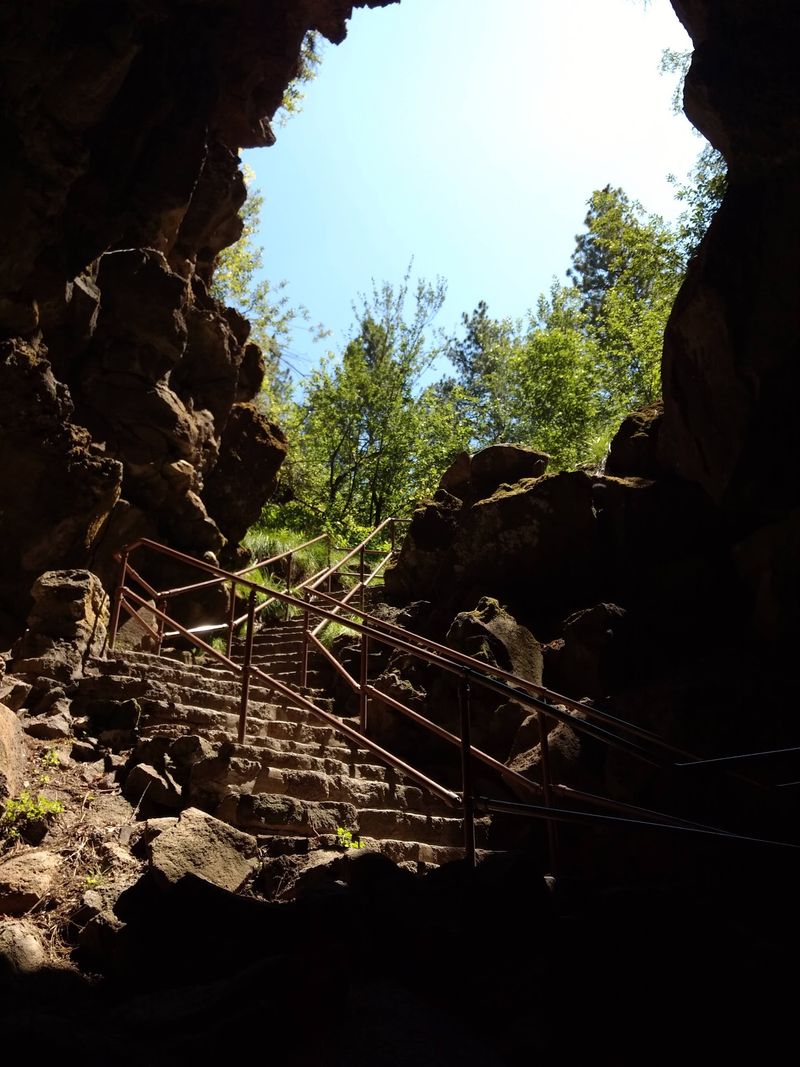
At roughly 42 degrees Fahrenheit year-round, the cave maintains a temperature that surprises almost every first-time visitor. Even on a blazing summer afternoon in Bend, the moment you step underground, you will feel the chill settle in fast.
Wearing a jacket is not optional here. Experienced visitors recommend layering: a base layer, a mid-layer like a hoodie, and a light outer jacket.
Even visitors who consider themselves cold-resistant often find themselves pulling on an extra layer halfway through the walk.
Gloves are a smart addition, especially for families with young children who tend to touch the walls. The cave floor varies between rocky, uneven patches and smoother sandy stretches, and the cold air makes the body work a little harder than expected.
The chill is part of the experience, and honestly, it makes the cave feel more dramatic. After spending a couple of hours underground in near-freezing air, stepping back out into the warm Oregon sunshine feels like a reward you genuinely earned.
Pack those layers without second-guessing yourself.
Let There Be Light: Why the Rental Flashlights Are Worth It
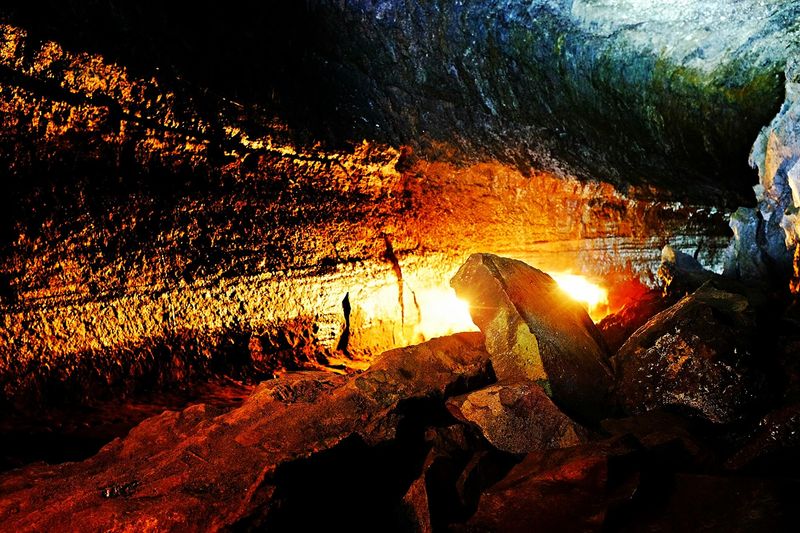
There is zero natural light inside the cave. Not a sliver, not a glow, nothing.
If your flashlight fails, you are standing in complete darkness, which is why bringing a reliable light source is treated as a non-negotiable requirement at this site.
The cave offers flashlight rentals for around $7, and nearly everyone who has used them agrees they are absolutely worth the cost. The rental spotlights are powerful enough to illuminate the ceiling 60 feet above, letting you actually appreciate the full scale of the tube.
A phone flashlight or a basic household torch simply cannot compete with that kind of brightness underground.
Headlamps are a practical choice if you bring your own, since they keep your hands free for steadying yourself on uneven ground. Some visitors bring both a headlamp and a handheld light for extra coverage.
The rental station near the entrance is staffed by helpful rangers who can answer questions and make sure you head in properly equipped. Renting a light here is genuinely one of those small decisions that makes the entire experience dramatically better.
Do not skip it.
The Walk Inside: What the Trail Actually Feels Like
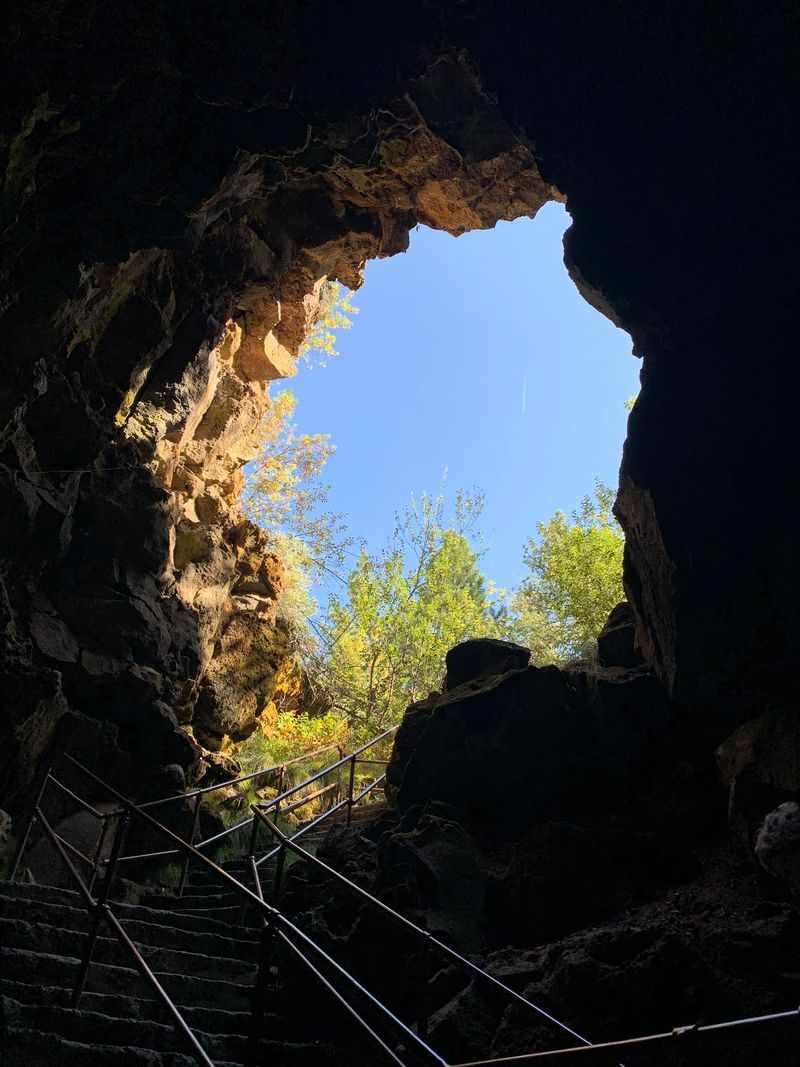
The cave trail covers 1.1 miles one way, meaning the full out-and-back walk clocks in at about 2.2 miles. Most of that distance is flat, which makes it accessible for a wide range of fitness levels, though the uneven rocky floor keeps you focused on every step.
Maps are posted at intervals throughout the cave, showing your progress and offering geological information at each marker. The tube changes character as you move deeper: the ceiling height shifts, the floor texture alternates between chunky lava rock and softer sandy sections, and the walls display different flow patterns depending on how the lava moved thousands of years ago.
The full round trip typically takes between one and a half to two hours at a comfortable pace. Time slots are generous enough that you do not feel rushed, and the cave is large enough that you rarely feel crowded even when other groups are present.
The quiet is remarkable. The only sounds are footsteps on rock and the occasional low murmur of other explorers somewhere in the dark ahead of you.
The walk has a rhythm that is hard to describe until you have done it yourself.
Footing Matters: Choosing the Right Shoes for the Cave
Footwear is one of those things that seems minor until you are halfway through a mile-long underground hike on slick, uneven volcanic rock and wishing you had made a better choice. Sturdy shoes with solid grip are genuinely important here.
The cave floor ranges from large chunky lava rocks to smoother, sometimes slick surfaces, and the combination can be tricky even for sure-footed adults. Flip flops and casual sneakers are not appropriate for this environment.
Hiking boots or trail shoes with ankle support and rubber grip soles are the smart pick.
Children especially benefit from well-fitted shoes with good traction, since the temptation to move quickly through the cave is real and the floor punishes careless steps. Rangers mention footwear during the safety briefing, and it is worth taking that advice seriously.
A twisted ankle in the middle of a dark lava tube is the kind of story nobody wants to bring home as a souvenir. Good shoes cost nothing extra if you already own them, and they make the entire walk more enjoyable from the first step to the last.
Biosecurity Rules: Why Your Cave Clothes Matter
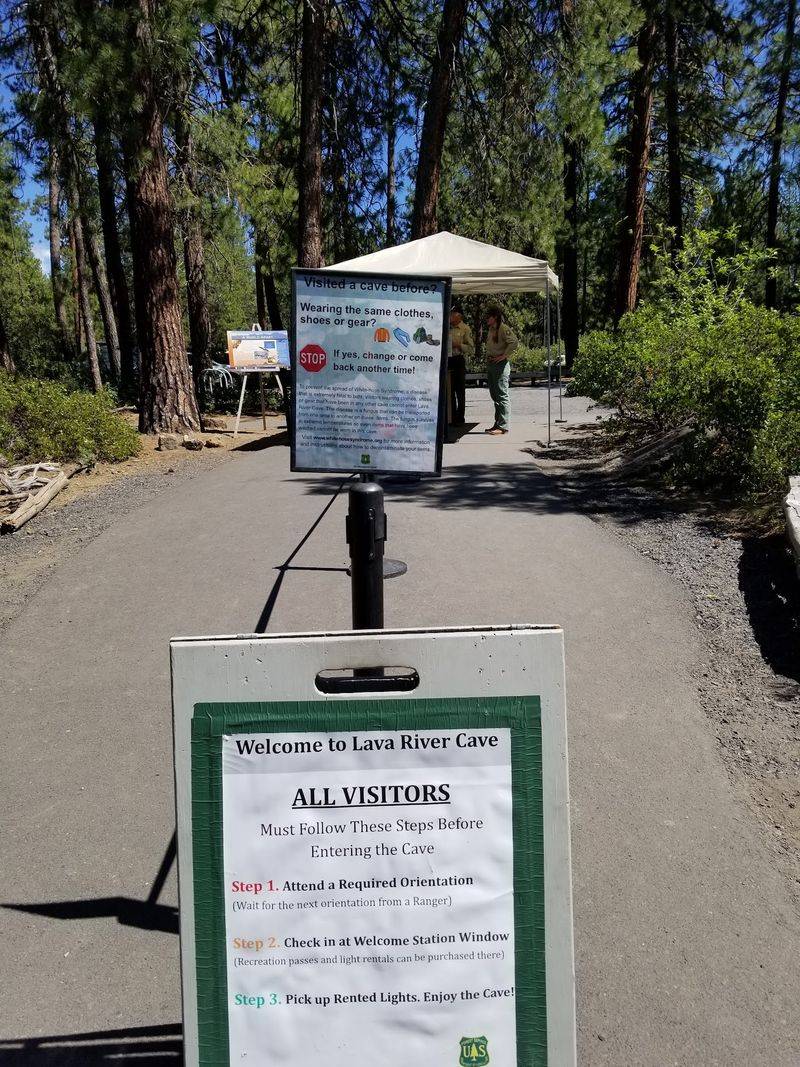
Before entering, rangers take a few minutes to explain one rule that surprises many visitors: you should not wear clothing inside Lava River Cave that you have previously worn in another cave. This is not arbitrary caution.
Certain fungal spores, most notably those linked to white-nose syndrome in bats, can travel on fabric between cave environments. Lava River Cave is part of a living ecosystem, and the staff takes its protection seriously.
Rangers explain this calmly and clearly, and most visitors find it a genuinely interesting piece of conservation science once it is explained.
If you have visited another cave recently, wearing a fresh set of clothes is the responsible move. The rule applies to jackets, shoes, and any gear that might have been inside a different cave.
It is a small ask given what is at stake for the cave’s long-term health. Conservation practices like this one are part of what keeps sites like Lava River Cave in good condition for future visitors.
The rangers handle the conversation well, and it adds a meaningful layer to the pre-tour briefing that most people appreciate hearing.
Family-Friendly or Not? What to Know Before Bringing Kids
Families with kids visit Lava River Cave regularly, and many children find the experience genuinely thrilling. The combination of total darkness, cool air, and alien-looking rock formations tends to spark curiosity in younger visitors in a way that few outdoor destinations can match.
The trail is mostly flat, which makes it manageable for older children with decent stamina. The staircase at the entrance and exit is the most physically demanding part, and younger or smaller children may need a hand navigating it.
The rental flashlights are a hit with kids, who love pointing them at the ceiling and watching the beam reach the top of the tube.
Parents should keep a close eye on footing since the rocky floor demands attention at every step. The cave does not have guard rails or barriers along the trail, so supervision is important.
That said, the space is open and wide enough that it never feels dangerous for careful families. Rangers are friendly and patient with younger visitors, and the educational signs throughout the cave give curious kids plenty to read and discuss.
Many families call it one of the best Oregon experiences they have shared together.
Booking Smart: Reservations, Timing, and Peak Season Tips
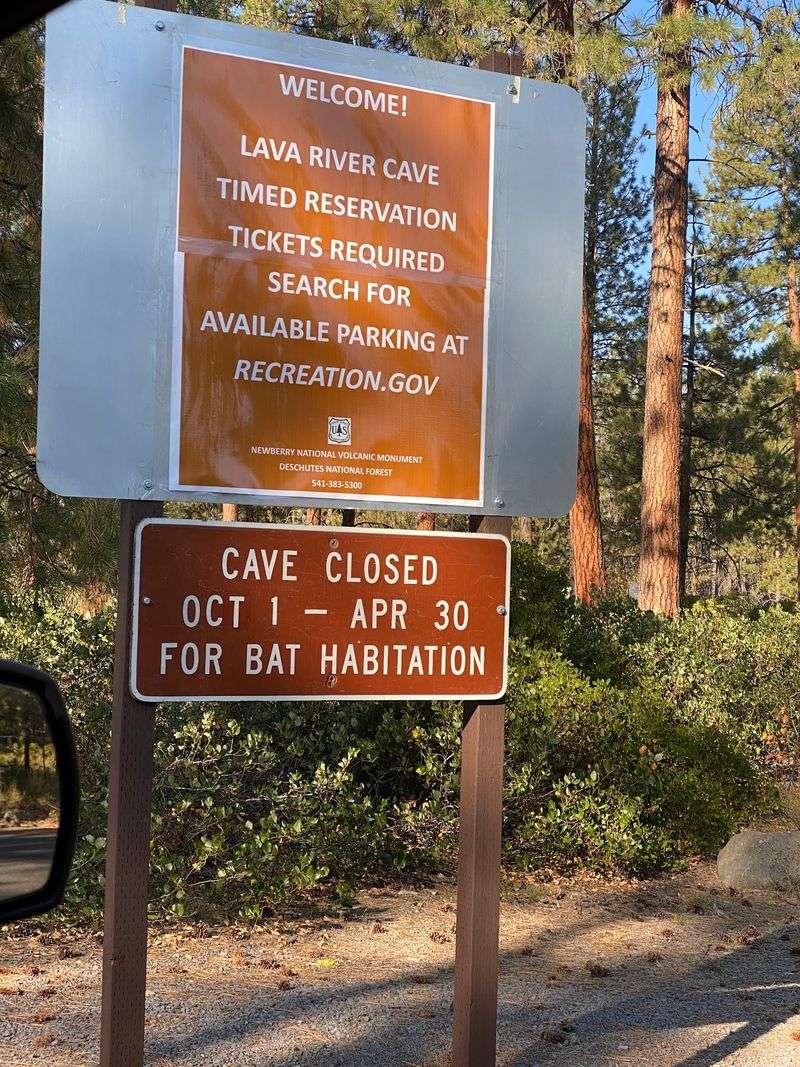
Getting your reservation right is the difference between a smooth visit and a wasted drive. Passes are available through Recreation.gov and typically go live one week in advance, with an additional release 24 hours before the visit date.
The $2 reservation fee is small, but the spots go quickly during summer weekends.
The cave is open Thursday through Monday, from 9 AM to 4 PM, with the last entry at 2 PM. Arriving early is consistently recommended, both to secure your preferred time slot and to beat the midday crowd.
Summer is the busiest season, and the parking lot fills up fast once the day gets going.
Cell service near the cave entrance is unreliable, so downloading your confirmation before leaving Bend is a practical move that saves a lot of frustration. Tickets purchased the day before are available starting at 7 AM.
If you are flexible on dates, a Thursday or Friday morning visit tends to be quieter than a Saturday afternoon. Planning even a day ahead makes the whole experience run more smoothly and lets you focus on the cave itself rather than logistics.
The Lasting Impression: Why This Cave Stays With You
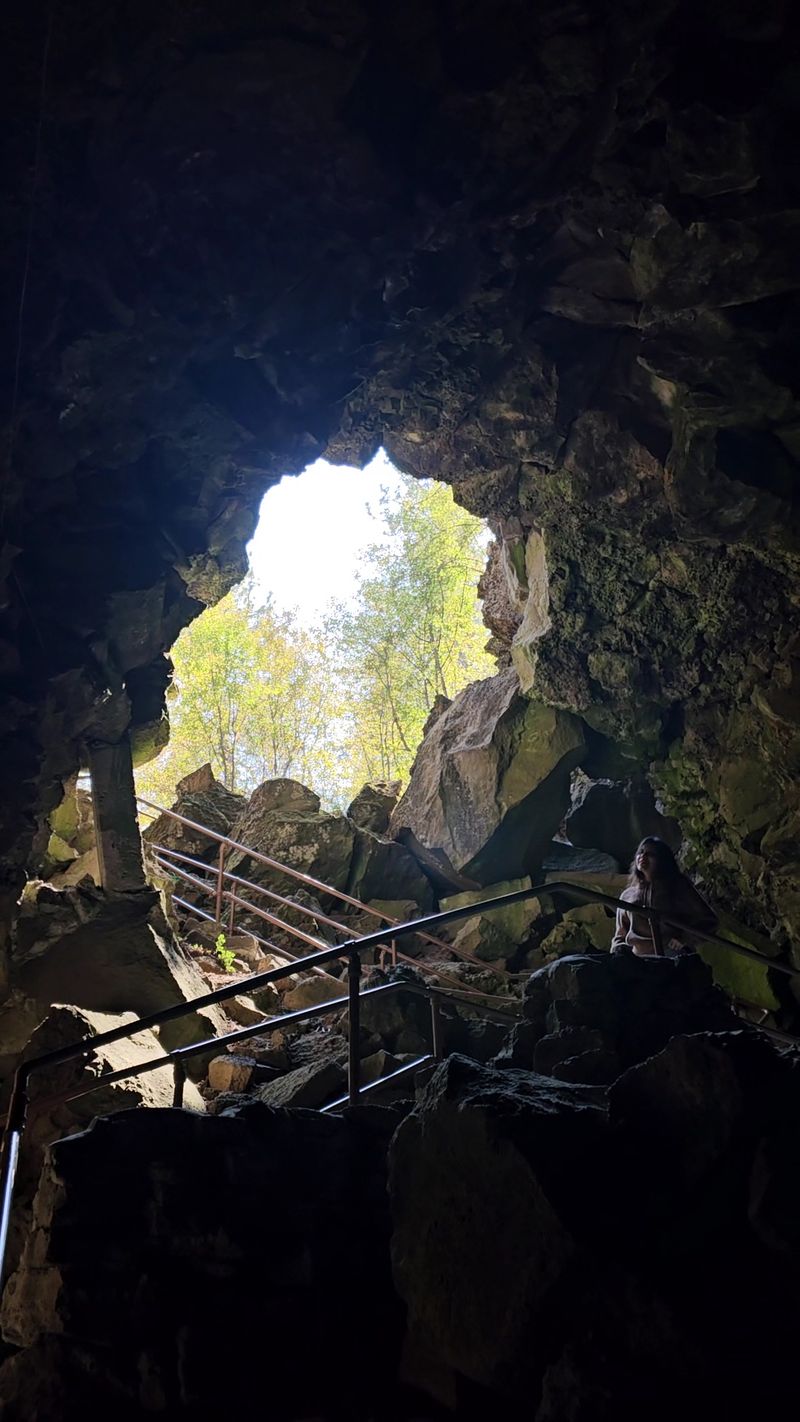
There is something about walking through a mile-long tunnel carved by ancient lava that does not leave you quickly. The scale of the cave, the absolute silence, and the cold air combine to create an experience that feels genuinely removed from everyday life in a way that very few places manage.
Lava River Cave holds a 4.7-star rating across nearly 1,400 reviews, which reflects how consistently visitors walk away impressed. The staff, the rental equipment, and the well-placed interpretive signs all contribute to an experience that feels polished without losing its wild, underground character.
The cave also carries personal meaning for many visitors. Some people remember coming here as children with grandparents and return decades later with their own kids.
That kind of generational connection to a place speaks to something real about what Lava River Cave offers. It is not flashy or loud or over-produced.
It is just a remarkable natural feature that Oregon has quietly preserved, sitting beneath the pines south of Bend, ready to leave a mark on anyone willing to bring a jacket and step into the dark.
Share this story