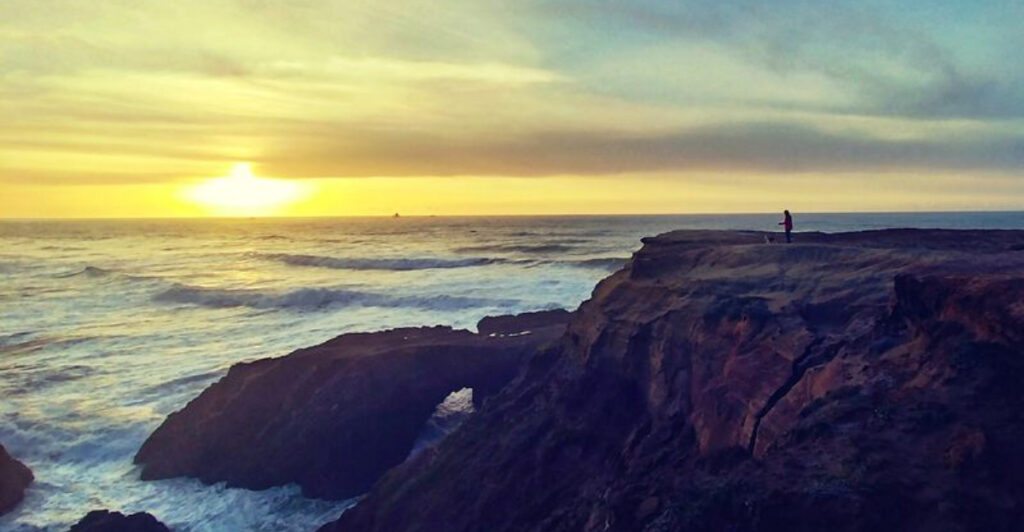
There is a stretch of the Oregon coast where the cliffs look like they were shaped by something ancient and restless, and the wind never quite lets you forget where you are. The sandstone formations jut out over the Pacific in shapes that feel almost architectural, carved over centuries by salt air and relentless surf.
The trail that leads out to the point is short enough for a casual afternoon but dramatic enough to stay in your memory for years. Pack a jacket, bring your curiosity, and keep reading, because this place is worth every word.
Where to Find Otter Point State Recreation Site
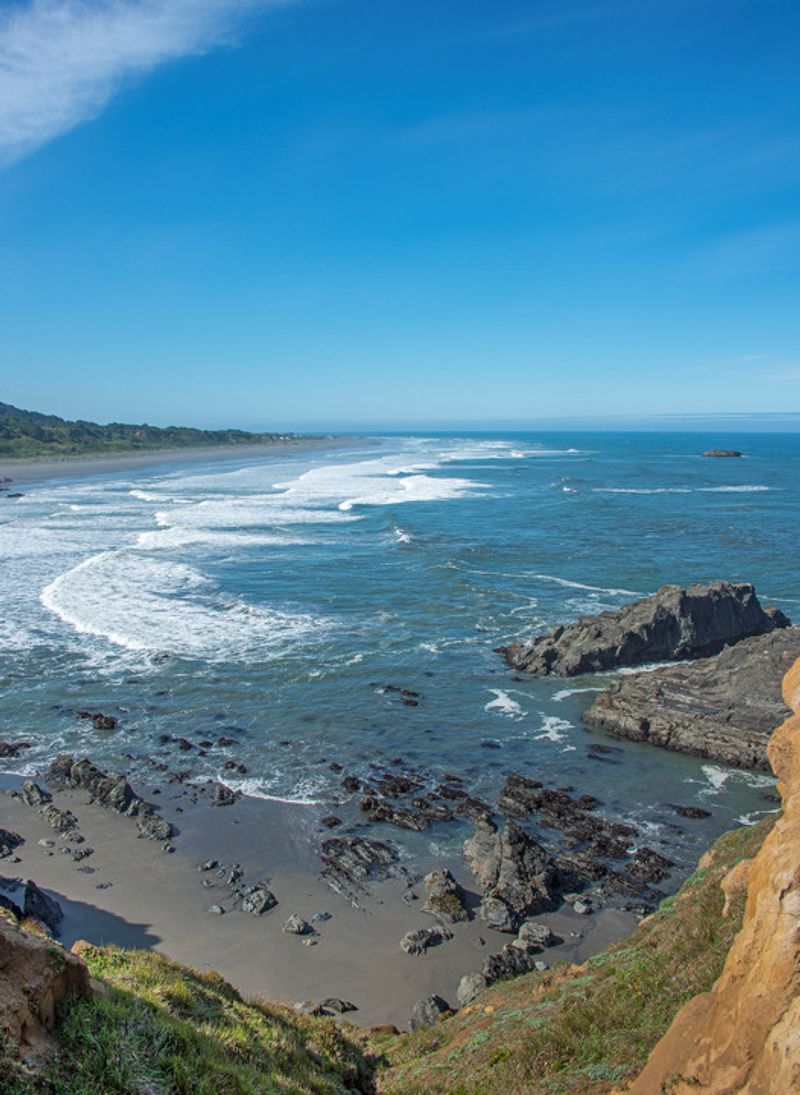
Getting here is half the adventure, and not in a glamorous way. Otter Point State Recreation Site sits along Old Coast Rd in Gold Beach, Oregon 97444, tucked just off the main highway south of town near the mouth of the Rogue River.
The access road is narrow, a single lane that winds through coastal brush before opening into a small gravel parking area. The road has earned a reputation for its potholes, some of them deep enough to make a small car groan, so a vehicle with decent clearance is a smart choice before you head out.
The drive in is less than a quarter mile from the turnoff, so it is not a long haul, just a bumpy one. Gold Beach itself is a laid-back coastal town with a few restaurants and motels, making it a convenient base if you plan to explore the area for more than one day.
You can reach the park office by calling 1-800-551-6949, and the site is open 24 hours a day, every day of the week. There is no entrance fee, which makes the whole experience feel like a well-kept secret that Oregon is quietly proud of.
The Sandstone Formations That Stop You Cold
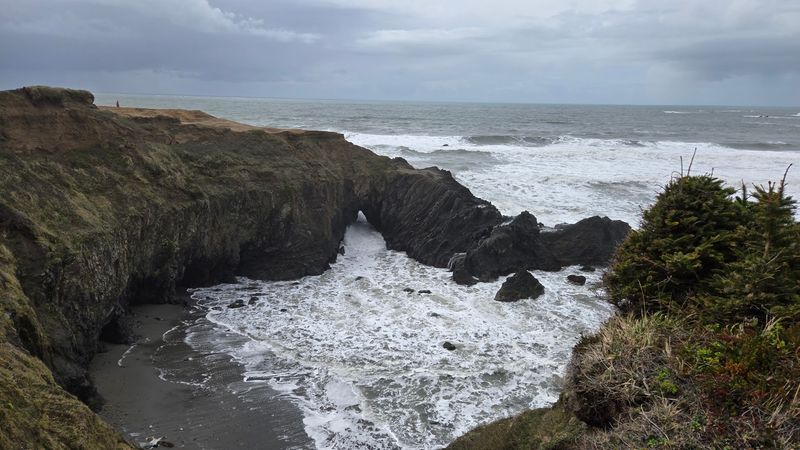
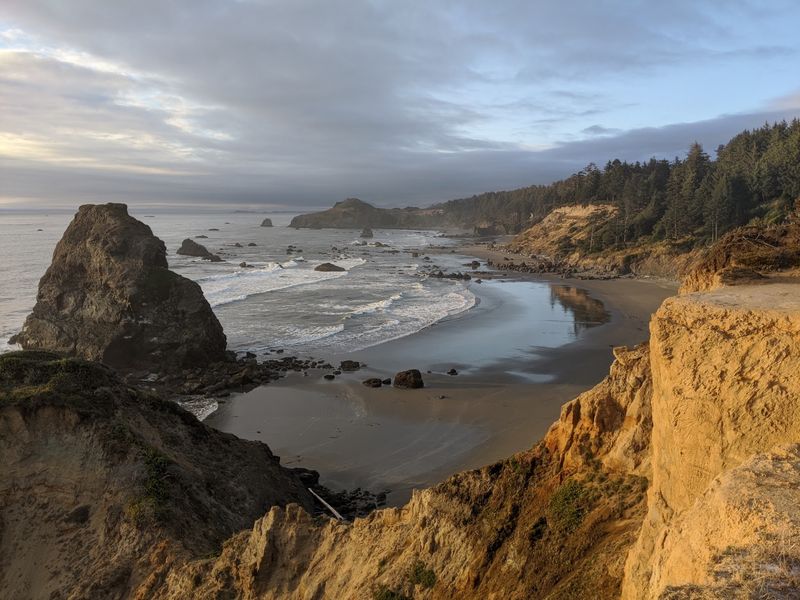
The moment you reach the cliff edge, the sandstone formations take over the entire conversation. These are not the smooth, rounded boulders you might expect at a typical beach overlook.
The rocks here are layered, pitted, and carved into shapes that look deliberate, as if wind and water spent centuries competing to see who could make the most interesting sculpture.
The formations extend along the point in irregular clusters, some rising sharply from the surf below and others spreading out in flat shelves that catch the light differently depending on the time of day. The erosion is active and visible, with sections of cliff showing fresh breaks and undercutting that remind you this landscape is still very much a work in progress.
The color shifts from pale tan to deep rust depending on moisture and mineral content, and the texture underfoot near the edge is rough and grippy, though caution is still strongly advised. Footing becomes unpredictable when wet, and there are no guardrails between you and the drop.
The raw geology here is the main event, and it rewards anyone who takes a few extra minutes to look closely at the patterns before moving on.
Two Trails, Two Very Different Experiences
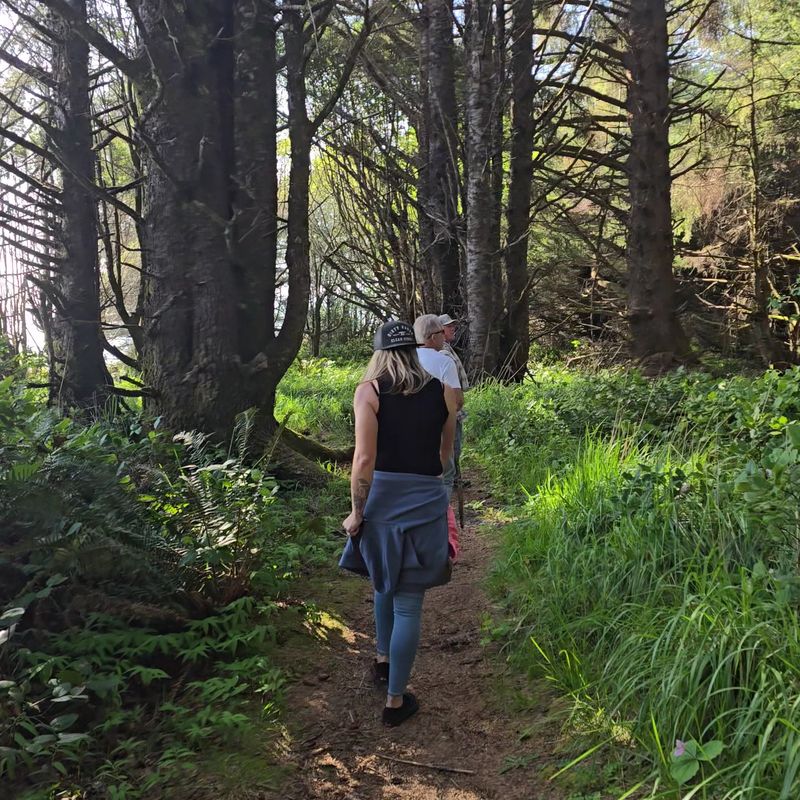
Most visitors do not realize at first that the park offers two distinct trail options, and choosing the wrong one for your energy level can lead to a muddy surprise. The short trail heads left from the trailhead and leads relatively quickly to the cliff overlook at the point, offering sweeping views of the Pacific without much elevation change.
The longer route is a different story. It winds through dense coastal forest that feels genuinely lush, almost rainforest-like in its moisture and greenery, before dropping steeply toward the beach.
The final descent involves a rope anchored to the hillside, and the path down is narrow and slick when conditions are damp.
A third option hides in plain sight across the parking lot from the main trailhead. A short path leads up and over a rise, crosses a small stream, and connects to the rope-assisted cliff descent.
Many visitors miss it entirely on their first trip.
The beach at the bottom is rocky and wild, backed by the same sandstone cliffs you admired from above. Mud on your shoes is practically guaranteed on the way back up, so wearing old footwear is a practical choice rather than a fashion statement.
The View From the Cliff Overlook
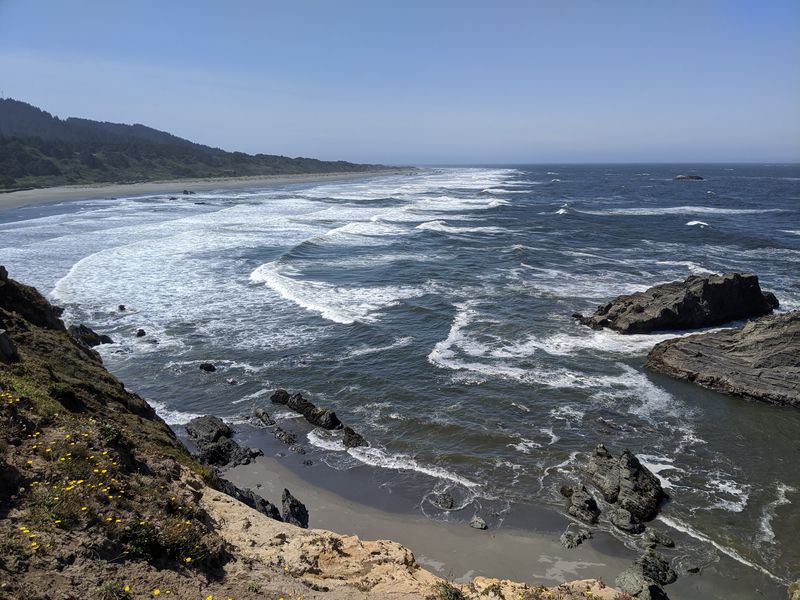
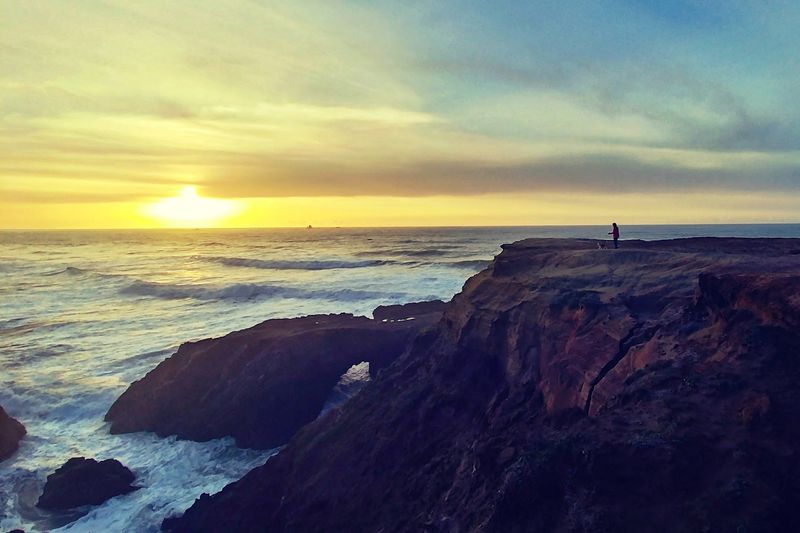
The overlook at the tip of Otter Point delivers something that photographs struggle to capture fully. Standing at the edge, you get a near-360-degree sweep that takes in the open Pacific to the west, the rocky coastline curving north and south, and distant sandy beaches framed by headlands.
The ocean here is rarely calm. Waves roll in with consistent force and break against the base of the cliffs in bursts of white foam, the sound carrying up clearly even on moderate days.
On windier afternoons, the gusts at the viewpoint can be strong enough to push you sideways, which adds a certain alertness to the experience.
Early September tends to bring clear skies and relatively calm conditions, making that window one of the better times to visit for unobstructed views. Winter visits come with dramatic cloud formations and heavier surf, trading clarity for atmosphere.
The lack of any safety railing is worth mentioning more than once. The cliff edge is real, the drop is significant, and the erosion patterns visible in the rock face make it clear that the edge shifts over time.
Staying back a comfortable distance lets you enjoy the view without any unnecessary stress.
What the Coastal Trail Feels Like on Foot
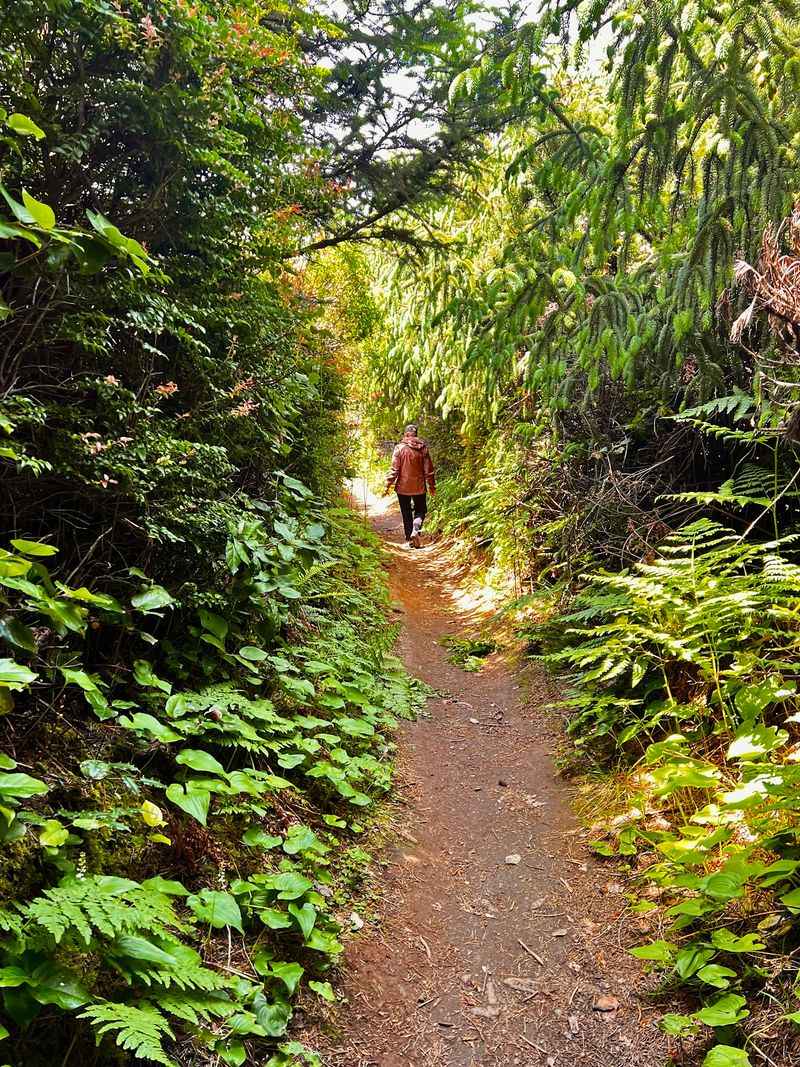
The walk out to the point has a quality that is hard to pin down but easy to feel. The trail surface is mostly packed earth and low coastal scrub, with the ocean breeze present almost the entire way and the sound of surf growing steadily louder as you approach the headland.
The vegetation along the path is low and wind-shaped, with grasses and shrubs bent permanently in the direction of the prevailing wind. That lean in the plants is a quiet signal about what conditions are like here on most days, and it gives the landscape a slightly otherworldly character even before you reach the formations.
The hike to the overlook is genuinely short, accessible to most fitness levels, and takes only about ten to fifteen minutes at a comfortable pace. There are no trail signs cluttering the experience, no interpretive panels breaking your focus, just the path and what it leads you toward.
Dogs are welcome on the trail and seem to enjoy the open space and the sensory overload of salt air and coastal smells. A leash is the considerate choice given the proximity to cliff edges, especially if your dog has strong opinions about chasing birds.
The Wild Beach Below the Cliffs
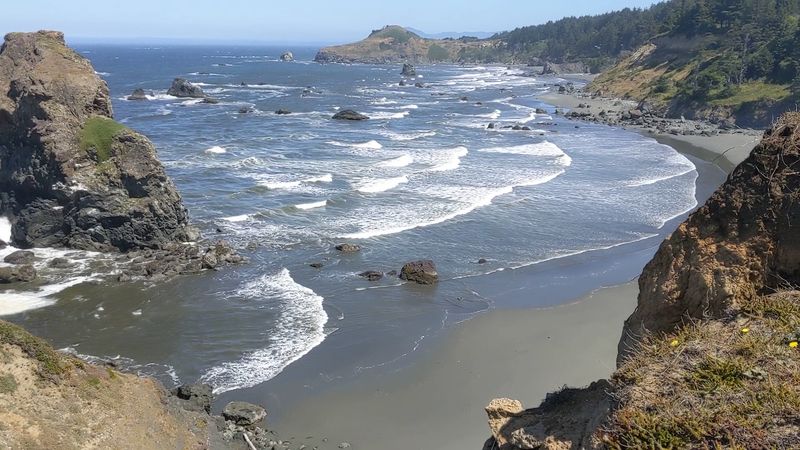
Reaching the beach at the base of the cliffs feels like earning something. The descent is steep, the rope is essential for the final section, and the return climb will test your legs, but the beach itself rewards the effort with a kind of solitude that is increasingly rare on the Oregon coast.
The shoreline here is rocky and dramatic, backed directly by the sandstone walls that tower above it. The rock formations that look impressive from the overlook become genuinely massive when you are standing at their base, and the scale of the erosion becomes much clearer up close.
Tide pools form in the lower sections of the rock, home to the usual Pacific coast residents including sea anemones, small crabs, and barnacle colonies. Low tide is the best time to explore these pockets, and checking a tide chart before heading down is a practical step rather than an optional one.
The beach has no amenities at all. There are no restrooms, no trash cans, and no picnic tables anywhere in the park, so carrying out everything you bring in is not just good practice but the only real option.
The reward is a stretch of coastline that still feels genuinely untouched.
Wildlife and What You Might Spot
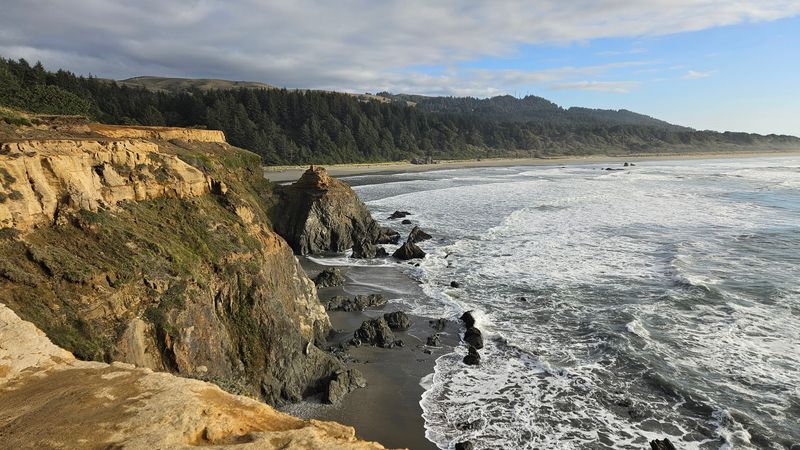
The name Otter Point raises expectations that the coastline does not always meet on a casual visit. Sea otters do inhabit parts of the Oregon coast, but sightings from this particular overlook are not guaranteed, and February is historically one of the quieter months for wildlife activity along the shore.
What you are more likely to see are seabirds, particularly cormorants and pelicans, riding the updrafts along the cliff face or perching on the lower rock formations near the waterline. The cliff ledges provide natural nesting and resting spots, and the bird activity adds consistent motion to the view even when the sea surface appears calm.
Harbor seals occasionally haul out on the flatter rocks below the point, especially during lower tides. Scanning the rock surfaces with binoculars from the overlook improves your chances of spotting them without disturbing any animals below.
The dense coastal vegetation along the trail supports smaller wildlife as well. Scrub jays, song sparrows, and the occasional black-tailed deer have all been spotted along the path, particularly in the early morning hours before other visitors arrive.
Arriving at dawn on a clear day gives you the best combination of light, quiet, and wildlife activity.
Best Times to Visit and What to Expect Each Season
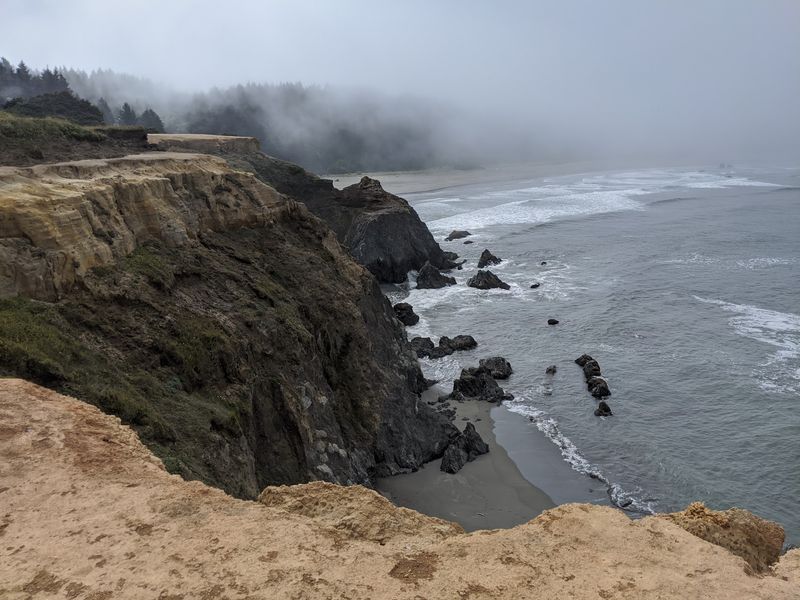
The Oregon coast operates on its own weather schedule, and Otter Point is no exception to the region’s reputation for unpredictability. Summer months, particularly July through early September, tend to offer the most reliable windows of clear skies and manageable wind, making them the most popular time for first-time visitors.
Late spring brings a mix of rain and occasional clear breaks, and the vegetation along the trail is at its most vivid green during this period. The crowds are thinner than in summer, and the light on cloudy days creates a moody, atmospheric quality that photographers often prefer over flat blue-sky conditions.
Winter visits are for people who genuinely enjoy dramatic weather. Storm surf at Otter Point can be spectacular, with waves reaching heights that send spray well up the cliff face.
The overlook trail remains accessible in most conditions, though the rope-assisted beach descent becomes genuinely hazardous when the ground is saturated.
Fall sits in a sweet spot between summer crowds and winter storms, and the first two weeks of September consistently draw strong reviews for weather and visibility. Whatever season you choose, layers are non-negotiable, and wind-resistant outerwear earns its place in your pack every single time.
Practical Tips Before You Go
A few practical details can make the difference between a smooth visit and a frustrating one. The access road off Old Coast Rd is rough, with potholes that are not shy about announcing themselves, and the lane is narrow enough that passing another vehicle requires one driver to pull over and wait.
The parking area at the end of the road is small, holding only a handful of vehicles comfortably. Arriving early on summer weekends reduces the chance of finding the lot full, and weekday mornings are reliably quieter across all seasons.
There are no restrooms anywhere in the park, a detail that catches some visitors off guard, so planning accordingly before you leave Gold Beach is genuinely useful advice. There are also no picnic tables, no water fountains, and no trash receptacles, keeping the site minimal and natural but requiring self-sufficiency from everyone who visits.
Cell service in the area can be spotty, so downloading an offline map before leaving town is a sensible precaution. The park is free to enter and open around the clock, which means sunrise and sunset visits are entirely possible and often produce the most striking light on the sandstone formations.
Why This Place Stays With You
Some places are beautiful in a way that fades once you are back in the car. Otter Point is not one of those places.
The combination of the wind, the sound of the surf rising from below, and the raw texture of the sandstone formations creates a sensory memory that tends to stick around longer than most vacation snapshots.
The absence of amenities, which might feel like a drawback at first, turns out to be one of the site’s strongest qualities. There is nothing here to distract you from the actual place, no gift shop, no interpretive center, no food cart, just the headland and the ocean doing what they have always done.
Visitors who have returned multiple times consistently note that the experience holds up across seasons and years. The formations shift subtly as erosion continues, the light changes with the weather, and the mood of the ocean is never exactly the same twice.
Gold Beach sits along one of the most scenic stretches of the Oregon Coast Highway, and Otter Point is one of its most rewarding stops precisely because it asks something of you, a little effort on the road in, a willingness to stand close to something genuinely wild, and the good sense to hold onto the memory once you leave.
Share this story