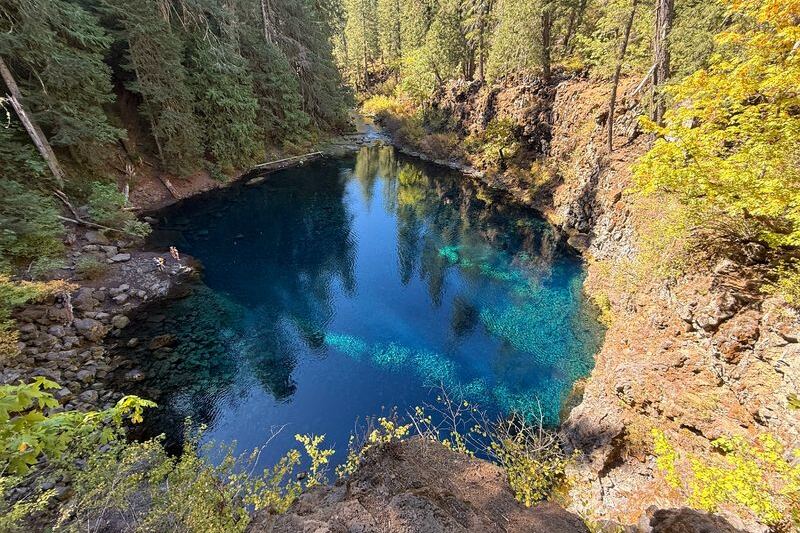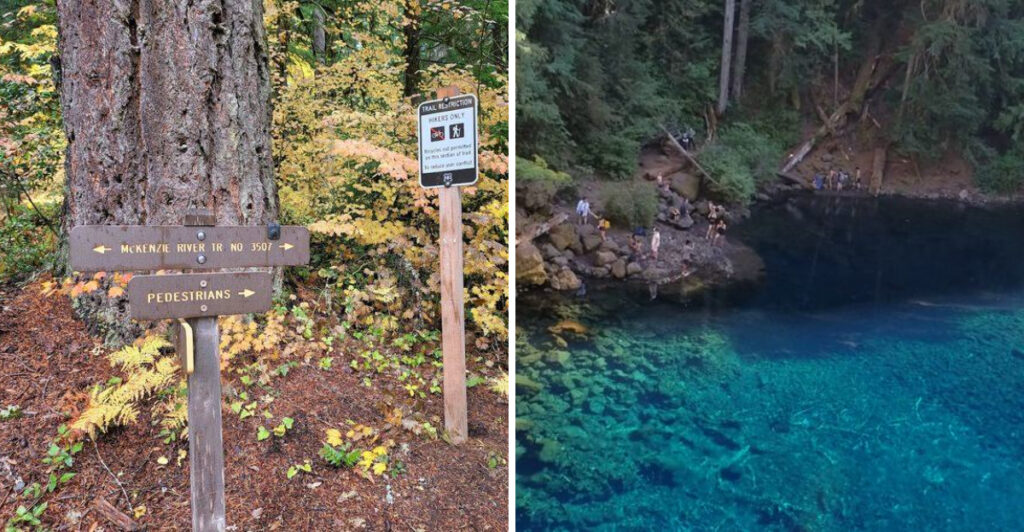
There is a pool in the Oregon wilderness where a river literally comes back from underground, and the color of the water will stop you in your tracks. The McKenzie River travels roughly three miles beneath a lava field before bubbling back up into a basin so brilliantly blue it looks painted.
The trail to reach it winds through old-growth forest draped in moss, crosses wooden bridges, and skirts ancient volcanic rock. By the time you arrive at the overlook, you will understand exactly why hikers keep coming back to this place again and again.
Where the River Rises: Location and Trail Access
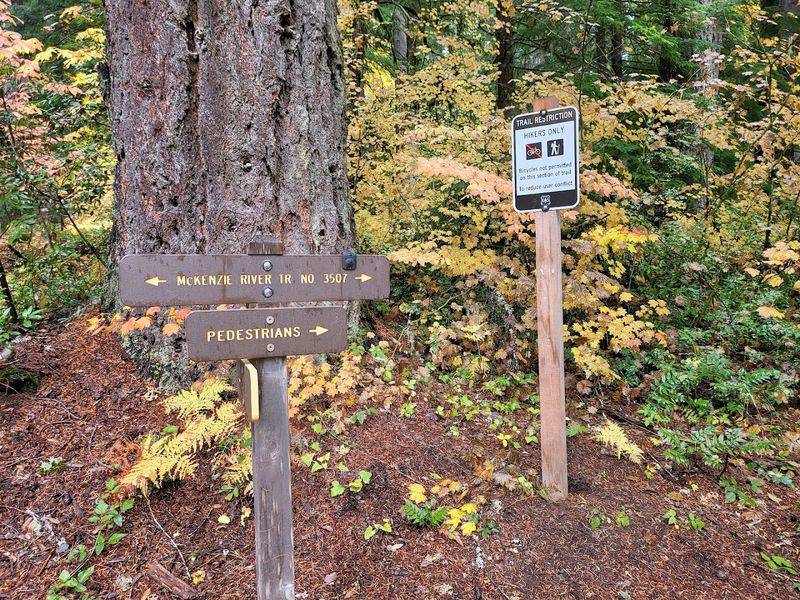
The trailhead for Tamolitch Falls, also called the Blue Pool, sits off National Forest Road 2672-655 near McKenzie Bridge, Oregon 97413, within the Willamette National Forest. You can reach it by calling the ranger station at 541-822-3381 or checking the official site at fs.usda.gov/willamette for current conditions.
The parking area is modest in size and fills up quickly, especially on summer weekends. Arriving early in the morning is the smartest move if you want a spot without stress.
There are pit toilets and porta-potties on site, which is a welcome detail after a long drive through the forest.
The trail itself runs about 2.1 miles one way from the parking lot to the pool. Elevation changes are gentle for most of the route, though the final descent toward the water gets noticeably steep and rocky.
Dogs are welcome on the trail as long as they are leashed, making this a solid outing for the whole family, four-legged members included.
The Science Behind the Disappearing River
One of the most fascinating things about this spot is the geology that makes it possible. The McKenzie River flows along normally until it hits a stretch of highly porous lava rock left behind by ancient volcanic activity in the Oregon Cascades.
The water simply drains down through the rock like it is passing through a giant sponge.
For roughly three miles, the riverbed runs completely dry above ground. If you hike the trail during late summer or early fall, you will actually walk along that dry, rocky channel and wonder where the water went.
It is a surreal feeling to stand in what should be a riverbed and see nothing but boulders and moss.
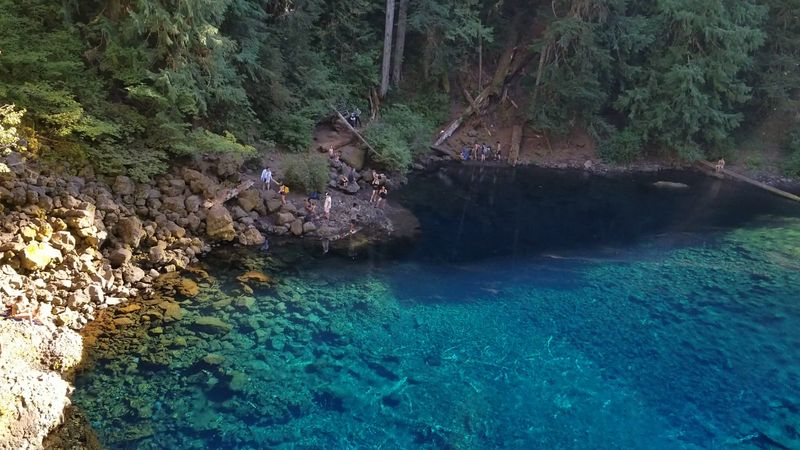
At the Blue Pool, all of that underground water resurfaces at once, welling up from below to create the vivid pool you see from the overlook. The water temperature stays around 34 to 38 degrees Fahrenheit year-round because it has been traveling through cold volcanic rock.
That frigid chill is a direct result of the underground journey the river has just completed.
The Trail Through the Forest: What to Expect Underfoot
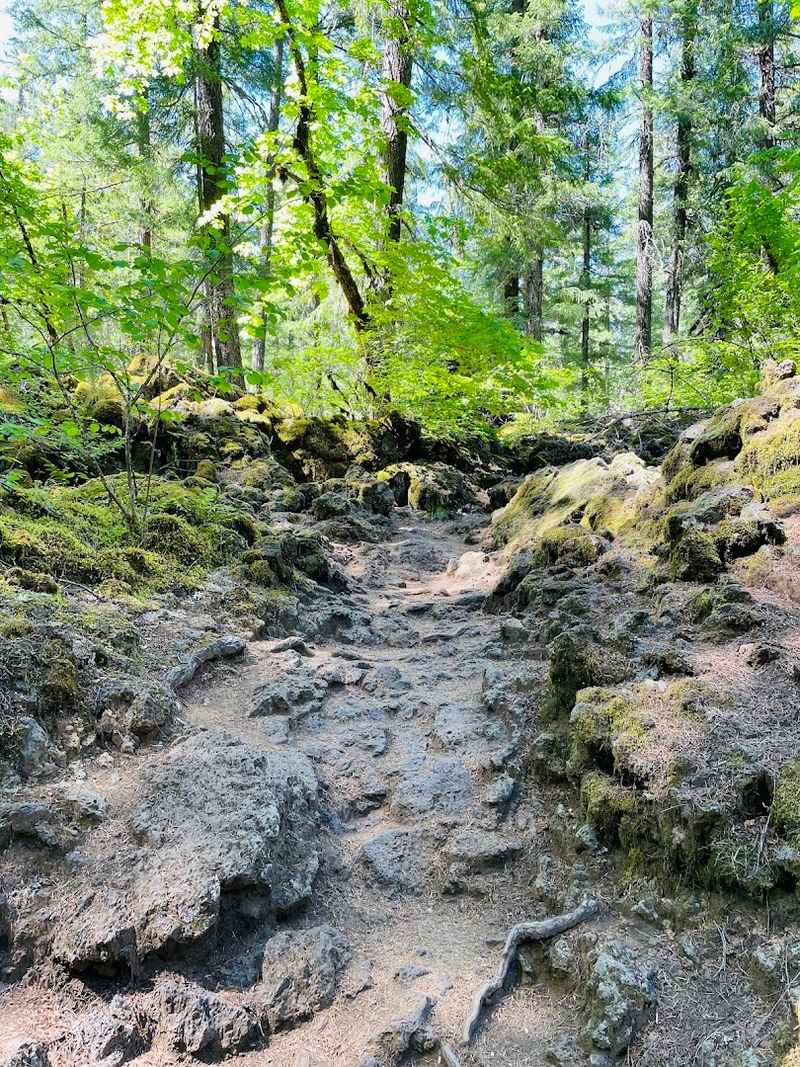
The first half of the trail has a smooth, forested character that feels almost meditative. Towering Douglas firs and western red cedars line both sides of the path, their trunks wrapped in thick green moss that makes the whole forest glow on overcast days.
The sound of the McKenzie River follows you along the route, which adds a natural soundtrack to the walk.
Two wooden footbridges cross the river along the way, and both offer great spots to pause and take photos. Past the midpoint, the terrain shifts noticeably.
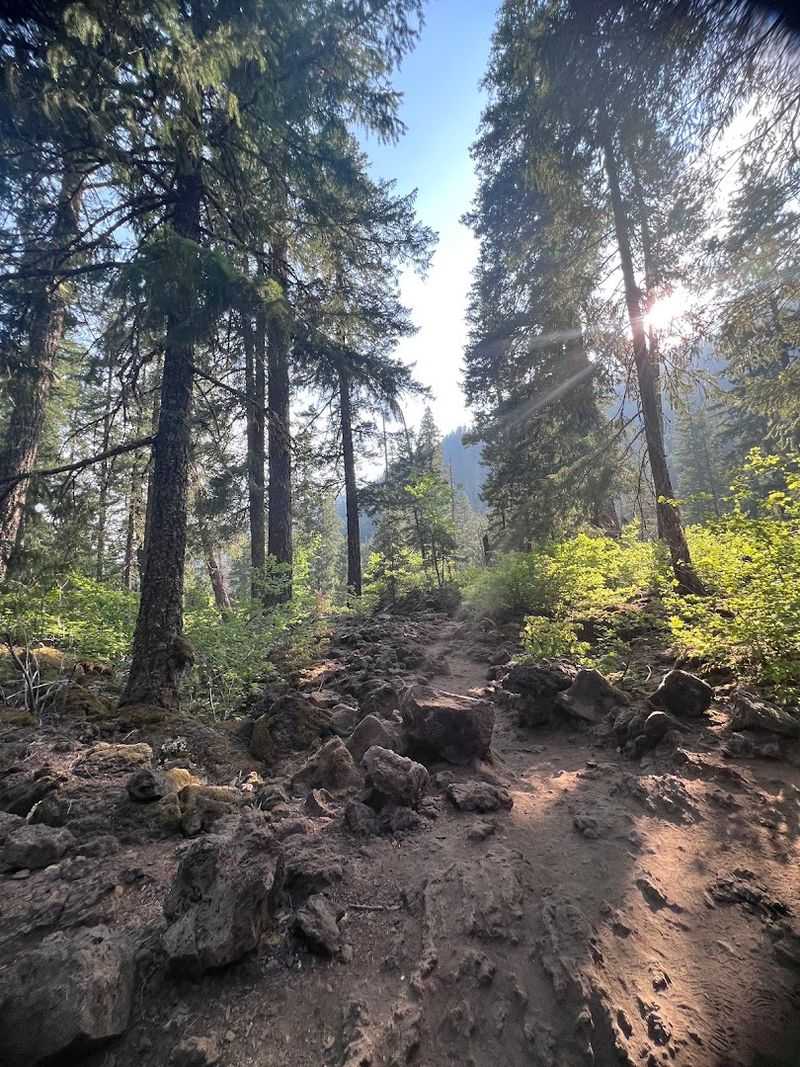
Lava rock begins to dominate the landscape, and the trail surface becomes uneven and chunky. Tree roots push up through the dirt in sections, so watching your footing is genuinely important here.
Proper hiking shoes with ankle support make a real difference on this trail. Sandals are a poor choice, and several hikers have learned that lesson the hard way after rolling an ankle on the volcanic rock.
The round trip takes most people between one and a half to two and a half hours depending on pace, photo stops, and how far down toward the water they choose to go.
That First Glimpse of the Blue Pool
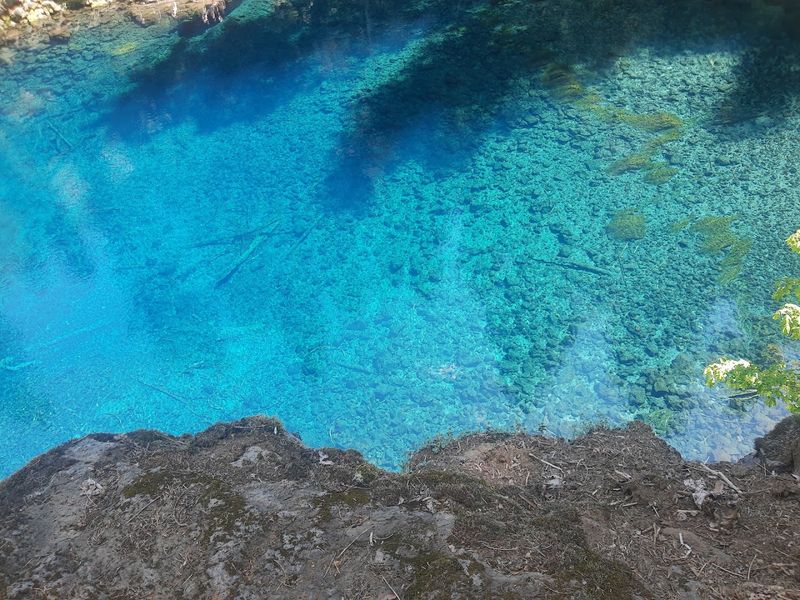
Nothing quite prepares you for the moment the pool comes into view. After miles of green forest and gray lava rock, the water appears below as a shade of blue that seems almost artificial.
It is the kind of color you associate with tropical beaches, not a mountain forest in central Oregon.
The hue comes from the extreme clarity and depth of the water, combined with the way light passes through it and reflects off the pale volcanic rock below the surface. On sunny days, especially when the sun is directly overhead around midday, the pool practically glows.
Arriving between noon and 2 p.m. gives you the best light for both viewing and photography.
The main viewpoint sits at the rim above the pool, giving you a dramatic overhead perspective of the basin. Most visitors stop here to eat a snack, rest their legs, and soak in the view before deciding whether to attempt the steep descent.
That first glimpse from above is genuinely one of the more memorable visual moments you can have on an Oregon trail, and it rewards every step of the hike that came before it.
Getting Down to the Water: The Steep Descent
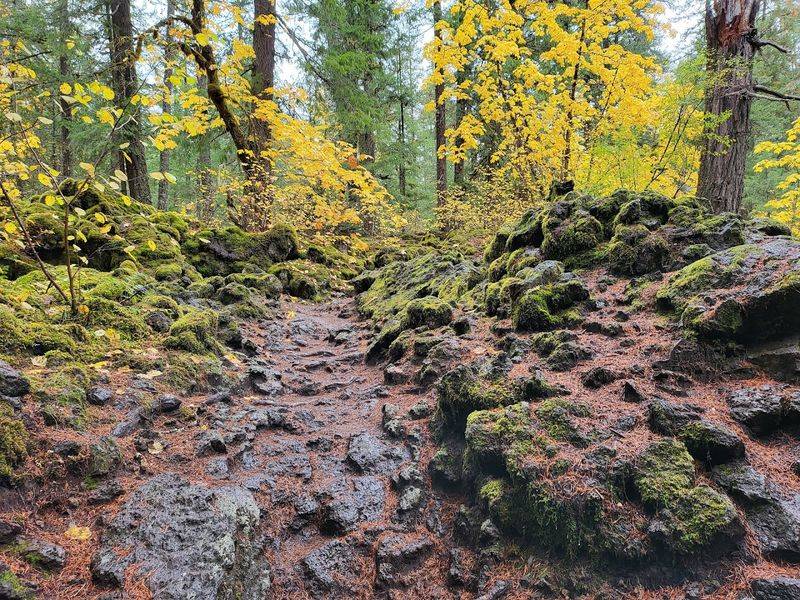
Reaching the overlook is one thing, but getting down to the actual water is a whole separate adventure. The descent from the rim to the pool’s edge involves scrambling over large boulders, navigating loose volcanic rock, and following blue ribbon markers that guide you through the most passable route.
There is no paved path, no handrail, and no gentle switchback trail.
The slope is steep enough that some hikers choose to sit and scoot rather than walk upright in certain sections. Going down takes focus, and coming back up requires real effort.
Anyone with knee concerns, balance issues, or young children in tow should think carefully before attempting this portion of the hike.
That said, reaching the water’s edge is absolutely worth it for those who can manage the terrain. The pool up close has a different energy than from above.
You can see the water welling up from below, feel the cold air radiating off the surface, and touch water that has just completed a three-mile underground journey. Following the blue ribbon markers carefully on the way back up makes the return trip significantly easier and safer.
Swimming in the Blue Pool: Cold, Clear, and Unforgettable
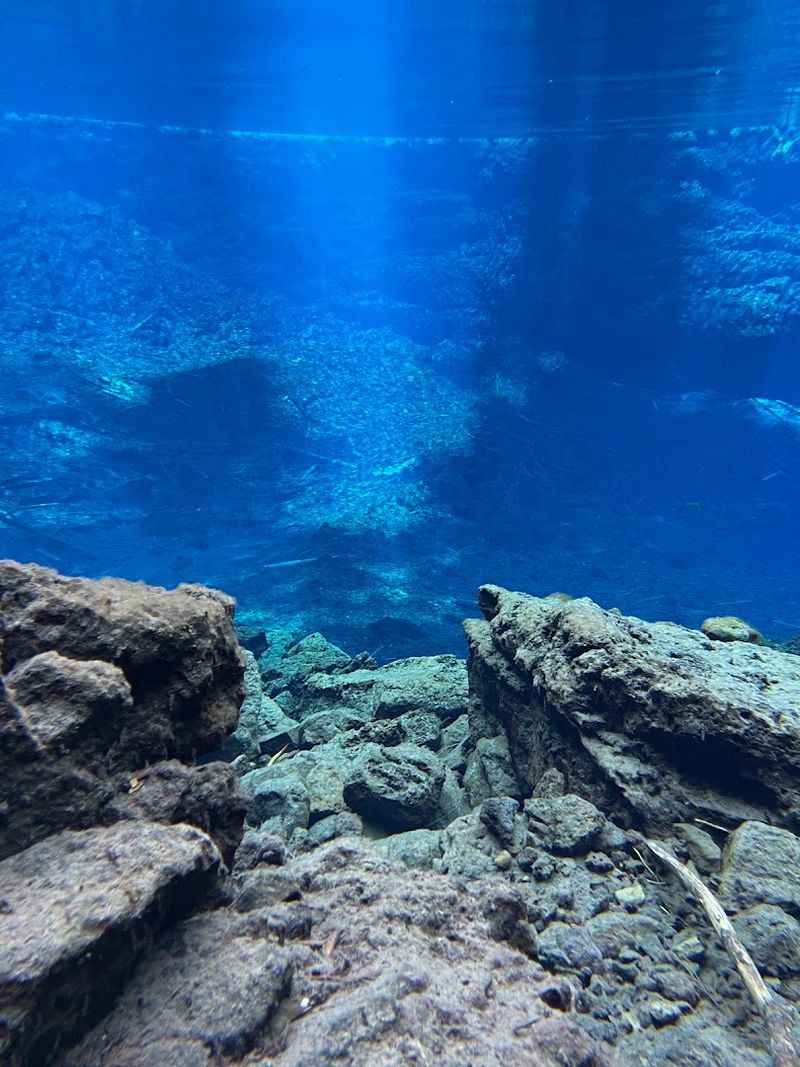
The water temperature at the Blue Pool hovers between 34 and 38 degrees Fahrenheit regardless of the season. That is cold in a way that takes your breath away the moment any part of your body makes contact.
Most swimmers last only seconds to a few minutes before the chill sends them scrambling back onto the warm rocks to recover.
Despite the temperature, people jump in throughout the summer months. The pool is deep enough for cliff jumping from certain points along the rim, and watching others take the plunge is entertaining even if you have no intention of joining them.
The water is so clear that you can see the bottom and watch the way the light plays through the depth.
Wearing a wetsuit is a smart choice if you plan to stay in longer than a quick dip. Without one, the cold hits fast and hard.
The experience of swimming here is genuinely unlike most places, partly because of the temperature and partly because you are floating in water that emerged from underground just moments before you arrived. That knowledge adds a strange, almost electric quality to the whole experience.
The Best Time of Year to Visit
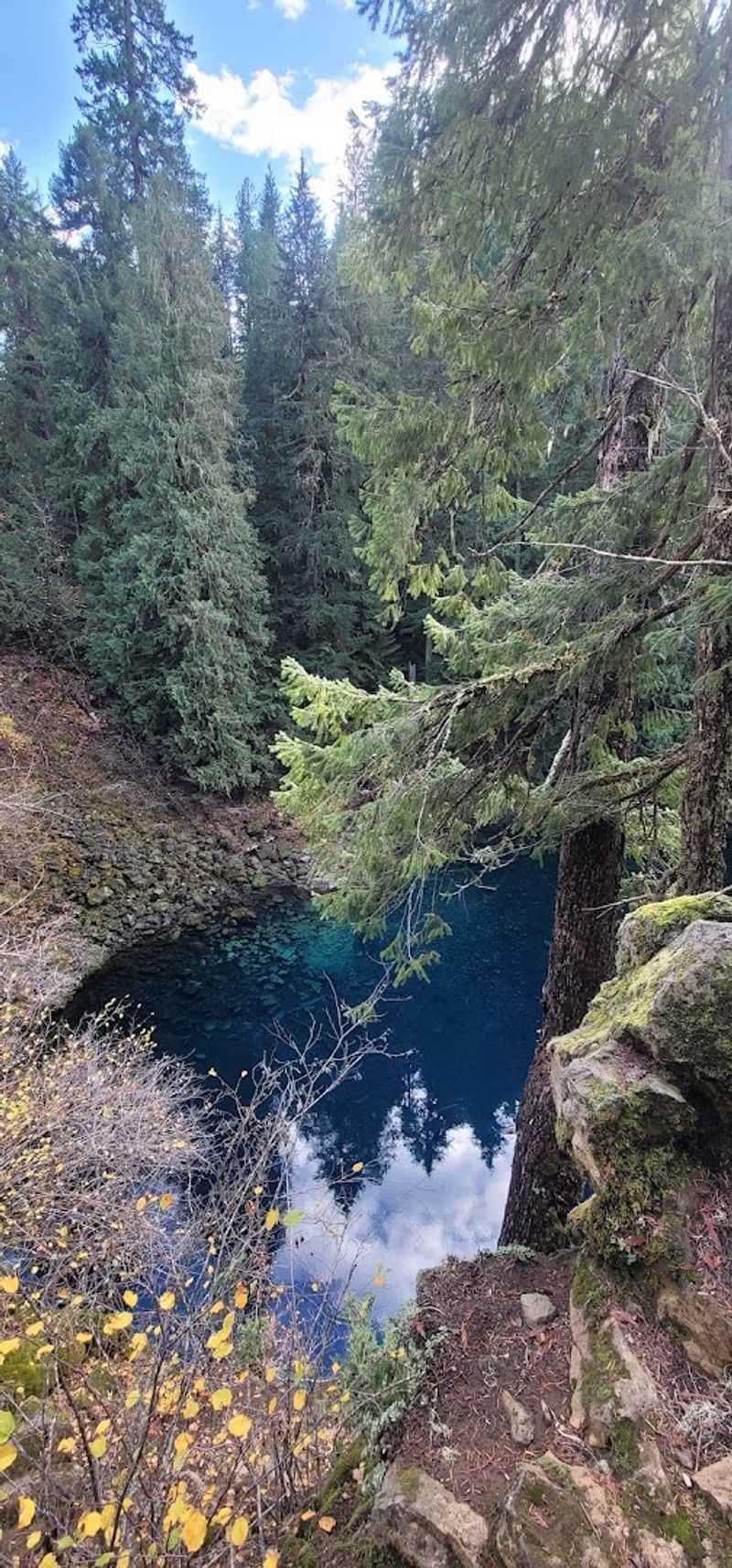
Every season offers a different version of this hike, and each one has something worth seeing. Late spring and early summer bring the most dramatic water levels to the pool, since snowmelt from the Cascades pushes more water through the underground system.
The surrounding forest is at its greenest during this window, and the air stays cool even on warm days.
Summer is peak season, and the trail gets crowded fast. Parking fills up by mid-morning on weekends, and the overlook can have twenty or more people at a time.
Going on a weekday or arriving before 8 a.m. makes a noticeable difference in how peaceful the experience feels.
Fall brings quieter crowds and golden light filtering through the trees, which makes for stunning trail photos. Winter visits are possible since the trail is open 24 hours year-round, and the path stays visible even with snow cover, though mud and ice require extra caution.
Each season has a distinct personality here, so the pool rewards repeat visitors who come back at different times of year to see how the place transforms around it.
What to Pack for the Hike
Packing smart for this hike makes a meaningful difference in how enjoyable the experience is. Water is the most critical item, and bringing more than you think you need is always a good call.
The trail does not have any water sources you can safely drink from, and the round trip can take up to three hours depending on your pace and how long you linger at the pool.
Snacks are worth packing too. The overlook is a natural rest spot, and having something to eat while you take in the view makes the stop feel complete.
High-energy snacks like trail mix, granola bars, or fruit travel well and give you fuel for the return hike.
Footwear is arguably the most important gear decision for this trail. Sturdy hiking shoes or trail runners with ankle support handle the lava rock and uneven terrain far better than sneakers or sandals.
Trekking poles help on the descent to the water and on the climb back up. A light layer is worth tossing in your pack even in summer, because the air near the pool is noticeably cooler than the rest of the trail and the walk back can feel chilly once the sweat sets in.
The Atmosphere on the Trail: What It Really Feels Like
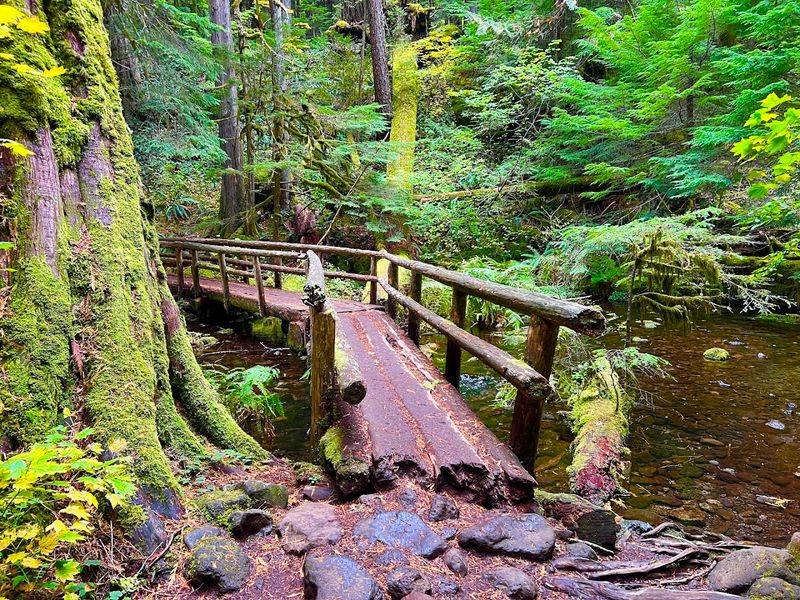
There is a particular quality to the air on this trail that is hard to describe without sounding dramatic. The forest is dense enough to block most direct sunlight, which keeps temperatures cool and creates a filtered, green-tinted light that feels almost otherworldly.
Moss covers nearly every surface, from tree trunks to boulders to fallen logs, and the overall effect is a landscape that looks like it belongs in a nature documentary.
The sound of the McKenzie River accompanies the first portion of the hike, providing a steady, calming background noise that makes the walk feel less like exercise and more like a slow wander through something genuinely beautiful. As the river disappears underground and the lava field takes over, the soundscape changes too.
Things get quieter, and the crunch of volcanic rock underfoot becomes the dominant sound.
Other hikers on the trail are generally friendly and considerate. There is an unspoken sense of shared purpose among people heading toward the same destination, and conversations happen naturally at the wooden bridges and rest spots along the way.
The atmosphere at the pool itself has a calm, almost reverent quality, as if everyone present understands they are somewhere genuinely special.
Tips, Practicalities, and Closing Thoughts
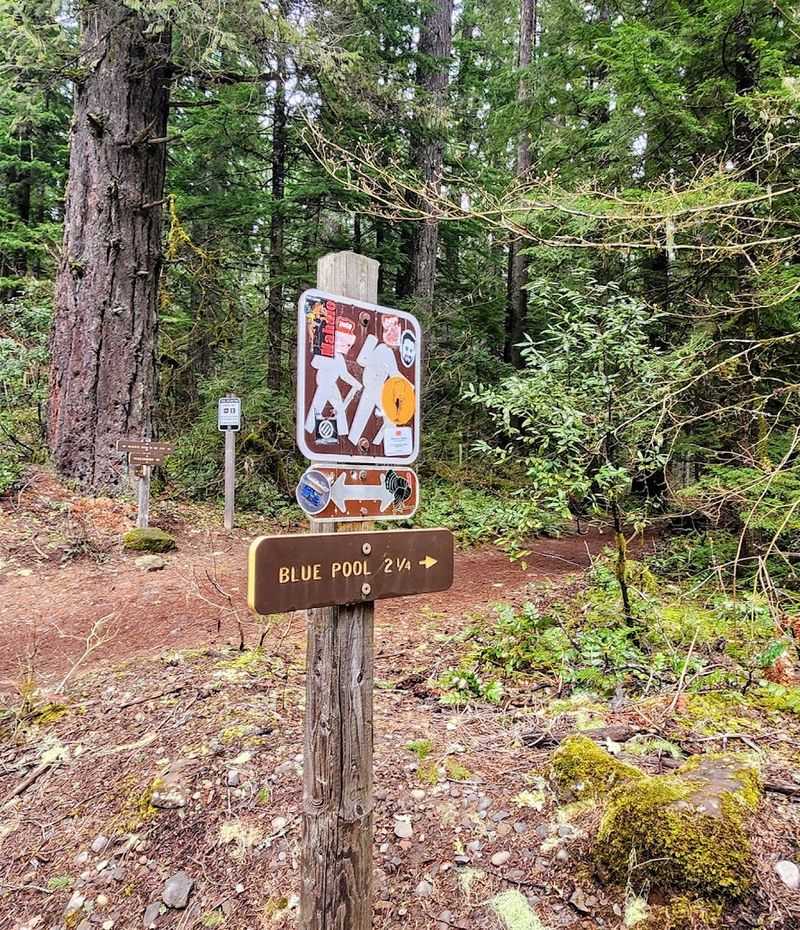
A few practical details can make or break this trip. No parking permit is currently required to use the trailhead, which is a genuine convenience compared to many popular Oregon hiking spots.
The parking area along the forest road is free, and the trail itself costs nothing to hike. That said, conditions and permit requirements can change, so checking the Willamette National Forest website before your visit is always a smart first step.
The trail is not ADA accessible and is not suitable for strollers. Cell service is limited or nonexistent in the area, so downloading an offline map before you leave is a practical precaution.
If someone in your group gets hurt on the trail, help can take a long time to arrive given the remote location, which is a real reason to hike within your ability level.
This place has a way of staying with you long after you leave. The combination of the underground river, the volcanic landscape, the old-growth forest, and that pool of impossibly blue water adds up to something that feels genuinely rare.
Oregon has no shortage of beautiful trails, but Tamolitch Falls earns its reputation as one of the most memorable hikes the state has to offer.
Share this story