There is a place tucked into the forested hills of southern Oregon where time stopped somewhere around 1913. A few miles off Interstate 5, a cluster of weathered wooden buildings stands quietly in a valley, surrounded by towering trees and the sound of a nearby creek.
The town of Golden, Oregon, once hummed with the activity of gold miners, families, and churchgoers. Today, it survives as the Golden State Heritage Site, a preserved ghost town that lets you walk through a genuine piece of the American frontier without a theme park ticket or a tour guide.
What makes this place so special is that it feels completely real, because it is.
Where Golden, Oregon Actually Is
The address is straightforward enough: Golden State Heritage Site, Wolf Creek, OR 97497. But getting there feels like following a secret.
You take Exit 76 off Interstate 5 near the small town of Wolf Creek, then drive a few miles along a winding country road that cuts through dense Oregon forest.
The site sits in a narrow valley carved out by Golden Creek, with hills rising on both sides and trees pressing in close. The whole setting has a quiet, almost suspended quality, like the landscape itself decided to hold still.
The nearest services are back in Wolf Creek, so fuel up and grab snacks before you head out. The Oregon State Parks system manages the site, and you can reach them at 1-800-551-6949 or visit oregonstateparks.org for more details before your trip.
Parking is on the right side of the road as you approach. The signs can be easy to miss, so slow down and keep your eyes open.
A volunteer caretaker is often on site and happy to answer questions.
The Story Behind the Town of Golden
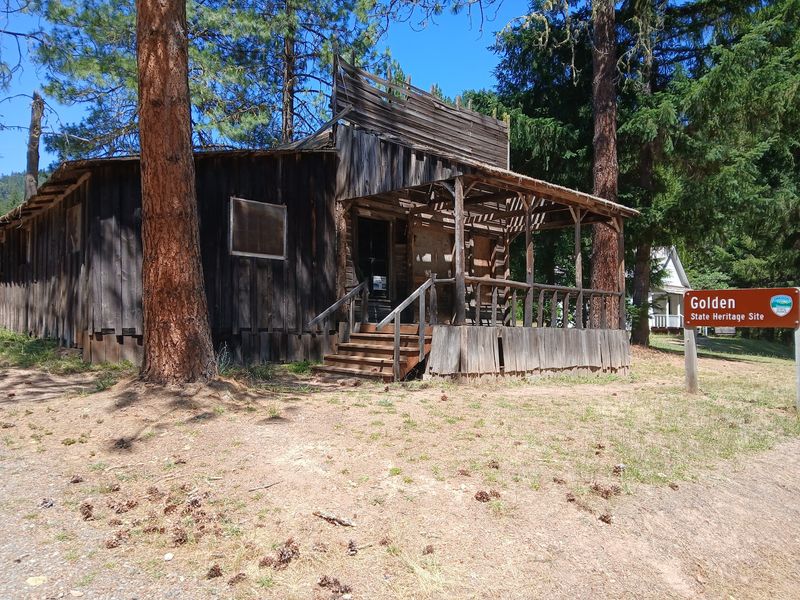
Golden was active from roughly 1850 to 1913, which gives it a run of about six decades as a working mining community. Gold was pulled from the creek and surrounding hillsides during that stretch, drawing settlers, families, and fortune-seekers into this remote valley.
What made Golden unusual among mining towns was its character. Most gold rush settlements were rough-and-tumble places, but Golden had two churches and, reportedly, no saloons.
The nearest spot for anything stronger than creek water was at Graves Creek, several miles away.
That detail alone says something interesting about the people who built this place. They were not just passing through to get rich.
Many of them were building a community, complete with a school, a general store, and a place to worship on Sundays.
By 1913, the gold had run thin and the population drifted away. The buildings stayed behind.
Decades later, some structures were even used as a film set for the television show Bonanza and several western movies, which added another layer to an already layered history.
The Church That Still Stands Proud
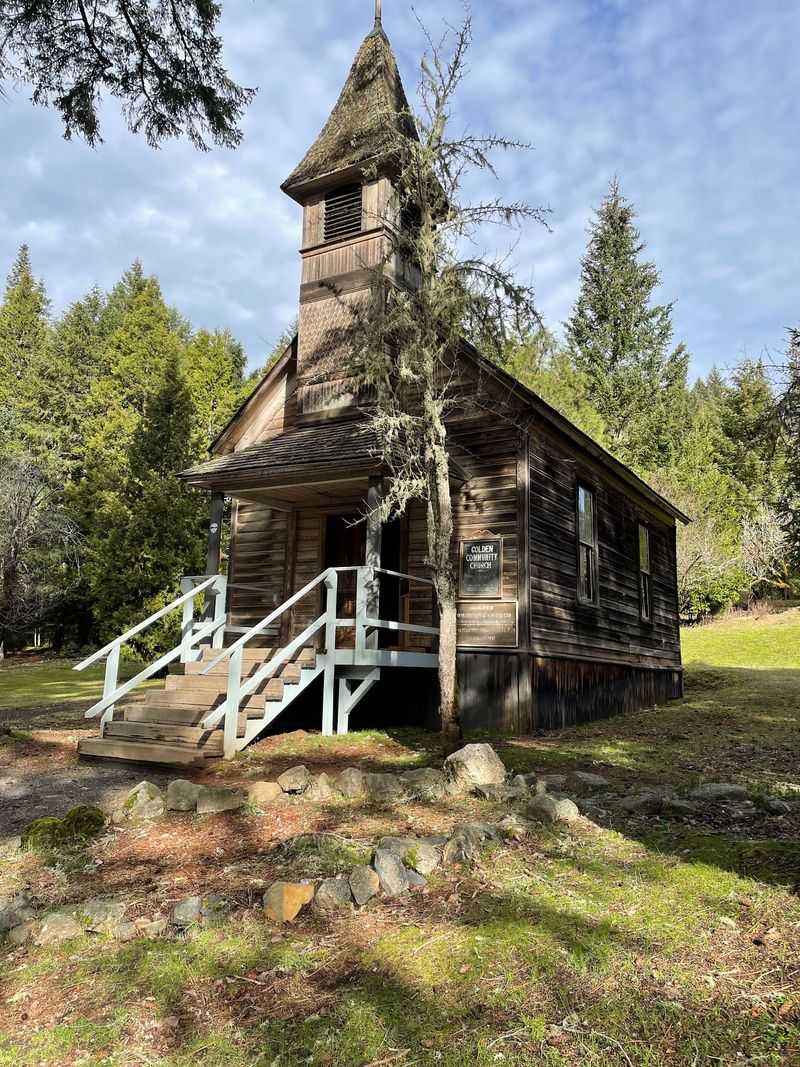
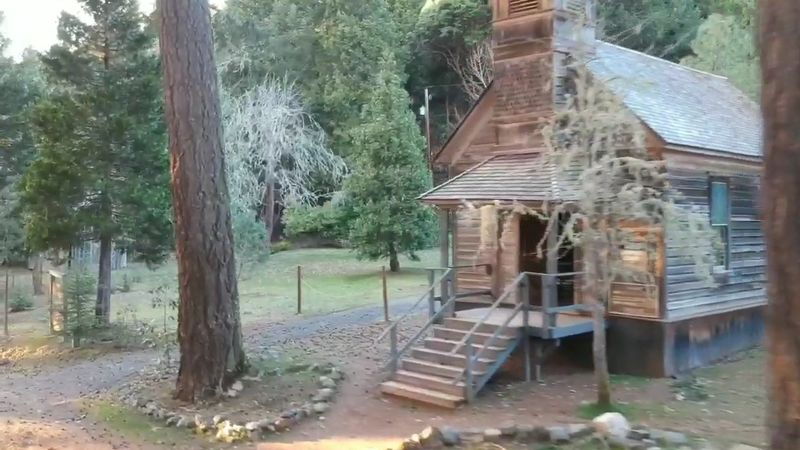
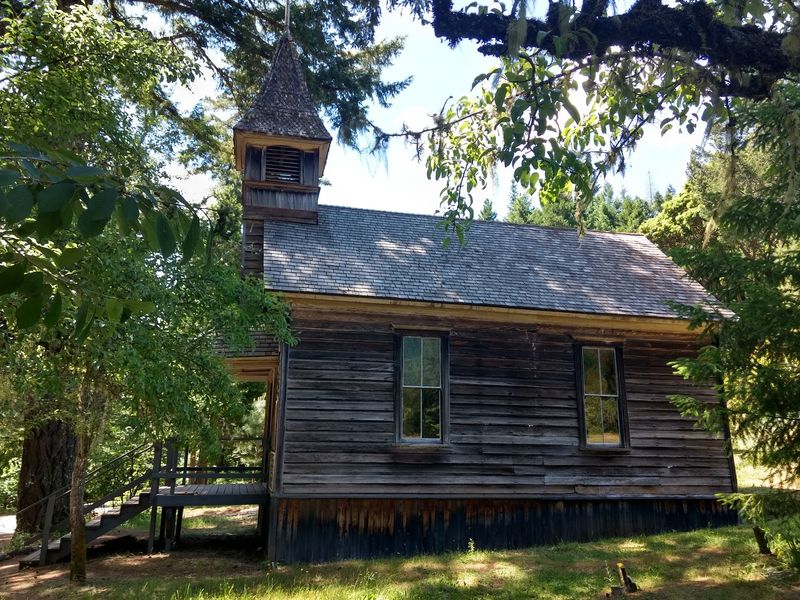
The church at Golden is the kind of building that stops you mid-step. It is small, simple, and made of wood that has gone the color of old silver over the years.
No fancy stonework, no stained glass windows worth writing home about. Just honest construction from people who knew what they needed and built it.
You can go inside when the caretaker hosts are on site, typically between 8 AM and 8 PM. The interior is spare and clean, with wooden pews and a plain altar that feels entirely consistent with the frontier faith that built it.
Standing inside, it is easy to understand why visitors say the church left them speechless. There is a stillness in there that goes beyond quiet.
The building has absorbed more than a century of Sunday mornings, and somehow that weight is still present.
Ghost Adventures, the popular paranormal television show, filmed an episode here, which brought a new wave of curious visitors. Whether or not you believe in anything supernatural, the church absolutely earns its reputation as the emotional centerpiece of the entire site.
The Schoolhouse and Its Lessons
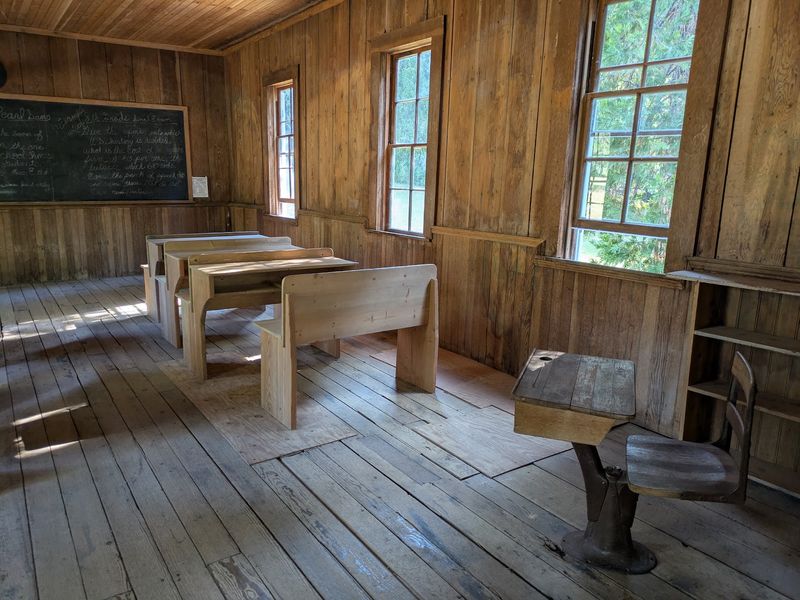
Right alongside the church stands the old schoolhouse, and together the two buildings form the heart of what remains of Golden. The schoolhouse is a one-room structure that once served the children of miners and settlers who had no other options for education within reasonable distance.
Like the church, the schoolhouse is open for viewing when hosts are present on site. Inside, the setup is exactly what you might expect from a frontier classroom: simple, functional, and built for purpose rather than comfort.
Old wooden desks, minimal decoration, and plenty of natural light through small-paned windows.
The schoolhouse was closed for repairs during some past visits, so it is worth checking conditions before you plan your trip. When it is open, the experience of standing in a room where real frontier children once learned to read and write is genuinely moving in a way that is hard to explain until you are actually there.
A red binder kept by the on-site hosts contains detailed history about the town. Ask to look through it, because the stories inside add real depth to everything you see around you.
The General Store and Other Surviving Structures
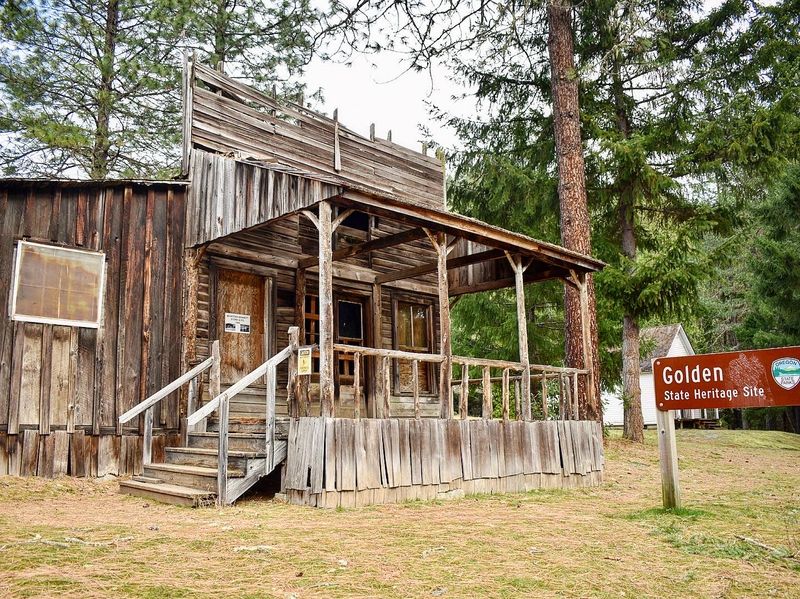
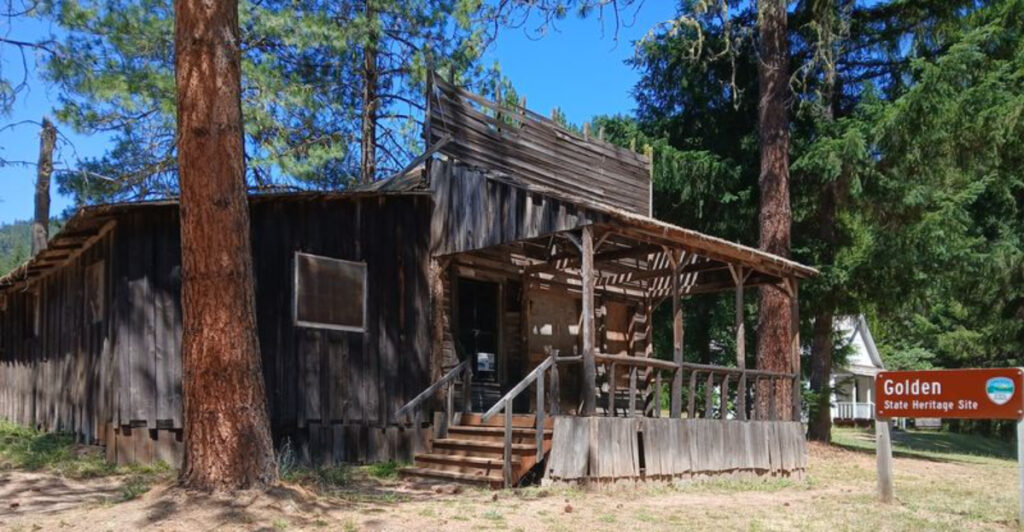
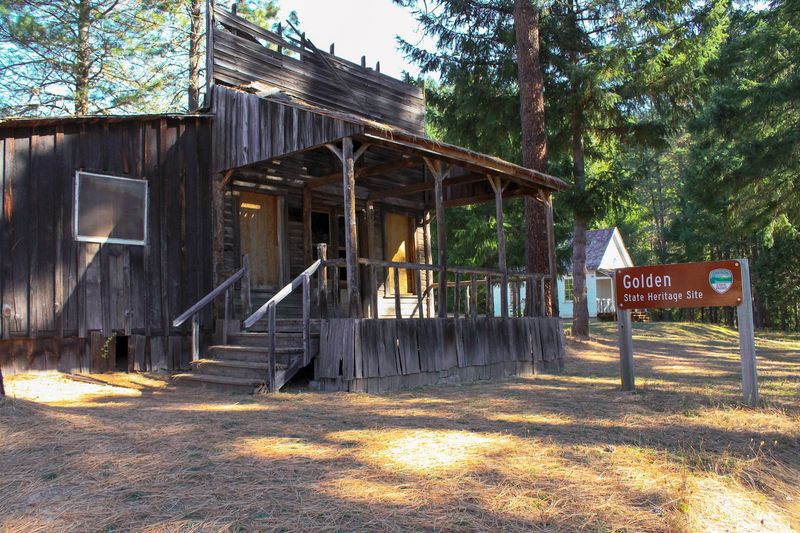
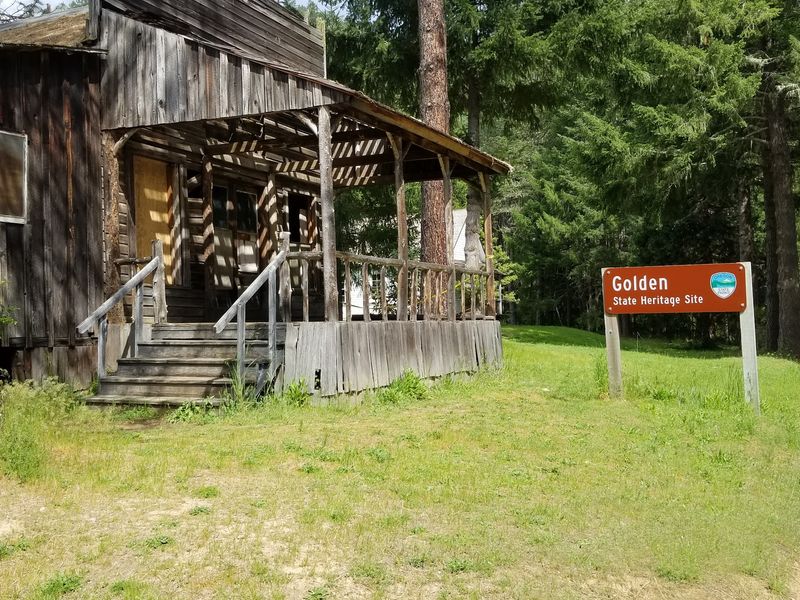
Beyond the church and schoolhouse, several other structures survive at Golden in various states of preservation. The old general store is one of the most atmospheric spots on the property.
You cannot go inside, but the covered front porch is accessible, and more than one visitor has reported feeling something unusual while standing on it.
The Ruble House is another structure on the grounds. It has collapsed over time, but there are plans to eventually re-erect it.
The brush around it has been cleared, which at least lets you get a sense of where it once stood and how the town was laid out.
Other outbuildings dot the property, and while most are viewable only from the outside, the collection as a whole gives you a surprisingly complete picture of how a small frontier community was organized. There was a logic to how these buildings were placed relative to each other.
Informational signs throughout the site explain what each building was used for and who occupied it. Reading through them as you walk the grounds turns the visit into something closer to an open-air history lesson than a simple sightseeing stop.
Three Graves and an Unanswered Question
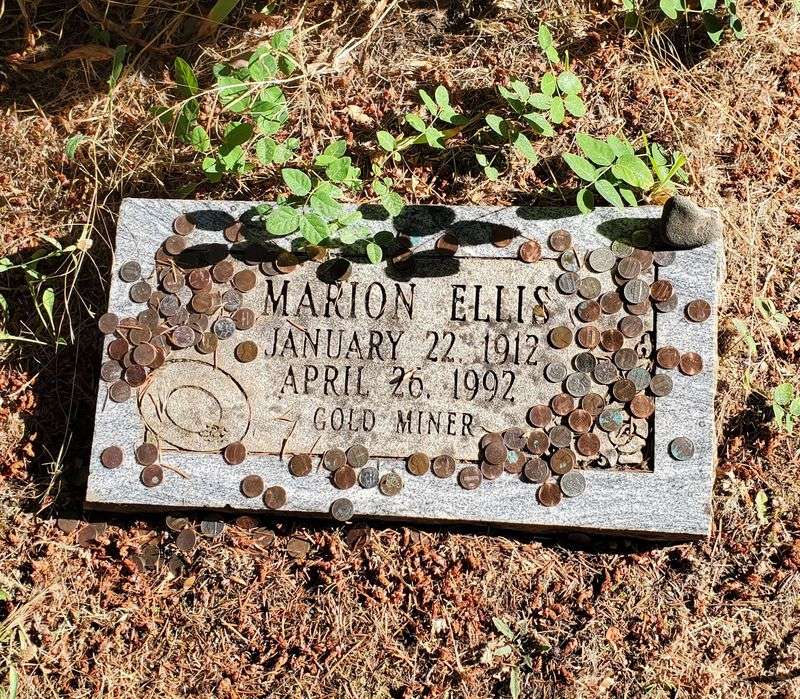
Among the more thought-provoking features at Golden are three graves located on the property. They are modest markers, and they raise more questions than they answer.
The names do not match the primary family names associated with the town, which makes their presence here both puzzling and compelling.
One marker identifies a gold miner. The others belong to veterans.
Why these three individuals are buried at Golden rather than in a more established cemetery nearby is not entirely clear from the existing records.
That gap in the story is actually part of what makes the graves so interesting. History does not always wrap itself up neatly, and these three markers are a reminder that real people lived and worked here, people whose full stories have not survived to the present day.
The graves are well maintained and treated with appropriate respect as part of the heritage site. They sit quietly among the trees, a short distance from the main cluster of buildings.
If you are the kind of visitor who lingers over the small, unexplained details of a place, these markers will hold your attention for a while.
The Creek Restoration and Natural Surroundings
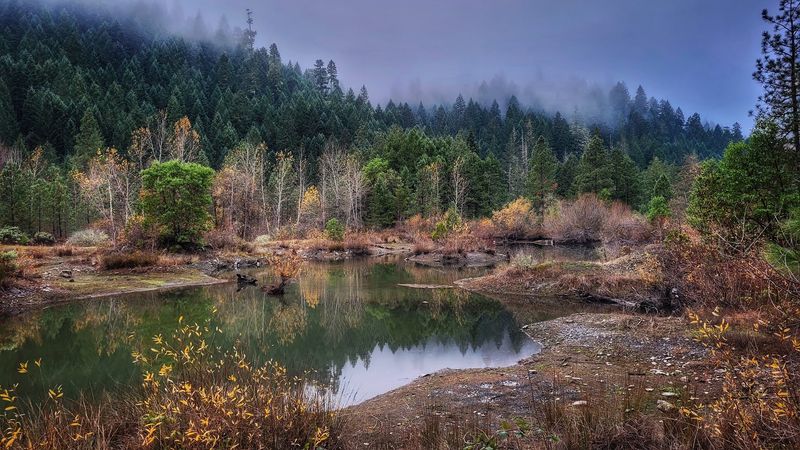
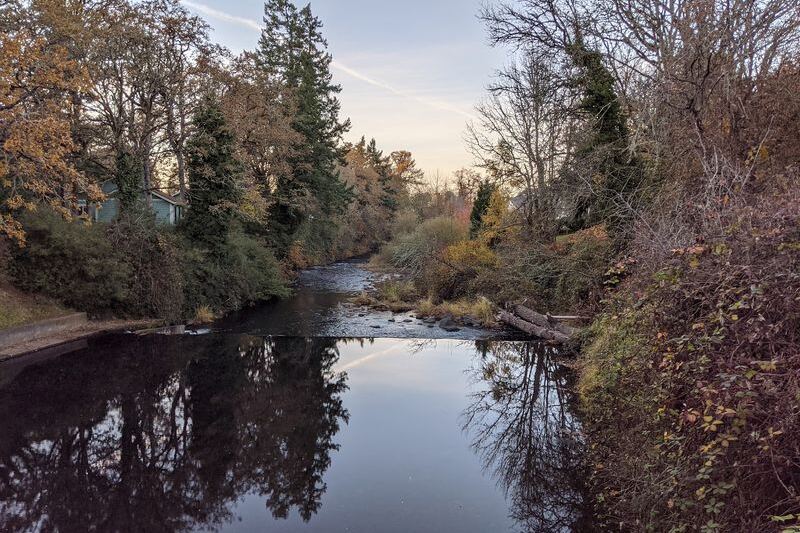
One of the more surprising aspects of a visit to Golden is what is happening just across the road from the historic buildings. The creek that once fed the gold mining operations is now the subject of active environmental restoration work, and the results are genuinely beautiful.
A short, easy trail leads down to the water from a trailhead near the parking area. The restored wetlands along the creek are home to geese, turtles, and a variety of other wildlife.
On a calm morning, the sound of the water and the birds creates a setting that feels completely removed from the interstate just a few miles away.
Eucalyptus trees grow near the creek, which is an unexpected sight in an Oregon forest. They were likely planted during the town’s active years and have since grown tall and distinctive.
Their peeling bark and sharp scent add a slightly exotic note to an otherwise very Pacific Northwest landscape.
The mining pond area across the road is worth exploring even if you only have a few extra minutes. The combination of historic site on one side of the road and recovering natural habitat on the other gives the whole visit a satisfying sense of balance.
What the Atmosphere Feels Like on the Ground
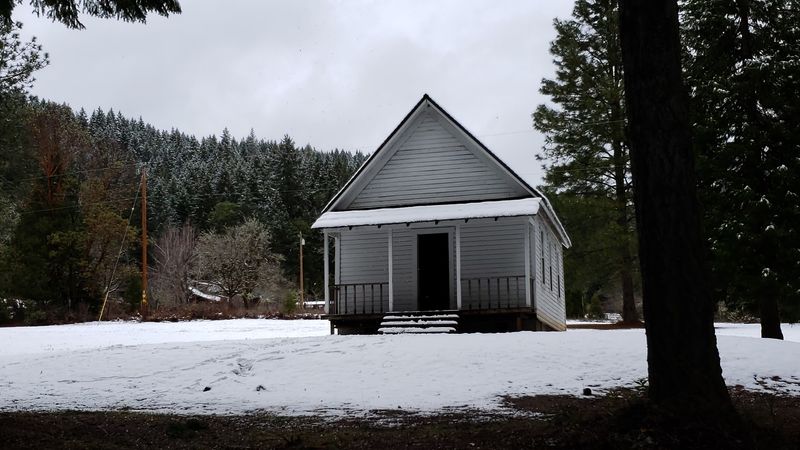
There is a quality to the air at Golden that is hard to put into words but easy to feel the moment you step out of your car. The forest presses in close, the buildings are old and quiet, and the whole place has a kind of concentrated stillness that does not feel empty so much as full of something you cannot quite name.
Several visitors have described feeling unusually lightheaded or emotionally affected near certain buildings, particularly on the porch of the general store. Whether that is the power of genuine history, the altitude, or something else entirely is a question each person tends to answer for themselves.
On a snowy afternoon, the site takes on a completely different character. The white ground and bare branches frame the dark wooden buildings in a way that feels almost like a photograph from another century.
Arriving to find the place entirely to yourself, as occasionally happens on weekday mornings, makes the experience even more personal.
Golden does not perform its history for you. It simply exists, weathered and patient, and lets you bring whatever you are carrying to the encounter.
That restraint is actually what makes it so affecting.
Practical Tips for Your Visit
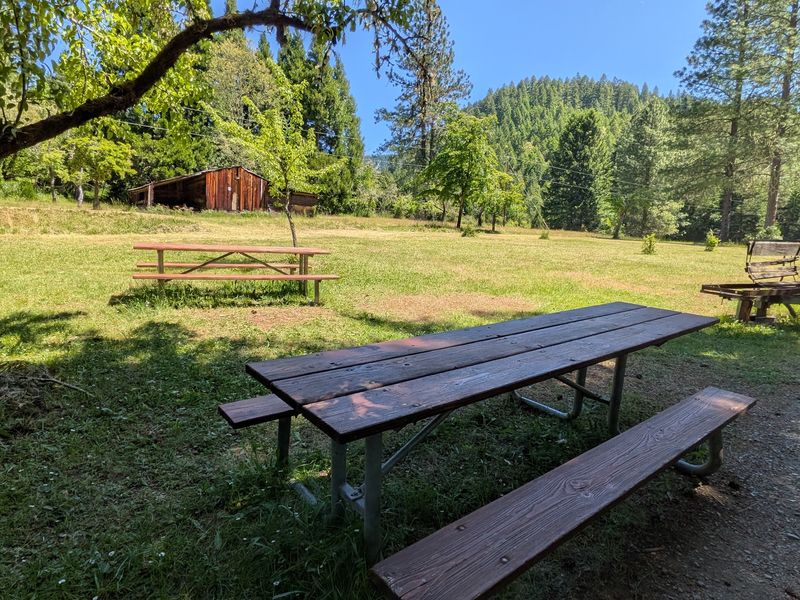
A few practical notes can make the difference between a smooth visit and a frustrating one. Park on the right side of the road as you approach the site.
The parking signs are small and easy to miss, and pulling over on the wrong side of the road will draw a firm correction from the on-site caretaker, who is otherwise a genuinely helpful and friendly presence.
The church and schoolhouse are open from 8 AM to 8 PM when hosts are on site. If you plan to visit in the evening or want to arrange any special access, coordinate in advance with the ranger at Wolf Creek.
Pets are welcome but must stay on a leash and are not allowed inside any of the buildings.
There are no trash cans on site, so the rule is simple: whatever you bring in, you take out. A portable restroom is available near the trailhead.
There are also picnic tables if you want to bring lunch and make an afternoon of it.
Poison oak grows throughout the area, so stick to the paths and wear long pants if you plan to wander near the creek or through the brush. Wolf Creek town, a few miles up the road, is the closest spot for fuel and food.
The Ghost Adventures Connection
Ghost Adventures, the long-running paranormal investigation show, filmed an episode at Golden, and that broadcast introduced the site to a much wider audience than it had previously enjoyed. For fans of the show, visiting the actual location gives the episode a satisfying real-world anchor.
The production chose Golden for reasons that are easy to understand once you have been there. The combination of genuine age, isolation, and the slightly charged atmosphere of the buildings makes the site a compelling setting for that kind of storytelling.
The church in particular photographs dramatically, especially in low light.
Whether or not you are a fan of paranormal television, the show’s visit left a positive mark on the site’s reputation. Many visitors now make the detour specifically because they saw the episode, and most come away feeling the real place exceeded what the screen could capture.
The caretaker who lives on site is well acquainted with questions about the show and the various unusual experiences visitors have reported over the years. A conversation with him, if he is available, tends to be one of the more memorable parts of the whole stop.
How Golden Fits Into a Broader Road Trip
Golden sits almost exactly halfway between Portland and the California border on the Interstate 5 corridor, which makes it a natural candidate for a road trip detour. The drive off the freeway takes about six minutes, and the site itself requires no more than 20 to 45 minutes depending on how slowly you like to read historical signs.
Wolf Creek Inn, a historic stagecoach stop just a few miles away, makes a natural pairing for an overnight stay. The inn has its own long history and adds another layer to the southern Oregon experience if you have the time to linger.
King Mountain and the surrounding Cascade-Siskiyou region offer additional outdoor options for visitors who want to extend their stay. The area rewards slow travel more than it rewards rushing through, and Golden is a good example of why.
For families on a long drive, the stop offers something genuinely different from the usual rest area or fast food break. Kids who have any interest in history, old buildings, or just running around a quiet outdoor space tend to respond well to Golden.
The short nature trail across the road gives everyone a chance to stretch their legs properly.
Why Golden Deserves More Attention Than It Gets
Golden earns a 4.7-star rating from more than 200 visitors, and that number holds up under scrutiny. The site is not flashy.
There is no gift shop, no audio tour, and no admission fee. What it offers instead is a rare kind of authenticity that more polished attractions cannot replicate.
The preservation work here is ongoing and entirely dependent on volunteer effort and limited state resources. The caretakers who live on site do so out of genuine dedication to keeping the place alive.
That commitment shows in the condition of the buildings and the quality of the informational materials available on the grounds.
Oregon has no shortage of beautiful places to visit, but few of them offer the specific combination of accessible history, natural restoration, and quiet atmosphere that Golden provides. It rewards visitors who slow down, read the signs, and let the place speak at its own pace.
A stop here costs nothing but a few miles off the highway and a willingness to pay attention. For anyone traveling through southern Oregon, that trade is about as good as it gets.
Golden is the kind of place you tell people about when you get home, and then have trouble explaining why it affected you as much as it did.
Share this story