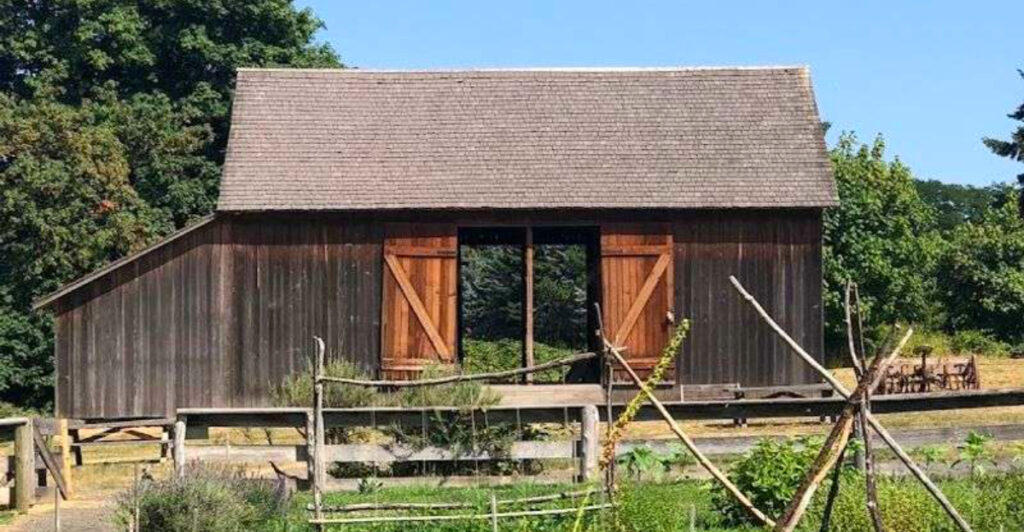
There is a quiet stretch of land along the Willamette River in Oregon where American history quietly rooted itself into the soil long before most people were paying attention. A group of settlers gathered here in 1843 and cast votes that would shape the entire Pacific Northwest.
That vote created the first American provisional government west of the Rocky Mountains, and the place where it happened is still open to visitors today. Champoeg State Heritage Area in St. Paul, Oregon, is part living museum, part campground, and part nature trail, and it rewards every type of visitor who shows up curious and ready to explore.
The Historic Ground Beneath Your Feet
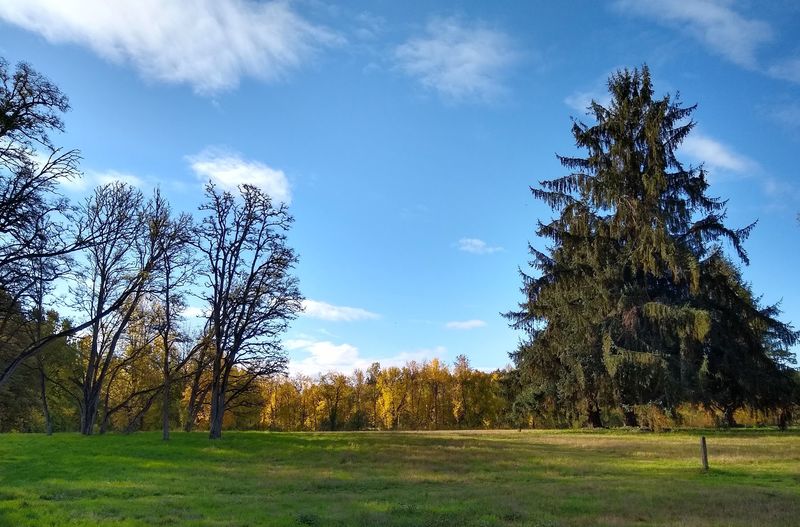
Few state parks carry the weight of a founding moment, and Champoeg State Heritage Area does exactly that. The park sits at 8239 Champoeg Road NE, St. Paul, OR 97137, right along the banks of the Willamette River in the heart of the Willamette Valley.
On May 2, 1843, settlers gathered at this very location to vote on whether to form an American provisional government. The vote passed by a narrow margin, and that decision set the wheels in motion for Oregon to eventually become a U.S. state.
The park is open daily from 8 AM to 5 PM, and you can reach the visitor center by calling 1-800-551-6949. A day-use fee applies, but the access to that kind of layered history makes the cost feel like a bargain.
The landscape itself feels almost reverent, with open meadows, shaded trails, and a river view that has changed very little in spirit since the 1840s. History does not always announce itself loudly, but here it hums steadily beneath every step you take.
The 1843 Vote That Changed Everything
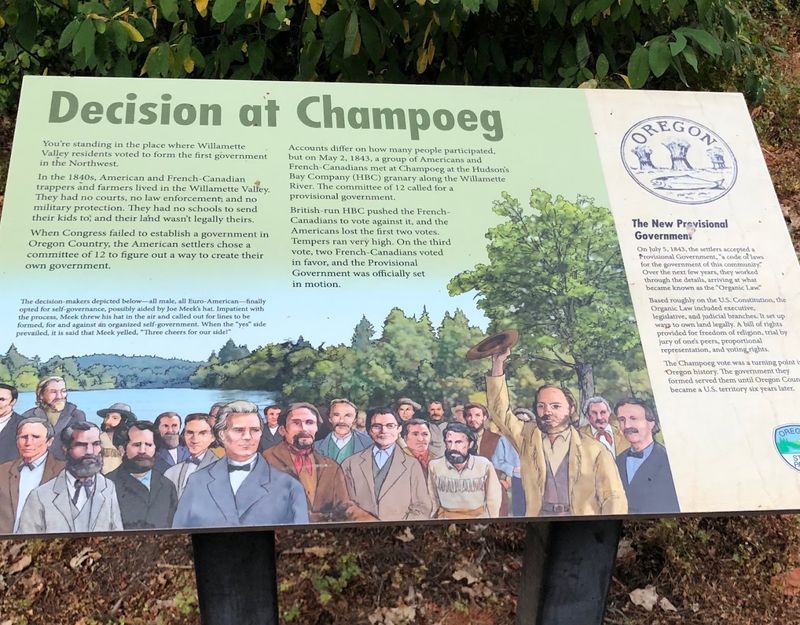
Not every vote reshapes a continent, but the one that happened at Champoeg in 1843 came remarkably close. A mixed group of French-Canadian settlers, American pioneers, and mountain men gathered at this site to decide whether the region would align with the United States or remain under the informal rule of the Hudson’s Bay Company.
The final tally was 52 in favor of forming an American provisional government and 50 opposed. That slim two-vote margin is one of the most consequential margins in Western American history.
The decision essentially laid the legal and political foundation for what would become the Oregon Territory and, eventually, the state of Oregon itself. It was a grassroots act of self-governance at a time when no formal U.S. authority existed this far west of the Rockies.
A monument on the park grounds marks the spot where that vote took place. Standing next to it, you get a very real sense of how ordinary people, not generals or presidents, can quietly redirect the course of history with a simple show of hands.
The Visitor Center and Museum Experience
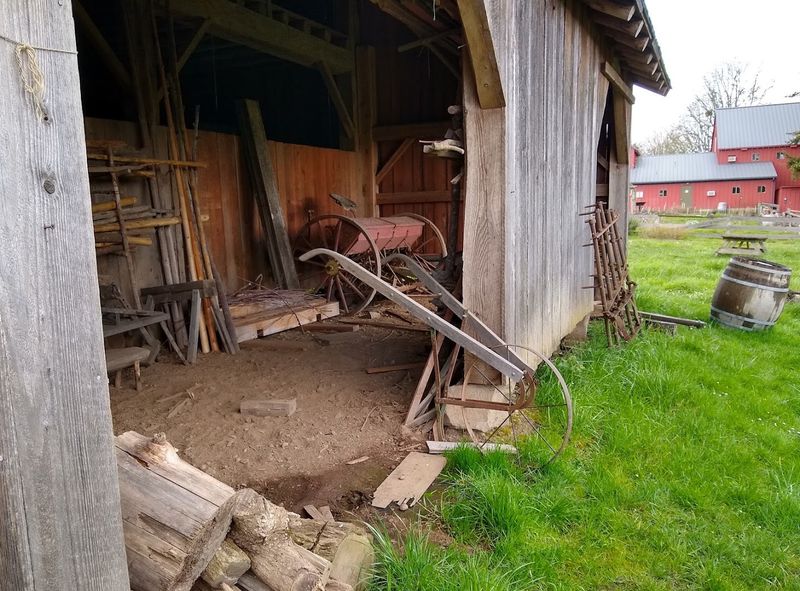
Right at the park entrance, the visitor center greets you with a well-curated collection of historical displays and pioneer-era artifacts. The exhibits walk you through the story of the Kalapuya people who originally inhabited this valley, the French-Canadian fur traders who settled nearby, and the American pioneers who arrived via the Oregon Trail.
The space is thoughtfully organized, and the information is presented clearly enough that kids can follow along without glazing over. Families often spend a solid hour inside before even hitting the trails.
The gift shop attached to the center carries a nice selection of Oregon-themed items, books about regional history, and small souvenirs that feel genuinely connected to the place rather than mass-produced trinkets. Staff members are knowledgeable and easy to talk to, which makes a real difference when you have questions.
Several additional educational displays are scattered throughout the park grounds, so the learning does not stop when you step outside. The visitor center sets the tone for the entire visit by grounding everything you are about to see in real, documented history.
Trails Through Willows and Wide-Open Meadows
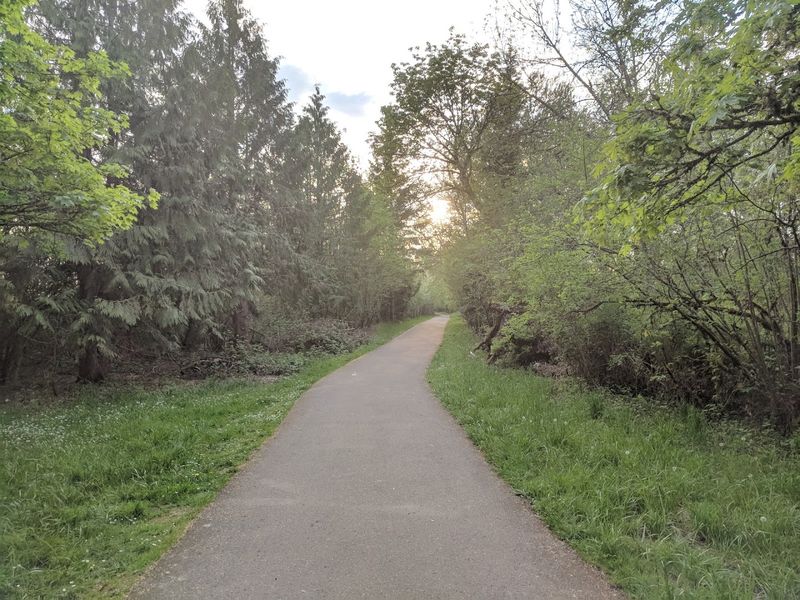
The trail network at Champoeg is one of the park’s most celebrated features, and once you get moving, it is easy to understand why visitors keep coming back. Most of the paths are paved and flat, making them accessible for walkers, joggers, cyclists, and families pushing strollers without any real struggle.
The trails wind through open meadows, shaded tree corridors, and stretches that run parallel to the Willamette River. Bird sounds follow you almost everywhere, and ground squirrels dart across the path with a confidence that suggests they know exactly who owns this place.
One particularly rewarding route leads to the Butteville Store, a historic building that now operates as a cafe with a lunch menu and homemade ice cream. The round trip is gentle enough that even younger kids handle it without much complaint.
Trail conditions vary by season, and some overgrowth has been noted in certain areas, so wearing closed-toe shoes is always a smart call. The views of the river from the trail edges are quietly stunning, especially on a clear morning when the light hits the water at just the right angle.
Camping Options for Every Style of Traveler
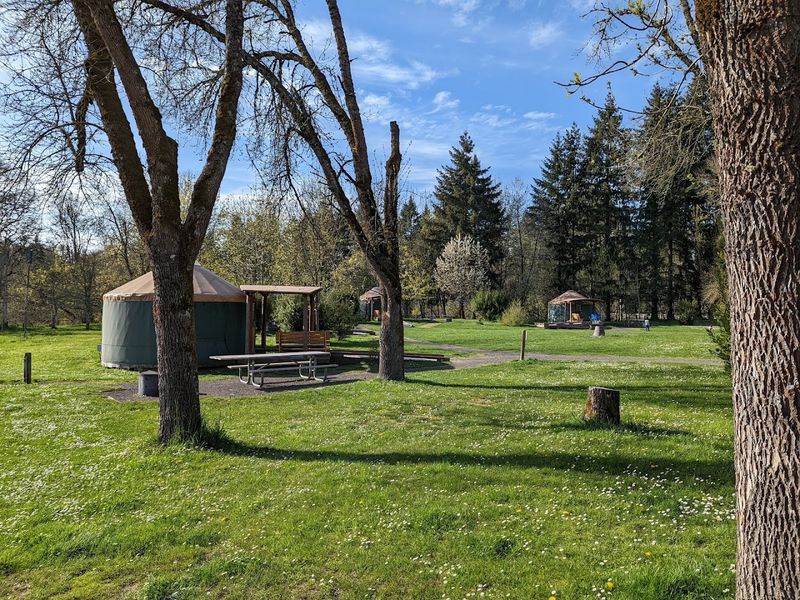
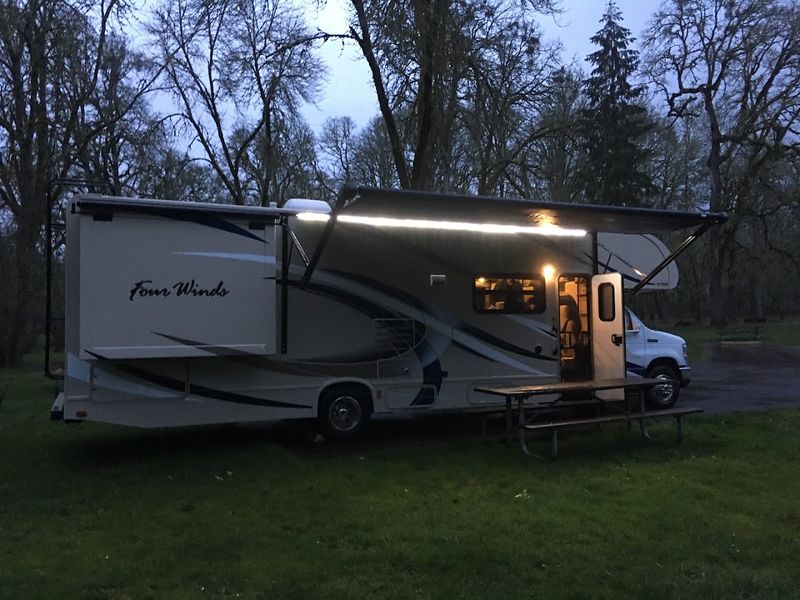
Champoeg offers a surprisingly wide range of overnight options that accommodate everything from minimalist tent campers to RV travelers who prefer full hookups and level ground. The campground is divided into two main loops, each with its own personality.
The A Loop is woodsy and kid-friendly, with sites tucked under tree cover and a more social atmosphere. The B Loop sits at the edge of a large open meadow and dog exercise field, offering more space, more privacy, and a quieter overall vibe.
Both loops have access to clean bathrooms and free showers, which is a detail that earns consistent appreciation from overnight guests.
Beyond tent sites and RV spots, the park also offers cabins and yurts for those who want a roof without setting up camp from scratch. Group tent sites near the river are available by reservation and work well for family reunions or organized outings.
Firewood is sold on-site, and the free dump station with two separate stations is a practical bonus for RV users. The park is open year-round, though winter availability is more limited, with tent sites generally reserved for the warmer months.
The Willamette River and the Dock
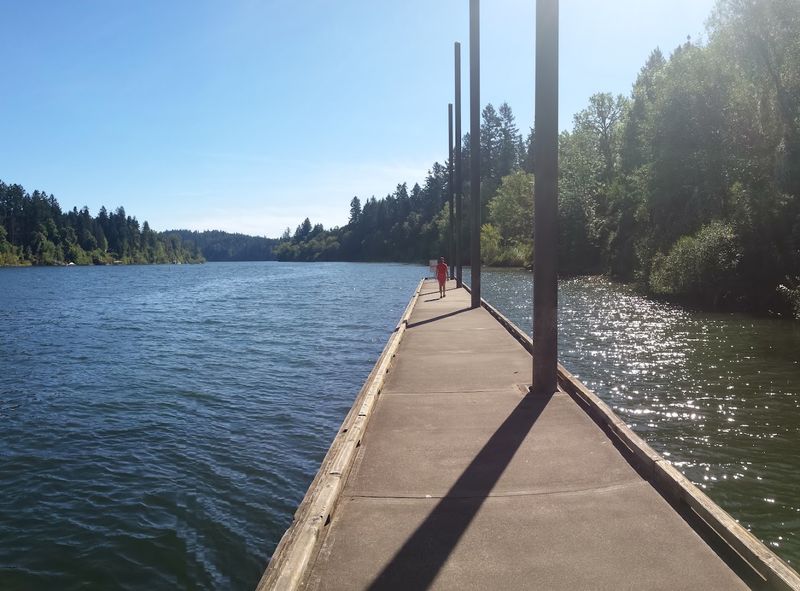
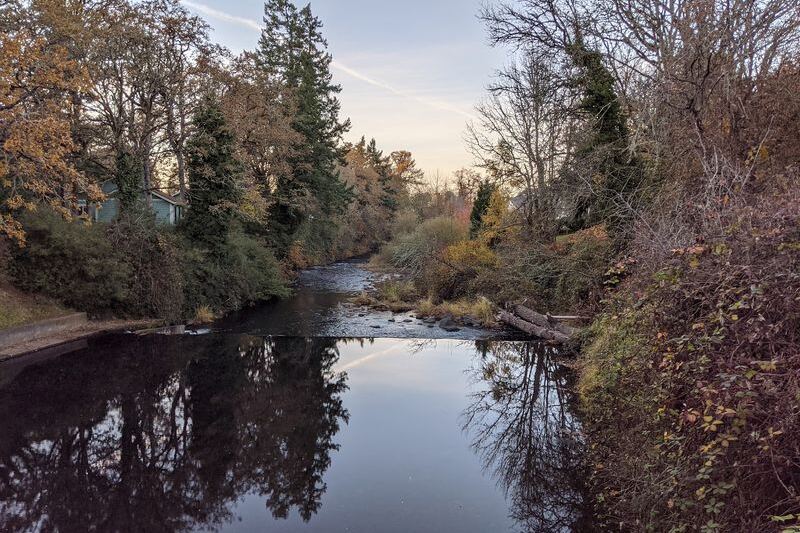
The Willamette River forms a natural boundary along one side of the park, and its presence shapes the whole atmosphere of the place. The water is visible from several trail sections, and the views it provides, especially during early morning hours, carry a kind of stillness that is hard to manufacture anywhere else.
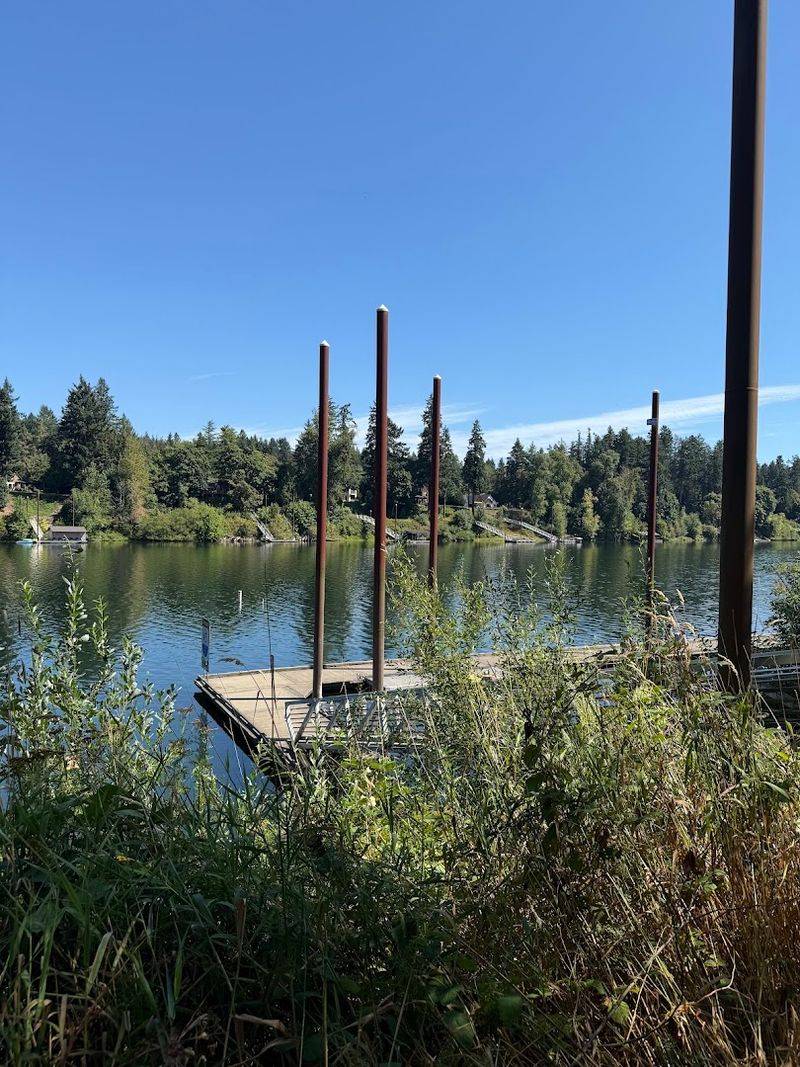
There is a boat dock within the park, which adds a nice dimension for visitors who arrive by water or want to watch the river traffic drift by. Signs throughout the area clearly indicate that swimming is not permitted, so the river functions more as a scenic backdrop than an active recreation zone.
The trail that runs closest to the riverbank is one of the most popular in the park for good reason. The combination of tree shade, river sounds, and relatively flat terrain makes it an easy favorite for both casual walkers and more dedicated hikers who just want a peaceful route.
Even without river access for swimming, the waterway adds an undeniable sense of place. The Willamette was central to the lives of the people who shaped this region’s history, and spending time near it at Champoeg makes that connection feel genuine rather than staged.
Cycling the Park Like a Local
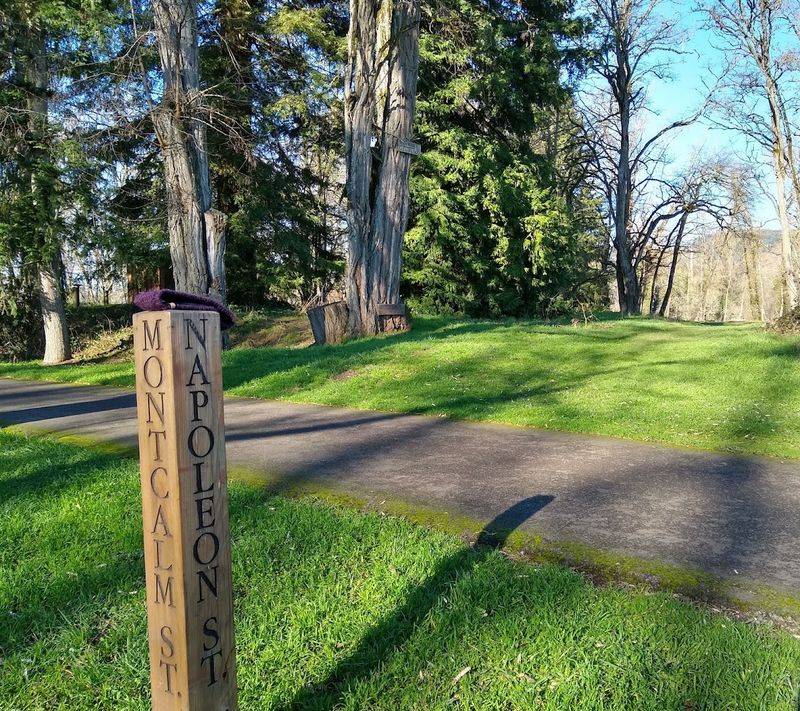
Champoeg is one of those rare parks where cycling is not just allowed but genuinely encouraged by the layout of the place. The paved trails are smooth, mostly flat, and wide enough that bikes and foot traffic can coexist without constant negotiation.
Families with younger riders find the park especially welcoming because the terrain does not demand any serious climbing or technical skill. A full day of trail riding here covers enough ground to feel satisfying without leaving anyone exhausted by mid-afternoon.
The route toward the Butteville Store is a particular favorite among cyclists because it combines scenic variety with a practical reward at the end. Arriving by bike and locking up outside for a lunch break or a scoop of homemade ice cream has become something of a park tradition for regulars.
Bike rentals are not available on-site, so bringing your own is necessary if you plan to ride. The park’s proximity to the Willamette Valley’s broader network of rural roads also makes it a natural starting point for cyclists who want to extend their ride beyond the park boundaries and explore the surrounding farmland at their own pace.
Birding, Wildlife, and the Quieter Joys of the Park
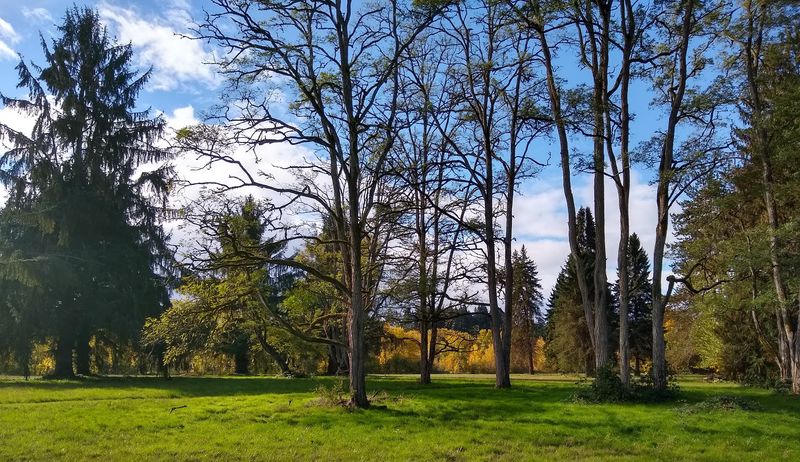
The park draws a steady stream of birding enthusiasts, and a single morning walk makes it obvious why. The mix of open meadow, riparian corridor along the Willamette, and wooded trail sections creates a layered habitat that supports a wide variety of bird species throughout the year.
Songbirds are almost constantly audible on the trails, and the open meadow areas attract raptors hunting for ground squirrels, which are themselves a reliable and entertaining presence throughout the park. Ground squirrels pop up along the path edges with such regularity that children tend to treat spotting them as a game.
The B Loop campground sits right next to the large dog exercise field and meadow, which provides an unexpectedly good vantage point for watching early morning wildlife activity. Visitors who hang hammocks in the shade and simply sit quietly report that the park rewards patience with a steady parade of small natural moments.
No special equipment is required to enjoy the wildlife here, though a basic pair of binoculars adds a lot to the birding experience. The park’s natural diversity is one of those understated qualities that reveals itself gradually the more time you choose to spend outdoors rather than moving through quickly.
The Butteville Store and Nearby Exploration
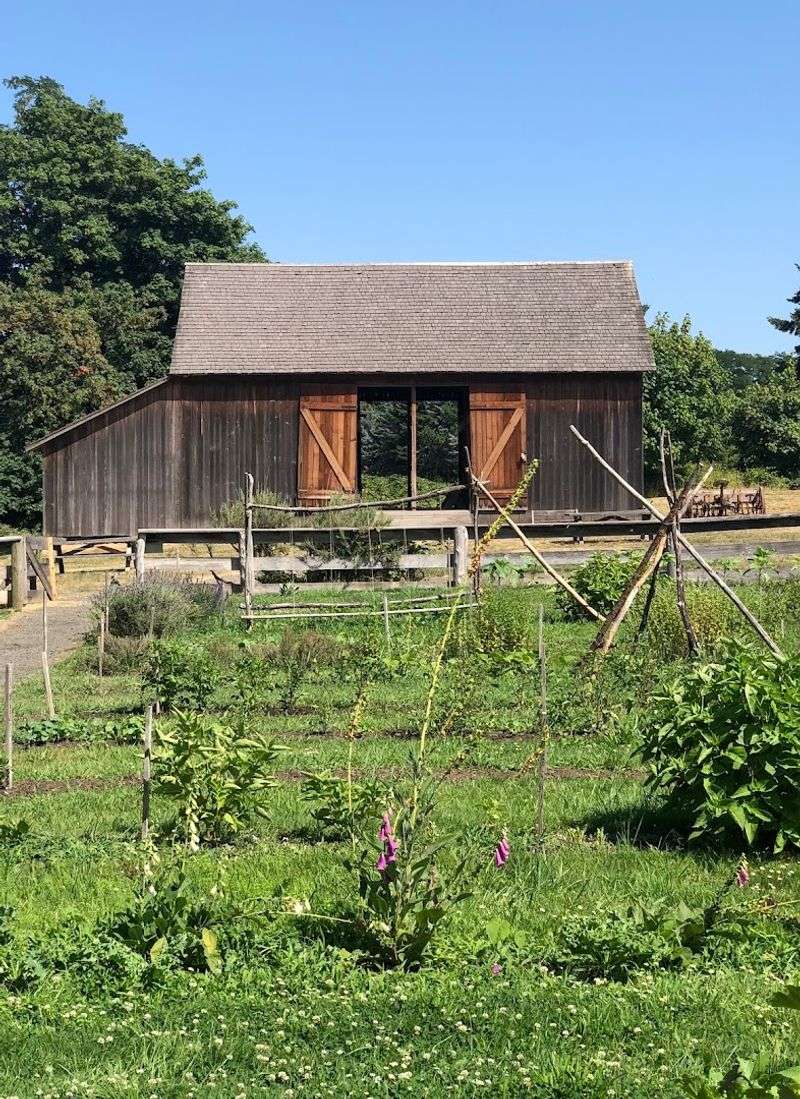
One of the most charming side trips from Champoeg is the roughly one-mile trail that leads to the Butteville Store, a historic building that sounds like a general store but functions as a small cafe with a lunch menu and homemade ice cream on offer. The name is a little misleading, but the food makes up for any confusion.
The building itself has genuine historical character, and stopping there mid-hike gives the outing a clear destination rather than a vague wander. The ice cream earns enthusiastic mentions from visitors of every age group, which is a reliable sign that it delivers.
The trail connecting Champoeg to Butteville runs through pleasant scenery and stays accessible for most fitness levels. It is the kind of route that feels like a reward in itself before you even arrive at the destination.
The broader area surrounding the park also offers additional points of interest for those willing to venture slightly beyond the park boundaries. The rural roads and farmland of the Willamette Valley provide a gentle, unhurried backdrop that complements the park’s own atmosphere without requiring much planning to enjoy.
Picnic Areas, Group Sites, and Family-Friendly Spaces
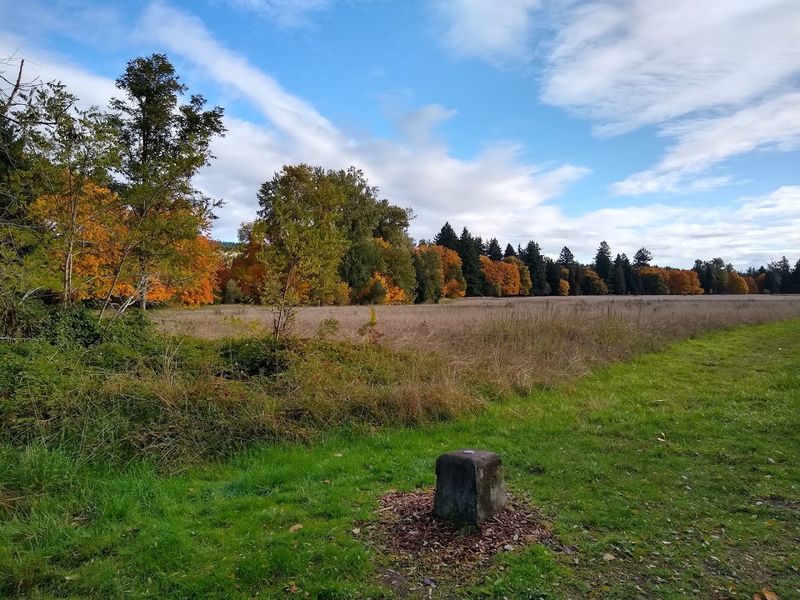
Champoeg takes picnicking seriously, and the infrastructure backs that up. The park has multiple picnic areas spread across its grounds, including covered group shelters that can be reserved for larger gatherings like birthday parties, retirement celebrations, or family reunions.
The open meadow areas near the group sites give kids room to run around without any real concern about traffic or hazards. A playground near the campground adds another layer of entertainment for younger visitors who need something structured to do between trail walks.
The park’s cleanliness is consistently noted by visitors, with well-maintained facilities and bathrooms that are stocked and functional throughout the day. A day pass provides access to all of the picnic and day-use areas, making it a practical option for families who want to enjoy the park without committing to an overnight stay.
The covered banquet area near the river is a particularly appealing option for groups, combining the convenience of a sheltered space with a natural setting that no indoor venue can replicate. Reservations for group sites should be made in advance, especially during summer weekends when demand is reliably high.
Disc Golf, Fishing, and Active Recreation
Beyond hiking and biking, Champoeg keeps active visitors entertained with a disc golf course that winds through the park’s varied terrain. The course uses the natural landscape to create a layout that is fun for casual players and engaging enough for those who take the sport more seriously.
Fishing is another option at the park, with the Willamette River providing the backdrop for anyone who wants to cast a line and spend a few quiet hours watching the water. Oregon fishing regulations apply, so a valid license is required before you get started.
The combination of disc golf, fishing, cycling, and hiking means that a single visit to Champoeg can look completely different depending on who you bring along. A group of teenagers might spend the whole day on the disc golf course while their parents walk the river trail and the younger kids work through the playground.
That kind of flexibility is genuinely rare in a state park, and it is one of the reasons Champoeg earns repeat visits from families who live nearby and return season after season. There is always something new to try or a familiar trail to revisit with fresh eyes.
Planning Your Visit and Making the Most of It
A well-planned visit to Champoeg starts with a few simple decisions. The park is open every day from 8 AM to 5 PM, and arriving early gives you the best chance of securing a picnic spot, enjoying the trails before afternoon crowds arrive, and catching the park at its most photogenic in the morning light.
Day passes are available at the entrance, and the fee is reasonable given everything the park offers. Overnight campers should reserve sites in advance through the Oregon State Parks website, particularly for summer weekends and holiday periods when the campground fills quickly.
Pet owners will be glad to know the park is pet-friendly, with leash rules in effect throughout the grounds. The large dog exercise field near the B Loop campground gives dogs a chance to stretch out properly, which makes the whole trip easier for everyone involved.
The park phone number is 1-800-551-6949 if you need to confirm conditions or ask specific questions before arriving. One last tip worth remembering: the park closes at 5 PM sharp, so building in enough time to finish your last trail loop and get back to the car before closing keeps the day ending on a smooth, unhurried note.
Share this story