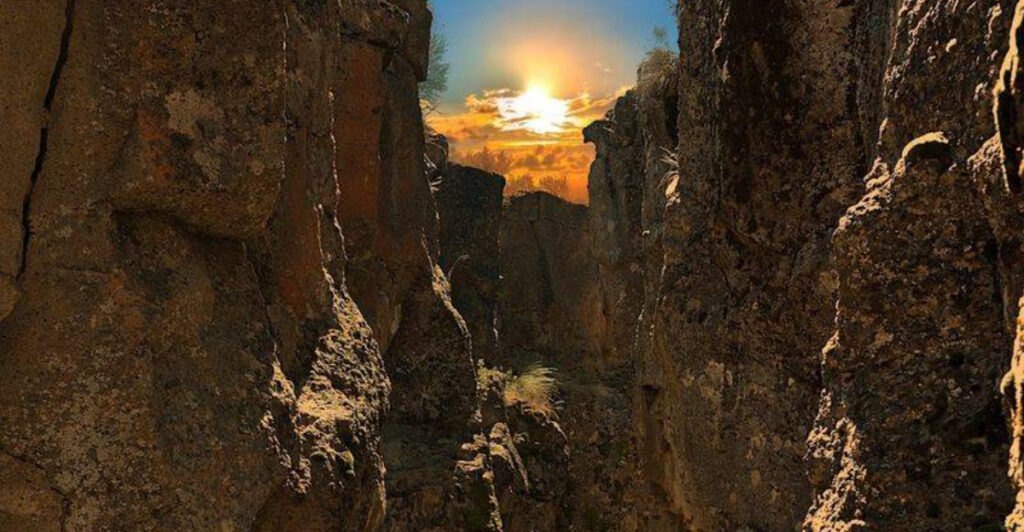
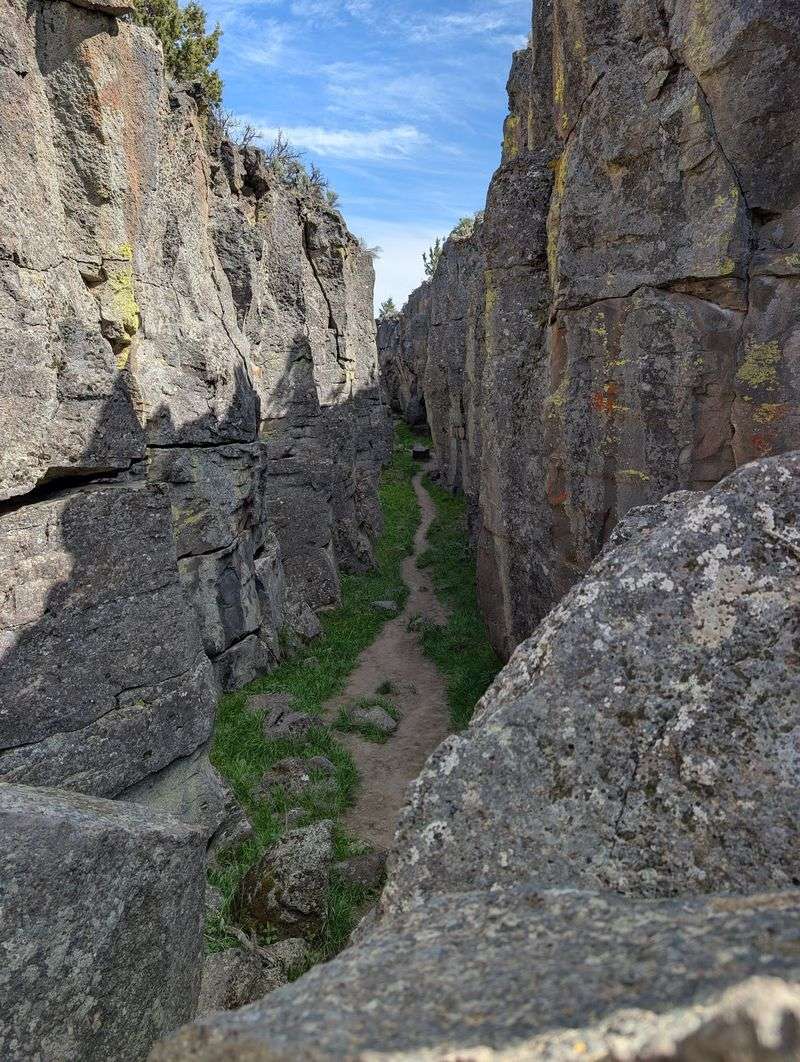
There is a place in the high desert of Oregon where the earth simply split open thousands of years ago and never closed back up. The result is a two-mile-long volcanic fissure that drops as deep as 70 feet, creating a narrow canyon you can actually walk through.
The air inside is noticeably cooler than the scorching desert above, and the basalt walls rise on both sides like something out of a science fiction film. Getting there requires navigating miles of rough gravel road, but every bump is absolutely worth it once you drop into that shadowy crack and realize the ground beneath Oregon has a wild side most people never see.
What and Where Is Crack-in-the-Ground
Few places in the American West carry a name as perfectly accurate as this one. Crack-in-the-Ground is a volcanic fissure located near Christmas Valley in Lake County, Oregon 97638, managed by the Bureau of Land Management.
The fissure stretches roughly two miles in length and plunges as deep as 70 feet in certain sections. It formed thousands of years ago when lava flows cooled and contracted, leaving behind this dramatic split in the earth’s surface that never filled back in.
The site sits within the high desert of south-central Oregon, a region known for its wide open skies and volcanic geology. To reach the trailhead, visitors drive several miles on gravel and dirt roads that can be rough, especially the last stretch before the parking area.
A vault restroom and a few shaded benches near the trailhead make the arrival a little more comfortable. The hike from the parking lot to the fissure entrance is short and easy, so the adventure begins almost immediately after you step out of your vehicle.
The Geology Behind the Crack
About 10,000 years ago, a series of volcanic events reshaped this corner of Oregon in ways that are still visible today. The Four Craters Lava Field nearby is part of the same volcanic system that created the fissure, and the entire area tells a story written in cooled lava and fractured basalt.
When thick lava flows cool rapidly, the outer crust contracts while the interior is still moving. This process can leave behind tubes, voids, and cracks, and in this case, it left behind a fissure long enough to hike through.
What makes this crack particularly special is that it has remained open. In most environments, erosion, sediment, and vegetation slowly fill these features over time.
Here, the dry desert climate has preserved it almost exactly as it formed.
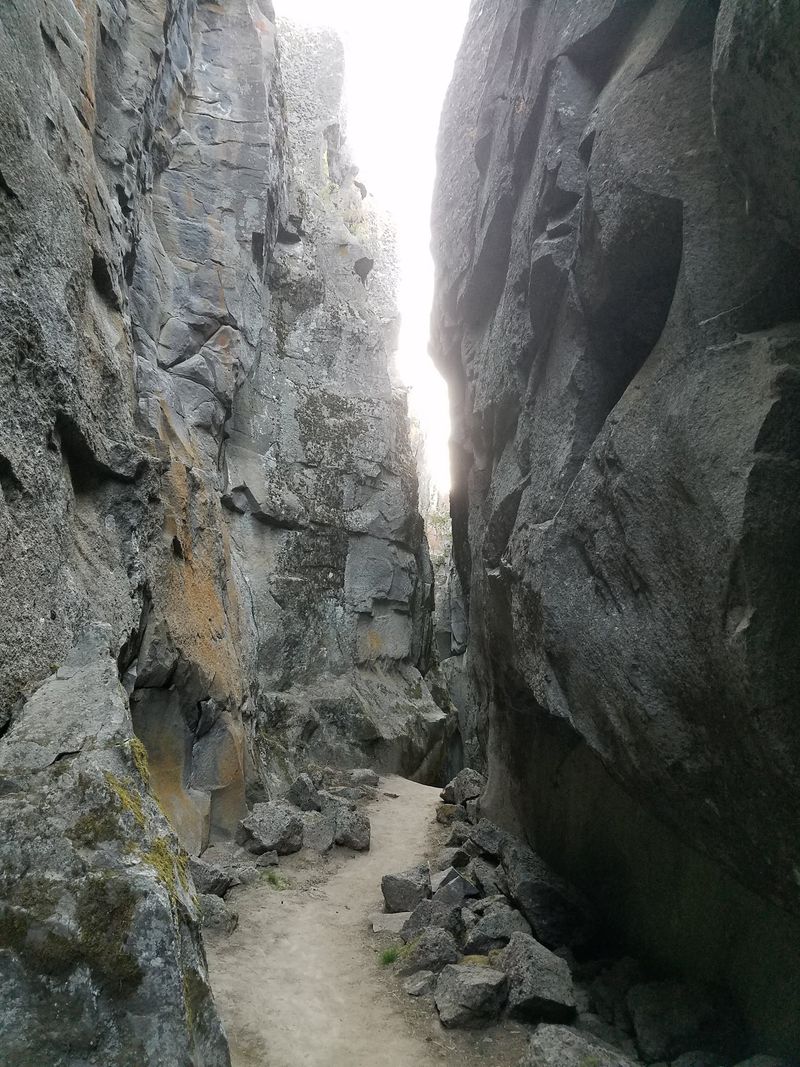
The walls are composed of dark basalt, a fine-grained volcanic rock that forms when lava cools quickly. Running your hand along those walls, you can feel the texture of ancient geological forces frozen in place, a reminder that the ground beneath Oregon has been restless for a very long time.
The Temperature Drop That Surprises Every Visitor
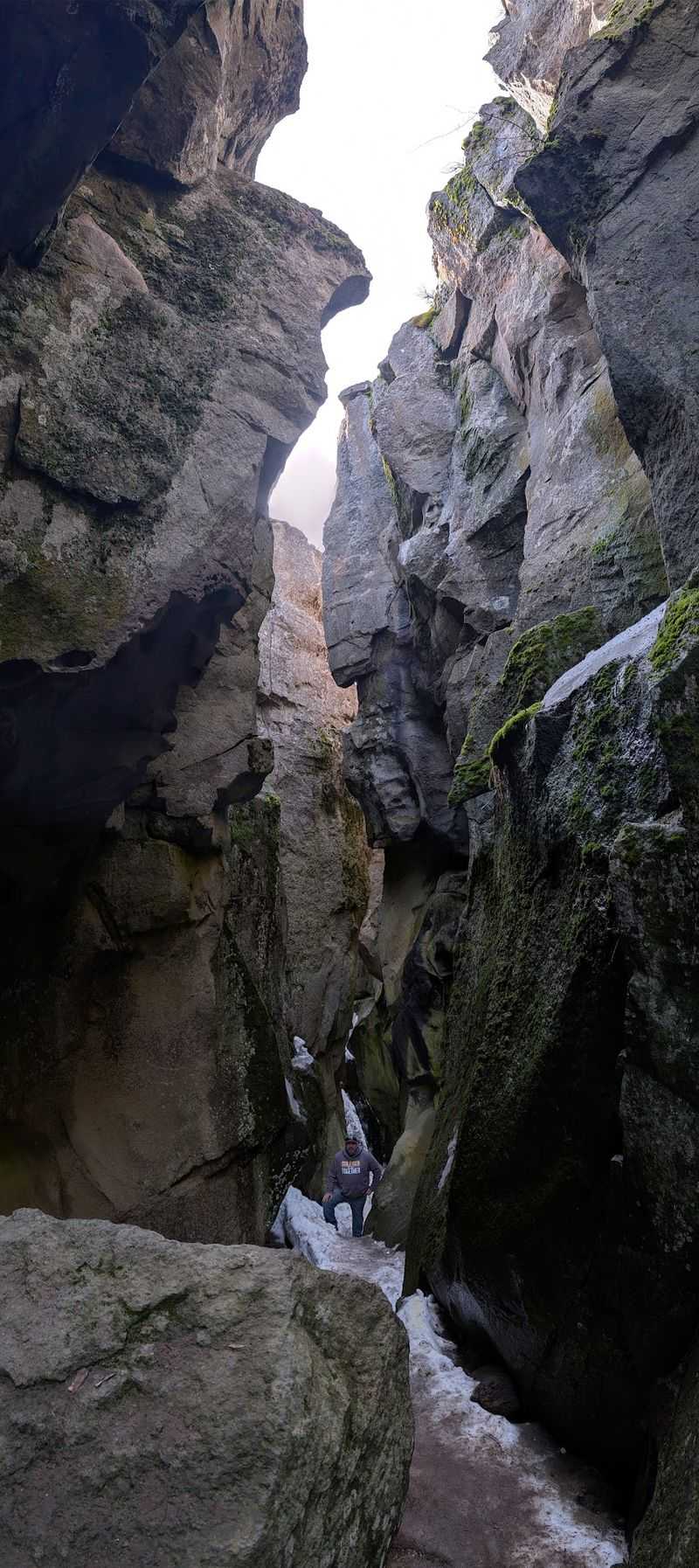
One of the most talked-about features of this place has nothing to do with the views. On a summer day when the Oregon high desert bakes at 95 degrees or higher, the temperature inside the fissure can drop by 30 degrees or more.
The narrow walls block direct sunlight for most of the day, and the shaded basalt stays cool even when the surface above is sweltering. Some visitors report getting goosebumps the moment they descend into the deeper sections, which is a genuinely shocking contrast after the hot walk from the parking lot.
This cooling effect makes Crack-in-the-Ground a surprisingly refreshing summer hike. Bring a light layer if you tend to get cold easily, because the temperature shift can catch you off guard.
In winter and early spring, the fissure can retain ice and frost long after the surrounding desert has warmed up. The deep sections see so little sunlight that frozen patches have been found well into spring, making each season feel like a slightly different version of the same extraordinary place.
What the Hike Actually Looks Like
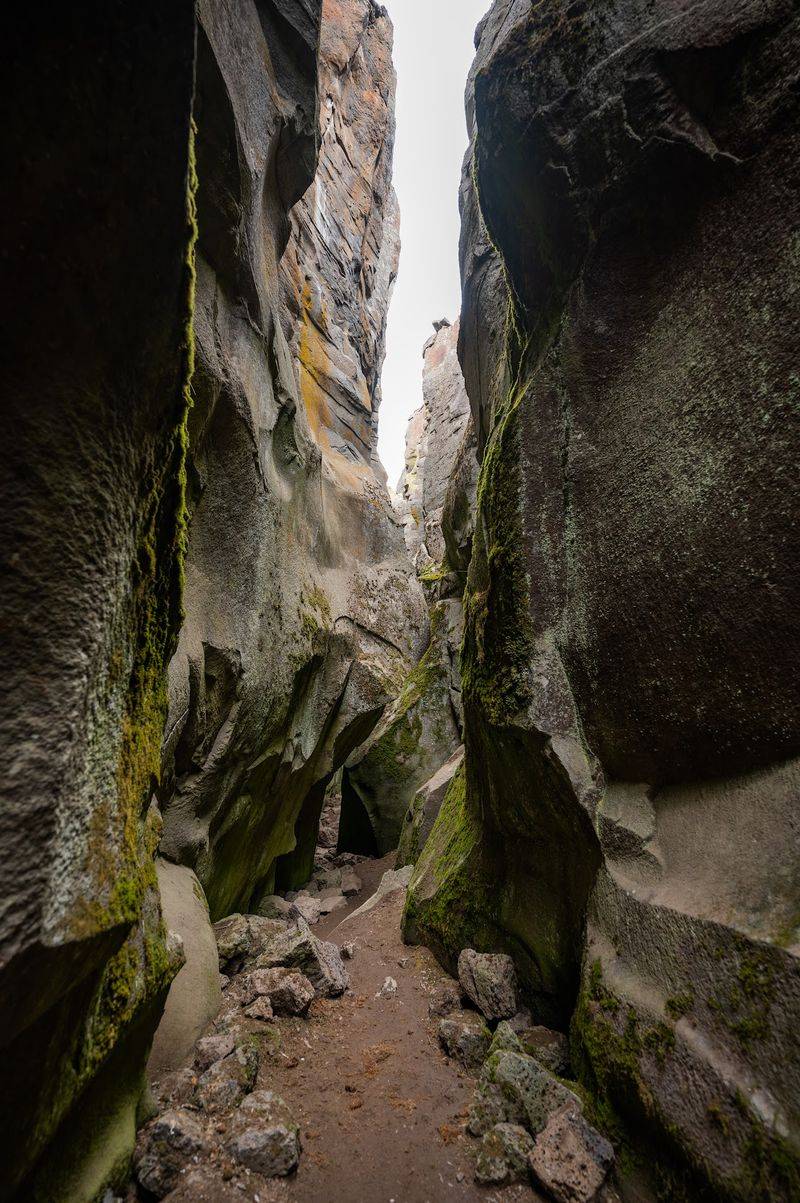
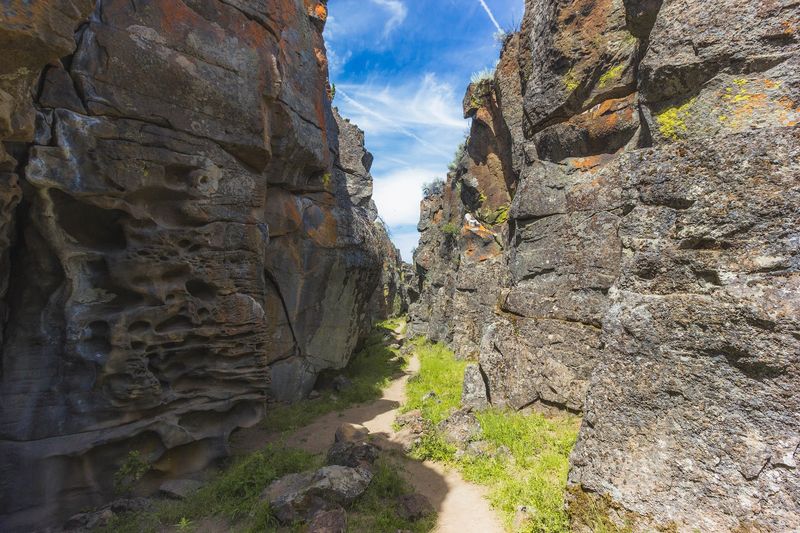
The trail system at Crack-in-the-Ground is a roughly two-mile loop, and the experience inside the fissure itself is unlike any standard hiking trail. The floor of the crack is uneven, scattered with rocks and boulders that require careful footing and occasional scrambling.
Some sections are wide enough to walk comfortably, while others narrow down significantly, creating what many visitors describe as labyrinth-like passages. The twists and turns mean you rarely see more than a short distance ahead, which keeps the sense of discovery alive throughout the hike.
In certain spots, you will need to climb over or around rocks to continue forward. The difficulty level is generally moderate, suitable for most healthy adults and older children, though the footing can be slippery when wet or when moss is present on the rocks.
The hike rewards patience and curiosity. Those who take their time, look up at the narrow strip of sky above, and explore the side passages tend to get far more out of the experience than those rushing through.
A signed guest book near the entrance is a fun tradition worth adding your name to.
Wildlife and Nature Inside the Fissure
The fissure and its surrounding high desert landscape support a surprising variety of wildlife. Jackrabbits are commonly spotted near the trailhead and along the approach road, darting across the dirt with impressive speed.
The occasional hawk circles overhead, riding the thermal currents that rise from the heated desert floor.
One visitor group even spotted a young hawk that had fallen from a nest near the fissure entrance, a reminder that the crack serves as habitat for birds that nest in its rocky walls. The dark basalt provides shelter and nesting spots for species that thrive in rocky, arid environments.
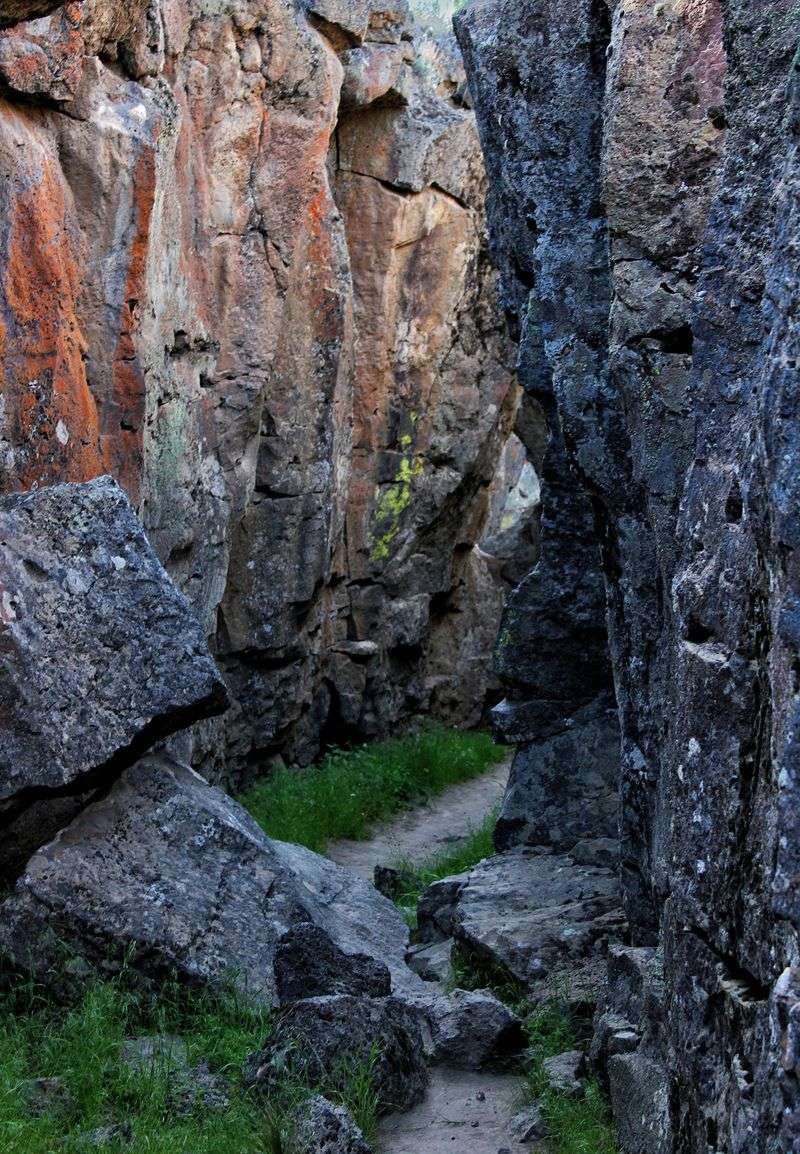
Inside the fissure itself, mosses and small plants cling to the damp lower sections where sunlight barely reaches. These tiny ecosystems exist because the crack traps moisture and creates a microclimate completely different from the surrounding desert.
Dogs are welcome on the trail, and many visitors bring their pets along for the adventure. The cool interior makes the hike comfortable for animals too, though leashes and attentive owners are always a good idea on rocky, uneven terrain where footing can be tricky for four-legged hikers as well.
The Road to Get There
Getting to Crack-in-the-Ground is part of the experience, and not always the comfortable part. The approach involves several miles of unpaved road, including sections of washboard gravel that rattle everything inside your vehicle with impressive enthusiasm.
The recommended route is via Crack-in-the-Ground Road off Route 31, rather than Northstar Road, which is known to be significantly rougher. Even on the recommended route, expect about seven to eight miles of bumpy road that rewards patience and penalizes anyone in a hurry.
Most standard passenger vehicles can make the drive as long as conditions are dry and the driver takes it slow. High-clearance vehicles and trucks handle the road more comfortably, but plenty of visitors have arrived successfully in regular sedans by simply easing through the rough patches.
After rain, the dirt sections can become muddy and more challenging, so checking conditions before heading out is a smart move. The drive itself passes through a beautifully empty stretch of Oregon high desert, and the wide open landscape gives you plenty of time to mentally prepare for the narrow world waiting at the end of the road.
Best Time of Year to Visit
Late spring and early fall tend to offer the most pleasant conditions for visiting. Temperatures are moderate at ground level, the roads are more likely to be dry and passable, and the crowds, while never overwhelming, are at their most manageable outside of peak summer weekends.
Summer visits are absolutely worthwhile, especially because the dramatic temperature contrast between the hot desert and the cool fissure interior becomes most noticeable during the hottest months. July and August visits when surface temps climb into the high 90s make the descent into the crack feel like stepping into a natural air conditioning system.
Winter is a different kind of adventure. Snow and ice can make the approach road treacherous, and the fissure itself may hold ice patches that require extra caution on already uneven terrain.
That said, a dry winter day can offer a beautifully quiet and photogenic visit.
No matter when you go, the site has no water available, so bringing enough to drink is essential. The combination of high altitude, dry air, and physical activity on rocky terrain means hydration is something to take seriously well before you arrive at the trailhead.
Photography Opportunities Inside the Fissure
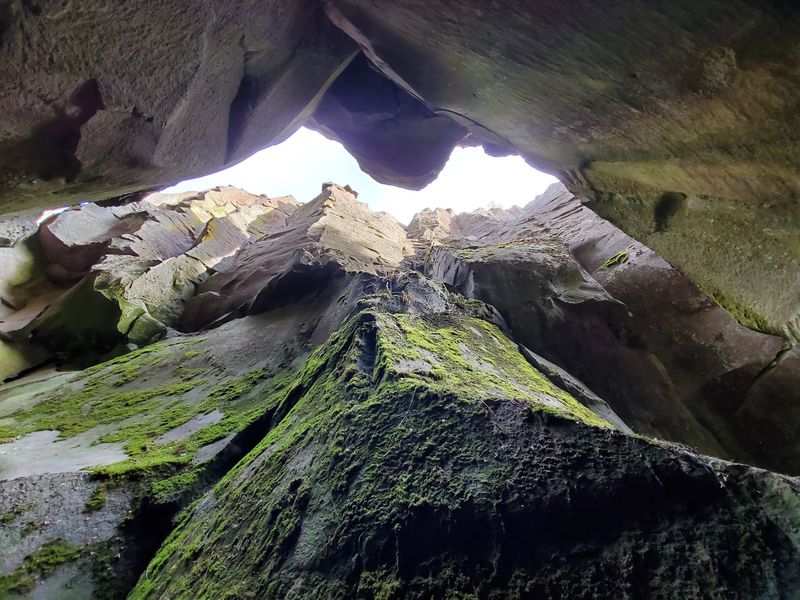
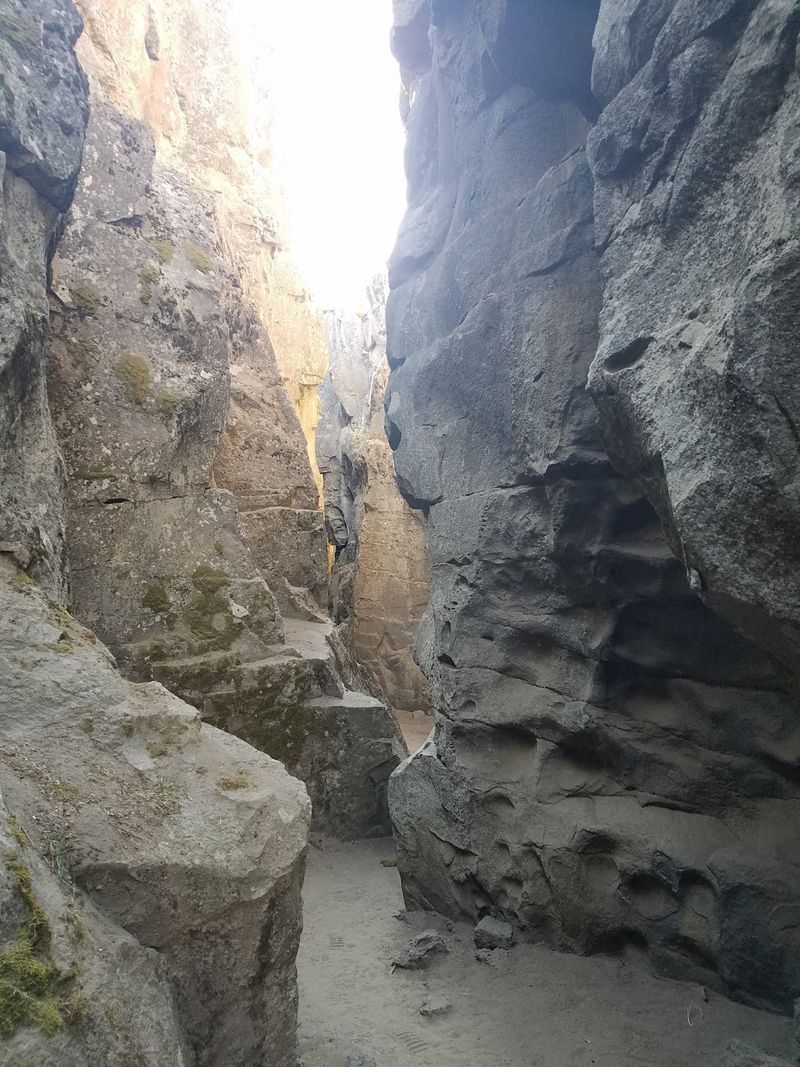
Photographers have a field day at this place, and the results can be genuinely striking. The narrow strip of sky visible from deep inside the fissure creates a natural framing effect that is almost impossible to replicate anywhere else.
The contrast between the dark basalt walls and the bright sky above produces dramatic light and shadow compositions, especially in the late morning and early afternoon when sunlight briefly reaches the lower sections. Golden hour photography from inside the crack, with warm light spilling down the walls, produces some of the most memorable shots.
The textures of the volcanic rock are endlessly interesting up close. Macro photography of the basalt surfaces, the mossy patches, and the small plants clinging to the walls reveals a detailed world that the wide landscape shots can miss entirely.
Wide-angle lenses work beautifully for capturing the scale of the walls rising above a lone hiker, conveying just how deep and narrow the fissure truly is. Smartphone cameras can capture excellent results in the brighter sections, though a camera with manual exposure settings helps in the darker, deeper passages where the lighting becomes more challenging and more rewarding to work with.
Camping Near the Fissure
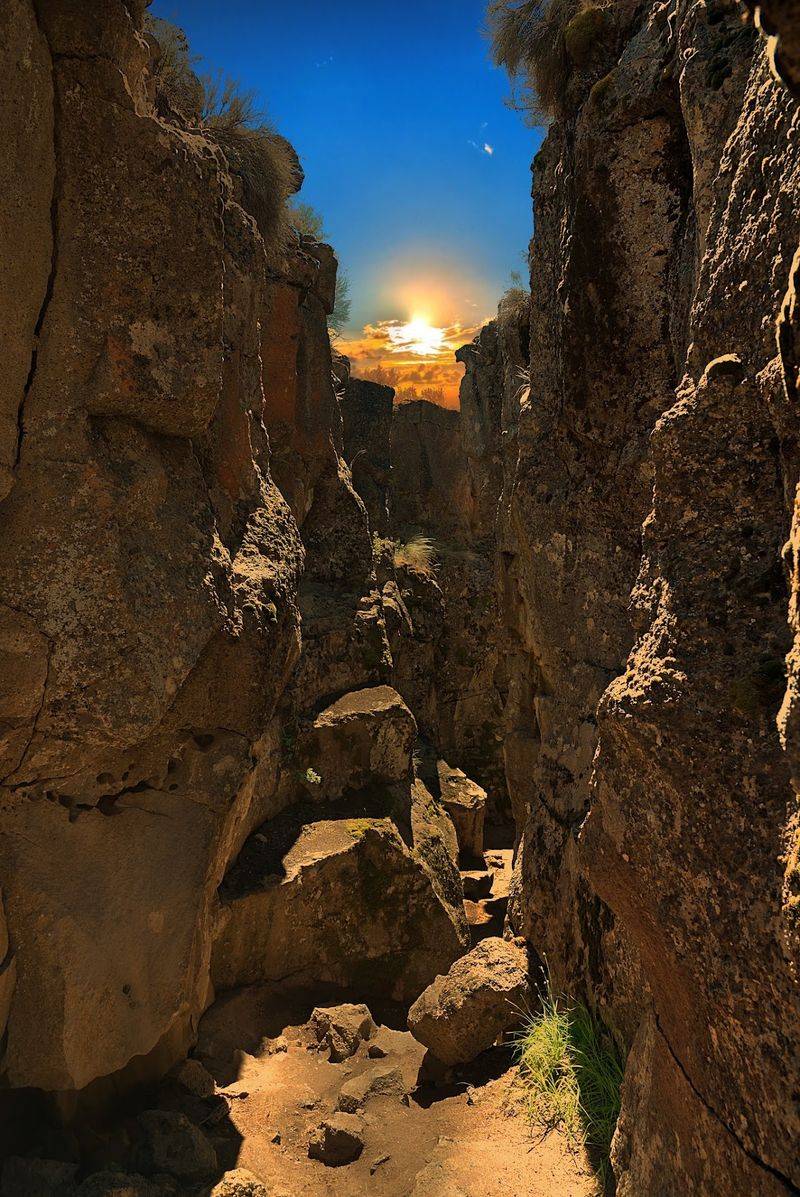
The area around Crack-in-the-Ground offers primitive camping for those who want to extend the adventure beyond a single day. The high desert setting means clear skies after dark, and the star gazing in this remote part of Oregon is genuinely spectacular on a cloudless night.
Dispersed camping is available in the surrounding BLM land, meaning you can set up camp without the structure of a developed campground. There are no hookups, no running water, and no camp store, so self-sufficiency is the name of the game out here.
Bringing more water than you think you need is the single most important preparation step for an overnight stay. The dry desert air and the physical activity of hiking the fissure can deplete your reserves faster than expected, and the nearest town is a significant drive away.
Waking up in the high desert before sunrise, with the fissure just a short walk from your tent, gives you the rare chance to visit the crack before any other hikers arrive. The early morning quiet in that narrow basalt corridor, with cool air and soft light, is a version of this place that most visitors never get to experience.
Tips for Making the Most of Your Visit
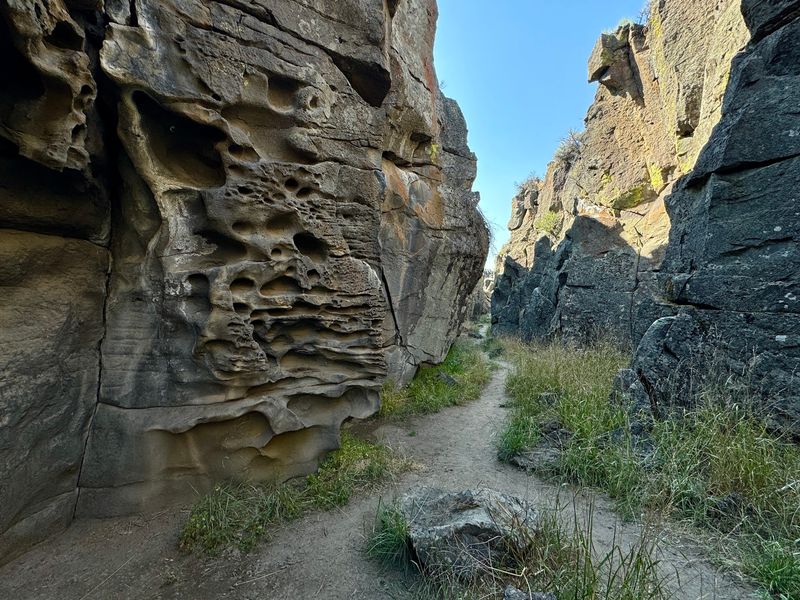
A few simple preparations make the difference between a smooth visit and a frustrating one. Sturdy closed-toe shoes with good grip are essential because the floor of the fissure is rocky, uneven, and can be slippery in sections where moisture collects near the walls.
Carry at least two liters of water per person, more in summer. The site has no water source, and the combination of sun exposure on the approach trail and physical exertion inside the crack adds up quickly.
Snacks are also worth packing since there are no services of any kind at the trailhead.
Check your vehicle before heading out. The rough approach road can be hard on tires, and being stranded on a remote Oregon dirt road with no cell service is a situation worth avoiding through basic preparation.
A full tank of fuel before leaving the nearest town is a smart habit.
Go to the right when you first enter the fissure, as that direction leads into the most impressive and deepest sections. Take your time, watch your step, and resist the urge to rush through.
The crack rewards those who slow down and pay attention to the remarkable world the earth left behind when it split open all those years ago.
Share this story