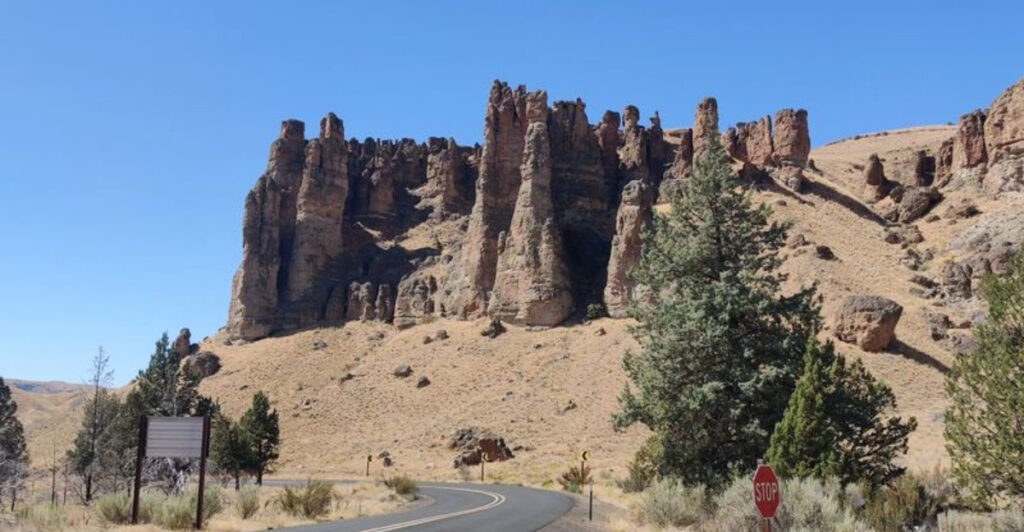
There is a trail in Oregon where the rocks beneath your feet are older than most things you can imagine, and the fossils embedded in them have been waiting quietly for around 50 million years. The Clarno Arch Trail, part of the John Day Fossil Beds National Monument near Fossil, Oregon, is one of those rare places that makes you feel genuinely small in the best possible way.
The towering Palisades rise above you like a natural fortress, and the Trail of Fossils nearby puts actual prehistoric plant remains right in front of your eyes. This is not a crowded tourist trap with long lines and overpriced souvenirs.
It is a quiet, wide-open stretch of high desert Oregon where curious hikers, families, and anyone who has ever wondered what the world looked like before humans existed can find something truly worth the drive.
Where the Trail Begins: Location and Access
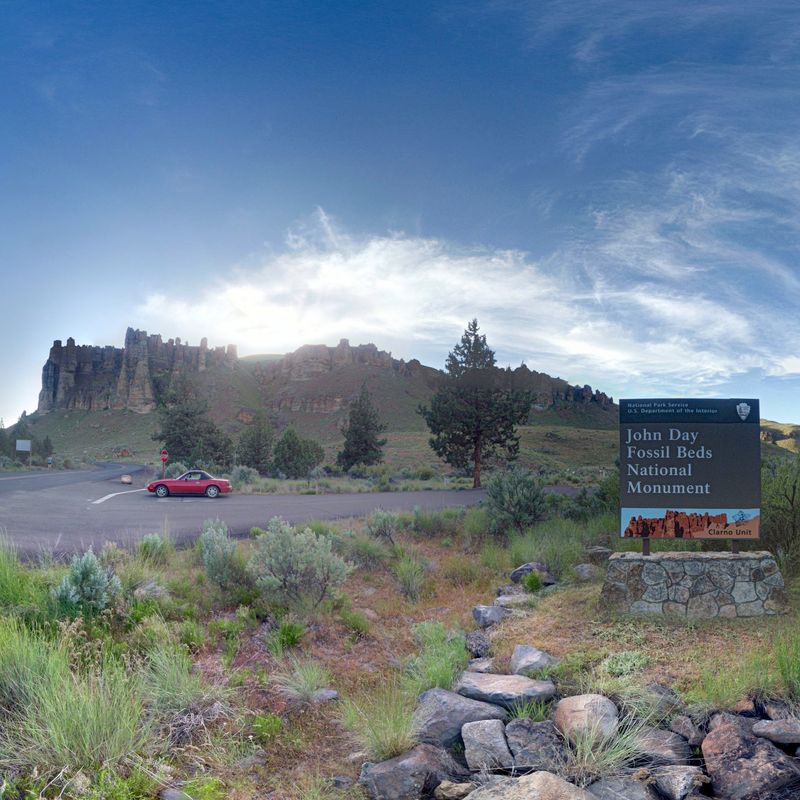
The Clarno Unit sits along Highway 218, roughly 16 miles southwest of the small town of Fossil, Oregon, in Wheeler County. The full address is associated with the broader monument at Fossil, OR 97830, and you can reach the park staff at (541) 987-2333 or plan your visit at the official NPS page.
The parking area is paved, which is a welcome surprise given how remote this corner of Oregon feels. Covered picnic tables, restrooms, and even a free water source are available right at the trailhead, making it an easy stop whether you are on a day trip or passing through on the Journey Through Time Scenic Byway.
The park is open daily from 6 AM to 9 PM, so early risers and late-afternoon wanderers both have plenty of time to explore. Cell service is limited out here, so downloading offline maps beforehand is a smart move.
Gas stations are sparse along this route, so topping off your tank before arriving will save you a stressful situation on the drive back.
The Palisades: A Wall of Volcanic History
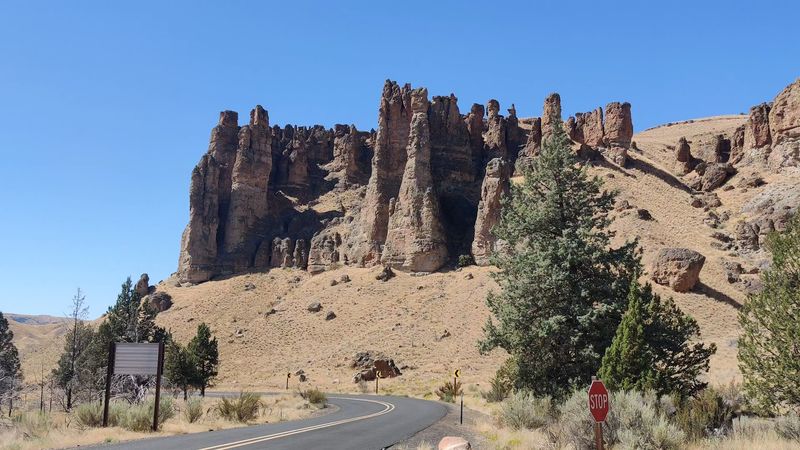
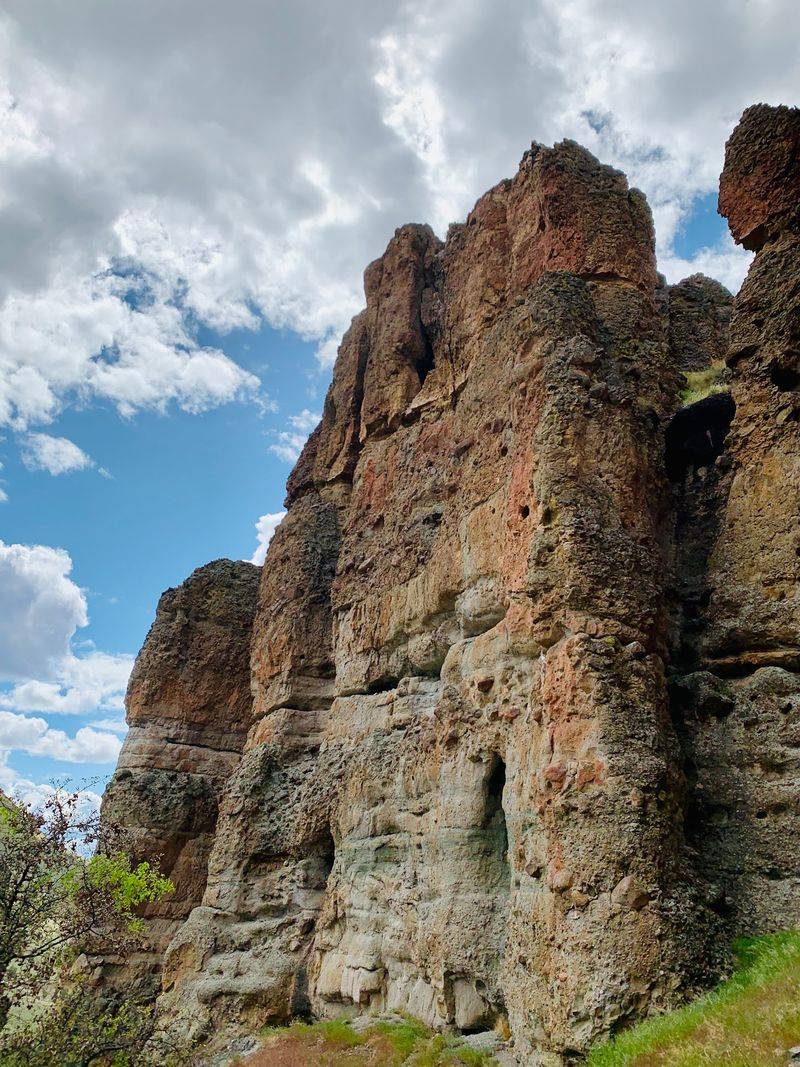
Before you even set foot on the trail, the Palisades stop you cold. These towering cliffs are made of ancient lahars, which are volcanic mudflows that swept through this region around 44 million years ago, burying entire forests and preserving them in stone.
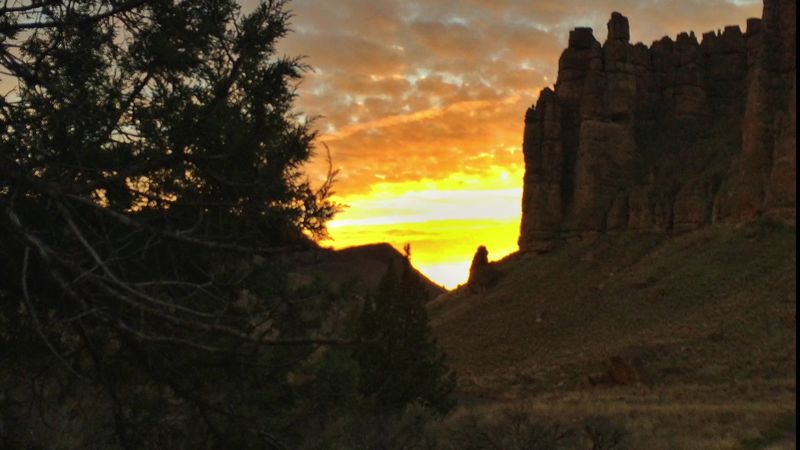
The colors shift depending on the time of day. Early morning light brings out deep oranges and pale yellows, while afternoon sun turns the rock face into something that looks almost painted.
Several visitors have compared the scenery to Bryce Canyon in Utah, and it is not hard to see why that comparison comes up.
Birds of prey circle the upper ledges regularly. Falcons have been spotted hovering along the cliff face before landing in nests tucked into the rock.
Mule deer and coyotes also move through this area, so keeping your eyes open while you hike rewards you with more than just geology. The Palisades are best photographed in the golden hour before sunset, when the shadows carve deep lines across every ridge and outcropping.
The Arch Trail: A Short Climb Worth Every Step
The Arch Trail is the more adventurous of the two main trails at the Clarno Unit, and it connects directly with the Geologic Time Trail at the base. The round trip covering all three trails from the parking lot comes in at just over two miles, which is very manageable for most fitness levels.
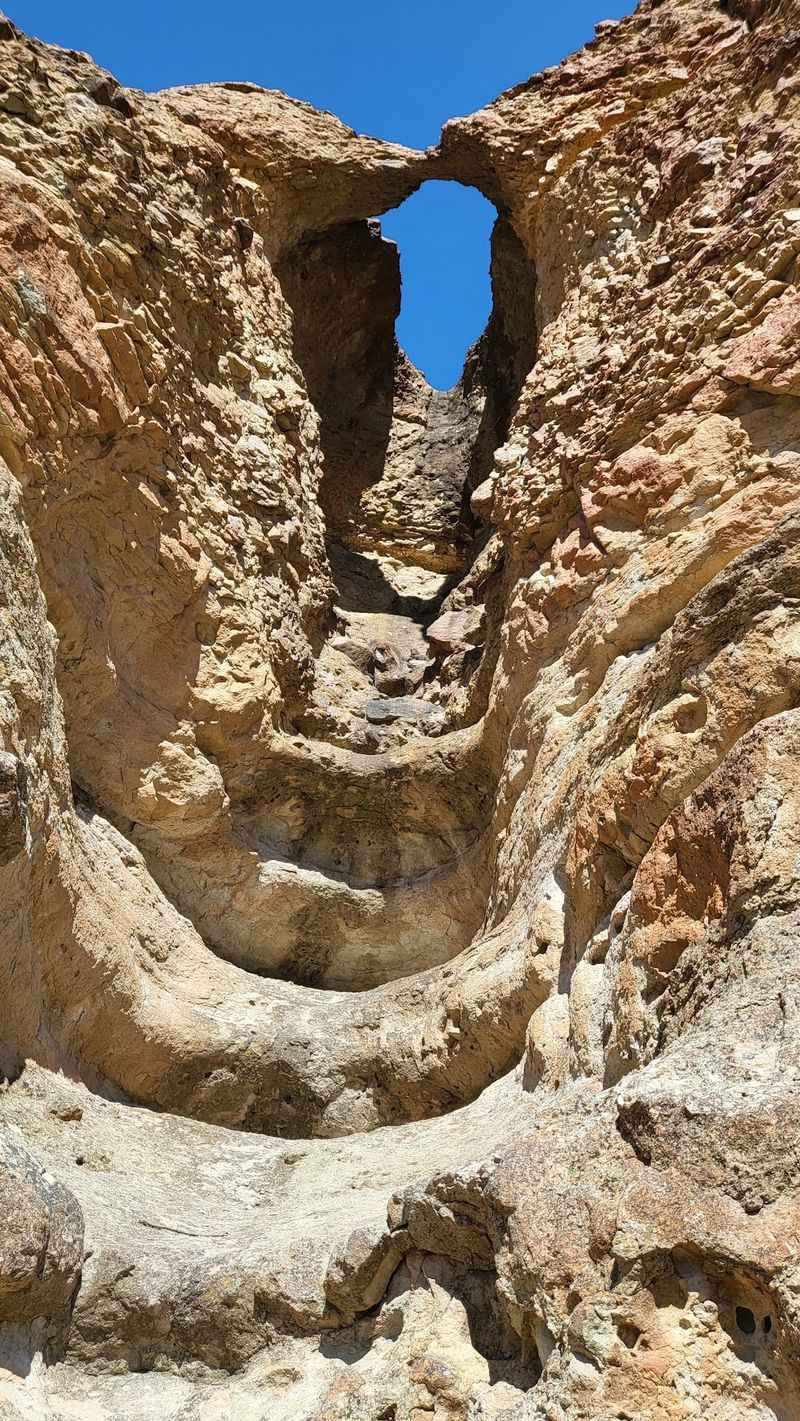
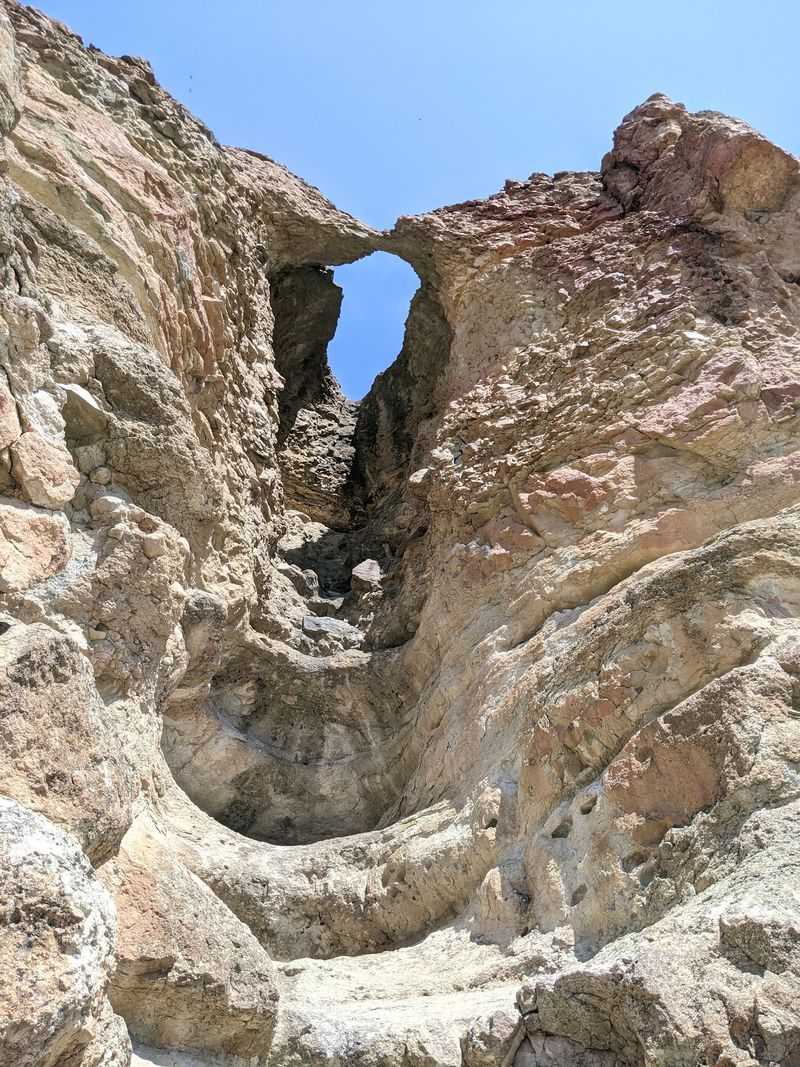
The trail climbs up through volcanic rock and desert scrub, and the footing requires a bit of attention on steeper sections. At the top, a natural stone arch frames a view of the valley below that feels genuinely earned.
It is a solid photo opportunity and a quiet moment that is hard to find at more crowded national parks.
The trail does not have heavy shade, so visiting early in the morning or during the cooler months of spring and fall makes the experience much more comfortable. Summer heat here can be intense, and without tree cover, the sun hits directly.
Bringing at least two liters of water per person is a practical baseline, not just a suggestion. The arch itself is compact but striking up close, with layers of volcanic material visible in the rock.
Trail of Fossils: Reading Rocks Like an Open Book
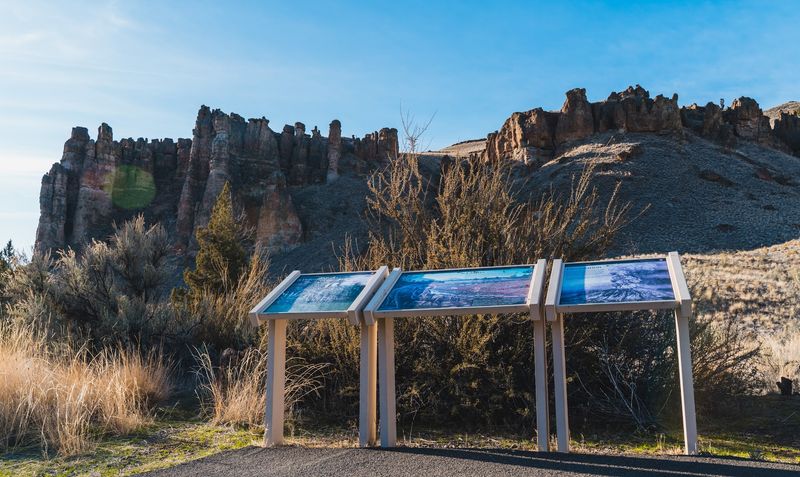
The Trail of Fossils is the flat, easy portion of the Clarno trail system, and it runs along the base of the Palisades. Interpretive signs and trail marker plaques are placed at regular intervals, explaining what each fossil feature represents and how it ended up locked in the rock.
What you are looking at here are fossilized plants, not dinosaur bones. Ancient tropical forest plants, seeds, nuts, and even logs were buried by volcanic mudflows millions of years ago and slowly turned to stone.
Some of the fossilized logs are visible right in the cliff face, and the plaques help you understand exactly what you are seeing rather than guessing.
The trail is roughly half a mile and stays relatively flat, which makes it accessible for kids, older visitors, and anyone who wants the fossil experience without the elevation gain of the Arch Trail. Trail marker plaques do a solid job of walking you through roughly 50 million years of natural history in the span of a short stroll.
It is genuinely one of the most educational half-miles you can walk in the entire state of Oregon.
Geologic Time Trail: Walking Through 50 Million Years
The Geologic Time Trail connects to the Arch Trail and covers the flatter terrain between the parking area and the base of the cliffs. Each step along this path represents a chunk of geologic time, and the interpretive signs are placed to give that abstract concept a physical feeling you do not easily forget.
The trail is well-suited for families with younger children because the terrain stays gentle and the educational signage keeps curious minds engaged. Each placard introduces a different era or event, from ancient volcanic activity to the slow transformation of a tropical forest into the dry high desert you see today.
One of the more quietly fascinating aspects of this trail is how it sets up everything else you see at the Clarno Unit. By the time you reach the base of the Palisades, the geology signs have already given you enough context to look at the cliffs with real understanding rather than just admiration.
That shift from passive sightseeing to active learning is what separates a good trail from a genuinely memorable one, and the Geologic Time Trail earns that distinction without any fuss.
Wildlife Along the Way: More Than Just Rocks
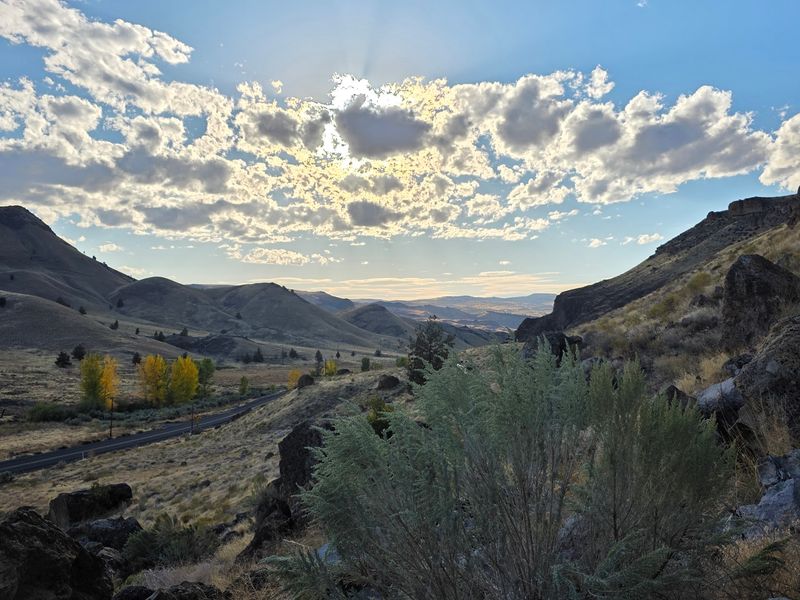
The Clarno Unit is not just a geology story. The surrounding high desert supports a surprising variety of wildlife, and a slow, quiet walk through the trails puts you in a good position to spot some of it.
Mule deer are common in the area, often spotted near the base of the Palisades in the early morning or late afternoon. Coyotes move through the open terrain regularly, and birds of prey, including falcons and hawks, use the cliff faces as nesting spots and hunting perches.
Watching a falcon hover motionless above the cliff before folding its wings and dropping out of sight is the kind of moment that sticks with you long after the drive home.
Desert wildflowers also appear along the trail during spring, adding unexpected color to the otherwise earthy landscape. The variety of bees and smaller birds working those flowers is worth pausing for, even briefly.
The Clarno Unit rewards visitors who move at a relaxed pace and keep their attention spread across the full environment rather than focusing only on the rock formations. The combination of geology and living wildlife gives this trail a layered quality that keeps the experience from feeling one-dimensional.
Picnic Area and Facilities: Comfort in the High Desert
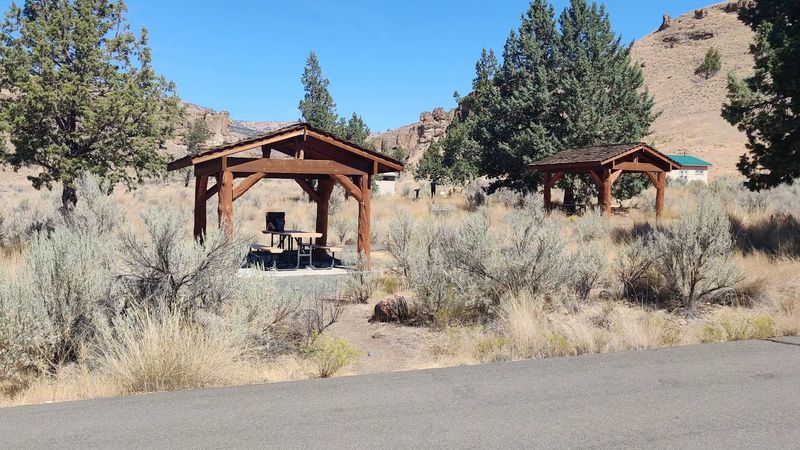
For a unit that sometimes gets described as the smallest and most remote of the three John Day monument sites, the Clarno Unit is remarkably well-equipped for a comfortable visit. The paved parking area is clean and spacious, with room to pull off onto the road shoulder if the lot fills up during busier seasons.
Covered picnic tables sit near the trailhead, giving visitors a shaded spot to eat lunch with an unobstructed view of the Palisades rising above. The restrooms are maintained in good condition, which is not always guaranteed at remote desert trailheads.
A free water source is also available at the site, which is genuinely useful given the heat and the distance from any town with a convenience store.
The overall setup makes the Clarno Unit a natural midday stop for anyone driving the Journey Through Time Scenic Byway. Families with young children, dog owners using the designated walking area, and older visitors who prefer a shorter outing all find the facilities here sufficient.
Bringing your own snacks and a packed lunch to enjoy at the covered tables while the Palisades loom overhead turns a quick stop into a proper afternoon out.
The Journey Through Time Scenic Byway: Context for the Drive
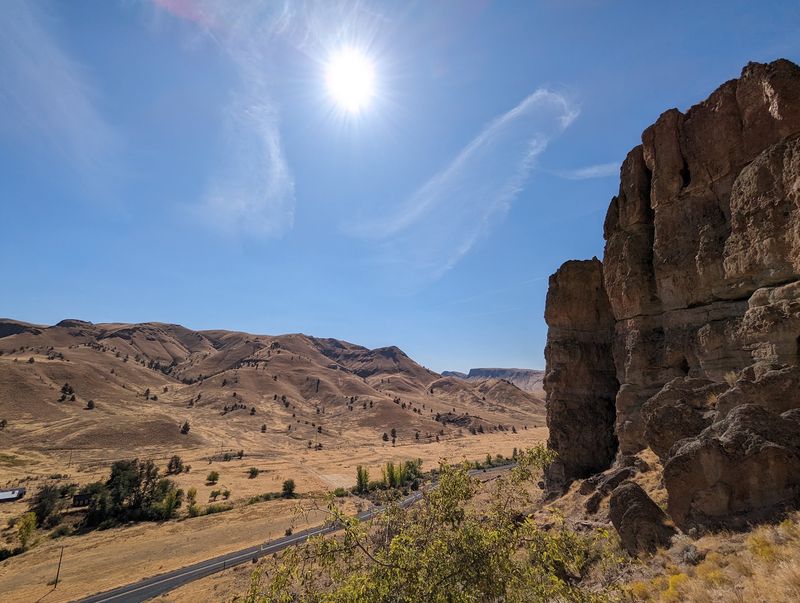
The Clarno Unit sits along the Journey Through Time Scenic Byway, a stretch of highway that connects the three units of John Day Fossil Beds National Monument and extends all the way to Biggs Junction near the Columbia Gorge. The drive itself is part of the experience, not just the means of getting there.
The landscape changes noticeably as you move between units. Rolling hills give way to dramatic canyon walls, and the color palette of the rock shifts from the pale yellows and reds of the Painted Hills to the darker volcanic tones of the Clarno Palisades.
Each unit tells a different chapter of the same geologic story, and the drive between them gives you time to absorb what you just saw before the next formation appears.
Fuel is a real consideration on this route. Gas stations are spread far apart, and running low between towns like Mitchell and Fossil is an easy mistake to make if you are not paying attention to your gauge.
Filling up in any town you pass through is the practical move. The byway also passes through some of the least-populated stretches of Oregon, which makes the solitude feel like a feature rather than an inconvenience.
Best Time to Visit and Practical Tips
Spring and fall are the most comfortable seasons to visit the Clarno Arch Trail. Temperatures in the high desert swing dramatically between summer highs and winter lows, and the trail has almost no shade cover, which makes a mid-July afternoon a genuinely grueling experience without proper preparation.
Spring brings desert wildflowers and cooler air, and the morning light on the Palisades during April and May is particularly striking. Fall visits offer crisp temperatures and the bonus of smaller crowds, since most visitors to the monument prioritize the Painted Hills and Sheep Rock units, leaving the Clarno Unit quieter than ever.
A few practical notes worth keeping in mind: the park opens at 6 AM daily, which makes early morning visits not just comfortable but also rewarding for wildlife sightings. Dogs are welcome on a leash in the designated walking area.
The visitor center at the Clarno Unit may be closed during off-peak hours, so stopping first at the Thomas Condon Visitor Center in the Sheep Rock Unit gives you important geological context before you arrive. Sunscreen, a hat, and extra water are not optional here.
They are the difference between a great afternoon and a rough one.
Why the Clarno Unit Deserves More Credit
The Clarno Unit consistently gets ranked third among the three units of the John Day Fossil Beds National Monument, behind the Painted Hills and Sheep Rock. That ranking is understandable given the visual drama of the Painted Hills, but it undersells what Clarno actually offers.
The Clarno Unit contains the oldest rocks in the entire monument, dating back around 44 to 54 million years. That means the fossils here are not just old in a general sense.
They represent a time when this region of Oregon was a warm, humid tropical forest teeming with plants that no longer exist anywhere on earth. The interpretive signs make that history accessible without requiring a geology degree to follow along.
The near-total absence of crowds is also genuinely appealing. Arriving to find an empty parking lot at a national monument is a rare thing, and the Clarno Unit delivers that experience regularly.
The combination of ancient fossils, dramatic cliffs, accessible trails, solid facilities, and honest solitude makes a strong case for treating this unit as a destination in its own right rather than an afterthought on the way to somewhere else.
Share this story