A curious New Jersey day-tripper might not expect a short local outing to include an enormous temple covered in detailed stone carvings. Yet that is exactly the surprise waiting here.
Its courtyards, architecture, and exhibits offer plenty to explore, and entry is free. The best part is that the visit can be as thoughtful and unhurried as you want it to be.
A Hindu Temple in Central New Jersey
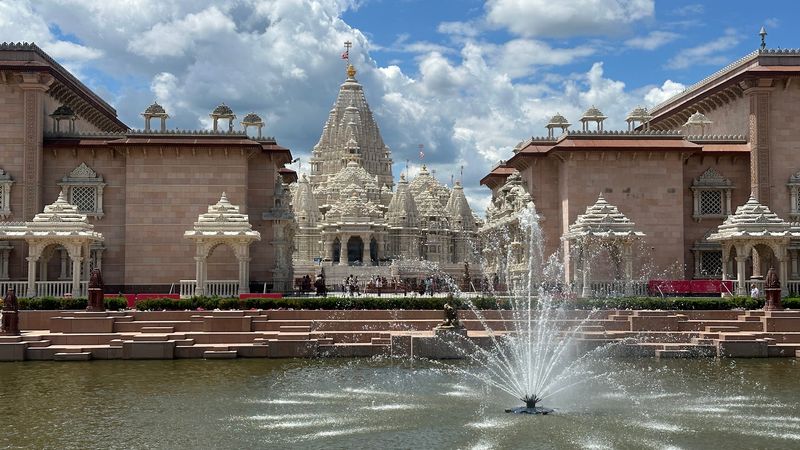
A temple of this scale is an unexpected find on a New Jersey day trip. BAPS Swaminarayan Akshardham is a Hindu temple at 112 N Main St, Windsor, NJ 08561, United States.
It is associated with Robbinsville, but the listed street address uses Windsor.
The complex is a place of worship as well as a destination for people interested in architecture and culture. Its large grounds give the visit a different pace from a quick stop at a single building.
There are outdoor areas to explore, a main mandir to enter, and spaces that explain more about the place.
That range makes it useful to know what kind of trip this is before setting off. Someone drawn by the stonework can spend time studying its details, while someone arriving for spiritual reasons can approach it as a temple first.
Either way, the carvings are only the beginning of the story here.
A Project Shaped by Many Hands
Look past the size of the complex, and the work behind it becomes the more interesting story. Accounts of the temple describe a project that took about a decade and involved many volunteers, artisans, and people helping with assembly.
It was not a small effort dressed up to seem grand.
Stone was sourced abroad, carved in India, and brought to the United States for the complex. That process helps explain why so much attention went into individual surfaces rather than only the overall outline.
The building asks for a closer look, not just a photograph taken from a distance.
Visitors can learn more about the project at the Welcome Center, where short presentations give context for the temple and the ideas behind it. Starting there may make the later walk through the grounds more meaningful.
A column or carved figure becomes part of a long, shared undertaking instead of an isolated decoration.
Stone Carvings Worth a Slower Walk
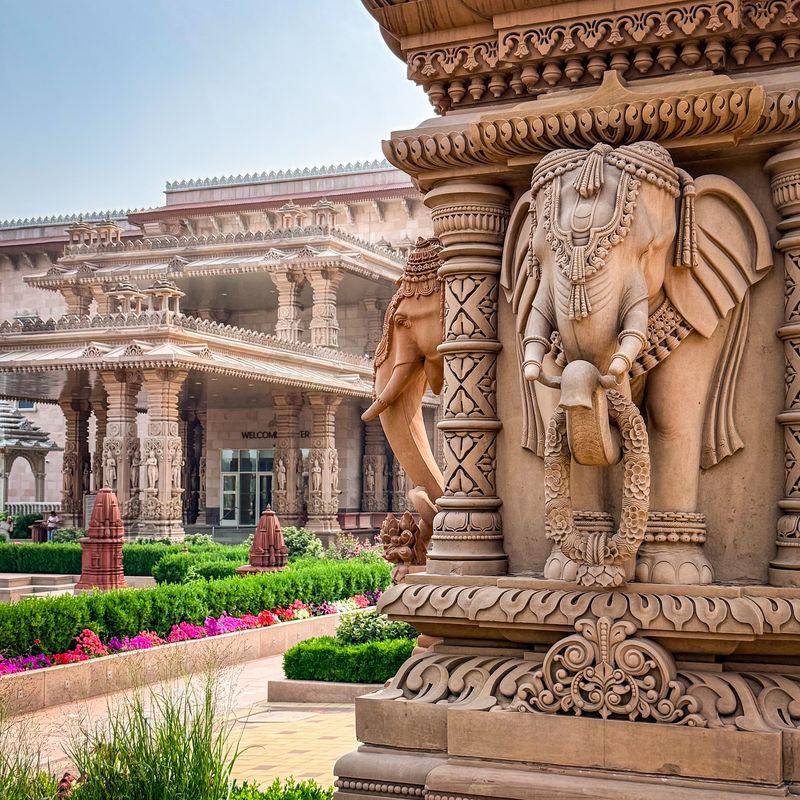
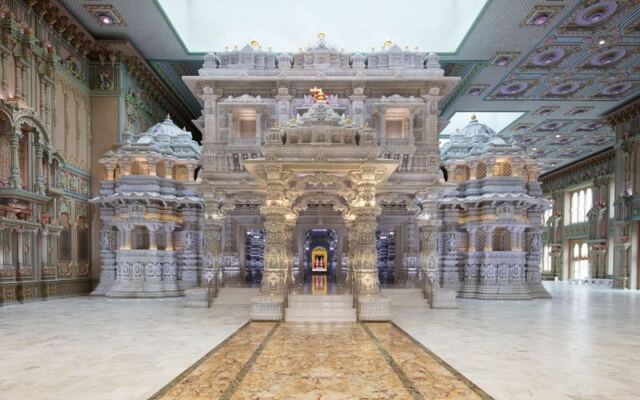
Small details have a way of changing the pace here. The temple is known for intricate stone carvings across its exterior and interior, including figures, patterned surfaces, and richly worked columns.
The closer someone looks, the easier it becomes to understand why a brief pass through the site would miss so much.
Rather than treating the carvings as a backdrop, give each area its own moment. Notice how the design continues around architectural features and how individual pieces contribute to the larger building.
The craftsmanship is a reason to walk, pause, and then walk a little farther.
Photography is permitted around the outside compound, while photos are not allowed inside the main temple. That rule gives the outdoor carvings a practical role for anyone hoping to take home images of the visit.
Inside, the experience calls for putting the camera away and paying attention to the work directly in front of you.
Courtyards Beyond the Mandir
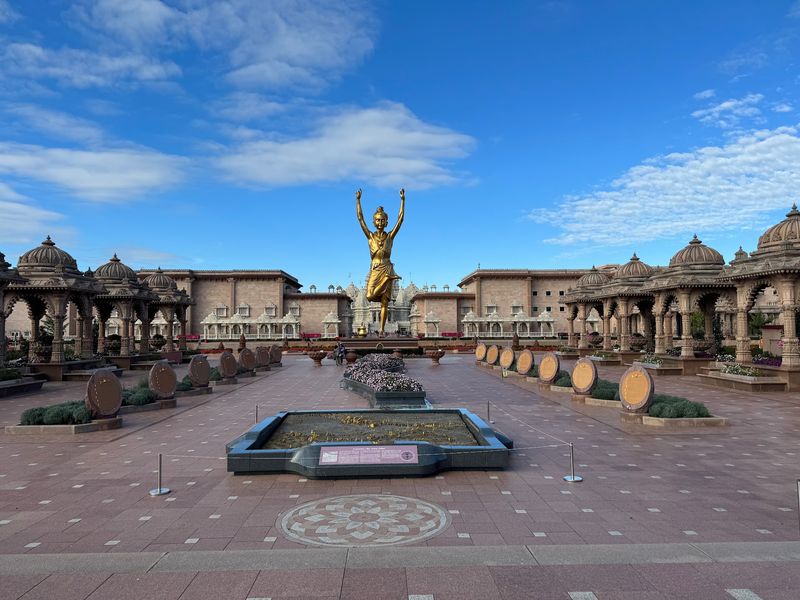
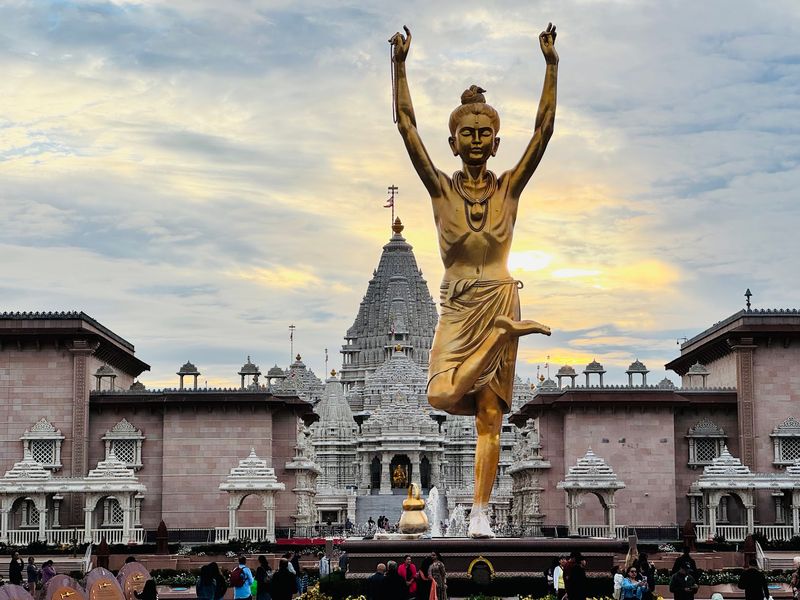
The main mandir deserves attention, but it does not have the grounds all to itself. Courtyards, water features, gardens, and a prominent statue give people more to explore before and after entering the temple.
These areas help make the outing feel like a visit to a full complex rather than a single room.
There is room to move between broad views of the architecture and closer studies of its details. The grounds also offer places to pause without turning the day into a race to see everything at once.
A few hours is a more useful plan than a hurried stop, especially for anyone interested in both the building and its setting.
Spring and summer may appeal to people who want to spend more time around the gardens, though the temple is a year-round destination. No season is required to appreciate the layout.
The simple advantage of allowing extra time is that the grounds can be part of the trip, not just the route to the door.
Context at the Welcome Center
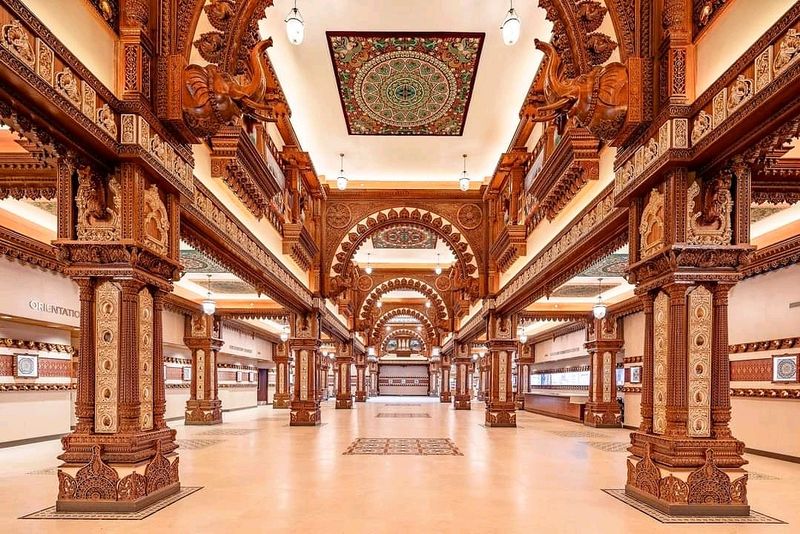
A good first stop can change what comes next. At the Welcome Center, carved wooden interiors introduce another kind of craftsmanship, while short theater presentations explain the temple’s background.
People who begin here can carry that context into the mandir and across the grounds.
The presentations are especially useful for a newcomer who recognizes the building’s artistry but wants to know more about its purpose. They provide a starting point without requiring prior knowledge of Hindu traditions.
The center also makes it easier to think of the site as an active cultural and spiritual place, rather than architecture alone.
Not everyone will want to follow the same route or spend the same amount of time on exhibits. Still, leaving a little space in the schedule for the Welcome Center is a sensible choice.
The stonework can hold a person’s attention on its own; learning how the project came together gives that attention somewhere further to go.
A Place for Reflection and Curiosity
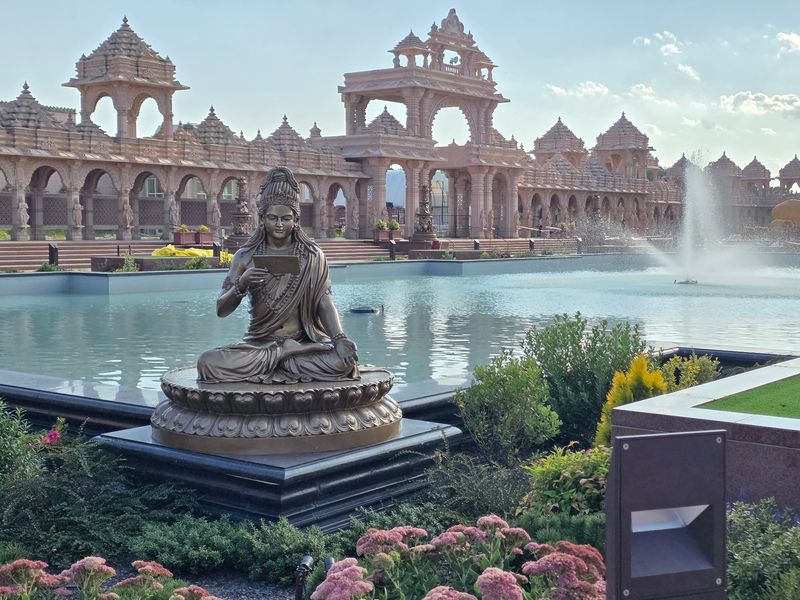
Architecture may bring someone here, but it need not define the whole visit. Akshardham is a place of worship, and the grounds also share messages about service, positivity, and care for others.
Those elements offer a reason to pause between stops and consider more than the workmanship.
The setting suits people arriving for prayer, families spending time together, and day-trippers hoping to learn about a tradition unfamiliar to them. People interested in carved stone can find plenty to examine without needing to approach the visit as experts.
A respectful attitude matters more than knowing every term before arriving.
For families, allowing two or three hours can make the trip easier to manage without rushing. Accounts of visits also describe stroller-friendly areas, wheelchair access, and a nursing pod.
Individual needs can vary, so checking current access information before leaving remains wise. The broad appeal is straightforward: there are several ways to engage with this one place.
The Details to Check Before Going
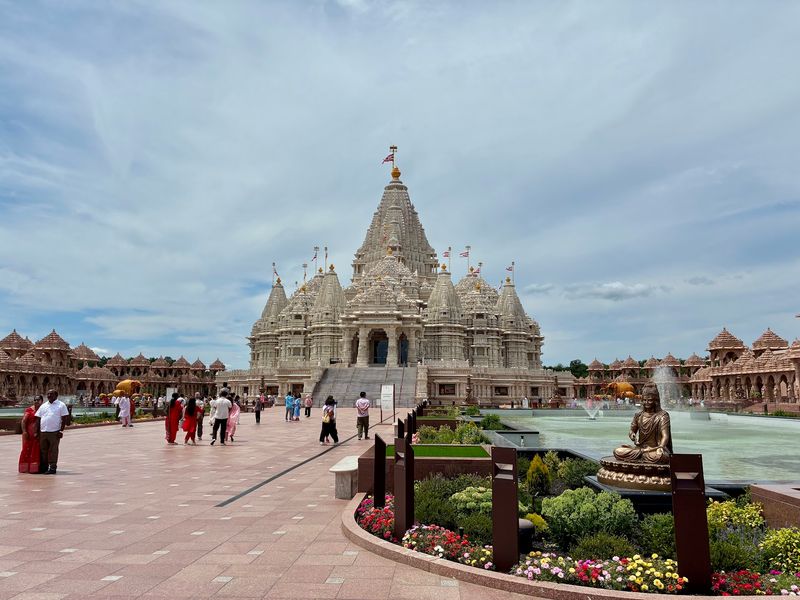
A little planning keeps the day focused on the temple instead of the logistics. The listed hours are 9 a.m. to 7:30 p.m. on Monday and Wednesday through Sunday; Tuesday is closed.
Entry and parking are free, with donations accepted. Check the temple website for current information before traveling, particularly if the visit falls on a weekend or holiday.
Plan for modest clothing that covers shoulders and knees. Shoes must come off before entering the mandir, and photographs are not permitted inside.
Bag checks and restrictions on outside food also make it sensible to review the site’s guidance before packing for the outing. Reservations have been recommended for busy days, so confirm whether one is needed for your date.
Driving is one option for reaching the complex, and on-site parking has been reported. Once there, allow time for walking and for any presentation you hope to attend.
Those modest preparations leave more room for the reason you came: the temple itself.
A New Jersey Outing That Rewards Time
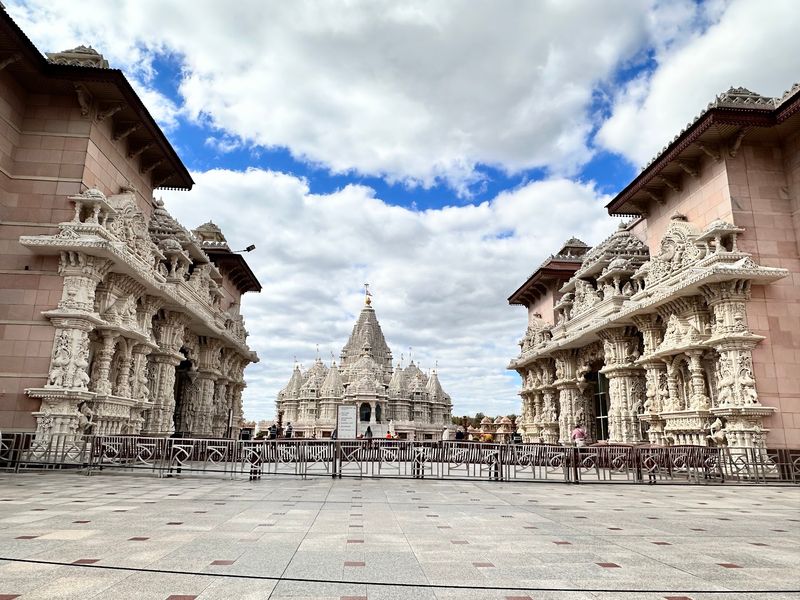
Few outings offer quite this combination of scale and close detail. At Akshardham, a broad view of the complex is only an introduction; the carved surfaces, courtyards, and exhibits give people reasons to keep exploring.
The destination works best when it is treated as more than a quick photo stop.
Practical options help make a longer stay possible. On-site café and shop facilities have been described, and the Welcome Center offers another way to spend time beyond the mandir and grounds.
Anyone interested in those facilities should confirm what is open on the day of the trip. The same goes for schedules and entry arrangements, which are always worth checking before departure.
There is no need to claim that everyone will take the same thing away from a visit. Some will remember the craftsmanship; others may value the chance to learn or reflect.
For a New Jersey day trip, having that choice is a strong reason to set aside a few hours.
Share this story