Somewhere in northeastern Oklahoma, tucked into a quiet hilltop town, sits a Catholic church that stops visitors cold the moment they step through its doors. Most people pass through the area without a second glance, never suspecting that world-class art is waiting just off the main road.
The stained glass inside this modest building was crafted by the same German studio that decorated the Vatican and great European cathedrals, yet here it glows over the Osage Nation homeland. Once you see it, you will not easily forget it.
Pawhuska and the Church on the Hill
Pawhuska, Oklahoma carries a quiet kind of weight. Seat of Osage County and historic heart of the Osage Nation, this small city of just a few thousand people holds more layers of history per square mile than most places ten times its size.
Visitors often arrive chasing Pioneer Woman fame or Osage heritage, but a different landmark rewards those who look a little harder.
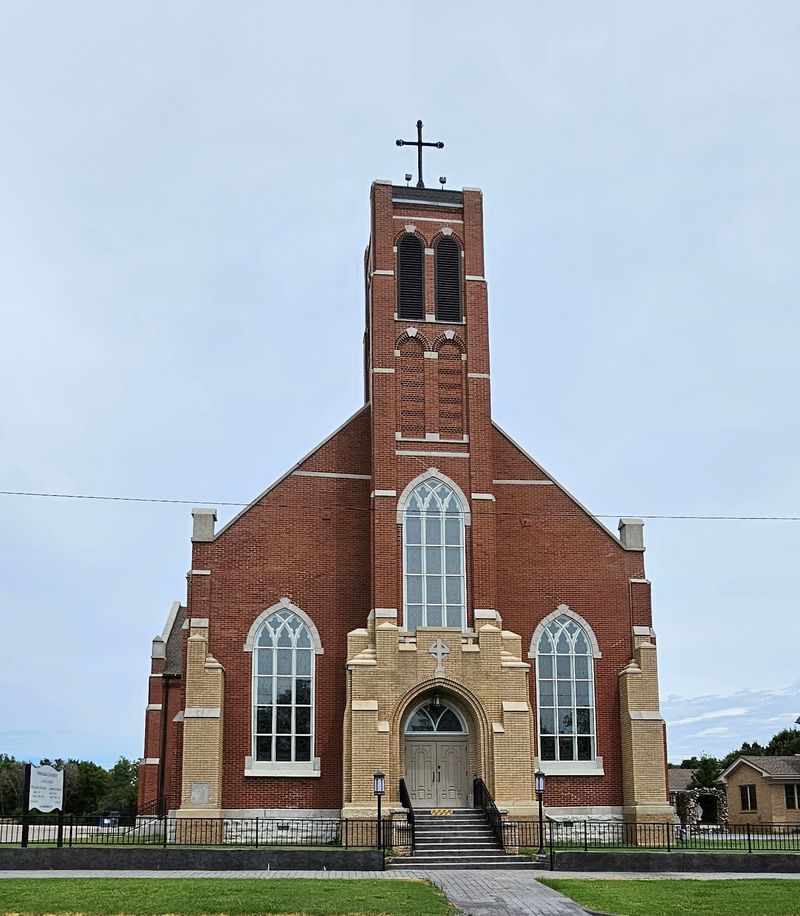
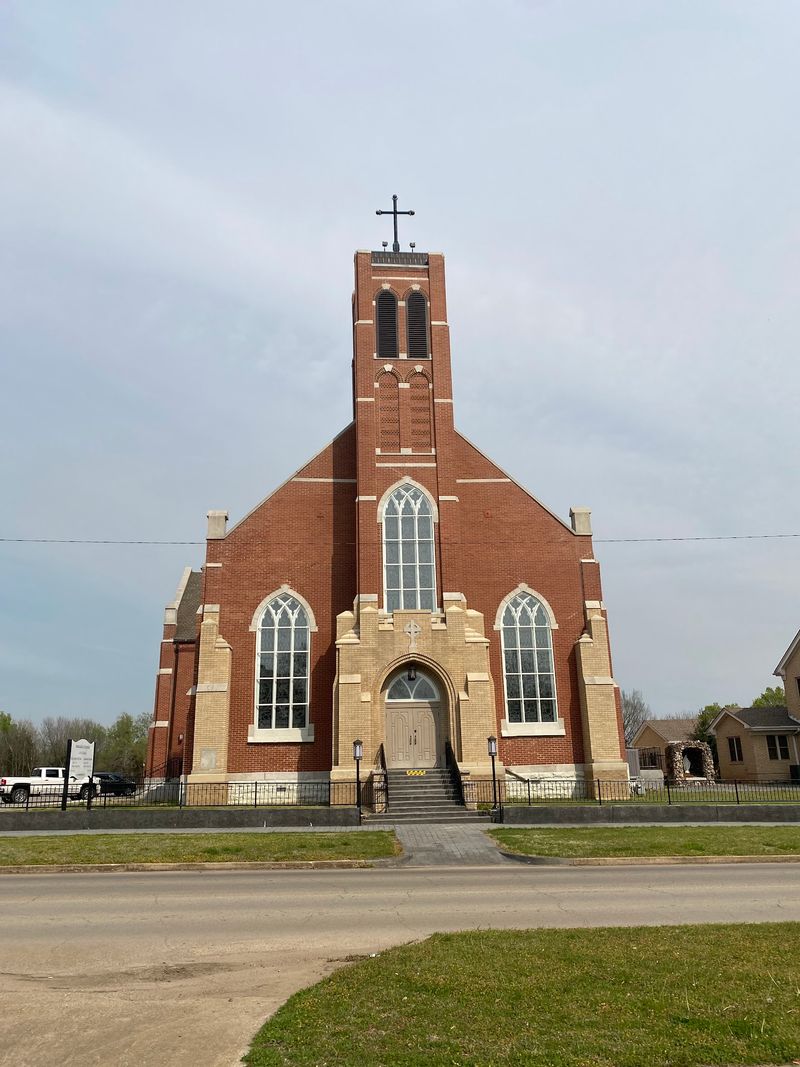
Perched on a gentle rise at 1314 Lynn Ave, Immaculate Conception Catholic Church has anchored this community for well over a century. From the outside, it reads as a tidy, dignified building, the kind of church you might find in any mid-sized American town.
The brick exterior and modest steeple give little hint of what waits inside.
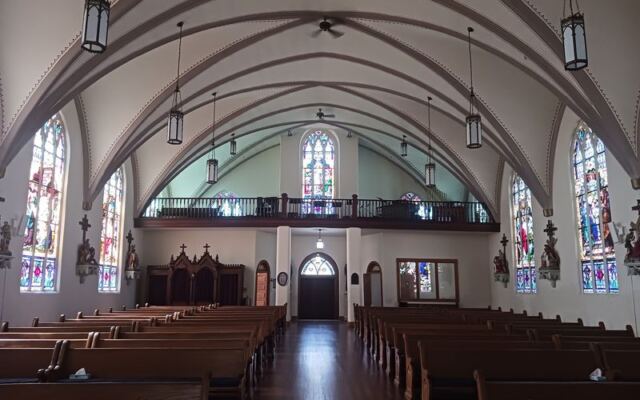
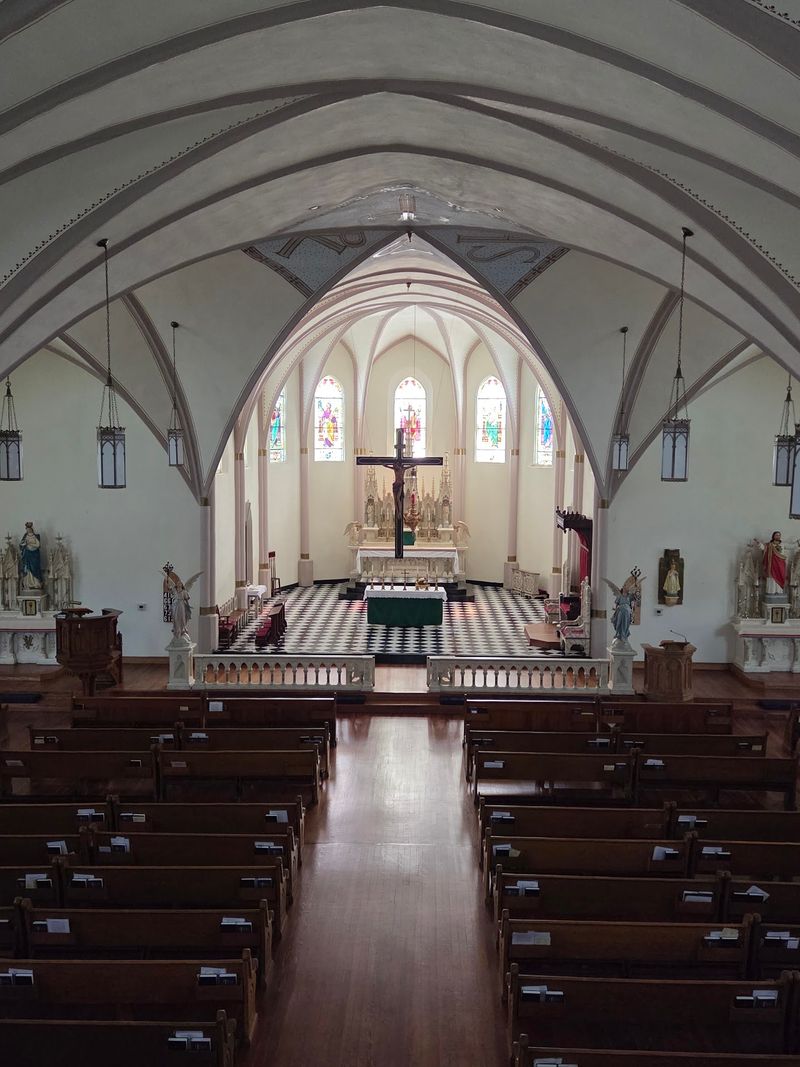
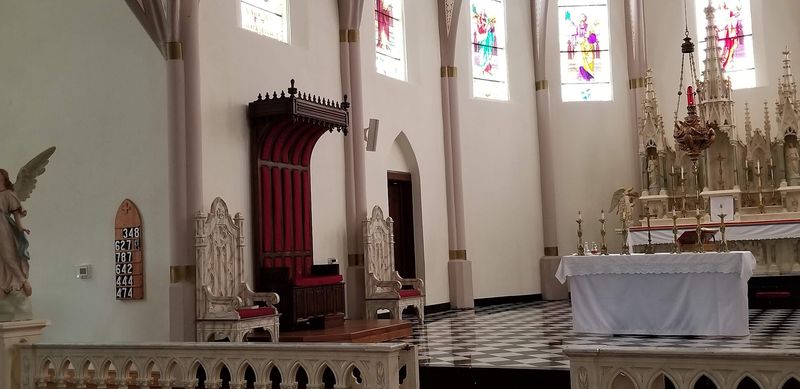
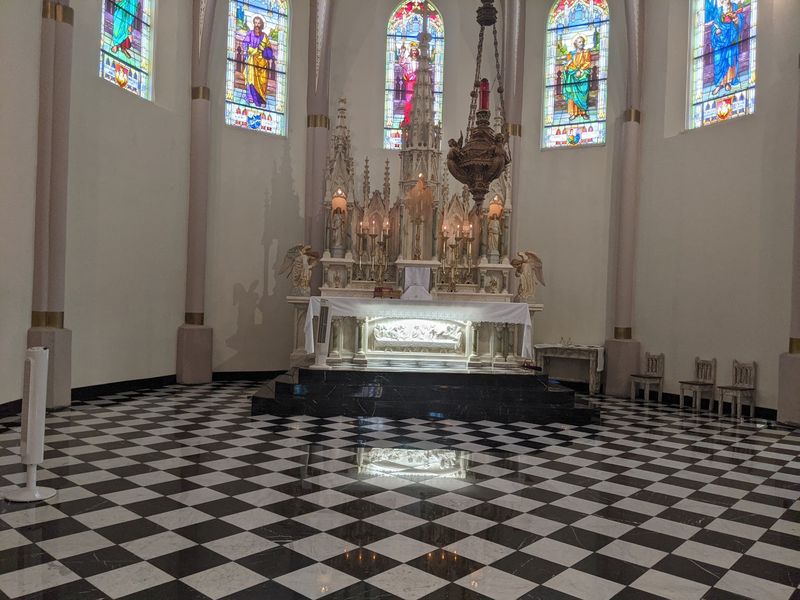
That understatement is part of what makes the first step through the door so striking. Light floods the interior in warm reds, golds, and deep blues, thrown across the pews by windows of extraordinary quality and detail.
For a town this size, in a state often overlooked by cultural travelers, the discovery feels almost surreal. Pawhuska earned this treasure, and it has kept it beautifully.
A German Studio That Dressed the World’s Greatest Cathedrals
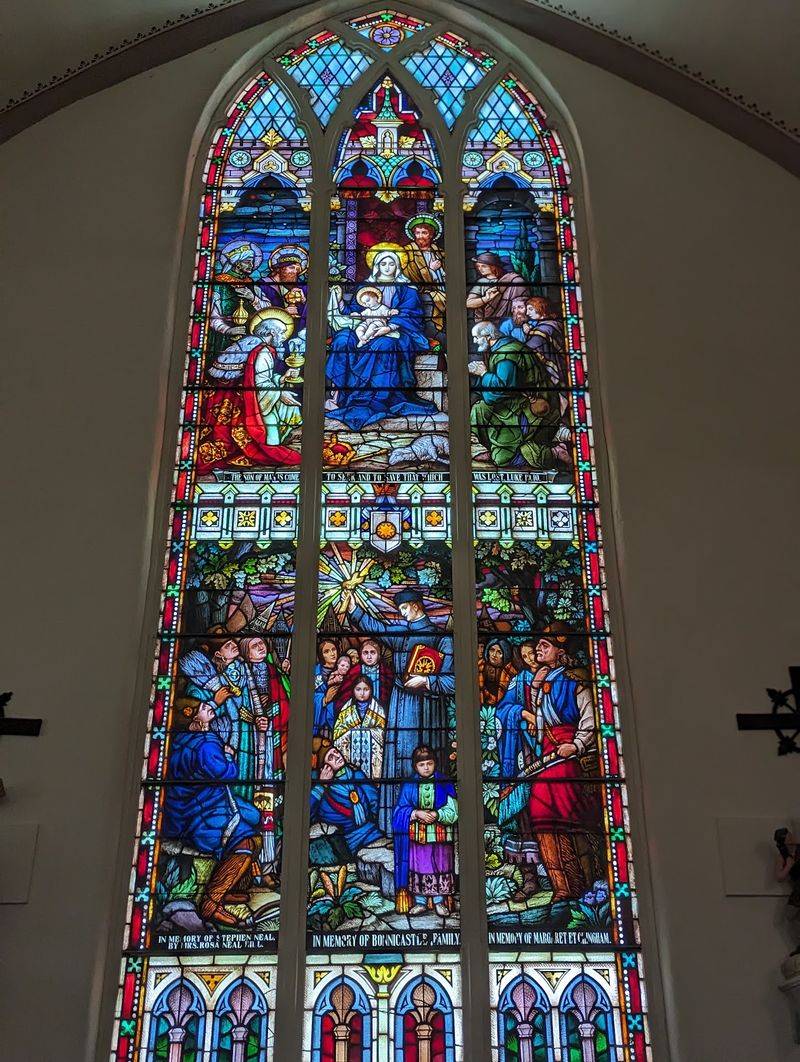
Not every small-town church can claim a glass maker whose portfolio includes the Vatican. Yet the windows at Immaculate Conception were produced by a German studio operating out of Munich in the early twentieth century, a firm whose commissions spanned some of the most celebrated sacred spaces in Europe and beyond.
That lineage alone makes Pawhuska a legitimate destination for art and architecture enthusiasts.
Munich became the world capital of ecclesiastical stained glass in the nineteenth century, refining techniques rooted in medieval tradition while introducing new levels of painterly detail. The colored glass was fired at high temperatures to bond pigment permanently into the material, producing hues that remain vivid more than a hundred years later.
Red and gold are the signature tones visitors notice first, but up close the palette reveals subtler purples, forest greens, and warm ambers layered beneath.
Knowing that the same hands, or at least the same workshop legacy, touched windows in Roman basilicas and Gothic European cathedrals reframes the experience entirely. Standing in a small Oklahoma church and looking at work of that caliber creates a genuinely unexpected feeling, something between pride and disbelief.
The craftsmanship is every bit as precise and alive as anything found in far more famous settings.
The Osage Nation Woven Into Sacred Glass
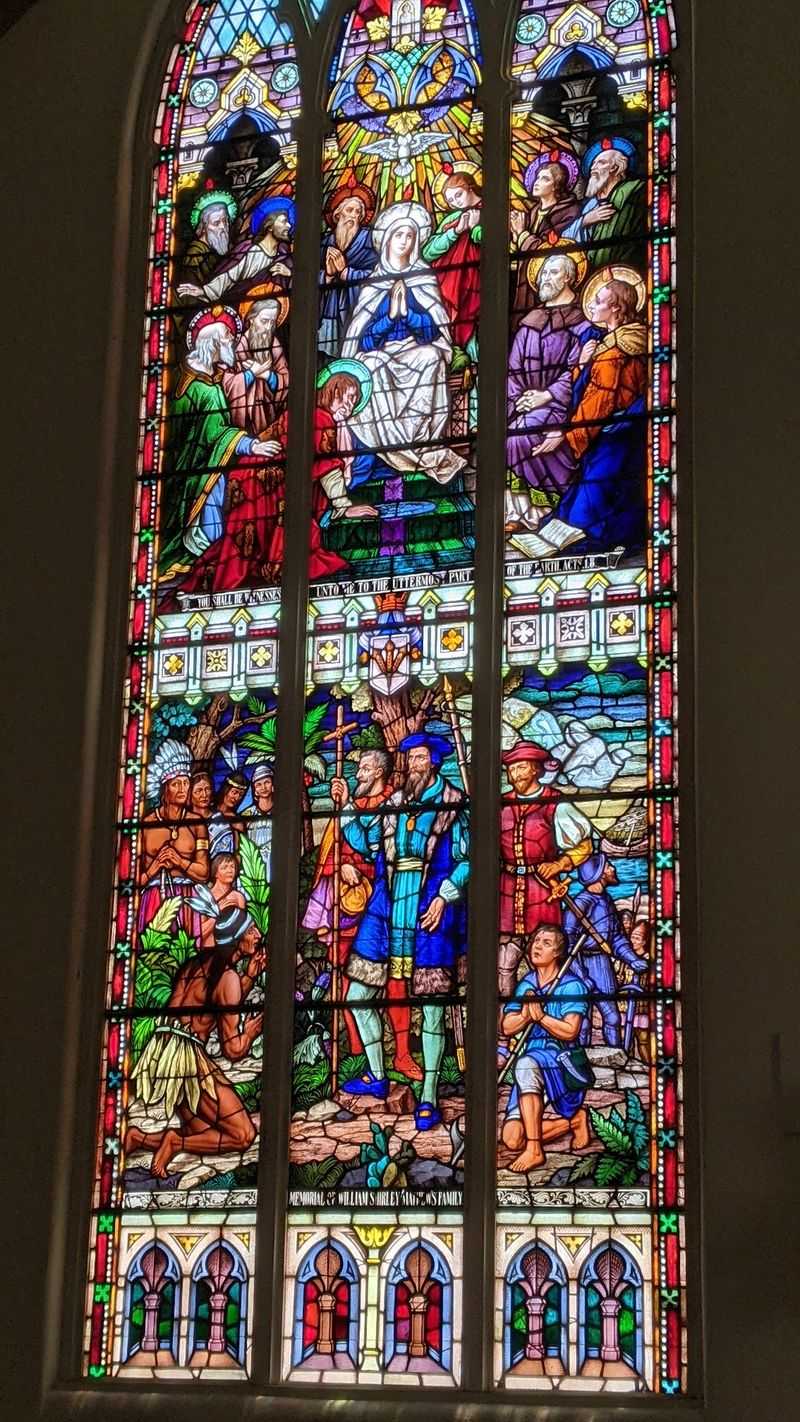
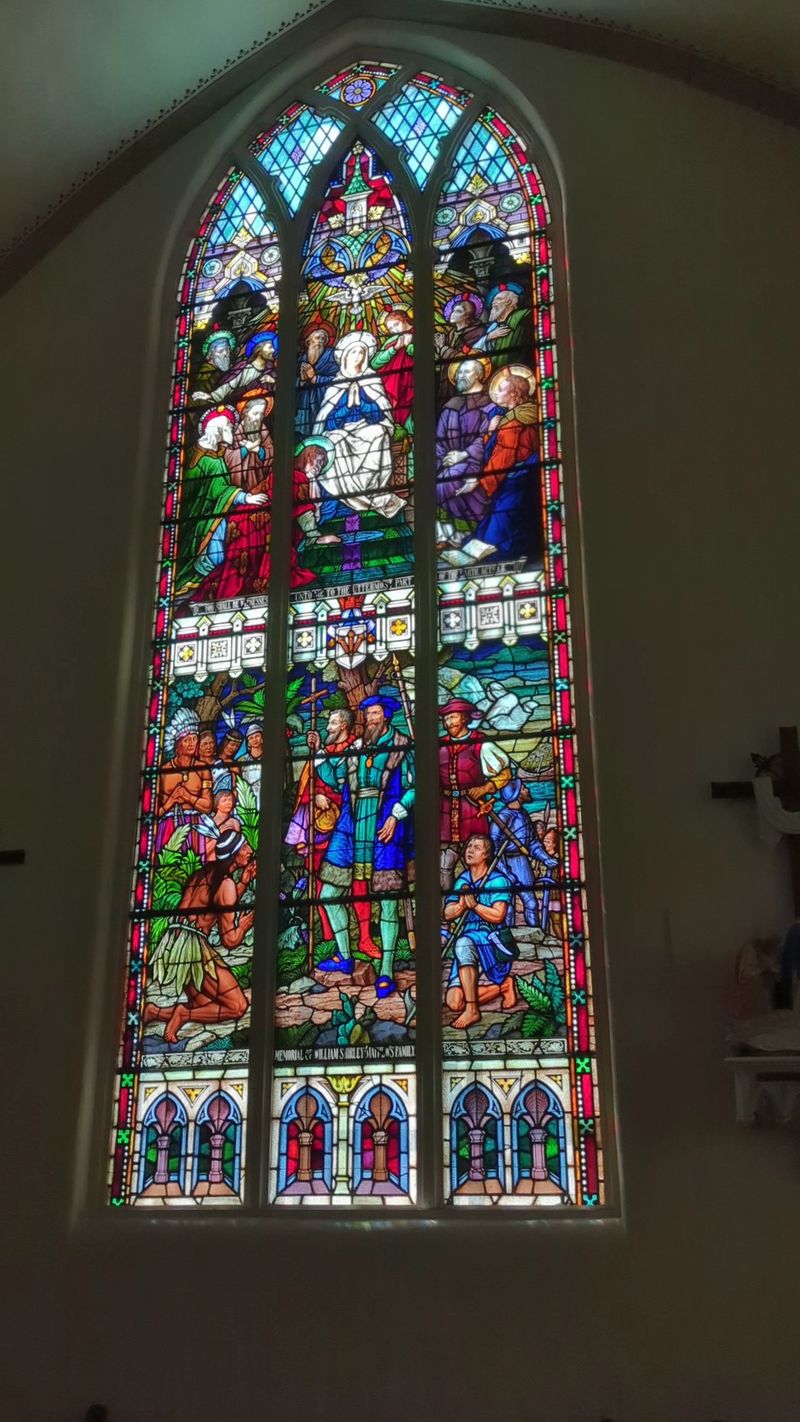
What truly sets these windows apart from other fine examples of German stained glass is their subject matter. Several panels incorporate imagery representing different Native American tribes, specifically acknowledging the Osage people on whose land this church was built.
According to visitors who have taken the guided tour, those depictions were approved by the Pope at the time of the church’s establishment, a remarkable detail that underscores the depth of intention behind the commission.
Blending Indigenous identity with Catholic iconography was not common practice, and seeing it executed at this level of artistry feels genuinely significant. The Osage Nation has called this region home for centuries, and the decision to honor that presence within the windows rather than erase it reflects a more thoughtful chapter of the church’s founding story.
Each panel rewards careful attention, because the cultural references are embedded in the composition rather than displayed as simple decoration.
Tour guides bring these stories to life in ways that a solitary visit simply cannot replicate. Visitors consistently mention that the historical context shared during the tour transformed their understanding of what they were seeing.
Without that layer of explanation, even the most attentive observer would miss the full meaning carried in the glass. Plan to take the tour if at all possible.
Color and Light as Architecture
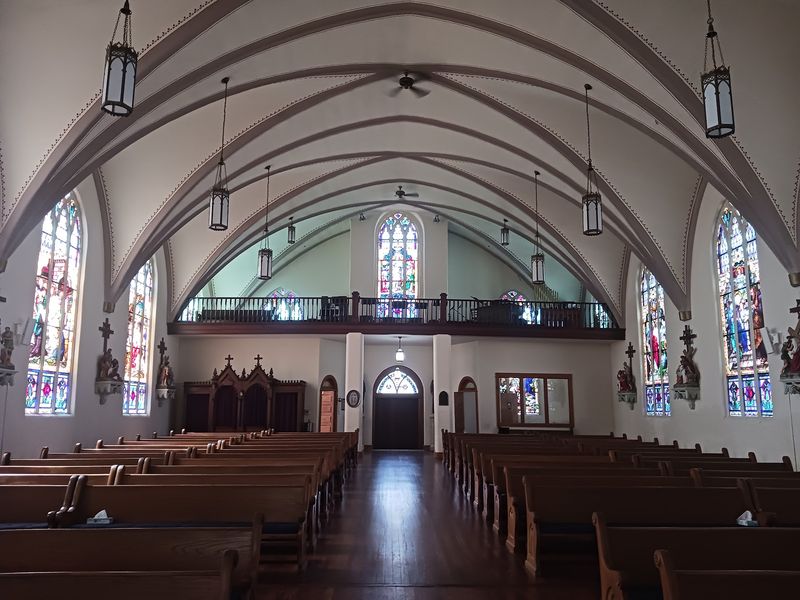
Walk through the main doors on a bright morning and the effect is immediate. Stained glass lines both sides of the nave, and when sunlight passes through it, the entire interior transforms into something closer to a living painting than a room.
Reds deepen toward crimson near the floor, gold washes over the wooden pews, and cooler blues settle near the ceiling. The color moves as clouds shift outside.
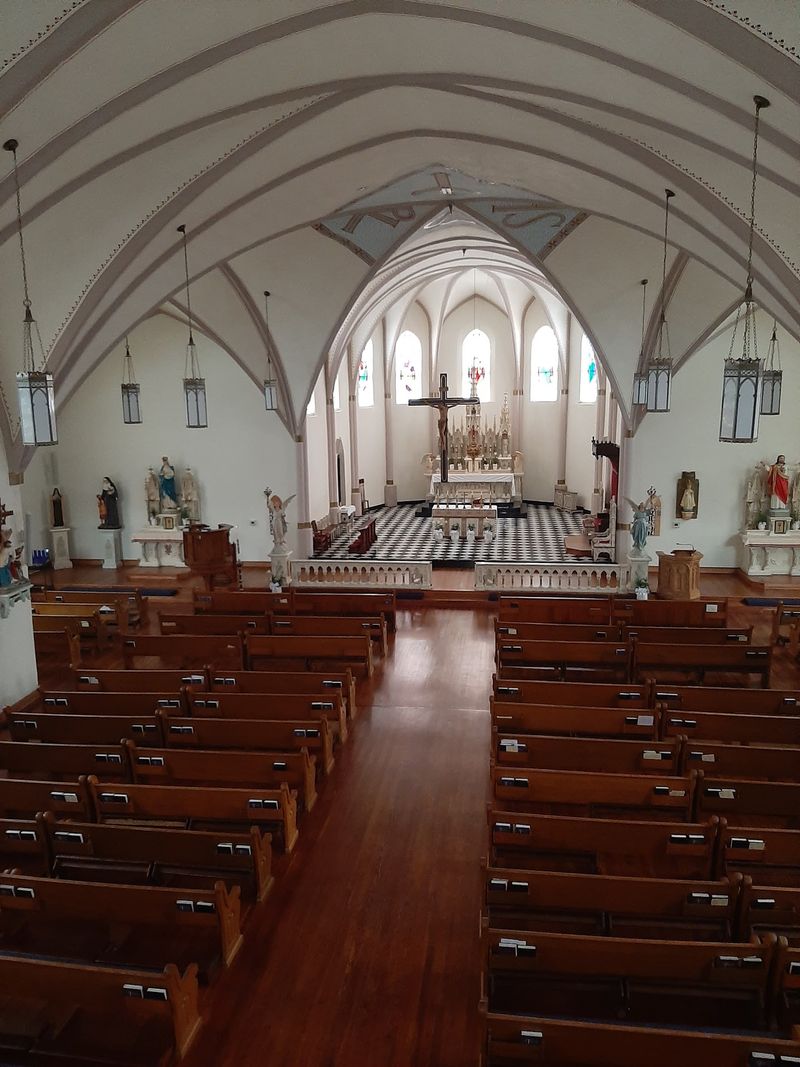
Wood flooring runs the length of the church, its warm honey tones amplifying the light rather than absorbing it. Several visitors have noted that the space reminded them of childhood churches, that particular combination of polished wood, filtered colored light, and hushed acoustics that registers somewhere between memory and feeling.
The scale is intimate without feeling cramped, which makes the windows feel even more present and enveloping than they might in a grander building.
Photographers find the interior endlessly rewarding, though capturing what the eye actually sees proves challenging. The dynamic range between the bright windows and the shadowed interior pushes most cameras to their limits.
Early morning visits on clear days tend to produce the most dramatic light, particularly along the south-facing windows where the sun angle sends long colored beams across the floor and pews.
Stations of the Cross in Extraordinary Detail
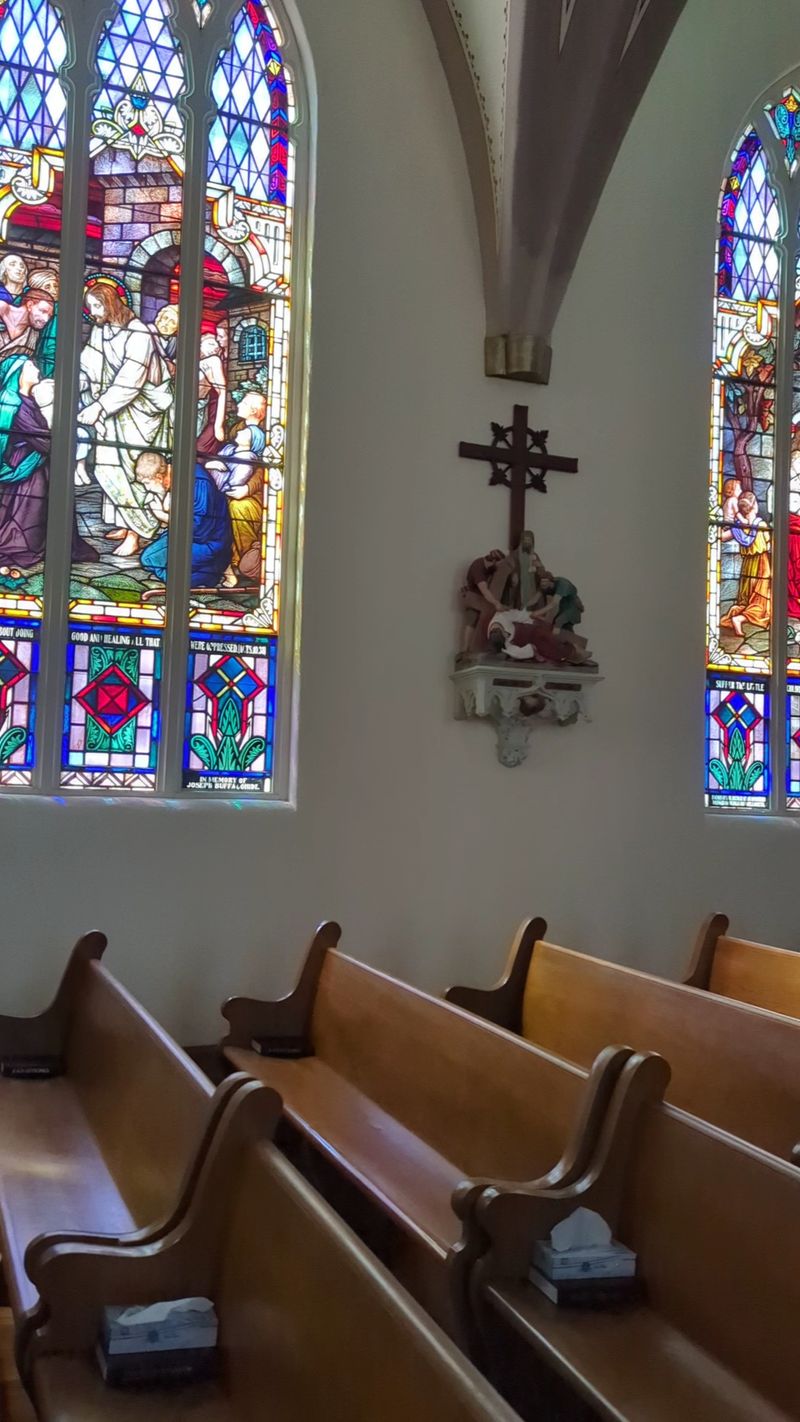
Beyond the main nave windows, the Stations of the Cross represent another layer of artistry worth dedicated attention. Visitors who have taken the guided tour specifically call out the detail in each station panel, noting how the figures convey genuine emotion and movement rather than the stiff formality common in lesser examples of the form.
Each scene reads clearly from a distance but rewards close inspection with additional detail.
The German tradition of figurative glass painting reached its peak in the late nineteenth and early twentieth centuries, and these stations reflect that mastery. Faces are rendered with subtle shading, drapery folds carry weight and texture, and background architectural elements give each scene spatial depth.
Considering that all of this was achieved through fired pigment on glass rather than paint on canvas, the results are quietly astonishing.
Many first-time visitors admit they had not expected to spend much time on the stations, arriving primarily to see the main windows. The tour guide’s narrative about the figures and their historical context tends to change that plan quickly.
By the time the full circuit is complete, most groups have slowed considerably, pausing longer at each panel than they anticipated. That unhurried attention is exactly what the work deserves and seems to invite.
Barbara and the Art of the Guided Tour
Few guided experiences feel as personal as the tours offered at Immaculate Conception. A volunteer named Barbara has become something of a legend among visitors, delivering tours with the kind of depth and warmth that only comes from genuine love of the subject.
She ranches west of Pawhuska and gives tours on Fridays and by appointment, which means a little advance planning goes a long way toward securing her as your guide.
Calling the church office on a weekday morning is the recommended approach for scheduling. Barbara typically asks for about a week’s notice, a reasonable request given that she is managing a working ranch alongside her volunteer role.
That small logistical hurdle is worth clearing, because visitors who have toured with her describe the experience as genuinely transformative rather than merely informative.
Other guides have also earned praise over the years, with multiple reviewers noting that every tour leader they encountered brought enthusiastic knowledge and a willingness to answer questions thoroughly. The consistency of that welcome across different volunteers speaks well of the community surrounding the church.
Plan for roughly an hour, though the time tends to pass faster than expected once the stories behind each window begin to unfold. A tour here is not a formality but a genuine conversation with living history.
A Church Tied to Over a Century of Community Life
Some buildings hold a town’s memory in their walls, and Immaculate Conception is that kind of place for Pawhuska. Locals who grew up here describe the church bells as a childhood timekeeper, the signal that marked the end of play and the beginning of the walk home for dinner.
That kind of lived-in familiarity gives the building a warmth that purely architectural landmarks often lack.
The church has undergone careful restoration work in recent years, described by longtime community members as a serious and beautiful facelift that honored the original without erasing it. Maintaining a structure of this age and artistic complexity requires ongoing commitment, and the congregation has clearly invested both care and resources into ensuring the windows and interior remain in excellent condition.
The result is a space that feels genuinely cared for rather than preserved behind glass.
Christmas services here carry a particular reputation, with the stained glass surrounding worshippers on all sides during candlelit vigil masses. Visitors who attended a Christmas night service mentioned that the combination of colored light, wood interior, and congregational warmth created an atmosphere unlike anything they had experienced elsewhere.
For those who grew up Catholic or simply appreciate the aesthetic of traditional sacred spaces, a holiday visit adds yet another dimension to an already layered place.
What the Windows Mean to the Osage Legacy
History in Osage County runs deep and complicated, and the presence of a Catholic church with windows that honor Indigenous identity sits within that larger story. The Osage Nation maintained a complex relationship with Catholic missionaries over generations, and the decision to commission windows that incorporated tribal imagery reflects a moment of genuine cultural negotiation rather than simple imposition.
Visitors with an interest in Native American history find the church adds an unexpected dimension to any trip through Osage country. Most come knowing about the Osage oil boom, the nation’s political history, or the broader story of Indigenous sovereignty in northeastern Oklahoma.
The windows offer a quieter, more intimate angle on that history, one expressed in color and light rather than documents and timelines.
Several visitors describe the experience as moving in ways they did not anticipate, particularly those with personal connections to the Osage Nation or to Catholic tradition. Seeing both identities honored within the same panels, crafted by European artisans working from specifications approved at the highest levels of the church hierarchy, carries a weight that is difficult to articulate but easy to feel.
The faith legacy of the Osage people, as one longtime visitor put it, lives on in this humble and beautiful space in a way that feels entirely genuine.
Who Will Love This Place Most
History travelers who have already worked through the more obvious Oklahoma landmarks tend to respond to Immaculate Conception with particular enthusiasm. The combination of world-class art, Indigenous history, and Catholic heritage in a single small building offers the kind of layered discovery that rewards curious, patient visitors.
Road-trippers moving through northeastern Oklahoma consistently call it a highlight that exceeded expectations.
Art and architecture enthusiasts will find plenty to occupy close attention even without the guided narrative. The technical execution of the windows, the spatial relationship between glass and interior, and the way light behaves differently at various times of day all provide material for extended observation.
Photographers, whether hobbyist or professional, tend to linger well past their planned departure time.
Families with older children who have some background in either Catholic tradition or Native American history will find the tour genuinely engaging rather than passive. The stories behind the windows are accessible without being simplified, and a knowledgeable guide makes the hour feel active rather than static.
Visitors who simply wander in without a tour still report a powerful visual impression, but those who invest the time in a guided visit overwhelmingly describe it as a richer and more lasting experience. Curiosity is the only real prerequisite for enjoying this place fully.
Hours, Tours, and Planning Your Visit
Getting the most from a visit here requires a bit of advance planning, and that effort pays off considerably. The church office is open Tuesday through Friday from 9 am to noon, which is the window for calling ahead to arrange a guided tour.
The phone number is 918-287-1414, and the church website at pawhuskaiccc.org carries additional scheduling information worth reviewing before you go.
Tours run on Fridays and by appointment, with guides typically requesting about a week’s notice. One past visitor noted arriving for a listed tour time only to find the volunteer guide unavailable due to illness, with no backup available that day.
That experience is the exception rather than the rule, but it underscores the value of calling ahead rather than simply showing up and hoping for the best.
Sunday mornings offer a different kind of access, with the church open from 8:30 to 10 am for mass. Attending a service is a legitimate way to experience the windows in a worshipping context, and visitors have consistently been made to feel genuinely welcome rather than like outsiders observing a private ritual.
Monday and Saturday the building is closed, so plan around that when mapping your route through Osage County. Pawhuska itself offers enough to fill a half-day or full day of exploration alongside the church visit.
A Small Town Prize Worth the Detour
Some places earn their reputation through scale or spectacle. Immaculate Conception earns its place in memory through precision and surprise.
A building this modest, in a town this size, containing art of this caliber creates a particular kind of joy that bigger, more famous destinations rarely deliver. The gap between expectation and experience is exactly what makes it stick.
Pawhuska sits roughly an hour northwest of Tulsa, making it a very manageable day trip from Oklahoma’s second-largest city. Osage County itself rewards extended exploration, with the surrounding tallgrass prairie, Osage Nation Museum, and the broader cultural landscape offering context that deepens the church visit.
Coming in cold and leaving with a full afternoon of discovery is entirely achievable with minimal planning.
The honest verdict from nearly everyone who has made the effort is simple: go, and take the tour. The windows are beautiful on their own terms, but the stories behind them elevate the experience from visually impressive to genuinely meaningful.
For a state full of unexpected discoveries, this one ranks among the most quietly extraordinary. Pawhuska may be small, but the treasure it keeps inside that brick church on Lynn Avenue belongs in any serious conversation about Oklahoma’s cultural heritage.
It is, as locals have long known, a must-stop.
Share this story