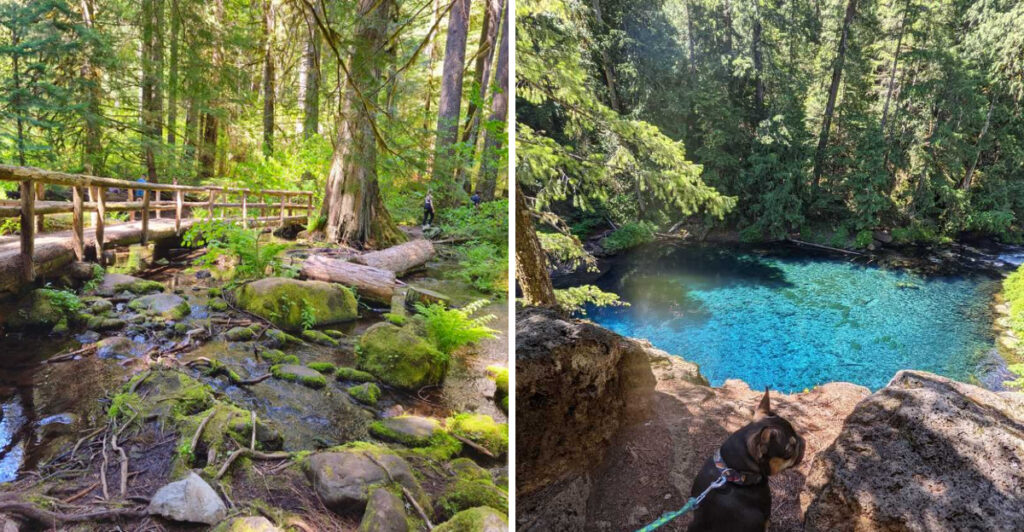
There is a trail in the Oregon Cascades where the forest goes quiet in a way that feels almost deliberate, and then the trees part to reveal a pool of water so impossibly blue it looks like someone spilled a jar of liquid sky onto the earth. The color does not make sense.
The stillness does not make sense. And yet, here it is, tucked into the McKenzie River corridor, waiting patiently for anyone willing to lace up their boots and walk far enough to find it.
Visitors come back year after year, struggling to put the experience into words, which is honestly part of the appeal. Read on, because what you are about to learn might have you booking a trip to Oregon sooner than you planned.
Where the Trail Begins: Getting to Tamolitch Falls
The trailhead for Tamolitch Falls, also known as the Blue Pool, sits at National Forest Road 2672-655 near McKenzie Bridge, Oregon 97413, right in the heart of the Willamette National Forest. You can reach it by calling (541) 822-3381 or checking the official site at fs.usda.gov/willamette for current conditions before you head out.
The parking area along the road is fairly compact, and on busy summer weekends it fills up fast. Arriving early in the morning, around 7 or 8 a.m., gives you the best shot at snagging a spot without circling the road twice.
There are pit toilets and porta-potties available at the trailhead, which is a relief after a long drive through the mountains.
No parking permit is currently required, which makes planning the trip a little simpler. The trail is open 24 hours a day, every day of the week, so technically you could hike in by headlamp, though daylight is strongly recommended for navigating the rocky sections safely.
The McKenzie River National Recreation Trail is well-marked and easy to follow from the moment you leave your car.
The Forest Walk That Sets the Mood Before You Arrive
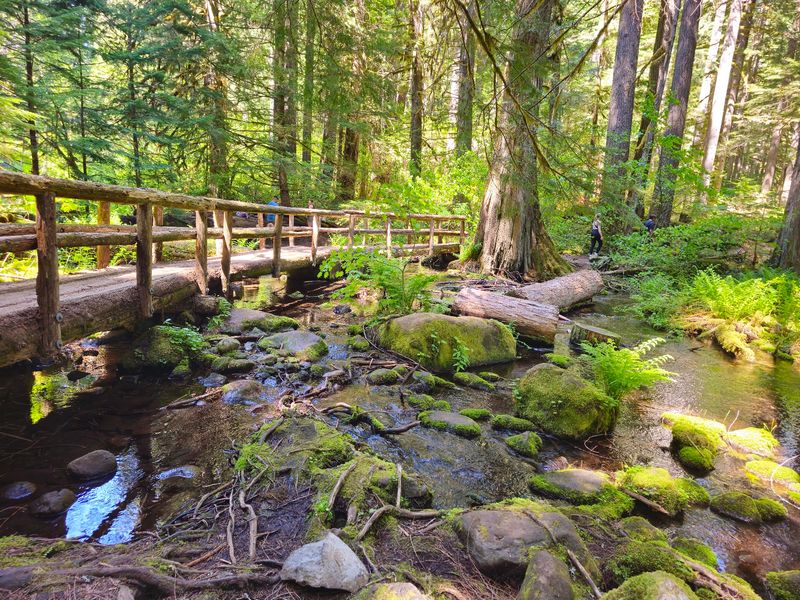
The first mile of the McKenzie River Trail does something clever: it earns your trust. The path rolls through a cathedral of old-growth Douglas firs and western red cedars draped in thick green moss, with the McKenzie River running alongside in a steady, reassuring rush.
Two wooden footbridges cross small streams, and each one feels like a checkpoint telling you that you are heading in exactly the right direction.
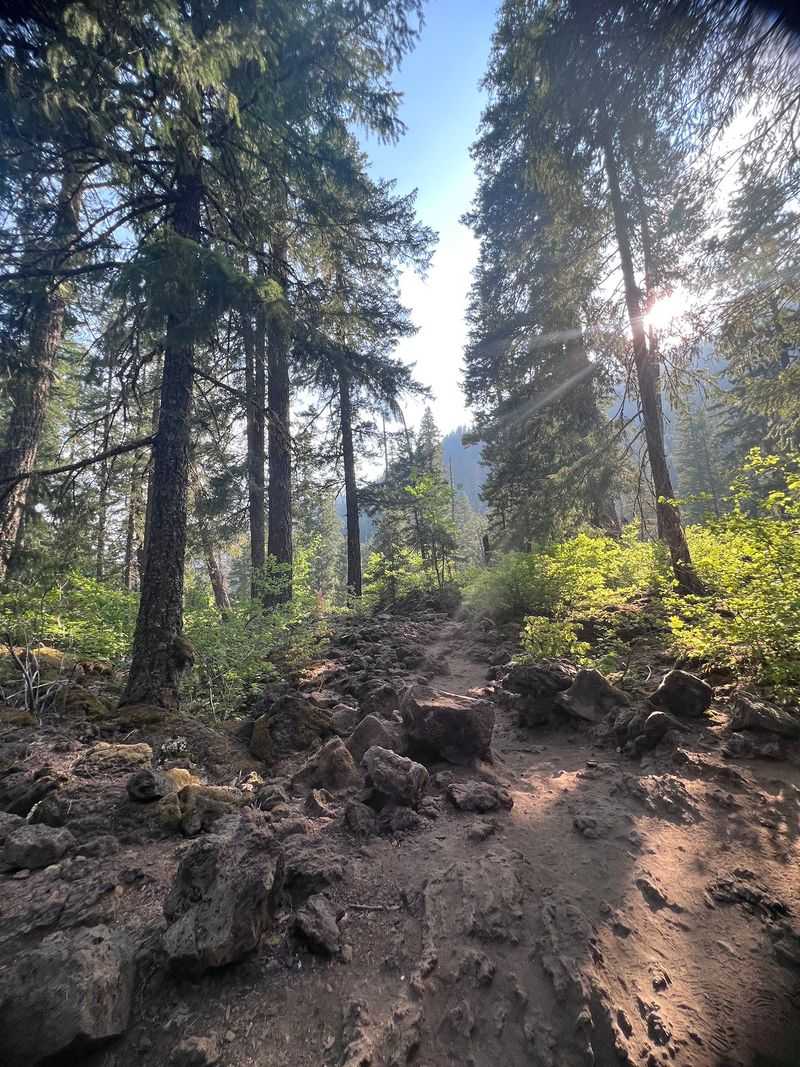
The terrain starts as packed dirt and gradually transitions into volcanic lava rock, which is where the trail gets more interesting and demands a little more attention from your feet. Tree roots cross the path regularly, and a few muddy stretches appear after rain or snowmelt, so waterproof boots are a genuinely good idea rather than just a suggestion.
The air stays noticeably cooler than in the surrounding lowlands, even during July and August, thanks to the dense tree canopy overhead. That natural air conditioning makes the roughly 45-minute to one-hour walk feel far more comfortable than a 4.2-mile round trip might sound on paper.
Every bend in the trail reveals something worth photographing.
The Lava Rock Landscape and What It Tells You About Oregon
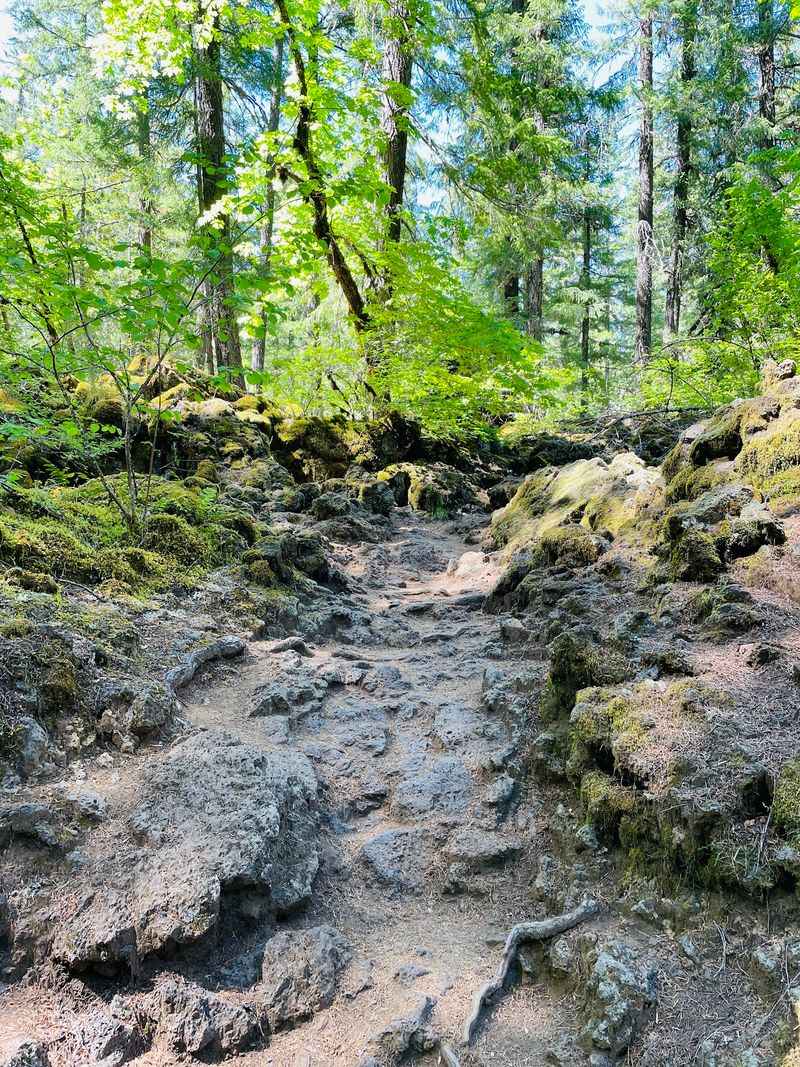
About halfway along the trail, the soft forest floor gives way to a field of jagged black lava rock, and that shift in texture is one of the most visually striking moments of the whole hike. The Cascades are volcanic country, and the lava beds here are a direct reminder that this landscape was shaped by forces far more dramatic than a quiet afternoon stroll might suggest.
The lava rock sections require focused footwork. The surface is uneven, pocked with gaps, and has a way of catching boot edges at unexpected angles.
Rolling an ankle is a real possibility if you are moving too quickly or wearing flat-soled shoes without ankle support. Trekking poles are genuinely helpful here, especially on the return trip when tired legs are less reliable.
What makes this section fascinating rather than just challenging is the contrast. Bright green moss pushes up through the dark rock in patches, and small wildflowers occasionally appear in the cracks.
The river, which flows strong and visible earlier on the trail, disappears entirely into the porous lava bed before you reach the pool, which sets up one of the most dramatic reveals you will find on any Oregon hike.
The Moment the Blue Pool Comes Into View
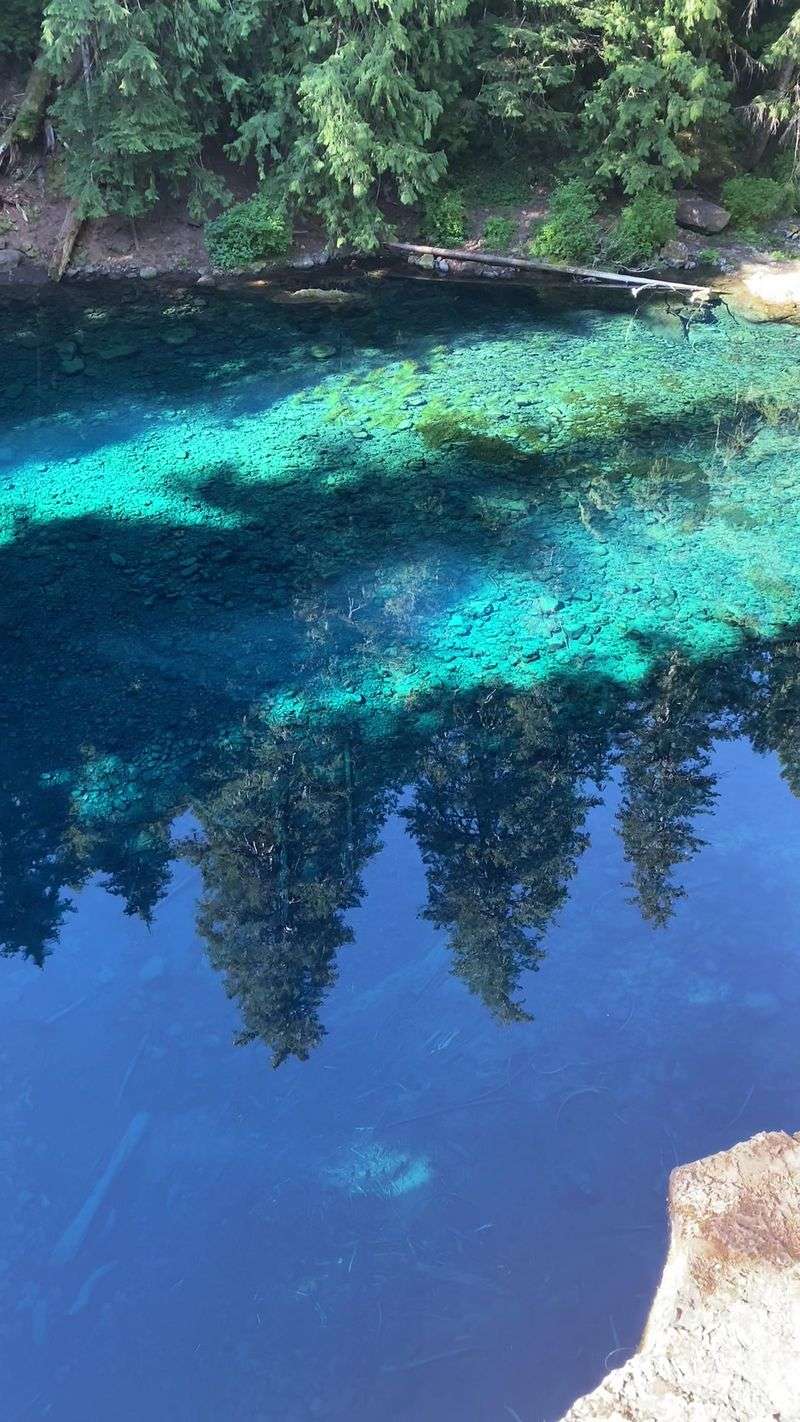
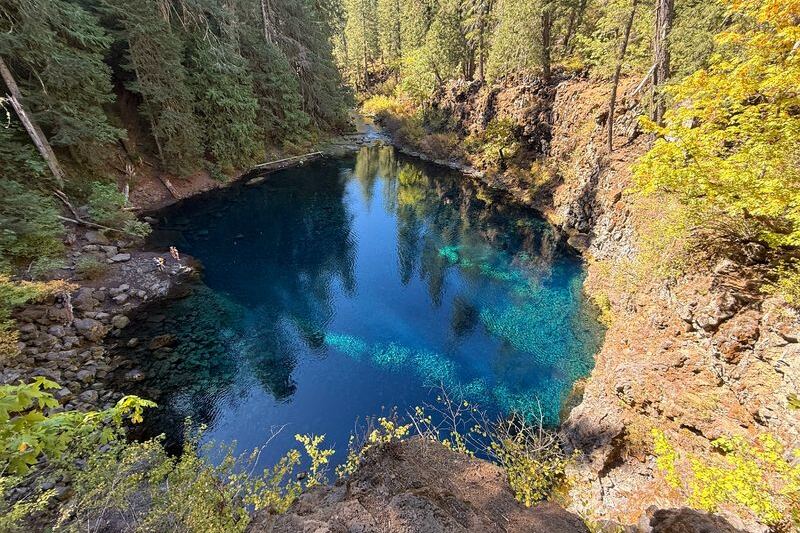
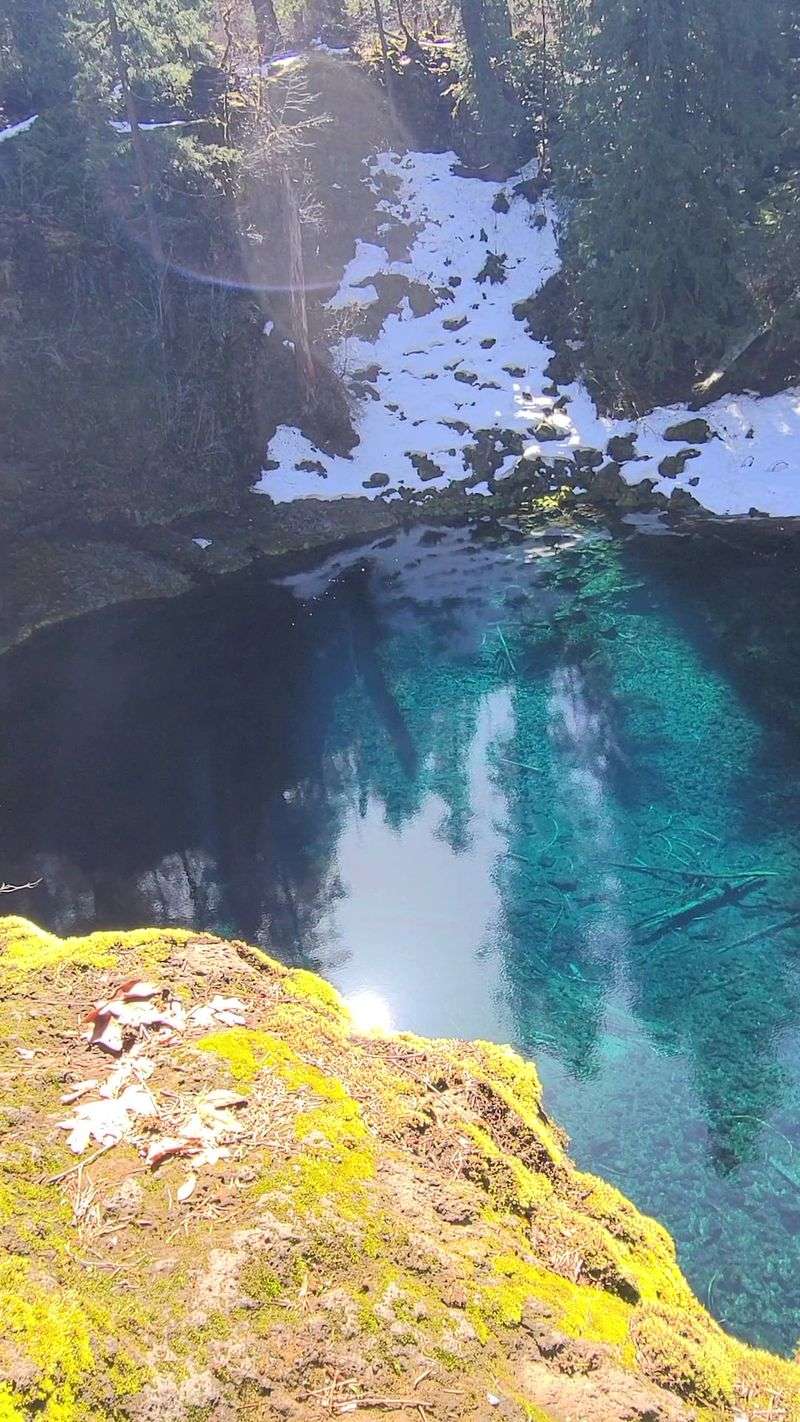
Nothing quite prepares you for the color. After an hour of green forest and black rock, the Blue Pool appears below the overlook like a painting someone left in the middle of the wilderness.
The water is a vivid, electric turquoise that shifts toward deep cobalt in the center, and the clarity is so sharp you can see the rocky bottom even from the viewpoint above.
The pool is fed entirely by groundwater that percolates up through the porous lava rock from the McKenzie River, which explains why the river seems to vanish upstream and then reappears here in such dramatic fashion. The surrounding basalt cliffs drop sharply on three sides, framing the water in dark stone that makes the blue look even more saturated by contrast.
The overlook is where most visitors pause, take photos, and sit quietly for a few minutes with that slightly stunned expression that seems to be universal here. Catching the pool when the sun is directly overhead, around midday to early afternoon, lights up the water most brilliantly.
Coming too early or too late in the day means the cliffs cast shadows across the pool and mute that extraordinary color significantly.
Getting Down to the Water: The Steep Descent to the Pool
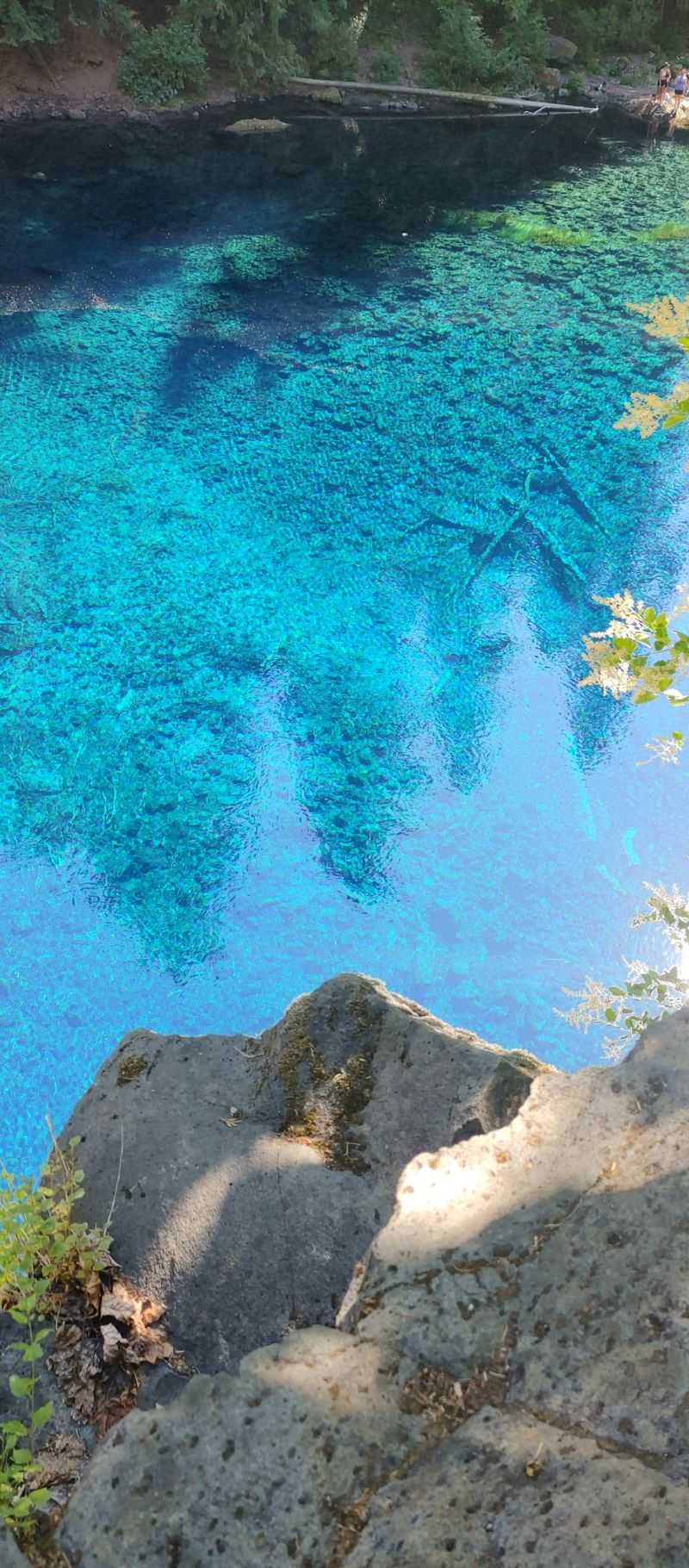
The overlook is spectacular, but some visitors want more than a view from above. Getting down to the water’s edge is a different kind of adventure entirely, involving a steep, unmarked scramble down loose and uneven basalt rock.
There is no paved path, no railing, and no clearly defined route. Blue ribbons tied to rocks help mark a general direction, but the descent still requires both hands and a calm head.
The drop is significant enough that it feels more like light rock climbing than hiking, and anyone with knee problems, a fear of heights, or young children in tow should think carefully before attempting it. That said, plenty of people do make it down safely every day by moving slowly and testing each foothold before committing to it.
Once you reach the bottom, the scale of the place hits differently. The cliffs tower overhead, the pool stretches out in front of you, and the temperature drops noticeably near the water.
The experience of standing at the edge of that pool, with cold mist rising off the surface and nothing but ancient rock and sky above you, is the kind of thing that tends to stay with a person for a long time after the hike is over.
The Water Itself: Cold, Clear, and Completely Unforgettable
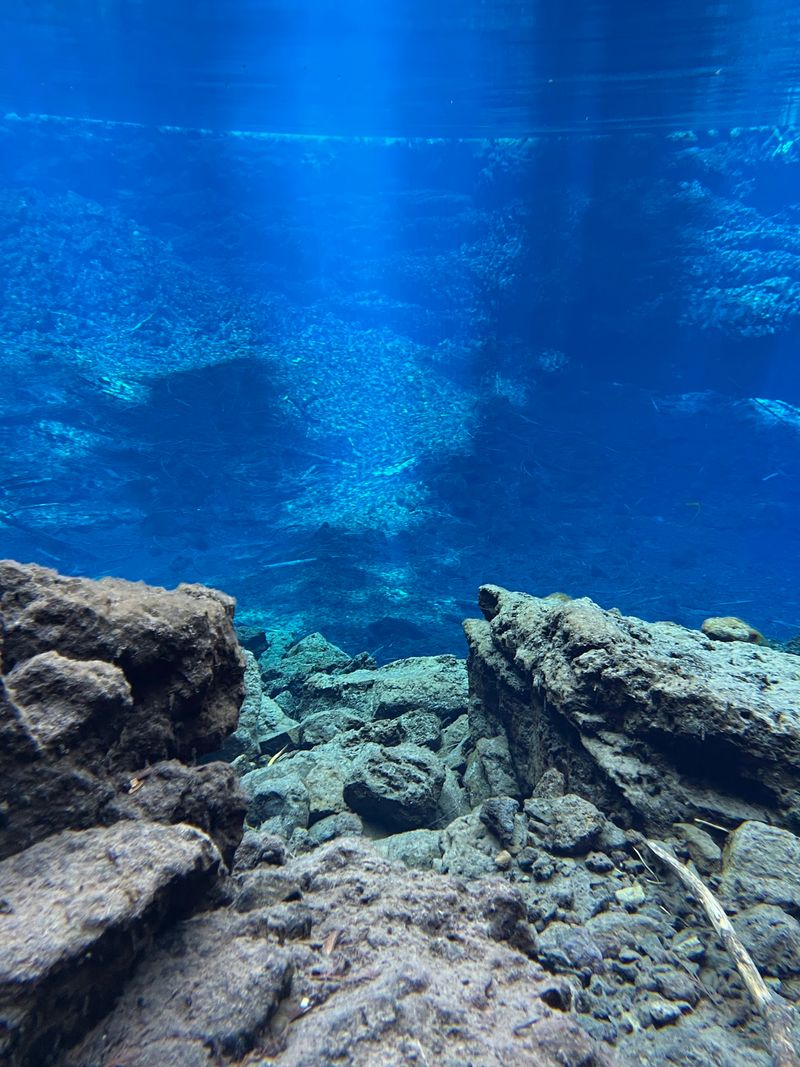
The water temperature at the Blue Pool hovers around 34 to 38 degrees Fahrenheit year-round, fed by snowmelt and groundwater rather than sun-warmed surface runoff. That number sounds abstract until the moment your foot touches the surface, at which point your body communicates the reality very clearly and very immediately.
Most swimmers last anywhere from a few seconds to a few minutes before the cold wins the argument. The shock is real, but so is the strange, buzzing alertness that follows.
The water is so clear that it almost does not look like water from certain angles, more like glass sitting in a stone bowl, which adds to the slightly surreal quality of the whole experience.
Cliff jumping does happen here, with the basalt ledges on one side offering a drop into deep water. This is not an officially sanctioned activity, and the rocks require careful navigation to reach safely, so anyone considering it should assess the conditions carefully and watch where others have jumped before making that call.
For those who prefer to keep their feet dry, simply sitting at the water’s edge and watching the color shift as clouds pass overhead is its own kind of reward.
Wildlife, Plants, and the Living Forest Around the Trail
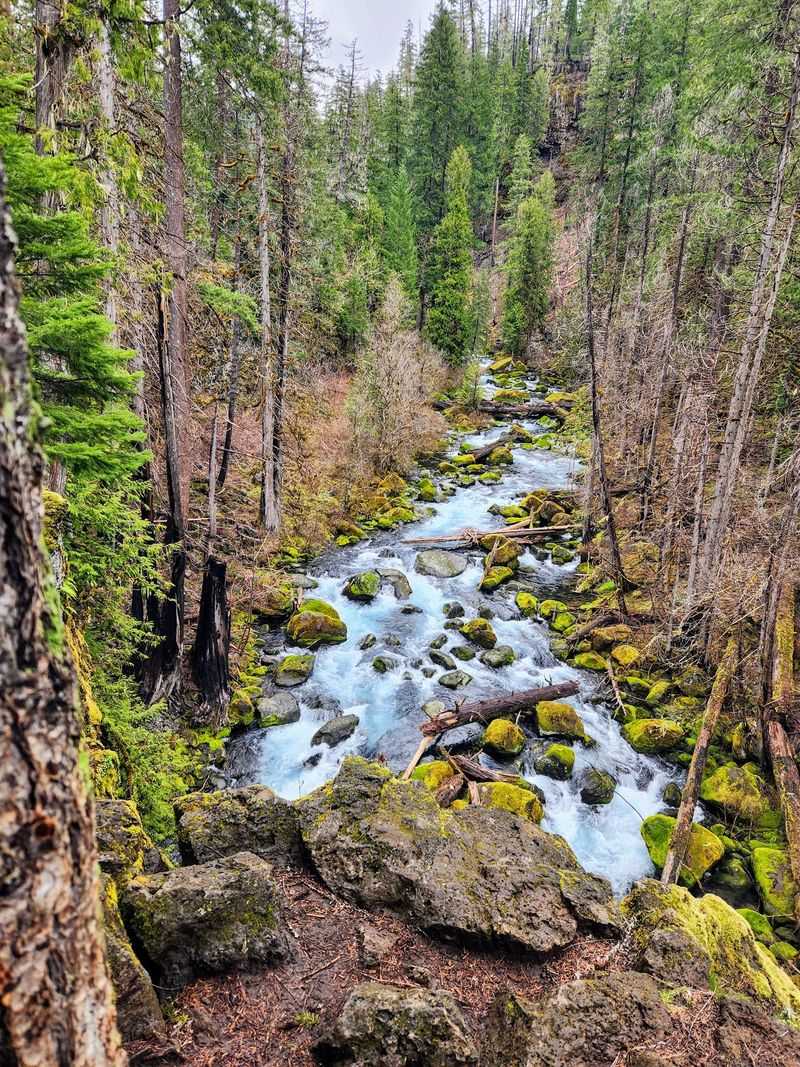
The McKenzie River corridor supports a remarkable variety of plant and animal life, and the trail to the Blue Pool passes through some of the most intact old-growth forest remaining in the Oregon Cascades. The trees here are enormous, with Douglas firs and western hemlocks reaching heights that make you crane your neck uncomfortably just to find the tops.
Moss covers almost every surface: rocks, fallen logs, lower tree trunks, and the wooden bridges. It gives the forest a lush, almost prehistoric quality that is hard to describe accurately without sounding like you are exaggerating.
Ferns fill the understory in dense green waves, and in spring, wildflowers push through the lava rock in spots that seem like they should not support any plant life at all.
Wildlife sightings along the trail include Steller’s jays, varied thrushes, and the occasional black-tailed deer moving quietly through the trees parallel to the path. The river itself supports native cutthroat trout and steelhead, and osprey are sometimes visible hunting above the water.
The sensory experience of the trail, the smell of damp earth, the sound of moving water, the cool air, is as much a part of the visit as the pool itself.
Best Times to Visit and What to Expect Each Season
Summer is the most popular time to hike to the Blue Pool, and for good reason. The weather is reliable, the days are long, and the pool looks its most vivid under direct afternoon sunlight.
The trade-off is that weekends between June and September bring serious crowds. The parking area fills by mid-morning, and the overlook can hold 20 or more people at a time during peak hours.
Spring visits offer a quieter experience, with snowmelt feeding the river at full volume and the forest in its freshest, most intensely green state. The trail can be muddy in March and April, and some sections may have lingering snow, but the path remains navigable with proper footwear.
Fall brings cooler temperatures, golden foliage in the deciduous patches, and significantly thinner crowds.
Winter hiking here is genuinely beautiful, with snow blanketing the lava rock and frost edging the moss, but the rocky sections become more treacherous and require microspikes or traction devices. The pool itself remains open year-round, and the blue color is just as striking against a winter backdrop as it is in summer.
Midday on a weekday, regardless of season, is generally the sweet spot for a more peaceful visit.
Tips for Making the Most of Your Visit
A few practical details can make the difference between a smooth trip and a frustrating one. The trail is not ADA accessible and is not suitable for strollers.
Bringing at least two liters of water per person is a solid baseline, more if the weather is warm or you plan to spend time at the pool before hiking back. Snacks help, especially on the return trip when legs are tired and the parking lot feels farther away than it did on the way in.
Footwear matters more here than on most trails. Trail runners with good grip or proper hiking boots with ankle support handle the lava rock sections far better than sandals or flat-soled sneakers.
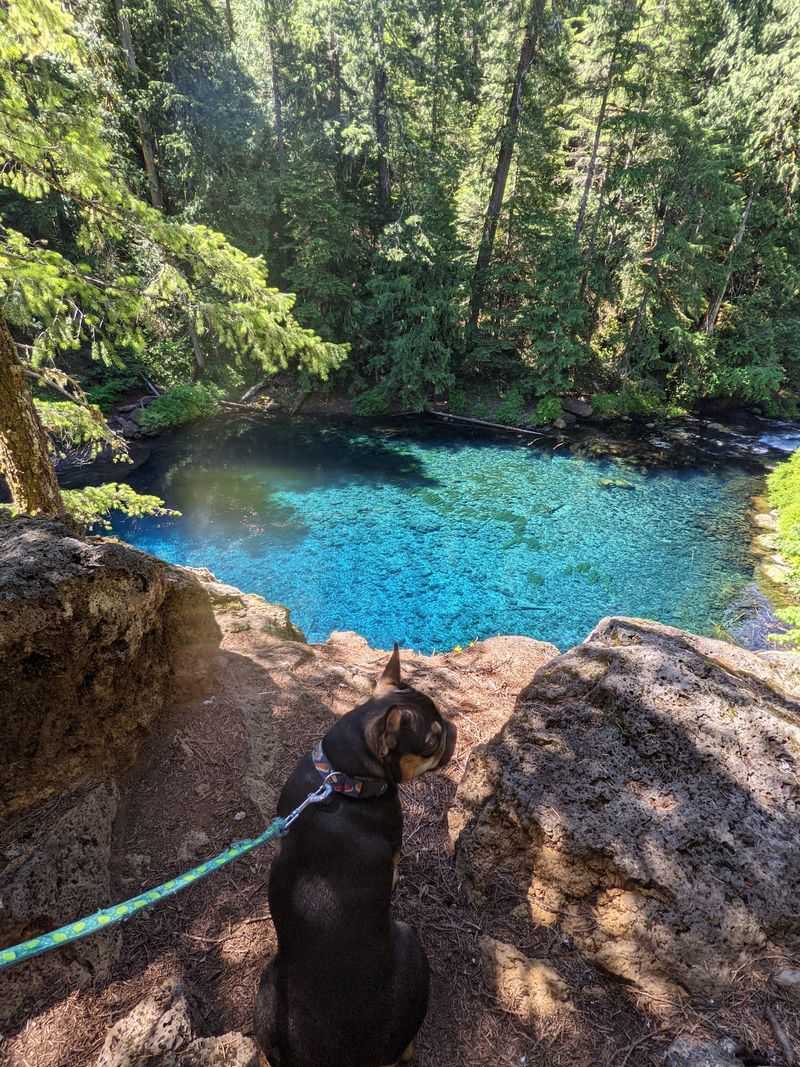
Dogs are welcome on the trail and tend to enjoy the river crossings enormously, but bring extra water for them since the pool water is not an ideal drinking source.
Check the sunset time before you leave the trailhead. The trail is open 24 hours, but navigating lava rock by phone flashlight is not anyone’s idea of a good time.
Arriving with at least three hours of daylight remaining gives you enough time to reach the pool, enjoy it properly, and return to your car before the light fades completely.
Share this story