Before infinity pools and glass-walled suites became the default luxury experience, tropical travel meant something grander and a little more theatrical. Grand hotels with pastel facades, courtyard gardens, and dramatic swimming pools welcomed guests who dressed for dinner and stayed for weeks.
Some of these legendary properties have never stopped welcoming travelers, and their history reads like a who’s who of Hollywood royalty, world leaders, and international jet-setters. A few of these places were actually co-owned by movie stars.
Others simply preserved the architecture and spirit of an era when a tropical vacation demanded a certain level of ceremony. From a pink palace on Waikiki Beach to a cliffside hideaway above the Pacific in Mexico, these 15 destinations prove that old-school glamour never really checked out.
Pack your best linen outfit and read on, because this list is genuinely worth the trip.
1. Hotel Los Flamingos, Acapulco, Guerrero, Mexico
Johnny Weissmuller, the actor who defined Tarzan for a generation of moviegoers, did not just visit Hotel Los Flamingos. He lived there, occupying the largest suite until his passing.
John Wayne co-owned the property.
The hotel, originally built in the 1930s, was purchased in the 1950s by a group of Hollywood stars who became known locally as the “Hollywood gang.”
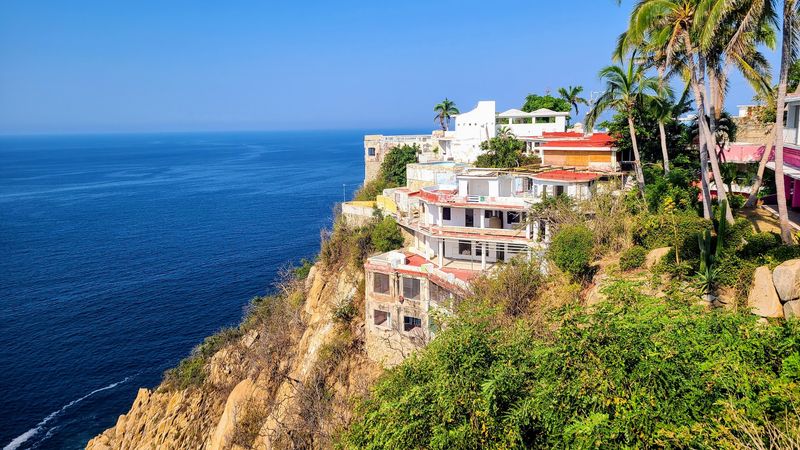
Perched atop Acapulco’s highest cliffs with direct views over the Pacific, the hotel became the social center of a glamorous mid-century scene. Cary Grant, Errol Flynn, Fred MacMurray, Red Skelton, Roy Rogers, Rex Allen, and Richard Widmark were among the famous names regularly associated with the property during its peak years.
The bar earned a reputation in the 1950s as the birthplace of the “Coco Loco” drink.
The John Wayne Suite remains one of the hotel’s most requested rooms, decorated with memorabilia from the actor’s career and personal life. Vintage photographs of the celebrity guests still line the lobby walls, giving the property an unusually tangible connection to its history.
The cliffside setting, with its dramatic Pacific backdrop, does most of the decorating work that no interior designer could replicate.
2. Round Hill Hotel and Villas, Montego Bay, Jamaica
Oscar Hammerstein composed Broadway musicals here. Noel Coward owned a villa on the grounds.
Round Hill opened in 1953 on a private Jamaican peninsula, and from the very beginning, its ownership and guest roster belonged to a different category of glamorous altogether.
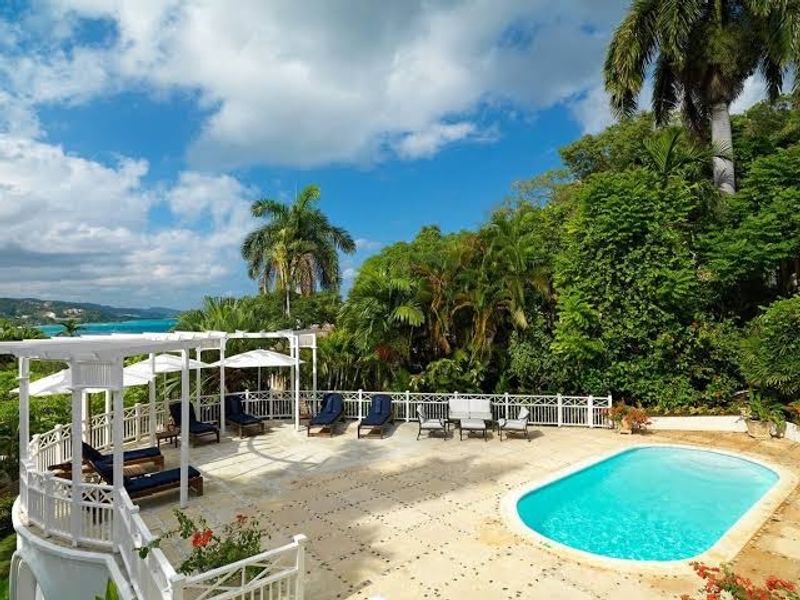
The resort’s main building rooms were decorated by Ralph Lauren, a design partnership that reinforced the property’s reputation for understated Caribbean elegance rather than flashy tropical excess. White buildings, lush greenery, and a private beach create a setting that feels more like a well-kept personal estate than a conventional resort.
Celebrities, dignitaries, writers, and entertainers have been returning here for more than seven decades.
What makes Round Hill particularly compelling is how little it has chased trends. The property has not reinvented itself into a minimalist spa retreat or a nightlife destination.
It remains a place where the architecture, the landscape, and the traditions of the house are the main attraction. For travelers who find that most modern resorts look identical, a stay at Round Hill offers the refreshing experience of a place that has always known exactly what it is and has never felt the need to change.
3. The Beverly Hills Hotel, Beverly Hills, California
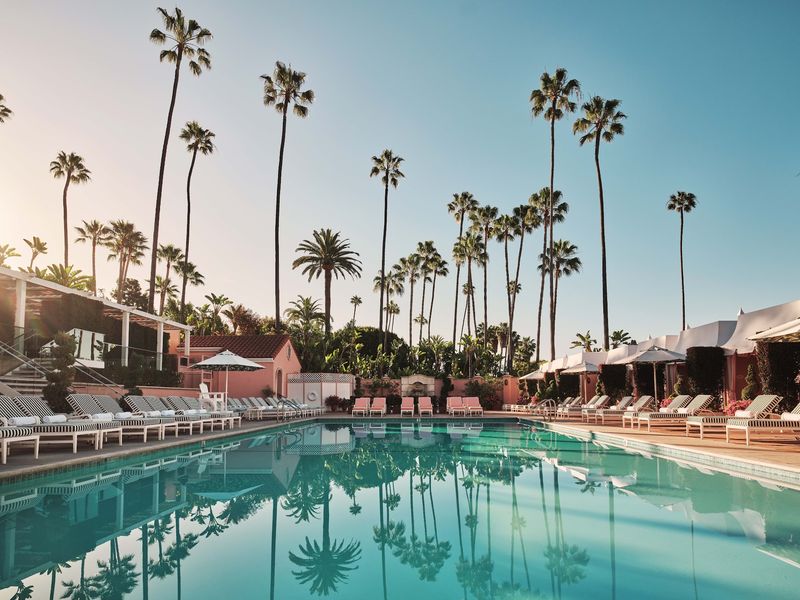
Howard Hughes once reserved up to 25 rooms at a time at this hotel, and he was not even considered its most eccentric guest. The Beverly Hills Hotel opened in 1912, years before Beverly Hills was officially incorporated as a city, making the hotel older than the neighborhood built around it.
Its pink-and-green palette, columned entrance, and palm-lined pool have defined Hollywood’s visual language of resort luxury for well over a century.
Elizabeth Taylor spent six of her eight honeymoons at the property, and her father operated an art gallery in the lobby. Marilyn Monroe frequently stayed in bungalow No. 7.
Charlie Chaplin, Rudolph Valentino, Spencer Tracy, John Wayne, and the entire Rat Pack all made the hotel a regular stop. The Polo Lounge became a gathering spot for Frank Sinatra, Dean Martin, and Cary Grant.
Actress Marlene Dietrich personally lobbied the management to overturn the hotel’s policy prohibiting women from wearing slacks on the premises, and she succeeded. The hotel later appeared on the cover of The Eagles’ album “Hotel California” and served as a filming location for “California Suite.” Few properties carry this much documented history per square foot.
4. The Colony Hotel, Palm Beach, Florida
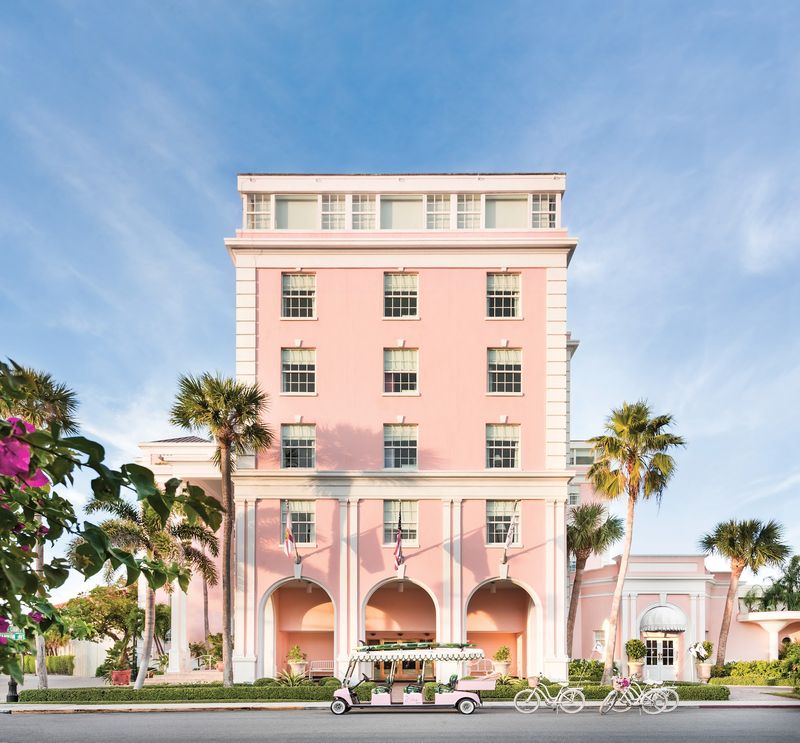
Palm Beach has never been shy about its love of color, and The Colony Hotel, which opened in 1947, has always been the most enthusiastic participant in that tradition. Painted a vivid pink and flanked by palms just steps from Worth Avenue and the beach, the hotel was built for a town that understood glamour as a full-time commitment rather than an occasional indulgence.
The guest list over the decades covers an impressive range of entertainment royalty. Judy Garland, Lena Horne, Frank Sinatra, Sophia Loren, and John Lennon all stayed here at various points.
The interiors lean deliberately into Palm Beach’s affection for bold tropical patterns, creating a space that is colorful, playful, and unapologetically nostalgic without tipping into theme-park territory.
The hotel’s enduring appeal comes from its refusal to neutralize itself. Many historic properties have been renovated into muted, minimalist versions of their former selves in recent decades.
The Colony went in the opposite direction, doubling down on the saturated palette and old-school polish that made it distinctive in the first place. An afternoon at The Colony still carries the particular ceremony that Palm Beach has always taken seriously, even when the rest of the world has moved on.
5. The Royal Hawaiian, Honolulu, Hawaii
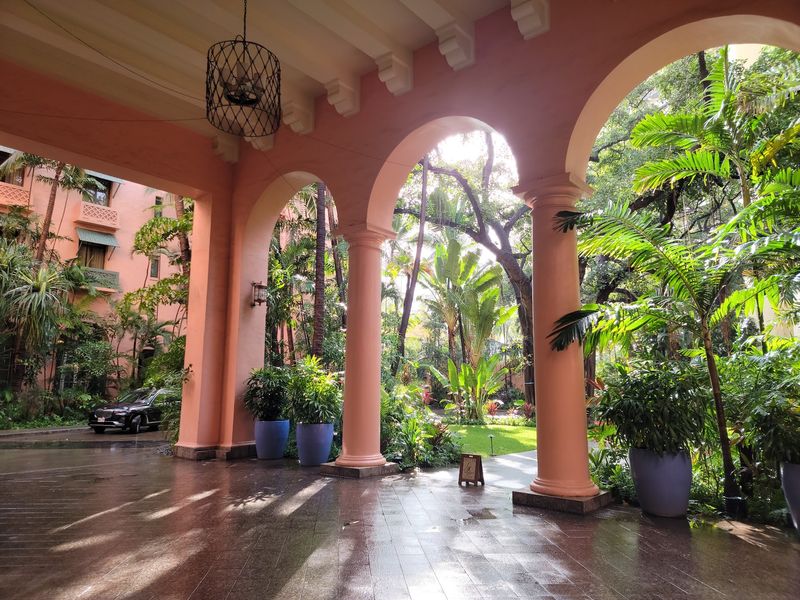
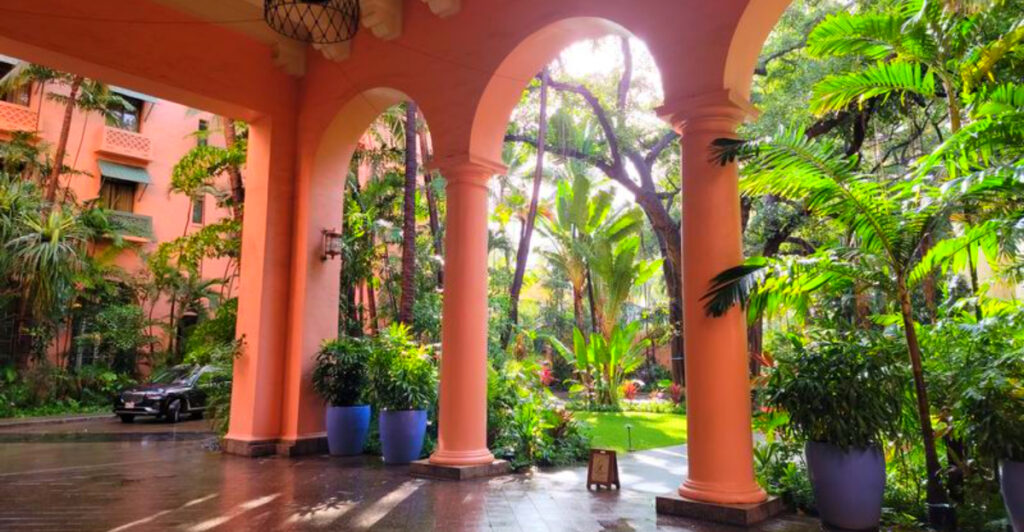
Rudolph Valentino’s Arabian film roles inspired the architecture of this Waikiki landmark, which is a surprisingly specific origin story for one of the Pacific’s most photographed hotels. The Royal Hawaiian opened on February 1, 1927, after just 18 months of construction at a cost of approximately four million dollars.
Its Spanish-Moorish design, pink concrete stucco exterior, and beachfront position on 15 acres of former royal Hawaiian land earned it the nickname “The Pink Palace of the Pacific” almost immediately.
The guest list over the decades reads like a vintage Hollywood directory. Shirley Temple learned to surf here during the 1930s, and President Franklin D.
Roosevelt was among the early prominent visitors. Clark Gable, Marilyn Monroe, Frank Sinatra, and Elvis Presley all stayed at the property during their respective peaks of fame.
The hotel’s Coconut Grove garden sits on the former site of Queen Kaahumanu’s Summer Palace, adding a layer of Hawaiian royal history beneath the Hollywood glamour. The Monarch Room inside the hotel was designed to evoke the visual grandeur of the 1920s.
Nearly a century after opening, the pink facade still stops people in their tracks on Waikiki Beach.
6. Condado Vanderbilt Hotel, San Juan, Puerto Rico
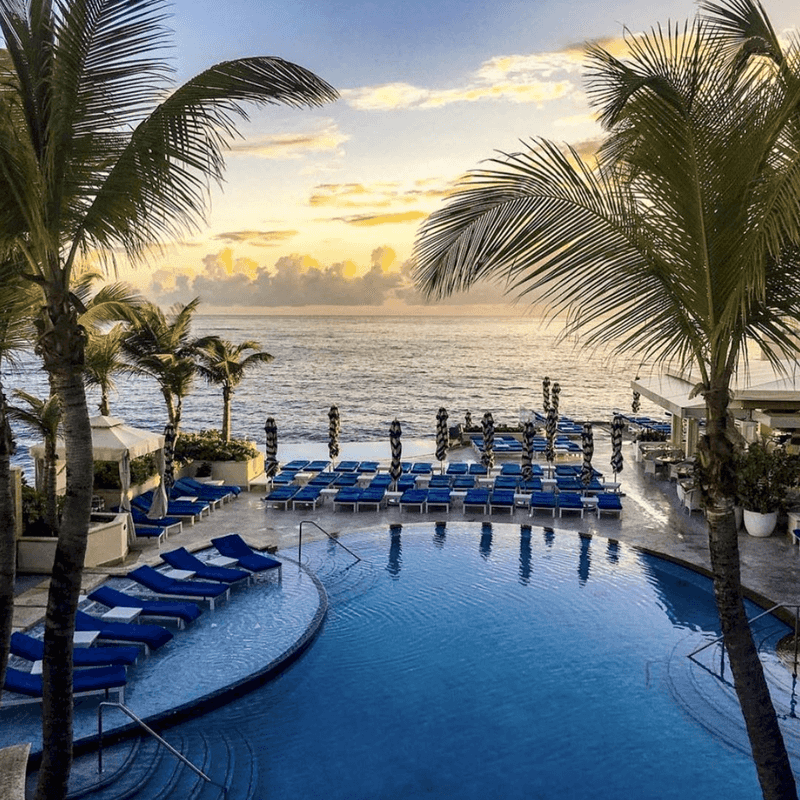
Frederick William Vanderbilt did not simply lend his name to this hotel. He personally financed it, selected the architects, and took an active role in its construction.
The Condado Vanderbilt opened on October 16, 1919, and it holds the distinction of being Puerto Rico’s first luxury hotel. The architects were Warren and Wetmore, the same firm responsible for New York’s Grand Central Terminal.
The building’s Spanish Colonial Revival and Beaux-Arts design features white walls, red-tiled accents, French-inspired windows, soaring ceilings, ornate marble, intricate mosaics, and a notable double spiral staircase. Presidents Franklin D.
Roosevelt and John F. Kennedy both stayed here, as did First Lady Eleanor Roosevelt, aviator Charles Lindbergh, Hollywood actor Errol Flynn, comedian Bob Hope, tango star Carlos Gardel, and pianist Arthur Rubinstein.
The hotel also became the first on the island to house a casino after gambling was legalized in Puerto Rico in 1940. It was listed on the National Register of Historic Places in 2008.
For a property built over a century ago on a Caribbean oceanfront, the Condado Vanderbilt manages to feel both historically significant and genuinely livable, which is a combination far harder to achieve than its elegant facade suggests.
7. The Colony Palms Hotel and Bungalows, Palm Springs, California
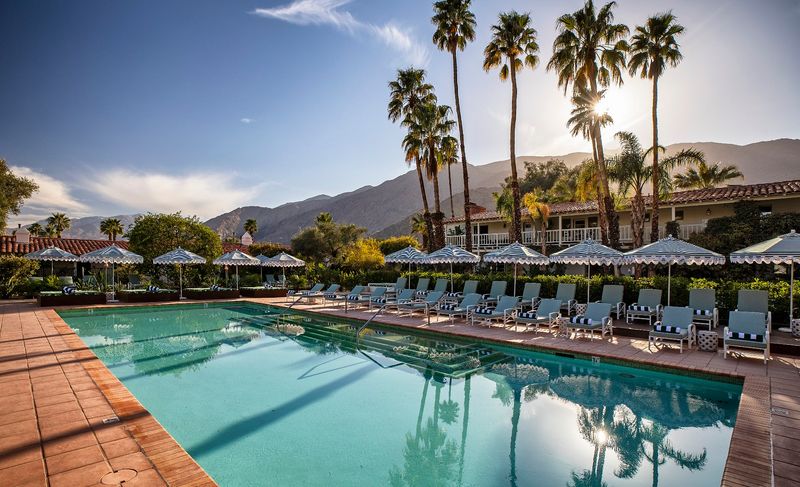
The original owner of this Palm Springs property was a reputed mobster, and the basement housed a speakeasy accessible through a secret staircase hidden behind a pantry door. That is the kind of origin story that most hotels could only dream about.
The Colonial House opened in 1936 and quickly became a favored retreat for Hollywood’s elite escaping Los Angeles for the desert.
Robert Howard, son of Seabiscuit’s owner Charles Howard, later took over the property and renamed it the Howard Manor. His wife was Academy Award-nominated actress Andrea Leeds.
Boxing champion Jack Dempsey also held ownership at one point. The guest list during the hotel’s peak years included Clark Gable, Carole Lombard, Humphrey Bogart, Kirk Douglas, Zsa Zsa Gabor, Frank Sinatra, Howard Hughes, Ronald Reagan, Dean Martin, and Marilyn Monroe.
Today the property operates as The Colony Palms Hotel and Bungalows, retaining its Spanish Colonial architecture, palm-lined pool, tiled roofs, and intimate courtyards against the dramatic San Jacinto Mountain backdrop. Unlike some vintage properties that rely entirely on historical reputation, this one has a physical setting that earns its glamorous image independently.
The mountains, the palms, and the pool do the heavy lifting that no amount of renovation could manufacture.
8. Halekulani, Honolulu, Hawaii
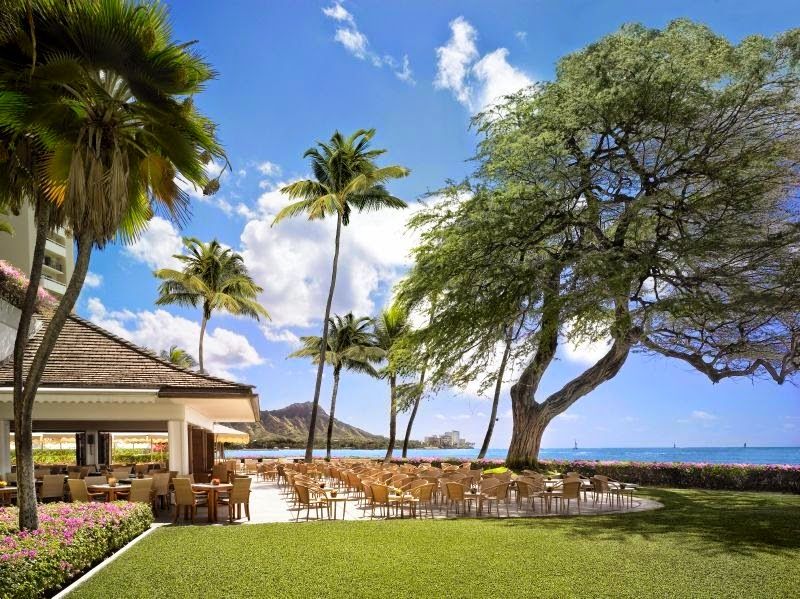
Waikiki is not exactly known for understatement, which makes Halekulani’s approach to luxury genuinely unusual. While much of the neighborhood competes for attention with towers, neon, and constant activity, Halekulani occupies its stretch of shoreline with a quieter kind of confidence.
The hotel’s manicured grounds, carefully maintained palms, and low-key architectural style reflect a deliberate choice to let the location speak rather than shout.
The Pacific views toward Diamond Head are the hotel’s most obvious asset, and the property uses them well without turning every surface into a panoramic observation deck. The beachfront position recalls an earlier era of Hawaiian travel, when visitors arrived by steamship, stayed for extended periods, and dressed formally for dinner on the terrace.
Halekulani’s design does not recreate that period theatrically, but it preserves enough of its spirit to make the comparison feel natural.
Glamour at Halekulani is achieved through restraint rather than spectacle. Generous open spaces, considered landscaping, and a refusal to overcrowd the grounds with amenities create a sense of ease that many larger, busier resorts spend enormous sums trying to simulate.
For travelers who find that most Waikiki properties feel like vertical shopping malls with ocean views, this hotel offers a noticeably different experience from the moment of arrival.
9. Biltmore Hotel Miami Coral Gables, Coral Gables, Florida
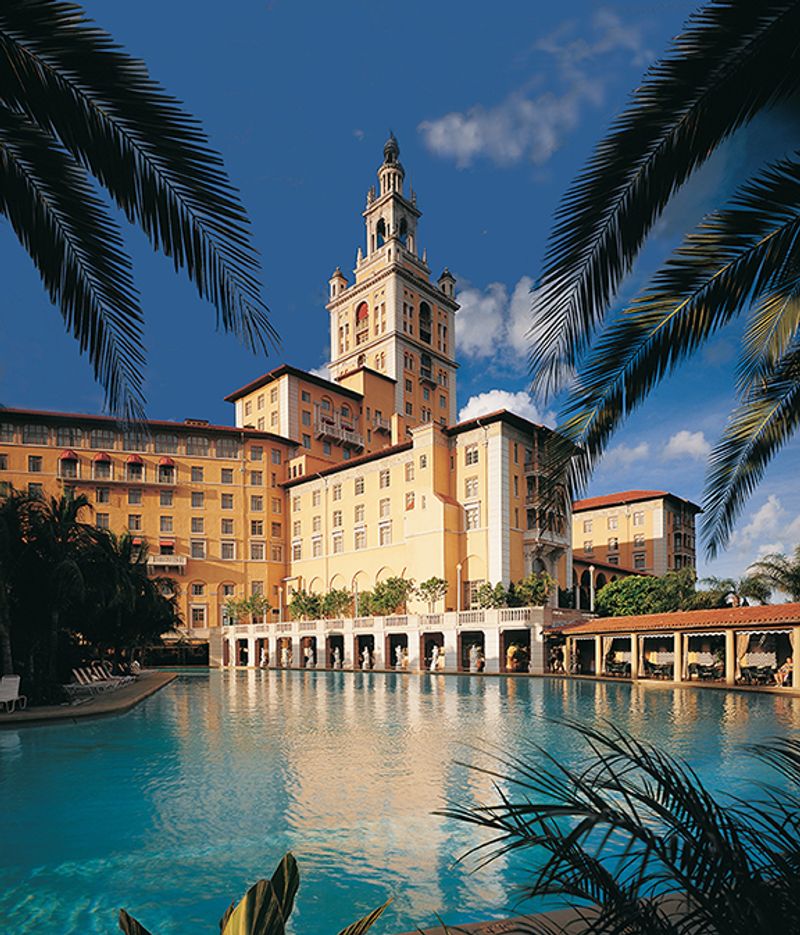
Johnny Weissmuller was discovered as a swim coach and performer at this hotel before he became Tarzan, which is the kind of origin story that tends to follow a building around forever. The Biltmore opened in January 1926, developed by George Merrick as the centerpiece of his Coral Gables vision.
Architects Leonard Schultze and S. Fullerton Weaver, who also designed New York’s Grand Central Terminal, created a Mediterranean Revival structure with Italian, Spanish, and Moorish influences.
For a period after opening, the Biltmore was the tallest structure in Florida. Its swimming pool was the largest in the world at the time of construction and is now recognized as the sixth-largest in the United States.
During the Jazz Age of the 1930s, European and Hollywood royalty filled the hotel, attending world-class golf tournaments and performances by big bands in the grand ballroom.
The hotel was converted into a military hospital during World War II and remained vacant for years afterward, a period that inadvertently preserved many of its original architectural features from modernization. It was added to the National Register of Historic Places in 1972 and designated a National Historic Landmark in 1996.
The result today is a property that feels genuinely historic rather than historically themed.
10. Moana Surfrider, A Westin Resort & Spa, Waikiki Beach, Honolulu, Hawaii
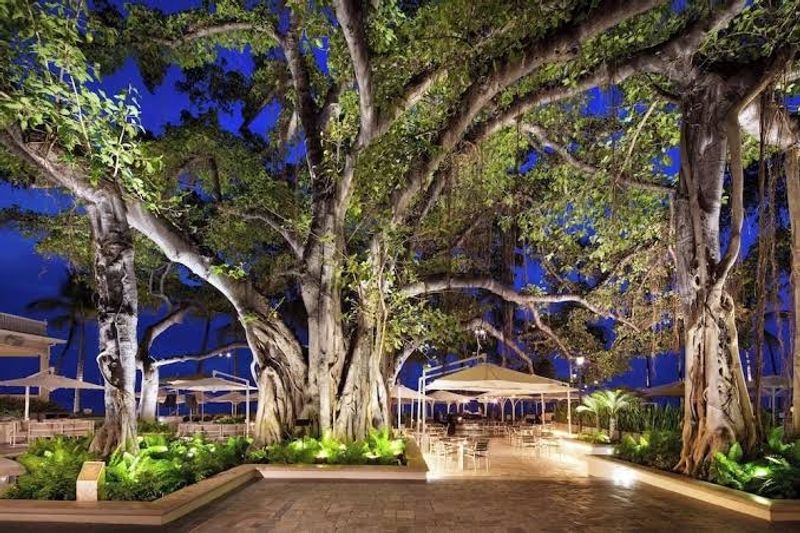
Waikiki’s first hotel opened in 1901, decades before the neighborhood became the tourist destination it is today, and it is still standing directly on the beach. The Moana Hotel, now operating as the Moana Surfrider, predates nearly everything around it and carries that history in its white facade, columned verandas, and broad oceanfront porch in a way that no amount of renovation could manufacture from scratch.
The towering banyan tree on the property has become one of the hotel’s most recognized features, providing a natural focal point that connects the building to its earliest years of operation. The historic sections of the resort retain the unhurried, spacious character of a grand seaside hotel from an era when guests arrived with steamer trunks and planned to stay for the season rather than the weekend.
Modern Waikiki has grown up around the Moana Surfrider in layers of glass towers and busy commercial streets, which makes the hotel’s preserved historic architecture feel all the more distinctive by contrast. The property offers a specific kind of glamour that does not depend on celebrity guest lists or architectural superlatives.
It simply occupies a piece of Waikiki’s original identity, and that connection to the island’s earliest tourism era is difficult to replicate or replace.
11. La Quinta Resort & Club, La Quinta, California
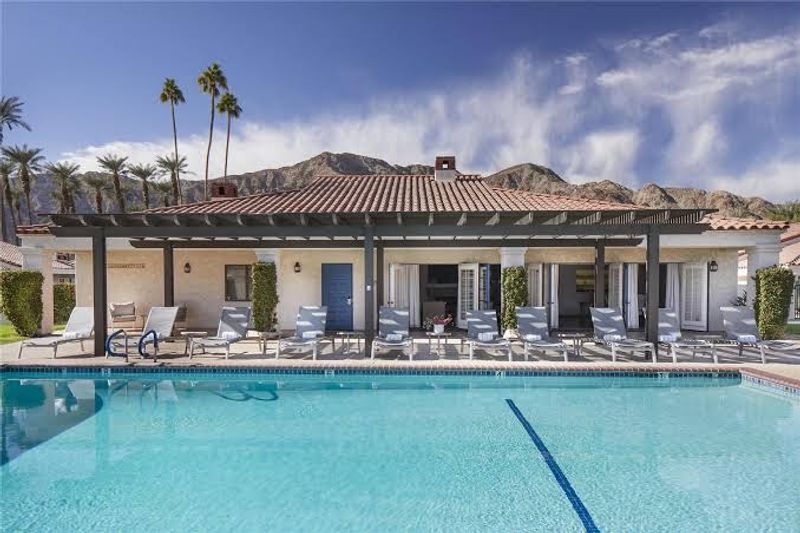
Not every escape from Hollywood required a passport or a long ocean voyage. For generations of California film stars, the desert east of Los Angeles offered privacy, warmth, and a landscape dramatic enough to feel genuinely far from the city without the inconvenience of actually leaving the state.
La Quinta Resort and Club, with its low-slung casitas, red-tile roofs, citrus trees, and palm-lined courtyards, became one of the primary answers to that particular need.
The property does not organize itself around a single grand hotel building. Instead, it unfolds through a network of landscaped paths, intimate courtyards, and pools tucked between Spanish-style structures.
The Santa Rosa Mountains rise behind the resort, providing a backdrop that shifts dramatically with the light and the seasons without ever feeling oppressive or overwhelming.
12. Graycliff Hotel, Nassau, The Bahamas
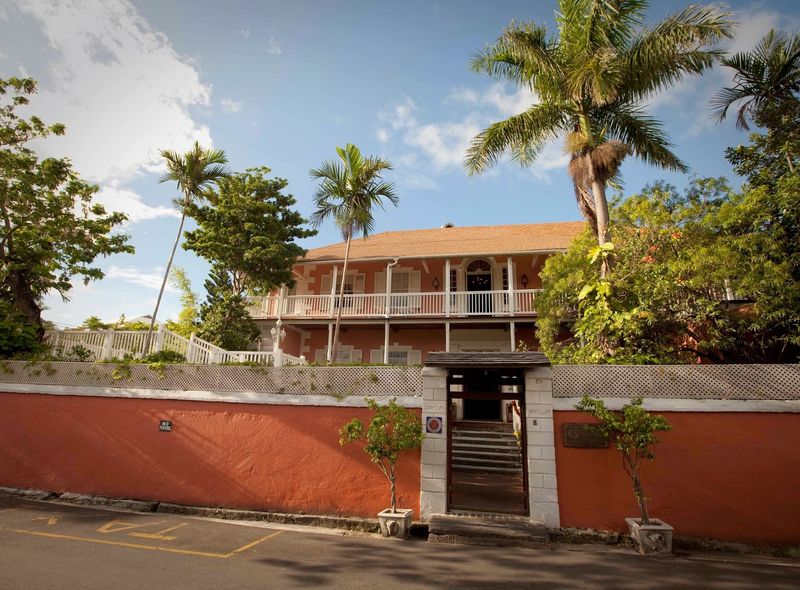
Most visitors to Nassau head straight for the sprawling beachfront resorts on the edge of the island, which means that Graycliff Hotel, tucked into a historic mansion near the heart of old Nassau, operates in a category almost entirely its own. The property is not competing with giant water parks or casino floors.
It is offering something considerably rarer: the experience of staying inside an older chapter of the city itself.
The mansion’s architecture, tropical courtyards, shaded terraces, and traditional furnishings create an atmosphere that feels genuinely private rather than curated for Instagram. The scale is deliberately intimate, more akin to a well-appointed private house than a commercial hotel.
Guests who arrive expecting the standard Caribbean resort format tend to recalibrate quickly once they see the property’s mahogany interiors and garden paths.
13. Half Moon, Montego Bay, Jamaica
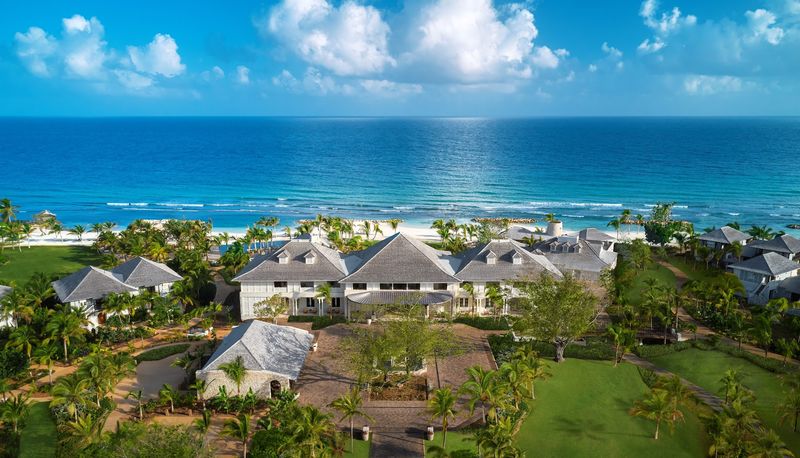
Half Moon covers enough coastline near Montego Bay that a guest could spend several days simply walking the grounds without covering the same path twice. The resort’s broad lawns, towering palms, whitewashed architecture, and private beach represent the classic Caribbean resort fantasy at a scale that most properties can only approximate.
There is no minimalist design philosophy here, no stripped-back aesthetic, and no attempt to look like anything other than exactly what it is: a grand tropical resort built for people who enjoy grand tropical resorts.
The property combines generous open spaces with the kind of polished resort traditions that have attracted generations of repeat visitors. Mornings at Half Moon tend to unfold slowly, with the Caribbean Sea providing a constant backdrop to whatever the day’s agenda happens to be.
Evenings at the resort carry a slightly more formal energy, consistent with the kind of dressed-up tropical glamour that defined Caribbean travel during its mid-century peak.
14. The Gardens Hotel, Key West, Florida
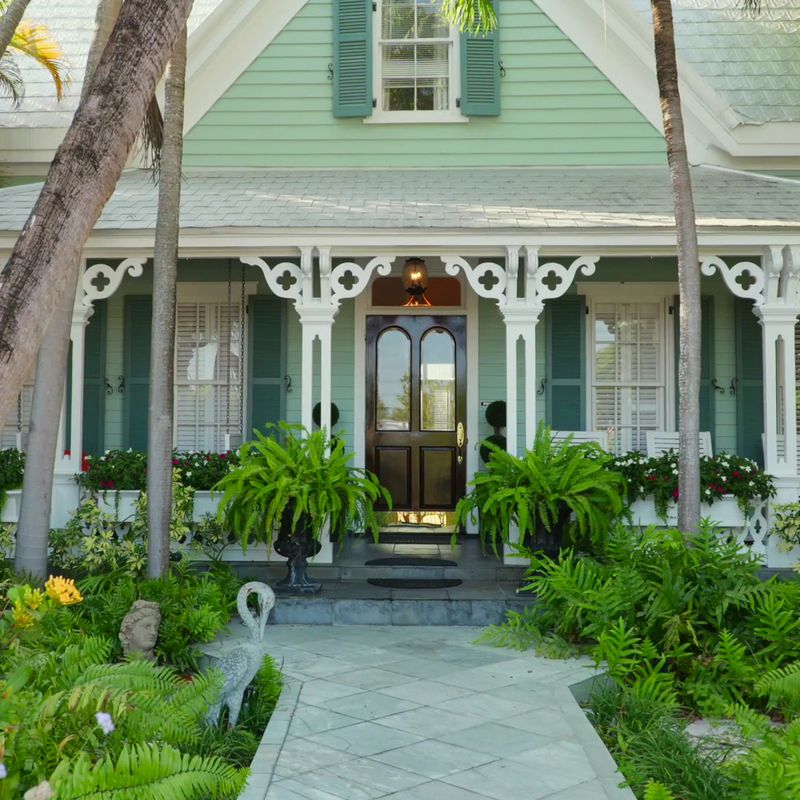
Peggy Mills purchased this Key West property in 1930 and spent years transforming it into a botanical garden, which means that the lush, layered greenery surrounding the hotel today is not a design choice made by a recent renovation team. It is nearly a century of intentional cultivation.
The Gardens Hotel is listed on the National Register of Historic Places and sits one block from Duval Street in Old Town, close enough to the action for convenience but separated enough to feel genuinely removed from it.
The interiors feature Bahamian plantation-style furnishings, polished oak floors, and a collection of local art. Owner Kate Miano decorated each room individually using antique furniture, original artwork, and Italian linens, which means that no two rooms in the hotel are identical.
The property operates as an adults-only retreat, a detail that contributes significantly to the overall atmosphere of calm.
15. Hotel La Palma, Capri, Campania, Italy
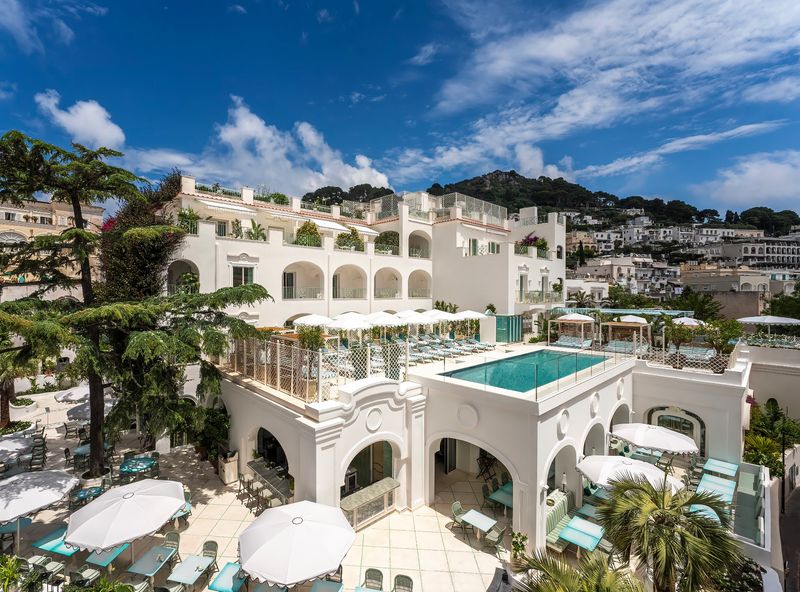
Capri has been collecting glamorous visitors for so long that the island itself functions as a kind of living credential. Hotel La Palma places guests directly in the center of the island’s famous social scene, which means that the narrow streets, designer boutiques, restaurant tables, and glimpses of brilliant blue Mediterranean water are not amenities to seek out.
They are simply the immediate surroundings the moment a guest steps outside.
The hotel’s pale interiors, Mediterranean architectural details, and breezy terrace styling reflect the polished side of island life without trying to compete with the natural setting. Capri does not need dramatic interior design to make a statement, and Hotel La Palma seems to understand that clearly.
The building’s character comes from its materials, its proportions, and its position within a town that has been drawing international travelers for generations.
Share this story