Oklahoma has a knack for hiding genuinely remarkable experiences behind understated storefronts and quiet side streets. Stumbling onto a children’s museum that somehow fits a water play room, a working planetarium, a packing tape tunnel, and a full engineering station under one roof feels less like planning and more like luck.
What looks from the outside like a straightforward kids’ attraction turns out to be one of the most thoughtfully layered science-and-play spaces in the state. Families who make the trip leave talking about it for weeks.
Where Discovery Lab Sits and What It Actually Is
Parked right along Riverside Drive in Tulsa, Discovery Lab occupies a spot that puts it within easy reach of one of the city’s most beloved green spaces. The Gathering Place park sits practically across the street, making the surrounding block feel like a genuine family destination rather than just a single stop on a busy errand list.
At its core, Discovery Lab is a hands-on children’s science museum and interactive play center. The focus lands squarely on STEM learning delivered through physical, full-body exploration rather than passive reading or screen-watching.
Kids touch, build, climb, splash, and tinker their way through the exhibits rather than simply observing them from a distance.
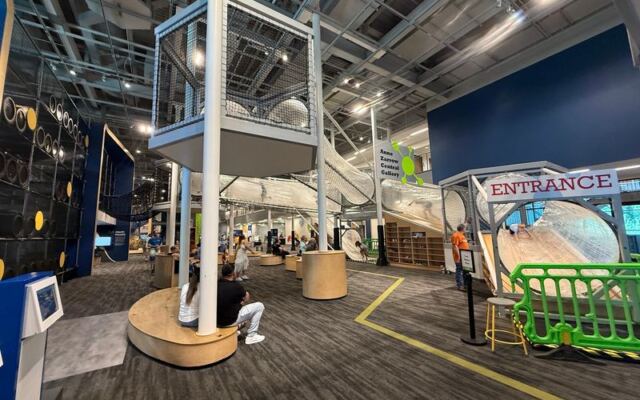
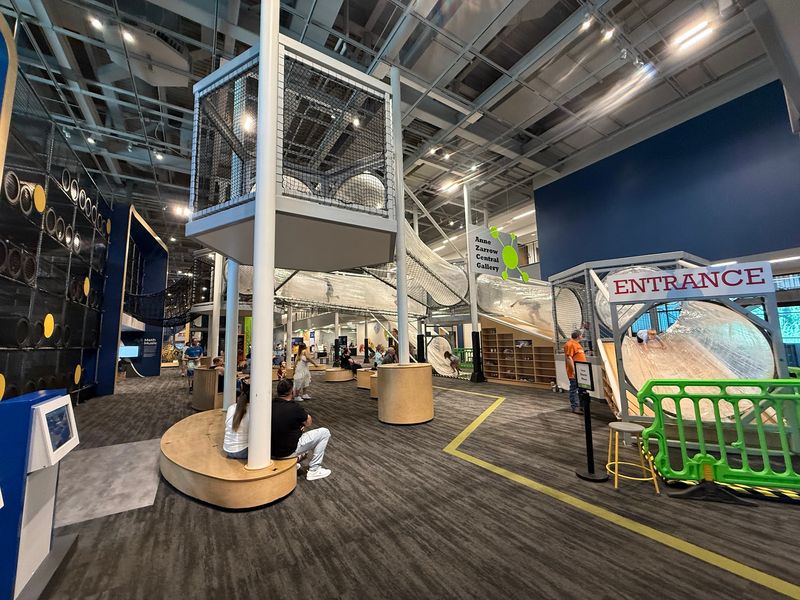
Visitors consistently describe walking in and feeling immediately welcomed by a wide, open main floor packed with activity zones. The layout keeps everything on one level, which makes it easy for parents to keep track of younger children while older kids roam freely.
Groups ranging from toddlers to early teenagers tend to find things that hold their attention, and the variety of exhibits means no two visits feel exactly the same.
The Story Behind the Space
Discovery Lab grew out of a straightforward belief: children learn best when they are allowed to get their hands into things. The museum positions itself not as a traditional exhibit hall where roped-off displays demand quiet admiration, but as a living laboratory where curiosity gets rewarded with immediate, tactile feedback.
The building houses what the museum describes as HiFi spaces, meaning exhibit areas whose curriculum rotates throughout the year. That rotating approach keeps returning families from feeling like they have already seen everything, because the content genuinely shifts and refreshes over time.
One visit might feature a particular engineering challenge; a later visit might swap in an entirely different problem-solving setup.
Over time, Discovery Lab has built a reputation as the kind of place that earns repeat memberships rather than one-time tickets. Families mention purchasing memberships after their first visit and returning multiple times within the same week.
The museum also participates in the ASTC reciprocal membership program, which means holders of qualifying memberships from science centers elsewhere in the country can sometimes get in free, making it an unexpectedly affordable stop for traveling families passing through Tulsa.
Science Exhibits That Actually Teach Without Feeling Like School
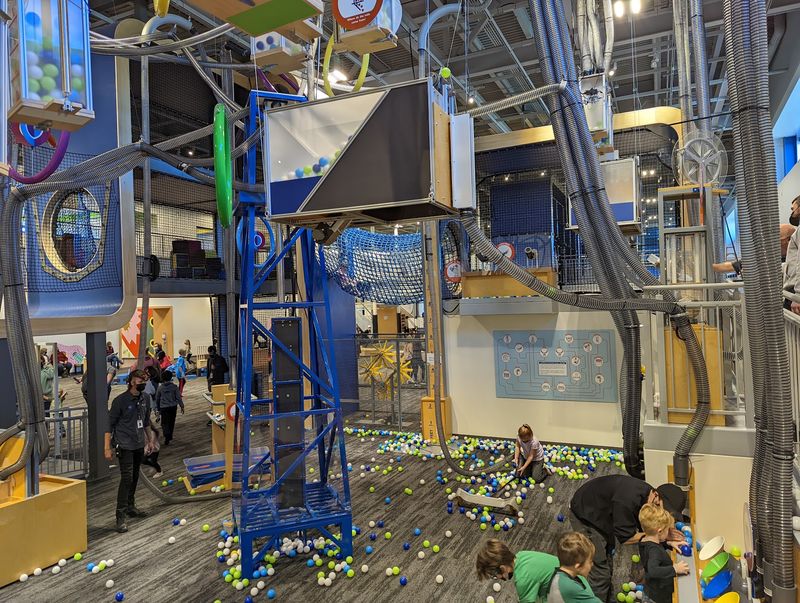
Calling these science exhibits is technically accurate, but it undersells how seamlessly the learning gets folded into the fun. Kids have been spotted leaving the building talking about physics concepts they absorbed without realizing they were absorbing anything at all.
One reviewer put it plainly: the little ones are having so much fun they do not realize they are learning physics.
The museum covers a broad range of STEM territory across its exhibit floor. Sound science gets its own dedicated space, which visitors describe as genuinely cool rather than just educational-poster cool.
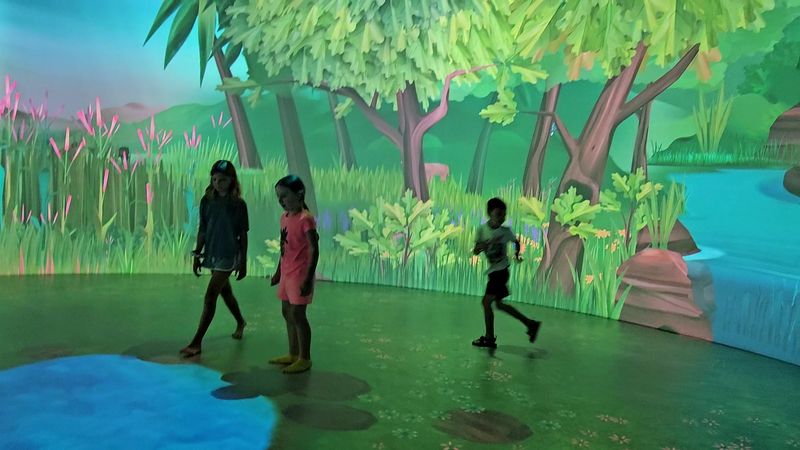
There is also a room featuring projectors that creates an immersive visual experience, adding a sensory dimension beyond the purely hands-on stations.
An engineer area stands out as a particular highlight for older kids. Children can put on safety goggles, gloves, and an apron before working through actual repair-style challenges.
The experience carries enough real-world framing that it feels meaningful rather than pretend, and parents report being surprised by how long their kids stay focused in that zone. Rotating builder and engineer opportunities cycle through consistently, so there is usually something fresh on offer even for families who visit regularly throughout the year.
The Water Play Room That Steals the Show
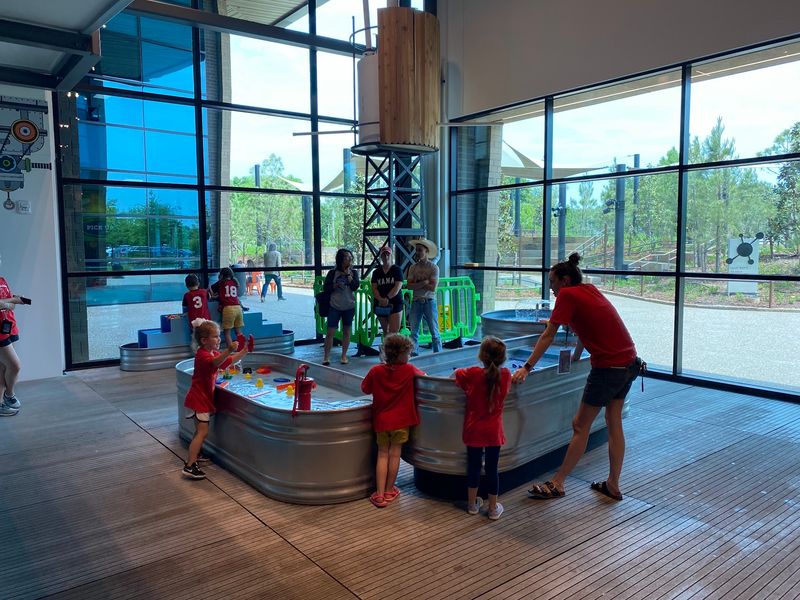
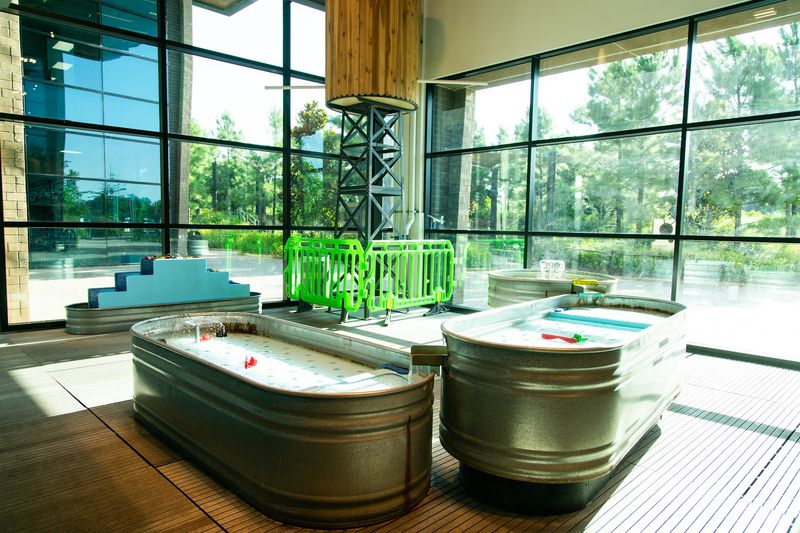
Among all the exhibit areas packed into Discovery Lab, the water play room earns a special level of enthusiasm from visiting families. Kids who might drift past other stations tend to plant themselves here and refuse to leave, which tells you something about how well the space is designed to hold young attention.
Water play has a long track record in children’s museum design for good reason: it is tactile, cause-and-effect driven, and endlessly replayable. Pour something in here, watch it come out there, change the angle, try again.
The feedback loop is instant and satisfying in a way that even the most polished digital exhibit rarely matches.
Parents traveling with kids across a wide age range report that the water area works particularly well as a common-ground activity. A six-year-old and a thirteen-year-old can both find something engaging at the water tables without either one feeling like they have been dragged to the wrong section.
Visitors suggest arriving prepared with a change of clothes for younger children, since the enthusiasm for splashing tends to outpace any concern about staying dry. On a hot Oklahoma summer day, the fact that the whole museum is air-conditioned makes the water room feel even more like a reward.
Planetarium Screenings and the Pull of the Night Sky
A planetarium tucked inside a children’s museum is not something most families expect to find, and that element of surprise makes it one of Discovery Lab’s most memorable features. The theater screens films on topics that genuinely stretch young imaginations, with dark matter serving as one subject that visitors mention coming away impressed by.
Planetarium programming fits naturally alongside the rest of the museum’s STEM focus. Space and astronomy offer some of the most naturally captivating entry points into science for children, because the subject matter is inherently vast and mysterious.
Watching a film about the universe projected overhead in a darkened dome is a fundamentally different experience from reading about it in a classroom, and that difference tends to stick.
Families visiting from out of town have specifically called out the planetarium as a highlight of their trip, with kids as young as three engaging with the content and staying attentive through screenings. The format works well for children who might find the busier, louder sections of the main floor overstimulating, since the theater provides a quieter, more focused environment.
For parents looking to pace a visit and give younger kids a chance to settle and recharge, a planetarium show makes a natural midpoint break in an otherwise action-packed afternoon.
Packing Tape Tunnels, Tape Slides, and the Climbing Structures Kids Cannot Get Enough Of
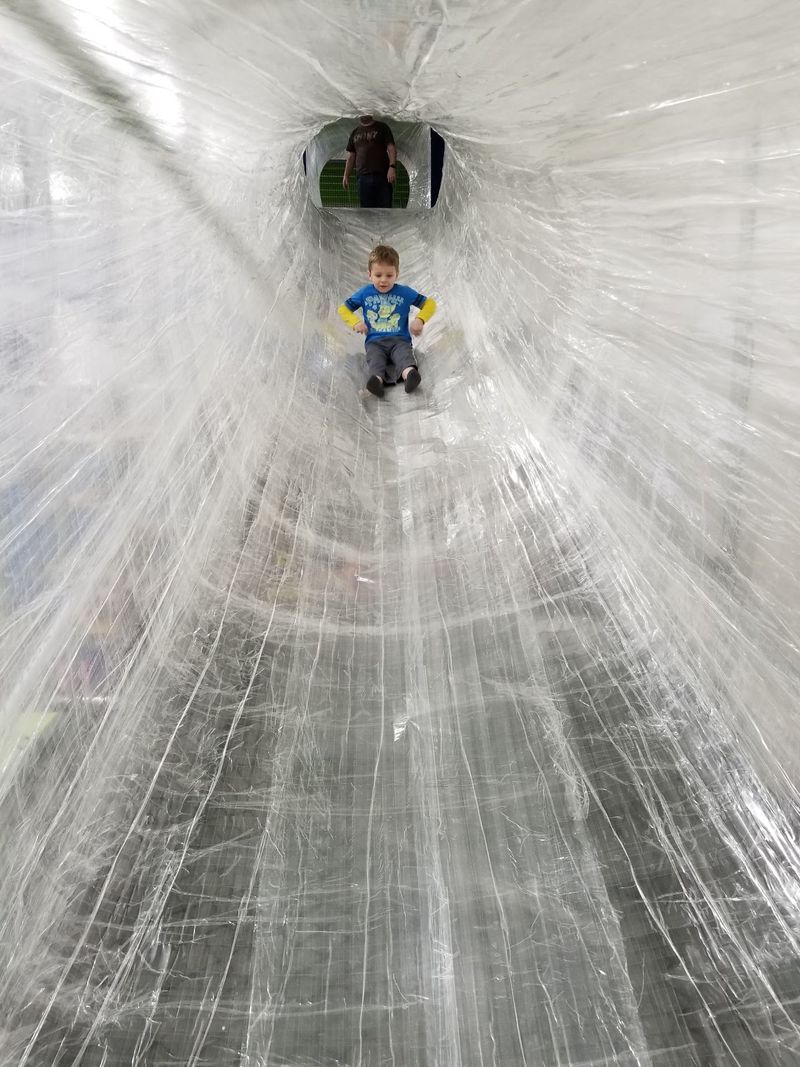
Few things at Discovery Lab generate as much repeat enthusiasm as the handmade packing tape installations. The tape tunnels, which are exactly what they sound like, create translucent crawl-through pathways that feel genuinely novel.
Kids who have visited multiple times still head straight for the tunnels on return trips, which is a strong signal that the novelty does not wear off quickly.
The tape slide earns similar devotion. Visitors across multiple reviews single it out as a consistent winner, and the museum’s own owner responses reference it with obvious pride.
There is something about the tactile quality of the tape surface and the unpredictability of the ride that keeps kids lining up for another turn long after they have already gone several times.
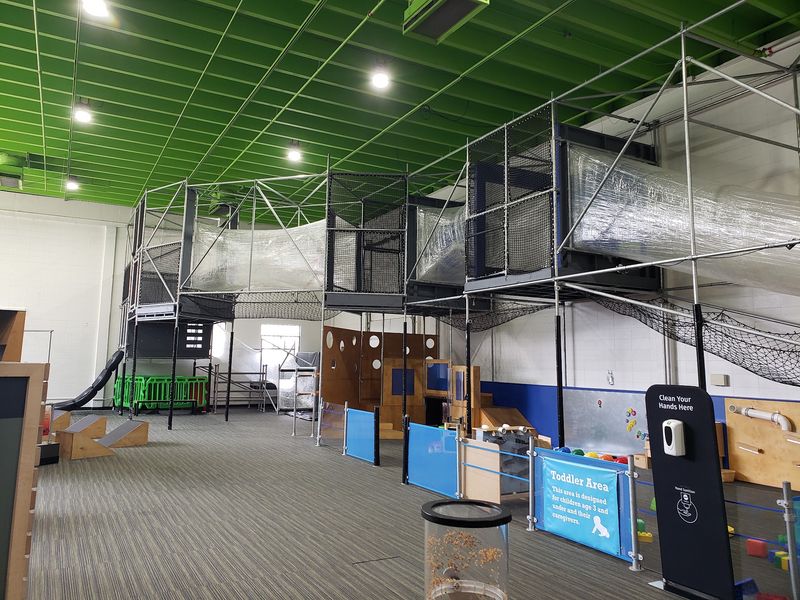
Beyond the tape features, Discovery Lab includes a vertical climbing maze that allows for full-body physical exploration. The structure is substantial enough that older kids find it genuinely challenging rather than immediately conquerable.
Plastic tunnels and climbing barrels add to the physical play options, though some of the barrel-style elements sit higher off the ground and may be better suited to children on the older end of the museum’s age range. Families with toddlers and preschoolers tend to appreciate that these bigger structures exist alongside gentler options designed for smaller visitors.
The Toddler Zone and What It Means for the Youngest Visitors
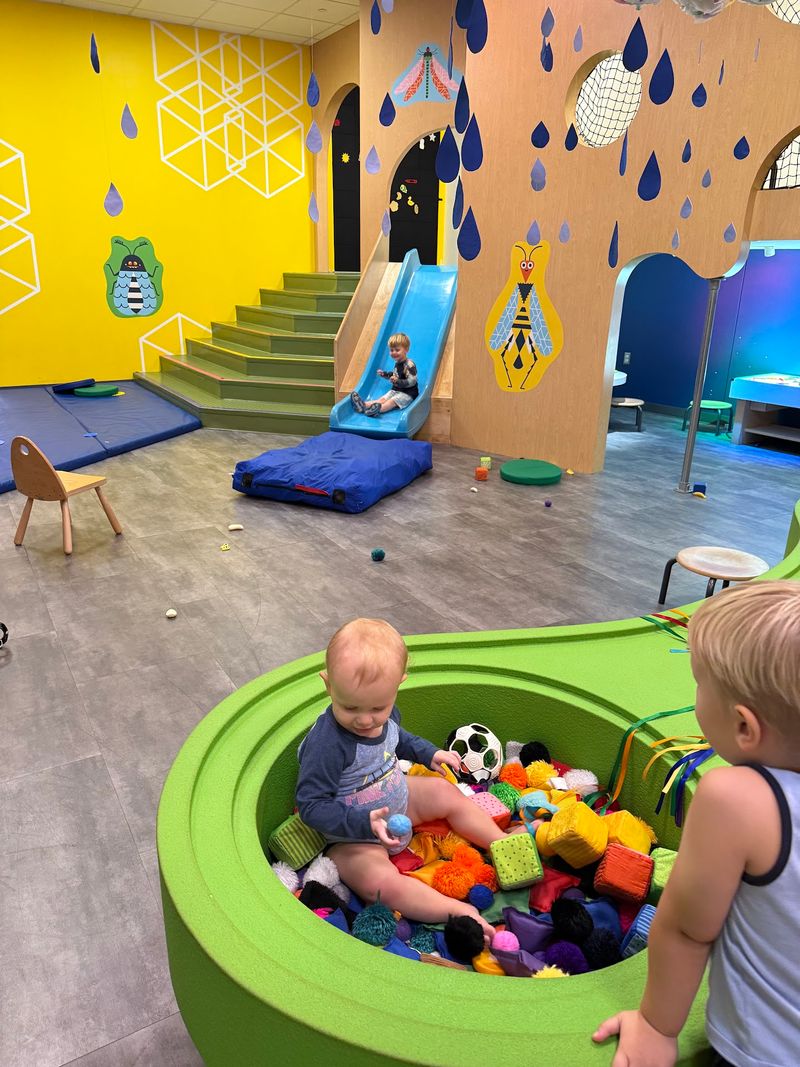
Bringing a toddler to a children’s museum can feel like a gamble. The worry is always that the exhibits skew too old, leaving the littlest visitors with nothing to do while older siblings race around.
Discovery Lab addresses that concern directly with a dedicated under-four area that parents consistently describe as one of the more thoughtful sections of the building.
The toddler zone gives caregivers a place to settle in without constantly chasing a small child through crowds of bigger kids. Parents mention being able to stay in one spot for a full hour while their toddlers cycle through the available activities with seemingly endless enthusiasm.
For families with children at very different developmental stages, having a clearly defined younger-child area reduces the logistical stress of a visit considerably.
The museum also provides a breastfeeding room, which signals a level of practical consideration for families with infants that not every children’s attraction bothers to include. A ball pit rounds out the sensory-play options for the youngest set and gets called out frequently by visitors as a reliable crowd-pleaser.
Discovery Lab’s awareness of the full family age range, from nursing infants through early teenagers, gives it a flexibility that makes it genuinely useful for multi-kid households rather than just households with one particular age of child.
Sensory-Friendly Hours and the Museum’s Approach to Accessibility
On a typical busy day, Discovery Lab hums with the kind of energy that is wonderful for most kids and genuinely overwhelming for others. The museum does not pretend otherwise, and it has built a specific accommodation into its monthly calendar to address that reality directly.
Sensory-Friendly Family Time runs on the second Sunday of each month from 9:30 AM to 11:30 AM. The format provides a lower-stimulation environment for children who find the usual noise levels and crowd density difficult to manage.
Families who have children on the spectrum or with sensory sensitivities have noted that the museum’s staff actively point visitors toward this option when it comes up in conversation.
The museum also posts what it calls Fieldtrip Forecasts on social media on a weekly basis, letting families know which days and time windows tend to be less crowded. That kind of transparency is genuinely useful for parents who want to plan around school group visits, which can significantly increase the activity level and volume inside the building.
Knowing that a museum actively communicates crowd patterns rather than leaving families to figure it out on arrival reflects a visitor-first approach that shows up in several small but meaningful ways throughout the Discovery Lab experience.
Admission, Memberships, Hours, and Getting There
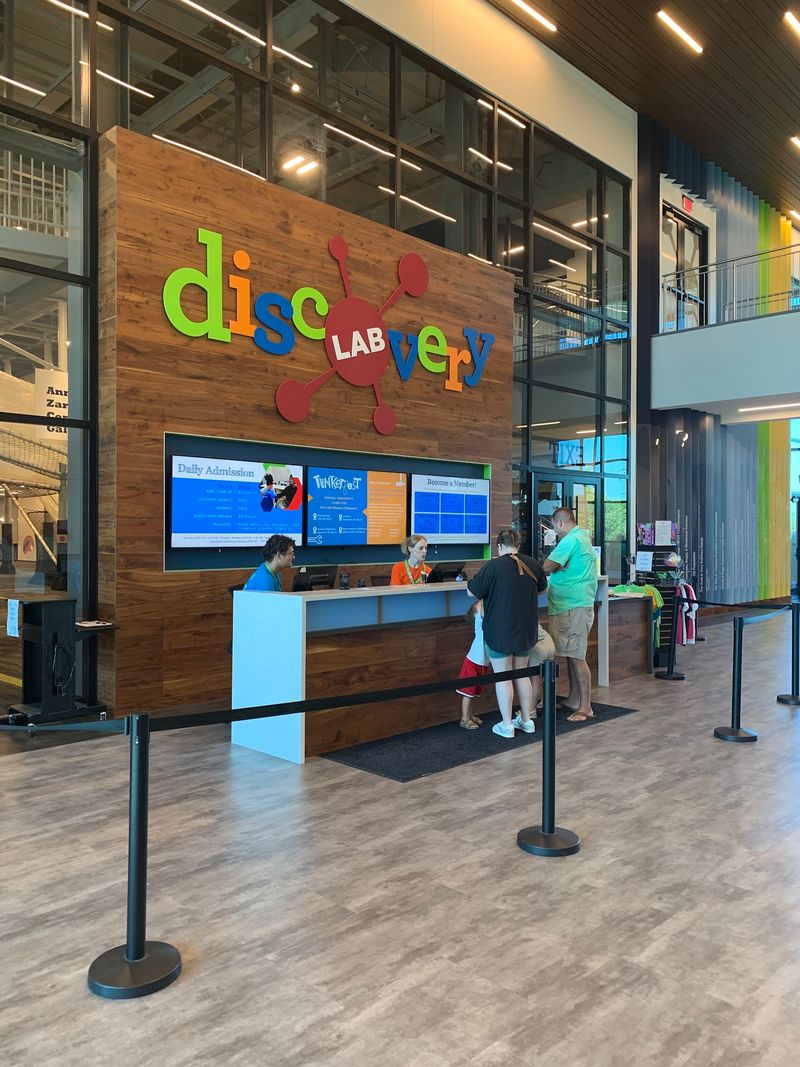
General admission runs at $14 per person, a price point that some families find reasonable and others find a stretch depending on household size. The museum’s own programming acknowledges the cost consideration, and the membership option tends to be the route that repeat visitors strongly recommend.
Members get unlimited visits for a full year, which quickly pays for itself for families who live nearby or plan to return.
Discovery Lab participates in the ASTC reciprocal membership program, meaning qualifying memberships from other science centers around the country can open the door for free entry. Families traveling through Tulsa who already hold a membership elsewhere should check their eligibility before purchasing tickets at the door.
Operating hours vary by day of the week. Tuesday through Friday the museum opens at 9:30 AM and closes at 5:00 PM.
Saturday hours extend to 7:00 PM, making it the best day for a longer visit. Sunday hours run from 11:30 AM to 5:00 PM, and Monday offers a shorter window from 10:30 AM to 2:00 PM.
The museum sits at 3123 Riverside Drive in Tulsa, and parking is available on site, though visitors suggest arriving earlier in the day to secure a spot more easily. Reach the museum by phone at 918-295-8144 or visit discoverylab.org for current programming details.
A Verdict on Whether the Trip Is Worth Making
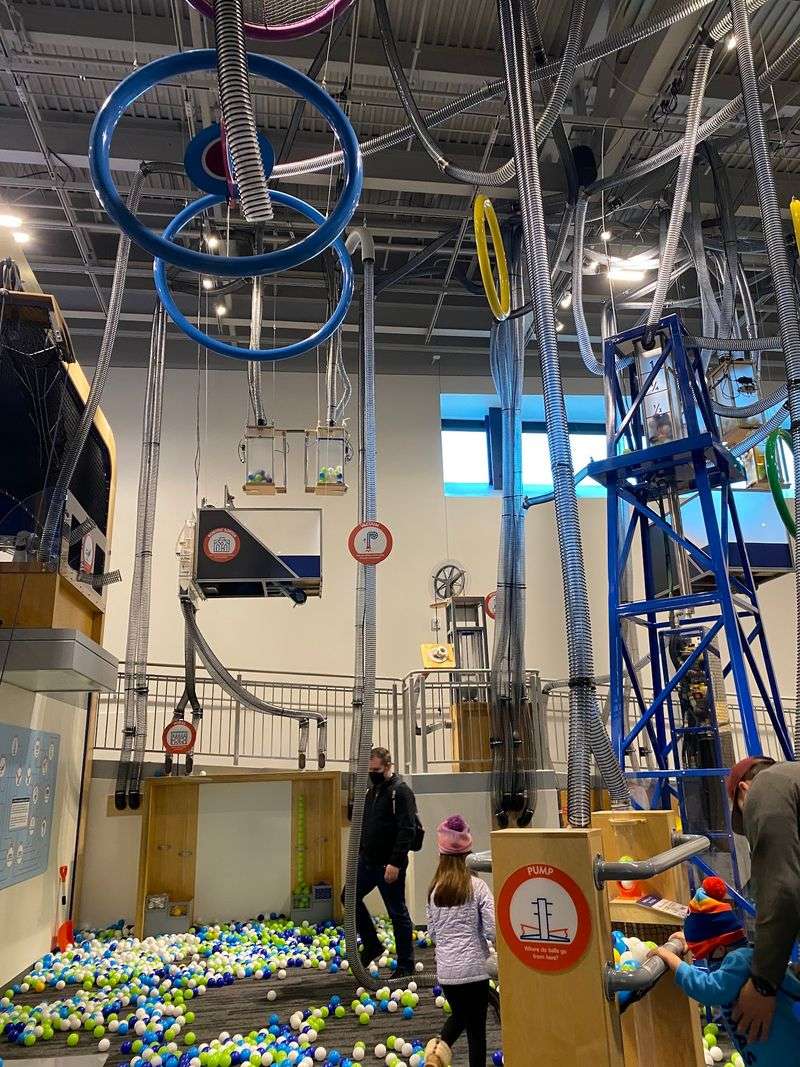
Few children’s museums manage to genuinely serve toddlers, elementary-age kids, and preteens under the same roof without feeling like they are compromising on all three. Discovery Lab pulls it off more successfully than most, and that range is probably its single strongest asset for families navigating mixed-age outings.
The combination of physical play structures, STEM exhibits, a planetarium, water play, and an engineering station gives the building a depth that justifies more than one visit. Families who purchase memberships and return throughout the year consistently report finding something new or finding that familiar favorites still hold their children’s attention just as strongly as the first time.
A few practical notes worth keeping in mind: some exhibits cycle in and out of working order, which is a common reality at hands-on museums with high-traffic installations. Arriving on a weekday morning tends to mean fewer crowds and a calmer experience overall.
For families visiting Tulsa with kids in tow, Discovery Lab pairs naturally with a walk through the Gathering Place right across the street, turning the whole block into a full-day itinerary. For anyone in Oklahoma looking for an indoor destination that earns genuine enthusiasm from children and parents alike, this one consistently delivers.
Share this story