Some hotel rooms come with a minibar and a view. Others come with iron cell doors, Gothic arches, or a lighthouse beam still sweeping the sea at night. Europe has a long habit of repurposing its most dramatic buildings, and a handful of clever hoteliers have turned that habit into some of the most memorable places to sleep on the continent. Former prisons, monasteries, hospitals, a water tower, a railway station, and a military fortress have all traded their original identities for thread counts and room service.
What makes these properties special is not just the novelty factor. Each one has kept enough of its original character to make a stay feel genuinely different from a standard hotel night. The buildings on this list span centuries of history and several countries, and every one of them has a story that begins long before the first guest ever checked in. Here is a look at fourteen of the most fascinating.
1. Malmaison Oxford, Oxford, England, United Kingdom
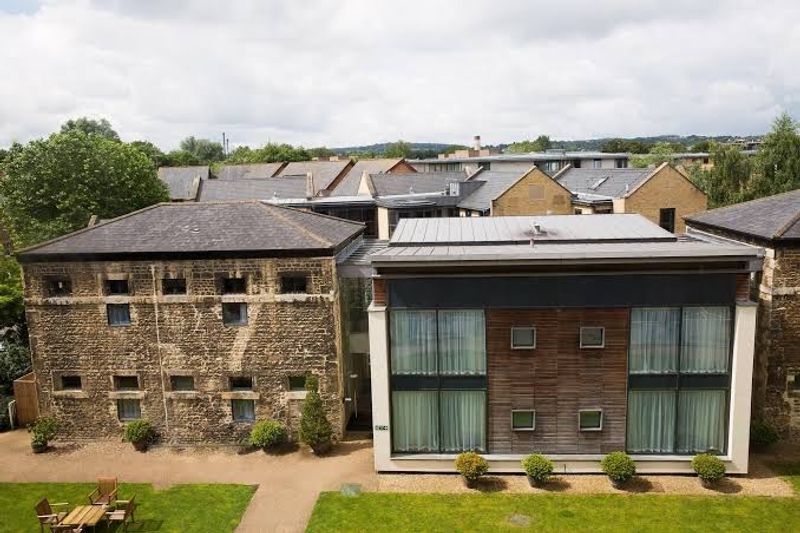
A Victorian prison is not the most obvious blueprint for a boutique hotel, yet Malmaison Oxford has made it work in spectacularly strange fashion.
The hotel occupies part of HM Prison Oxford inside the historic Oxford Castle complex, a jail that did not close until 1996.
Iron walkways, heavy cell doors, and exposed brickwork are all still present, woven into interiors that are polished and comfortable rather than bleak.
Many guest rooms were converted directly from actual cells, so the compact layouts carry a certain architectural honesty that no newly built hotel could fake.
Exercise yards have been reimagined as social spaces, and the former visitors area now functions as a bar.
The building’s radial cell-block design, originally built for surveillance, still shapes the layout today, giving curious guests plenty of original prison architecture to explore between meals.
2. Home Hotel Katajanokka, Helsinki, Finland
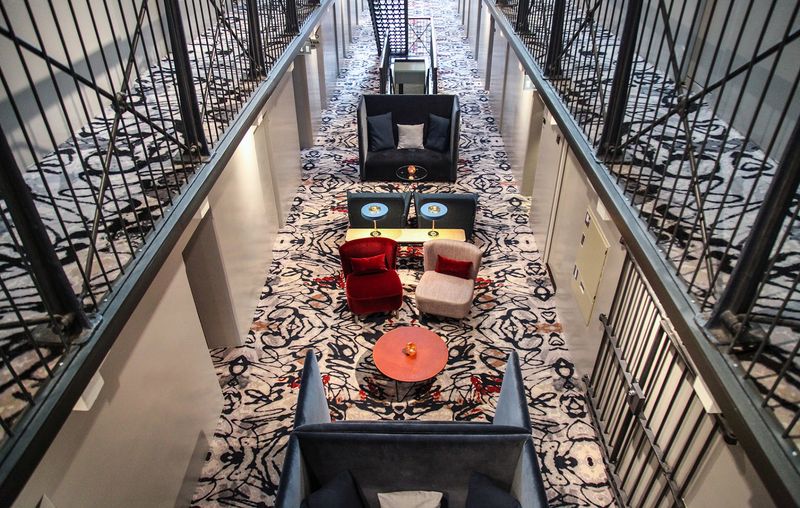
Helsinki is not short of design hotels, but very few of them can claim a history as the country’s most notorious correctional facility.
Home Hotel Katajanokka occupies a former county prison on Katajanokka island, with the oldest section dating to 1837 and the main building completed in 1888.
The prison closed in 2002, and after extensive renovation the hotel opened in 2007, turning a place of mandatory residence into one guests choose willingly.
Former cells were combined to create more spacious rooms, yet original iron staircases, exposed brick, and an impressive open atrium modeled on the Philadelphia-style prison plan remain clearly visible.
Two original basement cells are preserved for visitors to inspect, including a group cell and an isolation room, providing a direct comparison with the comfortable rooms upstairs.
A former prison chapel now serves as a function room, and a small sauna in the basement nods firmly to Finnish tradition.
3. Van der Valk Hotel Het Arresthuis, Roermond, Netherlands
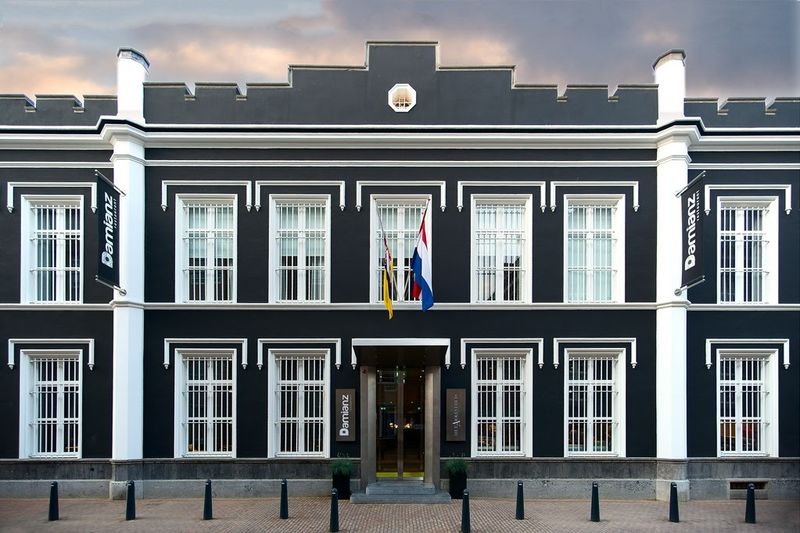
Het Arresthuis makes absolutely no attempt to disguise its past, and that architectural honesty is precisely what draws travelers to Roermond.
Designed by state architect Allard Cornelis Pierson and opened in 1863, the building operated as a detention facility for nearly 150 years before closing in 2007.
A two-year renovation then transformed its 105 cells into 40 luxury rooms and suites, combining three former cells to create each standard room.
Cast-iron staircases, elevated walkways, vaulted ceilings, and original cell doors remain intact, polished rather than removed, so the building’s character survived the conversion largely undisturbed.
Themed suites named The Jailer, The Lawyer, The Director, and The Judge add a layer of storytelling that plays directly on the building’s former hierarchy.
The old exercise yard is now a fine-dining terrace, and handwritten texts once left by former prisoners have been carefully preserved and subtly reincorporated into select rooms.
4. Långholmen Hotel Stockholm, Stockholm, Sweden
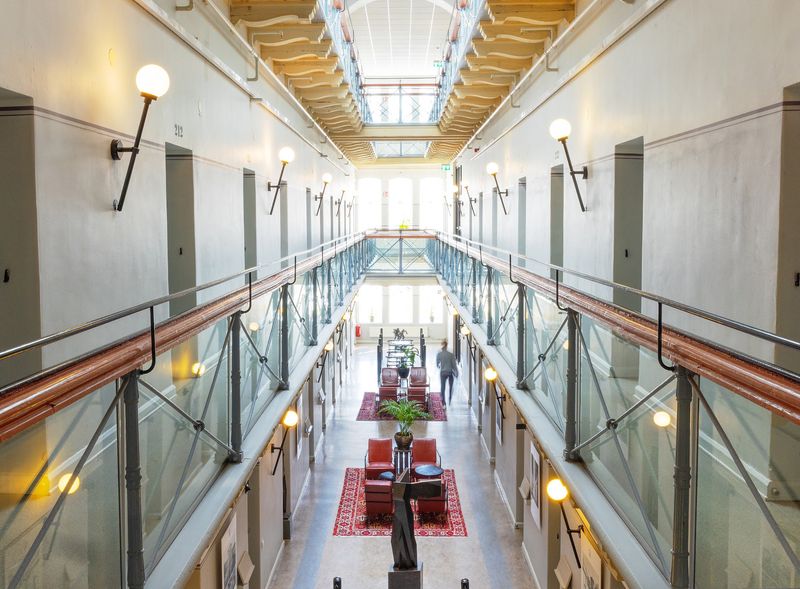
A leafy island in central Stockholm sounds like an unlikely location for a former maximum-security prison, but Långholmen spent generations as exactly that.
Known as the Crown Prison, it held over 500 cells at its peak and did not close until 1975.
After two years of renovation, the hotel and an adjoining hostel opened in 1989, reclaiming the surviving prison buildings for entirely different purposes.
Original cell doors, now operated with key cards, remain in place, and exposed brickwork and an attractive atrium gallery dating from 1866 give the interior an unmistakable institutional character that no decorator could invent from scratch.
Many of the converted rooms retain details like iron bars repurposed as headboards, creating a contrast with modern amenities that guests tend to find more amusing than uncomfortable.
A small on-site prison museum, open daily, traces Långholmen’s 250-year history, and a beach just 100 meters away completes the island’s improbable appeal.
5. The Ned London, London, England, United Kingdom
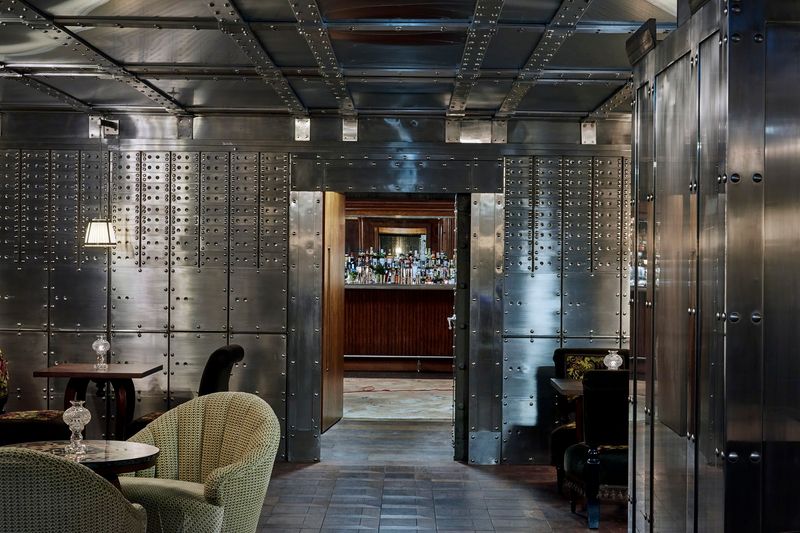
Before it welcomed a single hotel guest, this City of London landmark spent decades guarding other people’s money as the headquarters of Midland Bank.
Designed by Sir Edwin Lutyens and completed in 1939, the Grade I listed building sat vacant for eight years after HSBC relocated its operations, until a vision for its transformation finally took shape.
The Ned opened in 2017, and the restoration preserved 92 verdite marble columns, original walnut banking counters, historic chandeliers, and wood paneling throughout the vast ground-floor hall.
That enormous banking hall now serves as the hotel’s social center, housing multiple restaurants and a lively gathering space where the financial past feels very close to the surface.
The original bank vault, reportedly featured in the James Bond film Goldfinger, was converted into a bar and lounge where thousands of original stainless-steel safe deposit boxes still line every wall.
6. Canfranc Estación, a Royal Hideaway Hotel, Canfranc-Estación, Aragon, Spain
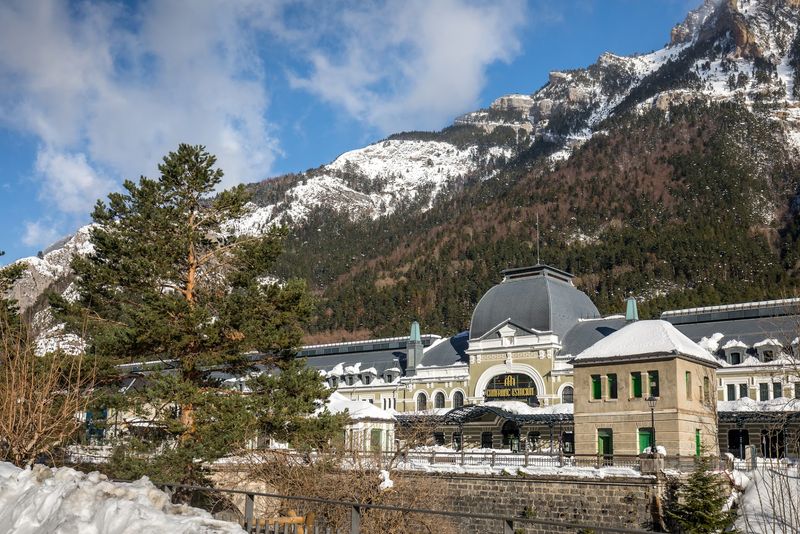
Europe’s railway history produced some extraordinary buildings, but few match the sheer ambition of Canfranc Estación, a structure so large it was nicknamed the Titanic of the Mountains.
Inaugurated in 1928 high in the Spanish Pyrenees, the station stretched 246 meters along its facade, featured 365 windows and 156 doors, and was once the second-largest railway station in Europe by surface area.
A bridge collapse in 1970 effectively ended international rail traffic, and the building fell into long decline until it was declared an Asset of Cultural Interest in 2002.
Restoration work eventually led to the hotel opening in March 2023, with 104 rooms and suites designed with Art Deco references that echo the station’s original era.
The historic main hall now serves as the hotel reception, while two restaurants are housed inside renovated train carriages, making the building’s railway identity central to the guest experience rather than a footnote.
7. Wasserturm Hotel Cologne, Cologne, North Rhine-Westphalia, Germany
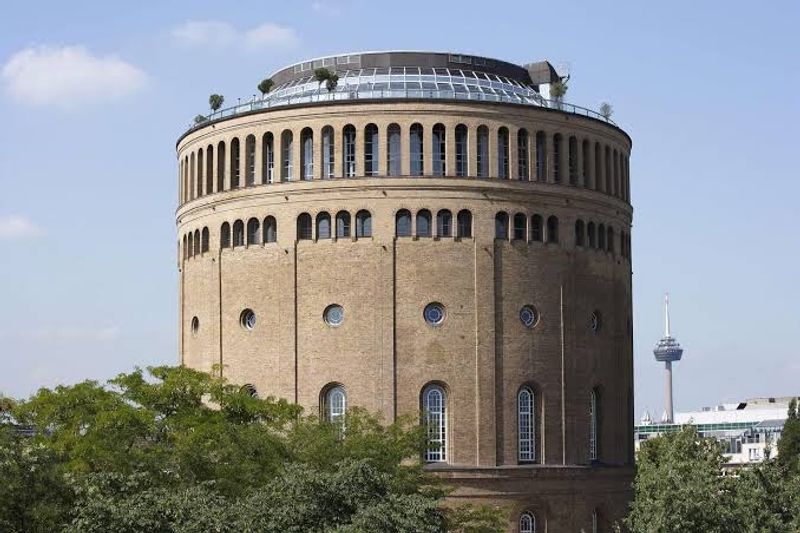
Cologne’s most unusual hotel is also one of its most recognizable landmarks, a round red brick tower that once had nothing to do with hospitality at all.
Built between 1868 and 1872 by British engineer John Moore, the structure was inaugurated as Europe’s highest water tower, supplying the city with drinking water until 1930 before falling into disuse.
Conversion work began in 1985, and the hotel opened in 1990, turning an industrial monument into a boutique property that now belongs to the Curio Collection by Hilton.
The cylindrical construction means every room has a unique, flowing layout that follows the curve of the walls, a spatial quality that standard rectangular buildings simply cannot replicate.
The 36-foot lobby immediately establishes the building’s scale with its formidable brickwork and lofty proportions, while the rooftop Bar Botanik offers 360-degree views across Cologne that no ordinary hotel bar could match.
8. InterContinental Marseille – Hotel Dieu by IHG, Marseille, Provence-Alpes-Côte d’Azur, France
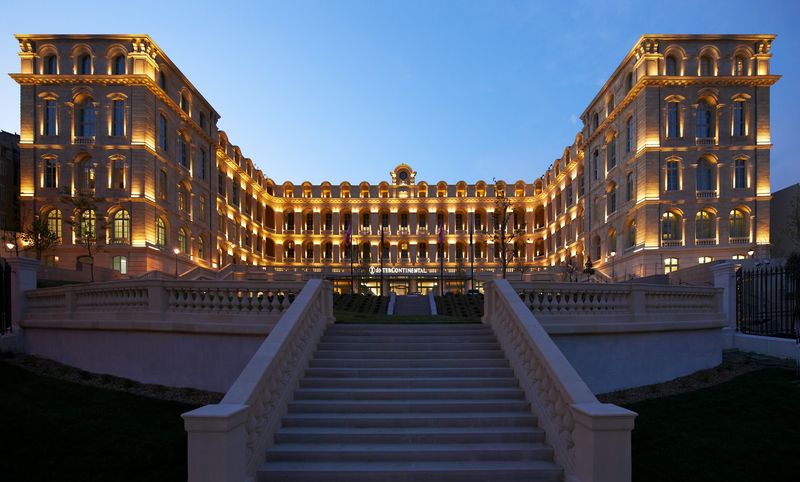
Centuries of caring for the sick left the Hotel Dieu in Marseille with an extraordinary architectural legacy, and a thoughtful conversion has turned that legacy into one of the city’s most dramatic places to stay.
The site’s hospital origins trace back to 1188, with the present monumental complex largely shaped by rebuilding that began in 1753 under King Louis XV’s court architect.
The last patients departed in 1993, and the InterContinental opened here on April 25, 2013, after a meticulous restoration that balanced modern luxury with preserved Baroque and Neoclassical architecture.
Sweeping staircases, elegant courtyards, and terraces offering panoramic views across the Vieux-Port and toward Notre-Dame de la Garde remain central features of the property.
Artifacts uncovered during archaeological excavations during the renovation are incorporated into the design, and the on-site restaurant Alcyone holds a Michelin star, adding a culinary dimension that the original hospital administrators could never have anticipated.
9. InterContinental Lyon – Hotel Dieu by IHG, Lyon, Auvergne-Rhône-Alpes, France
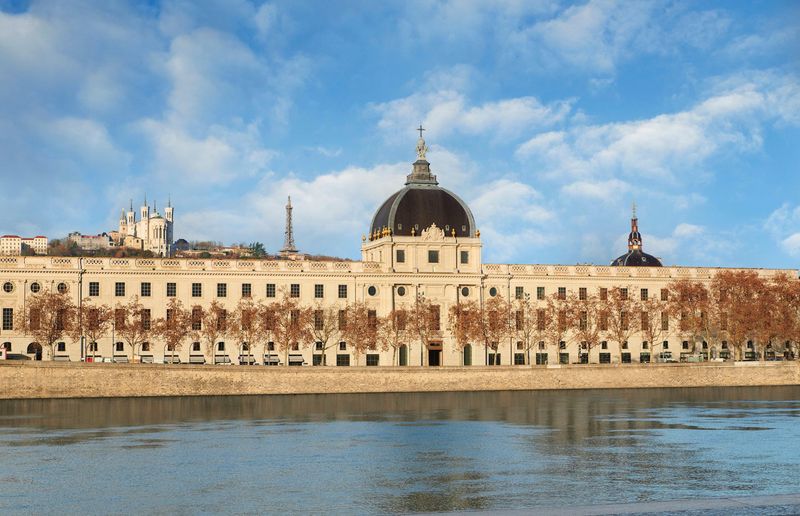
Lyon’s Grand Hotel Dieu cared for the city’s sick and poor for the better part of nine centuries before anyone imagined luxury suites beneath its famous dome.
The site’s hospital history reaches back to the 12th century, and the monumental riverside building seen today was largely designed in the 18th century by Jacques-Germain Soufflot, the architect behind the Pantheon in Paris.
After the hospital closed in 2009, a restoration costing over 200 million euros and lasting nine years transformed the complex into what became the largest private conversion of a historic monument in France.
The InterContinental opened here in 2019, with interior designer Jean-Philippe Nuel creating rooms that incorporate original stone floors, plastered walls, and timber ceilings alongside custom silk prints by a prestigious Lyonnais textile house.
The 32-meter Soufflot Dome, once a chapel, now houses Le Dome Bar, and many of the 144 rooms overlook the Rhone River or the Fourviere hill beyond.
10. Cap Rocat, Cala Blava, Mallorca, Spain
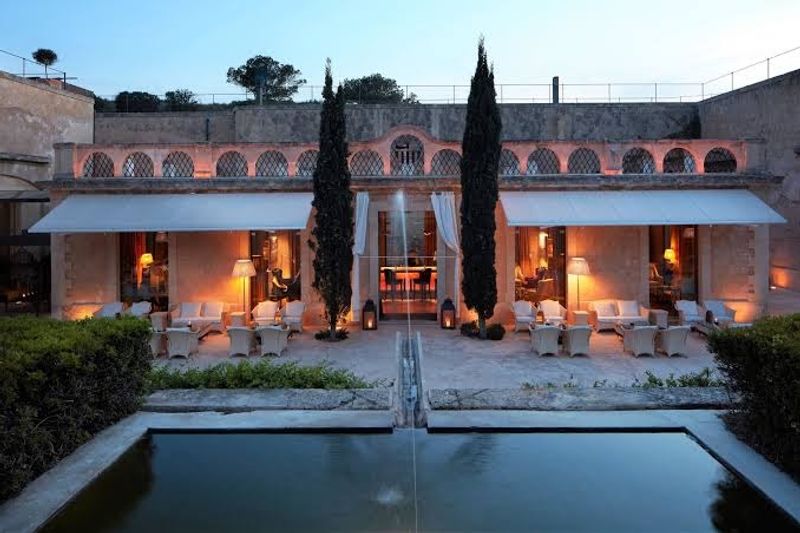
Built to be invisible from land and sea, this 19th-century military fortress on the Mallorcan coast succeeded so completely that the hotel inside it still feels like a hidden discovery.
Cap Rocat was constructed to defend the Bay of Palma, with its thick stone walls engineered directly into the coastal cliffs, making the structure almost indistinguishable from the surrounding landscape.
After the fortress fell out of military use, architect Antonio Obrador spent a decade restoring it, a project that earned the Europa Nostra Heritage Award for preserving both the building’s identity and its natural environment.
Suites are incorporated into former defensive structures, including dugouts originally designed for artillery, and some are carved directly into the rock face with private patios positioned to face the sea.
A subterranean spa occupies former ammunition stores, while a saltwater infinity pool and restaurants set in vaulted rooms or on old military platforms complete a property that feels genuinely unlike any resort built from scratch.
11. Kruisherenhotel Maastricht, Maastricht, Limburg, Netherlands
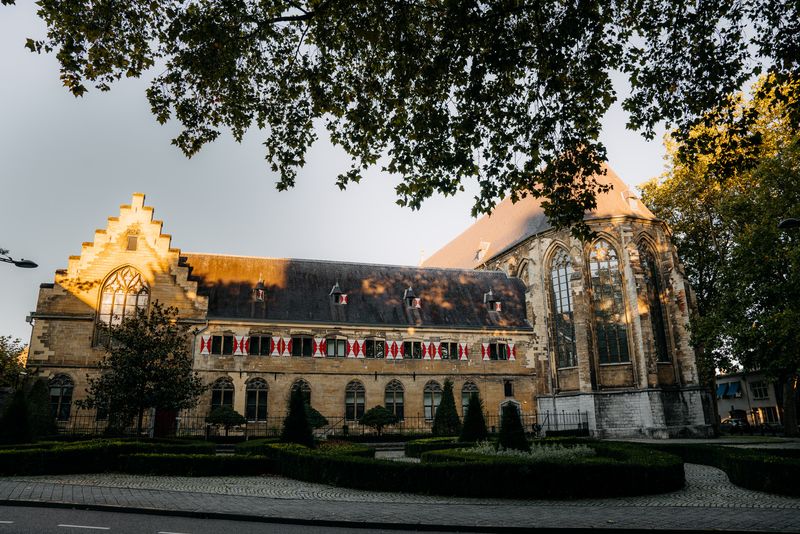
Not many hotels can claim that their reception area was once a place where medieval monks studied, copied manuscripts, and observed vows of silence, but Kruisherenhotel Maastricht can.
The property occupies a former 15th-century Kruisheren monastery and its monumental Gothic church, with construction of the complex beginning in 1440.
After the Crutched Friars were expelled during the French Revolution, the building served various purposes across the following centuries before its transformation into a luxury design hotel was completed in 2005.
A glass elevator connects the church and monastery sections, and the nave of the former church now holds the reception, a lobby bar, library, and a wine bar with a glass-vaulted cellar below.
The mezzanine restaurant Spencer’s is positioned between the soaring chancel windows, and the 60 rooms, spread across the former monastery and additional buildings, blend modern furnishings with original stone, timber beams, and ecclesiastical proportions.
12. Martin’s Patershof, Mechelen, Flanders, Belgium
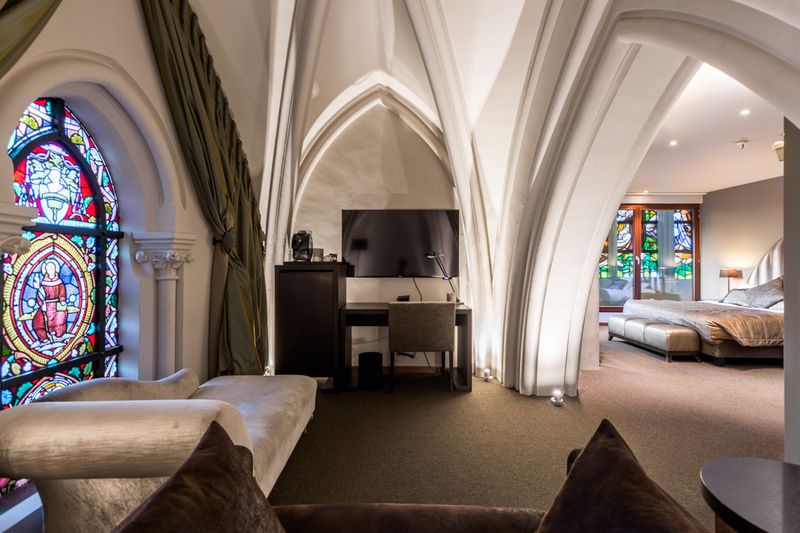
Stained-glass windows are not a standard feature in most hotel bedrooms, but at Martin’s Patershof in Mechelen, they are simply part of the architecture.
Built in 1863 by the Minor Brothers of Mechelen, the neo-Gothic complex served as a Franciscan monastery until the late 1990s, when it was deconsecrated and the long process of conversion into a hotel began.
The hotel opened in 2009 and has carefully preserved vaulted ceilings, ornate pillars, and vivid stained glass throughout both the public spaces and many guest rooms.
Breakfast is served in the former choir space of the church, where the original altar painting and high arched ceilings create a setting that no purpose-built hotel dining room could replicate.
The hotel bar also occupies part of the former church, offering guests an unusually grand space for a quiet sit-down, while the overall property maintains a balance between religious grandeur and practical modern comfort.
13. Mandarin Oriental, Prague, Prague, Czech Republic
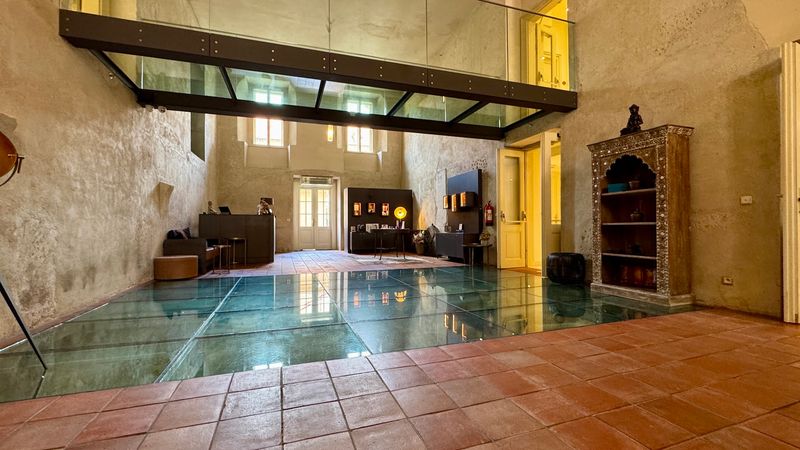
Hidden on a cobbled street in Mala Strana, this property carries more centuries of history beneath its floors than most hotels accumulate across their entire building.
Mandarin Oriental Prague incorporates a former 14th-century Dominican monastery, with the complex blending original Gothic, Baroque, and Renaissance elements with understated contemporary interiors.
Each of the 99 rooms and 20 suites has a distinct layout shaped by the monastery’s original structure, featuring vaulted ceilings, exposed stone, and timber beams that vary from room to room.
The hotel’s spa occupies a former Renaissance chapel, where the original Gothic walls of the St. Mary Magdalene church, predating 1329, are visible beneath a glass floor that was installed specifically to preserve them.
During restoration work, over 350,000 artifacts were uncovered on the site, including a medieval well found in the wine cellar, giving guests a direct and tangible connection to the layers of history beneath their feet.
14. Faro Capo Spartivento, Domus de Maria, Sardinia, Italy
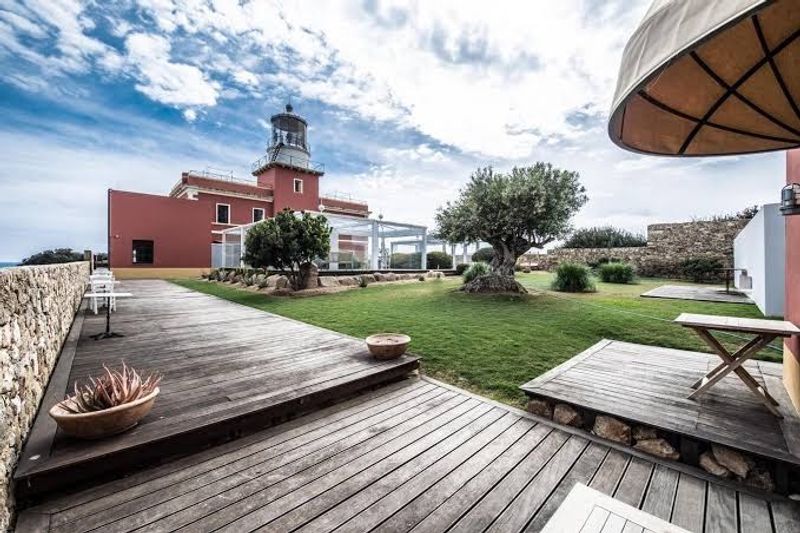
Built by the Italian Navy in 1854, this lighthouse on the southern tip of Sardinia spent well over a century guiding ships before its keepers packed up and left for good in the 1980s.
After automation ended the need for resident staff, the property sat neglected for decades until an extensive restoration project began in 2006, eventually making it Italy’s first lighthouse hotel.
The rotating lantern still functions, meaning guests sleep in a working lighthouse rather than a purely decorative one, a distinction that matters when you are this far out on a headland with the Mediterranean stretching in every direction.
Suites include some former gas tank structures converted into rooms with glass roofs for stargazing, while outdoor infinity pools, crystal gazebos, and dining areas are positioned to maximize the uninterrupted 360-degree sea views.
A separate building on the property, the Residenza Semaforisti, once housed lighthouse workers and still bears visible bullet holes from World War II, adding a further layer of history to an already remarkable site.
Share this story